Apex Legends: Cipher is scheduled to launch on November 3, bringing a substantial mix of weapon experimentation, Legend changes, match-objective rewards and Ranked rules. The headline-grabbing addition is Akimbo Wingman: a dual-wield version of the semi-automatic revolver that sacrifices some accuracy in exchange for greater damage. The update will also rework Crypto around more immediate reconnaissance, restore Lifeline’s revive shield, buff Revenant and introduce Strongholds as high-risk loot targets.
For a game in which tiny timing and positioning decisions routinely decide a fight, Cipher’s changes appear to be pointing in a clear direction: more reasons to move, contest space and react quickly. That does not necessarily mean every match will become a close-range brawl, but the new Wingman option, alarmed Strongholds and Crypto’s revised drone tools all reward squads that can turn information into decisive action.
Dual Wingmans trade precision for damage
The standard Wingman is a semi-automatic revolver that uses Sniper Ammo. It has remained threatening despite changing standing over recent seasons, largely because accurate shots can produce enormous value. It is described as the 19th most effective weapon by DPS, or damage per second, yet that ranking does not tell the whole story. A precise player can down an opponent with roughly two to four headshots, depending on the target’s armor.
Cipher’s Akimbo Wingman creates a distinct alternative rather than simply making the existing version stronger. Dual wielding will cost players some accuracy while raising the weapon’s damage. The practical implication is straightforward: the normal Wingman’s rewards are tied to controlled, high-value shots at a range of distances, while the Akimbo version is expected to encourage players to get much closer.
That creates an important risk-and-reward question. Reduced accuracy matters most when an opponent can create distance, use cover or force the shooter to track a moving target. At close range, though, a weapon built around bigger damage can become far more forgiving if the user can keep a target in front of them. Players who prefer carefully paced revolver shots may therefore see Akimbo Wingman as a separate tool for aggressive entries rather than a direct replacement for the single-gun approach.
There is also a balance precedent worth keeping in mind. Akimbo Mozambique previously rose from a little-used option to a dominant one before it was quickly nerfed. That history does not establish how the Akimbo Wingman will perform, but it does explain why the combination of dual wielding and high damage deserves close attention once Cipher is live. A weapon designed to be less accurate can still become extremely potent when its intended engagement range reduces the cost of missed precision.
What DPS does—and does not—explain
DPS is a useful shorthand, but it is not a complete measure of a weapon’s practical strength. It describes the damage a weapon can deal over time under its assumed firing conditions. In a real fight, shot placement, distance, cover, reload windows and armor all influence the outcome. The Wingman’s ability to secure a kill in a small number of headshots illustrates why a comparatively modest placement in a DPS list does not make it harmless.
For players facing the new Akimbo version, the likely defensive lesson is not complicated: avoid giving a dual-Wingman user an uncomplicated close-range exchange. Breaking line of sight, creating room and refusing to take a stationary face-to-face duel should matter whenever the damage advantage is concentrated at short distance. That is analysis based on the stated accuracy-and-damage tradeoff, rather than a claim about final balance numbers that have not been provided.
Related coverage includes Apex Legends: Cipher Adds Akimbo Wingman, Lifeline Revive Shield and Crypto Rework.
Crypto Rewired shifts his drone toward active pressure
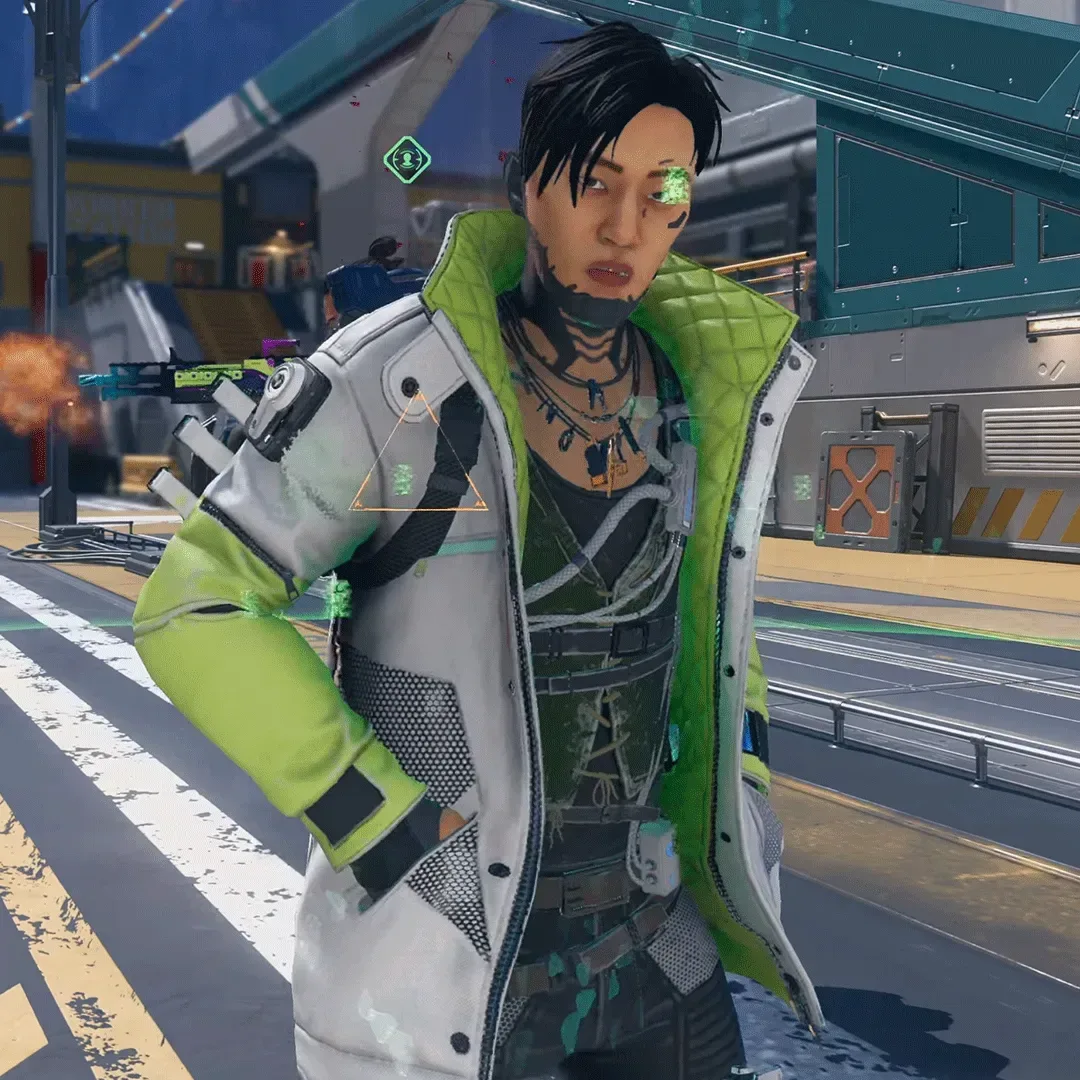
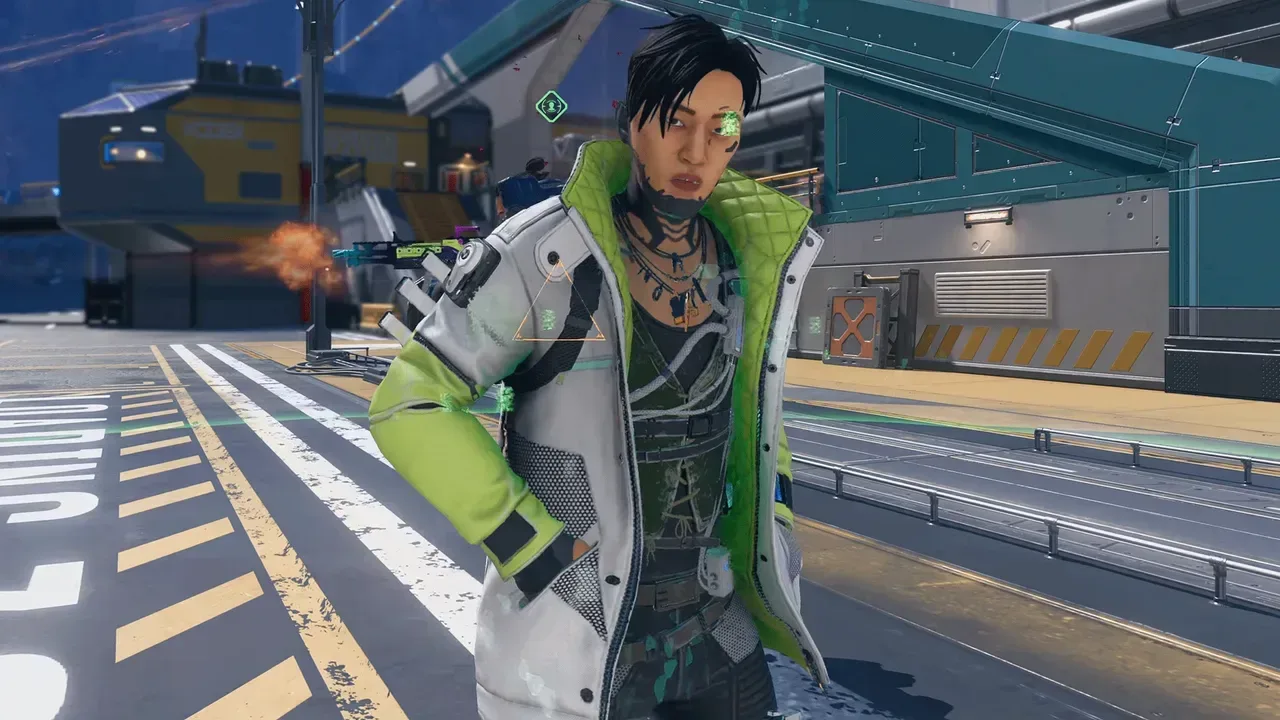
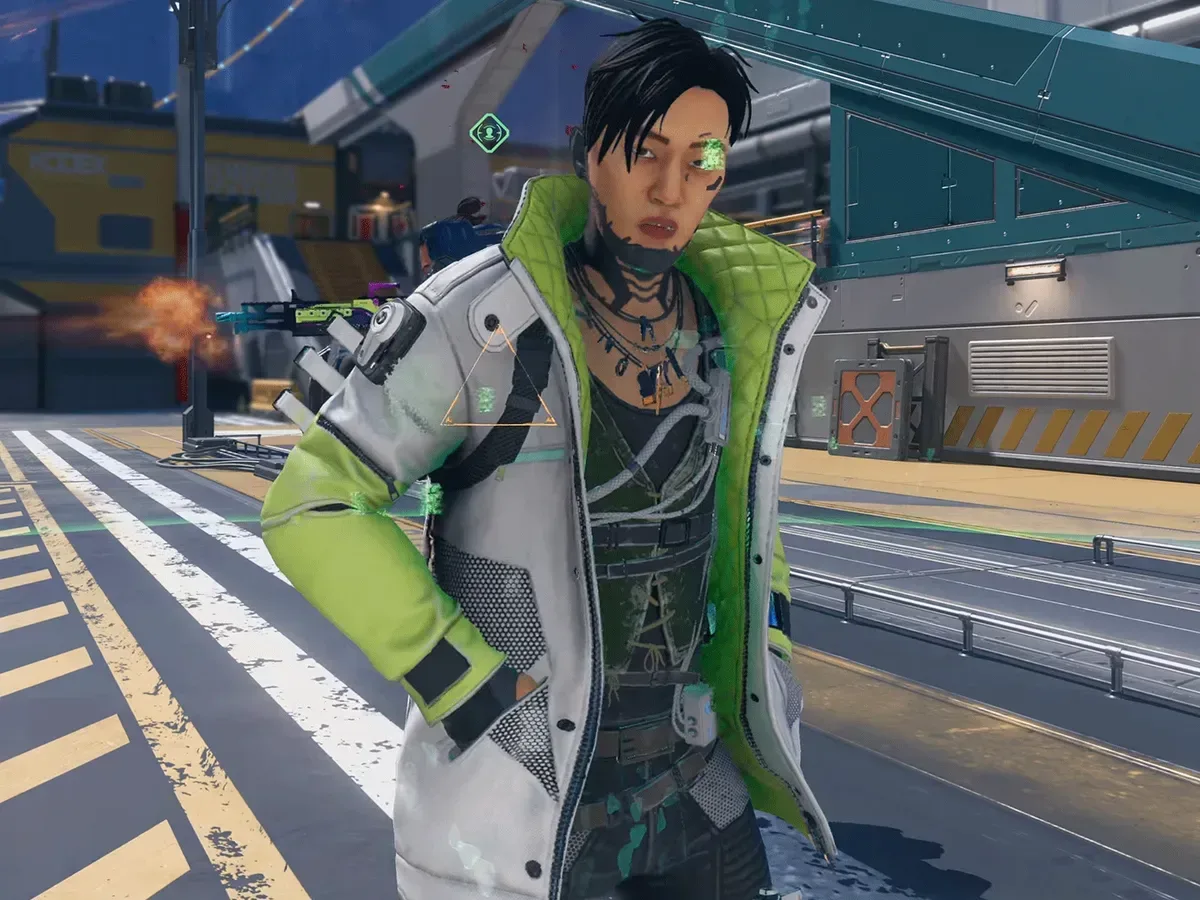
Crypto is receiving a rework called Crypto Rewired. The key change is to his Surveillance Drone, which will use batteries rather than a conventional cooldown. Instead of waiting through a long cooldown after retrieving it, Crypto can pick up the drone and redeploy it. This matters because a cooldown is a forced period before an ability is available again; a battery-driven system changes the constraint from waiting to managing a resource.
The drone is also gaining Sentry Mode, which tags enemies when it sees them. In shooter terms, a tag is valuable information: it identifies an enemy for the squad and can make it easier to coordinate a push, hold an angle or decide whether to disengage. Cipher’s description positions this version of Crypto less as a player who stays back operating a drone and more as an intel-focused Legend who can remain involved as the fight moves.
Crypto’s EMP Ultimate is becoming quicker to activate as well, with deployment available at the press of a button. The stated change removes an extra layer between deciding to use the Ultimate and putting it into effect. Combined with faster drone reuse and Sentry Mode, the rework appears built to shorten the gap between spotting an opening and acting on it.
That does not mean reconnaissance suddenly replaces gun skill or squad coordination. Information only pays off if a team is prepared to use it. But the rework could make Crypto easier to integrate into a mobile team plan: scout, reveal, commit pressure, then reposition the drone rather than treating it as a long absence from the fight. The central adjustment for Crypto players will be learning the battery rhythm and deciding when a redeployment is worth the resource.
Strongholds make loot a visible commitment
Cipher also adds Strongholds, described as an evolution of care packages. Squads must raid a Stronghold to pull out its rewards, which can include crate weapons, corrupted attachments and EVO shield boosts for the team. EVO shield boosts are especially meaningful because they strengthen a squad’s defensive capacity, while attachments and crate weapons can change a team’s immediate combat options.
But Strongholds are not silent loot stops. The raid takes time, and an alarm can be heard by nearby enemies. That turns the feature into a deliberate public commitment. A team gains the chance to improve its loadout and shields, but it tells other squads that an opportunity is available. In effect, the objective creates its own conflict zone.
The decision is therefore likely to revolve around timing rather than simple greed. A squad that is secure, well positioned and ready to defend may judge the possible upgrades worth the attention. A damaged or poorly equipped squad may have to weigh the same reward against the danger of advertising its location. Other teams will have a different calculation: contest the alarm immediately, set up an approach route, or let the raiding squad finish and attempt to intercept it afterward.
Strongholds fit closely with the other Cipher changes. Akimbo Wingman encourages close-pressure scenarios, Crypto gains tools for finding opponents and acting faster on sightings, and Strongholds give teams a loud reason to converge. The result could be more situations in which information, movement and a quick decision matter as much as raw loot quality.
Lifeline’s revive shield returns as mobility improves
Lifeline will receive several buffs, including a reduced drone cooldown, self-healing while gliding, a shorter Ultimate cooldown and improved flight mobility. Most notably, her revive shield is returning. The revive shield is a defensive element tied to bringing a teammate back into the fight, so its return has obvious implications for how safely a Lifeline squad can attempt a recovery under pressure.
The broader package is notable because it addresses both recovery and movement. Reduced cooldowns mean Lifeline’s relevant tools can be available more often, while glide healing and better flight mobility improve her ability to function while moving through the match. The revive shield, meanwhile, reinforces the part of her identity associated with saving a downed teammate in a dangerous moment.
There are still no supplied specifics on the shield’s exact protection, duration or interactions, so it would be premature to declare Lifeline’s final place in the meta. What can be said is that opponents will need to account for the possibility that a knock does not automatically convert into an easy elimination when a Lifeline is present. Finishing the fight may require better angle control and faster coordination around the revive attempt.
Revenant gets faster tools and knock-based Ultimate extensions
Revenant is also receiving buffs. Cipher will shorten his Ultimate cooldown and make his Tactical faster. New upgrades will allow him to extend his Ultimate with each knock, while another upgrade allows Shadow Pounce to Silence players.
A knock is the pivotal state in which an opponent has been downed but is not necessarily out of the match, making any benefit triggered by a knock inherently geared toward maintaining momentum. Extending Revenant’s Ultimate after knocks could reward a team that turns an initial advantage into a chain of pressure. Likewise, applying Silence with Shadow Pounce adds an extra consequence to a movement-based engagement tool.
As with the Lifeline changes, the provided information establishes the direction of the adjustments rather than precise numbers. The practical takeaway is that Revenant players may have more incentive to keep pushing after a successful down, while their opponents may need to be particularly careful about allowing one knock to become a wider collapse.
Ranked Legend Bans begin in Diamond and above
Cipher’s Ranked changes introduce Legend Bans in Diamond lobbies and above. Players will vote to ban Legends, and the Legends receiving the most votes cannot be selected for that match. The system gives higher-ranked players a formal way to remove particular character options before a game begins.
Legend Bans are significant because they affect planning before a squad even lands. Teams that repeatedly rely on one Legend may need a second composition ready, and players who want to specialize will benefit from being comfortable on more than one choice. The feature could also become a response to dominant strategies or frustrating matchups, though which Legends players prioritize cannot be known in advance.
This kind of adaptation is familiar across competitive shooters, where balance changes and seasonal systems regularly force teams to reassess their defaults. For a separate example of how an ongoing multiplayer game can restrict a mechanic after players find an aggressive use for it, see the recent DMZ Possum perk restriction.
What to prepare for on November 3
Cipher is not defined by one isolated buff or one new gun. Its most interesting through-line is the potential for faster, more contested decisions. Dual Wingmans create a close-range damage proposition. Strongholds make valuable rewards audible to nearby squads. Crypto’s revised kit aims to keep reconnaissance closer to the action. Lifeline and Revenant receive changes that can reshape the moments immediately after a teammate is downed or an enemy is knocked. Higher-ranked games add pre-match bans that can alter a team’s intended plan before the first engagement.
Players do not need to assume any one of these changes will be overwhelming. They do, however, have reason to arrive with flexible loadout choices, alternative Legend picks and a willingness to reconsider when a loud Stronghold is worth contesting. Cipher launches November 3, and its early matches should quickly reveal whether the Akimbo Wingman becomes a niche close-range gamble, a major new threat, or something in between.