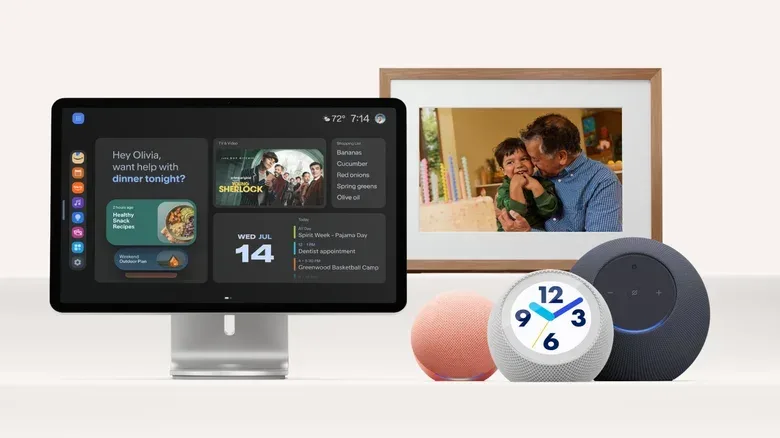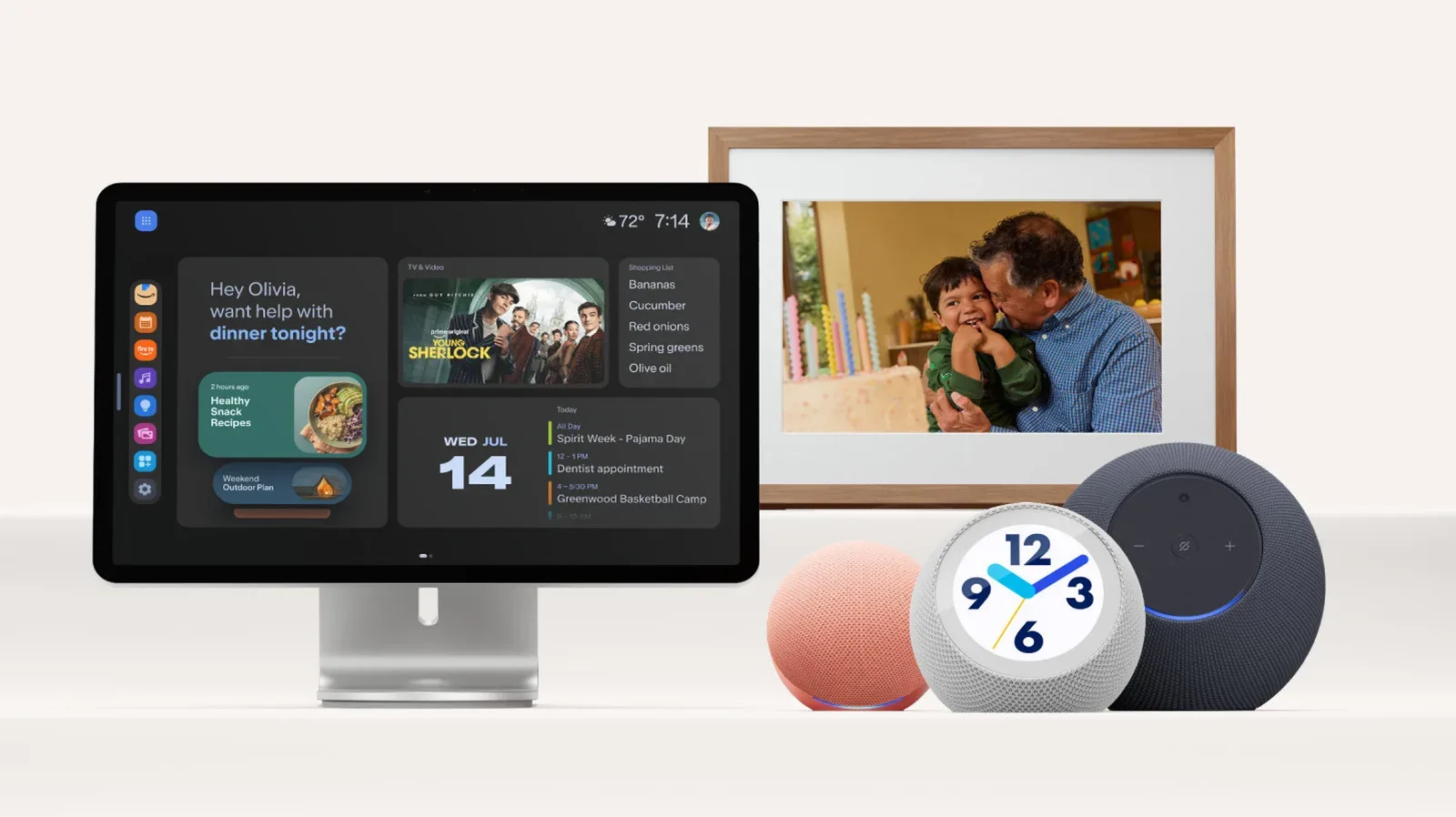
Amazon has expanded its Echo hardware lineup with a notably broader idea of what an Alexa device can be. The new releases include a refreshed Echo Dot, an Echo Studio with a camera, the Alexa Photo Frame, the sleep-focused Echo Time alarm clock and a redesigned Echo Show 16. Rather than merely adding another speaker, the collection pushes Alexa+ into bedside routines, household displays, room-aware audio and camera-based smart-home controls.
The immediate practical distinction is scale. The Echo Dot remains the comparatively accessible $99 entry point, while Echo Time and the Alexa Photo Frame each begin around $200. The Echo Studio with Camera costs $250. At the high end, the wall-focused Echo Show 16 begins at $500, or $570 with its anti-glare Nanomatte display. That spread means shoppers should begin with the job they want a device to do, not simply the largest screen or longest feature list.
Several of the products also deepen Amazon’s use of Alexa+ and what it calls Omnisense. These are not just ways to issue spoken commands. Across the range, the company is proposing that devices recognize voices, identify faces, detect presence, use cameras to understand a scene or use sensors to alter behavior. That can be convenient, but it also makes placement, household consent and comfort with personalization central buying considerations.
Echo Dot gets stronger smart-home credentials
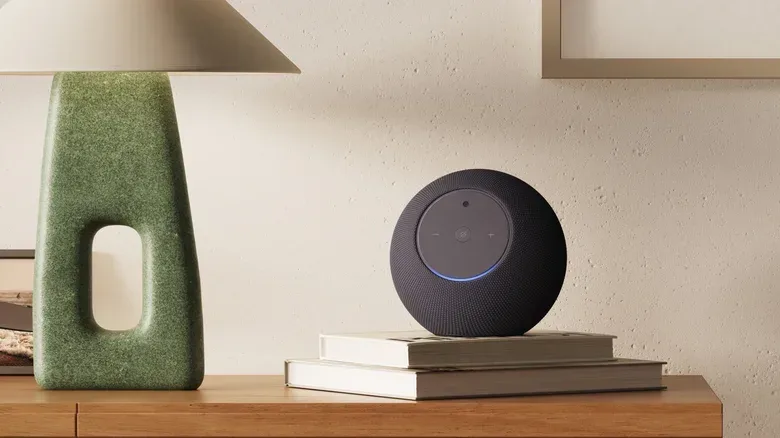
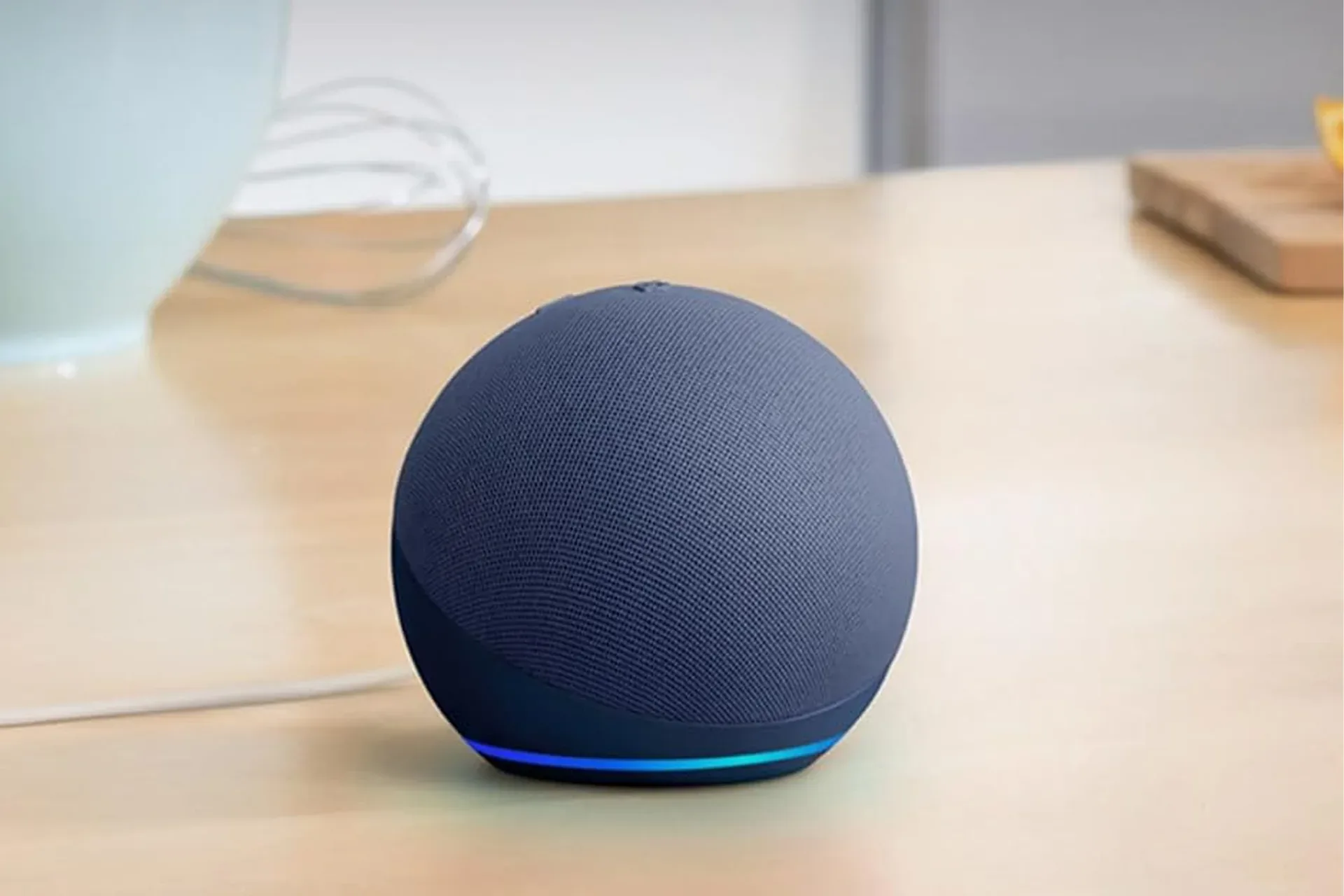
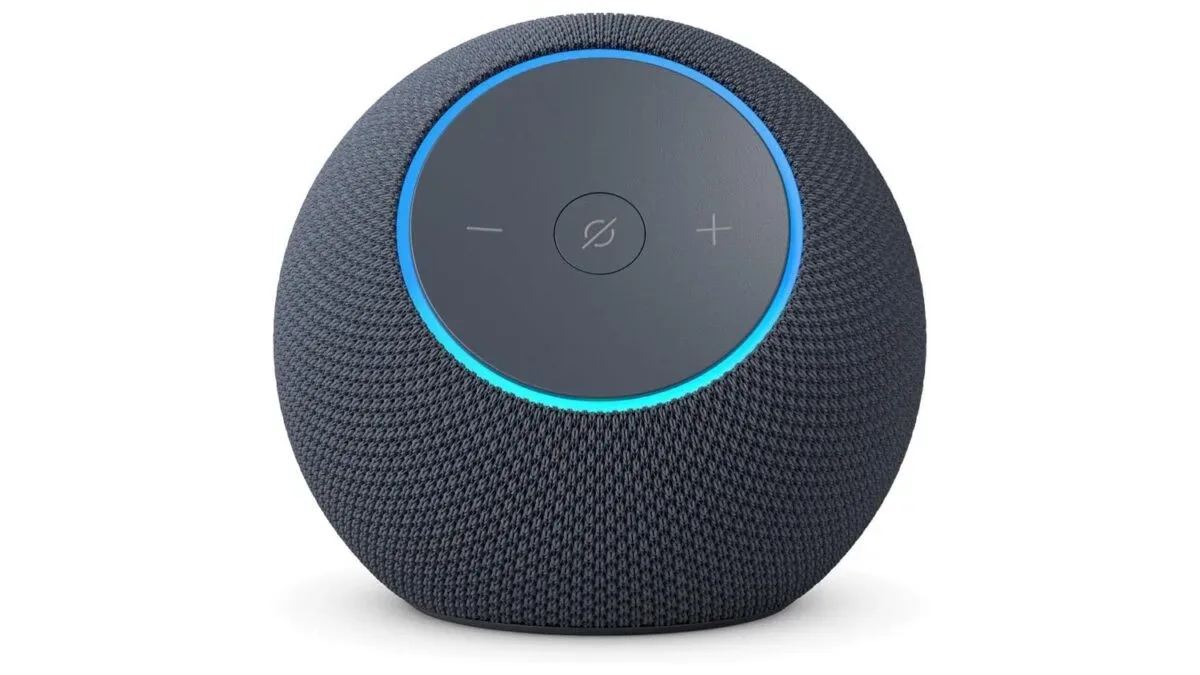
The updated Echo Dot adds an upgraded speaker, a fourth beamforming microphone and revised noise reduction. Beamforming is a microphone-array technique intended to focus on a speaker’s voice while reducing unwanted sound from other directions. In ordinary use, the value of the extra microphone and updated processing is straightforward: Alexa commands may be easier for the device to understand in a room with music, conversation or other background noise. The extent of that improvement will naturally vary by room and situation.
Amazon says the new Dot uses an AZ3 chip for quicker, more natural Alexa+ conversations. It also supports Voice ID, which can recognize a user to surface personal options such as that person’s playlists. Shared households should think about whether individualized responses are genuinely useful in a communal speaker location, and who is expected to use it.
Its most consequential capability may be its role as a smart-home hub. The Echo Dot supports Zigbee, Thread and Matter. Those labels matter because they refer to methods and standards used by smart-home accessories to communicate. Matter is a compatibility standard designed to help connected devices work across ecosystems. Thread is a low-power mesh networking technology, while Zigbee is another established smart-home wireless protocol. Support for all three gives the Dot a more flexible role than a simple voice speaker for homes using compatible lights, sensors and other connected gear.
The speaker can also operate as a Wi-Fi extender for Eero routers, potentially making it relevant to an Eero household that wants broader coverage. Buyers should distinguish that feature from a general promise to improve every network: the stated function is specifically tied to Eero routers.
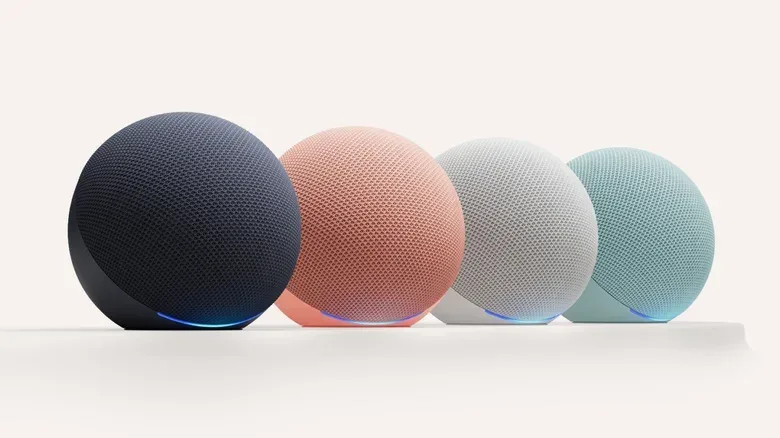
The Echo Dot is available now in graphite, glacier white, agave green and coral pink for $99. A $110 kids edition arrives with one year of Kids+ and Sleep Studio services, including Calm, and is offered in octopus and penguin designs.
Echo Studio with Camera turns a speaker into a room-aware device
The new $250 Echo Studio with Camera adds a camera to Amazon’s higher-end speaker category. Amazon says it does not record footage; its purpose is to provide a live view of a home, such as checking in on pets. The camera also supports face recognition for personalization, while Voice ID provides another recognition route. Alexa+ visual intelligence can answer questions about what the camera sees.
This is a meaningful departure from a conventional smart speaker. A microphone-equipped voice assistant already asks users to accept an always-present connected device in a room. A camera used for a live view, face recognition and visual questions raises a different set of decisions. A prospective owner should consider not just whether the camera has a stated recording function, but where the Studio will sit, whether visitors and other residents are comfortable with it, and whether a camera is necessary for the task they want the speaker to perform.
The more novel feature is Advanced Room Adaptation. It uses Omnisense to estimate how many people are in a space, then adjusts sound for the people present and the room’s acoustics. It can also change the volume based on the listener’s location. In technical terms, this is an attempt at automatic audio calibration: rather than leaving a single sound profile in place, the speaker uses information about the room to change output dynamically.
That could be appealing in a frequently used living room where people move around, talk over entertainment or change seats. It is also an example of why the camera cannot be viewed as a bolt-on feature here: its sensing functions are part of the device’s audio proposition. The Studio with Camera can be used in an Alexa Home Theater system, potentially placing it in the same entertainment space as a TV or console. For readers building out a living-room setup around games and media, our look at Nintendo Wii fighting games with strong multiplayer identities is a reminder that shared-room entertainment has many demands beyond raw audio output.
An optional stand for the Echo Studio with Camera costs $40. The existing, regular Echo Studio will remain available.
Alexa Photo Frame puts AI selection beside family pictures
The Alexa Photo Frame is a new 10-inch touch-screen smart frame designed to resemble an ordinary picture frame. It connects with Amazon Photos, which offers unlimited storage to Prime subscribers, and includes Alexa+.
Its key software pitch is curation. A user can ask Alexa to examine several photographs of a person and choose the strongest images to send to the frame. Voice notes can be attached to photos as well. This shifts the product from a passive slideshow display to a device that can help sift through a larger library.
That sounds useful for people whose photo collections are extensive but poorly organized. Still, the benefit depends on a user being happy to connect their photo library and delegate some selection decisions to the assistant. “Pick the best” is inherently subjective: an image-selection tool may prioritize clarity or a recognizable face, whereas a family member may favor a candid moment, a particular trip or a photo with emotional significance. The manual touchscreen and Amazon Photos integration remain important alternatives to relying on an automated request.
The black-frame model begins at $200. Versions with real birch or walnut frames cost $229. The relatively modest difference makes the finish an unusually direct part of the purchase choice, especially for a device intended to live in a visible area rather than hide near a router or television.
Echo Time makes sleep sensing the main event
Echo Time is a $199 smart alarm clock built around wind-down and wake-up routines. Its central component is an ultrasonic transducer, which uses sound frequencies beyond normal human hearing to detect whether a person is asleep. Amazon says this lets Echo Time begin waking a user during a lighter part of a sleep cycle, from 10 to 60 minutes before the required wake time. Light and a choice of alarm tones are part of the wake-up system.
The underlying aim is different from a standard alarm that rings at one fixed minute. Instead, the clock is intended to use sleep detection to choose a window within a user’s requested schedule. That makes the specified wake time and the chosen early-wake range especially important settings: the device is not presented as an open-ended sleep tracker that can ignore a deadline.
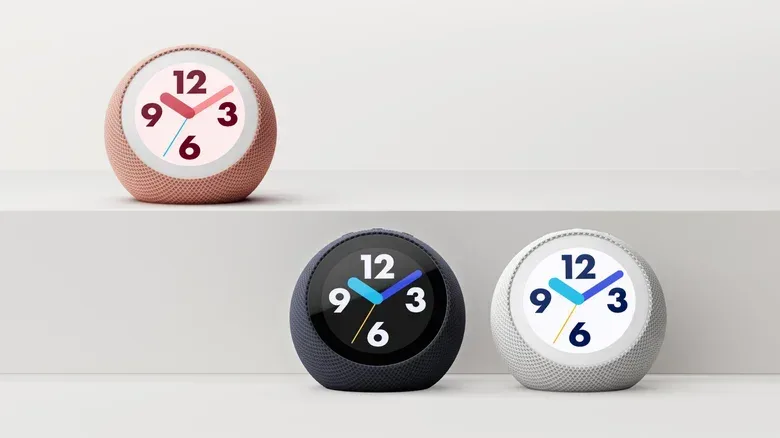
For a bedroom device, the hardware choices will matter as much as the sleep premise. Echo Time has no camera, hundreds of clock faces and a circular 2.3-inch display that can dim to below 0.3 nits. A nit is a measurement of screen brightness, so the low-brightness claim is intended to address the concern that a bedside display could be disruptive overnight.
Echo Time is available now in graphite, glacier white and coral pink. A $210 kids model includes Sleep Studio, one year of Kids+ and alternative clock faces; it comes in grape and cosmic lime styles. Parents can manage a child’s Echo Time, a relevant control when a sleep device also connects to an assistant and subscription-backed services.
Echo Show 16 becomes a wall-mounted household dashboard
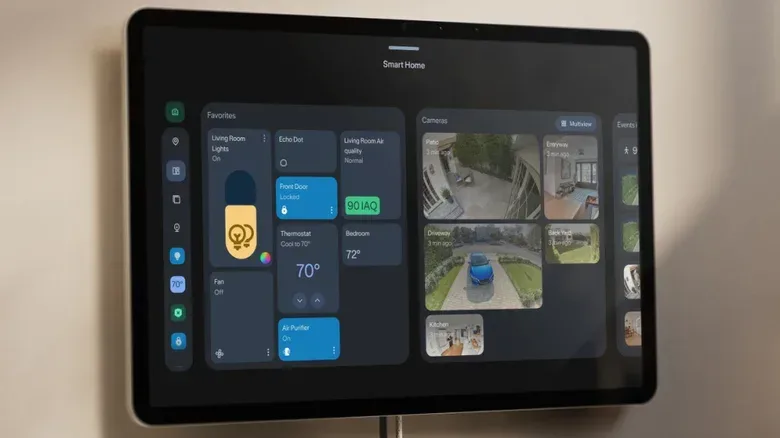
The Echo Show 16 is the most ambitious device in the group. Amazon says the 16-inch model is 40 percent thinner than previous versions, with bezels 80 percent thinner. It can be ordered with a Nanomatte anti-glare display, using the same anti-glare technology Amazon used in the Alexa Tablet Pro 12.
Its screen can switch among a family organizer, a photo frame, a Fire TV interface and a smart-home hub. The last of these brings Alexa Home Map, which can use cameras to map a home and show the location of connected devices. The possible advantage is visual management: a household could potentially identify and control smart-home gear spatially instead of navigating a plain device list. Omnisense can also detect entry into the room and automatically change settings such as a thermostat.
It is worth treating that as a convenience-versus-complexity choice. A mapped home dashboard can reduce friction for a household with many connected devices, but it also introduces cameras and room mapping into the management model. The right question is not whether mapping is clever; it is whether it solves a real problem in that home.
The Show 16 will organize Alexa conversations into topic-based cards that users can revisit and pin. Those cards are also available in the Alexa app and on the web. This makes the device more like a shared reference surface for prior assistant interactions rather than a screen that only reacts in the moment.
Audio hardware includes four beamforming microphones, eight woofers and two tweeters. The Show 16 has a 13MP camera that Amazon says can recognize users from up to 17 feet away, and it is the first Echo Show with night vision support. There is a physical button to disable both the camera and microphones. For a device designed to be prominently displayed and potentially wall-mounted, that hardware control is particularly relevant.
Pre-orders are open now, with shipping expected by the end of the year. The standard Echo Show 16 costs $500, while the Nanomatte version costs $570; Amazon is offering a $100 discount to customers who pre-order. A standard stand costs $70, and a tilt-and-swivel stand costs $125. Since the Show 16 is primarily intended for wall mounting, prospective buyers should factor the intended placement and any stand expense into the headline price.
Which Echo device fits which need?
- Echo Dot: The practical option for voice control, smart-home protocol support and Eero extension features without a large screen or camera.
- Echo Studio with Camera: Aimed at listeners who want room-adaptive audio, Alexa Home Theater compatibility and camera-enabled visual functions, with the associated privacy considerations.
- Alexa Photo Frame: Best suited to an Amazon Photos household that wants a dedicated, visible display and is interested in Alexa-assisted photo curation.
- Echo Time: The specialized bedside choice for users interested in sensor-guided wake-up timing, a dim display and a camera-free design.
- Echo Show 16: The premium household screen for people who specifically want a large wall-oriented family, entertainment and smart-home dashboard.
The common thread is that Amazon is moving Alexa hardware beyond the familiar speaker format. The useful features are increasingly tied to recognition, sensing and context: who is speaking, who is in the room, what a camera can see, what appears on a wall display and when someone may be asleep. Buyers have more specialized choices than before, but they also have more reason to decide exactly how much sensing they want in each room.