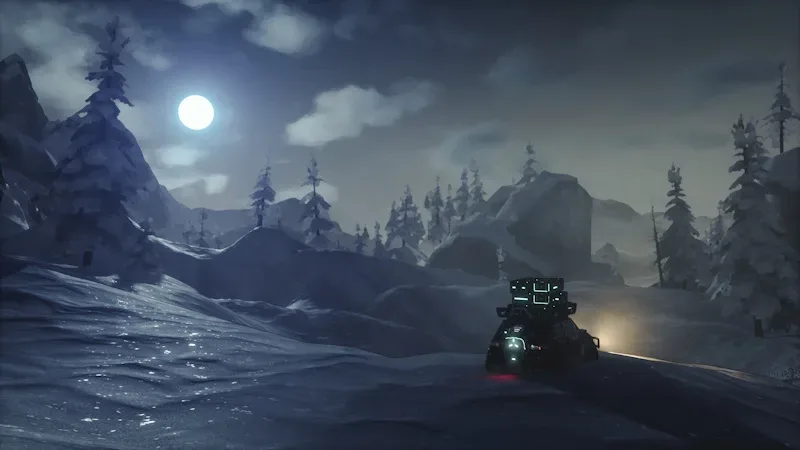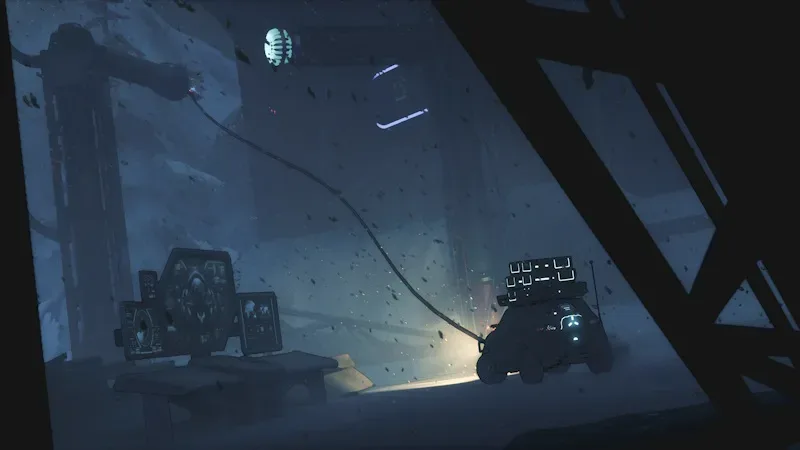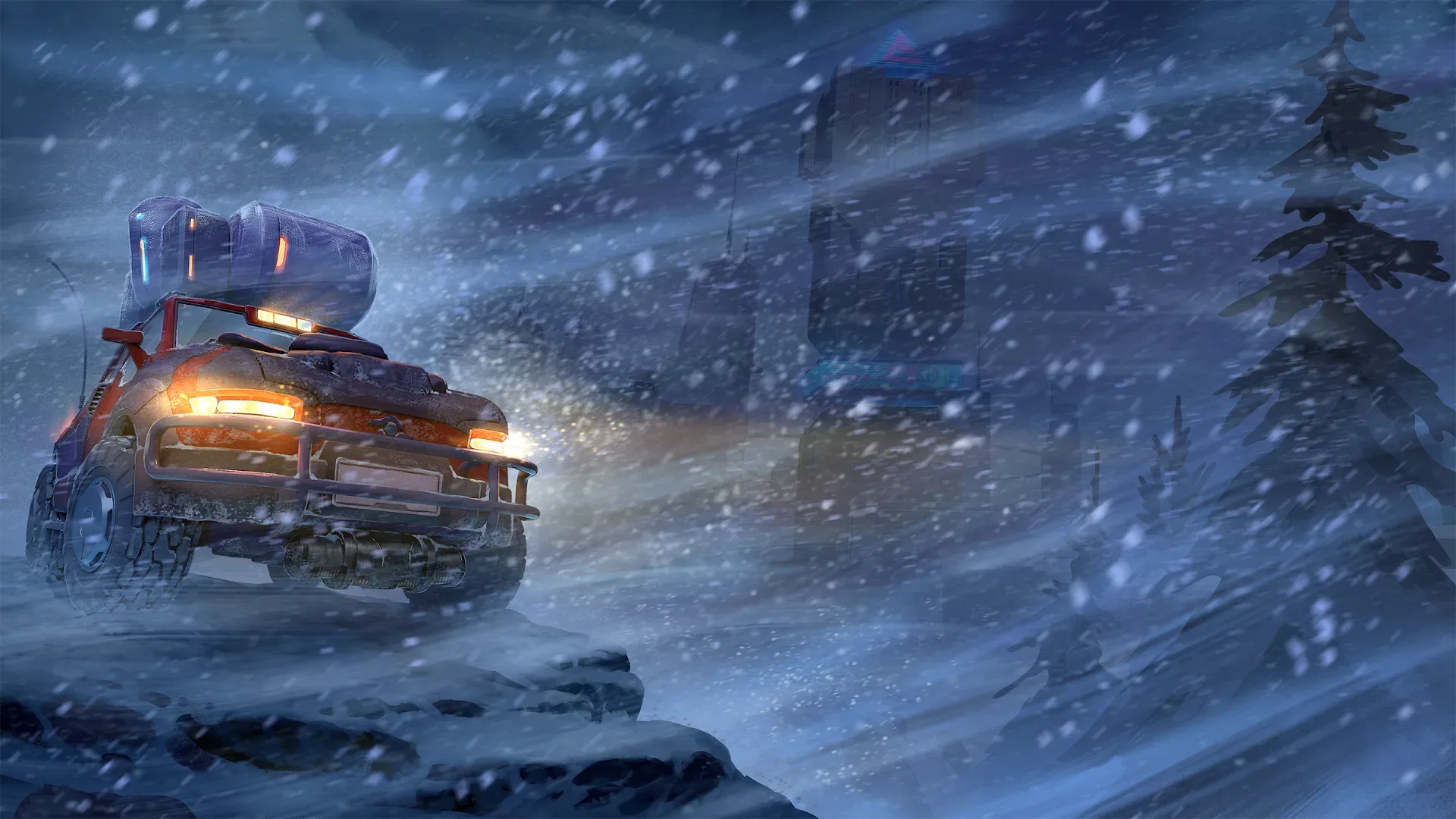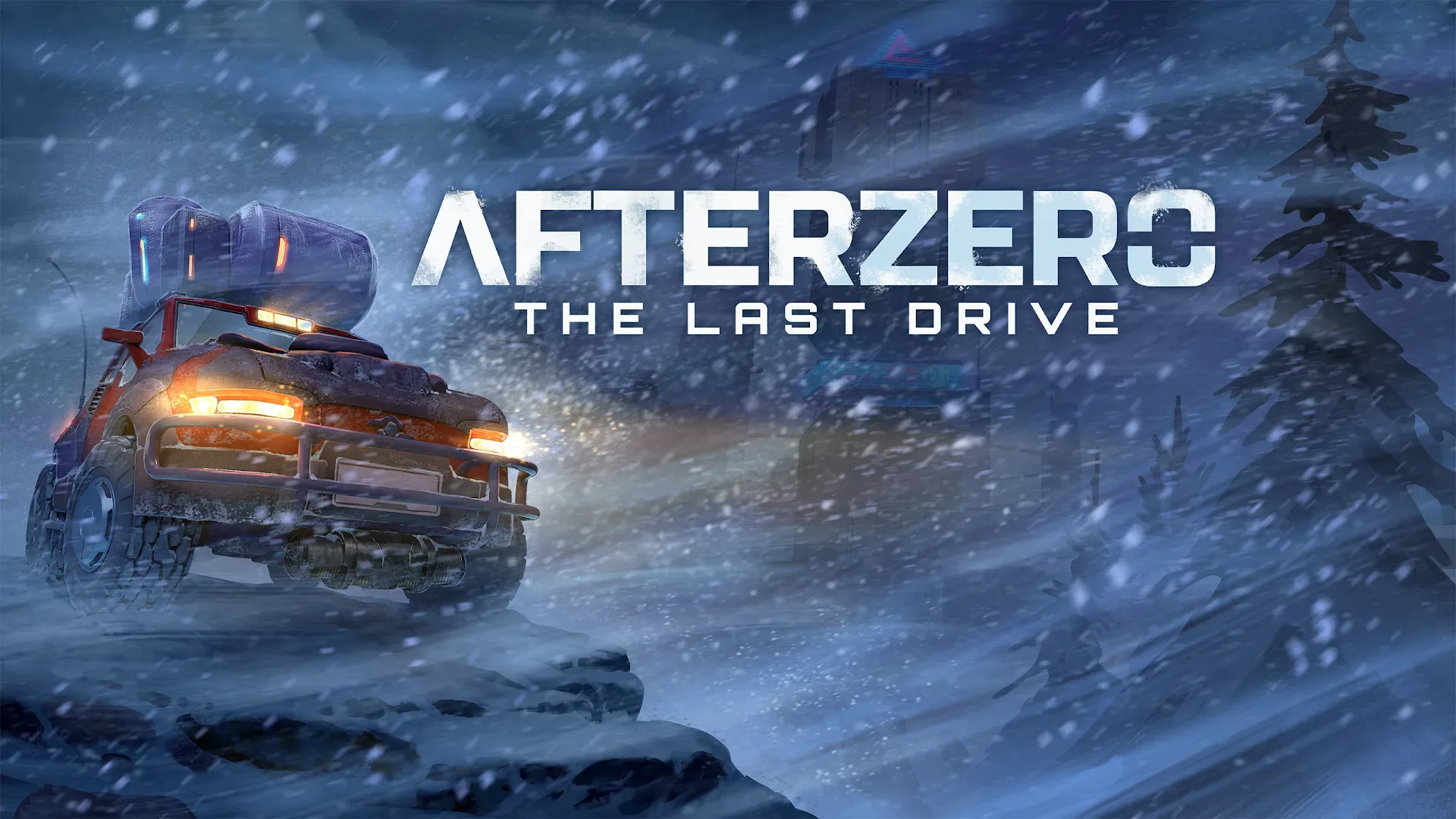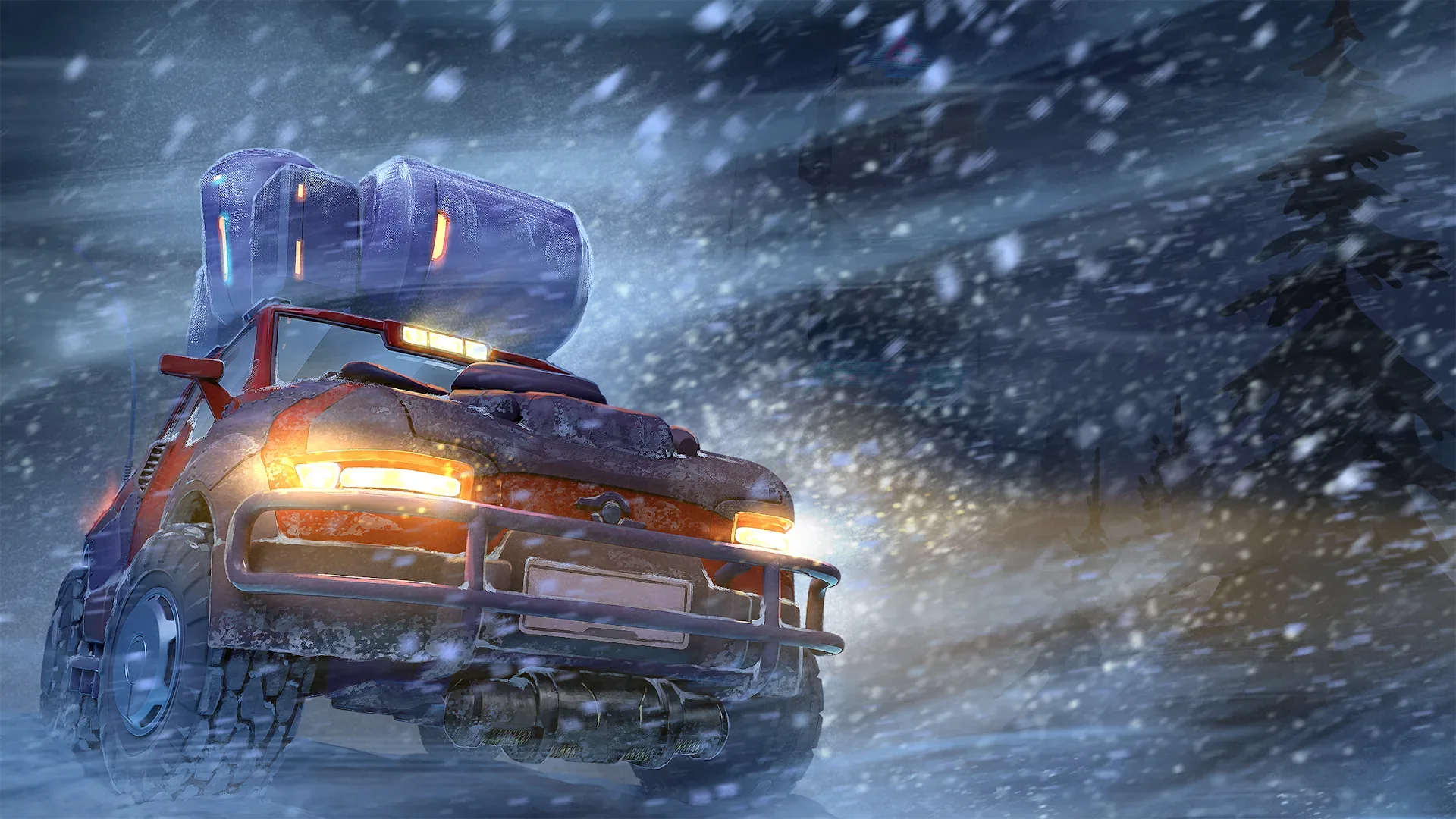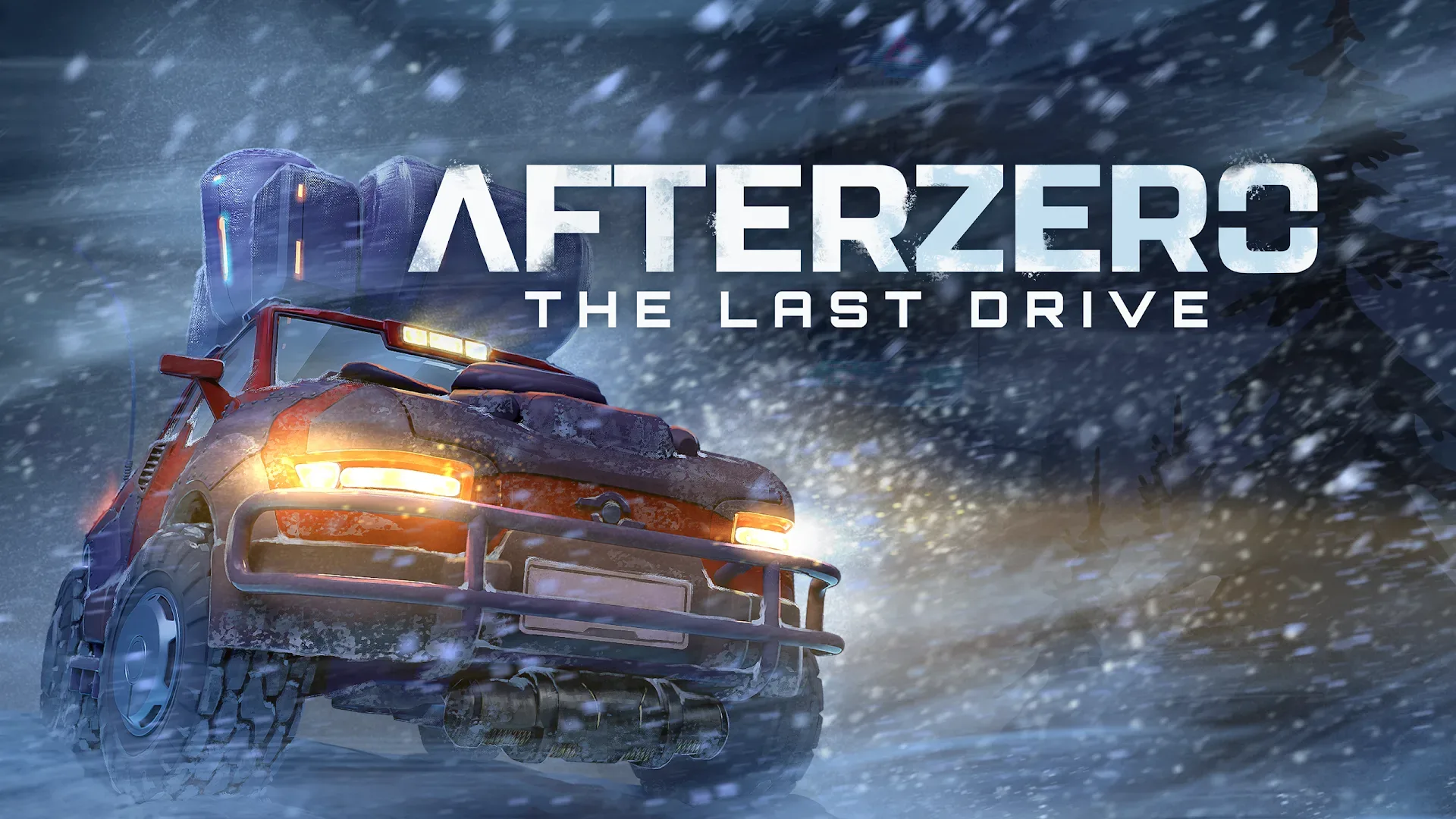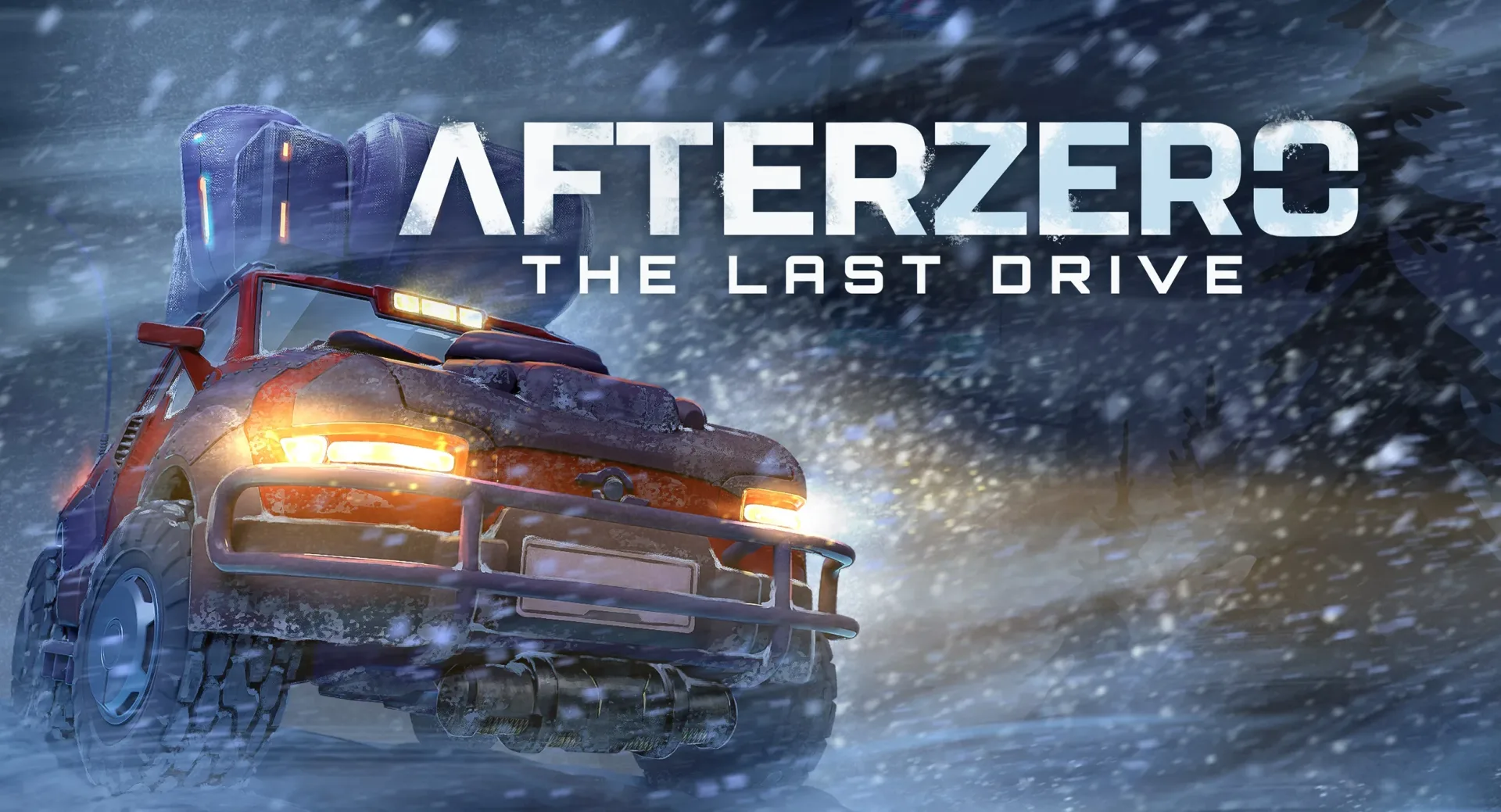
There are plenty of games that ask players to survive the end of the world. AfterZero: The Last Drive is taking a colder and more vehicle-focused route through that familiar disaster: an endless winter, a battered off-road truck, dwindling supplies and a destination that may be more hope than certainty.
Developer 3DClouds has revealed the original single-player survival driving game for PC, PlayStation 5 and Xbox Series X|S, with a planned 2027 release window. It is set in a post-industrial wasteland after an event called the Frostfall, which has left survivors scattered through a landscape of ice and snow. The central objective is to make for Sunnyland, a rumored refuge where the cold is supposedly less punishing.
The pitch has several connected parts rather than a single driving hook. Players will explore, scavenge, solve puzzles, gather materials, improve a safe haven and care for its inhabitants. The journey is made in an upgradeable off-road vehicle called Old Grizzly, with a small drone named T3DDY along for the trip. A buried AI mystery and hostile machines provide the larger story thread behind the trek.
Old Grizzly is the center of the expedition
AfterZero positions its vehicle as more than transport between mission markers. Old Grizzly is the means of reaching abandoned cities, frozen lakes and mountain forests, but it is also a platform that can be improved as players collect materials. The announced tools and abilities include grappling hooks, EMPs, ice tires and nitrogen guns.
Those names suggest distinct practical purposes, though the exact mechanics have not been detailed. EMP is short for electromagnetic pulse; in games, it commonly describes a temporary disruption of electronics. In AfterZero, that sits naturally alongside the premise that machines across the wasteland are controlled by an old AI. Ice tires, meanwhile, point toward traction being an important concern in the frozen environment. Grappling equipment could expand access to areas or help address traversal problems, while nitrogen guns are another vehicle-mounted capability named as part of the upgrade path.
What matters is the stated loop: scavenged materials feed vehicle upgrades, which should in turn allow more capable expeditions. That is a different emphasis from a racing game’s focus on beating times or opponents. The vehicle is described as a survival asset. Its usefulness is tied to the player’s ability to go farther, retrieve supplies and return from a dangerous area with enough to improve the next outing.
The world is also meant to pressure that decision-making. Night arrives, storms emerge and supplies run low. In practical terms, the advertised tension is not simply whether players can locate a resource, but whether it is worth risking a trip through worsening conditions to secure it. Retreating to safety is explicitly part of the balance.
“AfterZero: The Last Drive’s oppressive atmosphere and somewhat unforgiving campaign is a big departure for us at 3DClouds,” said 3DClouds CEO Francesco Bruschi.
That “unforgiving” description is worth reading carefully. It establishes a desired tone, but it does not yet explain such essentials as death penalties, checkpoint structure, fuel systems or how severe weather changes vehicle handling. Those are still open questions. What has been clearly outlined is a campaign built around exposure, scarcity and the judgment call between pressing forward and coming home.
A refuge that needs more than a fresh coat of snow
Expeditions lead back to Firewall, the game’s safe haven. Survival there is not presented as an automatic reward for returning from the wilderness. Residents require food, medicine and heat, while a train or locomotive also needs repairs. Players will work with survivors including Pops, Nova and Sak as they improve equipment and prepare for further journeys.
This gives resource collection a stated human purpose. Food, medicine and heat are basic survival needs, while locomotive repairs are connected to forward progress. The announced setup suggests that the camp and the road are dependent on each other: travel outward to bring back what the refuge needs, then use the refuge’s improvements to support the next departure.
It also means “base building” should not be mistaken for a promise of unrestricted construction. The announced material says players can repair and improve their refuge, but it does not specify building placement, customization options, staffing systems or a detailed management layer. At this stage, Firewall is best understood as a safe-haven progression hub with survivor needs, not as a fully defined settlement simulator.
The locomotive is an especially notable part of the premise because it offers a concrete reason to look beyond the immediate camp. Repairing it is named among the tasks players undertake during expeditions, and the train’s condition is directly linked to the community’s preparation. Whether it becomes the final means of escape, a mobile base or something else has not been confirmed.
The route to Sunnyland includes an AI mystery
Sunnyland is described as a rumored location where winter is less severe, not as a guaranteed sanctuary. That uncertainty gives the journey a useful narrative edge: the destination is a motive for escape, but the game’s description leaves room for the possibility that reaching it will require uncovering what devastated the world in the first place.
An old AI controls machines scattered around the wasteland. Players can hack, disable and exploit machine glitches to learn what is controlling that AI and how to escape. Hacking, as used here, refers to interacting with electronic systems rather than merely fighting them; machine glitches imply that failures in those systems may be turned into opportunities. The announcement does not define the interface or puzzle format for these activities, so it would be premature to assume a particular hacking minigame or enemy behavior.
Still, the AI angle gives the game a second layer beyond weather and supplies. The immediate survival problem is cold, scarcity and a harsh open world. The longer-term problem is understanding the technology governing the hostile machinery and using that knowledge to find a way out. The combination could make exploration serve both material progression and story discovery.
What is confirmed—and what players should keep in perspective
The confirmed foundation is substantial: AfterZero is a story-driven, single-player game; it features a post-industrial winter wasteland; Old Grizzly is upgradeable; T3DDY accompanies the player; Firewall houses survivors with needs; vehicle tools include grappling hooks, EMPs, ice tires and nitrogen guns; and the old AI can be investigated through hacking, disabling machines and exploiting glitches.
There are also clear limits to what has been shared. No price, precise launch date, performance targets, multiplayer mode or detailed accessibility information has been announced. The project is described as an open world, but its size, structure and whether progression is strictly gated by upgrades have not been laid out. Likewise, the game has referenced puzzle solving without identifying the kinds of puzzles players will face.
That distinction matters for a game with several systems in its premise. “Survival driving” can mean many things, from a fairly directed story campaign with occasional scavenging to a deeper sandbox where each outing is shaped by shifting resources and persistent hazards. The information available supports the broad promise of exploration and survival trade-offs; it does not yet settle the finer design questions.
Platforms, wishlisting and the road ahead
3DClouds plans to bring AfterZero: The Last Drive to PC, PlayStation 5 and Xbox Series X|S in 2027. The game is listed for wishlisting on Steam, Xbox, PlayStation, the Epic Games Store and GOG. A trailer has also debuted, offering the first public look at the project’s frozen-road setting.
For PC players keeping an eye on the release calendar, it joins other newly announced projects headed to the platform, including One More Plate!’s planned Steam launch. AfterZero’s own release remains further away, and its current 2027 window leaves plenty of room for the studio to clarify the systems that will define each expedition.
For now, the appealingly specific image is a survival game built around the condition of a truck and the people waiting for it to return. Old Grizzly must be equipped for the next stretch of ice; Firewall needs warmth and supplies; the train needs repair; and Sunnyland remains somewhere ahead, if it exists at all. That is a strong framework for a wintry road story. The remaining question is how demanding the game makes the road itself when players finally take the wheel.