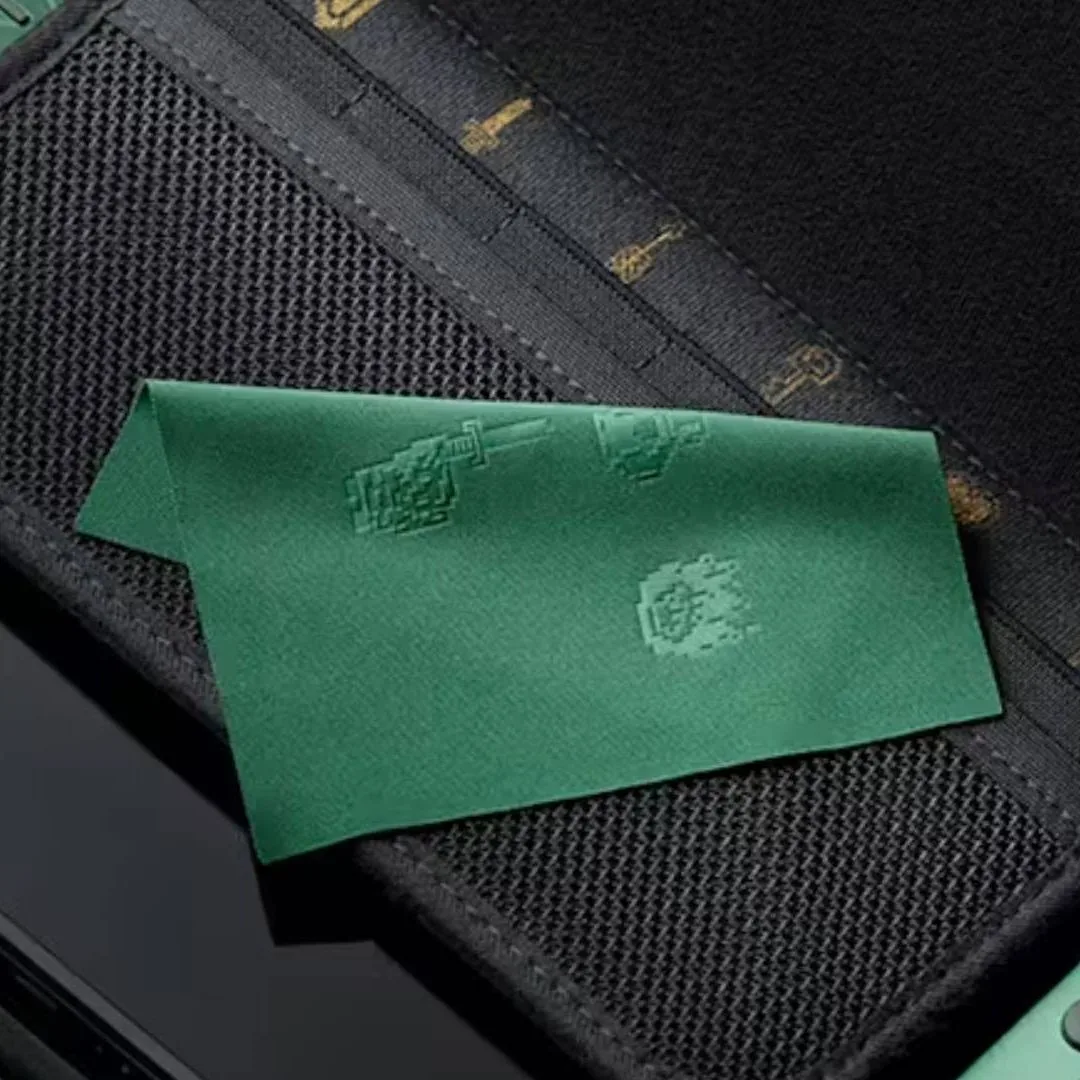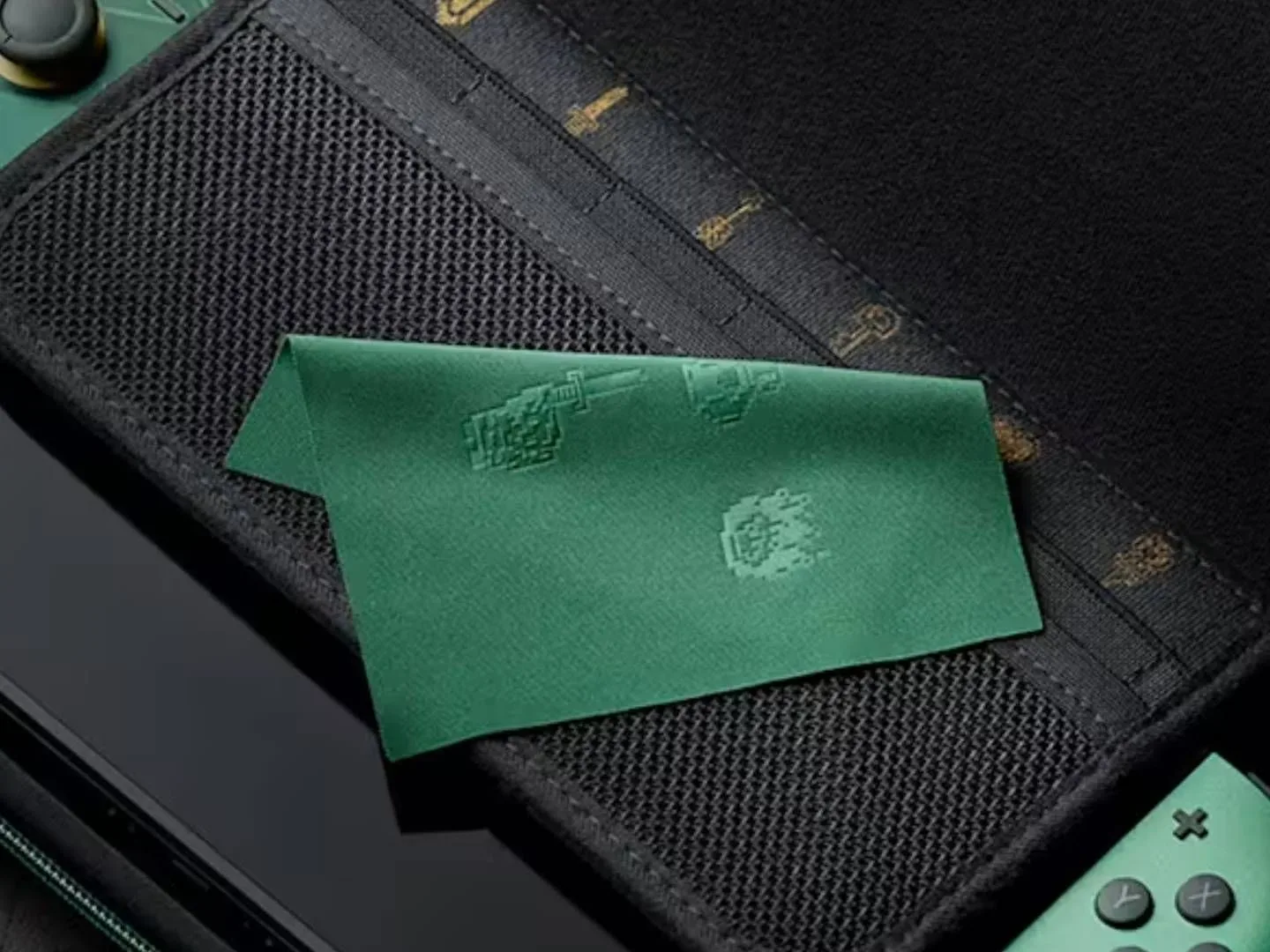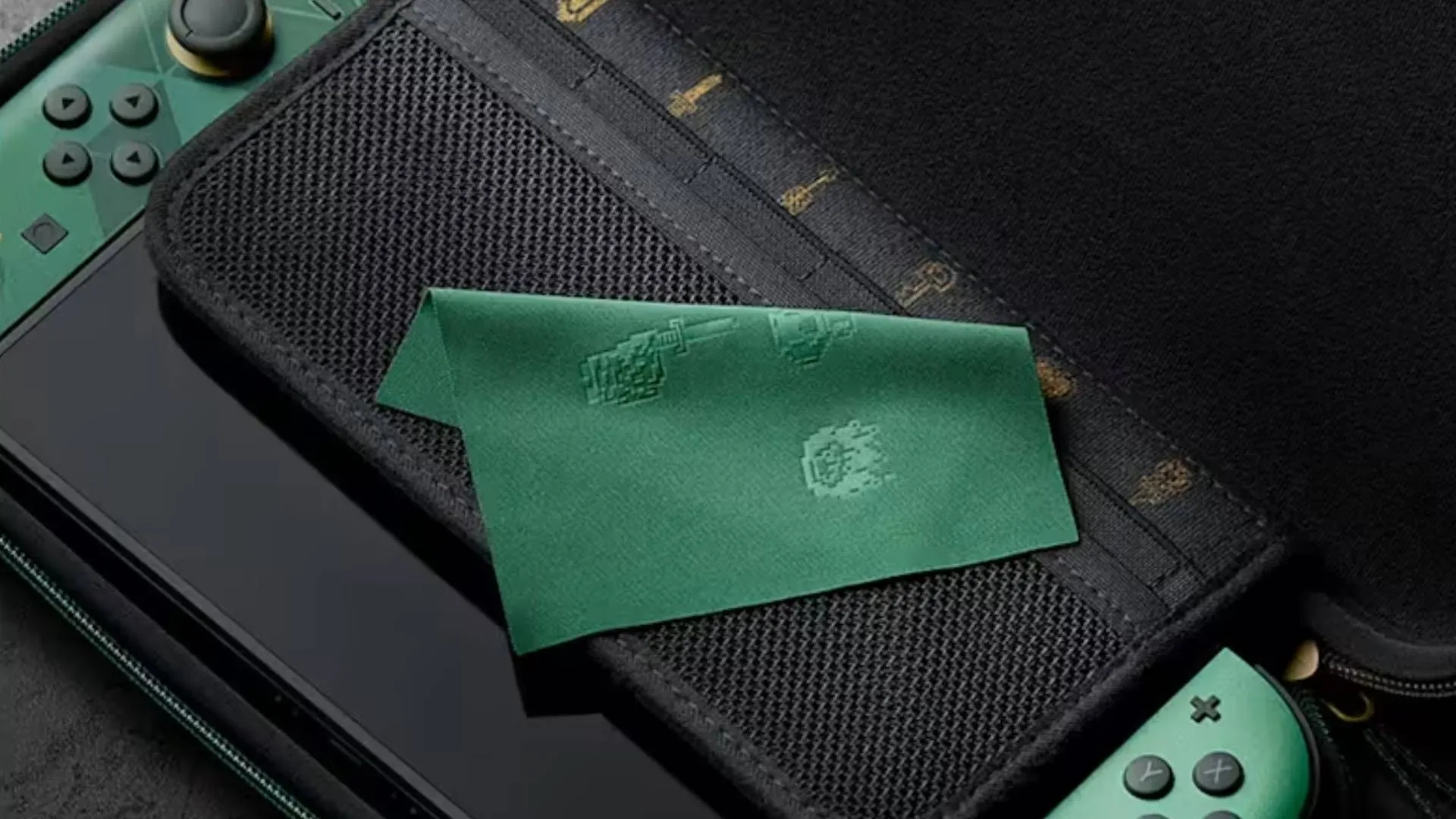
Nintendo’s 40th Anniversary The Legend of Zelda Switch 2 Carrying Case & Screen Protector set has the sort of visual appeal designed to make a fan’s rupees vanish. Its gold Triforce styling, smaller franchise references and anniversary branding make it an immediately recognizable piece of Zelda hardware. At $39.99 on Amazon, though, it presents an awkward choice: buy a handsome commemorative accessory, or buy a case principally intended to keep a costly handheld safe.
Those two goals can overlap, but they do not always do so. The Zelda edition appears to share its basic design with Nintendo’s standard Switch 2 Carrying Case, which launched alongside the console. If that resemblance reflects the same construction, the anniversary version’s main upgrade is its presentation rather than its protective capability. That is not a trivial thing for collectors, yet it matters greatly for players who expect a travel case to absorb the minor chaos of bags, desks and everyday transport.
A display piece first, a protection purchase second
The strongest argument for the 40th Anniversary case is straightforward: it looks like Zelda merchandise should look. The Triforce motif gives it a much more appealing identity than a plain official case, while the anniversary logo turns a functional accessory into something that can earn shelf space alongside other franchise memorabilia.
For a buyer building a Zelda-themed setup, that can be enough. Collectible appeal is personal, and a design that makes someone happy whenever they pack their console has real value. But it is important to distinguish that value from practical value. Anniversary branding and attractive artwork do not automatically change what the case can hold, how much impact it can resist, or whether its included screen coverage is suitable for long-term use.
At the listed $39.99 MSRP, the case is notably expensive for a pouch-style product without a hard-shell outer structure. A pouch case is generally a softer, slimmer form of carrier: useful for keeping a console separated from loose items and avoiding surface scuffs, but not inherently as resistant to crushing or impacts as a rigid case. A hard-shell case uses a firmer exterior intended to provide more structure around the device. Neither format is universally right, because bulk and portability matter, but buyers should know which compromise they are making.
That distinction is the center of the Zelda case debate. The anniversary design may be the prettier option, yet its reported design does not offer the kind of substantial outer protection that many people expect when spending $40 on a console accessory.
The screen protector wording deserves scrutiny
The product name also includes a screen protector, which can make the set sound more complete than it is. The included protection is described as a thin plastic film rather than tempered glass. Those are not interchangeable materials.
Plastic film is a thin layer applied over a display. It can help with light scratches, but it does not provide the same rigid feel or degree of impact resistance commonly associated with tempered glass. Tempered glass protectors are separate, hardened glass layers made for screens; the supplied material describes the component, not a guarantee that every glass protector performs identically. Still, the basic difference is meaningful when comparing bundles at similar prices.
In practical terms, the Zelda set should not be treated as though its screen accessory alone closes the gap with a package that includes tempered-glass protectors. Players who specifically want glass protection may need to budget for it separately, increasing the effective cost of the official case.
Orzly’s larger case puts function ahead of theme
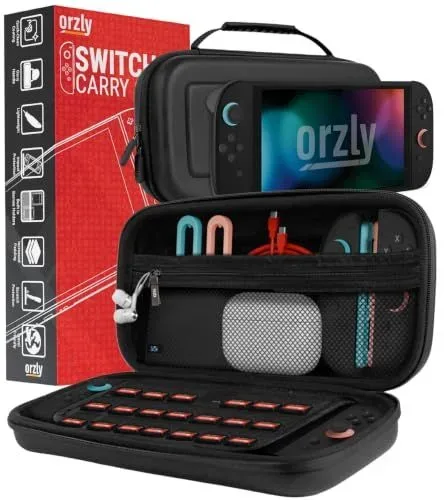
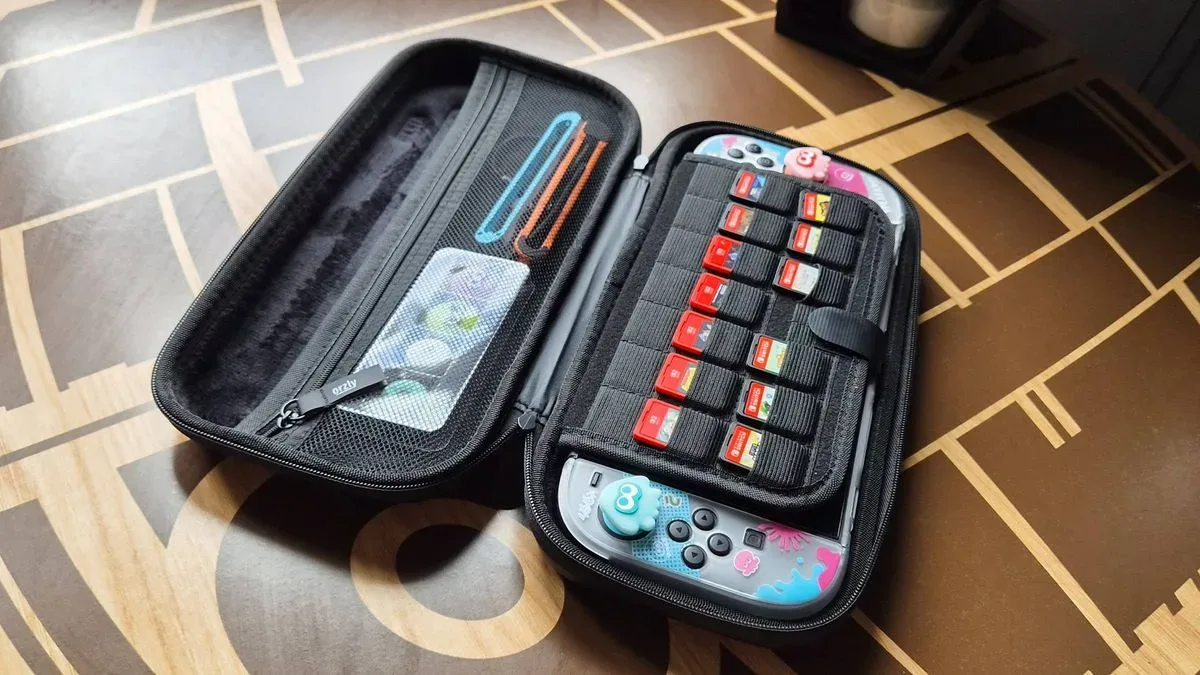
The clearest alternative for protection-focused buyers is the Orzly Carrying Case for Nintendo Switch 2. It was listed at $26.91 on Amazon at the time of the comparison, below the Zelda case’s $39.99 price. Unlike the pouch-style official model, it has a hard-shell form factor and is described as having room for 21 physical games as well as small accessories.
That capacity could matter most to players who still purchase cartridges. A case that carries the console, a sizable portion of a library and smaller essentials reduces the need to put game cases or loose cards elsewhere in a backpack. It also gives the buyer a clearer hardware-protection rationale for the purchase rather than asking the design alone to carry the price.
There is a cost to that utility: the Orzly case is substantially bigger. Anyone using a compact bag should measure expectations carefully, because a heavier, roomier shell is not automatically convenient. This is the familiar portable-accessory trade-off. More structure and storage normally means more bulk. Players who only take their Switch 2 on short trips and want the smallest possible profile may reasonably prefer a slimmer pouch.
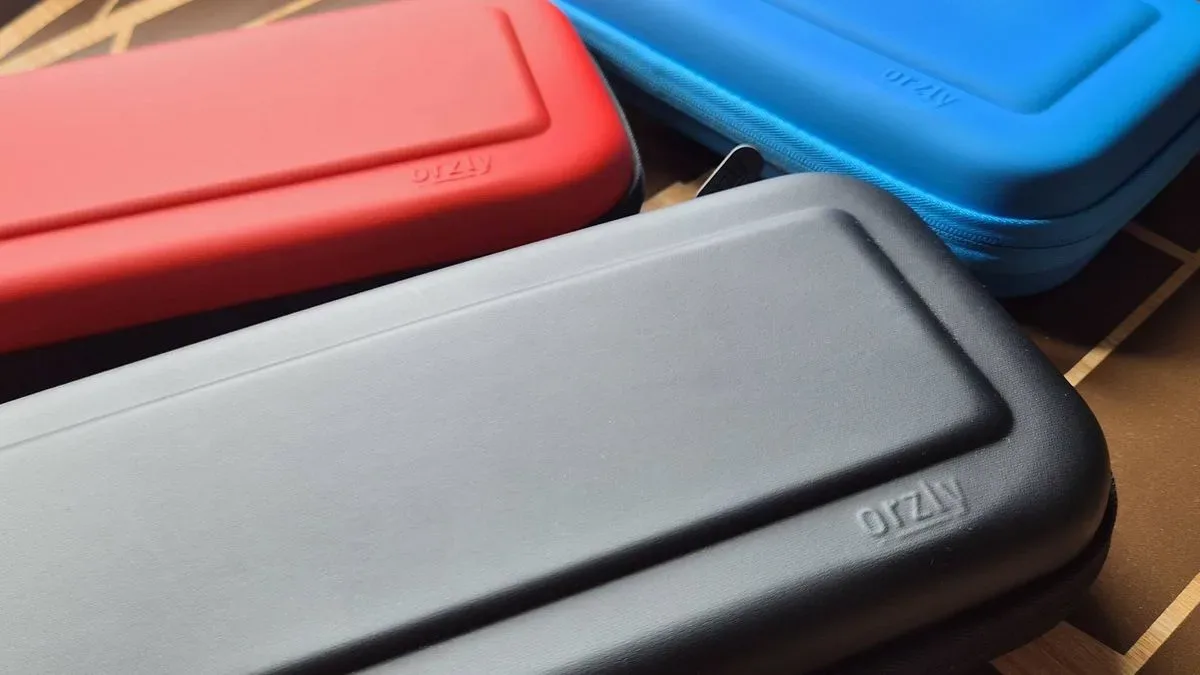
For shoppers who value color options but do not require Zelda branding, the Orzly line is also said to come in numerous finishes, including a red-and-white “Poke” colorway. It does not replace a gold Triforce design, but it does show that a buyer does not necessarily have to choose between a plain black case and an anniversary-priced official accessory.
A same-price bundle changes the calculation
There is also an Orzly bundle priced at the same $39.99 as the Zelda case. Its contents are listed as the carrying case, two tempered-glass screen protectors, a grip case, wired earbuds, a USB-C charging cable, a game-card holder and a stylus.
That inventory makes the contrast stark, even without assuming every included item is equally useful or of equal quality. A grip case is a cover intended to be held around the hardware, while a game-card holder gives cartridges a dedicated place rather than leaving them loose. A USB-C cable can be useful as a spare charging connection. Buyers should assess each component for their own needs, and the available information does not establish the quality of every bundle extra. But at identical headline prices, a package with multiple distinct accessories is plainly offering a different kind of value proposition.
It also highlights why the official Zelda case is best understood as a commemorative accessory. Its price makes more sense when a buyer assigns meaningful value to the licensed design and 40th Anniversary packaging. It makes less sense as a pure checklist comparison of protection, capacity and included equipment.
A compact compromise: PowerA’s Slim Case
Not everyone wants the oversized protection of a hard-shell carrier. The PowerA Slim Case for Nintendo Switch 2 is another pouch-style option, normally listed at $20 and discounted to $16.99 during the cited week. It is compact, includes space for physical games, and its game-storage section can convert into a makeshift stand for propping up the console.
A stand is a modest but useful feature for tabletop play. It does not make a slim case as protective as a hard shell, but it adds a clear function that the buyer can use away from home. At a much lower price, it also leaves room in the budget for a separate screen protector or other accessory.
The PowerA option will not satisfy someone seeking a 40th Anniversary Zelda item, and it is not positioned as a direct aesthetic rival. It does, however, make an important point: a small case does not have to surrender game storage or all added utility just to preserve a compact shape.
What Switch 2 owners should decide before buying
Rather than treating these cases as versions of the same product, prospective owners should sort themselves into one of three groups:
- Collectors and dedicated Zelda fans: The official 40th Anniversary case may be worth the premium if its gold Triforce design, branding and display appeal are the actual reasons for purchasing it. In this scenario, its limitations are part of a knowingly made trade-off.
- Frequent travelers with physical libraries: The hard-shell Orzly case is the more practical match based on its 21-game capacity, accessory room and more protective format. Buyers should account for its larger footprint.
- Minimalists who want a lower-cost daily carrier: The PowerA Slim Case offers a compact profile, game slots and a stand function at a lower listed price, though without the special-edition Zelda presentation.
One additional decision is whether a screen protector is an essential part of the purchase. If so, check the material rather than relying on the phrase “screen protector” in a product title. Plastic film and tempered glass serve different roles, and the Zelda set’s film should be weighed accordingly.
The larger Nintendo ecosystem is also worth watching for players who favor cartridges and need storage; interest in legacy releases remains high, as seen in recent discussion around potential Pokémon Ruby and Sapphire Switch ports. That does not confirm any particular game or accessory need, but it underscores why physical-game capacity can be more than a minor bullet point for some buyers.
The sensible verdict is conditional
The Zelda 40th Anniversary Switch 2 case is not difficult to appreciate. It has the visual language fans want from a milestone release, and there is nothing irrational about paying more for a licensed commemorative object that will be displayed or used with care. It is an especially understandable purchase for someone whose priority is simply owning a handsome Zelda accessory.
But it is hard to call the case the best value at $39.99 when its apparent base design is a soft pouch, its screen protection is thin plastic film, and it lacks the hard-shell protection and larger storage offered by a cheaper alternative. The matching-price Orzly bundle makes the functional gap even more apparent.
In other words, the official case is a style-led purchase, not a best-in-class protection purchase. Buy it for the Triforce, the anniversary connection and the pleasure of adding it to a Zelda collection. Buy one of the alternatives if the mission is safeguarding a Switch 2, carrying a stack of games, or stretching an accessory budget as far as it can go.
Shop the products
Check current price, model and availability at the retailer.