Airport security is built to make hesitation feel like a mistake. There is a queue behind you, an officer directing the next passenger forward, a flight departure time creeping closer, and a camera positioned at the document-check podium. In that environment, a request to stand still for a photo can sound less like a choice and more like another compulsory part of entering the terminal.
But travelers can decline the TSA facial scan used at these identity-check points. The simplest approach is also the least dramatic: before stepping into position for the camera, calmly say, “I’d like to opt out of the facial scan.” The officer can then proceed with a conventional check of the traveler’s ID and boarding pass.
That does not mean opting out skips security, overrides a document requirement, or changes the usual screening process. It means declining one particular biometric comparison during the ID-check stage. Knowing that distinction can make the interaction less intimidating—and helps travelers make a deliberate decision rather than treating a facial scan as an unavoidable airport ritual.
The practical opt-out script
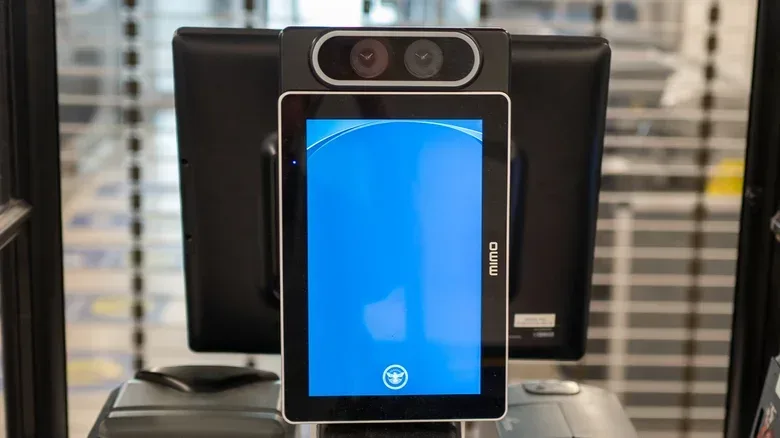
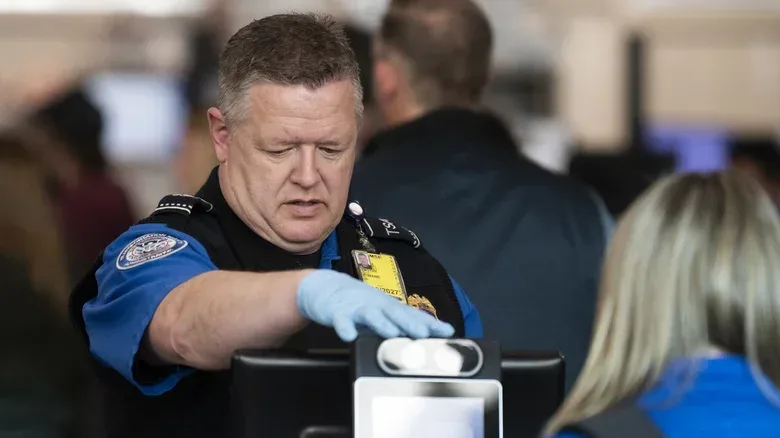
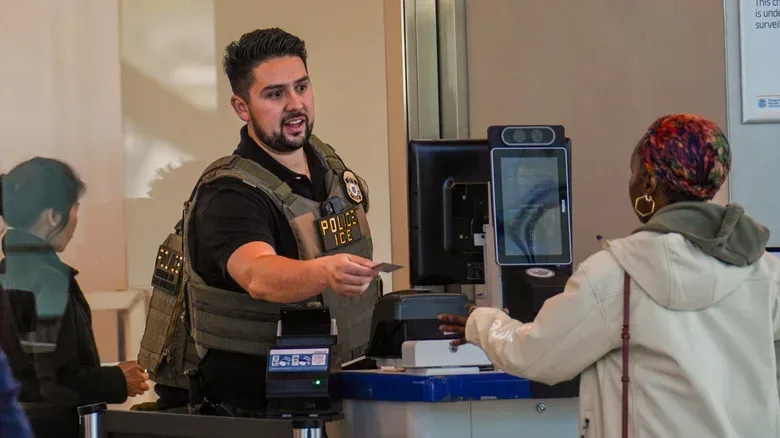
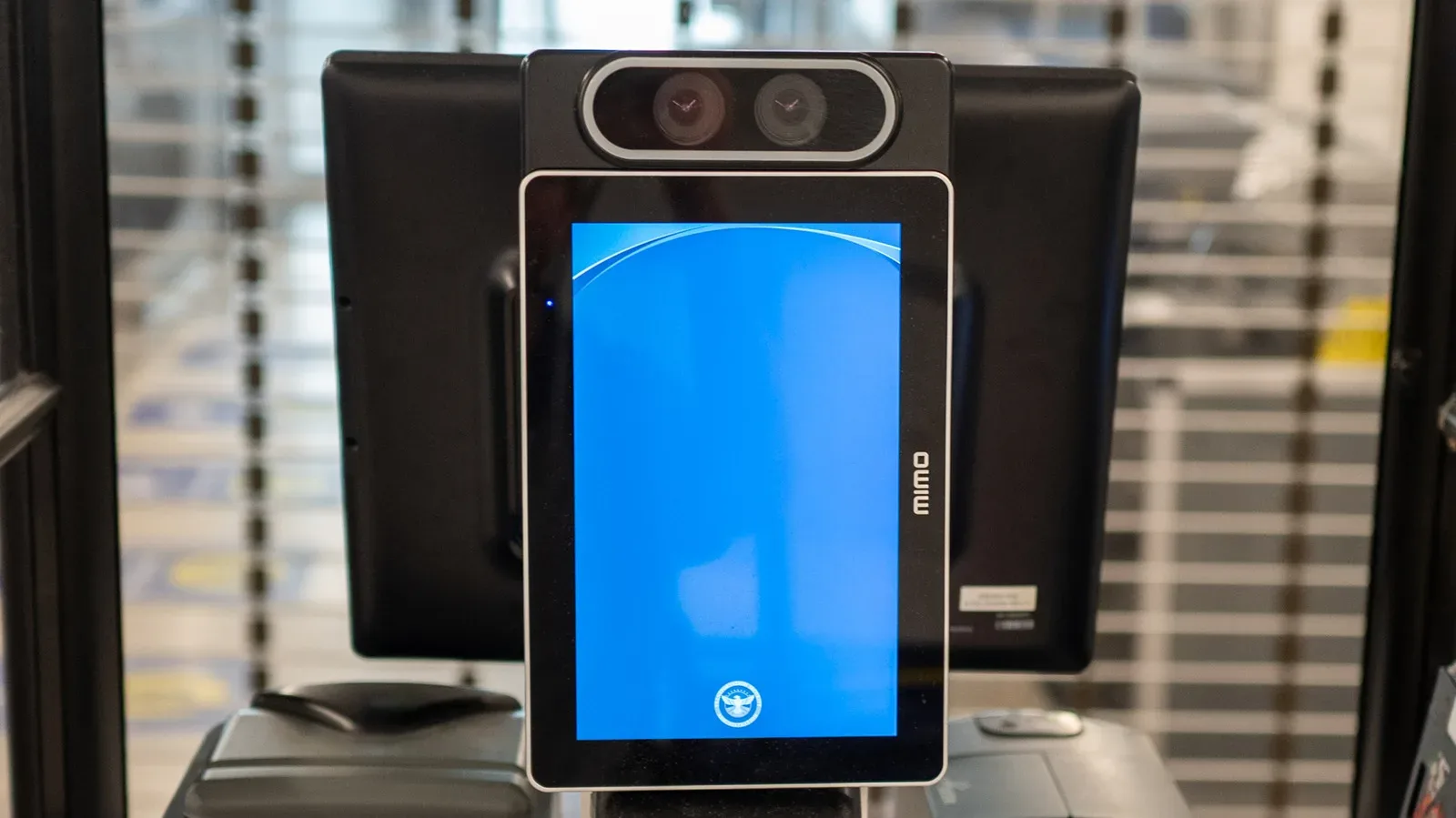
At participating checkpoints, the equipment may look like a webcam-style lens aimed at the passenger standing in front of the officer. An officer may direct someone to have their photograph taken without first verbally emphasizing that the scan is voluntary. Notices about the opt-out option may be hard to spot, small, poorly placed, or absent, so waiting for a prominent reminder is not necessarily useful.
If you do not want the scan, state your choice clearly and briefly. There is no need to argue about facial-recognition policy in the line or give a personal explanation.
- “I would like to opt out of the facial scan.”
- “I prefer a manual ID check.”
- “No facial scan, please.”
Bring out the identification and boarding pass you would ordinarily present. The normal expectation after an opt-out is that an officer still reviews those documents and continues the identity-check process. From there, a traveler goes on to the rest of the airport security process.
A measured, direct request matters because the setup can create ambiguity. A passenger might think an officer’s direction is an order, while an officer may move quickly through a routine process. A concise statement removes the ambiguity without turning a simple preference into a confrontation.
What facial recognition is doing at the document podium
It is useful to separate an ordinary security camera from the kind of image captured for facial recognition. General airport surveillance can observe people moving through a space. The facial-scan system, by contrast, takes a forward-facing image intended to compare the person at the checkpoint with the identity document being presented.
Related coverage includes How to opt out of a TSA face scan and what happens next.
Facial recognition is a system that analyzes characteristics of a face—often described as facial geometry—and uses those features to produce a comparison with another image. In this setting, the relevant question is whether the live image appears to match the photo on the traveler’s ID. It is not simply a snapshot in the casual sense; the image is collected for an automated identity comparison.
That difference is central to the privacy concern. A clear, front-facing facial image is sensitive information in a world where faces can function as an authentication method on personal devices. People may reasonably see a biometric identifier differently from a routine picture taken in a public place.
The TSA says images are deleted immediately, while also acknowledging that some photos may be kept longer for testing and evaluation. Those two points should be considered together. Immediate deletion is the stated default, but testing and evaluation create an exception travelers may weigh when deciding whether they are comfortable participating.
Why some travelers choose to decline
There is no single correct privacy preference. Some passengers may accept the scan as a convenient part of their journey. Others may prefer to limit the collection of biometric information where a non-biometric option exists. The important point is that consent is meaningful only if people know there is an alternative and can use it without feeling pressured by the line around them.
There is also a wider concern about how pilot programs can evolve. The present use is a facial comparison at airport identity checks, but systems introduced in a narrowly defined environment can lead to questions about future scope: whether the technology will be expanded, retained longer, applied in additional locations, or combined with other systems. Such questions do not establish that a particular expansion will happen. They explain why someone might choose to set a boundary at the first voluntary use.
Government facial-recognition use is not limited to the TSA context. Immigration and Customs Enforcement, which like TSA sits within the Department of Homeland Security, has used a smartphone-photo facial-recognition app. Outside government, a facial-recognition-related feature reportedly considered for smart camera glasses was rolled back after code pointing to it was discovered. These examples underline a broader practical reality: face-matching tools are appearing in different products and institutions, often raising different rules and risks in each setting.
For people thinking about privacy more broadly, the useful habit is not panic or resignation. It is recognizing when a system is asking for a more durable type of data than a name, ticket number, or photo ID alone. The same mindset can apply to everyday technology choices, including steps that reduce unwanted data collection on a phone, such as blocking intrusive Android ads without installing another app.
Accuracy is not evenly distributed
Supporters of automated comparisons may present them as a quick way to confirm identity, but a fast process is not necessarily an equally reliable process for every traveler. Facial-recognition errors have been documented across demographic groups, with particularly serious concerns for women and people of color.
A study from the National Institute of Standards and Technology found significantly higher error rates for women, Black people, East Asian people, and other groups that are neither white nor male. This is an important limitation to understand: a system can work often enough to appear seamless for many users while still imposing more mistakes on particular groups.
A false negative occurs when the system fails to match a legitimate traveler to their ID photo. At an airport, that may mean delay, further questions, or another form of manual review. It is different from a false positive, which is when a system incorrectly identifies a match. Both error types matter, but a false negative is the immediate concern for a passenger whose own documentation is valid but whose face comparison fails.
The possibility of error is not merely theoretical. An American Civil Liberties Union test found that an Amazon facial-recognition system falsely matched 28 members of the U.S. Congress with criminal mugshots. That result does not prove every facial-recognition system behaves identically, nor does it describe the TSA’s exact system. It does demonstrate the broader problem: automated face matching can produce confident-looking but incorrect results.
For a traveler deciding whether to scan, this creates a practical counterpoint to the fear that opting out itself will be disruptive. A declined scan leads to a document-based check. A failed scan can also create friction, potentially with less clarity about why the automated system rejected the match. For people in demographic groups where error rates are higher, that is a particularly consequential trade-off.
Will declining the scan cause trouble?
This is the question most likely to keep someone silent at the podium. In a high-pressure setting, even a voluntary choice can feel risky if a traveler worries that declining will trigger an extra search, an interrogation, or an unexplained delay.
Available accounts point in two directions that should both be taken seriously. On one hand, declining is an allowed option, and travelers can generally expect to proceed through a standard ID-and-boarding-pass review. On the other hand, a 2025 report from the Algorithmic Justice League found that 99% of interviewed travelers said they were not told they could opt out. The same report said 67% of respondents who opted out described negative treatment, including verbal abuse, public shaming, or perceived additional scrutiny.
Those reported experiences do not mean every opt-out will lead to mistreatment. They do mean it would be unrealistic to dismiss concerns about how discretion, urgency, and unequal treatment can affect a supposedly simple choice. Travelers who are immigrants or members of marginalized communities may have especially understandable reasons to assess the situation differently, particularly amid concerns about arrests at airports involving immigration enforcement.
There is no need to pretend that every passenger faces the same risk or feels the same level of safety in asserting a right. The decision is personal. If a traveler opts out, a calm approach, ready documents, and a short statement may reduce unnecessary friction. If an interaction becomes uncomfortable, preserving one’s immediate ability to travel safely may take priority over making a point at the checkpoint.
A small choice with a clear boundary
The most useful takeaway is straightforward: a facial scan at the TSA document-check position is not something travelers have to accept by default. If you want to decline it, say so plainly, provide your ID and boarding pass, and expect the ordinary document check to continue.
That choice does not resolve every concern around airport screening or biometric technology. It does, however, give travelers a concrete way to decide whether a face-based identity comparison is appropriate for them. In a setting designed for speed and compliance, taking a few seconds to make an informed choice is not holding up the line. It is using an option that exists.