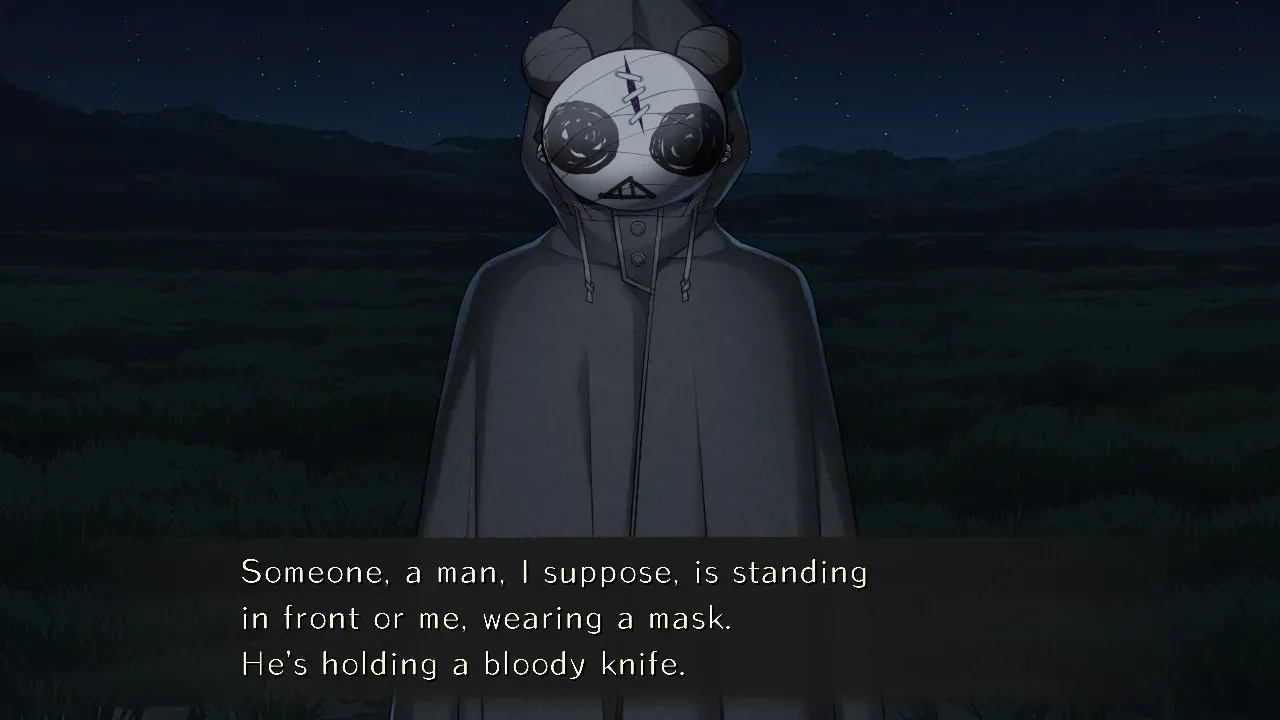
World End Syndrome carries a title that suggests catastrophe on the grandest possible scale. There is, indeed, a looming legend about the Yomibito: dead people who return at century-long intervals and bring destruction with them. Yet the game’s real interest lies somewhere smaller, sadder and considerably more human. Its setting, the coastal town of Mihate, becomes a stage for buried family histories, adolescent romance, cruel online behavior, grief and the terrifying prospect that a person may not be who everyone believes they are.
That contrast is the game’s greatest asset. The end of the world is not merely an abstract supernatural threat; it also describes the private upheaval that follows a life-altering loss. World End Syndrome has a potent sense of how trauma can isolate people and force them into new roles. It also has the ingredients for a memorable visual-novel mystery: a lovely rural backdrop, a cast whose apparent archetypes gradually gain dimension, and a supernatural mythology that becomes increasingly relevant as the story proceeds.
Its biggest obstacle is not the premise, the translation, or the central mystery. It is the structure players must navigate to see the full picture. World End Syndrome turns the pursuit of character routes into an unusually punishing scheduling exercise, then makes that schedule central to a story that ultimately has a prescribed destination.
Mihate makes apocalypse feel intimate
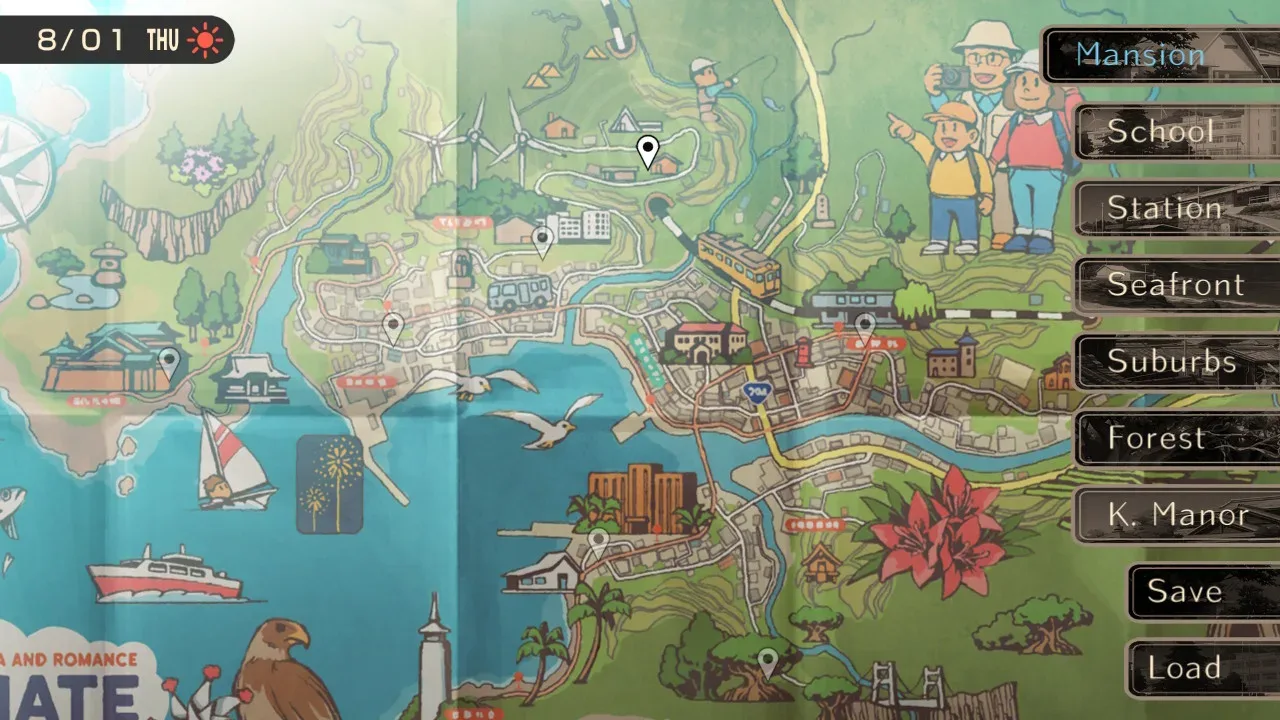
The setting is central to why the narrative works. Mihate is not presented as a battlefield or an anonymous mega-city in ruins. It is a seaside community with familiar stops: a school, residential areas, a café, and a waterfront that includes a hotel and lighthouse. Against that calm scenery, the Yomibito legend becomes more unnerving. The strange is close at hand, intruding on ordinary school days and friendships rather than arriving with a conventional action-game explosion.
This approach gives the romance routes room to function as character studies. Five students can be romanced, although only three routes are initially available. The format resembles a dating-focused branching adventure, with progress depending largely on whom the protagonist spends time with. The initial presentations may look recognizable to veteran anime and visual-novel audiences, but several routes work to complicate those first impressions.
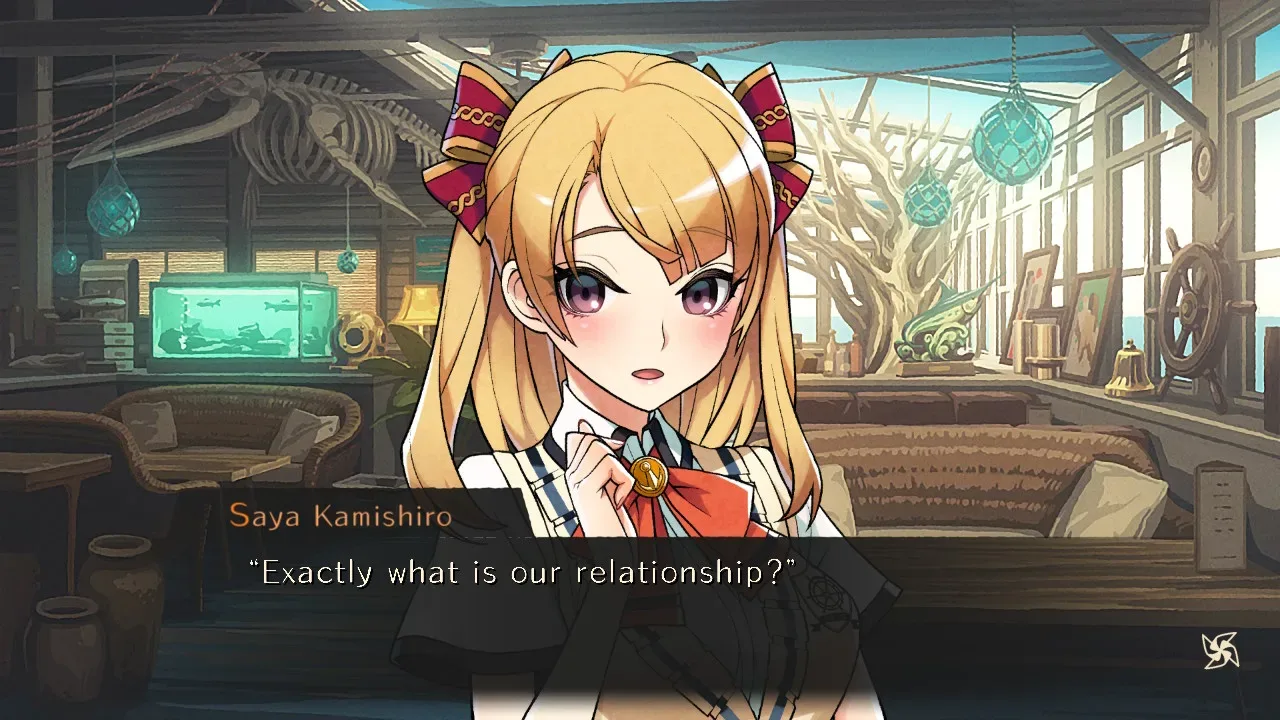
Saya Kamashiro is a clear example. At first, she can seem aloof, demanding and protected by wealth as a member of the prominent Kamashiro family. Early scenes, including her hiring the protagonist as an assistant, take time to gain momentum. Eventually, however, her story explores the insecurity underneath that polished exterior. A threatening stalker is revealed to be her biological father, not a member of the aristocratic family that raised her. Her questions about belonging and legitimacy give her pride a more vulnerable context. Even details such as her skill with a naginata help make her feel more specific than a simple rich-girl stereotype.
That willingness to look beneath surfaces is one of the narrative’s recurring strengths. World End Syndrome wants its characters to be understood rather than merely sorted into familiar roles. Its better romantic scenes are meaningful because they emerge from fears and wounds that the cast has trouble voicing directly.
The calendar turns curiosity into administration
Unfortunately, getting to those scenes can be frustrating. Once the lengthy prologue ends, Mihate opens into a location-selection loop. Players choose where to visit, but the game does not initially identify which character is waiting at a given destination. Visiting a place advances time whether or not the desired meeting occurs. Since the action is limited to August, an unsuccessful guess can cost an opportunity that may be vital for a particular route.
Related coverage includes World End Syndrome's Mystery Shines Despite Its Punishing Route Structure.
There is an idea here that fits the setting: daily life is uncertain, and choosing where to go ought to create a feeling of personal direction. In practice, uncertainty becomes busywork because the system withholds information needed to make informed decisions. The game later recognizes locations encountered on earlier saves or subsequent playthroughs by placing character icons beside them. That feature demonstrates that the information could have been communicated more clearly from the start. Instead, the effective strategy becomes constant saving, reloading and tracking prior visits.
This is not the satisfying kind of replay design in which new knowledge causes players to reassess old scenes or discover radically different choices. It is more like administrative overhead placed between the player and the story. A system closer to a social-calendar display—where characters’ likely whereabouts are visible without consuming time for a failed visit—could have retained planning while avoiding needless penalties.
The tension is especially apparent in a game whose major appeal is reading people closely. When every movement through town risks wasting a limited day, the player’s attention can shift from emotional cues and mystery clues to save-file management. Mihate remains appealing as a setting, but the structure makes exploring it feel less natural than it should.
Routes offer emotion, then reveal a fixed staircase
The game’s route order also changes the meaning of its apparent choices. A romance such as Saya’s can build toward a poignant conclusion, only for the protagonist to be killed by a Yomibito. No alternate dialogue selection or last-minute correction saves that outcome. It is a dramatic endpoint, but one that can leave players searching older saves for an answer that does not exist.
That is where World End Syndrome’s branching form becomes somewhat misleading. To reach the definitive material, players must complete multiple routes. Miu, the character tied most directly to Mihate’s hidden history, only becomes accessible after the other four storylines are finished. The design demands five passes through the game before it provides the route that resolves the central mystery.
There is nothing inherently wrong with a visual novel having a canonical path or requiring prior routes. Many stories use that design to make individual endings feel like pieces of a wider mosaic. The issue is that World End Syndrome initially frames progression as a matter of dating preference while ultimately requiring every relationship in a specific overall sequence. The individual routes may be worthwhile, but player agency feels diminished once it becomes clear that the journey is a locked staircase rather than a genuinely open set of possible resolutions.
Miu’s storyline demonstrates why players may still want to persevere. Her connection to the Yomibito curse and her Hawk’s Eye ability put her near the core of the supernatural plot. She can perceive people’s auras; because the undead possess none, that absence exposes their unnatural condition. It is an elegant investigative power because it is rooted in the game’s lore rather than functioning as a generic detective gadget.
The Truth ending reportedly delivers consequential revelations about both the protagonist and the identity of the actual Yomibito. Those turns are intended to be shocking and tragic, and the larger mythology gains force when the game finally permits its mysteries to align. World End Syndrome has a compelling final destination. Its trouble is that it makes the road there feel longer and more restrictive than its narrative needs demand.
For another example of a game finding emotional stakes inside an ostensibly world-ending scenario, see why Ys VIII: Lacrimosa of Dana makes its apocalypse feel personal. World End Syndrome shares that useful contrast between huge stakes and individual pain, though it expresses it through a visual-novel framework rather than an action RPG.
A tonal problem named Kensuke
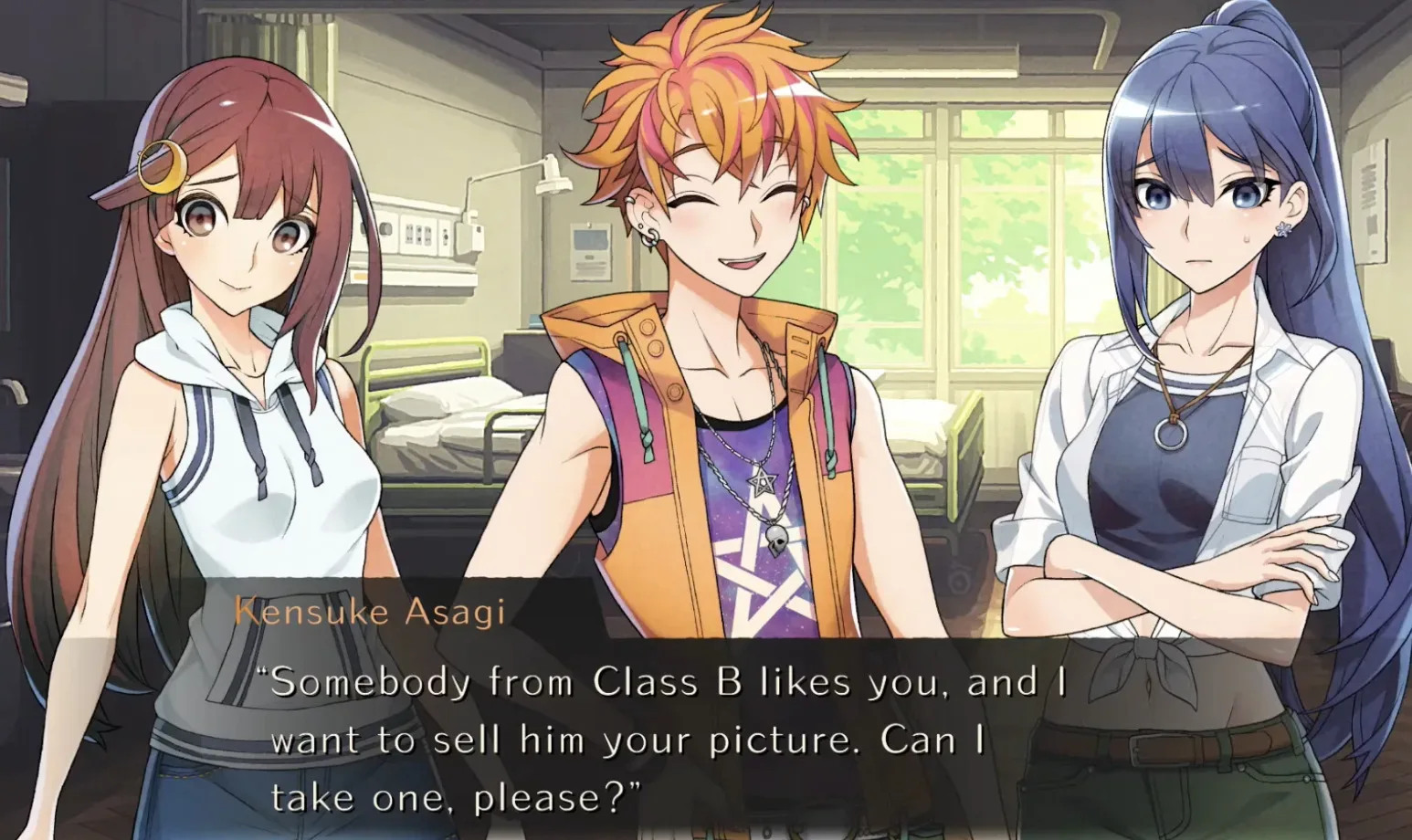
The most difficult element is Kensuke, a would-be comic-relief member of the cast. Comic characters can give serious stories breathing room, and a mystery about death and selfhood certainly has space for levity. Kensuke’s behavior, however, goes beyond harmless foolishness. During a school outing, he tries to photograph female students in compromising circumstances for online sale. Later, after Miu has been attacked and is in a hospital bed, he asks to photograph her so he can sell the image to another student.
Those actions are not simply awkward jokes that fail to land. They are exploitative, and the game’s continued use of Kensuke as an intrusive punchline creates a sharp tonal contradiction. He joins the mystery club through the protagonist, then repeatedly interrupts more serious conversations with self-absorbed comments. The result can make the protagonist seem disturbingly tolerant of conduct that should demand a stronger response.
This matters because World End Syndrome handles online cruelty as a key part of its emotional core. The protagonist has lost his sister, blames himself, and has also been subjected to online blame and bullying. His move to Mihate and adoption of a new identity are connected to that pain. The story understands how people can turn another person’s suffering into spectacle, and it suggests that empathy and genuine friendship may be ways to survive a shattered reality.
Kensuke undermines that theme by repeatedly treating other people as objects for his own entertainment or profit. The issue is not that a grim story contains a flawed character. Flawed characters can be useful. It is that the comic framing surrounding him clashes with the compassion the rest of the story works hard to earn.
Who should make the trip to Mihate?
World End Syndrome is best approached by players who can tolerate deliberate repetition and who value a layered mystery enough to work through an awkward route system. Its strengths are substantial: an engaging supernatural premise, a focused small-town atmosphere, character arcs that improve on their first impressions, and an ambitious concern with identity, loss and harassment. The Miu route and Truth ending supply the connective tissue that turns those separate elements into a larger tragedy.
But the game asks too much patience from its audience. Hidden character locations, time advancement on unproductive visits, reliance on repeated saving and loading, and a final route locked behind four others all make discovery feel artificially obstructed. Add a side character whose supposed humor repeatedly injures the story’s tone, and it becomes clear why the experience can be as exasperating as it is affecting.
For readers willing to endure its structural friction, Mihate’s secrets appear to reward attention. For everyone else, World End Syndrome remains a persuasive case that even a well-written visual novel needs its mechanics to respect the player’s time—and its comedy to respect the themes it is trying to explore.