Shelley Duvall’s influence on horror games is not primarily a matter of celebrity likeness. It is a matter of emotional design.
Her performance as Wendy Torrance in The Shining made fear look immediate, physical and exhausting. Wendy is not presented as a conventional action hero; she is trapped in an escalating nightmare, attempting to protect herself and her child from an abusive husband in an isolated hotel. Duvall’s face, posture, voice and visible apprehension give that danger its human scale. The audience does not simply understand that Wendy is in peril. It feels her trying to remain functional while terror overwhelms her.
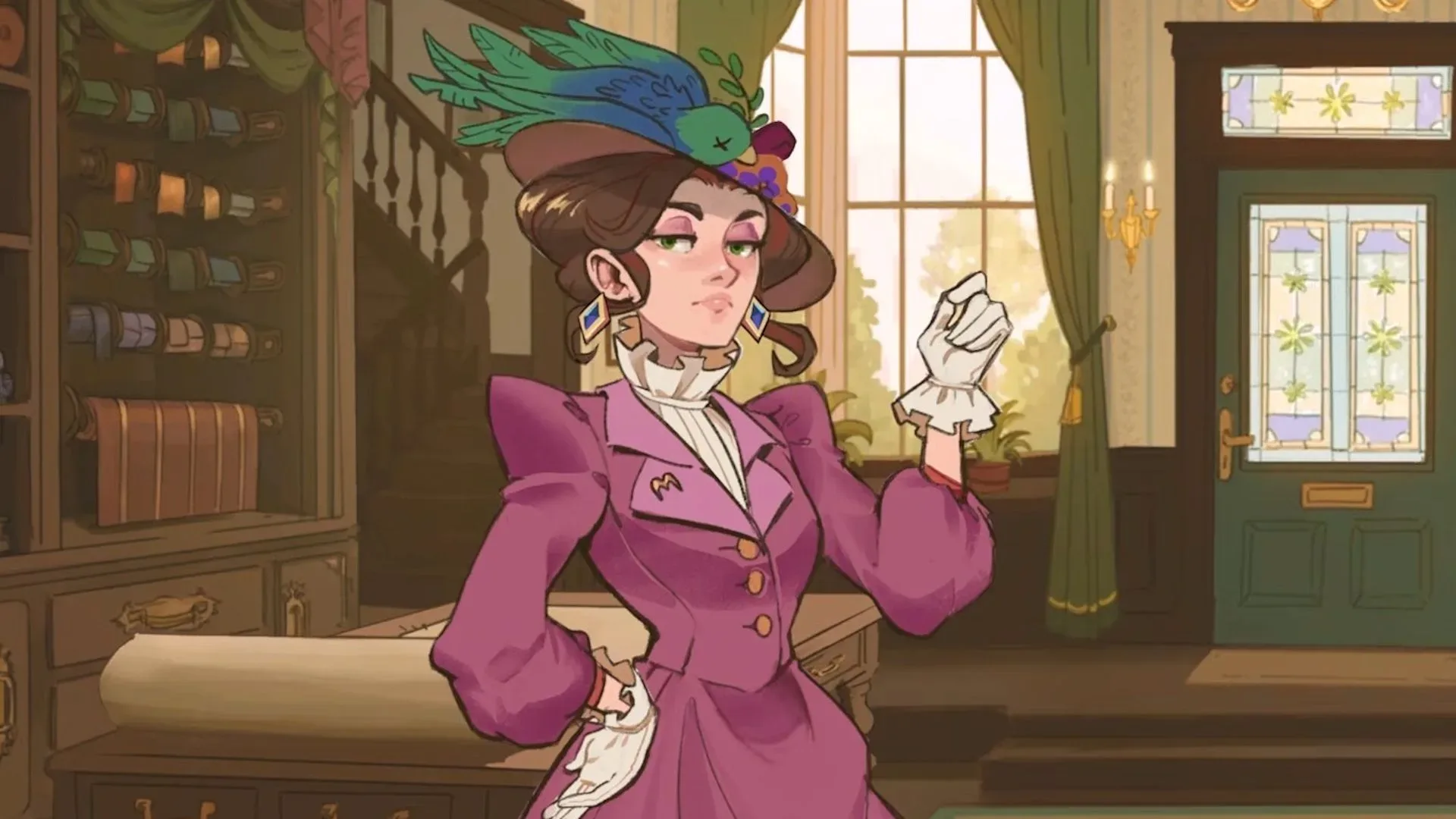
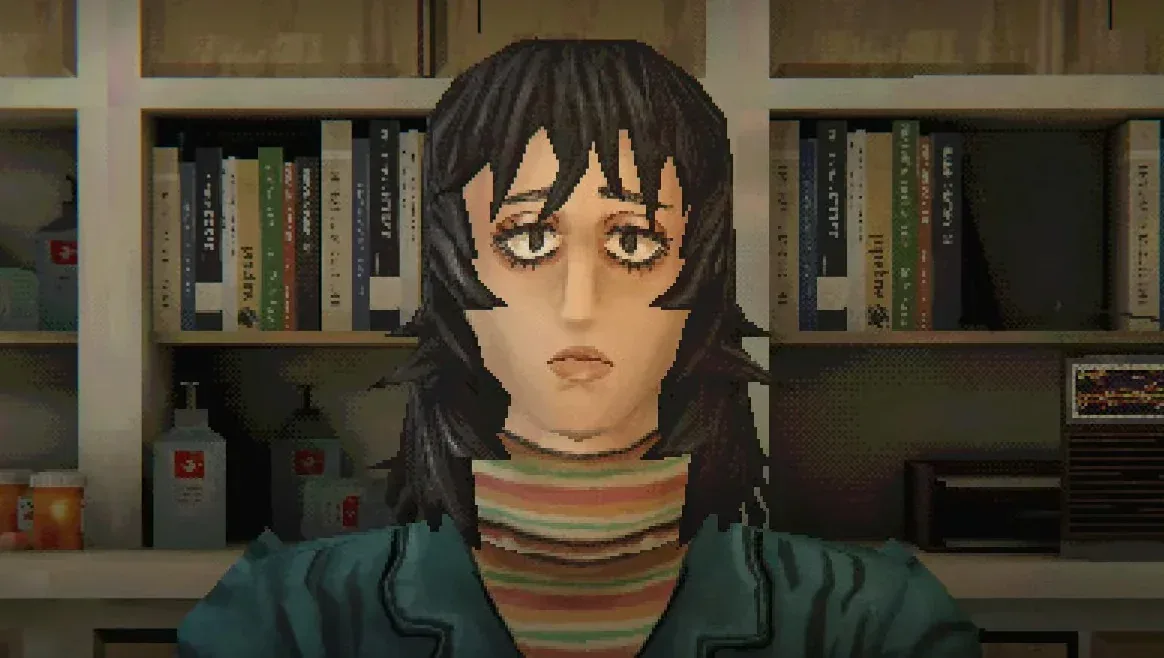
That quality has proven unusually durable in horror games and adjacent fan projects. Wrong Organ has explicitly identified Duvall as an inspiration for Anya, the nurse in the 2024 indie game Mouthwashing. Fans have also identified a family resemblance between Duvall and Rosemary Walten of The Walten Files, the multimedia Five Nights at Freddy’s fan project. Rosemary also appears in the fan game Bon’s Burgers: After Hours. Zoey Bennett, a nervous ghost in Date Everything, belongs to a similar lineage of dark-haired, visibly uneasy women whose presence makes vulnerability central to a scene.
None of those characters needs to be a copy of Duvall to communicate the association. The influence lives in an expressive vocabulary: wide, searching eyes; an impression of fragility; a body language that suggests someone bracing for bad news; and, crucially, an inner life that does not vanish just because the character is frightened.
A useful horror-game archetype: vulnerability with agency
Horror games frequently depend on player vulnerability: the sense that the player character is under-equipped, exposed or unable to control every threat. This can be conveyed mechanically through limited ammunition, scarce healing items, restricted movement or unreliable information. But games also create vulnerability through characterization. A protagonist or supporting character who seems alert to danger, yet unable to simply overpower it, gives the horror a sharper emotional edge.
Duvall’s work offers a powerful model for that second kind of vulnerability. Her characters can appear delicate, but delicacy is not the same thing as passivity. Wendy survives. She makes decisions under severe pressure. Her fear is not evidence that the danger is unreal or that she has failed; it is evidence that she understands the stakes.
That distinction matters when discussing Anya and the characters who recall Duvall’s screen presence. A character can be anxious, overwhelmed or soft-spoken while still being morally perceptive and capable of care. In Mouthwashing, Anya’s concern for people around her remains significant even after they have demonstrated their capacity to hurt her. The emotional force comes from that tension: compassion exists alongside risk, not outside it.
This is a welcome counterweight to a narrow idea of game strength as dominance. Plenty of games make empowerment their central fantasy, handing players escalating weapons, skills and authority. Horror often works in the opposite direction. It asks what a person does when power is limited, when threats cannot be neatly solved, or when survival requires endurance instead of conquest.
Related coverage includes Shelley Duvall's Fragile Screen Presence Still Echoes Through Horror Games.
That does not make vulnerable characters automatically deeper or more realistic. It does show why Duvall’s influence fits the genre so naturally. Horror needs people who look as though the cold has reached them. It needs performances and character designs that can communicate dread before a monster appears.
Why the resemblance is more than a hairstyle
Visual echoes are the most obvious entry point. Duvall’s distinctive eyes, dark hair and slender silhouette make her readily recognizable as an inspiration. But reducing her influence to a collection of facial features misses what made her work resonant in the first place.
Her appearance carried emotional information because it was paired with a highly specific expressiveness. Duvall could look startled without looking blank; fragile without seeming ornamental; dreamy while still alert to the cruelty around her. That mixture is especially valuable in horror, where designers and writers need characters to register danger without flattening them into a single note of panic.
Rosemary’s connection to film provides another meaningful parallel. Duvall was not only an actor: she also created and produced Faerie Tale Theatre, the anthology series that ran through 1987, serving as both host and performer. Her work in that series moved between storybook fantasy and melancholy, a tonal balance that makes sense beside modern horror media that uses old recordings, fragmented narratives and familiar formats made unsettling.
The Walten Files similarly exists in a multimedia space connected to the wider Five Nights at Freddy’s fan culture. In that kind of horror storytelling, images, performances and mediated artifacts can matter as much as direct action. A character who appears both ethereal and distressed is not merely a visual reference; she can become part of the project’s method for making viewers feel that something intimate has been lost or endangered.
Horror’s interest in people who cannot armor themselves
There is an important reason Duvall’s legacy can be felt in horror rather than in every genre equally. Horror is often most persuasive when its characters cannot fully protect themselves. The threat may be supernatural, psychological or interpersonal, but the genre relies on a breach in the ordinary defenses people use to get through life.
Duvall’s Wendy embodies that breach. She does not meet a violent crisis with cool detachment. The performance lets the audience see the cost of every moment. That visibility has been reassessed over time. A contemporary review dismissed her work as “jittery and amateurish,” but later audiences and critics have found extraordinary vulnerability in it. The performance’s rough edges are inseparable from its potency: Wendy appears pushed past the point where composure is possible.
For game creators, that is a valuable lesson. Polished character animation and attractive designs can make a protagonist memorable, but a horror character also needs to feel reachable. The player has to believe that harm would matter to them. A Duvall-like character design can rapidly establish that feeling, particularly when it avoids turning fragility into a decorative pose.
The best use of that influence is therefore not to reproduce an actor’s face as closely as possible. It is to understand the dramatic function beneath the resemblance. Give the character a perspective. Let her fear communicate knowledge. Let her make choices, however constrained. Let the audience or player see the difference between being powerless and being denied power by a frightening situation.
Homage, influence and the question of likeness
There is also a meaningful difference between artistic influence and direct replication. Games sometimes use or closely emulate famous performers’ actual appearances. The supplied examples include Onimusha using the likeness of Japanese actor Toshiro Mifune, and Stranger Than Heaven featuring an aged-up version of Tupac created with AI. Those approaches prompt different questions about identity, permission and the line between tribute and imitation.
The Duvall-inspired horror characters described here generally work through approximation rather than literal digital duplication. That can create room for new characters to stand on their own. Anya, Rosemary and Zoey are not Wendy Torrance, and their stories should not be treated as substitutes for Duvall’s work. Yet they demonstrate how a performer’s expressive legacy can travel across media without requiring a one-to-one recreation.
It also underscores why game character design is about more than graphical fidelity. A recognizable silhouette or face may initially catch the audience’s attention, but the lasting connection comes from writing, animation, voice, context and the character’s relationship to danger. A borrowed visual cue has little value if the game has nothing to say with it.
Duvall’s own connection to games
Duvall’s relevance to games is not solely retrospective. She made educational computer games in the 1990s, a detail that makes the current affinity feel less like an accidental collision between two separate worlds. Her career also encompassed acting, production and the imaginative hosting of Faerie Tale Theatre; she understood the value of inviting an audience into a constructed world.
That broader creative history is worth keeping in view when discussing a visual legacy that can otherwise become overly focused on appearance. Duvall’s unusual screen presence certainly inspired character artists and fans, but it was sustained by her ability to communicate unstable, difficult feelings. Her best-known horror role remains powerful not because Wendy looks frightened, but because Duvall makes fear appear like labor.
Modern games are increasingly interested in protagonists and supporting characters who do not fit a narrow, hardened model of heroism. That shift can be seen in conversations around games designed with women’s perspectives in mind, including the case for fashion games built with women in mind. Horror’s Duvall-adjacent characters are not all making the same argument, but they do share an appetite for emotional specificity over invincibility.
Duvall died in 2024 after spending two decades away from Hollywood. Two years later, the echoes of her work continue to appear in characters who are watchful, strained, caring and close to catastrophe. That is not simply nostalgia. It is evidence that horror games still need what she so memorably embodied: the courage of a person who is terrified, visibly hurt, and still trying to get through the next impossible moment.