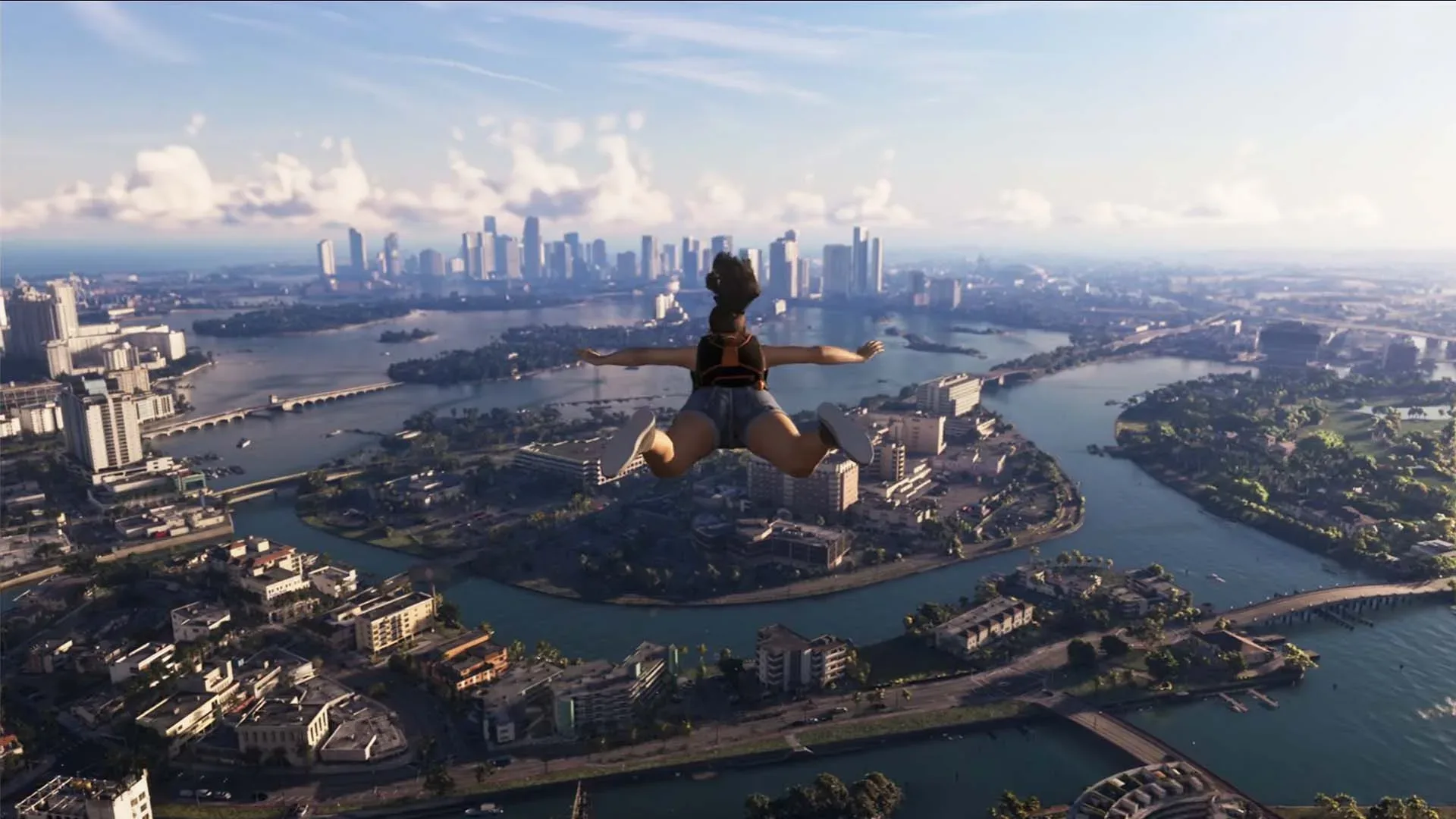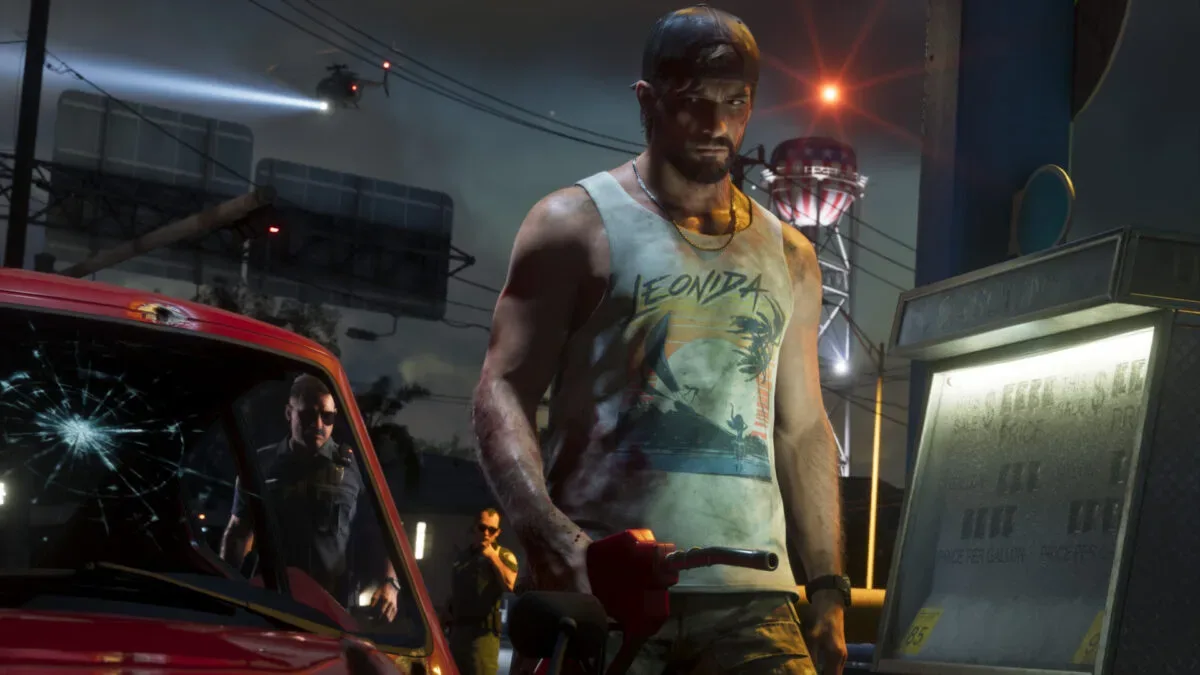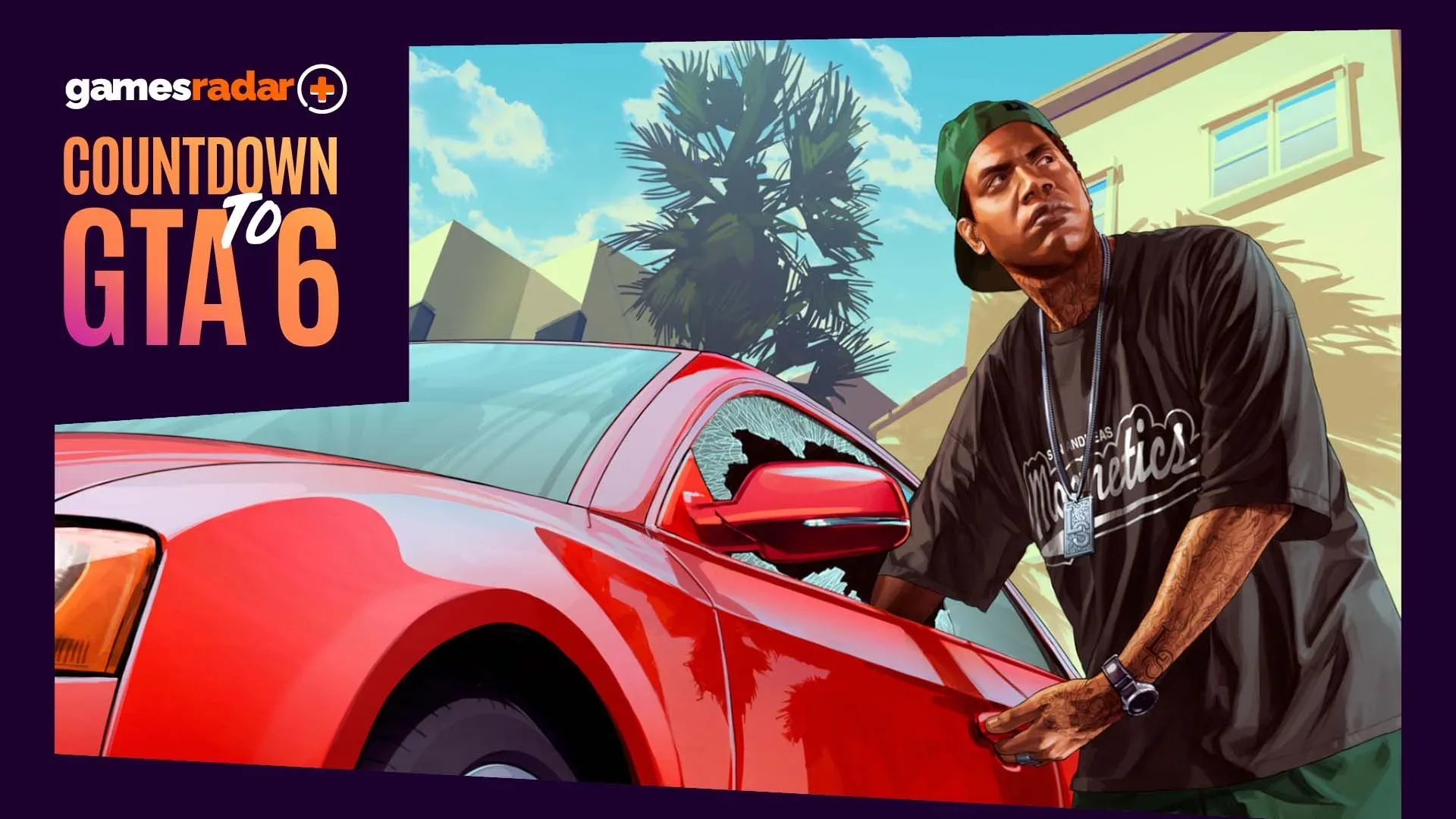

For someone who has never played a Grand Theft Auto game, the scale of anticipation around Grand Theft Auto VI can look slightly absurd. The broad description is easy enough: cars, crime, missions, gunfights, an enormous city, and the freedom to cause trouble. None of that, on its own, quite explains why a new entry can become a cultural event—or why Grand Theft Auto V has sold nearly 235 million copies.
The better explanation is that Grand Theft Auto is not primarily cherished as a sequence of crimes to complete. For many players, it is a place to inhabit. The missions provide direction and characters, but the durable appeal is the sensation that a virtual city is present even when the player is not following an objective. A radio song arrives at the right moment. Rain changes the tone of a nighttime drive. A player sees a train, a blimp, a stranger, or a distant building and asks the key question: can I interact with that?
That question—followed by an answer more substantial than “no”—is a large part of the series’ identity. It also explains why GTA VI may matter to newcomers who have no nostalgia for earlier games and no particular enthusiasm for simulated criminal mayhem.
The real draw is the world, not just the plot
Open world is the useful technical term here. It describes a game structure that gives players a navigable space and meaningful room to choose where they go or what they do, rather than moving them through a strictly linear sequence of levels. Grand Theft Auto has long been open-world, but its reputation was transformed when Grand Theft Auto III brought that approach into a 3D city on PlayStation 2.
Its significance was not merely that players could drive cars or undertake missions. It was the absence of a conventional endpoint to the space between missions. You could walk a street, get in a vehicle, change direction, and keep moving. The city itself became the activity.
That idea has evolved across distinct periods of the series. The early top-down games were more cartoonish and provocative, known partly for their willingness to put players in criminal roles. The 3D era, beginning with GTA III, made the setting feel more immediate and explorable. Grand Theft Auto IV then pushed toward a more serious tone and a more grounded character story through Niko’s journey. GTA V became the technically bigger phenomenon, but some players still favor GTA IV for its more consistent mood, narrative, and soundtrack.
Those preferences underline something useful for prospective GTA VI players: there is no single thing that every fan wants from these games. One person remembers a character arc; another remembers driving through Liberty City at night while a particular song played on the radio. Another remembers stealing a stationary train in San Andreas simply because the option appeared to exist—then discovering that driving too fast could send it off the tracks.
These are not achievements in the usual sense. They are self-directed anecdotes. Grand Theft Auto turns players into collectors of moments, rather than only collectors of completion percentages.
Related coverage includes Why GTA 6 Matters, Even If You've Never Played Grand Theft Auto.
What “emergent gameplay” actually means
The most important concept for understanding the series is emergent gameplay. That phrase means an unscripted outcome created by systems interacting with player choices. A mission designer did not necessarily place a marker reading “shoot the blimp and watch what happens.” Yet a player can try it, see the blimp explode and fall, watch a fire begin, and then observe emergency and police responses. The story comes from the systems reacting to a choice.
In a tightly scripted game, the player is usually offered a defined problem and a defined solution. In an emergent sandbox, the player creates the experiment. The game’s job is to make that experiment feel acknowledged.
That does not mean every possible idea will work. No game can simulate every action or consequence. But Grand Theft Auto’s best quality is often the impression that the developer anticipated the urge to poke at the scenery. A vehicle that looks usable may be usable. A route that looks drivable may reveal a new neighborhood. A strange detail may lead nowhere, yet still make the setting feel more convincing because it exists at all.
This is why describing GTA merely as “driving around and stealing stuff” misses the mechanism that keeps people returning. The driving is an interface to exploration. The criminal premise supplies chaotic tools and a satirical modern-American setting. But the lasting loop is curiosity, experimentation, and reaction.
A sandbox has two sides
The same latitude that makes creative play possible can also enable ugly behavior. The series has a history of misogyny and of material that punches down, and players have used its systems to target women, trans people, and to stage horrific real-world violence. That cannot be waved away as unrelated to Grand Theft Auto’s success. Provocation and transgression were plainly part of the franchise’s public identity, particularly in earlier eras.
It is equally incomplete, however, to say that this is all the series has ever offered. A sandbox is morally neutral only in the narrow mechanical sense; it permits many actions. Its design, writing, targets of satire, and character treatment determine what the game encourages, mocks, or makes uncomfortable. The freedom to test a world can produce cruelty, but it can also produce harmless curiosity: a quiet drive, an odd detour, a scenic view, a failed stunt, or an accidental chain reaction.
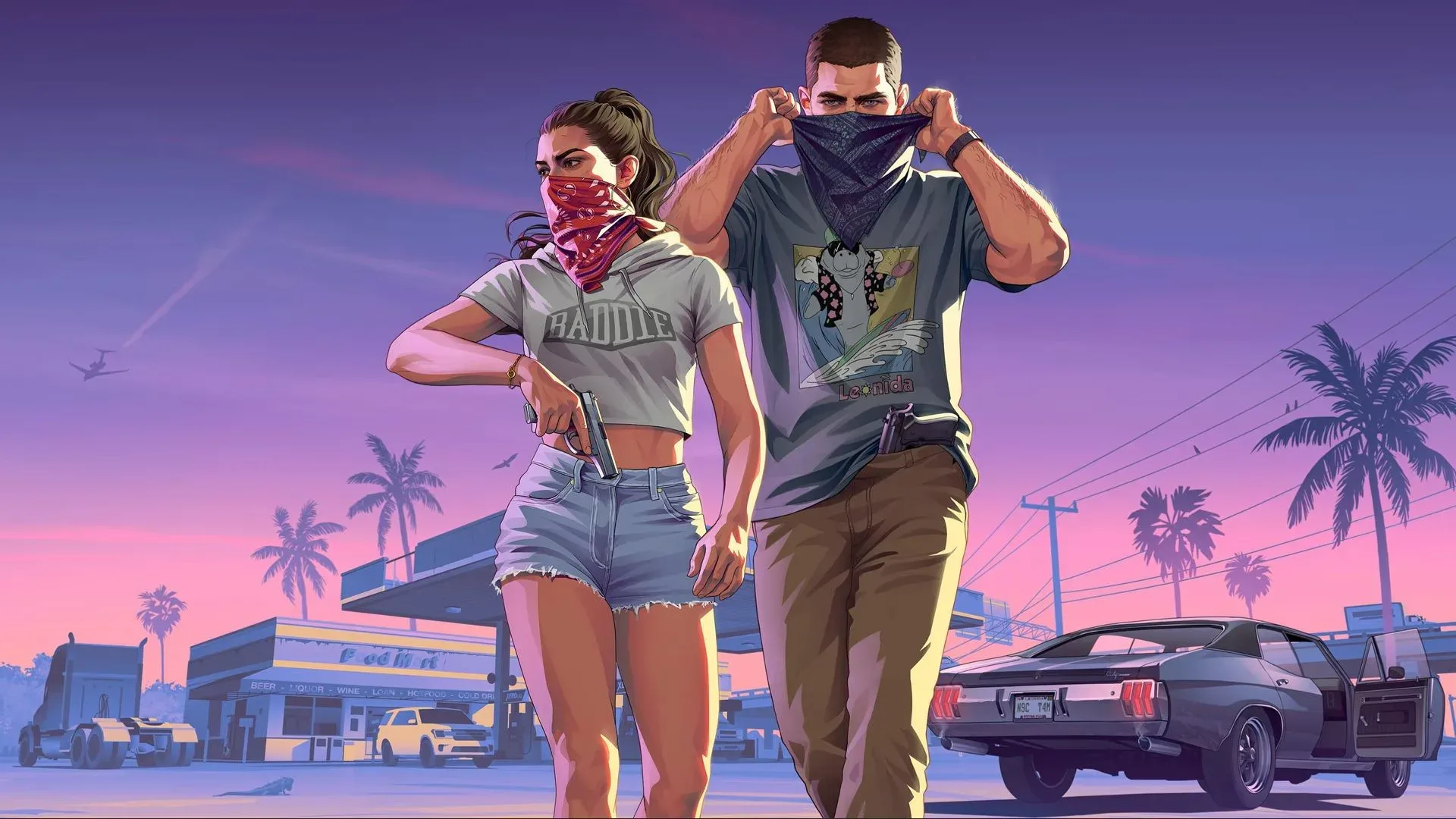
That tension makes GTA VI’s narrative treatment worth watching. Lucia is expected to be a full-fledged playable female protagonist in a 3D Grand Theft Auto, alongside Jason. Given the series’ history, that creates both interest and justified caution. A new protagonist alone does not establish whether a story is humane, insightful, or free of tired stereotypes. The meaningful question is how the game treats its people and whether its writing gives the world something more substantial to say than a fresh set of targets for ridicule.
Why the radio matters so much
Grand Theft Auto’s radio stations are easy to mistake for background decoration. They are closer to environmental storytelling: music and broadcast texture that communicate the culture and mood of a setting without pausing for exposition. They also give players a measure of authorship over the atmosphere. Switching stations can turn an aimless trip across town into a joke, a memory, or a surprisingly cinematic scene.
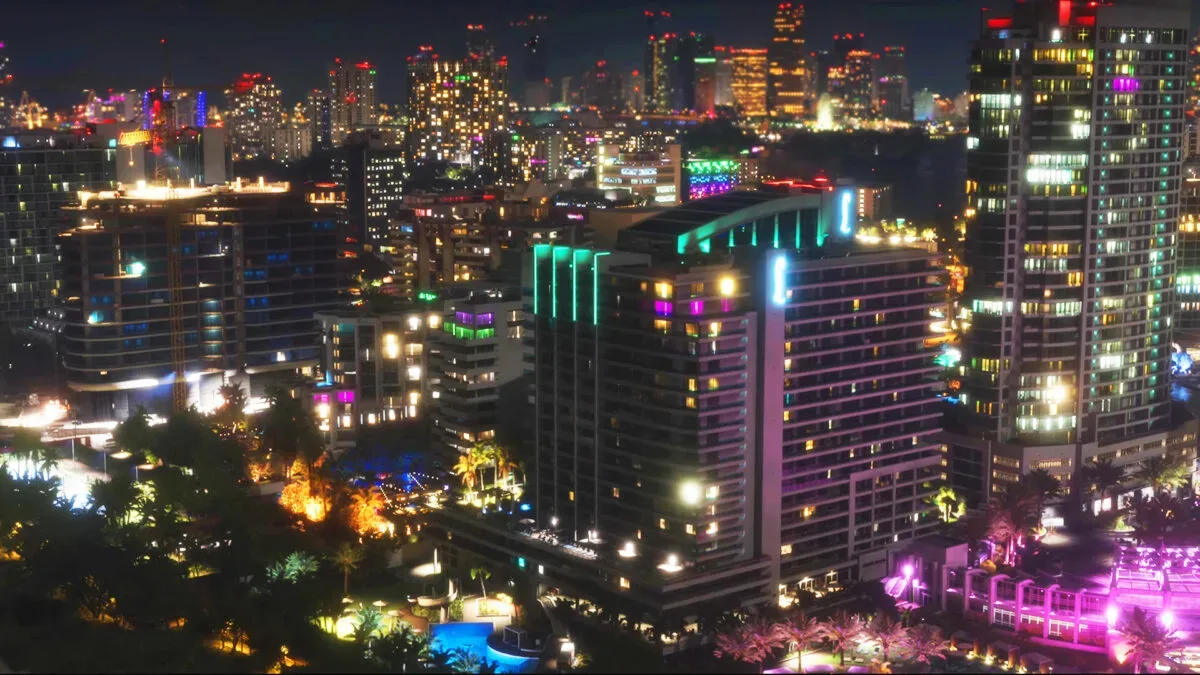
That effect is especially potent because driving gives players time to absorb a place. Missions often require urgency and attention; travel allows the city to breathe. A song paired with rain, a sunset, the ocean, or a nighttime skyline can make a game world feel personal rather than merely technically impressive.
Fans single out different soundtracks for different reasons. Vice City is often associated with a high concentration of recognizable songs, while GTA IV’s selection is remembered for exposing players to music they had not previously encountered and for giving Liberty City a culturally rich identity. There is even a peculiar charm to songs referring to real-world places that do not technically exist inside the fiction: players understand what Liberty City evokes even if it is not named New York.
This is not a claim that a radio playlist can substitute for good design. It is that Grand Theft Auto is unusually effective when its systems, sound, and setting align. The city is not just a map of icons; it is a mood machine.
How a newcomer can approach GTA VI
New players do not need a checklist or series homework to understand the appeal. Grand Theft Auto IV is a reasonable earlier entry for someone seeking a more consistent story and tone, while GTA V represents the more technically ambitious previous benchmark. But GTA VI should be understandable on its own terms as a new setting and a new pair of protagonists.
The most practical way to meet the series halfway is to resist treating every free-roam minute as dead space between objectives. Early story missions still matter: they establish who Jason and Lucia are, what they want, and what pressures shape them. Yet after the game opens up, it is worth reserving time for deliberate, low-stakes curiosity.
- Drive normally for a while. Instead of immediately turning every trip into a chase, pick a direction and notice what pulls your attention: unusual architecture, a parked vehicle, a waterfront, a group of people, or an area that looks unlike the previous district.
- Use the radio actively. Change stations rather than leaving the first one on. The range of music and broadcasts can be one of the quickest ways to get a feel for a fictional city’s personality.
- Try a reasonable interaction once. If a train stops, a vehicle looks accessible, or an object seems reactive, test it. The objective is not destruction for its own sake; it is learning the grammar of the world.
- Follow a distraction. Open-world games often work best when the player permits an unplanned detour. A distant landmark or a minor encounter can become more memorable than the task originally on the map.
- Keep expectations measured. “Freedom” does not mean every imagined action has a bespoke result. It means the game should reward enough curiosity that players begin creating stories from their own choices.
That approach also helps separate genuine interest from hype. If wandering, listening, observing, and probing the game’s boundaries feels engaging, the GTA formula is probably clicking. If it does not, there is no obligation to force it because the series is enormous. Its popularity is evidence of a powerful formula, not a universal requirement.
Why the anticipation is bigger than a release-day joke
Part of the frenzy surrounding GTA VI comes from scale. A new Rockstar open world promises a fresh place that players expect to revisit for months or years, not simply finish once. Grand Theft Auto V’s extraordinary sales footprint also means there is an unusually broad audience with memories, stories, and expectations attached to the name.
But anticipation also grows from the social nature of discovery. In these games, players compare the strange thing they found, the system they unexpectedly triggered, the spot they drove past, or the story they created while ignoring the intended route. Older games such as San Andreas generated urban legends partly because their spaces felt so large, new, and faintly dreamlike that players could imagine secrets in every distant forest or dark corner. Sometimes the mystery was real; often it was players filling gaps with possibility.
That feeling remains powerful even as technology advances. A richly detailed world can make people believe there is always another interaction, another detail, another route, or another surprise just beyond what they have already seen. The anticipation is not only for a crime narrative or a graphical showcase. It is for the return of that possibility.
There is a reason the long-running “we got this before GTA 6” gag has become exhausted enough to inspire its own obituary: the wait itself became a shared cultural ritual. Once players can actually enter the new world, the conversation changes. It becomes less about absence, and more about the small, highly specific stories only a responsive sandbox can produce.
For the uninitiated, then, GTA VI does not require reverence. It requires curiosity. The series’ most persuasive pitch has never been that everyone must enjoy its stories, satire, or mayhem. It is that, when the design works, a player can turn toward something interesting, wonder whether the game will acknowledge the impulse, and discover that it does.