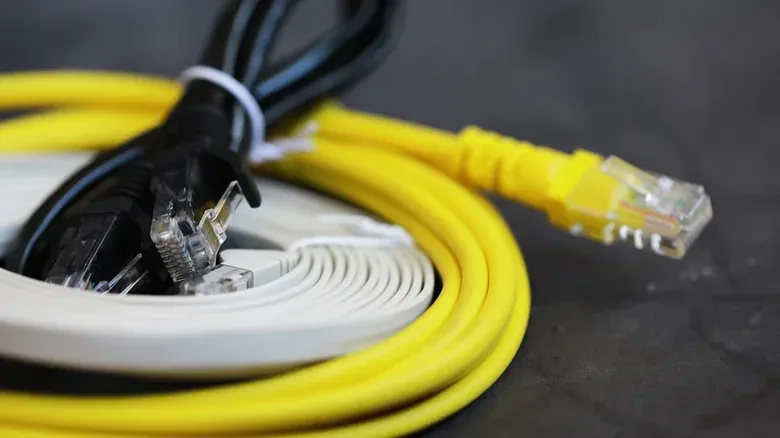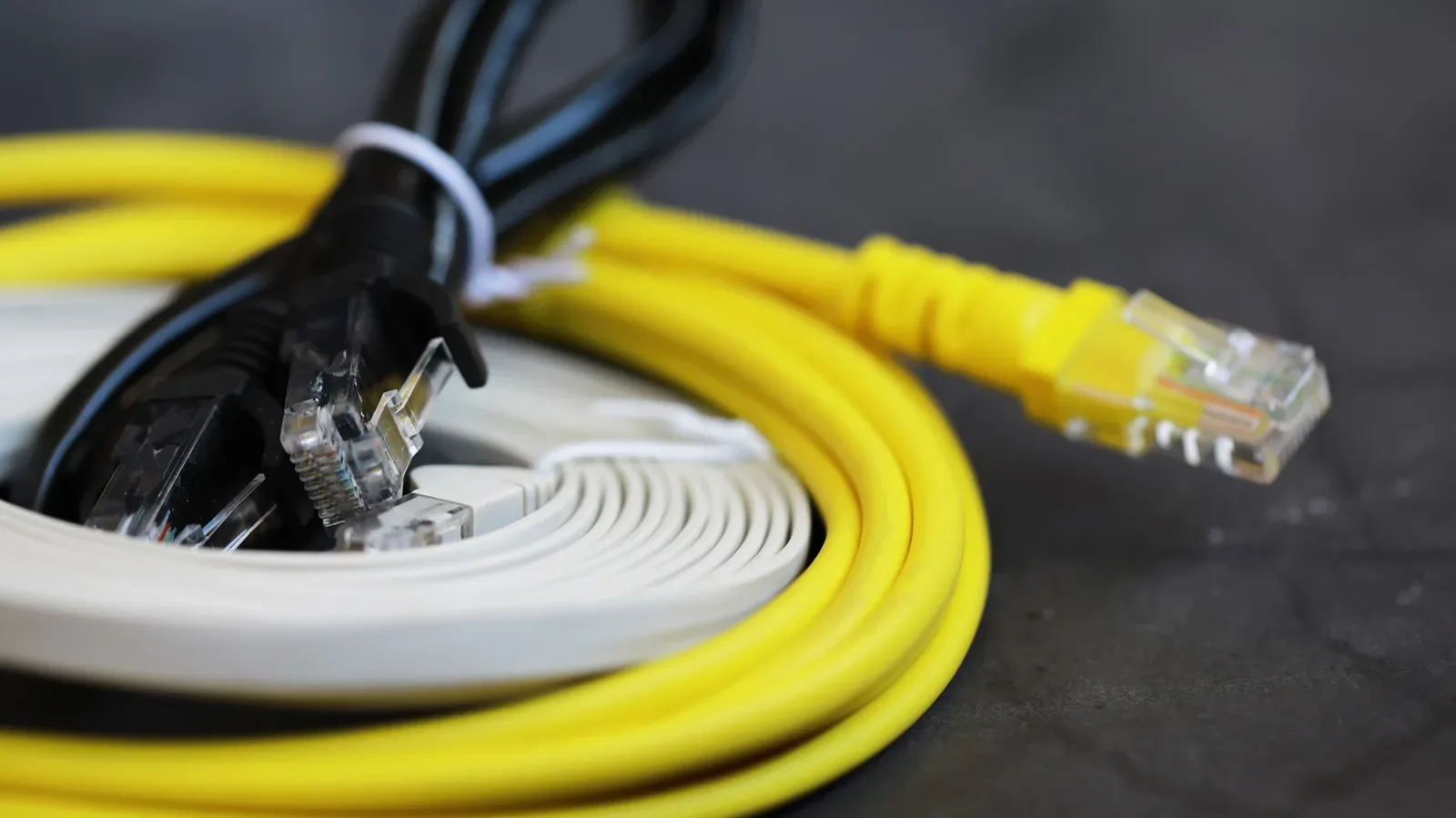
An Ethernet cable is supposed to look boring. Its job is to sit behind a desk, along a baseboard, or between a router and a console without attracting attention. Yet under its outer jacket is a deliberately patterned design: copper conductors arranged as twisted pairs rather than laid out as straight, parallel lines.
That internal twist is not a manufacturing quirk, nor is it the kind of twist that suggests a cable has been kinked, tangled, or damaged. It is a core part of how communications cables keep signals intelligible as they travel. The short version is that moving electrical charges create magnetic fields, and nearby wires can influence one another. Twisting two wires together helps reduce that unwanted interaction.
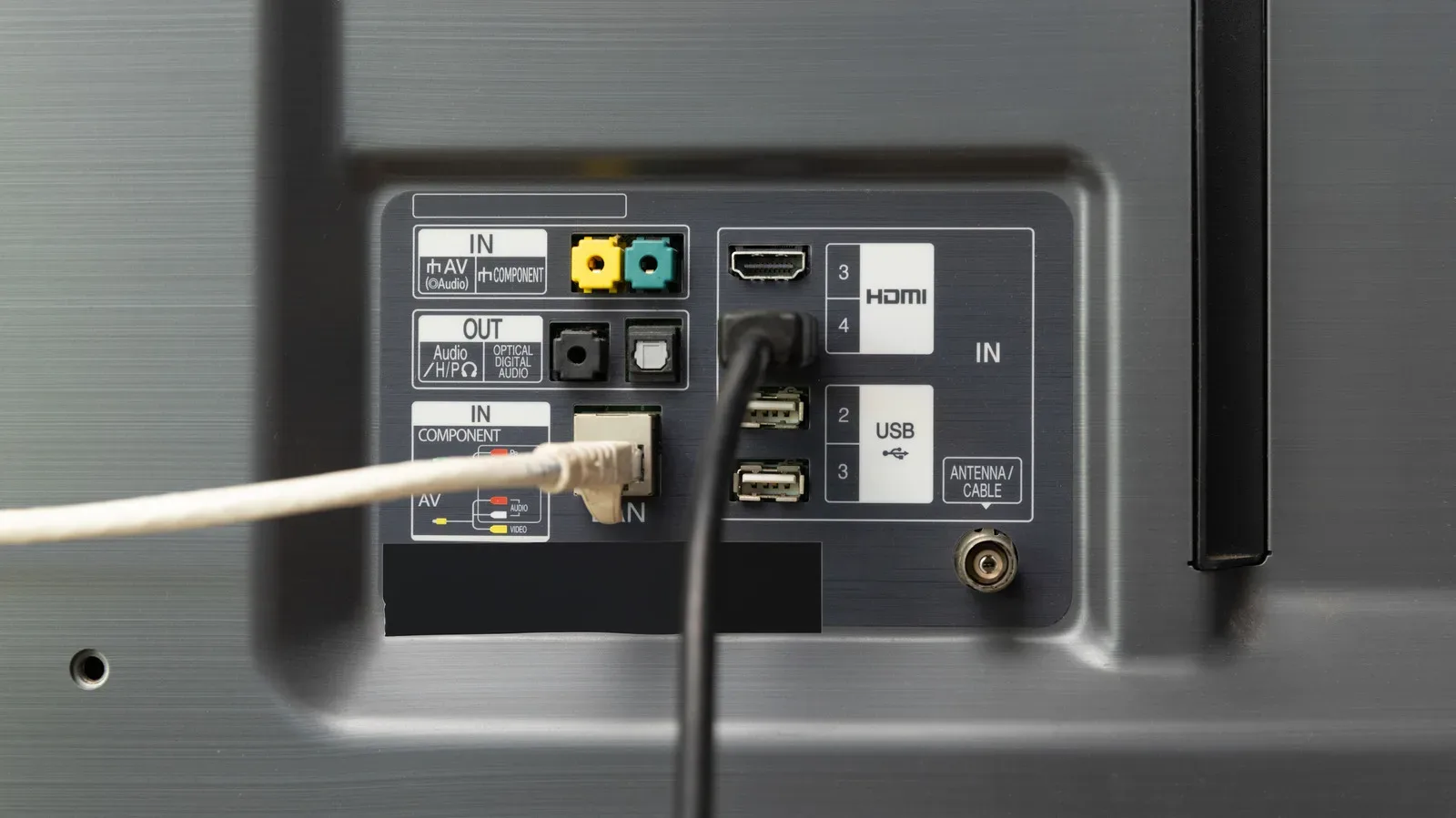
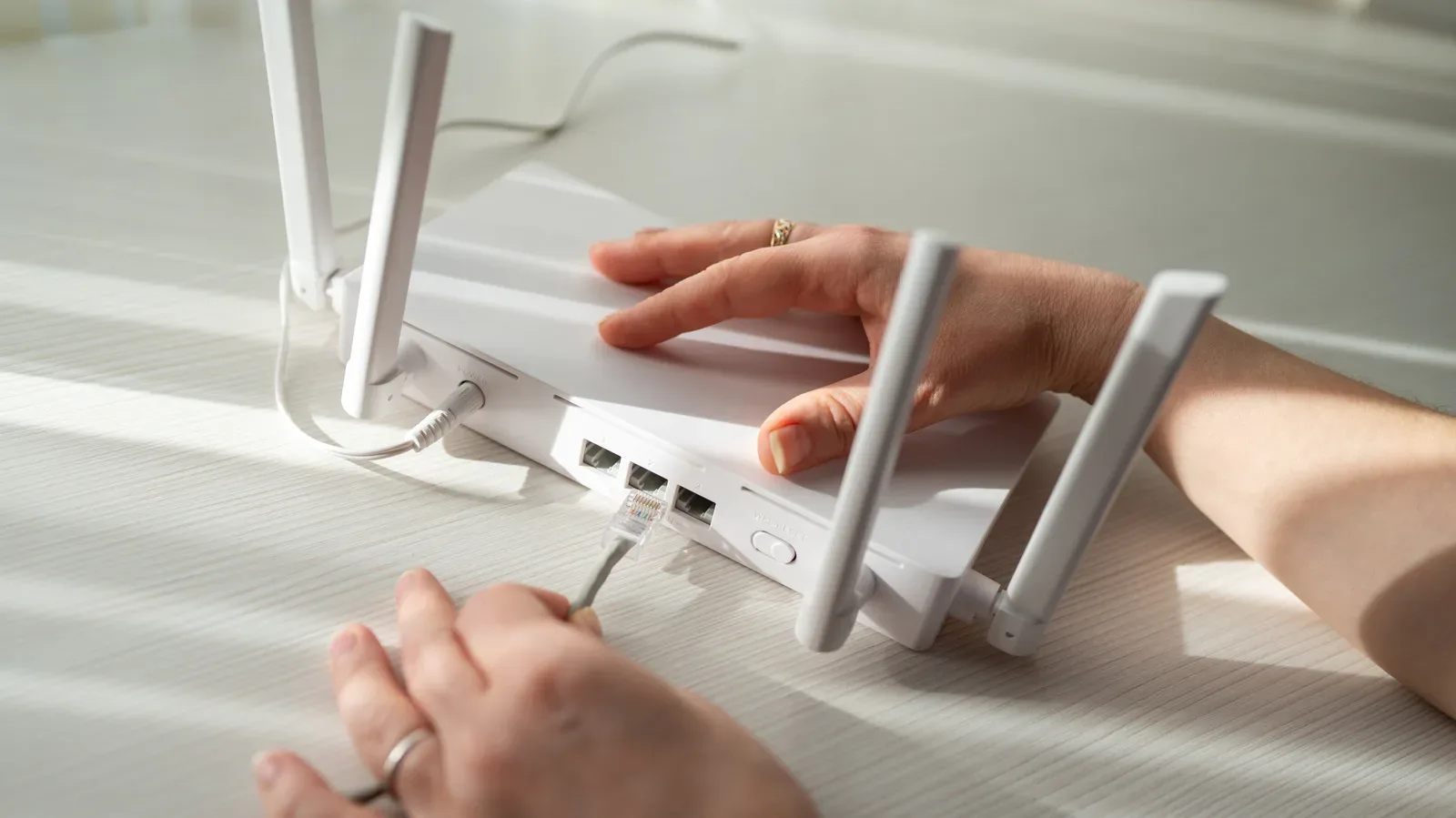
For a home setup, this explains why an Ethernet lead can remain a useful, direct link between networking equipment and devices such as a PC, game console, or smart TV. It also gives some useful perspective on what the cable is doing when it is quietly carrying a demanding wired connection. For a broader look at connection choices around a display device, see Smart TV Wi-Fi vs. Ethernet: Why the Faster Connection May Not Be the Better One.
The important difference between a kink and an engineered twist
It is sensible to avoid tangles, sharp bends, and physical stress in a cable. Those can create performance trouble or contribute to damage. The twists inside an Ethernet cable are entirely different. They are designed into the cable from the outset, repeating along the length of individual wire pairs.
That distinction matters because the arrangement is purposeful electromagnetic housekeeping. A single wire carrying an electrical signal produces a magnetic field around itself. Put another signal-carrying wire directly beside it in parallel, and the field associated with one may interfere with the electrical behavior of the other. The result can be signal degradation rather than clean communication.
Twisting the conductors as a pair changes the geometry of that relationship continuously along the cable. The intended effect is cancellation: opposing magnetic-field effects help counter the interference that would otherwise be more persistent with parallel wires. In practical terms, the goal is to let the electrical signals move without being needlessly disrupted by their immediate neighbor.
Electromagnetism is the reason, not cable aesthetics
Electromagnetism is the connection between electrical charge and magnetic fields. In this case, its relevance is straightforward: when charge travels through a conductor, a magnetic field forms around that conductor. Networking cables must account for those fields because multiple conductors occupy a small shared space.
Two parallel conductors can be a poor arrangement for distinct signals when their electromagnetic effects are allowed to influence each other. A twisted pair is an answer to that issue. By repeatedly swapping the relative positions of the two wires as they travel down the cable, the pair is arranged so the unwanted effects can oppose one another rather than simply accumulate in one direction.
Related coverage includes Why Ethernet Cables Have Twisted Wires Inside.
It is a deceptively simple physical idea doing an important communications job. The cable is not merely a passive tube for electricity. Its construction helps preserve the signal’s quality while it moves between devices.
What is inside a modern Ethernet cable?
Most modern Ethernet cables contain four twisted pairs of copper wires: eight individual conductors total, grouped two at a time. Which pairs are active can depend on how much information is being transmitted. For gigabit internet standards, all four pairs are active.
Each pair’s twist helps with the interaction between its own two conductors, but that is only part of the design problem. Four pairs positioned together can also affect each other. The term for unwanted interference among wires inside the same cable bundle is crosstalk.
Crosstalk is distinct from interference arriving from outside the cable. A cable may use a foil layer around the bundled wires to help insulate carried signals from external interference. Twisted-pair construction tackles the internal issue as well: it reduces the opportunity for the cable’s own conductors to become obstacles to one another.
Why the pairs do not all twist at the same rate
Look closely at a stripped Ethernet cable and the pairs will not necessarily appear to have identical spirals. That variation is intentional. Each pair is twisted at a different rate, meaning the tightness of the twists differs across the four pairs.
If every pair used precisely the same twisting pattern, adjacent pairs could introduce a new version of the same problem that twisting was meant to solve. Their fields and physical alignment could interact in an unhelpful, repeating way. Different twist rates make that interaction less uniform and help limit interference between pairs.
In other words, an Ethernet cable uses several layers of sensible interference control: conductors are paired, each pair is twisted, pairs use varying twist rates, and the bundle may have foil insulation for outside interference. No single detail tells the whole story. The design works as a system.
Why this is relevant to a gaming and home-network setup
The most useful takeaway is not that every household needs to shop for a mysterious special kind of “twisted” Ethernet cable. Twisted-pair wiring is already standard in contemporary technology cabling, including Ethernet. The twists are a normal part of the product rather than an exotic upgrade to hunt down.
Instead, the detail is useful because it clarifies why cable condition and routing still deserve basic care. The planned internal spirals are designed to manage signals. Accidental external damage is not. A visibly kinked cable, a lead under excessive strain, or one with a compromised outer jacket is a different matter from the orderly twists inside it.
It also helps place a wired connection in context. A cable connection is not just “internet through a wire.” It is a communications path built around minimizing interference between several simultaneously organized conductors. When gigabit standards call on all four pairs, that coordination becomes especially relevant: all four pairs are active, and each needs to coexist without excessive internal disruption.
A long-standing idea still doing modern work
Twisted-pair wiring is not a recent invention. The concept is credited to Alexander Graham Bell and dates to the 1880s, when twisted pairs were used in early telephone lines in the United States. The same underlying need—keeping communication signals clear despite nearby conductors—remains relevant in Ethernet many decades later.
That continuity is a reminder that networking often depends on durable physical principles rather than only on the newest router or fastest service tier. Electrical charges still create magnetic fields. Nearby conductors can still interfere with one another. A carefully designed twist still helps reduce that interference.
So the next time an Ethernet cable disappears behind a console or router, its outer appearance tells only part of the story. Inside are four copper pairs, each arranged in a particular pattern to resist crosstalk and support clean signal travel. The cable’s twists are not a flaw to straighten out. They are one of the quiet engineering choices helping keep a wired connection connected.