Undertale has the kind of soundtrack that invites arguments the instant anyone tries to condense it. The game’s music is not merely a collection of memorable tracks: it is a web of recurring motifs, joke songs, regional themes, combat cues and emotional payoffs that change meaning as players move through the Underground. Put that material on a symphonic concert program and omissions become inevitable. Put “Temmie Village” on that program while leaving out the standard battle music, however, and you have created a debate that could power the CORE.
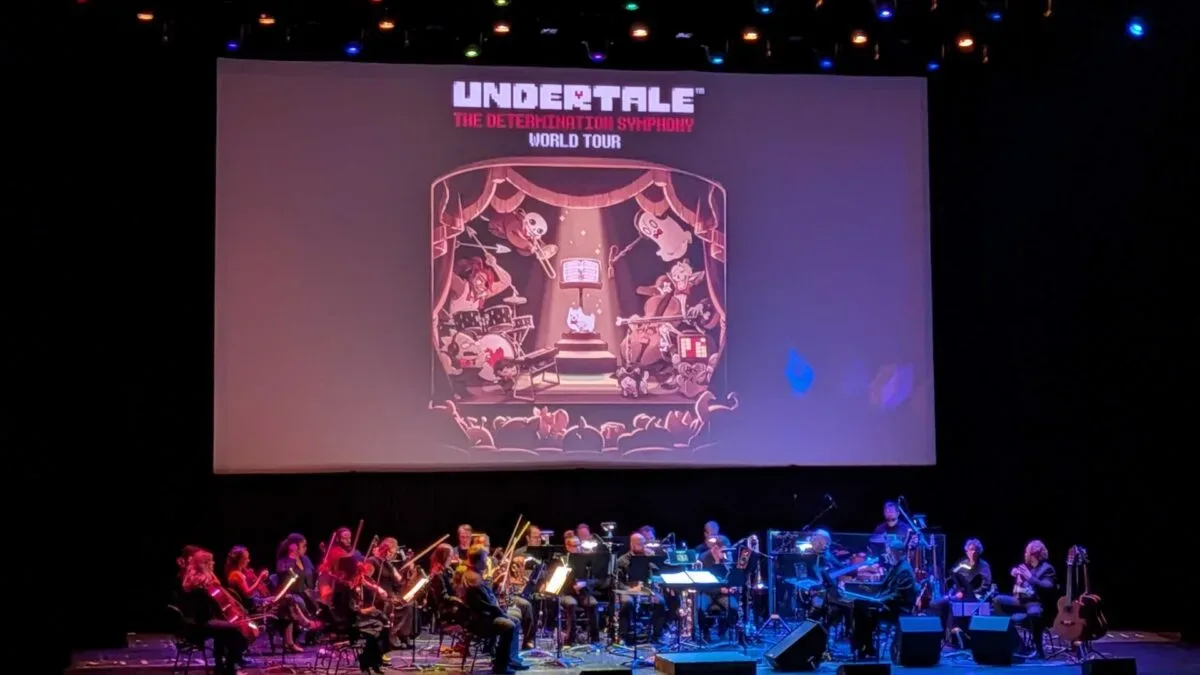
That was the friction surrounding Undertale: The Determination Symphony, performed at Kauffman Center in Kansas City on September 2, 2026. By all accounts, the atmosphere itself had plenty going for it: fans arrived in polished cosplay, the room was enthusiastic without becoming disruptive, and the orchestral arrangements were generally enjoyable. There were occasional signs that this sort of touring presentation may not always receive all the rehearsal time its material deserves, but the overall performance landed as a pleasant celebration of Toby Fox’s enormously beloved score.
Most crucially, “Megalovania” made it to the finish line, and the conductor’s visible enthusiasm helped sell the moment. That is the baseline triumph. A concert built around Undertale must understand that “Megalovania” is not background noise; it is a communal ritual with a very fast tempo and an audience that knows every turn.
The bigger question is how the program got there. Its opening stretch apparently followed the game’s path with reasonable clarity, moving through “Once Upon a Time,” “Your Best Friend,” “Fallen Down,” “Ruins,” “Home,” “Heartache,” “sans,” and “Snowy.” Then it began treating the Underground like a speedrun route devised by someone who took a wrong turn at Snowdin and decided to commit.
A concert setlist is not a soundtrack playlist
It is worth granting the arrangement team some room. A chronological presentation of the full soundtrack would not make a particularly tidy two-act concert. The game has many compact tracks, several variations on the same melodic material, and dramatic peaks that arrive at awkward points for a conventional intermission. Ending the first act with “Bergentrückung” and “ASGORE,” even after a leap past substantial portions of the adventure, makes musical and theatrical sense. It provides scale, danger and a definitive curtain-drop.
Likewise, no reasonable program can include every track. An orchestra concert cannot stretch to three hours simply to accommodate every menu cue, shop tune, gag theme and battle variation. Selection means sacrifice.
But successful adaptation is about identifying what cannot be sacrificed. It should preserve the game’s geographical identity, its emotional architecture and the major musical ideas that players instinctively associate with a particular place or turning point. On that standard, the omissions are especially conspicuous because the show did find time for pieces such as “Spooktune,” “Temmie Village” and “Song That Might Play When You Fight Sans,” the last of which does not actually appear during gameplay.
Those choices are not indefensible. “Spooktune” is funny, instantly recognizable and probably a delightful orchestral novelty. “Temmie Village” has an intentionally absurd charm that can make a live room smile. Yet a concert’s limited runtime turns every novelty selection into an argument against something larger.
Related coverage includes Undertale Determination Symphony Earns Praise, but Its Missing Songs Spark Debate.
The missing tracks, from understandable to absolutely baffling
“Can You Really Call This A Hotel, I Didn’t Receive A Mint On My Pillow Or Anything”
The absurdly named hotel cue is a jazzy reworking of central Undertale musical DNA, so its exclusion is survivable. The program already included “Memory,” itself a gentler music-box perspective on “His Theme.” Still, the hotel track offers a distinct color and a more playful groove. It would have been a compact way to bring another flavor of the game’s main melody into the hall.
“Stronger Monsters” and “An Ending”
“Stronger Monsters” belongs to the game’s limited Hard Mode content, making it less fundamental than the broadest regional or story themes. Yet it is energetic, upbeat and well suited to a brief battle-focused transition. “An Ending,” meanwhile, turns “Ruins” into a reflective piano statement with a key change. Neither omission breaks the concert’s identity, but each looks like a missed opportunity for pacing and emotional continuity.
“Quiet Water”
This one is difficult to dismiss on runtime grounds. “Quiet Water” runs only 32 seconds. It could have followed “Waterfall,” or created a breath between “Bird That Carries You Over A Disproportionately Small Gap” and “Dummy!” Rather than demanding a whole standalone movement, it could have functioned as atmosphere: a small patch of stillness before the setlist resumed its hops across the map.
“Here We Are”
Now the absence becomes more consequential. “Here We Are” is a major location theme, one that gives the True Lab its uneasy, haunting identity. It also offers orchestral potential that is notably different from the score’s brighter melodies and high-pressure battle tracks. Pairing it with “Amalgam” could have created a genuinely unsettling mini-suite, revealing another side of what an orchestra can do with this material.
“Start Menu” and “Menu (Full)”
These tracks suggest an ideal structural device for a concert’s second act. Beginning sparsely with the introductory menu music, then building through successive variations until “Menu (Full)” arrives with the orchestra at maximum weight, would dramatize the game’s own escalating sense of possibility. It is one of those arrangements that feels obvious only after someone points it out—which is often the sign of a strong concert-programming idea.
“Reunited,” “Bring It In, Guys!” and “Last Goodbye”
The True Pacifist material is where the concert’s shape seems most open to challenge. “Reunited” is long, and length alone may explain its absence. But it is also an essential decompression point after “Hopes and Dreams” and “SAVE the World.” Without that release, a finale risks treating emotional resolution as a box to tick rather than a space to inhabit.
The credits tracks “Bring It In, Guys!” and “Last Goodbye” are even more frustrating to lose. Perhaps the visual component made them awkward choices; showing game credits and Kickstarter backers on the venue screens may not have fit the intended staging. Musically, though, those songs are a farewell. The recorded version of “Last Goodbye” ends with piano performed live by Fox, adding another layer of personal character to a piece that already feels like the game waving back at its players.
“Another Medium”
Skipping “Another Medium” means skipping Hotland’s defining theme. This is not an obscure sidebar or an optional joke. Hotland is a major stretch of Undertale, and its music supplies much of the area’s restless, industrial momentum. The concert jumped to “Spider Dance” and “It’s Raining Somewhere Else” while apparently leaving the region’s principal map theme behind. That is a particularly strange trade, because “Another Medium” is both a fan favorite and an ideal candidate for a full orchestral treatment.
“Battle Against a True Hero”
Undyne’s ultimate battle theme is another omission that feels hard to reconcile with the program’s priorities. “NGAHHH!!!” and “Spear of Justice” ensured she was represented, but “Battle Against a True Hero” is the musical escalation that turns her role into something mythic. A late encore pairing it with “Megalovania” would have made a convincing one-two punch: two iconic boss tracks, each delivering a different kind of intensity.
“Enemy Approaching”
This is the omission that transforms reasonable grumbling into bewilderment. “Enemy Approaching” is the normal battle theme. It is the musical signal for the basic, recurring encounter loop at the heart of Undertale. Leaving it out is akin to presenting a concert built around a celebrated adventure game and omitting the sound of opening a door because a novelty jingle had better stage banter.
It does not need to dominate the evening. It could be a concise transition, a medley component or a gateway into “Stronger Monsters,” boss themes and other battle material. But it belongs. The fact that it was absent makes the concert’s otherwise smart and spirited musical celebration feel oddly incomplete.
The better shape hiding inside the existing program
A revised program would not need to abandon the successful elements. Keep the early Ruins material in sequence. Preserve “Bird That Carries You Over A Disproportionately Small Gap,” because an orchestra taking that tiny comic cue seriously is exactly the sort of affectionate silliness Undertale earns. Keep “ASGORE” as an Act 1 closer if desired. And, yes, end the main performance with “Megalovania” if that is the show’s intended final explosion.
But make the journey legible. Give Papyrus’s section more space. Let “Enemy Approaching” establish the ordinary rhythm of conflict. Allow “Another Medium” to carry listeners into Hotland. Reserve the strange comedy tracks for a deliberately comic suite rather than letting them crowd out structural music. Then let the closing arc breathe: “Hopes and Dreams,” “SAVE the World,” “His Theme,” “Reunited,” “Bring It In, Guys!” and “Last Goodbye” have the bones of a sweeping finale already built into them.
For anyone who misses the days when gaming music was just another rule in a living-room contest, our guide to the unwritten rules of couch multiplayer is a reminder that games have always been social performance. A symphony hall simply gives that performance strings, brass, formalwear and considerably less tolerance for someone pausing the game to make a sandwich.
Undertale: The Determination Symphony evidently got the hard part right: it gave a devoted community an enjoyable night with music worthy of orchestral attention. The next challenge is equally important. When adapting a score this densely loved, the setlist must not only hit the famous notes. It has to remember the routes players traveled to reach them.