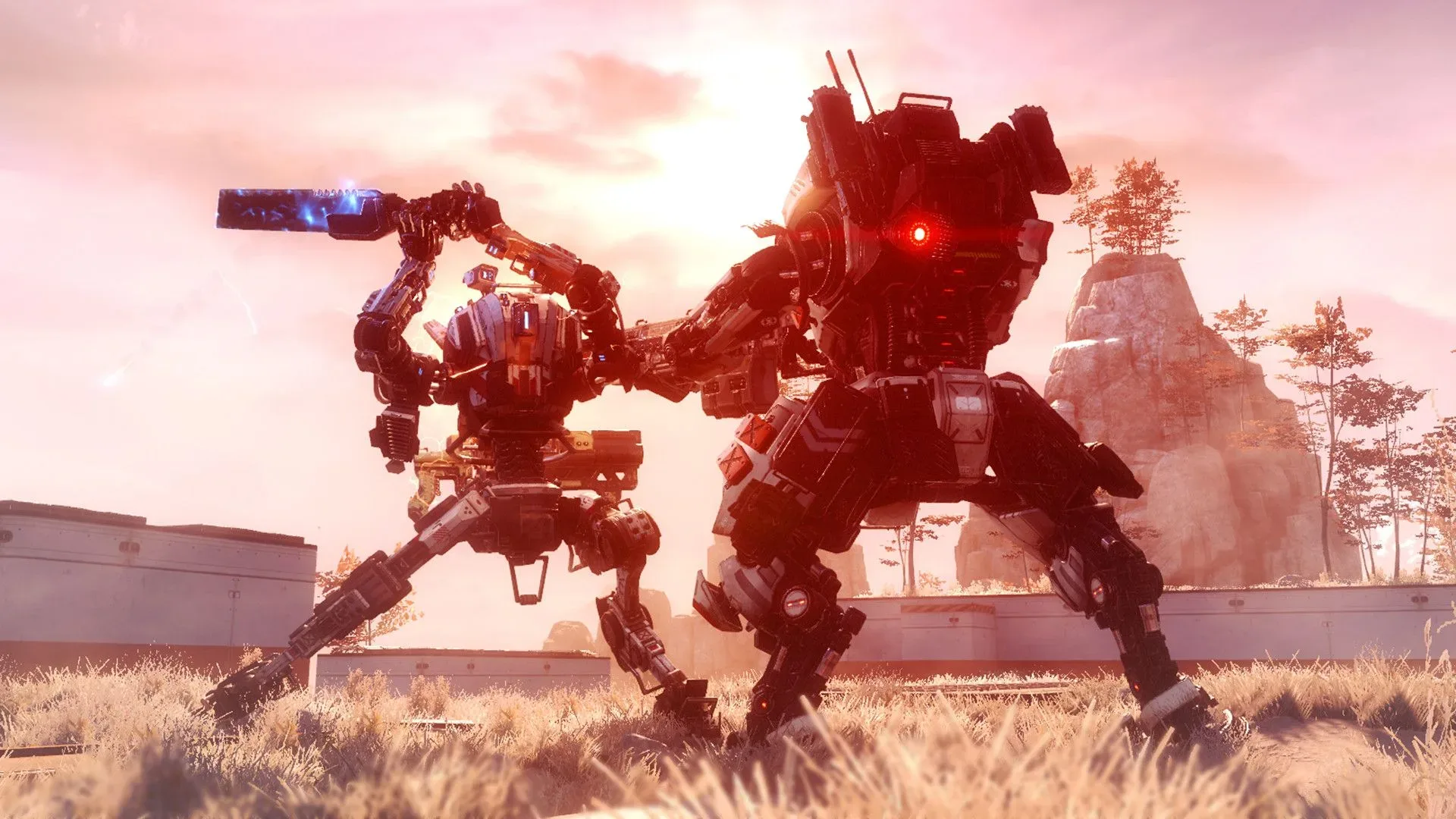
Titanfall 2 is an unusually clear snapshot of a turning point in big-budget games. It has the visual language of a modern service title: a multiplayer menu built around updates, news, cosmetics and ongoing activity; post-launch maps, modes, weapons and an extra Titan; and a competitive loop designed to keep players coming back for another match. But it also has a self-contained single-player campaign and a multiplayer ruleset that, for the most part, stopped changing not long after launch.
That combination makes Respawn Entertainment’s 2016 shooter more than a fondly remembered mech game. It is a useful counterfactual. Titanfall 2 shows what a major multiplayer release looked like while publishers were learning how much value could be found in regularly updated games, but before every successful competitive game was expected to become a permanent, ever-changing platform.
The irony is sharp. Its support ended relatively quickly, and the old “Operation Endeavor patch is now live!” notice reportedly remains on the title screen years after the patch itself. Yet that abandonment has also preserved a particular version of Titanfall 2. The game remains available as an authored campaign, and its online play retains an identity that has not been continually rebuilt around new seasons, major reworks or recurring monetization beats.
What “live service” means in this context
Live service is not simply a game that has multiplayer or receives patches. The term generally describes an ongoing operating model: a game is supported for a long period with new content, balance changes, time-limited events and often a storefront selling cosmetic or other digital items. The goal is not only to sell a boxed or digital release once, but to create a reason for players to return—and potentially spend—over time.
That structure has become familiar across AAA games. Players expect seasonal refreshes, limited-time playlists, new cosmetics and mechanics that may be significantly different from those present at launch. Such support can keep a community active and allow developers to respond to clear problems. It can also mean that the game a player likes in year one may be substantially altered by year three.
Titanfall 2 contained ingredients of that future without fully committing to it. Across six updates, it received free additions including maps, modes, cosmetics, weapons and an additional Titan. Updates such as Angel City’s Most Wanted and Monarch’s Reign made the multiplayer feel like it had a long runway. But the runway ended about a year after release.
It is therefore more accurate to call Titanfall 2 live-service adjacent than a full service game. Its post-launch support mattered, but the game’s existence was not wholly dependent on maintaining a constantly expanding content pipeline or on making its multiplayer hub the sole center of value.
A sequel that moved in the “wrong” direction—and benefited
The first Titanfall was deliberately distinct from Call of Duty. Respawn’s roots were closely associated with Infinity Ward, after Vince Zampella and Jason West left that studio in 2010 amid a dispute involving alleged withheld Modern Warfare 2 royalties and subsequent litigation. Many team members followed. The new studio’s first game had a futuristic setting, wallrunning and giant Titans—mechanized combat units that radically changed the scale of a firefight.
Related coverage includes Titanfall 2's Unfinished Live-Service Future Helped Preserve What Made It Great.
The original game did not launch on PlayStation and did not offer a conventional campaign. It attempted to blend story material into competitive multiplayer, a difficult fit when matches must accommodate repeated sessions, variable outcomes and players who are primarily there to win.
Titanfall 2 took a route that now seems almost backwards for a multiplayer franchise: the sequel added a fully developed offline story campaign. That choice gave the game something service-driven structures can struggle to provide: control over pace, character development and escalating level design.
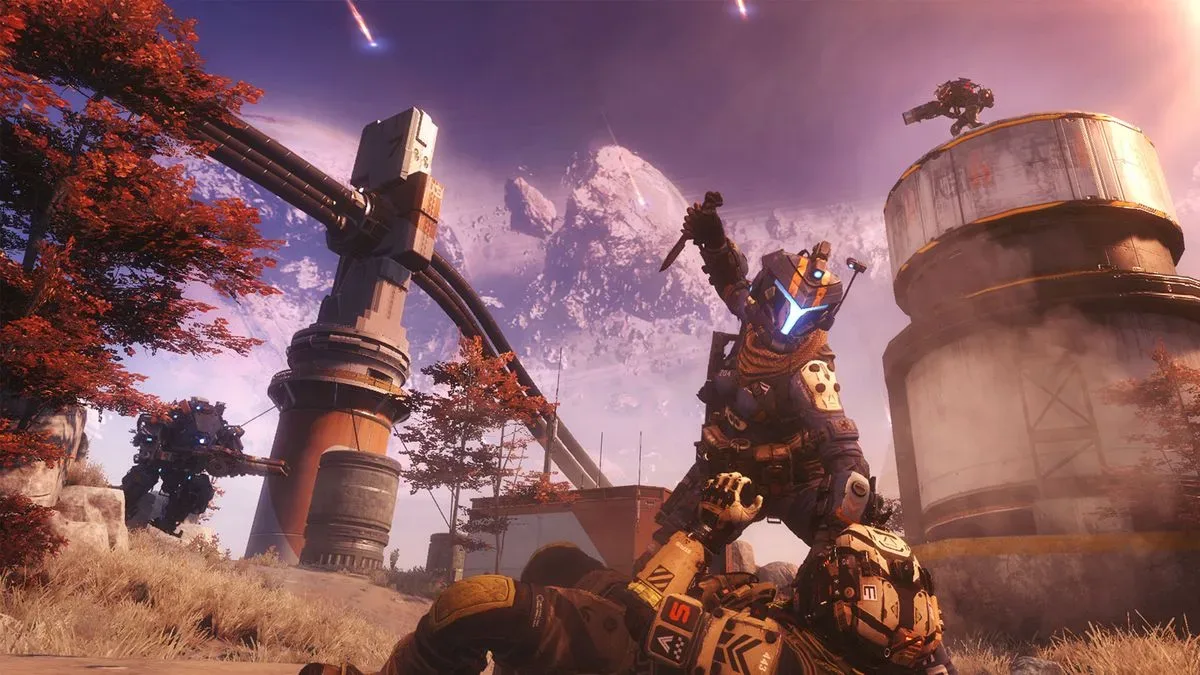
Its campaign’s movement is central to that success. A Pilot can wallrun and double-jump, enabling a faster, more vertical form of traversal than an ordinary military shooter. Wallrunning is exactly what it sounds like—maintaining momentum across suitable vertical surfaces—but in Titanfall 2 it is more than a stylish trick. Level progression regularly asks players to read spaces as linked movement routes, using walls placed at workable distances to carry speed from one surface to another.
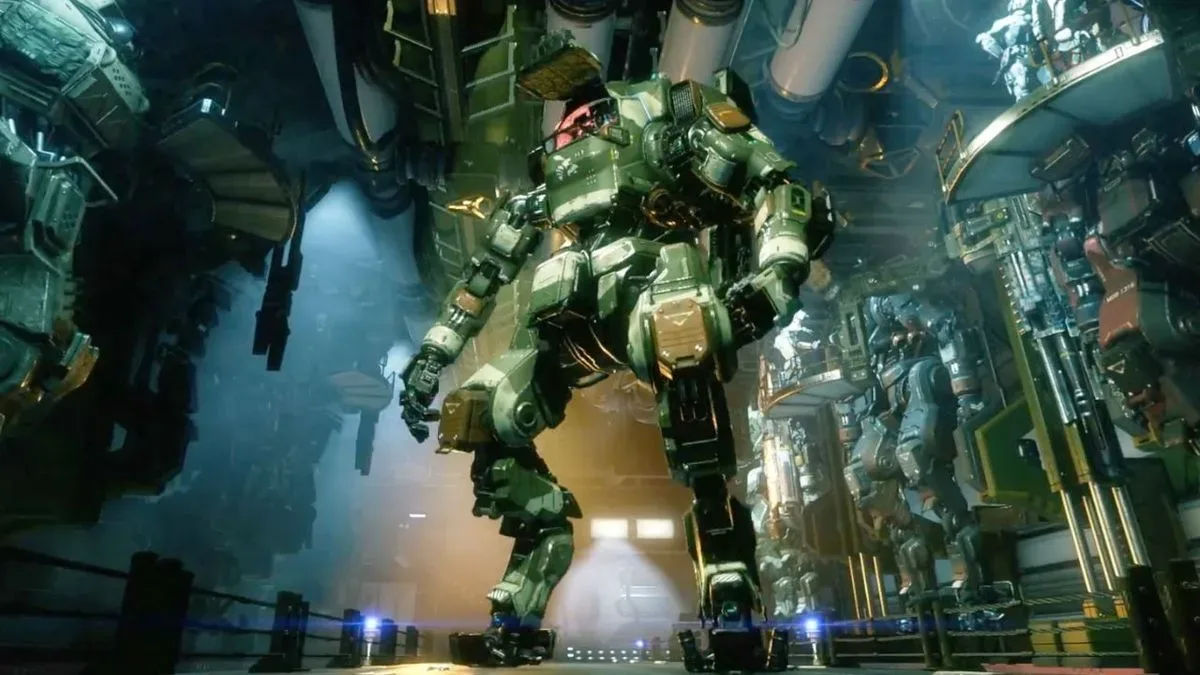
The best result is not just velocity; it is legibility. A player is asked to see a level in layers: ground cover, walls, openings, elevated paths and gaps that only make sense once momentum is understood. In Into the Abyss, the setting’s enormous factory machinery turns the environment itself into a shifting obstacle course. The campaign uses its industrial scale for spectacle, but also for playable geometry.
Effect and Cause is widely singled out because it lets players move between two timelines within the same space. The premise is technically striking, but its importance is more practical: each switch changes both the player’s immediate safety and their understanding of the route ahead. It is an example of a campaign level built around one strong interaction rather than a pile of unrelated set pieces.
BT-7274 proves why authored pacing matters
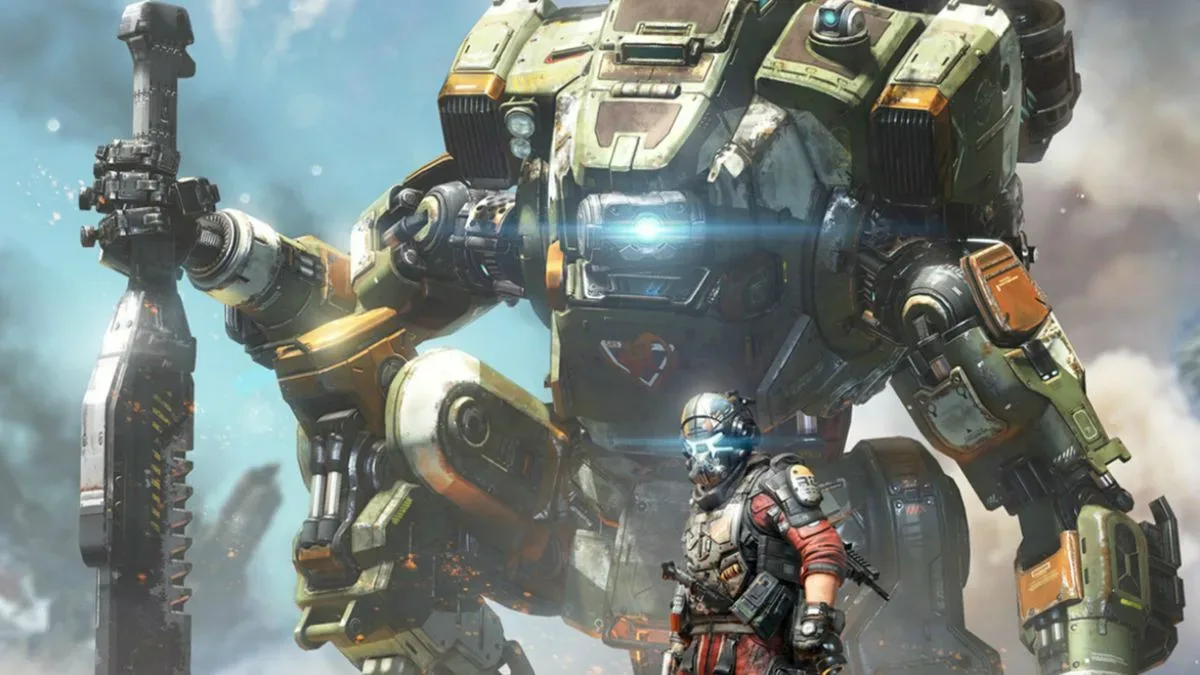
The campaign also establishes something the first game’s PvP-led storytelling could not easily sustain: a relationship between the player and BT-7274. BT, the Titan assigned to the player character, is a machine with a notably restrained vocal performance from Glenn Steinbaum. The writing and delivery nevertheless give the character small flashes of personality.
This is not an argument that multiplayer games cannot have memorable characters. It is an argument about control. An offline campaign determines when a conversation happens, how long a player sits with it, when the stakes rise and when an interaction is allowed to pay off. A competitive match cannot reliably make those promises. Its tempo belongs to human opponents, respawns, score limits and the possibility that a player is too busy being shot at to absorb a story beat.
Titanfall 2 benefits from having both formats rather than forcing one to imitate the other. The campaign turns a Titan into a companion and a storytelling partner. Multiplayer turns Titans into contested assets that reshape a match. The same broad fiction supports two very different goals.
The multiplayer’s real trick: Titans are powerful, not invulnerable
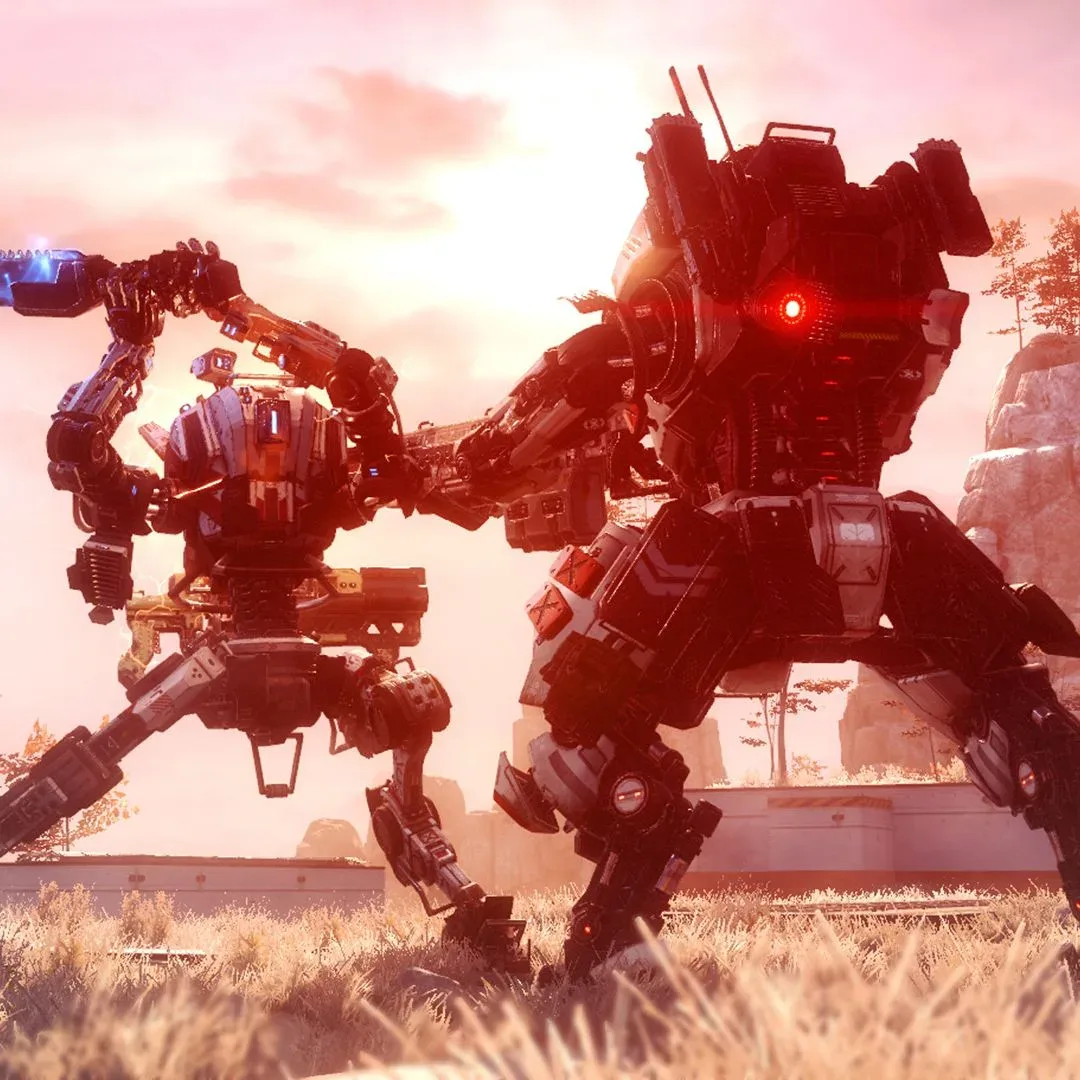
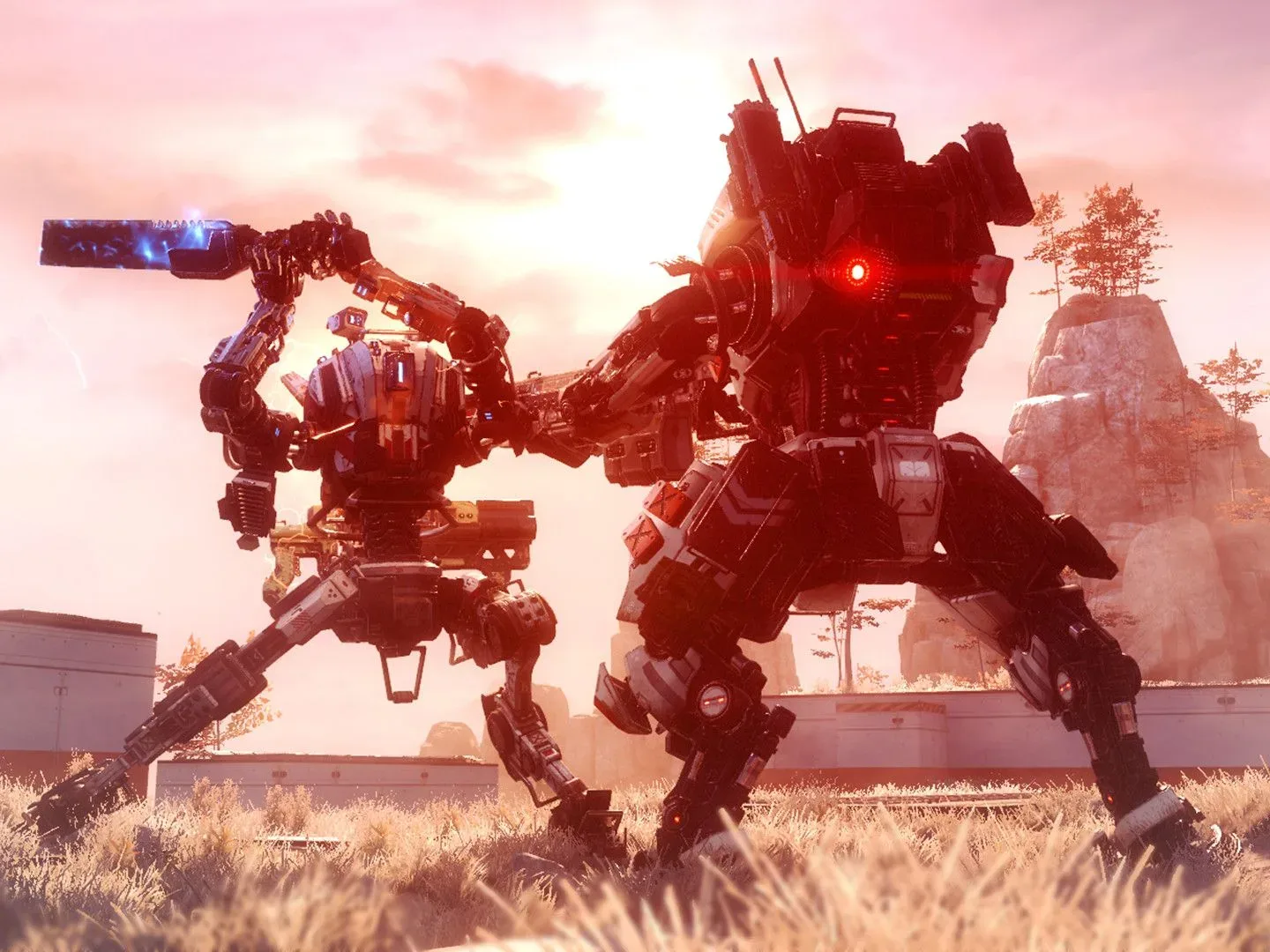
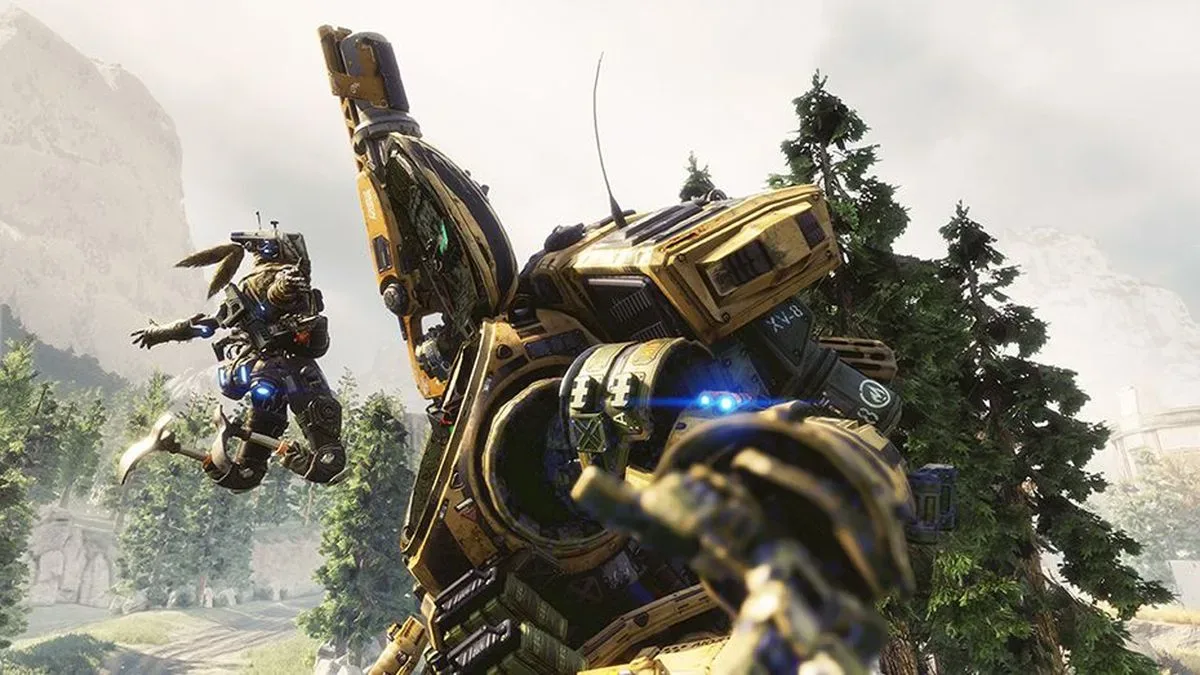
Online, Titanfall 2 is strongest when it leans into the tension between nimble Pilots and massive Titans. A Titan is an obvious power fantasy: heavy steps, heavy weapons and the ability to crush opposing troops underfoot. But a competitive game cannot let one side feel helpless whenever a mech arrives.
Respawn’s solution is a combination of map design and counterplay. Titans have open areas in which to move and fight, while Pilots have structures, cover and routes that support evasion and ambushes. “Counterplay” is the useful design term here: it means a player has meaningful tools to answer a threatening strategy, rather than merely waiting for it to end.
Pilots can rodeo an enemy Titan by leaping onto it and dealing guaranteed damage if they survive the sequence. They can also use dedicated anti-Titan weapons to wear down a machine’s health from safer positions. The sequel also made Titans feel more vulnerable than those in the first game, including by dropping shield regeneration. That decision changes the emotional rhythm of a match. Seeing an enemy Titan while waiting for one’s own is not automatically a dead end; it can be an opportunity to contribute damage, exploit cover and influence the larger fight.
The balance may never be mathematically perfect because the game is balancing fundamentally unequal roles. That is part of its appeal. A Pilot is quick, fragile and inventive; a Titan is durable, loud and imposing. The important achievement is that neither role completely erases the other.
Why Attrition still explains the game so well
Attrition remains the clearest expression of Titanfall 2’s multiplayer loop. Teams race toward a score target by defeating Pilots, Titans and AI-controlled soldiers and robotic units. The inclusion of AI targets gives every player additional ways to help the team, while the threat of enemy Pilots and Titans keeps the mode from becoming a simple race through disposable targets.
The end-of-match escape is equally revealing. When the losing side’s respawns are disabled, an escape ship arrives and remaining players can attempt to reach it. The ship can be destroyed, so the outcome is not ceremonial. It gives a losing team a final objective and lets a match end with one more burst of movement, risk and pursuit rather than a flat scoreboard transition.
Matches reward speed and aggression because players work toward calling in their next Titan. That produces a distinctive rhythm: a Pilot might wallrun above an unsuspecting opponent, slide through a corner for a close-range surprise, then eventually trade that agility for the Titan’s power. The game is not merely a shooter with mechs bolted on; earning, deploying and countering Titans is the structure around which its tempo is built.
Preservation by neglect is still a complicated victory
There is no need to romanticize dwindling support. The supplied account describes player populations in the hundreds rather than the thousands, no added crossplay, and matchmaking that can take minutes. Crossplay, the ability for people on different platforms to join the same player pool, would ordinarily help a game with a smaller population find matches more quickly. Its absence makes the remaining community more fragmented.
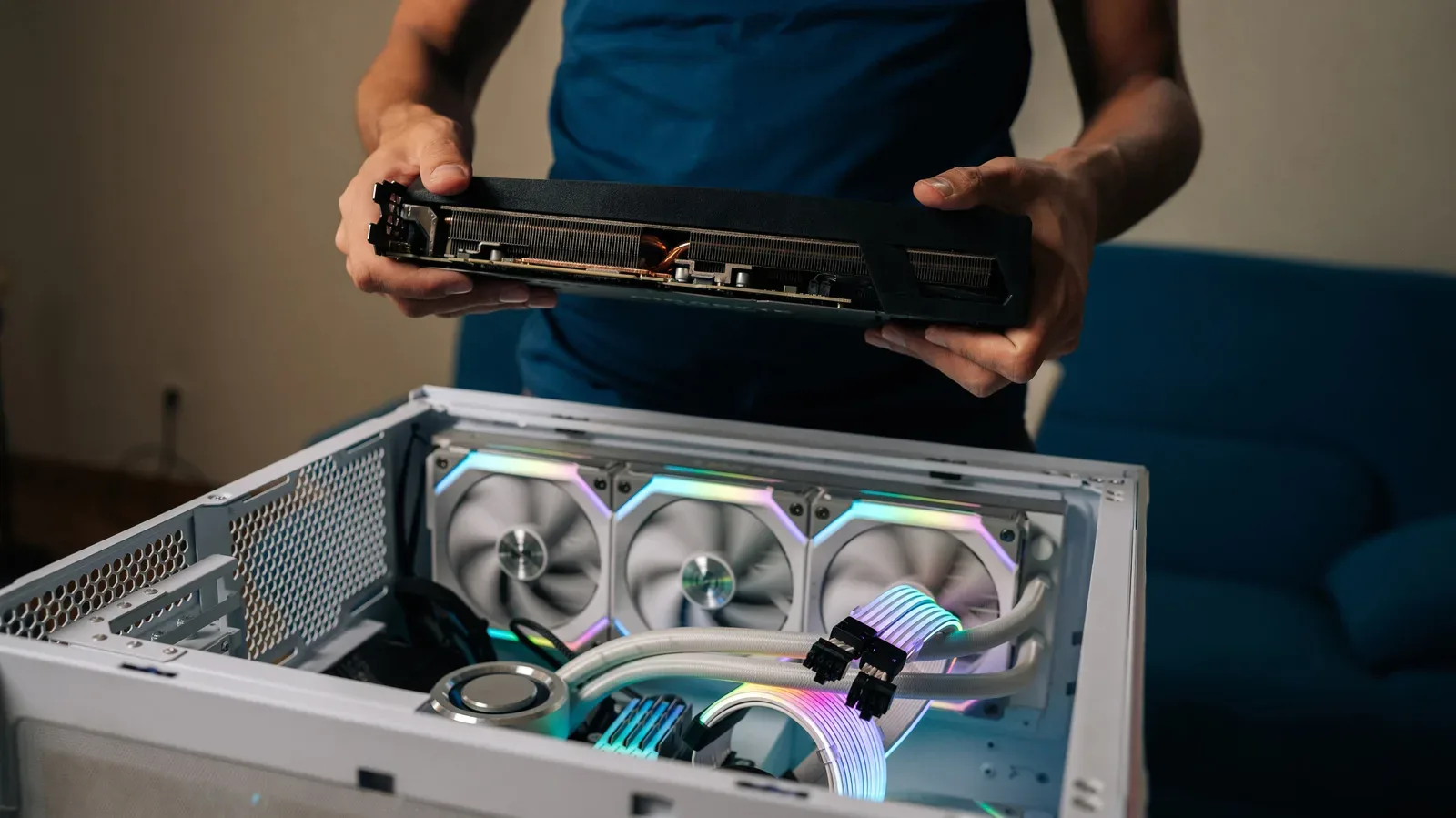
For anyone returning on PC, it is sensible to remember that a stable game does not remove the usual hardware concerns; component fit, power requirements and cooling remain relevant when making any upgrade. Our guide to PC graphics-card compatibility checks covers the basic pre-installation questions worth settling before opening a case.
Still, Titanfall 2’s continued server availability means its multiplayer has not vanished in the way some online-dependent games can. A game designed around ongoing spending and a perpetual audience may face a brutal endpoint when that audience or revenue falls short. Titanfall 2 had a conventional release model behind it, a complete campaign that works apart from its online population, and multiplayer that can continue to function without a fresh seasonal storyline.
That does not make its curtailed future ideal. The game’s menu, with its old promotional material and permanent patch message, reads less like a living service than an exhibit of a plan left unfinished. Its free update commitment also looks markedly different now that premium cosmetics and paid seasonal tracks have become common ways to finance continued support.
But the unfinished pivot gives Titanfall 2 a rare quality. Its campaign remains a designed sequence with a beginning, escalating ideas and a relationship at its center. Its multiplayer remains substantially recognizable rather than endlessly re-authored. The game forecast the service-game era, then stopped short of being consumed by it.
That is why Titanfall 2’s legacy is not simply that it deserved more updates or that it might have pointed toward a different sequel. It demonstrates that a multiplayer game can be supported after launch without surrendering its core shape, and that a finished campaign can preserve value long after the update schedule has gone quiet. Its old title screen may be frozen, but the design underneath it has not been replaced piece by piece.