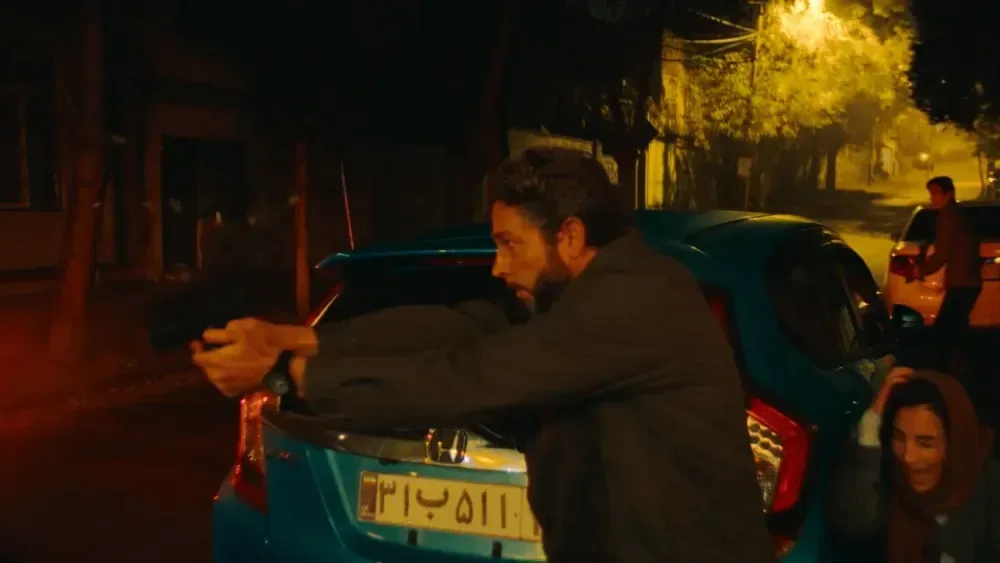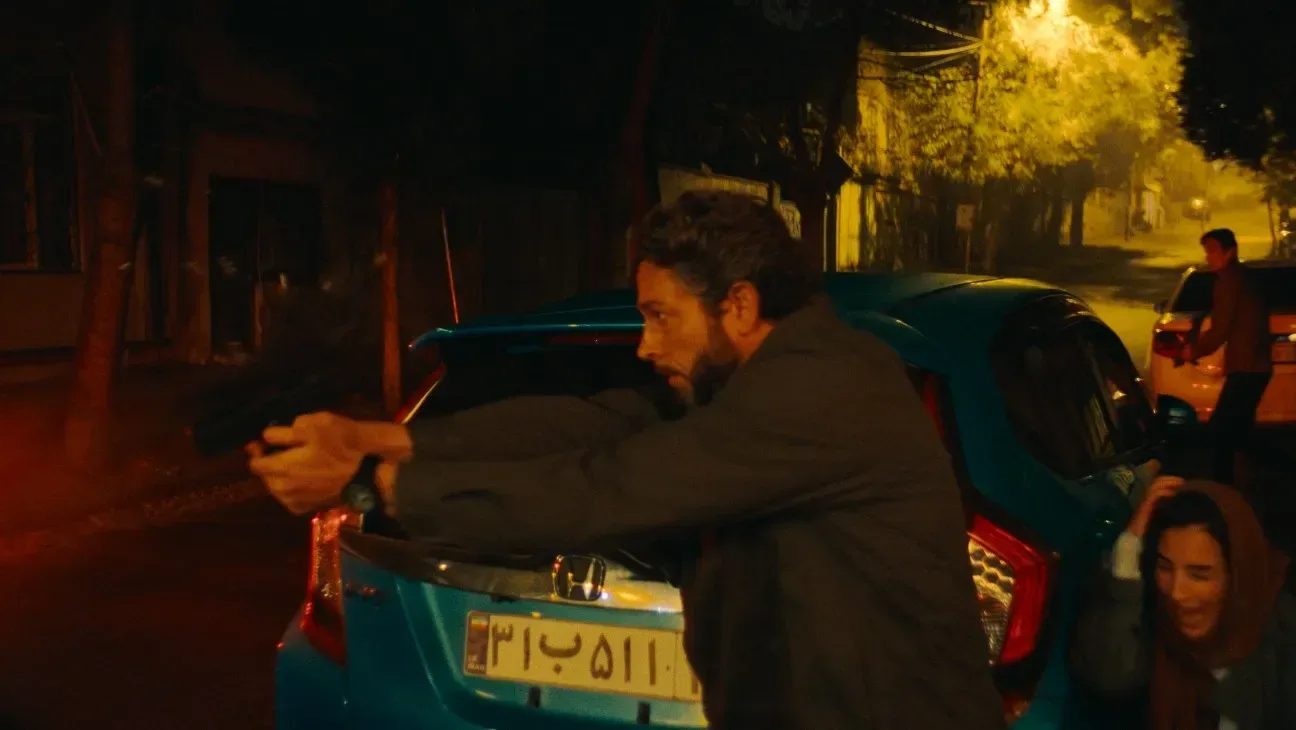
The Fix has the ingredients of an old-fashioned covert-operations thriller that wants to feel bigger than a single mission. A disgraced former CIA special-operations leader, a damaged crew, a mentor with dangerous secrets, a dissident stranded in Tehran, buried money from the fall of the Shah and a parade of cover identities all arrive before the film’s 141 minutes are over. It is a substantial pile of plot, and writer-director Guy Moshe keeps it moving with enough polish that the film remains watchable. Yet the same abundance becomes its central problem: the movie rarely chooses which emotional or political thread should matter most.
Zachary Levi leads the film as Tucker, an ex-operative whose instinct to save people clashes with the chain of command. Liam Neeson plays Larry, his former handler and the figure whose deteriorating health opens the door to the main story. Their pairing sounds like a sturdy action-movie hook, especially given Neeson’s long association with hard-edged thrillers. But viewers anticipating a two-hander should temper that expectation. Larry is essential to the premise and prominently positioned around the movie, though Neeson spends much of the running time on the margins once the operation begins.
A Kabul prologue gives the mission real urgency
The opening roughly half-hour is set amid the 2021 evacuation of Kabul. Tucker and his unit are told to retrieve a local ally before the Taliban capture him. Faced with a fast-moving crisis, Tucker makes choices that violate direct instructions. Those decisions save lives, but the institutional price is immediate: Tucker and his squad are pushed out of the Agency.
It is a useful foundation for the character, supplying an understandable reason for his alienation and for the loyalty that remains among the men who served beside him. The prologue also establishes the movie’s preferred mode: hurried deployments, armed confrontations and decisions made when every option carries consequences. It has a clean, practical objective, something the larger Tehran plot occasionally lacks once it begins layering in old intelligence, family obligations, political repression and a fortune that has supposedly remained hidden for decades.
After Kabul, the group returns to the United States and struggles with civilian life. Tucker has retreated from his ex-wife and son because he sees himself as broken. His fellow former operatives likewise have trouble locating a purpose beyond the work that defined them. The material is familiar, but it gives The Fix an emotional route into its characters before it asks them to go back into the field.
Tehran brings together the rescue and the treasure hunt
Larry’s migraines have worsened into early-onset dementia, and in his confused state he begins revealing classified information. Among the secrets is a cache of millions concealed in Tehran during the 1979 collapse of the Shah’s government. Tucker follows the lead to Paris, presenting himself as a journalist when he visits a woman connected to Larry’s past.
She offers a bargain. She will direct Tucker toward the hidden wealth if he helps bring her daughter, Maryam, to safety. Maryam, played by Lara Wolf, is evading Iranian authorities because of her activism. That arrangement turns the movie from a retrieval story into a rescue mission, while the promise of old money ensures the team has more than one reason to take the risk.
Tucker calls the crew back together and sends them into Iran behind constructed identities. His own cover is a New Zealander interested in exporting rugs. Elnaaz Norouzi plays Zara, a Farsi-speaking university student recruited in the U.S. to pose as Tucker’s new wife. Crucially, Tucker has not told Zara what the trip is really about. That decision creates distrust inside the team before the external pressures start closing in.
Related coverage includes ‘The Fix’ Review: Zachary Levi Leads a Slick, Overstuffed Tehran Thriller.
The movie has no shortage of operational complications. Zara’s impulsiveness affects the plan, the purported stash is located in a place that is now a military installation, and access eventually requires the team to seize a senior official played by Navid Negahban. Quincy Isaiah also joins the ensemble as a replacement following a loss within the group. Wes Chatham, Jake Choi and Augusto Aguilera are among the other members of the former unit.
All of that gives Moshe many levers to pull, but The Fix pulls them so frequently that surprise begins to lose value. Hidden allegiances and reversals are standard tools in espionage fiction; a good one reshapes the audience’s understanding of what came before. Here, the sheer volume of double-crosses threatens to make the individual turns feel mechanical. The question stops being who can be trusted and becomes whether anyone in the frame will be permitted to be straightforward for more than a scene.
Physical momentum is stronger than the spy-game intricacy
The best material in The Fix is generally its most immediate material. When the characters need to move through a dangerous space, extract somebody, flee an escalating confrontation or improvise around a failed plan, the film finds a more persuasive pulse. Its strongest stretch lands around the two-thirds point, when the mission’s physical hazards are clearer than its accumulating explanations.
The action itself is capable rather than consistently nerve-racking. Moshe stages the set pieces with competence, but they do not always achieve the sharply escalating tension that could make a long thriller feel lean. Momentum also fades at intervals, especially when a fresh revelation requires the narrative to re-explain the board. The 141-minute length is not fatal, but the script by Moshe, Mark Bacci and Ron Hutchinson does not always make the added complexity pay off.
Levi gives Tucker the appropriate weary conviction. The character is written as someone who cannot escape a rescuer’s impulse even when that impulse has damaged his life, and Levi sells the basic conflict. Norouzi has an important job as Zara, whose partial understanding of the mission turns her from mere cover-story decoration into a source of disruption and tension. The supporting cast is solid across the board, even if the screenplay does not consistently offer enough dimension to support every betrayal and history lesson it assigns.
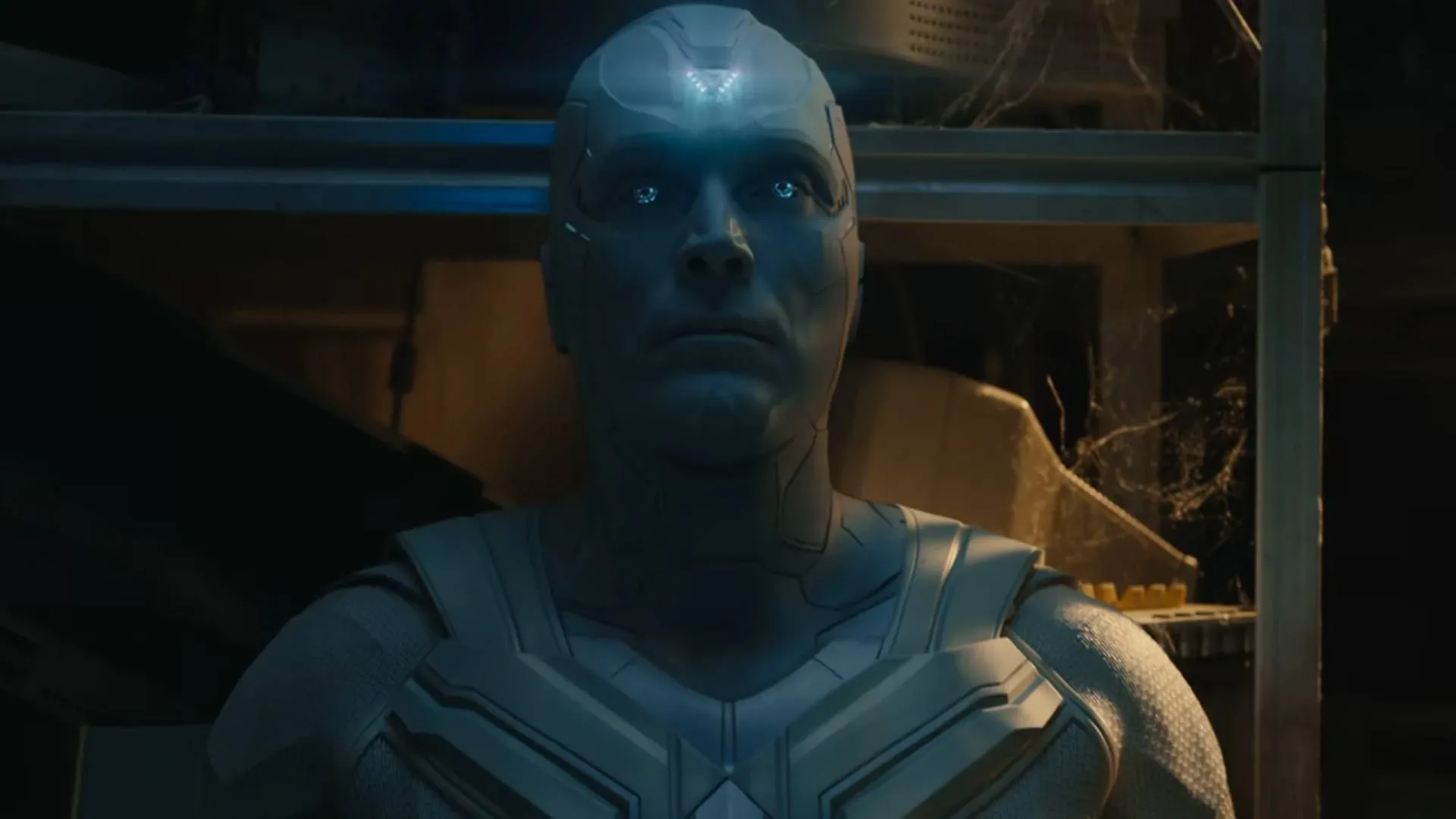
Neeson, meanwhile, brings weight to Larry’s vulnerability and authority, though the part is more limited than the film’s promotional focus might suggest. Some of Larry’s dialogue is conspicuously blunt, a recurring issue in a screenplay that can announce its ideas instead of trusting the situation to communicate them. For audiences tracking Neeson’s broader place in franchise and genre entertainment, Joking Joystick has also covered how VisionQuest is positioning James Spader’s Ultron.
Handsome craft cannot solve the film’s political vagueness
Visually, The Fix is one of Moshe’s more persuasive efforts. Cinematographer Larry Smith gives the film a widescreen presence and uses the locations effectively. Georgia stands in for Iran, while the American material was shot in Mississippi. The substitution works more smoothly than some of the film’s digital effects, which can look less convincing than the otherwise sturdy production design and photography.
The visual confidence is particularly notable because Moshe’s filmography has been difficult to pin to one lane. His debut, Holly, was a quieter expatriate drama set in Cambodia. He later shifted toward the highly stylized comic-book-influenced action of Bunraku and then the speculative science-fiction of LX 2048. The Fix is another distinct turn, merging a military-team action picture with an espionage story. It shows his willingness to work across modes, even if this particular combination does not always settle into a coherent identity.
That uncertainty is most apparent in the movie’s politics. The film begins with a Biblical quotation and periodically approaches an overtly hawkish posture without fully committing to it. Its depiction of Iranian theocratic power often feels broad and stereotyped, while its criticisms of U.S. policy direct attention toward Jimmy Carter and Joe Biden. That selective framing leaves the movie sounding accusatory without presenting a sufficiently developed argument.
Maryam’s plight should give the Tehran storyline a human center, and the rescue objective is inherently more compelling than the prospect of recovering old money. But the film keeps dividing attention between the dissident, Tucker’s family damage, Larry’s condition, the treasure and internal treachery. The result is a thriller reaching for epic stakes while often treating its biggest ideas as additional complications.
An entertaining mission that keeps losing its clearest target
The Fix is rated R and was reviewed online on September 9, 2026. Its nearly two-and-a-half-hour runtime passes more easily than its busiest plotting might suggest, largely because Moshe maintains an attractive surface and returns often enough to the crew’s immediate survival. It is not devoid of suspense, nor is it a failed action picture. There is a reliable baseline of craft, a game cast and a central operation substantial enough to hold interest.
Still, the movie’s stated and unstated messages never lock together. Even its closing gesture reportedly blends family reunion sentiment with a distinctly militarized idea of inheritance, underlining the uneasy overlap between its domestic drama and its hard-power fantasy. The Fix may satisfy viewers looking for a polished, adult-oriented covert-action movie with a large cast and international settings. Those hoping for a tightly engineered spy thriller, however, may find that its many moving parts obscure the mission that should have mattered most.