Calling a game-of-the-year race before the calendar has finished its lap is usually an invitation for trouble. New releases can arrive late, long-running games can transform through updates, and personal tastes are wonderfully difficult to organize into a clean leaderboard. But one thing is already unusually clear about 2026: this has been a year in which games with radically different priorities have found room to shine.
The strongest common thread is not a dominant genre, platform, or graphical style. It is conviction. Whether a game is asking players to shout directions across an island, carefully catalogue documents inside a book-eating machine, land a train stunt, or decide which vampire-RPG objective must be left undone, the notable games of 2026 appear to understand exactly what experience they want to create.
That makes the current field less like a tidy awards ballot and more like a very crowded arcade cabinet where every button launches a different kind of chaos. Here are the big patterns behind an already enormous group of contenders—and what they could mean for players deciding where to spend their time.
Big ideas are arriving in forms that only games can pull off
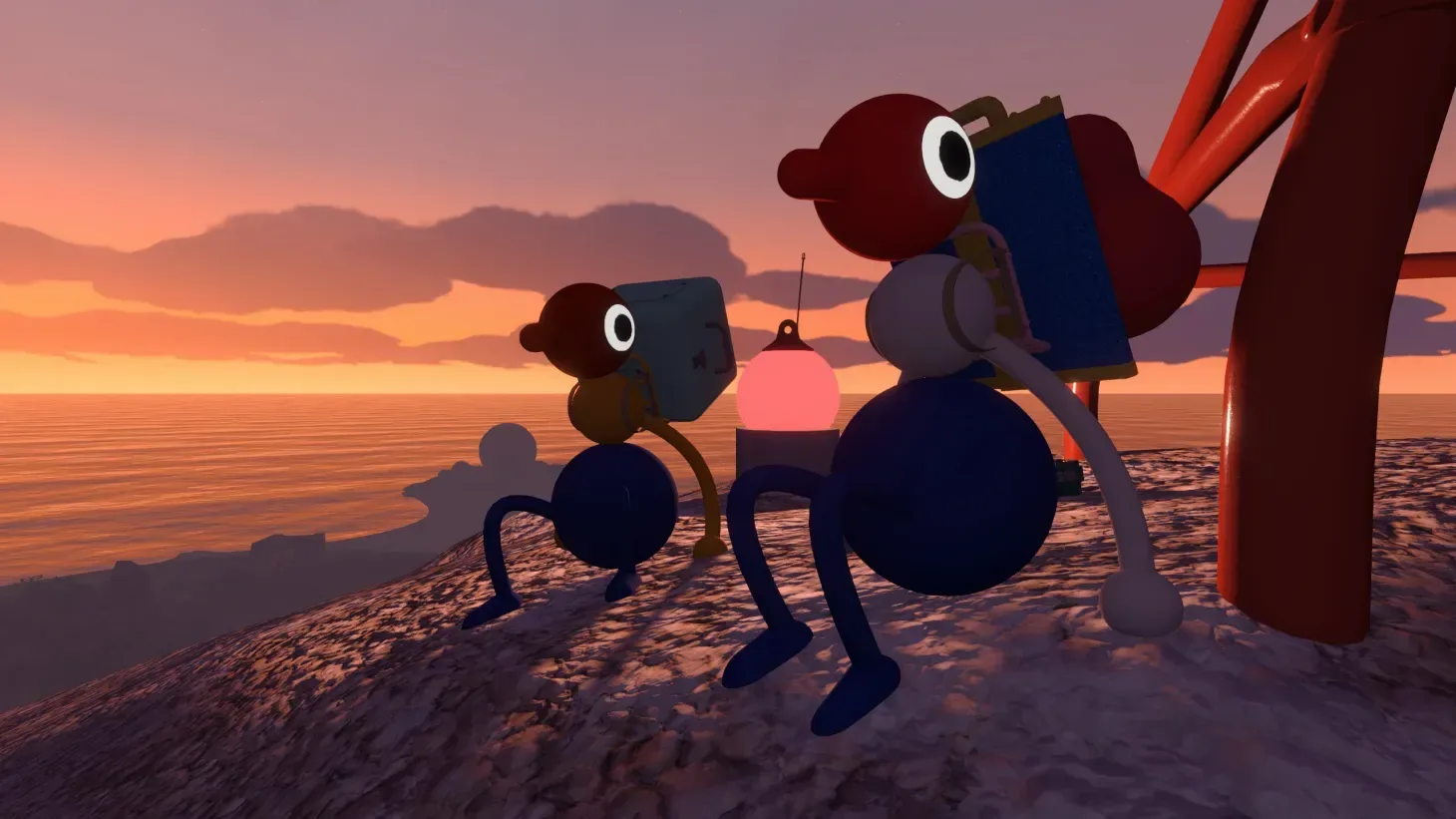
Big Walk may be the purest example of design built around human interaction rather than a conventional power fantasy. One to 12 players explore an island full of toy-like structures, mechanisms, and puzzles. The crucial resource is communication: players use sound, movement, gestures, lights, walkie-talkies, and flare guns to bridge both literal distance and the gaps in what each person knows. The game’s peculiar gourd-shaped rewards are almost beside the point. The real achievement is making coordination, misunderstanding, silliness, and eventual shared success into the core adventure.
That distinction matters. Co-op is often treated as a feature bolted onto an otherwise solitary game. Here, it is the material from which the game is made. A puzzle can be technically simple and still become memorable if several friends have to invent a shared language to solve it. The appeal is not merely winning; it is the story a group creates while trying.
Other games turn their unusual premises into mechanical identity. The Blood of Dawnwalker, a vampire action RPG, assigns time values to activities. Its central provocation is that players cannot complete every available task. That is a sharp break from the modern open-world tendency to let players eventually vacuum up every icon on a map. Rather than presenting incompletion as a failure state, Dawnwalker uses it to make decisions consequential. Choosing a route means accepting the cost of the paths not taken.
TR-49 takes a slower but no less strange route. Set in an apocalyptic alternate history, it involves searching the archives of a giant machine that consumes books, locating records, and cataloguing them while danger closes in. Its subject matter includes narrative reality, language, creative culture, and generative AI, but the essential interaction is deliberately methodical organization. That tension—between quiet archival work and looming political pressure—sounds like a strong reminder that high stakes do not always require a larger gun.
Then there is Titanium Court, which combines match-three and tower-defense systems with a narrative populated by characters from A Midsummer Night’s Dream. The game is explicitly interested in the blurry relationship between creator, player, and game. It is an odd pitch, sure, but its apparent success illustrates a healthy reality: a game can be mechanically hybrid, literarily ambitious, and funny without flattening any of those qualities into a gimmick.
Related coverage includes The Standout Games of 2026 So Far: 36 Essential Picks Across Every Genre.
RPGs are making choice feel like more than a dialogue wheel
Role-playing games dominate the year’s conversation, but not because they all chase the same template. Deltarune reached its fifth chapter, continuing the story of two young people in an alternate world threatened by darkness. It is, at base level, a turn-based RPG with bullet-hell battles—meaning combat includes dense patterns of projectiles that players must physically dodge. Yet the larger strength is its character writing, humor, and emotional attention to family, love, grief, loss, and growing up. With its final chapter count still uncertain, the current achievement is not resolution but the sustained power of a cast worth worrying about.
Zero Parades: For Dead Spies also leans into interiority. Its lead, the spy Cascade, can use “conditioning thoughts” that help during skill checks. A skill check is a game system that tests a character’s relevant abilities to determine whether an attempted action succeeds, fails, or creates an unexpected outcome. The game turns that familiar RPG device into a way to explore perspective and identity through the slippery concept of possessing “it.” It is exactly the sort of abstract idea that could collapse under its own cleverness; the promise here is that the writing gives it coherence.
For players who prefer their role-playing games to be less philosophical and more feral, Mewgenics offers a turn-based, deck-driven roguelite built around teams of fighting cats. A roguelite is generally a game structured around repeat runs, where failure sends players back to begin again but some form of knowledge or progress carries forward. Mewgenics further complicates the formula by making each squad distinct, then sending that group into a breeding program after its run. It is a generational loop rather than a simple hunt for the perfect permanent build.
Nioh 3 likewise expands an established formula instead of merely polishing it. The series’ blend of Soulslike difficulty and fast arcade-action combat now sits within broader maps and more open exploration. Importantly, the earlier emphasis on repeated missions and gear score has reportedly given way to a more coherent suite of RPG systems. Gear score is the numerical measure games often use to summarize equipment strength; reducing its dominance can free players to think about play styles rather than just bigger numbers.
And Esoteric Ebb, a long-running solo project by Christoffer Bodegård, brings politically charged, identity-focused role-playing into a Dungeons & Dragons-style framework. Its especially notable calling card is comedy. In a year with plenty of grim fantasy and anxious systems, games that can make players laugh hard without sacrificing thematic ambition deserve attention.
Action games are favoring identity over imitation
2026’s action releases include several games that embrace recognizable lineages while making a specific change that alters the feel of play. Mortal Shell 2 still occupies Soulslike territory, but its shell system encourages major shifts in combat style and the absence of a stamina bar makes encounters faster and more fluid. In many action games, stamina limits how frequently players can attack, dodge, or otherwise act. Removing that limiter is not inherently better or worse; it changes the rhythm. Here it allows the sequel to distance itself from simple imitation and pursue a clearer personality.
Saros is another challenging action game that seems conscious of calibration. It remains a cinematic roguelike shooter with demanding bosses and psychological horror, but it can accommodate players seeking either an extreme gauntlet or a more attainable path through. Difficulty options are often discussed as a culture-war switch, when the more useful question is whether a game can preserve its central tension for different audiences. Saros appears to aim for that balance without abandoning Housemarque’s exacting combat identity.
Pragmata has a different kind of tension: shooting enemies is tied to hacking their defenses. The player must multitask between puzzle-solving and firing a weapon, turning comparatively measured action into a more hectic cognitive test. Its story centers on Hugh and Diana, a father-daughter pair whose complementary skills are embedded in the play itself. That connection between narrative relationship and mechanical cooperation is often more persuasive than a cutscene explaining why two characters need each other.
Resident Evil Requiem uses contrast as its organizing principle. Grace navigates sections with minimal resources, while Leon later brings a substantial arsenal to zombie encounters. Survival horror traditionally derives pressure from scarcity: every shot, healing item, and safe hallway can matter. Letting a second protagonist cut loose with force does not erase the fear; it can make the change feel cathartic, as long as the game knows when to deny power and when to grant it.
The Sinking City 2 also takes survival horror into third-person action, replacing corporate conspiracies and mutated creatures with Lovecraftian nightmares and worms. It is not described as the most polished game in the field, and that caveat is worth retaining. But polish is not the only measure of value. An uneven game can still deliver a distinct, creepy adventure if the atmosphere and ideas hit their target.
Movement is having a very good year
A surprising amount of 2026’s energy can be found in games that simply make moving through a digital space feel excellent. Big Hops is a colorful 3D platformer praised for its jumping, movement, power-ups, and exploration. That can sound deceptively basic. But in a platformer, movement is not transportation between the “real” parts; it is the real part. The best games in the genre make running, turning, leaping, and recovering from a near-miss expressive enough to feel like a language.
Demon Tides looks back toward PS2-era mascot platformers but avoids treating nostalgia as a substitute for modern design. Its goal is a contemporary game with the weight, attitude, and satisfying traversal associated with that older style. Mina the Hollower performs a similarly broad synthesis in two dimensions, drawing on top-down Zelda games, Game Boy RPGs, Soulslikes, and Castlevania as Mina searches a Victorian-gothic world for six Spark Generators. It offers weapons, secrets, eccentric characters, and substantial optional discovery.
Elsewhere, movement becomes spectacle. Denshattack! applies the score-chasing logic of skateboarding games to trains: grinding rails, executing stunts, and pursuing high scores while an anime-inspired style provides the voltage. Cairn makes climbing its central challenge, gamifying the pressure and snap decisions of scaling intimidating surfaces. Its survival elements and controls may sometimes be frustrating, but that friction is part of an experience designed around risk rather than effortless sightseeing.
Forza Horizon 6, meanwhile, makes free roaming in digital Japan its own form of temptation, whether players are speeding through Tokyo in a sports car or taking a truck over hills. Not every great movement game needs precision-platforming stakes. Sometimes the point is to make a place compelling enough that a player keeps saying, “One more drive,” and suddenly the evening has been politely stolen.
Familiar names are succeeding by widening the fantasy
Several major franchises and adaptations stand out because they do more than replay a familiar image. 007 First Light shifts James Bond away from the long shadow of shooter-focused adaptations and into third-person stealth. Players can sneak, shoot, or talk through missions while the environment reacts. That structure suits a character defined not only by weapons but by improvisation, social manipulation, and the ability to turn a bad situation into a tailored suit.
Lego Batman: Legacy of the Dark Knight marries Batman’s grappling and gliding to an unusually detailed open city, but retains the absurdity appropriate to bricks and minifigures—Catwoman can summon cats to fight enemies, and Prince’s “Partyman” is included. Marvel Tōkon: Fighting Souls faces a different adaptation challenge: creating a complex four-versus-four tag fighter that remains approachable. Tag fighters ask players to manage multiple characters and swaps within a battle, often producing a daunting amount of strategy. A simpler control scheme can offer newcomers an on-ramp, while expert competitors keep finding depth. The game’s PC launch had a rough start, but work to improve it has given the fighting game a potentially durable base.
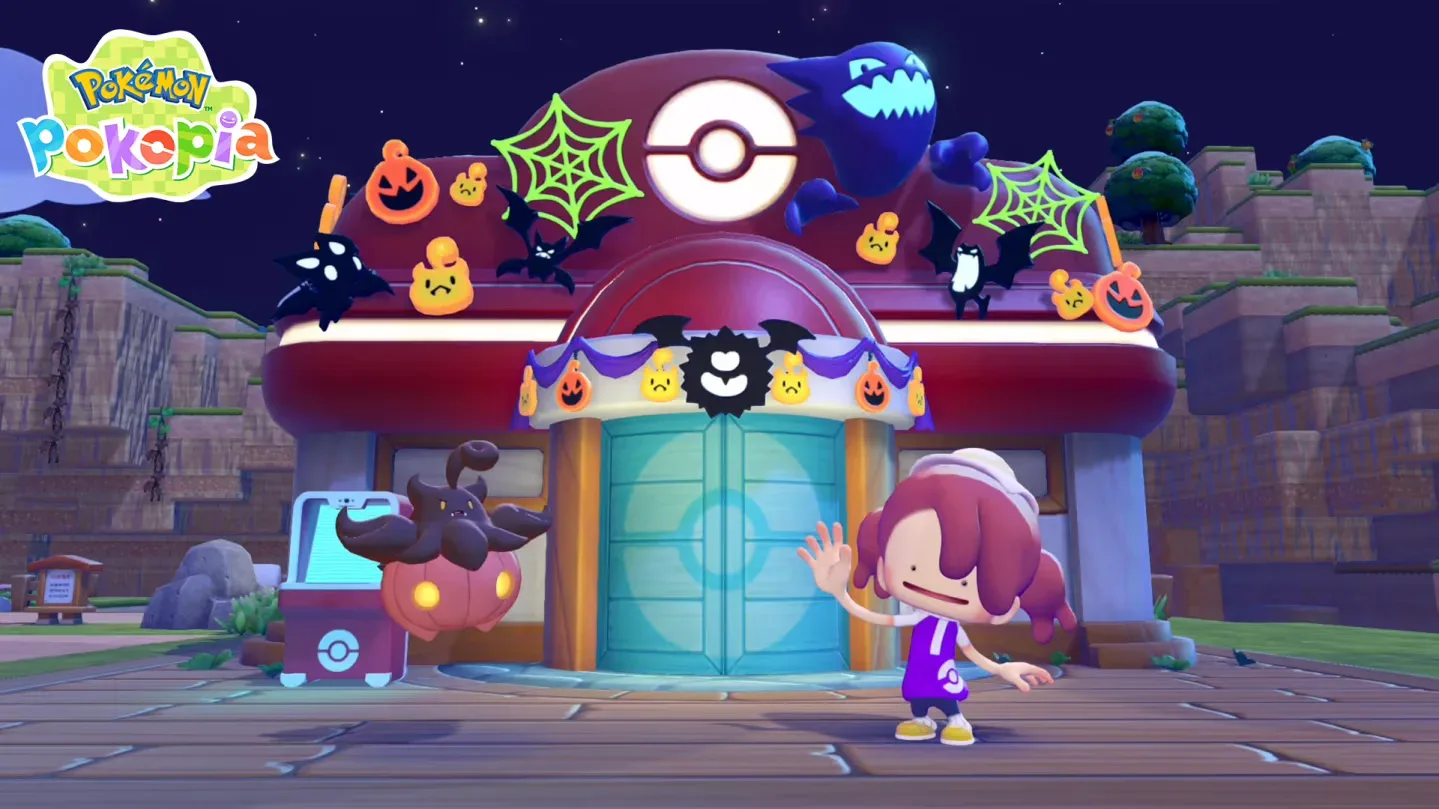
For those who want something warmer, Pokémon Pokopia pairs town-building with a melancholy mystery and a 300-entry Pokédex. It can appeal to people who normally bounce off open-ended life simulations because it supplies forward momentum alongside creative goals. The useful mindset is to build a town that makes its inhabitants happy rather than measuring yourself against the most elaborate creations online. Players looking for a specific seasonal objective can also consult our guide to Pokémon Pokopia’s Pumpkaboo event, Candy rewards, and Gourgeist-building path.
A practical way to choose from a packed year
This is too broad a field for a single “best” answer to be particularly useful. A better approach is to start with the kind of experience you actually want this week:
- For shared problem-solving: Big Walk makes communication the adventure.
- For demanding action: Saros, Nioh 3, Mortal Shell 2, and Resident Evil Requiem offer distinct versions of pressure and mastery.
- For systems that reward repeat runs: Slay the Spire 2, Mewgenics, Blood Dungeon, and Marathon each revolve around replay, though Marathon’s extraction-shooter highs come with the risk of losing valuable gear.
- For narrative experimentation: TR-49, Titanium Court, Zero Parades, Perfect Tides: Station to Station, and Esoteric Ebb put writing and perspective in the foreground.
- For tactile movement: Big Hops, Demon Tides, Denshattack!, Cairn, and Forza Horizon 6 offer very different reasons to keep traveling.
- For an intentional change of pace: Fields of Mistria and Pokémon Pokopia offer farming, relationships, building, and personalization without abandoning goals or progression.
There are still caveats. Dead as Disco is in Early Access and lacks some planned levels, even though its custom-track functionality already broadens its beat-synchronized combat. Slay the Spire 2 has only recently entered Early Access as well, despite already feeling like a substantial continuation. Other games have technical issues, uneven back halves, or stories that do not land as strongly as their systems. Those limitations should not disappear because a game makes a great first impression.
But they also do not blunt the larger picture. 2026’s most exciting games so far are not converging on a safe formula. They are making room for co-op play that depends on friendship, horror that alternates frailty and force, RPGs that deny completionism, action games that sharpen their own identity, and narrative experiments unafraid of being weird. That is a very promising kind of pileup.