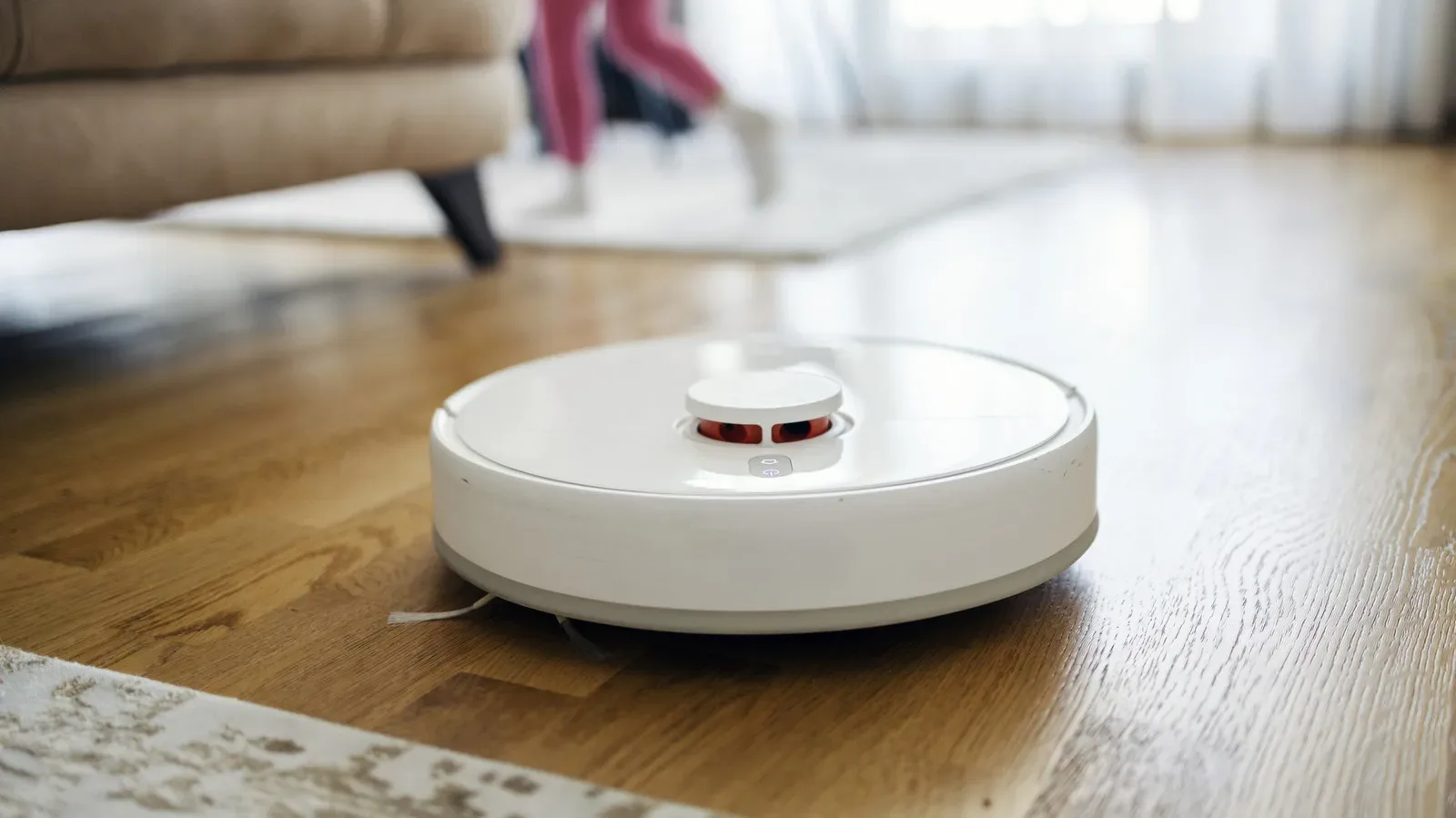
A robot vacuum promises the closest thing household cleaning has to an autopilot mode: map the floor, schedule a run, and let a compact machine deal with the daily drift of dust, crumbs and hair. For the right room, that can be genuinely useful. It can keep hard floors presentable between larger cleans, and higher-end models may empty their own bins or add mopping functions.
The catch is that a robot vacuum is not a smaller version of a person using an upright vacuum. It has to operate within the physical rules of the room: what it can see, what it can pass over, what it can fit beneath, and what will trap its wheels or brushes. The more a buyer expects it to work unattended, the more those constraints matter.
That does not make the category a bad purchase. It makes it important to buy for a realistic job. A robot vacuum is generally best understood as a maintenance cleaner, one that reduces the amount of loose debris accumulating on accessible floors. It is much less suited to replacing all the deep-cleaning, edge work and judgment a person can provide.
The first task is often preparing the level
The biggest irony of automated floor cleaning is that it can require manual setup. A human cleaner can lift a toy, move a chair, pick up a sock, unplug a cable or choose a different tool for an awkward gap. Most robot vacuums cannot. Before an automated run, floors may still need a quick sweep for objects that are new to the space or were not present when the machine first mapped it.
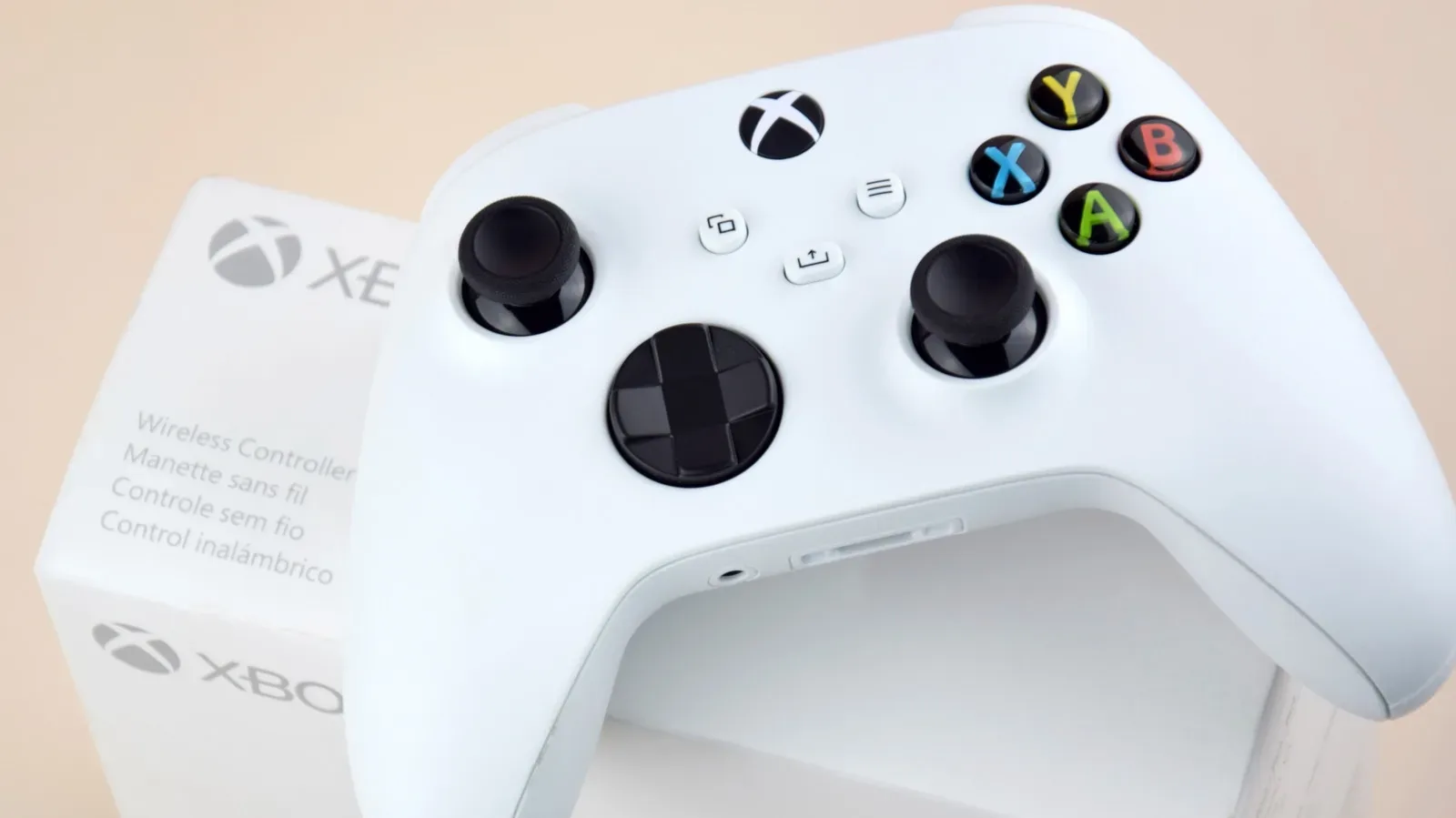
This is particularly relevant in busy homes, pet areas and the kinds of multi-device rooms familiar to players. A controller charging lead, headset cable or loose accessory on the floor is not merely visual clutter to a robot vacuum. Cables can wrap around wheels or rotating brushes and end a cleaning cycle early. Socks can be drawn into the intake. Lightweight rugs can be troublesome as well. Pet messes pose an obvious additional risk if the machine encounters them rather than avoiding them.
Navigation hardware changes how a machine responds, but does not erase the need for floor checks. Entry-level models can use bump sensors, meaning they learn there is an obstacle by physically meeting it. That can create inefficient routes, including repeated passes around a barrier. More capable machines can use infrared sensors to detect objects at a distance. Premium devices may combine LiDAR—a sensing method that uses light to gauge surroundings—with AI-assisted cameras intended to identify more hazards.
Those systems can improve a robot’s ability to route around known and visible items. They do not give it human-level problem solving, a hand to relocate clutter, or a guarantee against every awkward object. There are exceptions in the form of models designed to move certain items, such as the Roborock Saros Z70, but that is not the baseline capability buyers should assume. Better navigation should be viewed as a reduction in avoidable interruptions, rather than a promise that the floor never needs preparation.
Room layout matters as much as the spec sheet
A robot vacuum’s usefulness is governed by its environment. A relatively open hard-floor room with predictable furniture presents a much easier assignment than a room with cables, low seating, thick rugs, narrow passages and constantly shifting objects. That practical reality is easy to overlook when comparing suction figures and feature lists.
It is a similar consideration to choosing controller connectivity: the technical choice can be shaped by where and how equipment sits in a room, not only by a headline feature. Joking Joystick has explored that idea in its look at wired versus wireless Xbox controllers. For a robot vacuum, the floor plan is effectively part of the product experience.
Before treating an automated cleaner as hands-off, it is worth identifying the repeat offenders: trailing leads, clothes left beside a bed, chair legs, raised rug edges and small items that routinely migrate onto the floor. If clearing those objects before every run would be more annoying than the cleaning the robot saves, its value proposition weakens.
Surface debris and deep cleaning are different jobs
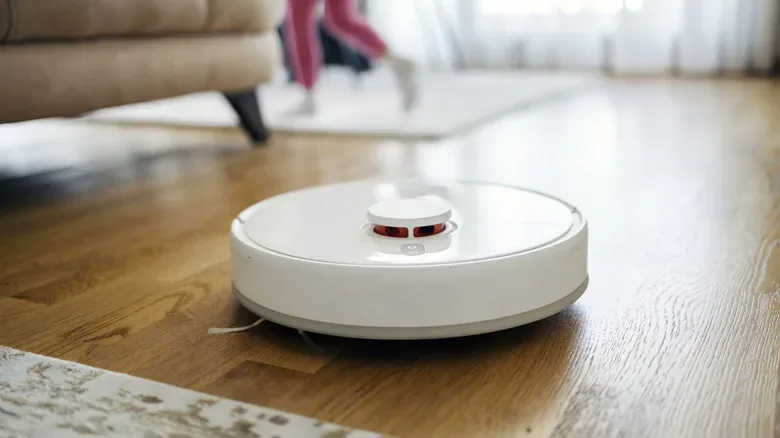
Robot vacuums can be effective at collecting loose debris, especially crumbs and dust on wood or other hard floors. That is the friendly scenario: material sits near the surface, the robot can roll across the area, and its brushes can feed debris into the bin.
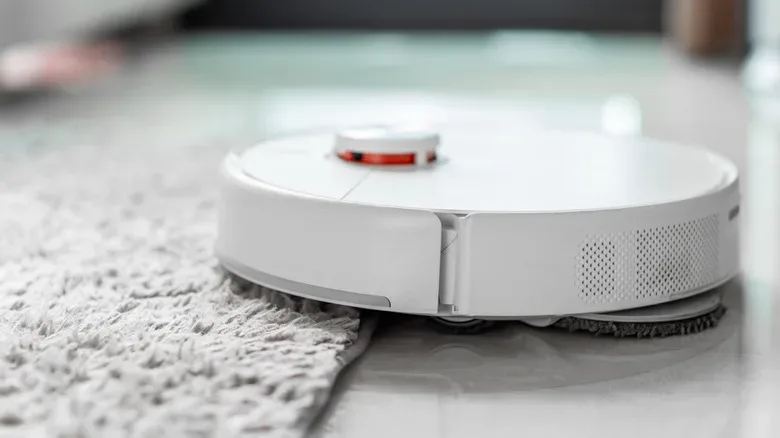
Deep carpet cleaning is a harder task. Traditional vacuum cleaners can use a powered floorhead to agitate carpet fibres and help lift ingrained dirt. A person can also make repeated, deliberate passes over a stubborn area. A robot’s result depends on its brush design, its ability to traverse the carpet and its route through the room.
This is why an advertised suction number should not be treated as a complete cleaning verdict. Suction is one part of a system. The brush has to contact the surface effectively, debris has to be moved toward the intake, and the machine has to reach the area at all. A robot stuck at a doorway or unable to climb a rug edge does not become more useful because its motor specification is larger.
Mixed flooring makes the challenge more visible. Homes may combine tile, timber, carpet, rugs and thresholds between rooms. A raised transition can stop a robot, while a rug edge can create an obstacle that disrupts a route. When a cleaning cycle cannot finish, the convenience of automation is immediately reduced.
Why corners, stairs and furniture remain holdouts
Most robot vacuums are circular, with their primary cleaning hardware underneath. Side brushes can pull debris inward, and some designs use extending brushes to improve edge coverage. Even so, tight corners remain a weakness because the body cannot fully occupy the same space as a narrow angle in a wall.
That limitation matters in practice because dust often gathers where a room meets furniture or skirting. A robot may reduce the amount of debris there, but it cannot be expected to eliminate every edge-cleaning task. A regular vacuum remains the sensible tool for detail work.
Stairs and upholstery are even clearer boundaries. Current consumer robot vacuums do not clean staircases. Roborock has shown prototype machines that can climb stairs, but those prototypes are not on sale. Upholstery also remains outside the normal role of a floor robot. Anyone expecting a single appliance to cover floors, steps, sofas, corners and awkward crevices will still need conventional equipment.
The practical expectation, then, is not “no more vacuuming.” It is “less loose dirt on accessible floors before the next full clean.” That can still be meaningful, especially for regular surface upkeep, but it is a narrower promise than the marketing-friendly idea of a fully autonomous cleaner.
Automation gets expensive quickly
Robot vacuums sit on a steep feature curve. Basic dry cleaning is available at the low end, with some models costing under $100. At that level, the expected role is simple collection of dust and crumbs, and long-term robustness may be a concern. Such a machine may be sufficient for an uncomplicated hard-floor space, but it will not necessarily solve navigation or maintenance issues.
Features designed to reduce intervention add cost. Reliable obstacle detection, self-emptying docks and wet mopping are not merely small software upgrades; they add hardware and complexity. The iRobot Roomba 105 Combo, which includes mopping and a self-emptying dock, is listed around $300. At the premium end, the Dreame X60 Max Ultra Complete is around $1,700, with automatic hot-water mop washing and a retractable navigation sensor intended to help it move under low furniture.
These examples illustrate an important buying question: which inconvenience is worth paying to reduce? A self-emptying dock can postpone bin emptying. A more sophisticated sensor array can make a run less likely to fail around obstacles. Automatic mop washing can lower the work associated with wet cleaning. But none automatically makes the machine capable of cleaning stairs, reaching every corner or removing embedded carpet dirt as effectively as a dedicated conventional vacuum can.
For an easy space and a light routine, a cheaper robot can potentially handle the central task. For a complicated layout, pets, mopping needs and a desire for fewer interruptions, the price can rise sharply. Buyers should include the continuing need for periodic manual cleaning in that calculation. Paying more buys convenience in particular areas; it does not necessarily buy total replacement of other tools.
Self-emptying is not maintenance-free
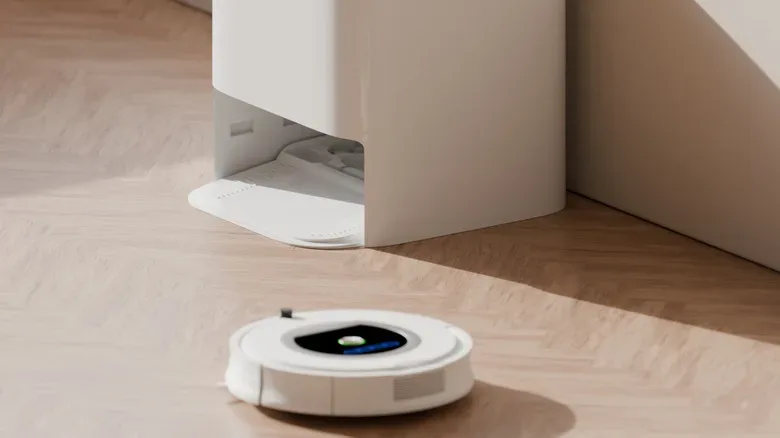
The phrase “self-emptying” can create the wrong mental model. It means the robot transfers debris from its small onboard dustbin into a larger container in its dock. It does not mean dirt vanishes or the cleaner needs no attention. The larger container still needs to be emptied eventually.
Without a dock, the small onboard bin may fill quickly, especially in homes with pets or with daily cleaning schedules. Once full, the robot has less capacity to collect additional debris. A self-emptying dock can reduce how often the owner deals with this, but it changes the frequency of the task rather than eliminating it.
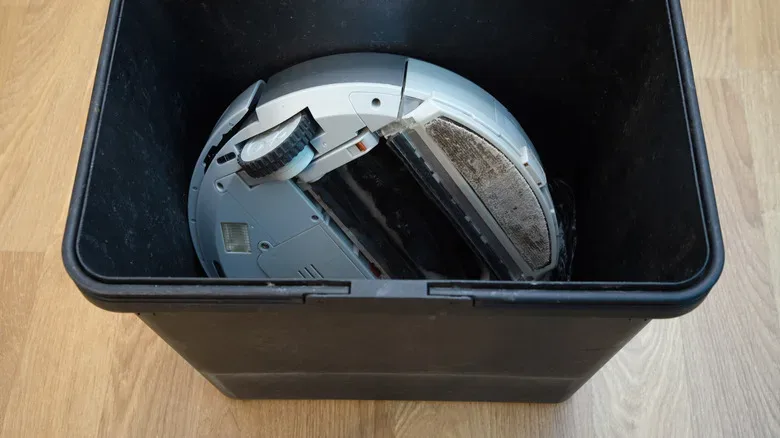
Other upkeep is unavoidable. Filters and brushes need periodic cleaning and replacement. Hair can wind around moving parts, interfering with their operation. Ignoring that buildup can lower performance and, in a worse case, contribute to a malfunctioning machine. These are not unique flaws of robot vacuums—hair is difficult for any vacuum—but automation does not make the mechanical reality disappear.
Mopping introduces another layer. Depending on the model and dock, users may need to fill water tanks and clean dirty pads. A dock capable of washing pads can take over part of that routine, but it is still a system that needs oversight. The useful distinction is between automated cleaning and automated maintenance: a robot can perform the former on a schedule, while the latter remains at least partly the owner’s responsibility.
A sensible role for a robot vacuum
The strongest case for a robot vacuum is routine control of everyday mess, not complete household independence. It can be valuable for accessible hard floors, frequent light debris and anyone who would benefit from a scheduled pass between larger cleaning sessions. Its success is most likely when the room is reasonably open, cables and small objects are managed, and the owner accepts that bins, brushes, filters and—when applicable—mop components need attention.
The weakest case is treating it as a universal cleaning substitute. Thick carpet, corners, tight furniture, thresholds, stairs, upholstery and unpredictable clutter all expose its limits. Adding premium sensors and docks can make a robot more capable and more convenient, but cannot convert every home into an easy environment.
Think of the robot as a dependable support character rather than the entire party. Set it up for the repeatable work it can actually complete, reserve the standard vacuum and mop for deep or awkward jobs, and factor a few minutes of floor preparation and machine care into the routine. With those expectations in place, it can reduce chores without creating a new boss battle every time it meets a charging cable.