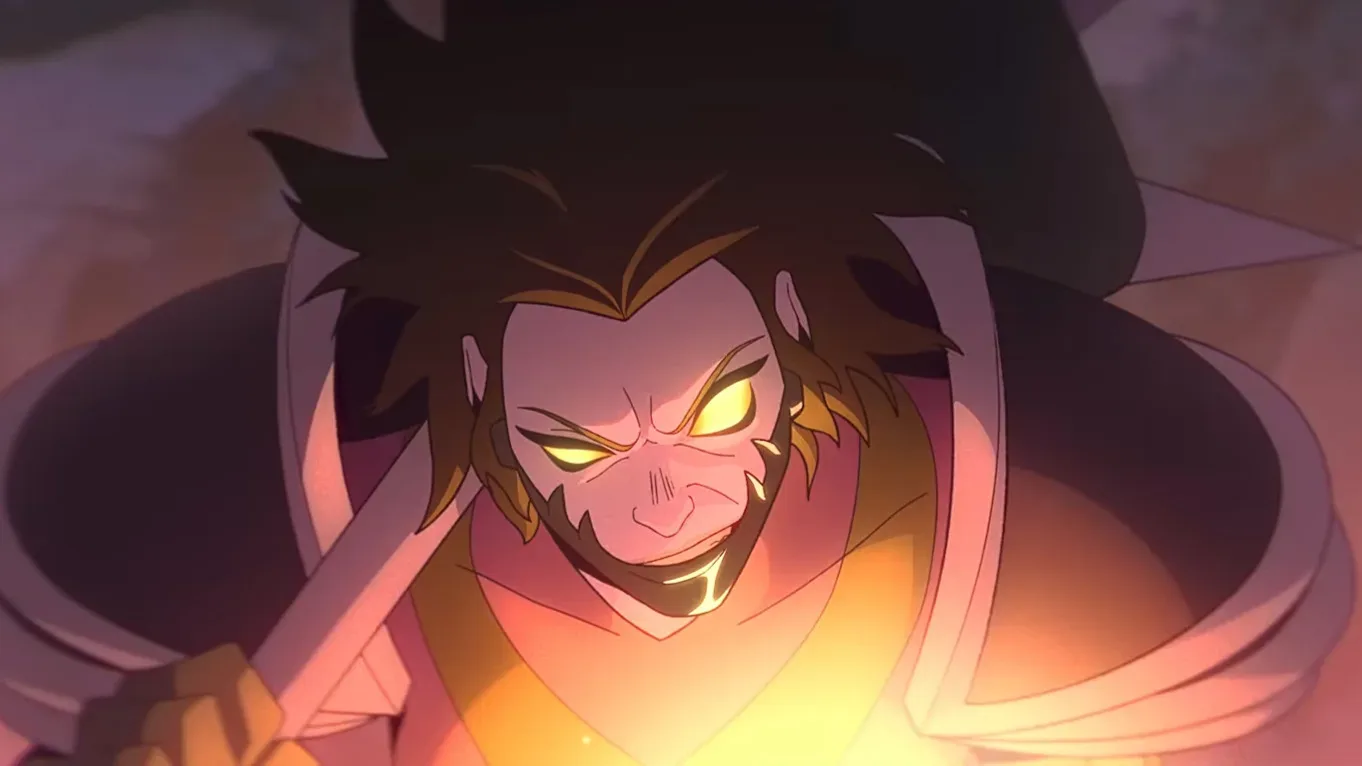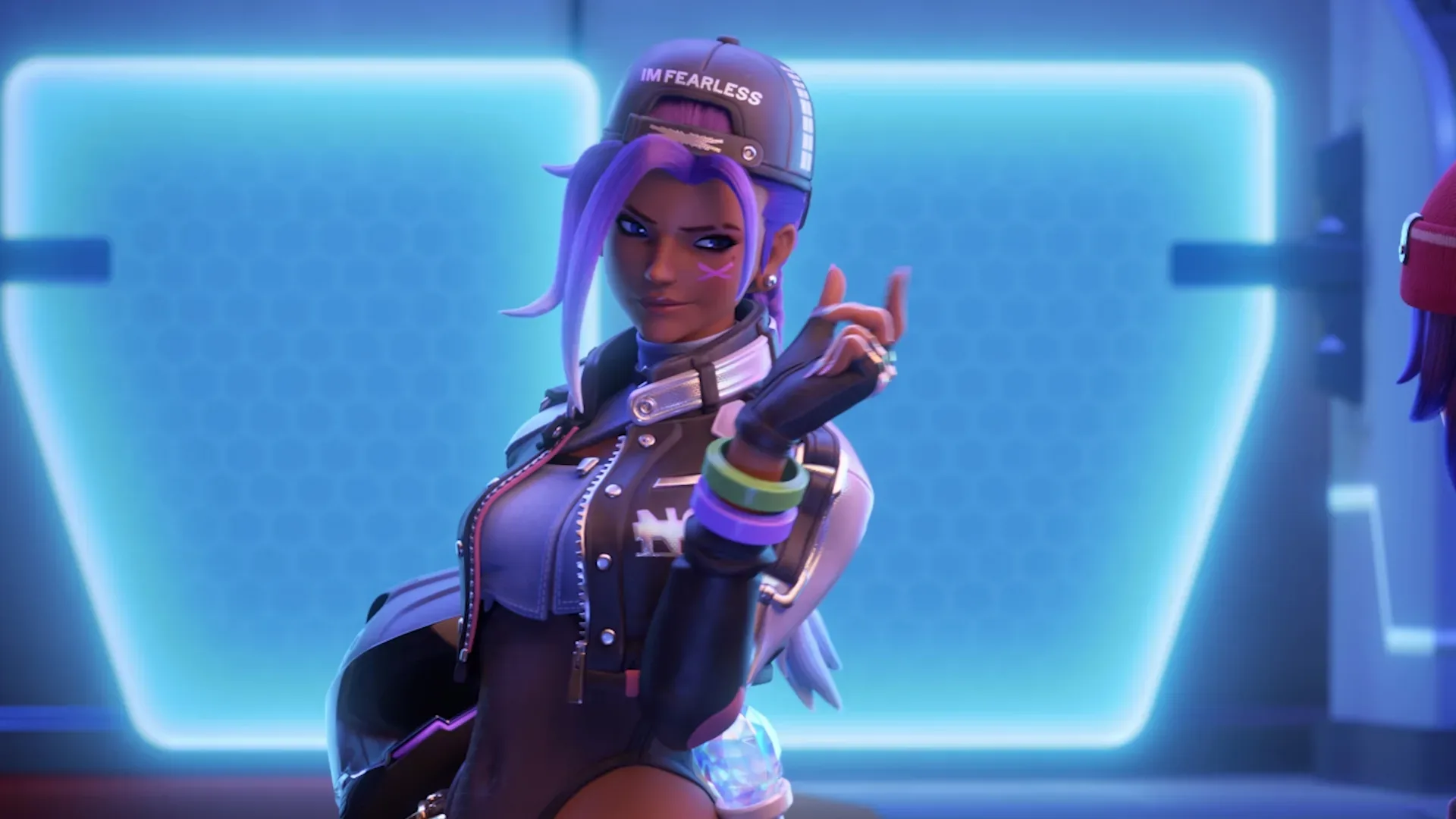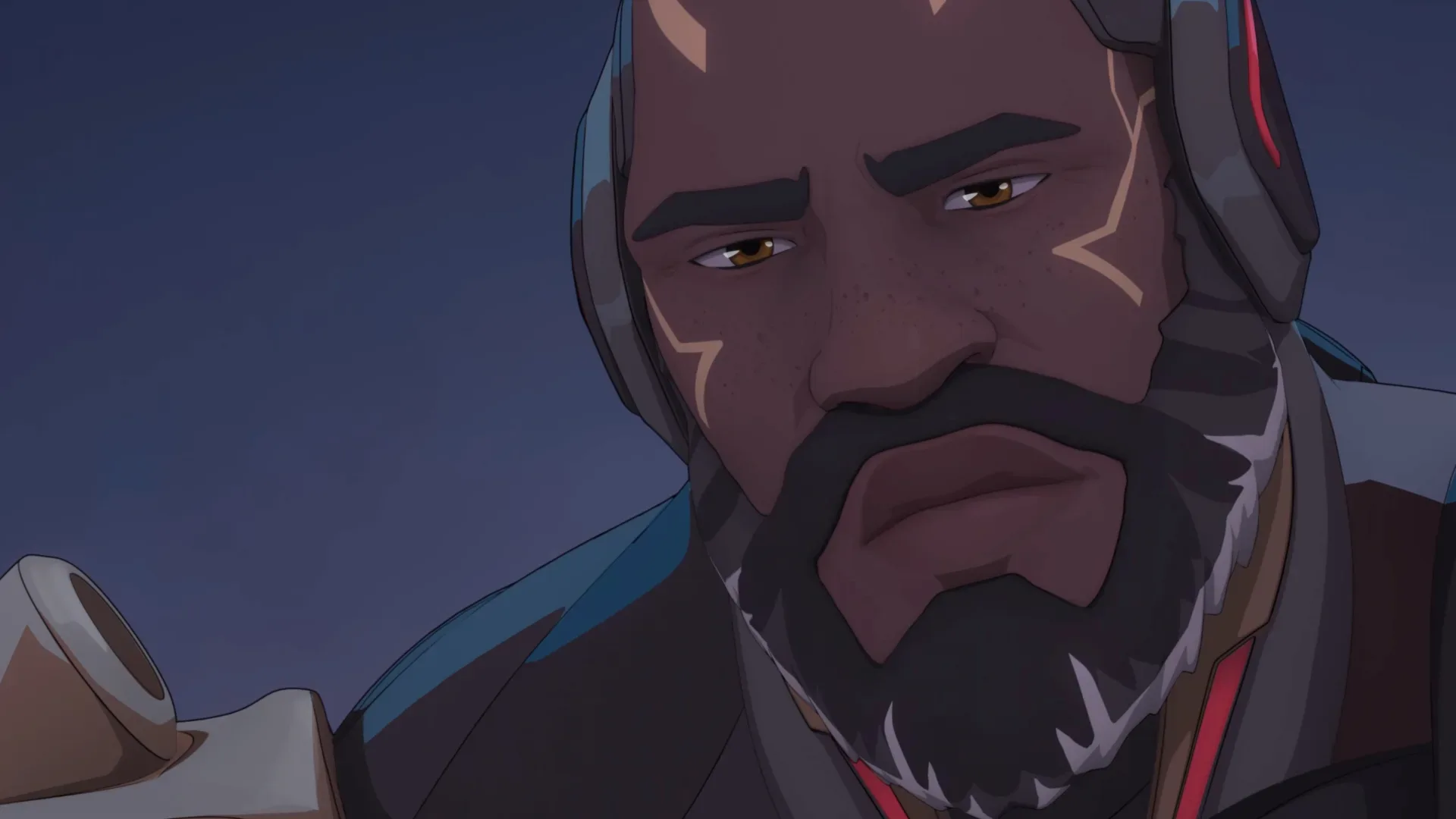
Overwatch has spent 2026 building toward a confrontation that was supposed to rearrange one of its oldest conflicts. Vendetta, the sword-wielding newcomer who appeared to kill Doomfist and seize Talon in February, had turned the organization’s familiar hierarchy upside down. Doomfist survived, gathered loyalists, acquired a new weapon, and ultimately took his throne back in the new cinematic In the Wolf’s Mouth.
That is a clean ending in the literal sense: the coup has been defeated, Vendetta is in Overwatch custody, and Talon’s old leader has escaped to plan whatever comes next. It is much less clean as a matter of narrative momentum. The closing image leaves the world in a configuration that strongly resembles the one players knew before Vendetta’s year-long rise: Doomfist leads Talon, Overwatch remains a precarious peacekeeping force, and a newly introduced antagonist has been removed from power.
That resemblance is the source of the complicated reaction. Some players are excited by the prospect of a Doomfist who now claims to have changed. Others see the resolution as a forceful reset, one that asks viewers to invest in Vendetta’s ascent before stripping away her gains with unusual speed. Both responses can coexist, because the cinematic delivers a decisive event while raising a larger question: was the point of the arc to permanently change Overwatch’s world, or to give Doomfist an overdue push toward becoming a more active villain?
How “In the Wolf’s Mouth” brings the conflict to a head
The short serves as the capstone to material released across audio dramas, web comics, animated shorts, and in-game story entries throughout the year. It begins at Colosseo, Vendetta’s stronghold, with Sojourn, Winston, and Tracer infiltrating the site. Several of Vendetta’s allies have already abandoned her project, but the threat remains immense: Overwatch has to stop an EMP capable of devastating much of Europe.
An EMP, or electromagnetic pulse, is presented here as a weapon that threatens widespread technological destruction or disruption. It is an effective piece of story shorthand for enormous stakes: the danger is not merely an individual duel or a territorial dispute, but a catastrophe with continental consequences.
Sojourn reaches Vendetta and nearly loses. Her cybernetics begin sparking under the damage she has taken, placing the character in a vulnerable state before the final reversal. Then Doomfist arrives with a replacement gauntlet supplied by Doctrine. His rematch with Vendetta ends very differently from their first encounter. Doomfist wins, declares that he has seen the world anew, and frames his setback as an evolution rather than a defeat that simply needed correcting.
Sojourn allows him and his loyal followers to get away, while Vendetta is left for Overwatch to apprehend. Doomfist promises that Talon will return as “something new.” It is an ending built on two simultaneous propositions: he has reclaimed the past, but the story wants audiences to expect a different future.
Why the resolution has hit a nerve
Vendetta was not merely a temporary obstacle placed in Doomfist’s way. Her arrival had genuine connective tissue to older Overwatch material. She is the daughter of a man killed by Reaper in the 2018 PvE event Overwatch Retribution, a death tied to the fractures that ultimately contributed to Overwatch’s collapse. Bringing that thread back gave the 2026 arc a sense that neglected pieces of the setting could matter again.
Related coverage includes Overwatch Closes Its Vendetta Arc, but Fans Question What Changed.
Her campaign also gave the fictional world more motion than players have often seen from the Talon side of the conflict. Vendetta attacked Watchpoint: Gibraltar and pushed Overwatch out of its base. She formed partnerships spanning otherwise disparate corners of the setting. Those moves made the conflict feel broad, rather than like a collection of disconnected character biographies.
At the same time, the arc did not depict an unstoppable mastermind cruising toward victory. Her anger at Talon shaped her choices. She believed that her father’s death had denied her a rightful place in the organization, and that grievance helped define her rule. Allies began distancing themselves from her plans; Domina, an early collaborator, judged the scheme too dramatic for her company’s shareholders. Those beats establish a meaningful internal reason for Vendetta’s coalition to weaken before the finale.
So the criticism is not necessarily that Vendetta lost. A villain’s defeat was always possible, even likely, in a story centered on an Overwatch intervention. The sharper objection is about dramatic treatment: whether the climax allowed her enough agency, competence, and dignity for the year of buildup to feel earned. The decisive Doomfist victory and Vendetta’s apparent inability to land a meaningful blow in their rematch made some viewers feel that the story had used her chiefly to restore an older villain to his familiar position.
For critics of the finale, the concern is less “the antagonist lost” than “the antagonist’s year of accomplishments was made to feel disposable.”
That distinction matters. A status quo can return after a major arc without making the arc meaningless. But the writing must show what has been altered in its characters, relationships, institutions, or stakes. Otherwise, a temporary takeover risks reading as a long detour.
Doomfist’s promised evolution needs to become visible
Doomfist’s new language is clearly meant to address a longstanding tension in his role. Since his 2017 debut, conflict and evolution have been central to how he describes his worldview. Yet his schemes have often not developed into sustained narrative consequences. The problem is not that a villain cannot lose; villains frequently lose. It is that repeated plotting without payoff can make a supposedly formidable mastermind feel stationary.
Vendetta’s coup gives Doomfist an opportunity to be something other than stationary. He was displaced, survived, rebuilt a circle of followers, and returned with Doctrine’s new fist. His claim that complacency has ended can be read as an acknowledgment that being Talon’s leader is no longer enough on its own. The next story needs to show what “evolved” means in practice.
That could mean a Talon with a genuinely different operating logic, a changed relationship between Doomfist and the people who followed him, or consequences from Vendetta’s period in charge that cannot be erased by one victorious fight. The cinematic does not establish which of those routes is coming. Its promise remains deliberately broad, which is why excitement about a revitalized Doomfist sits beside skepticism. A declaration of change is not yet the same thing as change.
The issue is especially important because Overwatch’s narrative has repeatedly had to make room around a live competitive game. In that kind of structure, characters cannot always be removed from the playable roster or transformed beyond recognition. But permanent storytelling consequences do not require deleting characters or making them unusable. Shifts in alliances, scars on institutions, changed priorities, and unresolved personal conflicts can all make a world feel as though it remembers what happened.
The accessibility problem: important story beats are scattered
There is another reason the arc can feel abrupt even to people who followed its headline moments. The connective material is spread across formats. Overwatch Undivided, the Webtoon comic, contains smaller character-focused scenes for the Overwatch team. Audio dramas and animated shorts have also carried pieces of the broader conflict. The in-game story menu has more lore entries still to come before the current season ends.
That is transmedia storytelling: one narrative distributed across multiple media rather than contained in a single game, show, or book. Done well, it can make a setting feel expansive. Each format can serve a strength—the cinematic for spectacle, the comic for quieter interactions, and the game for direct player-facing context.
The tradeoff is discoverability. A player who watches the major cinematic but has not sought out a comic through a separate app may encounter a sequence of very large plot developments with less of the emotional stitching that explains them. Vendetta can appear to rise, fracture, and fall in a compressed series of milestones rather than a gradual character journey. Players who did engage with the surrounding material may have more context for why her support collapsed, but a story designed to attract the game’s audience should not make core comprehension feel like optional homework.
That practical lesson extends beyond this particular arc. Live-service games routinely ask audiences to keep up with patches, seasonal changes, trailers, social posts, and tie-in material. The more places a crucial plot beat can hide, the harder it becomes for a single finale to land with equal force for everyone. Other continuing games are also trying to make long-running worlds legible to returning audiences, as seen in the attention around World of Warcraft: Forever’s Northrend-focused trailer.
Four lore drops could still shape the verdict
It would be premature to treat the cinematic as the entire ending. Four lore drops remain in Overwatch’s story menu before the season concludes, and they may clarify what Doomfist’s new Talon actually is, what becomes of Vendetta, and how Overwatch’s uneasy position with the United Nations changes after Colosseo.
Those entries carry real responsibility. They cannot change the immediate impression of Vendetta’s defeat, but they can establish that her actions left marks which matter. Custody does not have to equal irrelevance. Her history with Reaper, her knowledge of Talon, and the alliances she assembled are all potential narrative pressure points if the story chooses to revisit them.
Likewise, Doomfist’s return will need a purpose beyond restoring a recognizable arrangement. The most promising reading of this year’s arc is not that Vendetta changed nothing, but that she forced Talon’s longtime leader to confront his own stagnation. If later material makes that confrontation concrete, the coup may read as a costly disruption that reshaped the enemy Overwatch faces. If not, the criticism will linger: the game spent a year setting the board on fire only to place the same pieces back where they started.
For now, In the Wolf’s Mouth is a spectacle with an unresolved accounting problem. It conclusively crowns a winner in the Vendetta-Doomfist feud. What remains unproven is whether the story’s world, and not only Doomfist’s fist, has truly evolved.