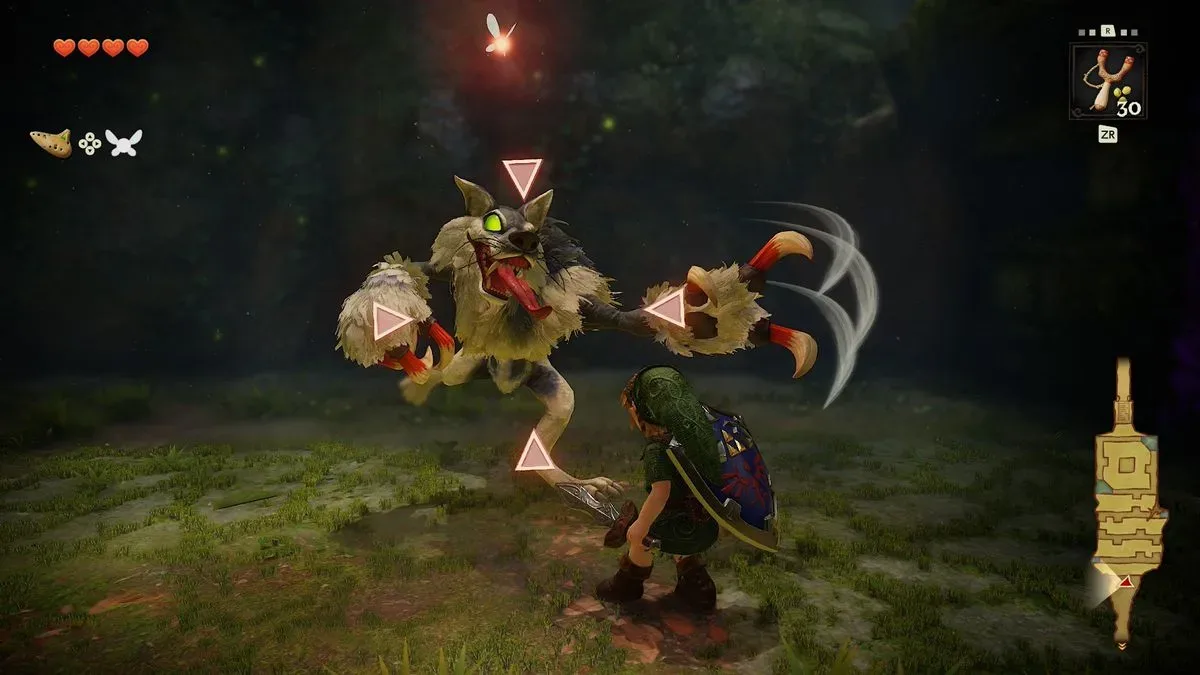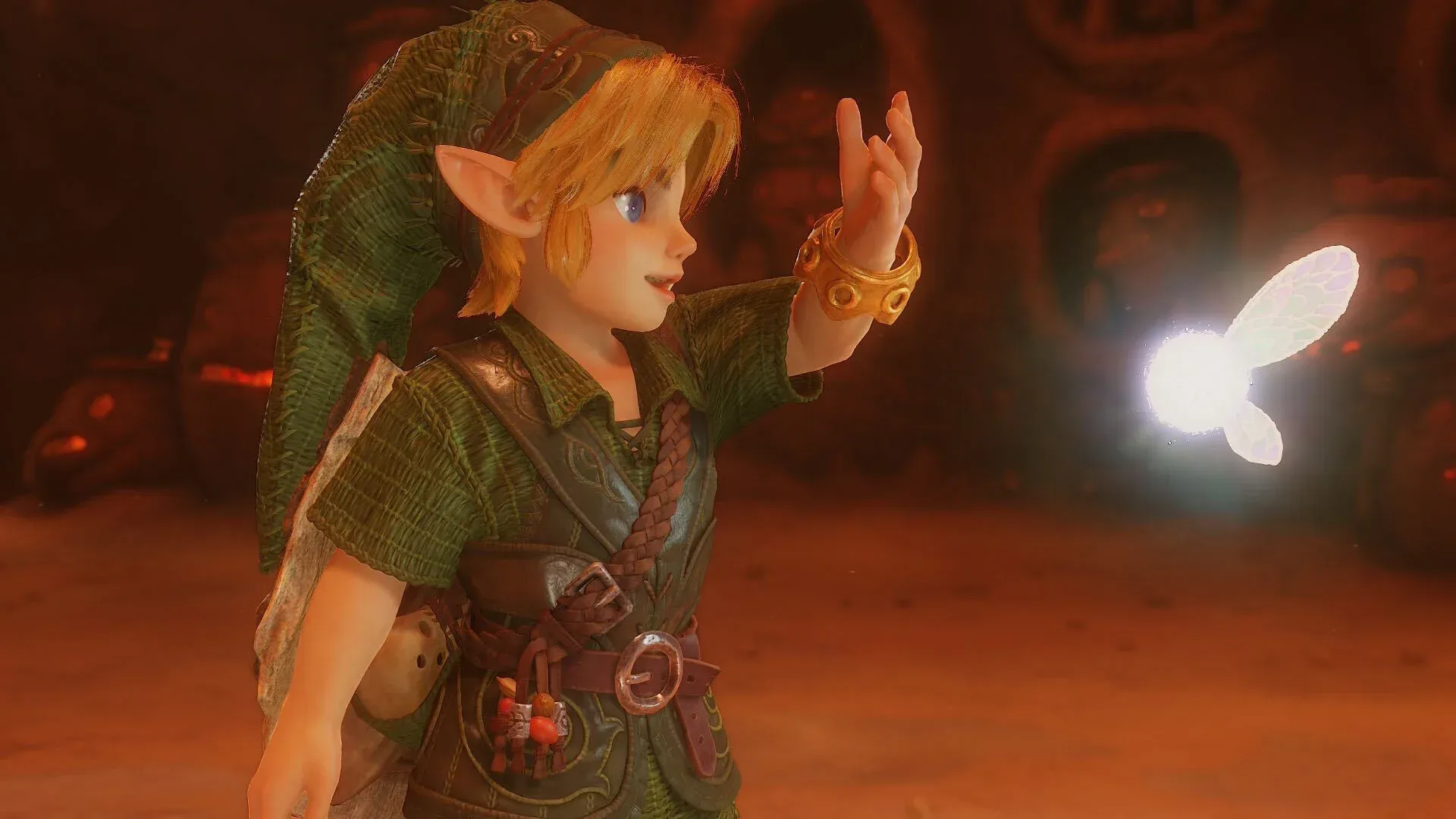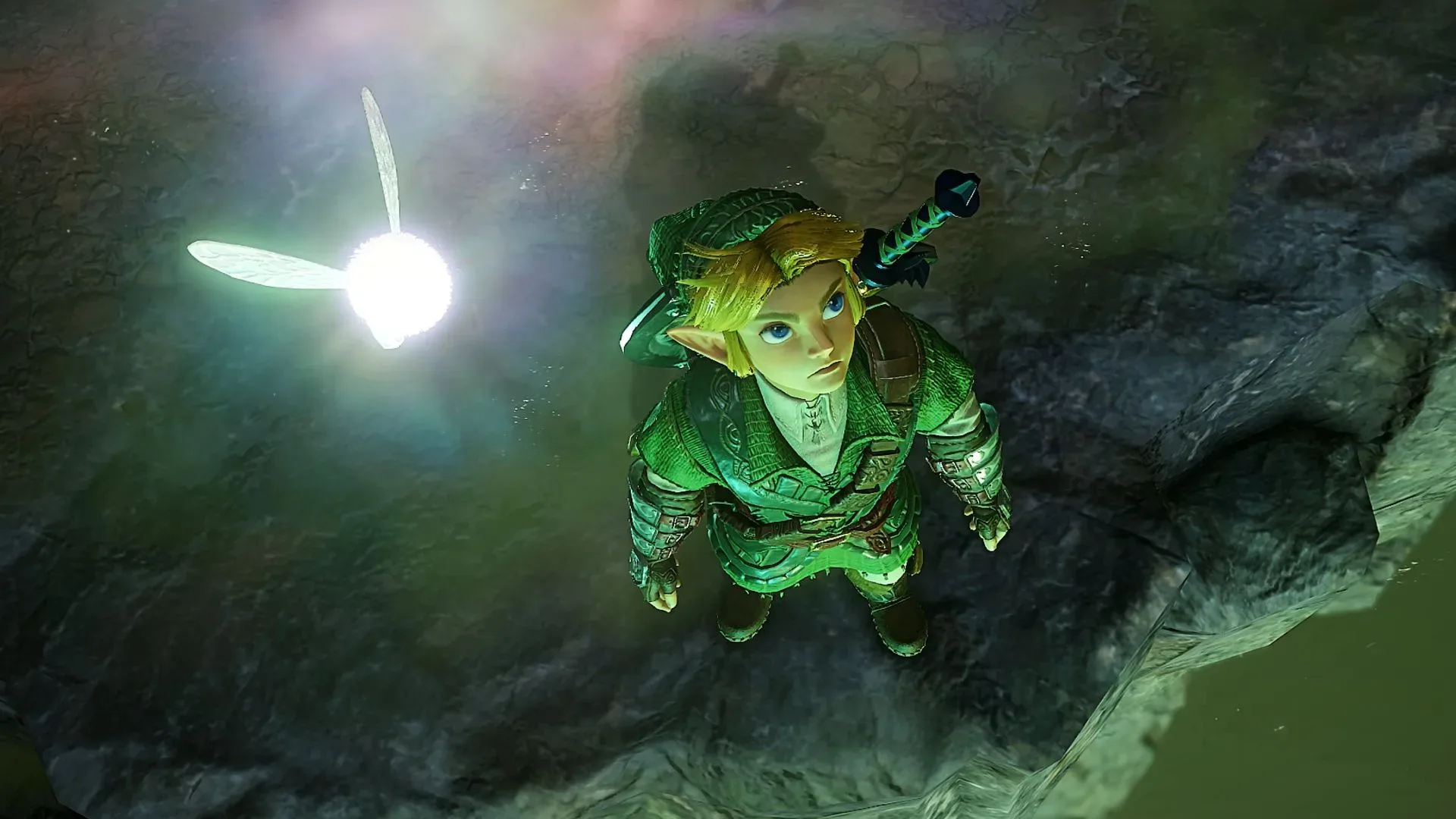
The Ocarina of Time remake makes a remarkably consequential change to one of the original game’s quietest ideas: Link no longer automatically leaps when he reaches an edge. Instead, jumping requires a button press.
That sounds like a modest modernization. In practice, it changes the mental rhythm of almost every ledge, gap and elevated route in Hyrule. The remake’s manual jump can make movement feel sharper and more expressive, particularly across its adjusted early-world spaces. But it can also create a peculiar kind of friction for players returning to a game whose traversal was built around automatic jumps.
The result is not a simple case of “old controls good, new controls bad.” Manual jumping has obvious advantages, and the remake is described as an otherwise careful, impressive overhaul. The more interesting question is why a mechanically useful addition can still feel out of place in a game designed around doing without it.
The lava lesson in Dodongo’s Cavern
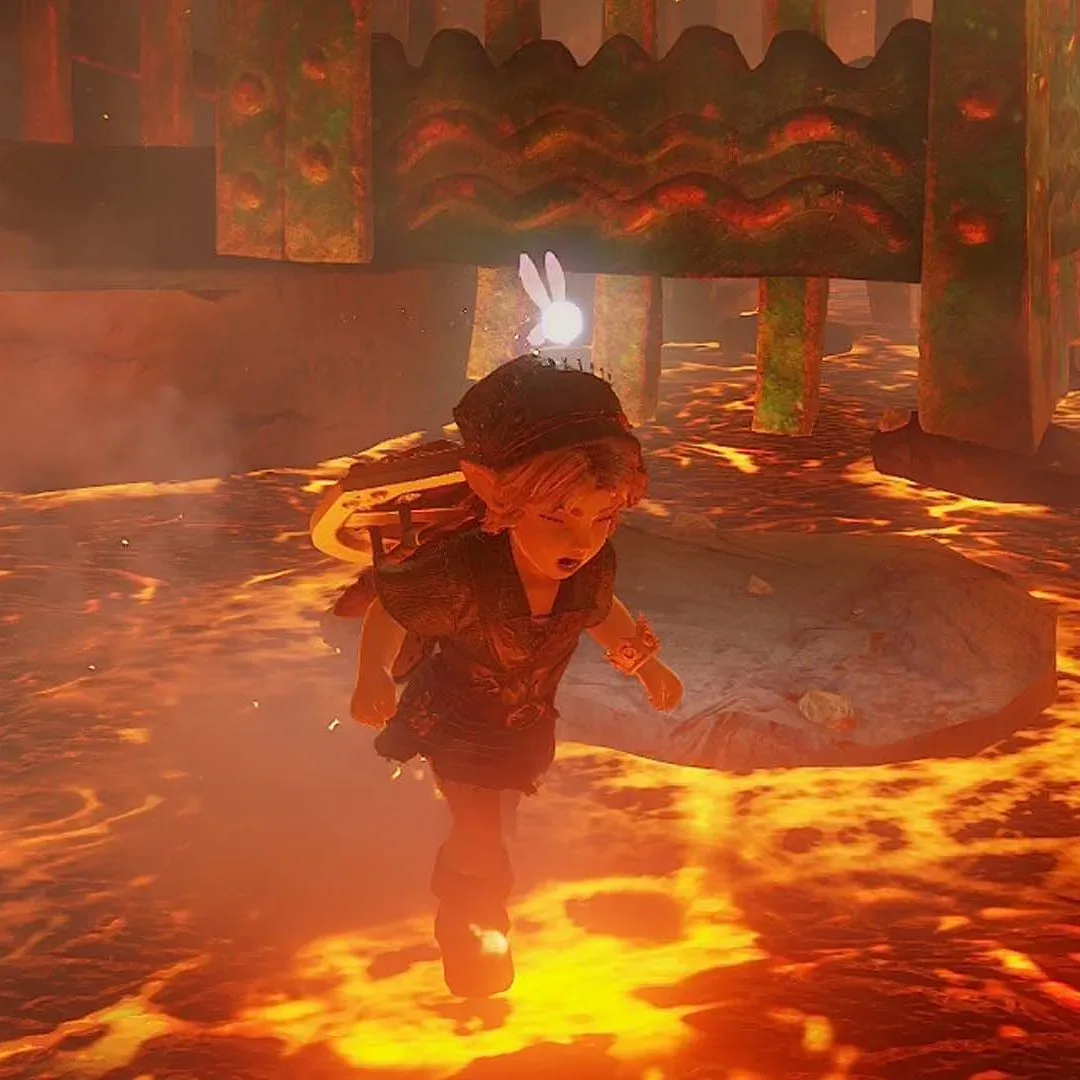
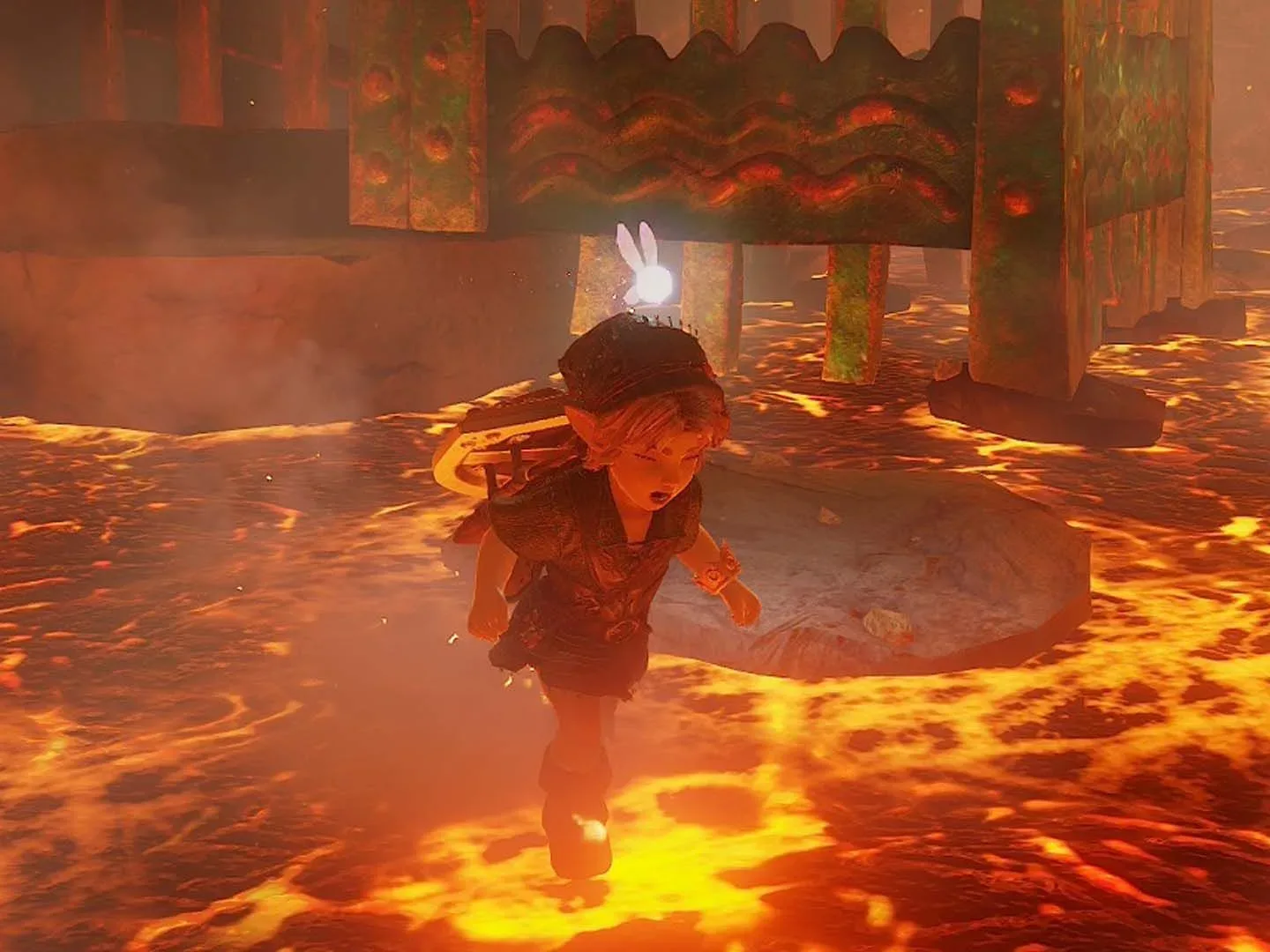
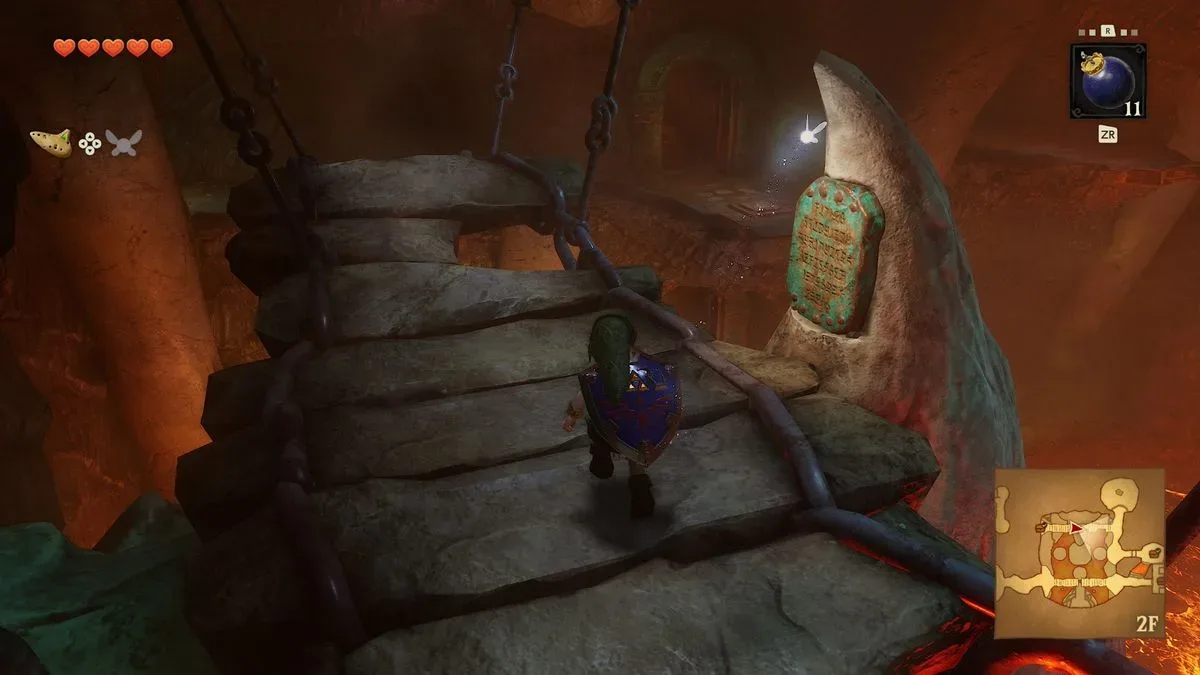
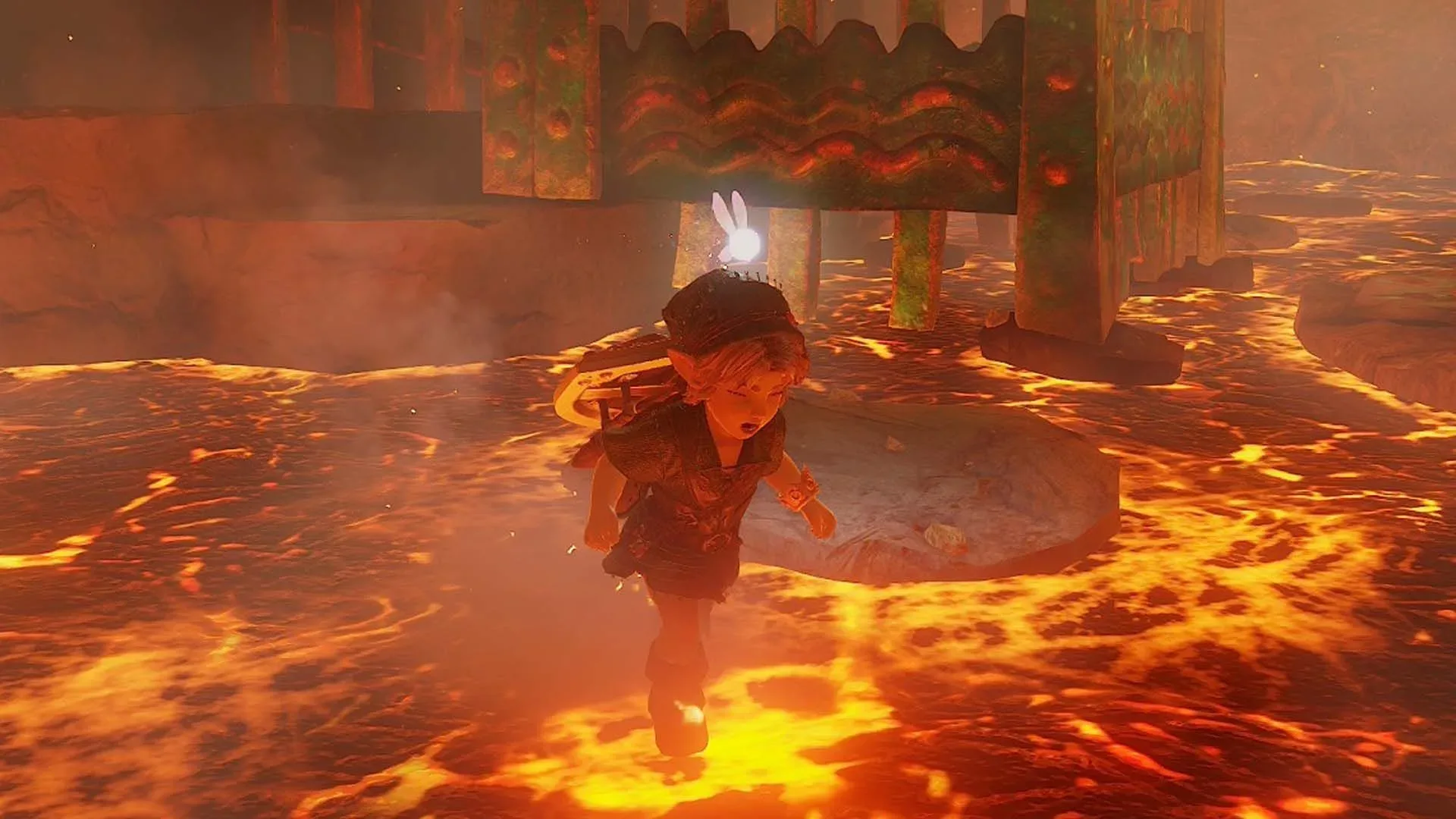
Dodongo’s Cavern, the second dungeon, is a clean illustration of the problem. A player who knows the Nintendo 64 original may approach its lava-surrounded ledges with a deeply ingrained expectation: guide Link to the edge, and he will make the jump from the furthest viable point. That expectation is not a shortcut or an accidental quirk. It is part of the original game’s control language.
With manual jumping, moving forward is no longer enough. The player must also remember the dedicated input, hit it at the right moment and avoid substituting another action, such as a roll. Miss the beat and Link tumbles into danger rather than clearing it. In a lava-filled dungeon, that is a quick route to losing hearts.
For a newcomer, this may be a perfectly ordinary platforming demand. For a returning player, it asks them to overwrite a trained response in locations that were authored with the opposite response in mind. Familiarity becomes the obstacle: the more confidently someone recalls the route, the more likely they may be to walk straight toward a gap and forget the newly required action.
What auto-jump actually did
Auto-jump is more than a convenience feature. In the original Ocarina of Time, it was a traversal rule: when Link ran toward an appropriate ledge, the game handled the leap. The player’s attention could stay on direction, positioning and the wider situation rather than on separately triggering every jump.
That simplicity helped make three-dimensional movement approachable without making the world inert. Players still had to judge where they could go, line Link up correctly, react to enemies and hazards, and understand the spaces around them. Auto-jump merely assigned the jump execution to the game once the player had expressed the intention clearly enough by running toward an edge.
Related coverage includes Ocarina of Time Remake's Manual Jump Is a Smart Addition That Can Still Feel Wrong.
That distinction matters in dungeons. Traditional Zelda dungeon rooms often ask the player to absorb several layers of information at once: routes, switches, enemies, doors, height differences and environmental threats. Removing one repeated timing demand can leave more mental space for those larger puzzles.
It also gives traversal a particular flow. A series of gaps becomes a path to steer through, rather than a sequence of discrete button checks. That flow is especially memorable in a classic game revisited many times. Players are not just remembering geometry; they are remembering how their hands moved through it.
Why manual jumping has genuine upside
The remake’s change is not without purpose. Manual jumps give the player more direct control over Link’s movement, while the overall movement suite is said to feel more reactive. Small alterations to early layouts add natural-looking verticality, and moving around towns or climbing up ledges can feel more fluid as a result.
In that context, a jump button fits the remake’s broader ambition: make Hyrule feel more physically responsive without discarding its recognizable structure. Where the revised world provides extra ways to move through space, manual input can make Link’s actions feel deliberate rather than inferred.
There are also individual moments where the new approach sounds well suited to the revised design. A reworked climb toward the Hyrule Castle gardens uses manual jumping in a way that is described as enjoyable. This is the strongest argument for the addition: where spaces have been altered to accommodate a more hands-on movement system, the system can give those spaces new energy.
In other words, manual jumping is not inherently a mismatch for Ocarina of Time. It is a potentially valuable tool when the level around it has been reconsidered for manual movement. The tension emerges when that tool is imposed on an older sequence whose original pacing presumed the game would automatically complete the jump.
A retrofit can be good and still disrupt a classic rhythm
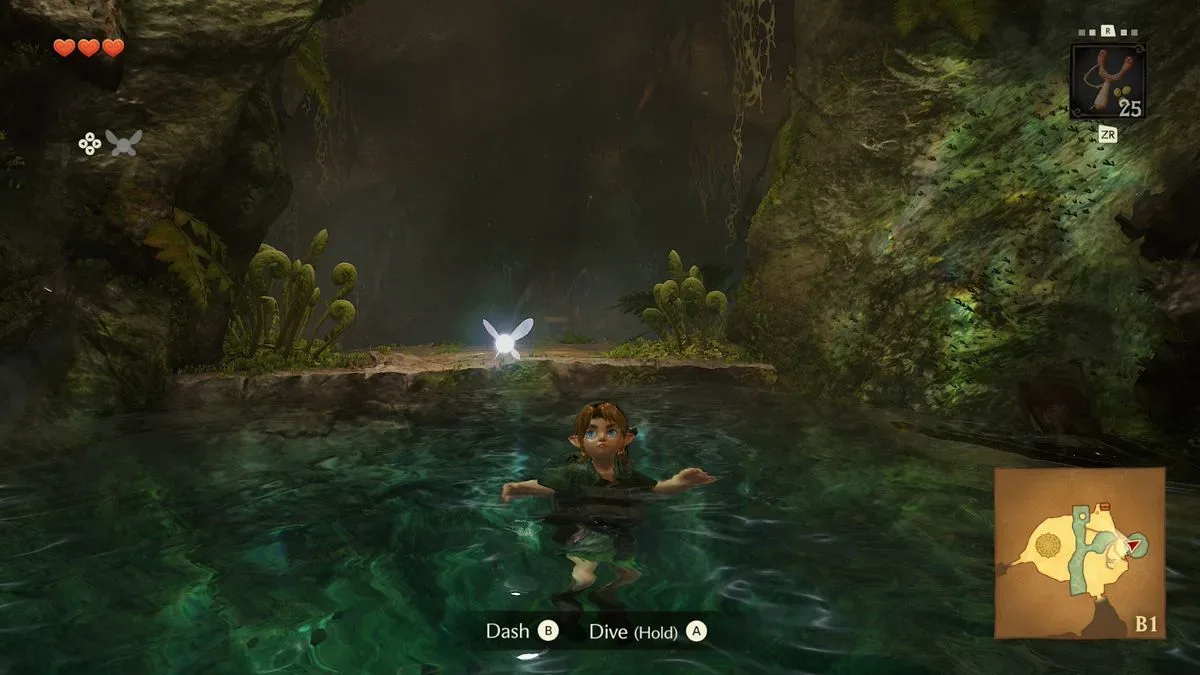
The Kokiri Village platform sequence captures the issue. Its placement may have been adjusted in the remake, but the basic sequence remains recognizable. The player still moves through a familiar route, except the revised version adds a repeated jump input where the original asked mainly for steering.
That can be a small change on paper and a large change in feeling. Control schemes are not merely collections of available actions. They establish expectations about which decisions deserve conscious attention. The original Ocarina of Time intentionally treated edge-jumping as something that should happen naturally once Link was aimed in the right direction.
Adding a button changes that division of labor. The player now has greater agency over every leap, but greater agency is not automatically a benefit in every context. Sometimes a game’s elegance comes from deciding what not to ask of the player.
The contrast with open-world design helps explain why this debate is more complicated than a resistance to modernization. In Breath of the Wild, a manual jump suits an exploration model built around freer movement and more open-ended navigation. The act of jumping becomes part of how players test terrain, seek alternate paths and improvise through the world.
Ocarina of Time’s tighter dungeon spaces and more directed route structure have different needs. Its automatic traversal was not necessarily a technical concession waiting to be fixed. It was a design choice that supported its own kind of clarity.
Remakes face a compatibility problem
Every remake has to choose which parts of an older game are essential and which can be rebuilt. Graphics and animation are easy areas to point to because they are visibly dated or newly expressive. Controls are harder because they shape the relationship between player memory and game space.
The reported remake changes appear to preserve much of the original’s core character while polishing many details. Enemy animation is more reactive, and numerous small adjustments are presented as thoughtfully calibrated. That makes the jump debate more revealing, not less: even a strong remake can contain one prominent choice that divides players because it touches the muscle memory of the original so directly.
Muscle memory is the learned physical habit through which an experienced player responds without deliberate step-by-step thought. It is often treated as nostalgia, but it is also practical knowledge. A returning player may remember that a route is safe, only to discover that their formerly automatic input sequence is incomplete.
That does not mean remakes must preserve every old behavior unchanged. It means a control revision has costs beyond its immediate utility. When the geography remains broadly familiar, an altered foundational input can make old knowledge feel unreliable.
The case for an auto-jump option
The most sensible middle ground would be an auto-jump toggle or an additional control option. The remake reportedly retains classic jump-attack and rolling options alongside modernized versions, suggesting that the game already recognizes the value of preserving more than one way to interact with its legacy systems.
An optional automatic jump would let players choose a mode that matches the experience they want. Newcomers could use the more direct manual system and enjoy the extra responsiveness it provides. Returning players could preserve the original rhythm across familiar dungeons and routes. Neither approach needs to invalidate the other.
There is one complication: some changed areas now appear to require manual jumping. An auto-jump setting would therefore need thoughtful handling in those places. But that practical constraint does not erase the broader appeal of choice. A hybrid approach could potentially preserve manual requirements where the redesigned level demands them while still allowing automatic leaps in conventional edge-to-edge traversal.
That would acknowledge two truths at once. The remake has new movement ideas worth exploring, and the original game’s automatic jump was a purposeful part of how its spaces worked.
More buttons are not always more freedom
The instinct to add manual controls to a classic game is understandable. A dedicated jump button is familiar, immediate and widely associated with modern third-person movement. Yet the Ocarina of Time remake shows why “more control” is not a universal upgrade.
Control can mean precision, but it can also mean obligation. Requiring a button press for every gap asks the player to perform an extra task, even in sequences where the original game deliberately converted that task into directional movement. Whether that feels liberating or irritating depends on the player and the scenario.
The remake’s best case for manual jumping lies in its newly responsive movement and revised vertical spaces. Its weakest case lies in legacy routes where the added input appears to interrupt a rhythm that was already working. Falling into Dodongo’s Cavern lava after forgetting to press jump may be funny, but it also identifies a genuine design seam: a modern mechanic rubbing against a classic structure.
For players curious about the remake’s wider direction, the game has also prompted speculation about what Nintendo could revisit next, though the available clues remain far from definitive. Discussion around possible Majora’s Mask references has given fans reason to look closely—but also to remain skeptical.
Ultimately, the manual jump is a reminder that faithful remakes are not defined only by what they retain. They are defined by whether new ideas respect the old game’s underlying logic. Ocarina of Time can apparently accommodate a more agile, reactive Link. The lingering question is whether it also should have retained the simple option to let Link hop automatically when players run him toward the edge.