Wuhu Island has always had the unusual burden of being both a sports venue and a place people simply want to be. A court, a runway or a stretch of water can host a match; an island needs to invite detours. The reported early impressions of Nintendo Switch Sports Resort suggest the new game understands that distinction far better than its immediate predecessor did.
The central claim is not that every sporting event has been reinvented. It is that Wuhu Island is genuinely enjoyable to explore: a setting with enough landmarks, small activities, narrated discoveries and visible residents to feel less like a menu background that accidentally became traversable. That is a meaningful achievement for a sports package, particularly one carrying the expectations attached to a beloved Wii-era location.
It is also the clearest reason to pay attention to the game. Wuhu Island’s appeal is not merely nostalgia for its earlier appearances. The island apparently has a purpose-built structure for wandering, with three activities that present it as an open world from distinct perspectives: Prop Plane in the air, Power Cruising at sea, and Skateboarding on land. Rather than treating exploration as one isolated sightseeing mode, that approach lets the geography itself become the connective tissue between sports.
An island redesigned, not simply restored
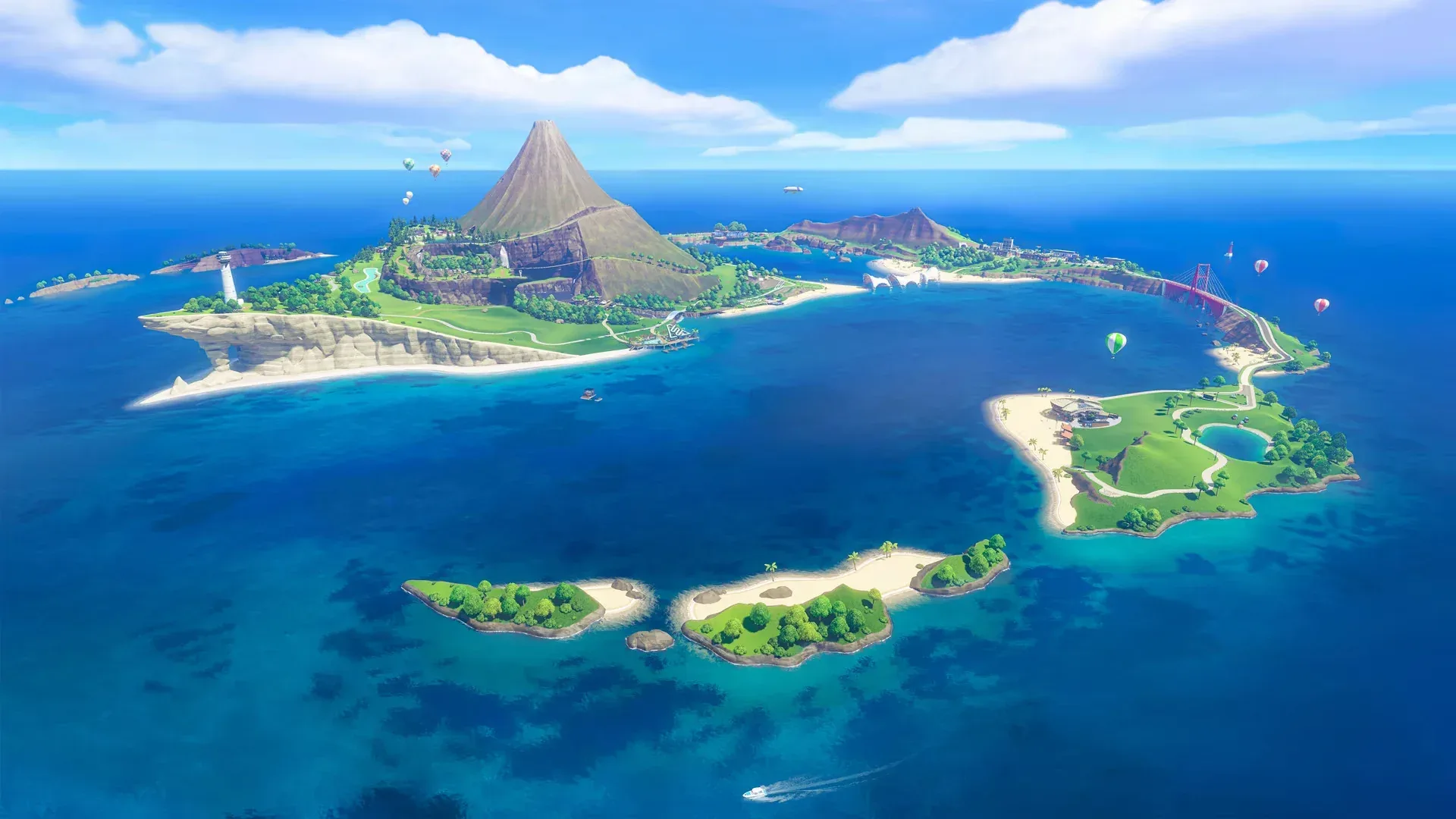
The new Wuhu Island is not presented as an exact preservation of the version players may remember. Its surroundings have expanded into a larger archipelago, while new caves, cafés and attractions have appeared around the central landmass. That is a smart direction in principle: a familiar setting needs recognisable character, but a direct copy would offer little reason to inspect it again.
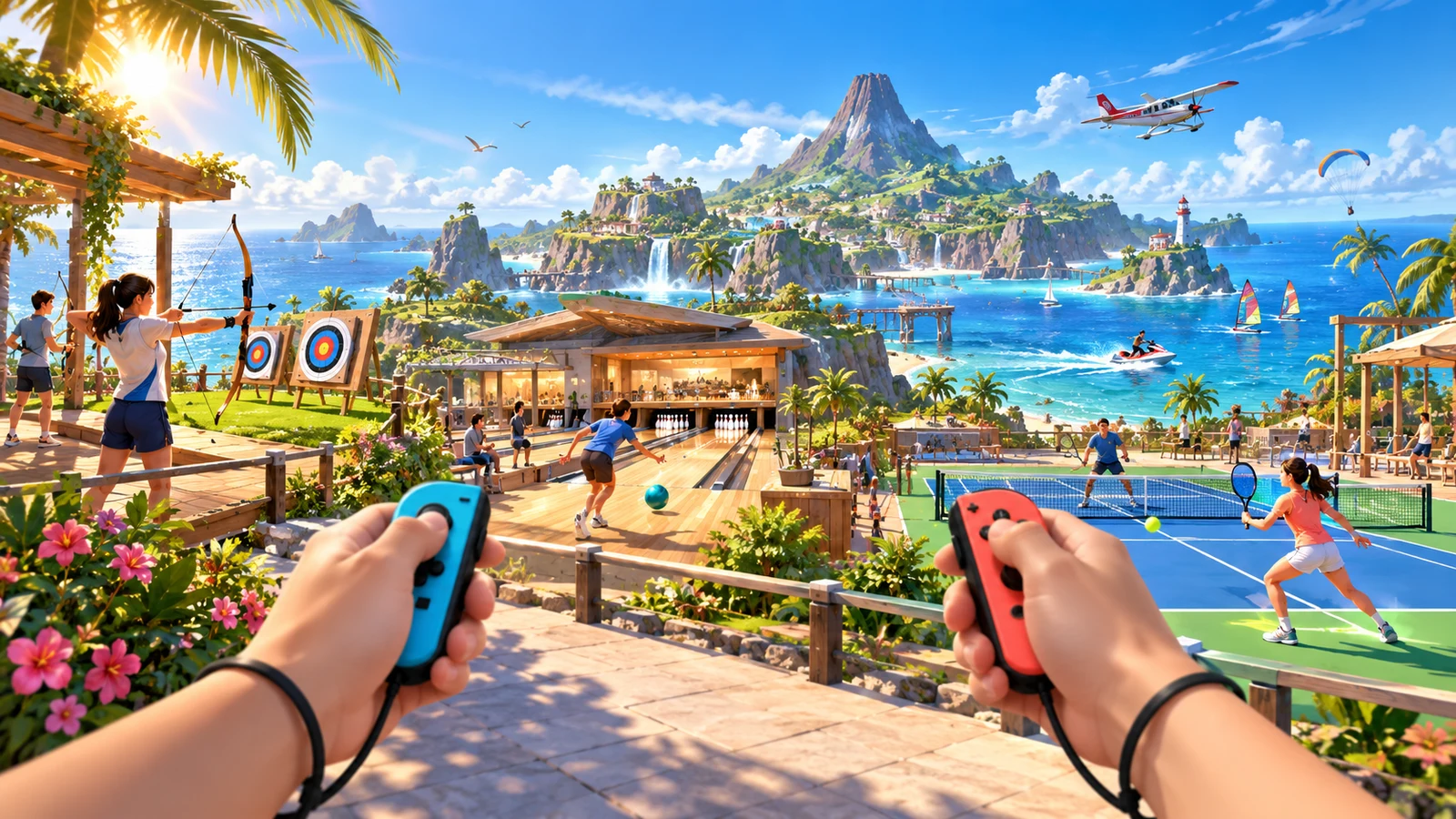
Its sports facilities are also described as being embedded in the terrain rather than laid out as generic standalone arenas. Volleyball is situated within a wooded area crossed by streams. Basketball sits by a calm lake at a venue called Hoop Haven. These details are modest, but they matter. When a game makes facilities feel geographically situated, travelling to them can feel like moving through a place rather than hopping between disconnected activities.
There is an important difference between a map that is large and a map that is legible. Nothing in the available details establishes the island’s size, and size would not by itself settle whether it is fun to explore. What does sound promising is the density of location-specific ideas: caves in mountains, a floating café, water traffic gathered for a whale sighting, forest courts and lakeside courts. Those are memorable visual anchors. They give players a vocabulary for recalling where they have been and a reason to see what sits around the next bend.
That environmental readability is particularly valuable for a game intended to be picked up in short sessions. Players do not necessarily need an enormous map; they need a place whose points of interest make a return visit feel purposeful. The reported setup gives Wuhu Island an advantage over a sports hub that exists only to funnel people into matches.
Prop Plane makes the case for sightseeing
Of the three exploration-focused sports, Prop Plane is described as the standout. It returns from Wii Sports Resort and provides the largest concentration of Spocco Photos, the game’s name for discoverable points of interest. In practical terms, these function as a collection and orientation system: the player searches the landscape, finds a notable subject or location, and receives an acknowledgment tied to that discovery.
Related coverage includes Nintendo Switch Sports Resort Makes Wuhu Island Feel Alive Again.
That design does more than pad a checklist. A well-used point-of-interest system changes how a player reads the world. Instead of flying only toward a finish line or competition, they scan for unusual structures, tucked-away routes and activity around the coastline. The act of looking becomes part of the game.
The available account puts the full number of Wuhu Island Spocco Photos at 105. Completing that set awards a small crown. The reward itself sounds intentionally light rather than transformational, but the number is revealing: this is not a token handful of photo opportunities added to advertise an open environment. It suggests the island has been stocked with enough discoveries to support repeated flights and a deliberate completion goal.
Prop Plane also apparently has diversions beyond the photos, including white balloons to shoot down and hibiscuses placed in difficult-to-reach spots. These are familiar open-world ingredients, but the key is their scale and fit. A plane naturally turns elevation, approach angle and distant landmarks into gameplay concerns. A flower on a high or awkward ledge is not only a collectible; it is a prompt to figure out a flight path. Balloons create a moving or visible target that can break up passive touring.
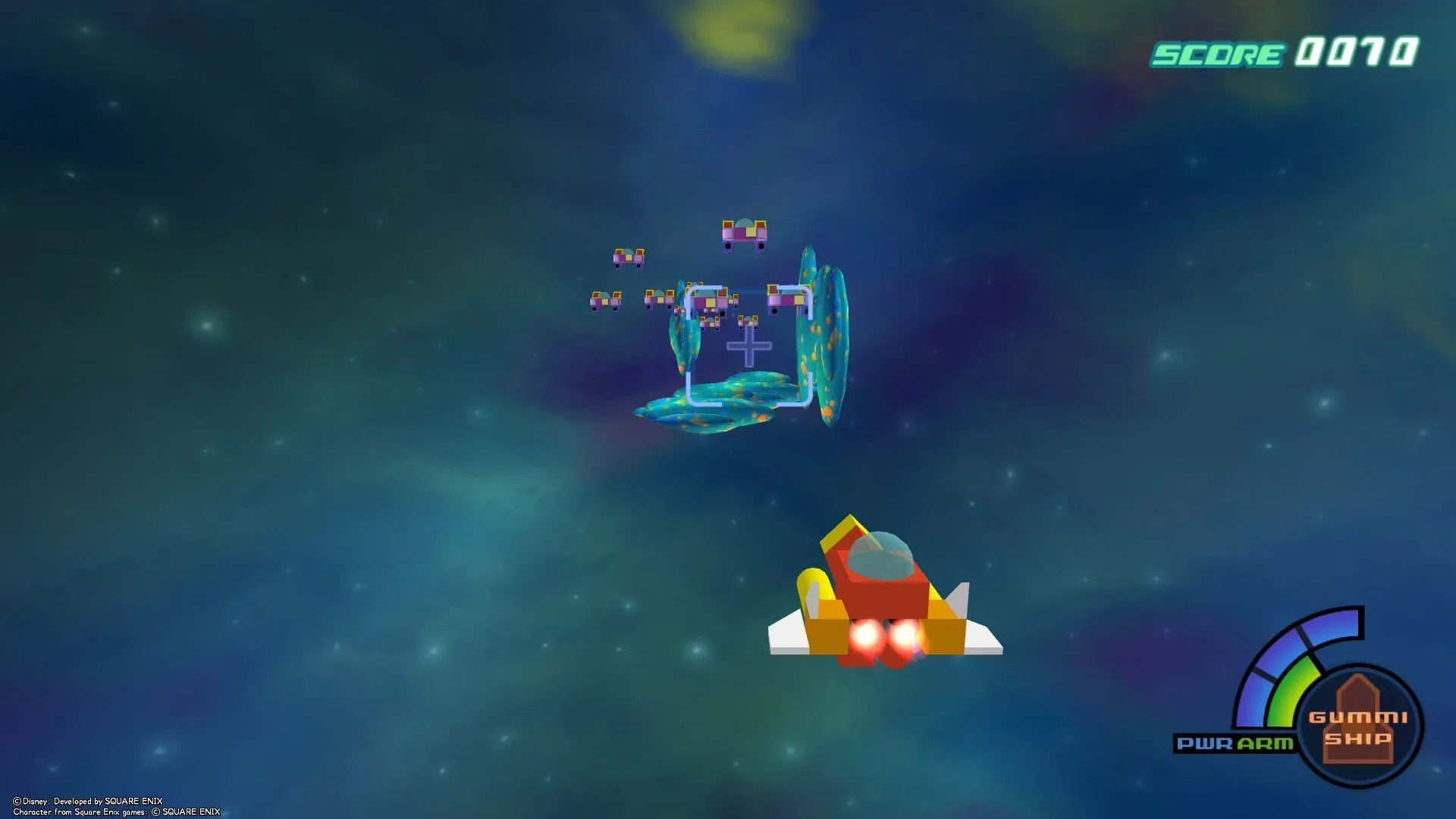
The result, if the impressions hold across the full game, is a mode where flight is not just transportation. It is the way players inspect the island’s composition. For a useful comparison of how a vehicle mode can become an extended detour rather than a simple utility, see our look at Kingdom Hearts’ Gummi Ship.
Three viewpoints make a stronger world
Prop Plane has the most reported photo locations, but the broader design choice is to let players investigate Wuhu Island vertically, horizontally and along the water. That division matters because each viewpoint changes what is visible and what counts as a route.
From the air, coastlines, mountain shapes and distant attractions become navigational clues. On the sea, the island’s perimeter and maritime activity take focus. On the ground, small pathways and the texture of individual attractions can carry the experience. A location that works only from the sky can feel like a miniature. One that also supports skating and cruising has a better chance of feeling inhabited.
Skateboarding is especially notable because it reportedly supports mouse controls that function surprisingly well. That is a technical and practical detail, not just an odd novelty. Mouse input can offer a different control option for players interacting with the mode at a desk, and it may make cooperative photo hunting easier to approach for people who do not want every activity to depend on the same motion-control routine. The impressions describe friends working together to locate photos while skating, which is exactly the kind of low-stakes social objective an explorable sports island should accommodate.
Of course, the report of a coffee table being scraped is also a very traditional reminder: players using physical input around furniture should make room before treating their living area as an extension of Wuhu Island. The game may offer scenic wandering; it cannot relocate the coffee table for you.
Small stories give Wuhu Island its pulse
The most encouraging detail is not the photo count, the vehicles or the updated venues. It is the reported feeling that Wuhu Island is alive. That claim is supported by specific examples rather than a vague promise of “immersion.” A narrator provides lore when a new photo is found. Miis and Sportsmates can be seen socialising and enjoying the island. Boats may congregate to watch a whale breach. A floating café is not just scenery but part of the island’s local character.
“Lore” here should not be mistaken for a claim of a sprawling narrative campaign. The available information points to short contextual details attached to discoveries. That is a fitting scale for this kind of game. It gives landmarks a story without demanding that a casual sports collection become a heavily scripted adventure.
This is also a better use for an open environment than filling it with compulsory tasks. The reported side activities—balloons, hibiscuses and photos—sound optional. Players can pursue a complete set of 105 photos, hunt isolated curiosities, or simply cruise and observe. That flexibility is central to the island’s appeal. A player seeking competition can enter sports; a player wanting a calmer session can wander without being told their time is being wasted.
There are reportedly sparse patches, and it would be misleading to pretend a few lively details automatically make every inch of an island richly populated. The more defensible reading is that the most carefully composed landmarks and discoveries give the setting a stronger sense of place than the comparatively lifeless presentation associated with Nintendo Switch Sports.
Why the setting may matter more than the sport list
Sports games often live or die on their mechanics, and nothing here proves that every individual event is equally strong. But Wuhu Island may be doing something equally important: giving the game an identity beyond its selection of competitions.
That identity comes from cohesion. Hoop Haven is not merely a basketball court. The forest volleyball space is not merely a court with trees pasted around it. Prop Plane’s photos, boats watching whales and the floating café all point back to the same intended fantasy: a playful island resort where sports happen to be part of daily life.
There is a difference between a game adding collectibles because open worlds are expected to have them and a game using discoveries to direct attention toward the personality of its world. The reported Spocco Photos appear closer to the latter. They make the scenery actionable while the narrator gives the player a reason to care about what was found. The crown for finishing all 105 offers an endpoint, but the side missions and multiple traversal modes help ensure the route is not merely a line of icons being erased.
For longtime Wuhu Island fans, the notable takeaway is that change has not necessarily meant dilution. The island has grown outward, acquired new spaces and accommodated Sportsmates alongside Miis, yet its strongest feature may remain the same: it encourages the player to slow down and look around. If Nintendo Switch Sports Resort sustains that feeling beyond its first flights and photo hunts, Wuhu Island could be more than a nostalgic return. It could be the game’s best reason to stay.