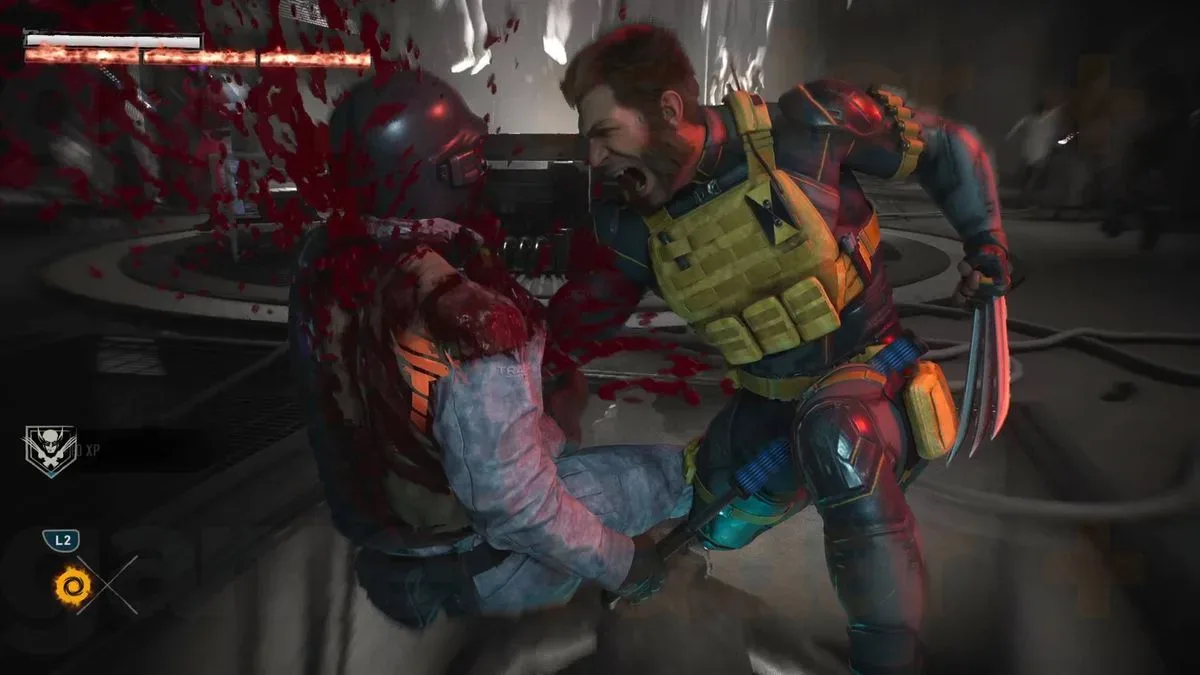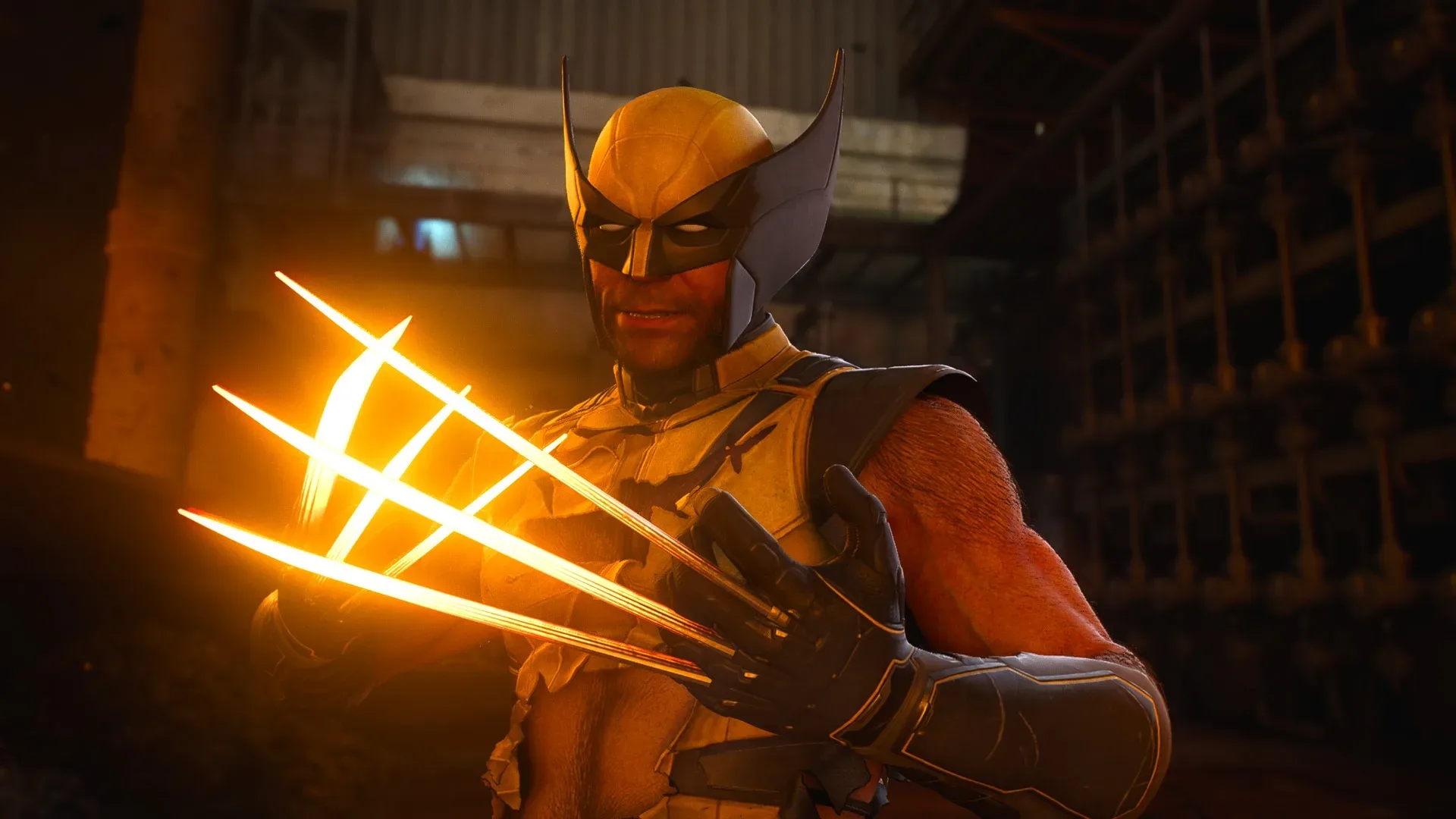
Marvel’s Wolverine arrives on PS5 carrying the kind of pressure usually reserved for an adamantium skeleton: it has to be a major superhero game, it has to interpret one of fiction’s most scrutinized characters, and it has to exist while every online clip is ready to be judged at the speed of a claw swipe. Early reaction has been notably divided, with middling critical notices and isolated footage becoming easy meme fuel. That is a precarious start for any high-profile release, even before factoring in the louder frustration around Sony and physical-disc preservation.
But the game’s reception should not eclipse one particularly intriguing result. Liam McIntyre’s work as Logan makes a compelling argument that the next live-action Wolverine does not necessarily need another exhaustive search for a performer who can merely resemble Hugh Jackman. Marvel may already have an actor demonstrating that he understands the character’s essential contradictions: the violence and restraint, the bitterness and decency, the instinct to push people away and the inability to stop protecting them.
That does not mean a video-game performance automatically translates into an MCU casting decision. Voice and performance-capture work are their own disciplines, while a film role demands its own physicality, chemistry, scheduling and long-term franchise considerations. Yet a roughly 15-hour Wolverine story is a far more meaningful proof of concept than a single screen test. It gives viewers time to hear how an actor carries Logan through rage, grief, awkward warmth, battle weariness, and the grim humor that stops the character from becoming a permanent cloud in a flannel shirt.
The impossible shadow of Hugh Jackman
Any conversation about recasting Wolverine begins with an obvious obstacle: Hugh Jackman has been the defining screen Logan for about a quarter-century. He first played the role in 2000’s X-Men, maintained that association even as the film series bent, rebooted and recast around him, and appeared to bring the run to a close with 2017’s Logan. His return in 2024’s Deadpool & Wolverine proved how difficult it is for audiences, studios and perhaps Jackman himself to fully step away from the part.
There has also been speculation around whether Jackman could appear in December’s Avengers: Doomsday. At present, it is not clear whether that apparent enthusiasm amounts to a joke, a hope, or a meaningful sign of involvement. Either way, a possible additional appearance does not solve the longer-term question. A new era of X-Men storytelling cannot permanently treat Logan as a role available only through nostalgia, multiverse mechanics, or the reliable presence of one actor.
Jackman’s achievement deserves respect precisely because it should not be replicated. His Wolverine was a defining blockbuster performance, not a template that must be copied until the end of time. The next actor needs to preserve Logan’s recognizability without becoming a tribute act in sideburns.
Why McIntyre’s version stands apart
McIntyre’s Wolverine appears to understand that assignment. His Logan remains tormented, impatient and dangerous, but he is not simply performing a greatest-hits approximation of the cinematic Wolverine audiences already know. There is a somewhat gentler current beneath the character’s roughness. He can sound wounded without sounding weak, and hostile without flattening Logan into a humorless instrument of pain.
That distinction matters. Wolverine is frequently reduced to claws, a snarl, and some variation of “leave me alone.” Those ingredients are certainly part of the recipe, but they are not the meal. Logan works because his anger protects a core of empathy that refuses to die, regardless of how much loss he has endured. If an interpretation only emphasizes the berserker, it misses the man. If it only emphasizes the wounded survivor, it loses the volatile edge that makes everyone in the room wonder whether the furniture will survive the conversation.
Related coverage includes Liam McIntyre's Wolverine Performance Makes a Strong Case for the MCU.
The game reportedly asks McIntyre to navigate a story that pulls from numerous Logan and X-Men threads. That can make the narrative feel crowded, particularly for players without a working map of mutant comic history. Creative changes may also prove divisive among devoted readers. Even so, an actor’s ability to remain emotionally legible when the surrounding plot is doing several things at once is valuable. McIntyre has been identified as one of the steadier elements in that large, complicated package.
There is an additional practical point: an actor who makes a distinct impression in a game avoids the trap of being judged solely through a face model. The visual rendering has been criticized as inconsistent, but the performance is not limited to a digital likeness. McIntyre supplies the attitude that makes a character feel like Wolverine rather than a generic gruff action lead with unusually expensive dental hardware.
An MCU X-Men lineup needs its Logan-shaped gap filled
Reports surrounding the next generation of MCU X-Men have attached several names to key characters. Sadie Sink reportedly debuted as telepath Jean Grey in Spider-Man: Brand New Day. Kit Connor has been linked to Cyclops, Samara Weaving to Emma Frost, Inde Naverrette to Rogue, Maya Boyd to Storm, Christopher Abbott to Professor X, and Adam Driver to Mr. Sinister. Most notably for this discussion, no actor has been publicly positioned as that lineup’s Logan.
That omission may be strategic rather than alarming. Wolverine is a giant piece on the board, and Marvel could be trying to avoid letting him consume every early conversation about the team. After decades in which the X-Men films often leaned heavily on Logan, there is merit in establishing Cyclops, Storm, Jean, Rogue and the rest as fully realized people before unleashing the fellow who treats doors as optional.
Still, Wolverine will need to arrive eventually. His relationships make him particularly useful in an ensemble: he can challenge Cyclops, act as an unexpectedly effective mentor, bring history and tension to Xavier’s school, or embody the fear that mutant stories inspire in the wider public. McIntyre could join such a cast with a version already differentiated from Jackman’s, rather than needing the first film to prove he is not trying to impersonate the past.
The one very comic-book-unfriendly complication
There is one amusing caveat. McIntyre is 6’1”, while comic-book Wolverine is famously short. Logan’s compact stature is not trivia for trivia’s sake; it contributes to his visual identity and to the delightful mismatch between his size and the amount of danger he represents. Fans have spent years hoping a future adaptation might finally embrace the character as a genuine short king.
On that narrow point, McIntyre would continue the long screen tradition of casting Wolverine considerably taller than his comics counterpart. It is not an automatic disqualifier—Jackman himself became inseparable from the character despite also being much taller than classic Logan—but it would mean Marvel had again passed over a chance at the most physically comic-faithful silhouette.
Height, however, should rank below presence, acting range, and the ability to make Logan feel human. A shorter performer who cannot convey the character’s exhausted tenderness would not become a better Wolverine merely by standing at the right eye level. McIntyre’s strongest case is that he has already demonstrated a balance the role demands: he can sound dangerous, but he can also make the audience believe there is somebody worth saving underneath all that damage.
A game performance is not a casting announcement
None of this should be mistaken for evidence that McIntyre has been approached, auditioned, or selected for an MCU role. No such casting move has been established. It is simply a reasonable fan-casting argument built from the most relevant available work: a substantial performance as Wolverine at the very moment a new live-action X-Men ensemble is reportedly forming.
There is also a broader lesson in the timing. Franchise characters do not stay fresh by treating every previous performance as untouchable museum property. They stay alive when new artists find a different truth in the same fundamentals. Gaming audiences have already seen how release plans and public expectations can shift rapidly; even the broader industry calendar continues to move, as with Rayman Legends Retold’s delay to December 3. The next Wolverine should not be chosen as a panic response to online discourse or because of an urge to duplicate a beloved performance.
McIntyre’s work gives Marvel a useful alternative to that mindset. If the studio wants a Logan who honors what came before but does not repeat it beat for beat, he has already put a thoughtful, forceful interpretation on the record. The claws are there. The scars are there. More importantly, so is the heart.