Choosing between IMAX 3D and IMAX 2D should not be treated as a simple question of whether “more technology” is automatically better. Both options can deliver the large-scale screen presentation and audio experience people expect from IMAX. The real decision is whether stereoscopic depth improves a particular film enough to justify trade-offs that can include a dimmer image, another pair of glasses and, for some viewers, physical discomfort.
That distinction matters most for action-heavy movies built around height, speed and movement through layered environments. A superhero moving between skyscrapers, for example, gives 3D a clear visual job: it can separate the character, nearby structures and distant cityscape in a way that makes the frame feel less like a flat window. But a film does not become more involving merely because it has a 3D option. If depth has little meaningful role in its visual design, IMAX 2D may be the more satisfying premium screening.
IMAX and 3D are not opposing formats
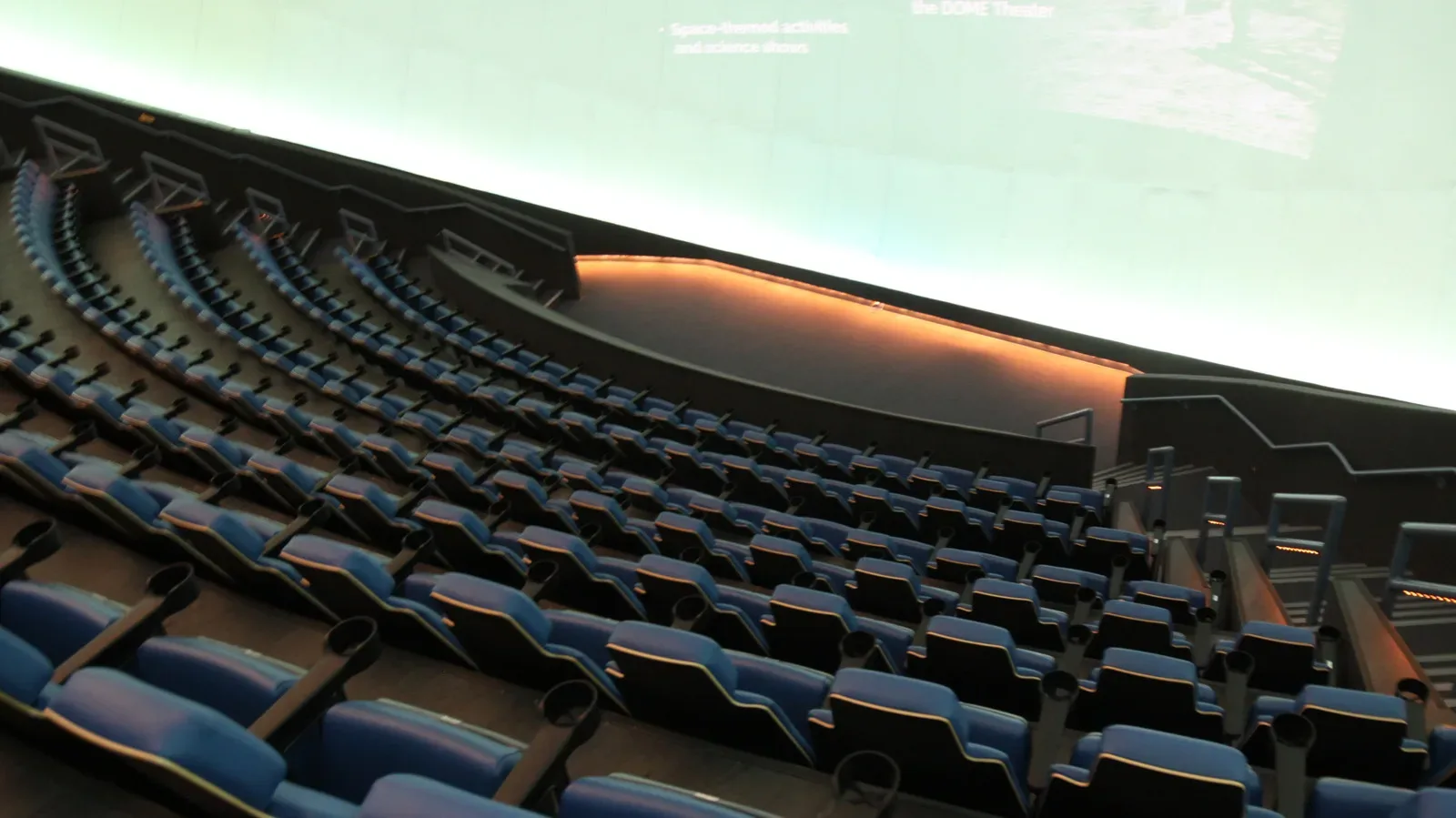
The first useful clarification is that IMAX and 3D describe different things. IMAX is the larger presentation package: its screen scale, projection arrangement, auditorium design and sound are part of the proposition. A movie can play in IMAX in either 2D or 3D. Choosing IMAX 2D does not mean abandoning the big screen or the high-impact audio; depending on the film and venue, it may also preserve an expanded aspect ratio.
3D, meanwhile, is an image technique. It can be presented in IMAX or in a standard auditorium through systems such as RealD. RealD uses the same broad visual principle—separate images for each eye—but it is not a like-for-like substitute for the entire IMAX presentation environment. RealD says its platform operates on more than 22,000 screens across 72 countries, which also explains why it is a familiar alternative at many theaters.
For moviegoers, this means the more accurate choice is not “IMAX versus 3D.” It is usually one of these: IMAX 2D, IMAX 3D, or conventional-auditorium 3D. The first two share much of the IMAX appeal. Their main difference is whether the film is adding stereoscopic depth—and accepting the compromises required to create it.
How theatrical 3D produces depth
The core idea behind cinema 3D is straightforward. The presentation sends two slightly different views of the same scene, one intended for each eye. The glasses keep those views from bleeding together, allowing the brain to combine them into an image with an apparent sense of depth.
That effect is often misunderstood as an excuse for objects to fly out toward the audience. Those moments can be attention-grabbing, but they are not the most persuasive use of 3D. Strong stereoscopic presentation can instead establish distance within a scene: a character in the foreground, an obstacle or architecture in the middle distance, and a wider environment behind them. On a screen that occupies a substantial portion of the viewer’s field of vision, those layers can make the image feel more like a space being viewed into rather than a surface being viewed at.
That is why a movie centered on aerial movement, rapid motion and tall environments can be a sensible IMAX 3D candidate. The depth effect has visual information to work with. It can reinforce the geography of a swing between buildings or the separation between objects crossing the frame at different distances. For fans who follow superhero storytelling beyond the screen, Joking Joystick’s look at Doctor Strange #1’s multidimensional setup is another reminder that scale and spatial perspective are central tools in the genre, even though cinema 3D and comics naturally achieve them in very different ways.
Related coverage includes IMAX 3D vs. IMAX 2D: When the Extra Depth Is Worth It.
Still, depth is not automatically dramatic just because the screen is huge. A restrained drama, a film whose compositions are predominantly close and flat, or a conversion that does not meaningfully shape the viewer’s sense of space may not gain enough from 3D to outweigh its costs. In those cases, 2D can put the viewer’s attention back on the image’s brightness, color and clarity.
Why one IMAX 3D screening may look better than another
“IMAX laser” is not a guarantee that every theater will offer identical picture quality. The projection system in the specific auditorium can materially affect how a 3D image is perceived. IMAX’s GT Laser system uses dual projectors, while CoLa and XT systems use a single projector. GT Laser is described as brighter and sharper than the single-projector CoLa and XT installations.
This is especially relevant for 3D because the glasses themselves reduce the light reaching the viewer. A presentation starting with more light output has more room to offset that loss. It does not eliminate every downside of 3D, but it can help preserve the clarity and brightness that give the format a fair chance to shine.
The practical implication is simple: a glowing recommendation for IMAX 3D may reflect not only the movie but also the particular venue. A viewer who has seen a sharp, bright dual-projector screening may have a very different impression from someone who encountered a softer or darker presentation elsewhere. Theater quality is therefore part of the format decision, not a trivial detail after the ticket is purchased.
Brightness and stereo contrast matter
Brightness is among the most persistent complaints about theatrical 3D. The glasses are necessary to direct the separate images correctly, but they also make the presentation darker. Laser projection can help compensate through higher light output, yet compensation is not the same as making the concern disappear.
Brightness and stereo contrast are both important to a convincing 3D image. In this context, stereo contrast refers to the visual separation that helps the two-eye presentation read as distinct depth rather than a muddy or vague effect. If the picture becomes too dim or loses clarity, the added dimension can feel less impressive precisely when the audience has paid for a premium format.
IMAX 2D has a strong argument here. It retains the scale, sound and possible expanded framing of the IMAX engagement without placing 3D glasses between the viewer and the screen. For a film that does not make persuasive use of depth, that brighter, simpler picture may be the preferable version rather than a downgraded alternative.
Comfort is not a minor footnote
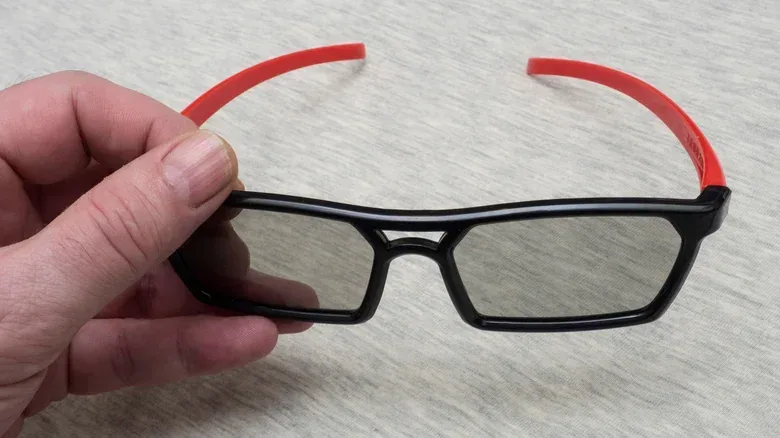
3D’s other major consideration is physical comfort. Viewers who wear prescription glasses may need to fit the theater’s 3D glasses over them. That can be workable, but it adds weight, fit issues and an ongoing awareness of the glasses that 2D does not impose. “Manageable” is not necessarily what someone wants from a format carrying a premium charge.
For other people, the concern is more substantial than inconvenient eyewear. A study of 497 healthy adults found that 54.8% reported some degree of simulator sickness after a 3D movie, compared with 14.1% after a 2D movie. Those figures should be interpreted carefully: the 2013 study was not specifically about IMAX, so they cannot be used as IMAX-specific rates. They do, however, underline that discomfort linked to stereoscopic viewing is a real consideration rather than a mere preference.
One explanation associated with stereoscopic discomfort is vergence-accommodation conflict. Vergence is the way the eyes angle inward or outward to aim at an apparent point in depth. Accommodation is the focusing adjustment of the eye’s lens. In a 3D movie, the eyes may converge as though an object sits in front of or behind the screen, while the physical focus remains on the screen’s flat surface. That mismatch can be uncomfortable for some viewers.
This does not mean every viewer will experience a problem, nor does it establish that all 3D presentations are unpleasant. It means the “best” format is partly personal. A viewer who regularly gets headaches, eye strain or nausea from stereoscopic displays has a sound reason to prioritize IMAX 2D, even for a movie that otherwise seems ideally suited to 3D.
A useful way to choose a ticket
When both IMAX versions are available, the decision can be reduced to a few practical questions:
- Does the movie appear designed around depth? Fast movement, large vertical spaces and carefully layered environments give 3D more opportunity to add something meaningful.
- Is the local IMAX auditorium likely to support a strong 3D image? The difference between dual-projector GT Laser and single-projector CoLa or XT setups is relevant to brightness and sharpness.
- How do you react to 3D glasses? Consider prescription glasses, fit, fatigue and any prior sensitivity to stereoscopic viewing.
- What are the ticket terms? Premium surcharges vary by theater and membership. AMC A-List includes IMAX and RealD 3D screenings without an additional premium-format charge, which may change the value calculation for eligible members.
The most defensible rule is that 3D should earn its place. Pick IMAX 3D when a film’s imagery is likely to benefit from depth and when the venue is equipped to present it well. Pick IMAX 2D when brightness, ease of viewing and a clean presentation are the priority—or when the movie offers no compelling reason to put on another set of glasses. Bigger is valuable, but extra depth is only valuable when it improves what is actually on screen.