The PlayStation 5 is still a remarkably capable way to play big-budget games, and the PlayStation 5 Pro pushes console graphics further still. But “capable” and “good value at this moment” are not the same thing. For anyone deciding whether to enter the PlayStation ecosystem now, the calculation has become unusually messy: the systems cost more than their launch counterparts, physical media appears to be on a narrowing path, and the Pro’s technical advantages do not improve every kind of game equally.
There is also no supplied timetable for a PlayStation 6. That uncertainty cuts both ways. A buyer who wants to play current PS5 releases now may reasonably decide waiting has little value. A buyer concerned about paying a premium late in a console cycle, however, does not have a clear next-generation date to plan around. The practical answer is not that every prospective owner should avoid a PS5. It is that shoppers should identify what they value most before choosing a model—or deciding to hold off.
1. The PS5 family costs substantially more than it did at launch
The clearest drawback is the price trajectory. In North America, the original PS5 with a disc drive launched on November 12, 2020 at $499, while the Digital Edition launched at $399. The stated current prices are $649 for the disc-equipped machine and $599 for the discless version. That is roughly a 30% increase for the disc model and a 50% increase for the digital model relative to those launch prices.
That reversal matters because shoppers often expect established consoles to become cheaper with age. Here, the direction is the opposite. The supplied information links the higher costs to severe RAM and SSD pricing pressures. RAM is the short-term working memory used by computers and consoles, while an SSD is the fast solid-state storage used to hold games and system data. Both are important parts of modern game hardware, so increases in component costs can affect what manufacturers charge for finished systems.
There are hardware details worth keeping in perspective. The disc-equipped PS5 now has 1TB of storage rather than the original 825GB. More storage is useful because contemporary games can consume a considerable portion of a console drive. However, that improvement does not erase the larger purchase price, and the supplied material says the Digital Slim has returned to the lower 825GB capacity.
The PS5 Pro’s movement is even more dramatic. It launched on November 7, 2024 for $699 and is now listed at $899. An optional disc drive for Slim and Pro systems remains $79. That means a shopper who wants the premium hardware and physical-game compatibility must consider the combined cost rather than treating the base console price as the whole story.
There is a second pricing trap: scarcity and third-party listings. A used PS5 Pro has been listed by an Amazon marketplace seller at $1,449, far above the $899 stated current price. That does not establish a normal market price; it demonstrates why buyers should distinguish a retailer’s official price from opportunistic marketplace offers. A shortage does not turn an inflated resale listing into good value.
The wider memory-price discussion is not confined to consoles. RAM pressures are also raising uncomfortable questions for PC gamers, which helps explain why component availability has become part of a gaming purchase decision rather than invisible industry plumbing.
Related coverage includes Four Reasons to Think Twice Before Buying a PS5.
2. Physical media is becoming a more consequential choice
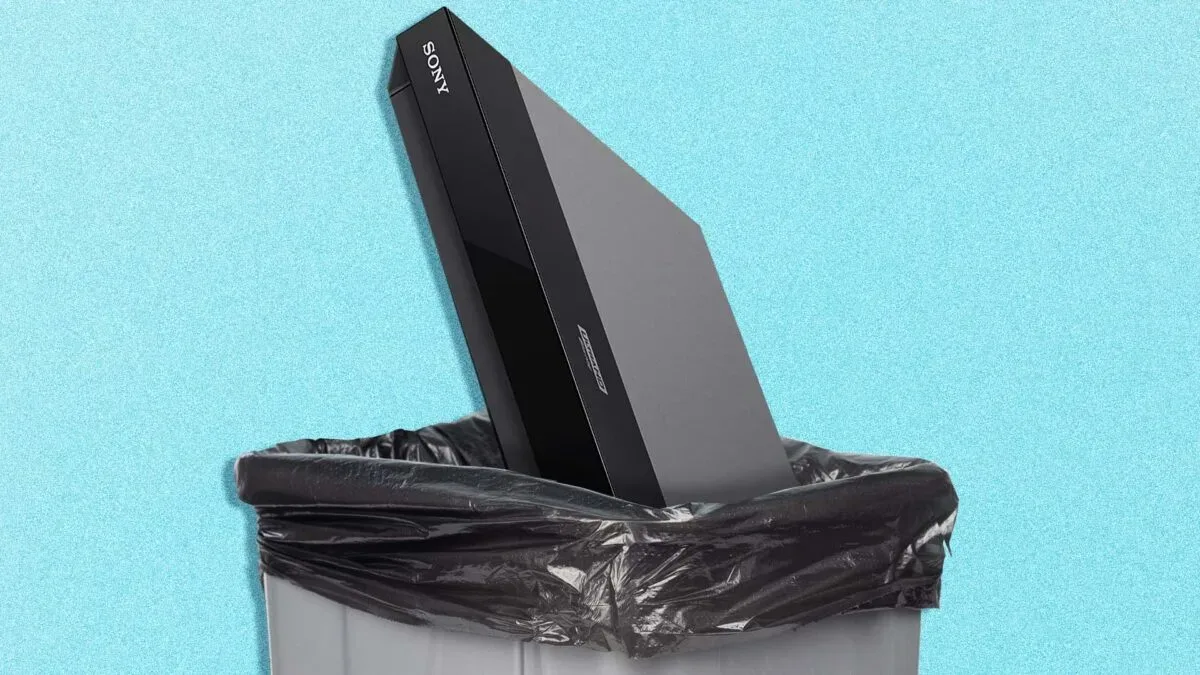
Buying a disc-capable PS5 is no longer only about whether someone likes putting a disc in a machine. It can shape how they purchase, share and store games. The supplied information says Sony will stop putting games on discs beginning in 2028, and that a future PlayStation 6 will not support physical games. It also says the UBP-X700/K is expected to be Sony’s final manufactured 4K Blu-ray player.
If that direction holds, it would mark a major shift from earlier PlayStation hardware. The PlayStation 2 was widely used for DVD playback, while the PlayStation 3 was positioned as an affordable Blu-ray option in its era. A game console can be a media device as well as a games machine; removing disc playback changes that role even for people who only occasionally watch a film on physical media.
For game buyers, the distinction between a disc and a code is practical. A genuine game disc can potentially be lent to a friend, traded, resold, bought from a store during a sale, or kept on a shelf. A download code in retail packaging does not provide those same options after it has been redeemed. Digital purchases can be convenient—no disc swaps and no need for shelf space—but convenience is a different benefit from ownership flexibility.
This does not mean digital libraries have no appeal. Many players have already moved most of their purchases online, making a Digital Edition an understandable fit for their habits. The key is to avoid buying a discless console merely because it looks cheaper. At the stated $599 price, the Digital Edition is only $50 below the $649 disc model. For a buyer who might want used discs, store promotions, lending, or Blu-ray playback over the life of the system, that $50 gap deserves careful consideration.
The same caution applies to expectations around major releases. The supplied material describes Grand Theft Auto VI as a title for which a “physical” purchase could be a code in a box. Prospective buyers should therefore look closely at what any retail package actually includes rather than assuming that boxed presentation guarantees a playable disc.
3. The PS5 Pro’s graphics lead does not solve every performance problem
The PS5 Pro is presented as the most powerful console, but its value depends heavily on the kinds of improvements a buyer expects. Its graphics hardware is much stronger than the standard PS5’s on paper: 16.7 TFLOPS of GPU compute performance versus 10.3 TFLOPS, a stated 45% increase, and 60 compute units versus 36.
TFLOPS, or trillion floating-point operations per second, is a measure used to describe theoretical mathematical throughput. It is useful as a broad hardware comparison, but it is not a direct promise that every game will run 45% faster or look 45% better. Games can be limited by different parts of a system, their engine design, and the choices developers make about image quality and frame rate.
That is where the CPU comparison is important. Both PS5 models use AMD Zen 2 processors with eight cores and 16 threads. The Pro is clocked at 3.85GHz, compared with 3.5GHz on the standard PS5: about a 10% increase. A CPU, or central processing unit, handles many of the calculations that govern a game’s simulation, world activity and other logic. When a game is CPU-intensive, much stronger graphics hardware may not automatically unlock dramatically higher frame rates.
The supplied examples are Cyberpunk 2077 and Dragon’s Dogma 2, where 90 frames-per-second modes are not appearing on the Pro. Frames per second, usually shortened to fps, is the number of rendered images displayed each second. Higher figures can make movement appear smoother and can improve responsiveness, but achieving them requires the game’s entire performance budget—not only graphics—to keep up.
There are meaningful image-quality benefits to the Pro. PSSR 2.0, its upscaling technology, is said to make Resident Evil Requiem and Saros look particularly impressive. Upscaling is a technique that renders an image at one resolution and reconstructs it for display at a higher resolution, aiming to preserve detail while reducing the raw rendering burden.
Yet the gap is complicated by Quick Spectral Super Resolution, or QSSR, an AI upscaling approach being brought to the base PS5. If the standard system gains better image reconstruction, the visual distance between it and the Pro can narrow in supported games. That is not an argument that the two machines are equal. It is a reason to avoid treating the Pro’s top specification as an automatic upgrade for every game and every display.
Prospective Pro buyers should ask a narrower question: do they value enhanced graphics in specifically supported titles enough to justify the higher price? It is less useful to ask whether the Pro is “powerful,” because the supplied specifications clearly show that it is. The more relevant issue is whether its GPU-heavy strengths match the games, screen and performance expectations of the person paying for it.
4. The industrial design may matter more than it sounds
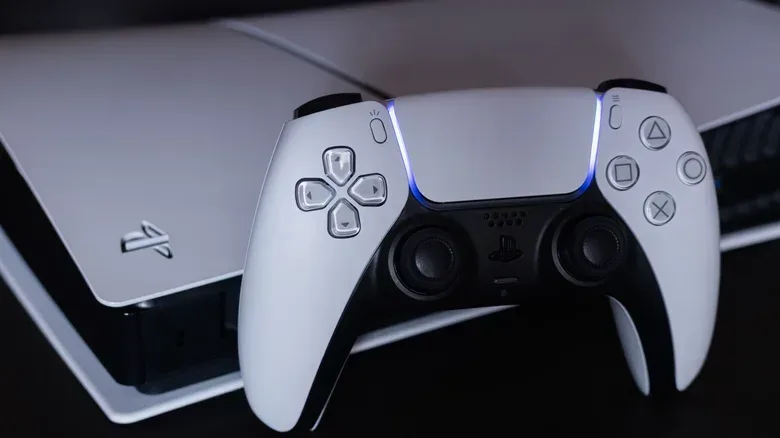
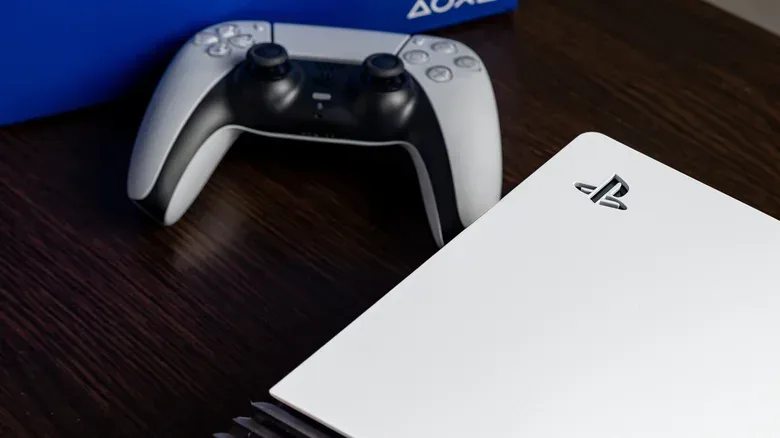
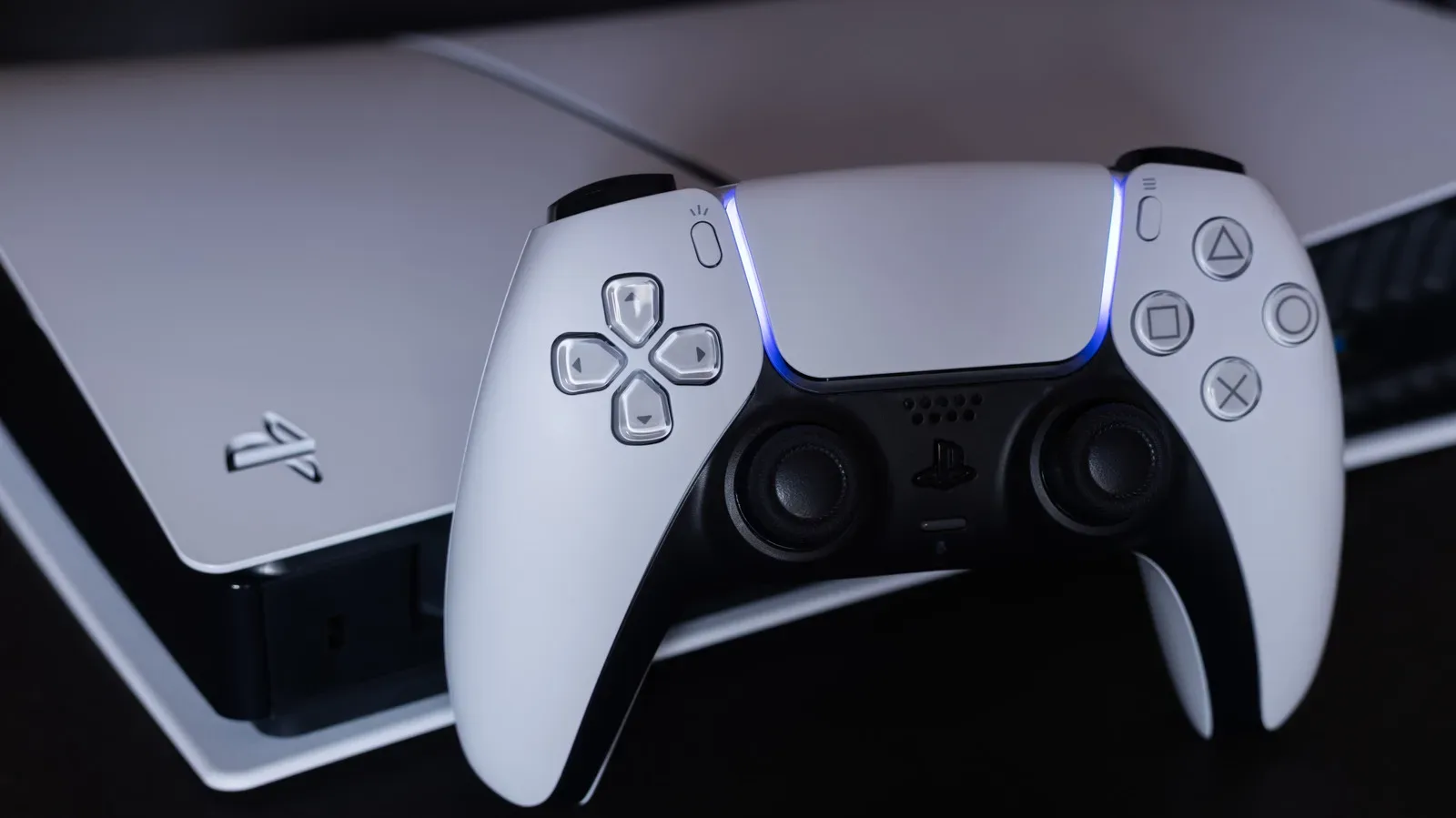
Design is subjective, but a console occupies a visible place in a living room for years. The PS5’s large, angular form has always been divisive, and the current family does not offer a universally understated alternative. The supplied view is especially critical of the original model’s size, jutting surfaces and protruding disc tray, with the systems described as less appealing when placed horizontally.
This is not merely an aesthetic footnote. A buyer who plans to place a console in an entertainment cabinet must account for its physical presence and, sensibly, should plan its location before buying rather than after. The Digital Edition has a more uniform profile than a model with an attached drive, and Slim and Pro owners are not required to attach the optional drive. Those differences may help in a setup where visual symmetry matters.
Vertical placement changes the look again, but the PS5 Pro requires an optional stand for that arrangement. That adds another consideration to an already expensive purchase. No supplied evidence establishes that one orientation is technically preferable; the important point is simply that placement, furniture space and visual preference are real buying criteria, not frivolous afterthoughts.
A more disciplined PS5 buying checklist
None of these drawbacks cancels the PS5’s strengths. Instead, they argue for buying the version that fits a defined use case, rather than reflexively chasing the newest or seemingly cheapest option.
- If physical games matter: compare the $50 stated difference between the disc PS5 and Digital Edition against the freedom to buy discs, use store promotions, lend games and play Blu-ray media.
- If the Pro is tempting: focus on supported games and the specific visual improvements you care about. Do not assume its 45% GPU advantage translates into equally large frame-rate gains in CPU-limited games.
- If storage is a priority: check the capacity of the precise model being sold. The disc-equipped current machine is described with 1TB, while the Digital Slim is described with 825GB.
- If price is the deciding factor: separate official listed prices from third-party marketplace asks, especially during shortages.
- If the console will live in a shared room: decide whether its size and shape work with the available cabinet, TV stand or visible shelf space before making the purchase.
The PS5 is not a bad console because it has drawbacks; every hardware purchase involves trade-offs. The problem for buyers now is that those trade-offs have become more expensive and more permanent. A careful decision about discs, storage, placement and the value of Pro-specific graphics is likely to be more satisfying than a purchase driven by scarcity, speculation about an unconfirmed 60 fps mode for Grand Theft Auto VI, or the assumption that an older console should automatically be a bargain.