A folding electric bike can look like the ideal bit of real-life inventory management: pedal assistance for the commute, a frame that folds for storage, and the pleasing prospect of reclaiming a hallway, apartment corner, office nook, or luggage rack from full-size-bike duty. That convenience is real. So are the compromises hiding behind the hinge.
The key distinction is simple: foldable does not mean effortlessly portable. A bike may occupy less floor space when folded while still being awkward to lift, uncomfortable over damaged pavement, expensive to buy, and demanding to maintain. The motor, battery, folding hardware, and the practical requirements of a rideable bicycle all have to coexist. There is no universal “best” folding e-bike; there is only the model whose trade-offs fit a rider’s actual route, storage situation, strength, budget, and transport rules.
That means the smartest pre-purchase question is not “Does it fold?” It is: What problem will folding solve in my day, and what new problems does the folded bike create?
A smaller footprint is not the same as a lighter load
A folding frame helps with volume, not necessarily mass. Electric bikes carry components that regular folding bikes do not: a motor for pedal assistance and a battery to supply it. The folding mechanism itself also requires hinges, clamps, and locking hardware. Those pieces are fundamental to the design, but they all add weight.
For more context, explore Future and Travis Scott Join Drake’s 40th Birthday Celebration in New York.
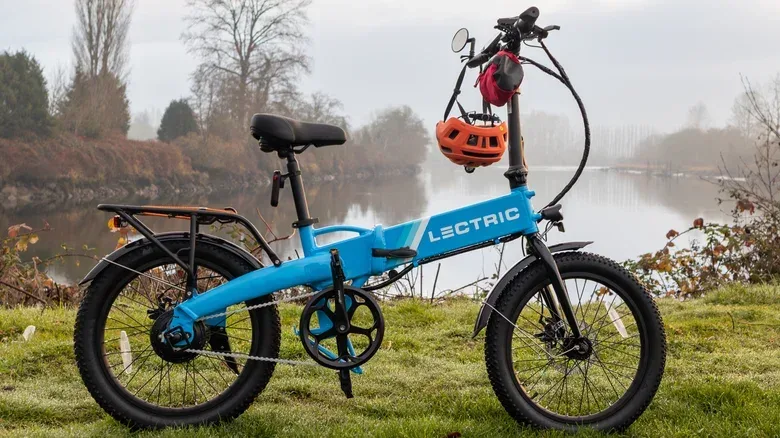
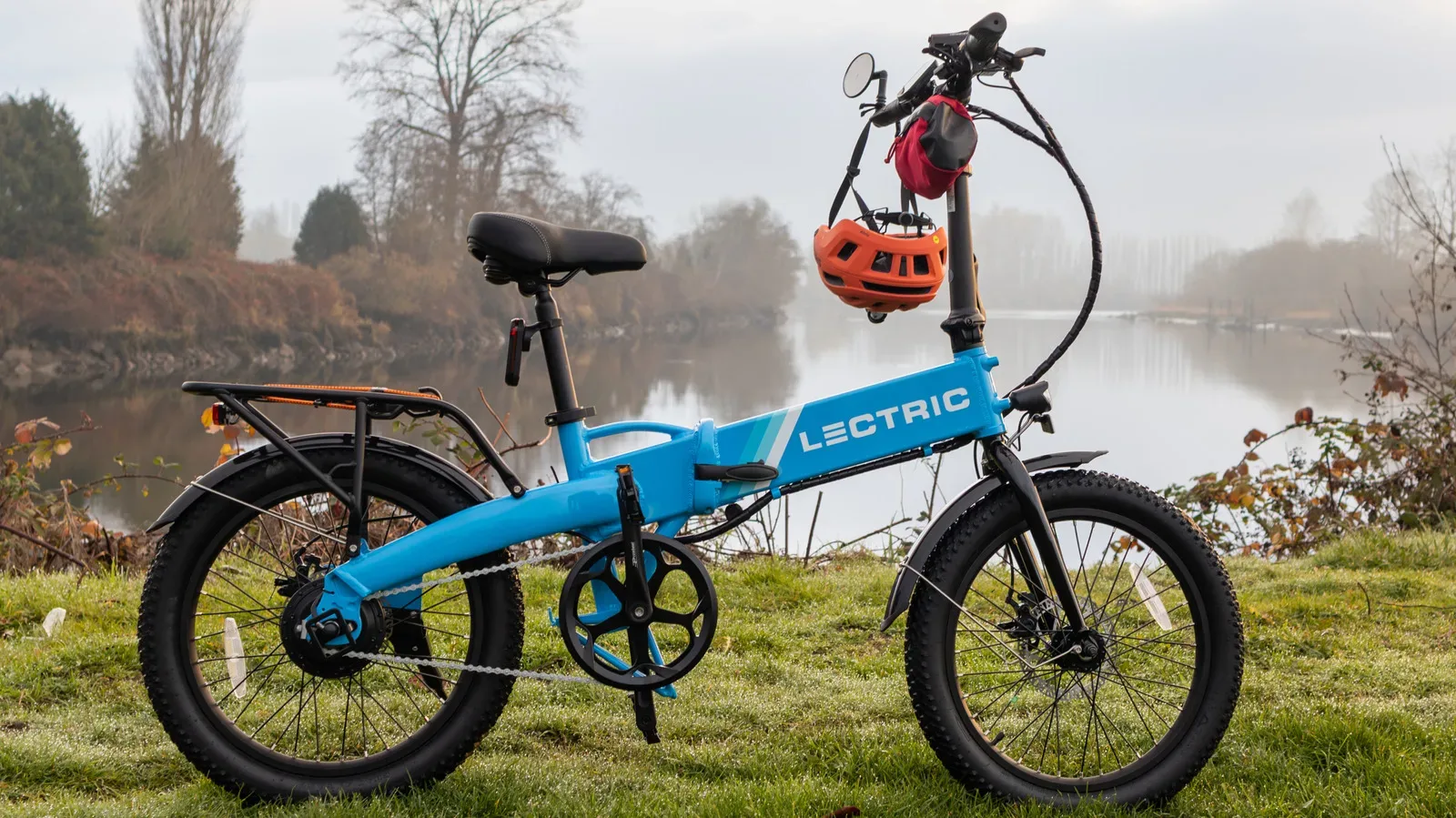
Consider the Lectric XP4 as an example of why the distinction matters. Its 500W folding model is listed at 62 pounds without its battery. The battery adds another seven pounds, for a 69-pound total, or roughly 31 kilograms. Removing the battery can make a lift slightly more manageable, but a 62-pound folded object is still a serious object to maneuver into a car or up a staircase.
This is where “portable” can become a slightly mischievous marketing word. A rider who rolls a folded bike from a platform to a workplace may find it perfectly practical. A rider who must carry it up several flights of stairs twice a day may find the same bike behaves less like compact transportation and more like a side quest involving a very determined suitcase.
Test the whole movement, not just the fold
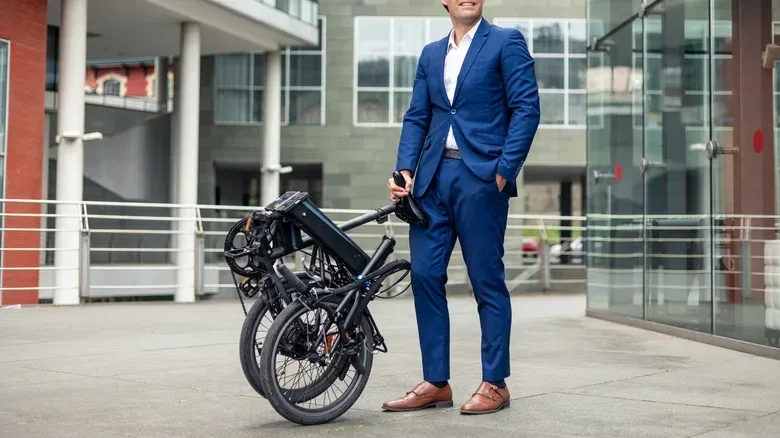
Weight is only one part of carrying practicality. The folded package needs a secure shape, usable handholds, and a way to stay closed while it is moved. Some models can be wheeled when folded, avoiding the need to support the entire weight in the air. That is a meaningful benefit, although it does not guarantee easy handling through tight doors, crowded spaces, or stairs.
Related coverage includes Foldable Electric Bikes Save Space, Not Necessarily Effort.
Accessories can make the logistics more complicated. A basket or pannier bags may be useful while riding, yet add bulk to the folded package or need to be removed before carrying. They also count toward the bike’s overall load limit. Folding reduces the frame’s footprint; it does not cause attached gear to vanish into a convenient inventory menu.
Before committing, it is worth carrying out a practical check:
- Lift the bike with the battery installed, because that is its real-world weight when ready to ride.
- Remove the battery and lift it again, if it is removable, to judge whether that changes the storage routine enough to matter.
- Fold it yourself and verify that the process feels straightforward and secure.
- Move it a short distance in its folded state, including turns and doorways where possible.
- Measure the folded dimensions and compare them with the intended storage area at home, work, or in a vehicle.
This is not needless fussiness. A folding bike succeeds or fails on the repeatable routine surrounding every ride. A bike that folds brilliantly but cannot be lifted safely by its owner is not solving the owner’s transportation puzzle.
Public transport limits can decide the issue before the ride begins
People often consider folding e-bikes for a mixed journey: ride to a station, take a train, then ride the final stretch. That plan has to account for the rules of the transport service, particularly where e-bike weight is concerned.
Amtrak’s rule limits electric bikes to 50 pounds. A 69-pound Lectric XP4 therefore falls outside that limit, even before thinking about what a rider is carrying. This is a useful reminder that a folded bike’s size is not the only specification that matters when combining modes of travel.
The practical implication is to check transport policies early rather than treating them as an afterthought. A purchaser should compare the model’s stated weight in the configuration they will actually use against the applicable limit. They should also consider accessories and how the folded bike will be moved through stations and onto trains. The right bike for an apartment-and-car routine may be the wrong bike for a rail commute.
Compact wheels can make rough roads feel even rougher
Folding designs often use smaller wheels so the bike can reduce to a more manageable size. That choice is logical for storage, but it changes the ride. Smaller wheels can make uneven surfaces more noticeable, so broken pavement and potholes may feel harsher than they would on a bike with larger wheels. Narrow tires and the absence of suspension can add to that feeling.
This does not mean every compact folding e-bike is uncomfortable or incapable. It means the surface beneath the wheels becomes part of the purchase decision. A short journey over relatively smooth streets is a very different use case from a long commute where the pavement is cracked, patched, and littered with potholes. Sustained rough ground and rutted tracks are likely to be a poor match for a compact folding design, even if a motor makes forward progress easier.
Suspension is the system intended to absorb some impact from uneven terrain. Wider tires can also improve comfort on rougher surfaces. Both can mitigate the compact bike’s limitations, but neither arrives free of consequence: they can add weight and bulk. This is the central folding e-bike bargain in miniature. Improvements to ride comfort may work against the reason a buyer wanted a compact bike in the first place.
Fit remains important even when the frame folds
The saddle is another factor that cannot be reduced to a simple “folding bikes are uncomfortable” rule. Comfort depends on the rider’s position, their reach to the handlebars, saddle placement, and whether the bike’s adjustment range works for their body. Manufacturers such as Tern emphasize setting saddle height and position correctly, and that advice matters just as much on an e-bike with a hinge in its frame.
A test ride should therefore be more than a quick loop on an ideal smooth surface. Pay attention to steering, braking, the riding position, and how the bike reacts to bumps. When possible, ride on surfaces resembling the usual route. The bike’s compact form is only helpful if the rider will be comfortable enough to use it regularly.
Battery capacity, range, and motor power need separate scrutiny
Folding e-bikes are not automatically weak, but their compact proportions can lead to smaller batteries. That makes it important to compare battery capacity and motor specifications rather than relying on a model’s category or a single advertised range number.
Range is an estimate, not a fixed promise. Lectric notes that the XP4’s range changes with load, terrain, and weather. A rider carrying more gear, traveling over demanding roads, or encountering unfavorable conditions may cover less distance than expected. Conversely, smoother roads, lighter loads, and shorter trips may yield more favorable results.
This is not unique to folding models, but it can matter more when the buyer is already balancing size and weight. A larger battery may help extend the distance between charges, but it can also add mass. A smaller battery can support a more compact package but may be a poor fit for a longer daily trip. The best approach is to match battery capacity to the route and leave room for changing conditions rather than planning around the most optimistic possible number.
It is also worth considering the battery as a future service item. No battery lasts forever. Before spending heavily, a buyer should find out whether a replacement battery can be sourced readily and how replacement fits into the bike’s ownership plan. The same question applies to folding-specific parts, including the joints and hardware that make the frame compact in the first place.
The premium for lighter folding models can be steep
Folding e-bikes can reach prices measured in thousands of dollars, especially when reduced weight is a priority. Brompton lists its Electric C Line from $4,700, the lighter Electric P Line from $5,500, and the Electric T Line as high as $7,850.
Those figures illustrate an important purchasing reality: lower weight can cost more. Yet a higher price alone does not guarantee the precise mix of lightness, range, comfort, and practical portability a rider wants. A buyer should resist treating price as a shortcut for suitability. The expensive model may be the superior fit for someone who must carry it daily, but an unnecessary expense for someone who can roll it from secure storage to a flat commute.
The decision becomes clearer when priorities are ranked honestly. If the most important requirement is storing the bike under a desk, folded dimensions may lead. If stairs are unavoidable, total carry weight may be decisive. If the commute covers rough streets, wheels, tires, suspension, and fit deserve extra emphasis. If a train is involved, the operator’s weight rule can be non-negotiable.
Folding hardware adds maintenance points that deserve respect
Every e-bike needs routine attention for tires, brakes, and chains. A folding model adds joints and clamps that are repeatedly used and subject to pressure. These should be inspected regularly. Tern recommends servicing folding joints and checking them before each ride.
This is not cosmetic maintenance. The folding mechanism must stay properly secured while riding. Incorrect adjustments can damage the frame, so manufacturer specifications should guide any adjustment rather than guesswork. For a buyer, this adds a modest but important ownership obligation: folding convenience works best when the hardware enabling it is treated as safety-critical equipment.
A useful maintenance mindset is to include the fold in the pre-ride routine. Check that the relevant joints and clamps are secure before setting off, alongside the ordinary checks a cyclist would make for tires and brakes. If something feels loose, unusual, or difficult to operate, it is a prompt to consult the manufacturer’s guidance or seek appropriate service rather than force the mechanism.
Who benefits most from a folding e-bike?
The strongest case is for a rider whose main challenge is storage space or combining travel modes, and whose daily route does not demand long carries or extensive rough-road comfort. A folded frame can make a bike much easier to store in a constrained home or workplace. Pedal assistance can make commuting and leisurely rides less strenuous. Those are significant advantages, not gimmicks.
But folding is a compromise rather than a universal upgrade. Buyers should think through the entire loop: where the bike lives, how it reaches the street, whether it must be lifted, what surfaces it will cross, whether a train or other transport imposes a weight cap, how far it needs to travel, and how the battery and folding hardware will be supported over time.
Do that, and the result is less likely to be a compact miracle that turns into a bulky boss battle by Thursday. The right folding e-bike can make day-to-day travel easier. The wrong one can still fold neatly—just not into the life its owner actually has.