Everybody Wants to Fuck Me arrives with the sort of title designed to make a crowd look twice, but Jonathan Schey’s first feature has more on its mind than pure provocation. Set around a charming London art-world operator whose casual dating routine abruptly becomes something far stranger, the film combines romantic comedy rhythms, gender satire and increasingly unpleasant body horror. It premiered in the Special Presentations program at the Toronto Film Festival on September 11, 2026, and runs 102 minutes.
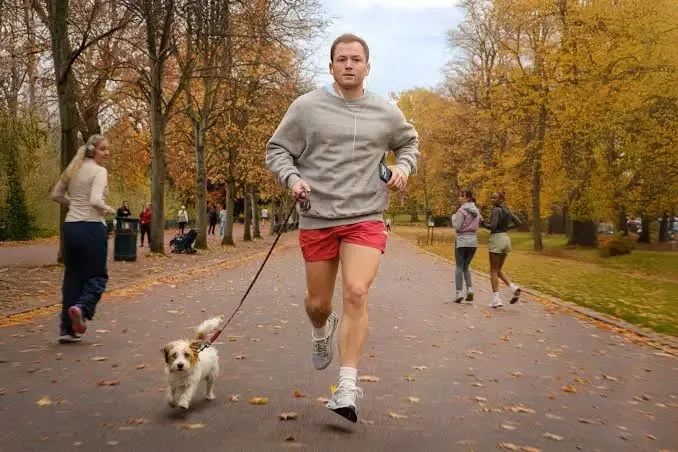
The result sounds deliberately volatile: a movie that begins by asking whether a seemingly thoughtful man is genuinely considerate or simply fluent in the aesthetics of consideration, then bends that question into a supernatural nightmare. Taron Egerton leads as Adam, a man whose attractiveness is only one component of a carefully curated persona. He is clean-cut, sociable, cultured and employed at a private London gallery that represents women artists. His apartment advertises the correct cultural credentials, from an Agnès Varda poster to literary fiction on the shelf. He carries a blue Mubi tote. Even his dog, the scruffy, differently colored-eyed Alana, has a music-savvy name.
None of those details prove that Adam is insincere. That is the useful tension in the setup. He may actually enjoy the art, films and books that surround him. Yet the film makes clear that those markers also function as signals: a way of assuring women that he is safer, cleverer and more emotionally tuned-in than the men they usually have to avoid. Adam’s problem is not presented as cartoon-villain cruelty. Instead, it is the subtler selfishness of someone who knows how to create a favorable impression, gets what he wants, and treats the aftermath as somebody else’s administrative burden.
A romcom meet-cute with an unpleasant aftertaste
Adam’s opening encounter with Liv, played in a brief appearance by Mia McKenna-Bruce, lays out the method. At a club, he intervenes when another man is bothering her and pretends to be her boyfriend. On paper, that is a romantic-comedy rescue; in practice, it becomes a calculated maneuver that ends in a one-night stand. The following morning exposes the gap between Adam’s performance and his conduct. Liv is left confused by his emotional distance, while Adam simply moves on to the next name in an overflowing WhatsApp history.
The film’s joke is not that Adam has sex, nor that he does not want a committed relationship. Its sharper target is his habit of using care, politics and cultural literacy as accessories while avoiding reciprocal engagement with the people he meets. That distinction matters, especially because the story eventually risks framing monogamy and imminent parenthood as the principal alternative to Adam’s behavior. A more searching version of this satire would have kept room for casual sex that is candid, respectful, communicative and equitable. Adam’s issue is not being single; it is acting as though attention from women is a resource he has earned without ever having to offer much back.
Emma, Adam’s lesbian best friend, is the person who sees through him most consistently in his everyday life. Charly Clive plays her as a friend who rolls her eyes at Adam’s conquests but remains connected to him. Emma is also living with a partner and expecting a baby, a stability that stands in contrast to Adam’s endless cycling through strangers. Her role puts a recognizable social dynamic on screen: the friend who understands that somebody’s stories are funnier than they are flattering, but does not always force a full reckoning.
That reckoning gains a fiercer voice when Adam meets Sofia, played by Jessica Henwick. A skeptical academic he approaches at the theater, Sofia immediately identifies the contradictions in his pitch. Her central accusation is blunt: men can seek female approval without extending actual regard to women as people. Adam is simultaneously rattled by her directness and drawn to it. When Sofia invites him home, the usual power balance of his seductions becomes unstable—and that instability launches the movie’s larger genre turn.
When desire becomes the curse
After his night with Sofia becomes hazy, Adam wakes to find that she has disappeared. Something has changed. Women begin responding to him with an intensity beyond his already impressive success rate, as if Adam has acquired an involuntary and overpowering sexual magnetism. Mere eye contact can seemingly produce results that formerly required his practiced charm. For someone used to treating desirability as evidence of his own specialness, it initially resembles a wish fulfilled.
But the film’s perversely comic idea is that unlimited access does not give Adam what he thinks he wants. If attraction arrives automatically, there is no persuasive performance to give, no little victory to bank, and no way to pretend his attention is a gift. Adam is no longer the active author of his encounters. He becomes the object around which everyone else’s desire is organized, and the experience is terrifying rather than flattering.
The physical evidence is even worse: a purple, raised rash spreading around his groin. Schey reportedly lets the uncanny elements unfold gradually enough that Adam’s state can at first be read as delusion, anxiety or a more literal paranormal infection. That ambiguity is important to the comedy. It lets the audience sit inside Adam’s confusion before the movie embraces its bolder, grosser implications. The body-horror imagery evokes sexually transmitted infection anxieties without pretending to be a realistic medical drama, pushing instead toward exaggerated and darkly farcical extremes. The narrative is willing to go into deeply uncomfortable territory, including family-related implications that make clear this is not simply a cheeky dating comedy with one surreal gag.
That bait-and-switch may be the movie’s biggest asset and its most divisive quality. Viewers arriving for a tightly observed contemporary romance may find the supernatural pivot abrupt. Viewers hungry for a new horror-comedy premise may welcome precisely the moment when the polished London dating story mutates into something feral. Schey’s approach reportedly has a sleek, arch sensibility associated with recent Scandinavian relationship comedies, but it applies that polished style to material that turns progressively more sickly and strange.
Egerton has to make Adam both unbearable and human
Egerton’s role depends on a tricky balance. Adam cannot be so monstrous that his panic becomes meaningless, but he cannot be so lovable that the movie ignores the casual harm he causes. The performance begins with confidence and ease before moving toward visible desperation, giving the absurd premise an emotional anchor. Adam is recognizable because he is not portrayed as a blatant caricature of online misogyny or a villain twirling a mustache over his unread messages. He is the far more familiar man who regards himself as decent because he is comparatively polite, while remaining oblivious to the advantages and assumptions built into his behavior.
That makes the film’s punishment-comedy engine more complicated than simple revenge. There is a degree of sympathy available for Adam as events spiral beyond his control. At the same time, the premise takes grim pleasure in making him endure a condition that turns his usual behavior inside out. The person accustomed to making others feel disposable now discovers how frightening it is to have autonomy, privacy and ordinary boundaries erased.
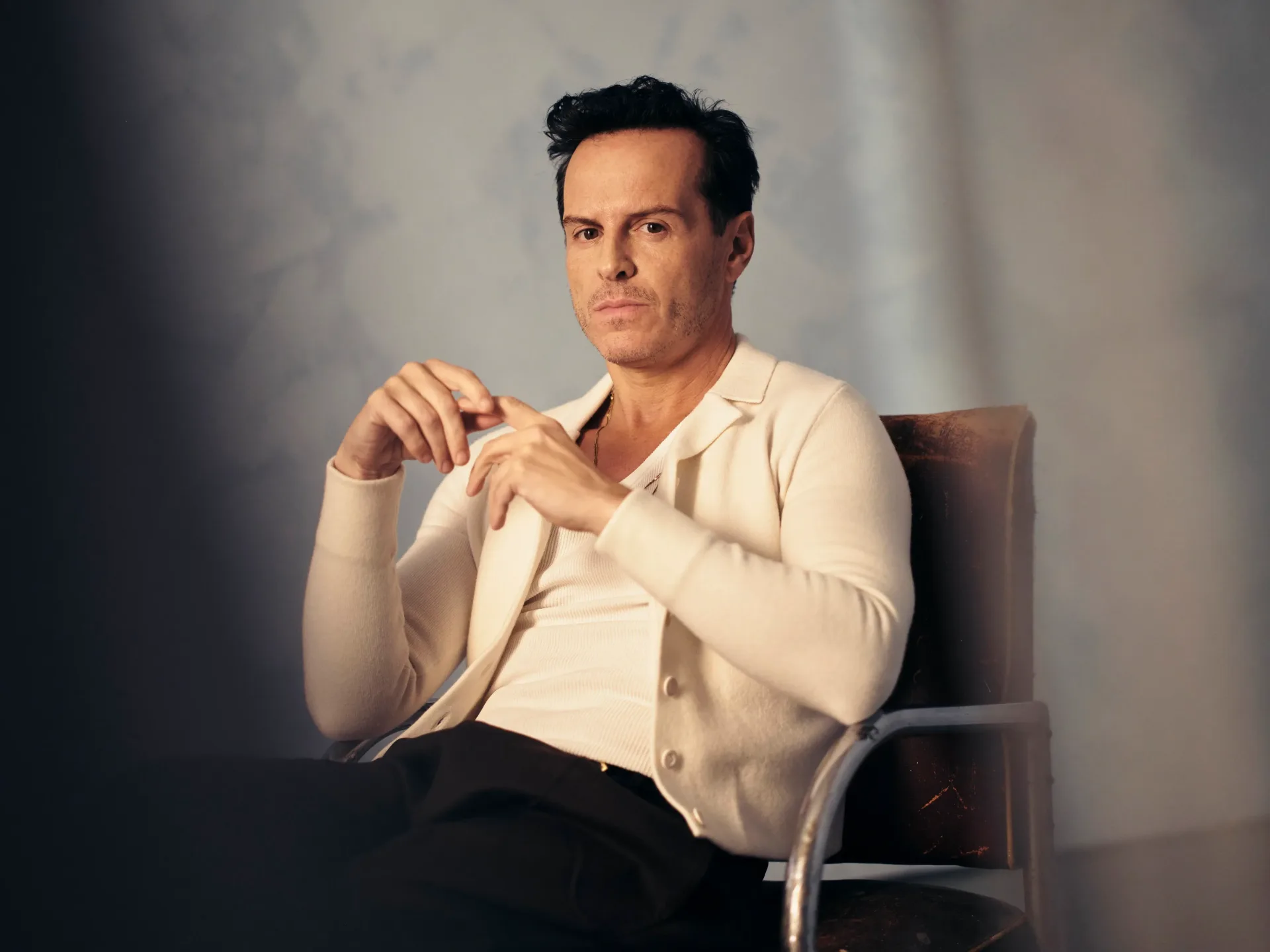
The broader conversation around what performers can bring to characters outside the audience’s expectations remains lively across film and television; Andrew Scott’s discussion of performance and role expectations is one example of how that debate reaches beyond any single production. Egerton’s Adam similarly relies on playing against the easy appeal of the star’s screen presence. The character’s handsomeness and apparent openness are not incidental details. They are tools within the story’s critique.
A lively provocation with a narrow escape route
Everybody Wants to Fuck Me appears most effective when it lets its tonal contradictions coexist: funny, nasty, embarrassed, erotic, ridiculous and alarming. Its title promises an aggressively uncomplicated fantasy. The movie’s premise turns that fantasy into a loss of agency, while its early scenes ask whether Adam ever understood other people’s agency in the first place.
The limitation is embedded in the answer it appears to offer. Emma’s settled domestic life may be healthy and loving, but treating it as the primary corrective to Adam’s empty promiscuity risks shrinking the film’s own sexual politics. There is a wide world between careless conquest and conventional coupledom. A movie so alert to performative sensitivity might have found even more bite by dwelling on those possibilities.
Still, Schey’s debut has a clear identity: a contemporary dating satire that refuses to remain merely a dating satire. With Egerton carrying Adam from smug ease into increasingly frantic disarray, and Henwick providing the story’s bracing counterforce, it sounds built to provoke arguments as much as laughs. In a genre landscape where straightforward romcoms can struggle to cut through, a film that pairs gallery-world signaling, supernatural lust and gruesome bodily consequences is unlikely to be mistaken for business as usual.