A television can deliver a gorgeous game image while making its most important sounds feel oddly distant. Dialogue gets swallowed by action, music loses weight, and the tiny speakers built into many displays have to do every job at once. A compact soundbar is one way to address that problem without redesigning an entire room around separate speakers.
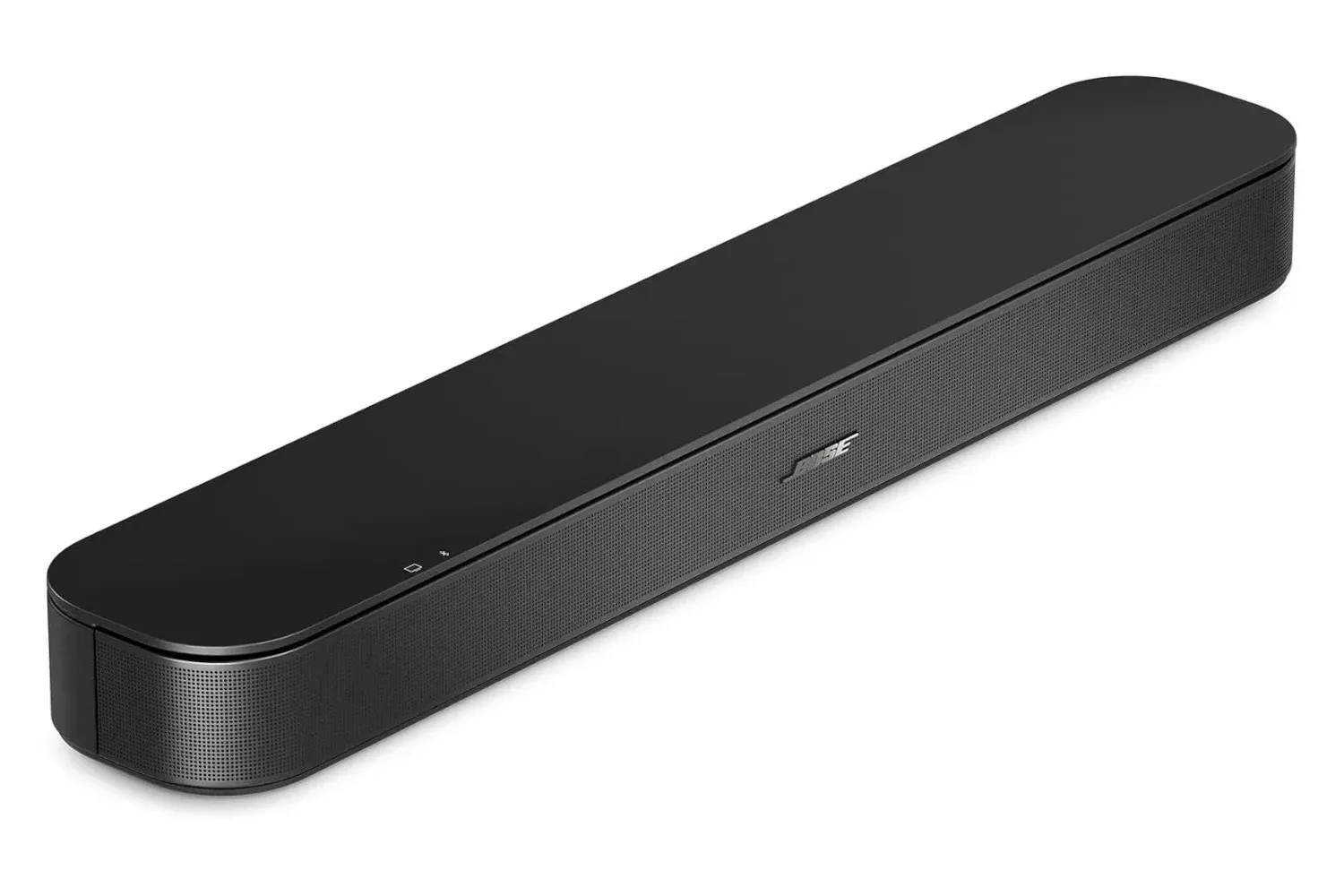
The Bose TV Speaker is currently listed at $199, a reduction from its stated usual price of $299. That is a $100 difference, or roughly one-third off the regular figure. The product’s name may sound broad, but it is designed as a soundbar: a compact audio unit intended to sit alongside a television setup. The listing highlights HDMI and Bluetooth connections, a dialogue-clarity feature, bass-forward sound, and the possibility of adding other Bose audio options later.
For people weighing a living-room or desk-adjacent gaming upgrade, the useful question is not whether a soundbar can make every game sound cinematic. It is whether this particular approach solves the problem a setup actually has: hard-to-hear voices, thin music, fiddly connections, or a lack of space. At $199, the Bose TV Speaker is most compelling as a simple, compact step up from TV audio rather than as an excuse to chase a more elaborate system.
Why TV audio can be the weak link in a game setup
Game audio carries far more than explosions and soundtrack swells. It communicates spoken objectives, teammates, environmental cues and the small sounds that establish a game’s atmosphere. Films and series face a similar issue: voices need to remain understandable amid music and effects.
The Bose TV Speaker’s dedicated clear-dialogue feature is therefore one of the most practical points in the listing. In plain terms, dialogue clarity is meant to give speech greater presence so voices are easier to follow. That may matter in story-heavy games, long TV sessions, and any household where repeatedly raising the volume just to catch a line becomes a routine irritation.
It is worth keeping expectations precise. A dialogue-focused mode is a feature aimed at speech intelligibility; it is not a promise that every mix, room, television or listener will produce the same result. Still, it directly addresses one of the most common reasons people look beyond built-in television speakers in the first place.
The stated emphasis on clarity and bass also points to the appeal of a soundbar for games and entertainment. Clearer detail can help give voices and lighter effects a more defined place, while bass can add physical weight to music and major action. Whether that feels valuable depends on what is being played or watched. A quiet narrative game and a loud action sequence place different demands on the audio system.
HDMI and Bluetooth cover two different jobs
The Bose TV Speaker can connect through HDMI or Bluetooth. Those terms describe different ways of getting sound into the unit, and each has a distinct practical use.
HDMI is the wired route associated with connecting the soundbar to the television. For a console player, that makes the television the center of the setup: the console feeds the TV, and the TV sends audio onward to the soundbar. The benefit is less about a flashy specification than convenience. A fixed cable connection is a tidy fit for the device that will handle most TV, console and streaming-viewing duties.
Bluetooth is wireless and expands the soundbar’s role beyond the screen. The listing specifically notes that a phone can be connected for music even when the TV is off. That makes the speaker more flexible in a small apartment, bedroom or shared entertainment area, because it can serve as both TV audio and a casual music speaker without requiring the television to be part of every listening session.
Neither connection is automatically “better” in every circumstance. HDMI is the obvious option to prioritize for an installed television setup. Bluetooth is useful for convenience and switching to phone-based listening. Buyers should look at their own TV and preferred devices before treating either option as a guaranteed match for a particular setup, since the supplied information does not detail every compatible port, cable or control arrangement.
A compact soundbar has a specific advantage
The listing describes the Bose TV Speaker as compact, and that detail should not be dismissed as merely cosmetic. Space is frequently the reason a soundbar makes more sense than a larger collection of audio hardware. A setup might share a media stand with a console, handheld dock, router, storage and a display; a small soundbar is intended to improve sound without demanding a major reshuffle.
That is particularly relevant for players using a television in a bedroom, dorm-like space, office or multipurpose room. The goal may not be to build a dedicated home theater. It may simply be to make a TV’s everyday sound more satisfying and more intelligible while keeping the room manageable.
Compactness also creates a useful buying distinction. This is an all-in-one soundbar intended to stand on its own, while the listing says Bose’s other audio options can be added later. That offers a path for someone who wants to begin with a contained purchase rather than commit immediately to a bigger audio build. It does not mean every buyer needs to expand; the initial unit is presented as sufficient by itself.
How the $199 price changes the decision
A discount is meaningful only when it changes the value calculation. Against the stated $299 regular price, $199 reduces the upfront commitment by $100. For somebody who already planned to replace TV audio, that difference may make the Bose TV Speaker easier to justify. For somebody satisfied with their current sound, a lower price alone should not create a need that was not there yesterday.
The more useful way to frame the listing is as a decision checklist:
- Choose it for simple TV improvement: the product is positioned around clearer sound, dialogue support and stronger bass in a compact bar.
- Choose it for connection flexibility: HDMI suits television use, while Bluetooth supports phone-based music playback.
- Choose it for a smaller space: its compact format is relevant when a full collection of speakers would be impractical.
- Consider it if expansion matters later: the listing says additional Bose sound options can be added beyond the standalone bar.
- Pause if the feature list does not match the problem: a discount does not answer questions about room layout, device connections or personal listening preferences.
There is also a timing consideration. The $199 figure is a current listing price, not a permanent new baseline. Retail listings can change, so anyone interested should verify the price and the exact product details at checkout rather than assume the reduction will remain in place.
What this means for console and streaming use
For console owners, the main appeal is immersion without complexity. Better-defined dialogue can make single-player scenes easier to follow; added low-end presence can make music and action feel more substantial; and an HDMI-connected soundbar can become part of a straightforward TV-centered system. Those are broad benefits rather than a claim that the product is tailored to one console or game genre.
For streaming, the case is similarly direct. Series often combine speech, score and effects across long sessions, making dialogue intelligibility especially useful. People interested in audio formats for video can also keep an eye on wider streaming developments, such as Apple TV’s planned Dolby Atmos support for F1 coverage. That broader format news should not be confused with a specification claim about the Bose TV Speaker; the supplied product information does not establish Dolby Atmos support for this soundbar.
That distinction matters because soundbar shopping can become a blizzard of labels. Buyers should focus first on the practical, confirmed details: this model is a compact Bose soundbar, it can connect by HDMI or Bluetooth, it has a clear-dialogue feature, and it is listed at $199 rather than its stated $299 regular price. Everything else should be checked against the retailer’s current product page and the needs of the equipment already in the room.
The sensible case for the Bose TV Speaker
The Bose TV Speaker deal is strongest for someone who wants a low-fuss upgrade from television sound and values a compact design. Its feature set maps cleanly to everyday use: HDMI for the TV, Bluetooth for phone music, a dialogue-focused option for speech, and a route to build out with other Bose audio products later if desired.
At $199, it is not merely a smaller saving on an already inexpensive accessory; it is a $100 reduction from the stated $299 price. That makes it worth a look for players and viewers who have already identified TV audio as the weak point in their setup. Just keep the purchase grounded in the setup you have, confirm the live price before paying, and treat the soundbar as an upgrade for clarity and convenience—not as a substitute for checking the compatibility details that matter to you.
Shop the products
Check current price, model and availability at the retailer.