Bluetooth-speaker shopping has a familiar trap: find two models, spot 10W on one box and 20W on the other, then assume the latter will be twice as loud. It is an understandable shortcut, and it is also wrong. Wattage measures electrical power delivered by an amplifier to speaker drivers; it is not a simple volume score, sound-quality grade or guarantee that one product will beat another in a room.
The practical question is not “What is the highest wattage I can buy?” It is “How much sustained output do I need for the place where I will actually use this speaker?” A small desktop speaker used from a few feet away has very different needs from a portable unit intended to compete with backyard noise. Looking past the splashiest number can prevent buyers from paying for bulk and power they will not use—or choosing a tiny speaker that must be run at an unpleasant maximum volume.
Start with the two wattage figures: RMS and peak
Speaker specifications can use two power measurements. Peak power is the maximum electrical power a speaker amplifier can tolerate in short bursts. It is the easy, dramatic number to put on a product listing, but it is not normally a level the speaker can sustain indefinitely without potential trouble for internal components.
RMS, short for root mean square, is the more useful figure for ordinary comparisons because it reflects the continuous power a speaker can handle over longer listening periods. In everyday shopping language, it is the number that better describes the sustained workload rather than a brief sprint.
The difference can be substantial. A speaker might list 40W peak power yet support 20W RMS for continuous operation. Neither figure is inherently false, but comparing one product’s peak rating with another product’s RMS rating produces a misleading contest before anyone presses play. Retail listings do not always state which figure they are using, and some brands publish only their maximum power number.
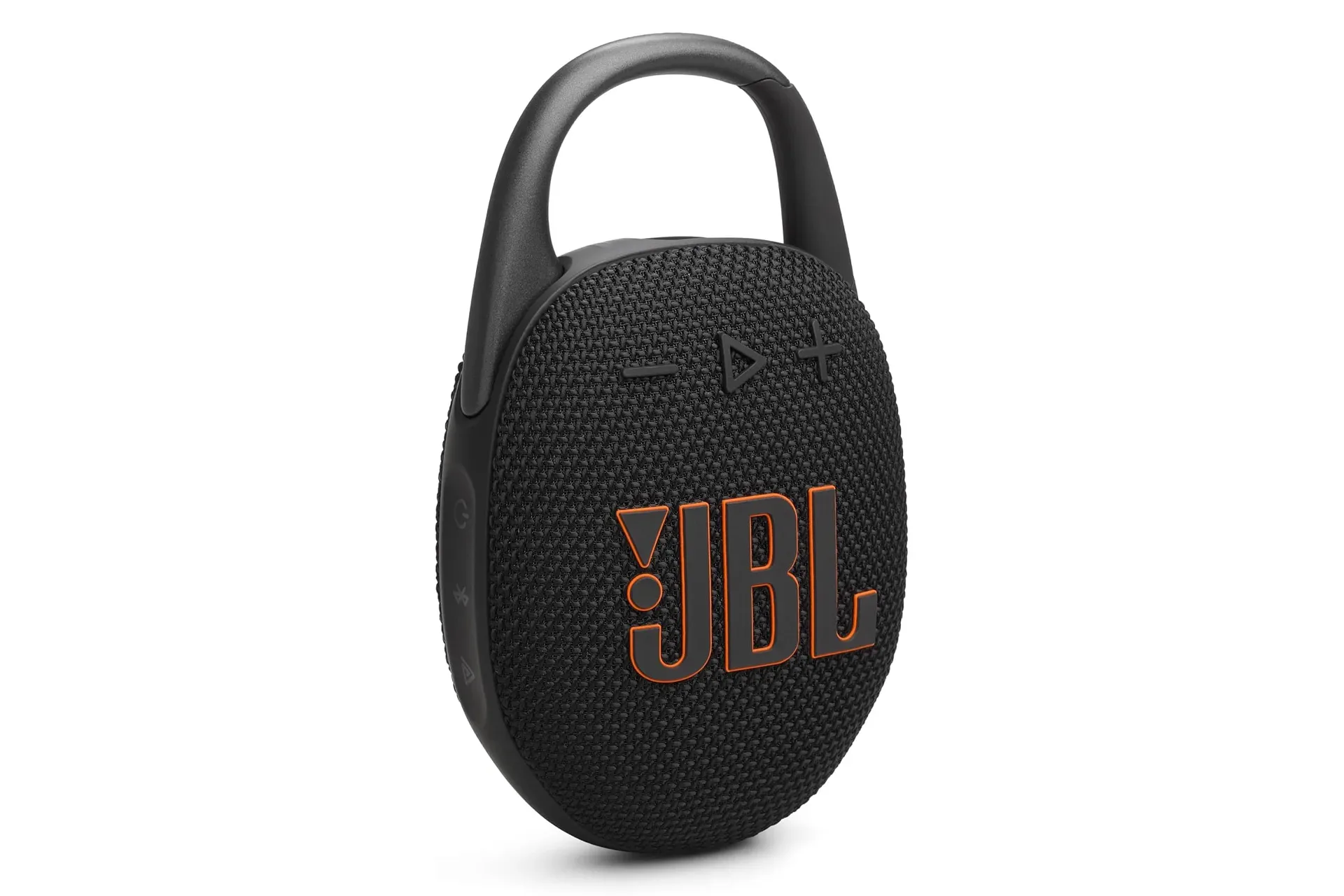
That makes it worth checking a manufacturer’s detailed specification page instead of relying solely on a retailer’s headline bullets. The JBL Go 4 illustrates the kind of detail worth locating: its official specification lists 4.2W RMS, while a retail listing may not provide a power figure at all. If RMS is unavailable, wattage becomes even less useful as a direct buying filter. Independent testing can add useful context where manufacturers do not disclose sustained ratings, but a buyer should still treat a single number cautiously.
A quick rule for apples-to-apples comparisons
- Compare RMS to RMS whenever both numbers are available.
- Do not set a peak-power figure beside an RMS figure and call the larger one louder.
- When a listing does not identify the type of power rating, regard it as incomplete information rather than a decisive advantage.
- Use wattage as a starting point, then consider drivers, listening distance, room or outdoor noise, and portability.
This is not mere spec-sheet pedantry. It changes the conclusion a shopper may draw from two apparently similar products. A large peak claim can look impressive while saying relatively little about how the speaker performs through a full listening session.
Why 20W is not twice as loud as 10W
Sound output does not rise in a straight line with amplifier power. Doubling power—from 10W to 20W, for example—adds roughly 3 decibels (dB) of sound level. Another doubling, from 20W to 40W, adds about another 3 dB. A decibel is a unit used to express sound level, and the important point for a purchase decision is that these small numerical changes in dB do not map to a simple “double the watts, double the loudness” experience.
Human hearing perceives an increase of around 10 dB as roughly twice as loud. Reaching that approximate perceived doubling requires a tenfold increase in power, not a doubling. That is why a move from 25W to 35W should not be read as a dramatic leap, even though the numbers may look meaningfully separated in a store filter.
Put another way, wattage escalates quickly in the pursuit of relatively modest output gains. The 10W-to-20W step is useful, but it is not a transformation into a speaker twice as loud. This is particularly important when a product page encourages numerical comparison without explaining the scale behind it.
More watts can provide more headroom, but wattage alone does not tell you how loud, clean or satisfying a Bluetooth speaker will sound.
There is a second reason that a wattage-only comparison falls apart: the drivers themselves. A speaker driver is the component that turns the amplifier’s electrical signal into audible sound. Driver sensitivity and efficiency matter. An efficient 10W design can outperform a 20W model, so even clean RMS figures cannot settle every matchup. Two speakers in the same power band may also have noticeably different tonal balance, clarity and usable maximum volume.
That is why “maximum power” and “best speaker” are not interchangeable phrases. Wattage describes one part of a larger system. It cannot tell a buyer everything about the drivers or the sound profile, and it cannot show whether a speaker remains pleasant when pushed hard.
Maximum volume is not always the target
A compact speaker can be adequate at close range yet become strained when asked to fill a larger room or defeat environmental noise. At maximum volume, many speakers can sound distorted. Distortion, in this context, means the output no longer reproduces the intended audio cleanly. The practical consequence is straightforward: a speaker that only meets your needs at 100% volume may be less appealing than one that reaches the same useful listening level without being pushed to its limit.
That does not mean every buyer needs a large, high-output model. It means the comfortable operating range matters. A speaker used beside a laptop, on a desk or a few feet from the listener has a much easier job than one placed across a busy room or outside. For the former, additional wattage may bring little benefit while making the device larger and heavier.
Physical size is another imperfect clue. Larger Bluetooth speakers often look as though they must be louder, but a sizable battery can account for much of the enclosure. Size should therefore not substitute for an RMS rating, nor should it be treated as proof of higher volume. It is one more piece of context rather than a verdict.
Useful wattage ranges for different listening jobs
The following ranges are best read as broad use-case guides, not strict performance classes. Driver design, sensitivity and the surrounding environment can change the result.
3W to 10W RMS: close-range personal listening
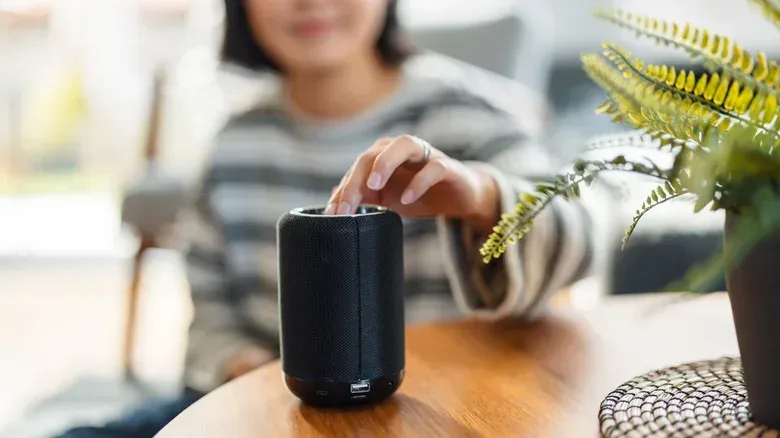
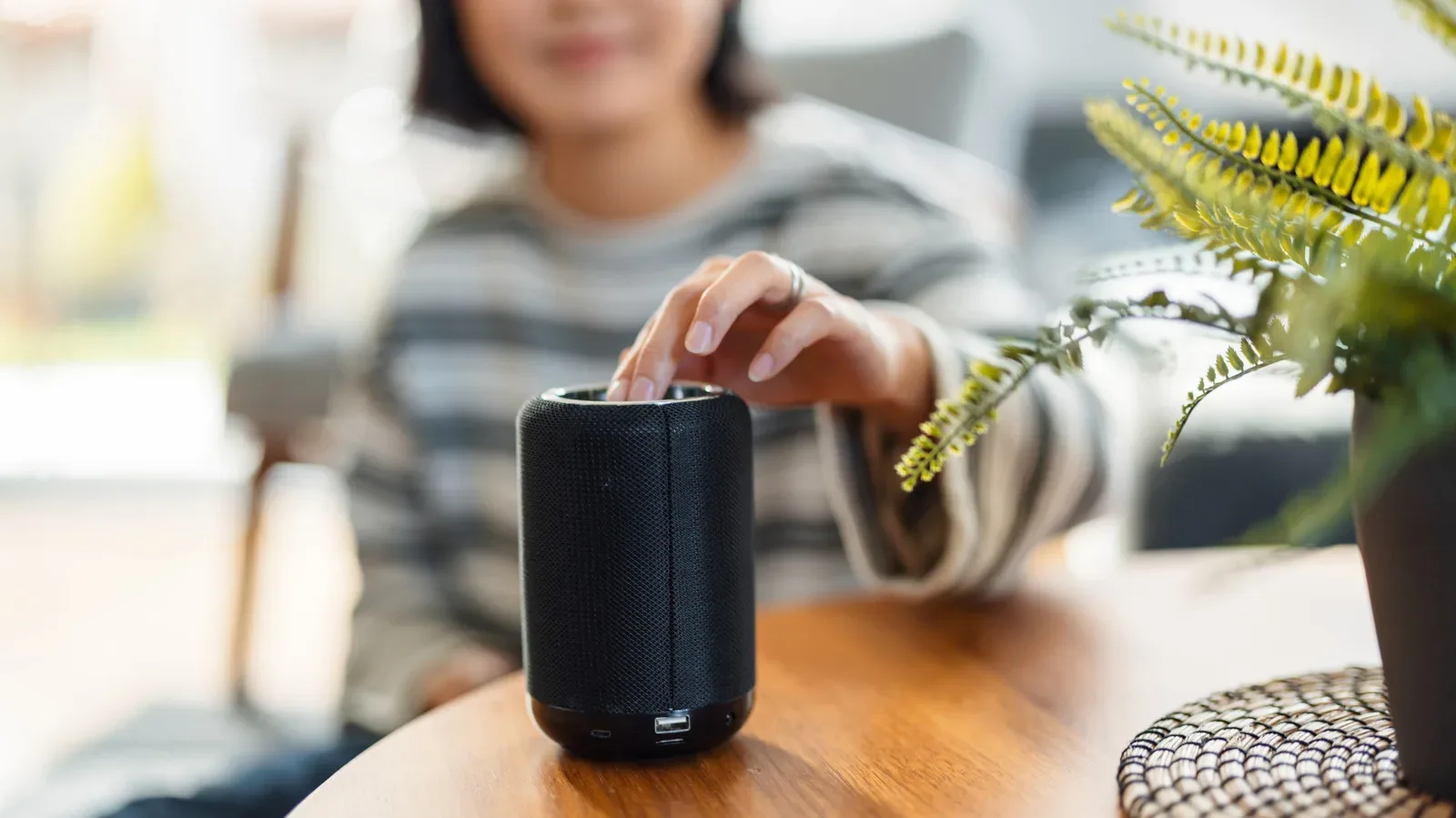
The smallest Bluetooth speakers commonly sit in the 3W-to-10W RMS range. That can be enough when the listener is only a few feet away. It is a sensible category for personal listening where a speaker does not need to overcome much background noise.
The trade-off is scale. This range is unlikely to overpower ambient sound or fill an average-to-large room comfortably. If a buyer expects a small model to serve as a room-filling party speaker, the limitation is not a defective product; it is a mismatch between the output requirement and the intended job.
Up to 40W RMS: portable speakers with more breathing room
Portable speakers with ratings up to 40W RMS often use two drivers rather than one. The key advantage is not simply a bigger number. These models can offer clearer sound and may fill a small space without needing to sit permanently at full volume. That extra margin is valuable when the goal is everyday indoor playback rather than a compact speaker’s close-range role.
For many indoor uses, a sub-50W Bluetooth speaker should be sufficient. Buyers do not need to chase triple-digit specifications just to listen in a typical home setting. The right choice depends on expected background noise, how far away people will be and whether the speaker must serve a small space rather than a single nearby listener.
40W to 100W RMS: a more credible outdoor option
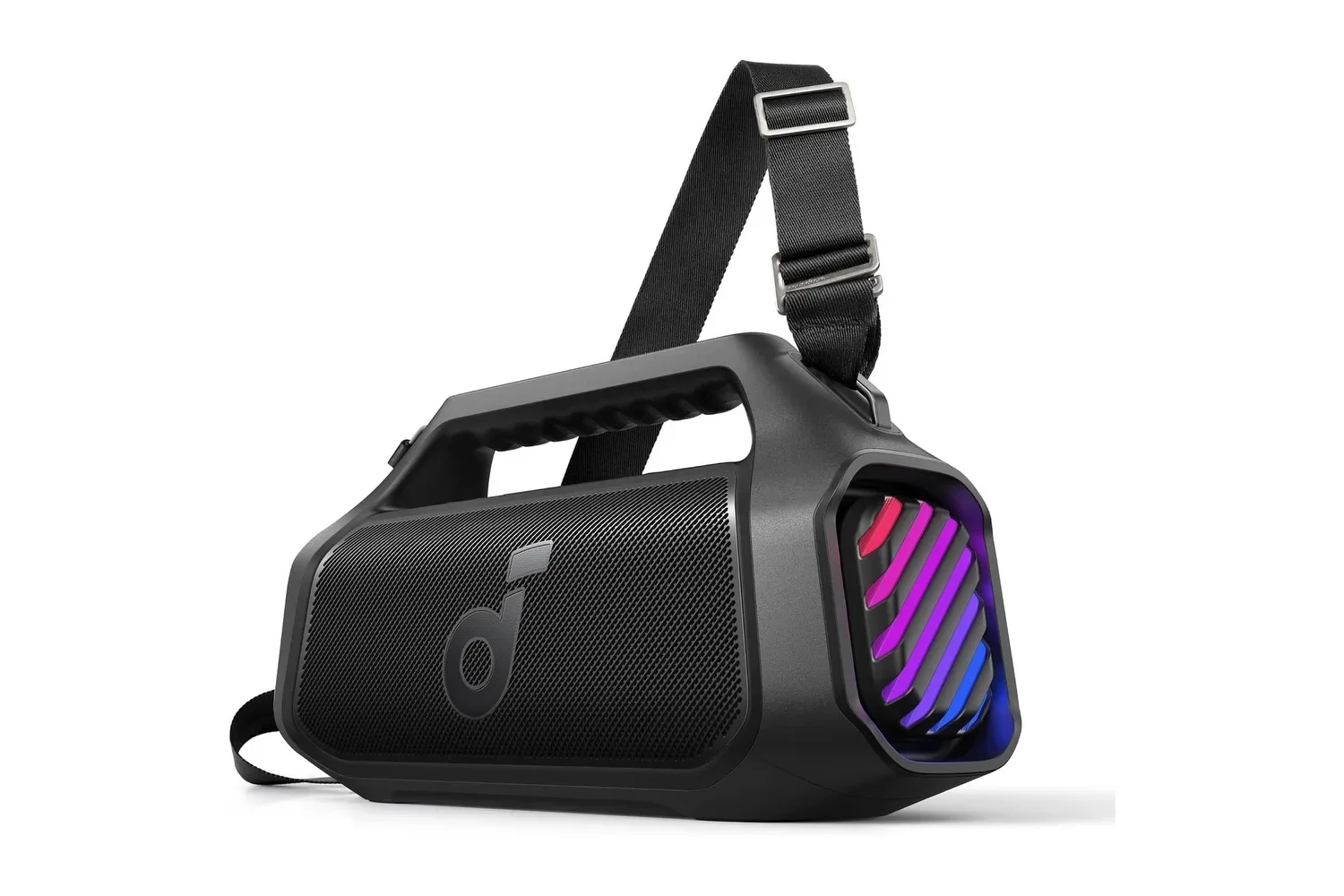
Between 40W and 100W RMS, Bluetooth speakers are often positioned for outdoor use. That claim can make sense for a backyard setting, where environmental sounds can otherwise swallow a smaller speaker’s output. The Soundcore Boom 3i, for example, carries a 50W RMS rating and is promoted as having the output to contend with surrounding noise.
“Outdoor” still needs a reality check. Outdoor conditions are not one fixed scenario. A quiet backyard and a large, noisy gathering impose different demands. The meaningful question is whether the speaker’s sustained output and driver design suit the noise it must compete against—not whether its marketing uses the word outdoor.
Large party-oriented speakers: power comes with a portability cost
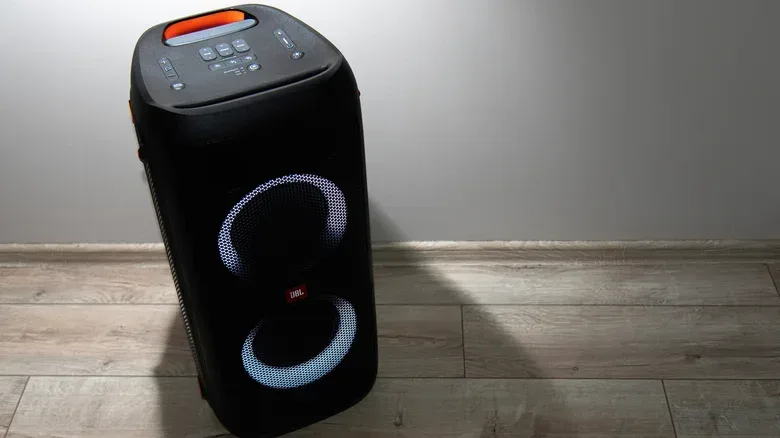
At the high end, models in JBL’s Boombox and PartyBox lines are cited with RMS ratings reaching 200W and 80W. These larger speakers are intended for bigger outdoor spaces and parties. More output requires other components to scale up as well, which means a heavier and larger product. That is a fair exchange for someone who needs the volume; it is needless baggage for someone carrying a speaker between rooms or keeping it near a desk.
In short, higher wattage is not a free upgrade. It may support louder use, but it can also mean less portability. Deciding where the speaker will live and how often it will travel should happen before treating the largest wattage number as the winner.
A practical buying checklist
- Name the listening environment. Decide whether the speaker is for close-range use, a small indoor space, a backyard or a large outdoor gathering.
- Find the RMS rating. Favor continuous RMS figures over peak-power claims when comparing products.
- Read the number in context. A 3W-to-10W RMS speaker can work close up; sub-50W options can suit most indoor listening; more power makes more sense where outdoor noise is a factor.
- Do not assume a wattage gap is a volume gulf. Doubling power yields about 3 dB, while a roughly 10 dB rise is perceived as about twice as loud.
- Account for driver efficiency and sound character. A higher RMS number is not an automatic victory over a more efficient speaker with better-performing drivers.
- Factor in usable volume. A speaker that sounds clear before maximum volume may be more suitable than one that has to be pushed to its limit.
- Check the carry trade-off. Higher-output designs generally require larger, heavier internal components.
Audio purchases share a broader lesson with other home tech: a spec is most useful when it describes the situation you actually have, rather than a theoretical maximum. The same kind of real-world thinking is helpful when setting up a gaming connection; a home network works best when Ethernet and Wi-Fi are chosen for the job at hand, not when one headline metric is treated as universally superior.
For Bluetooth speakers, RMS wattage is worth checking, especially once background noise and distance enter the equation. But it should be treated as a clue, not a crown. Match the speaker to the listening space, distinguish sustained power from a brief peak claim, and remember that drivers and efficiency help determine what those watts become in the real world.