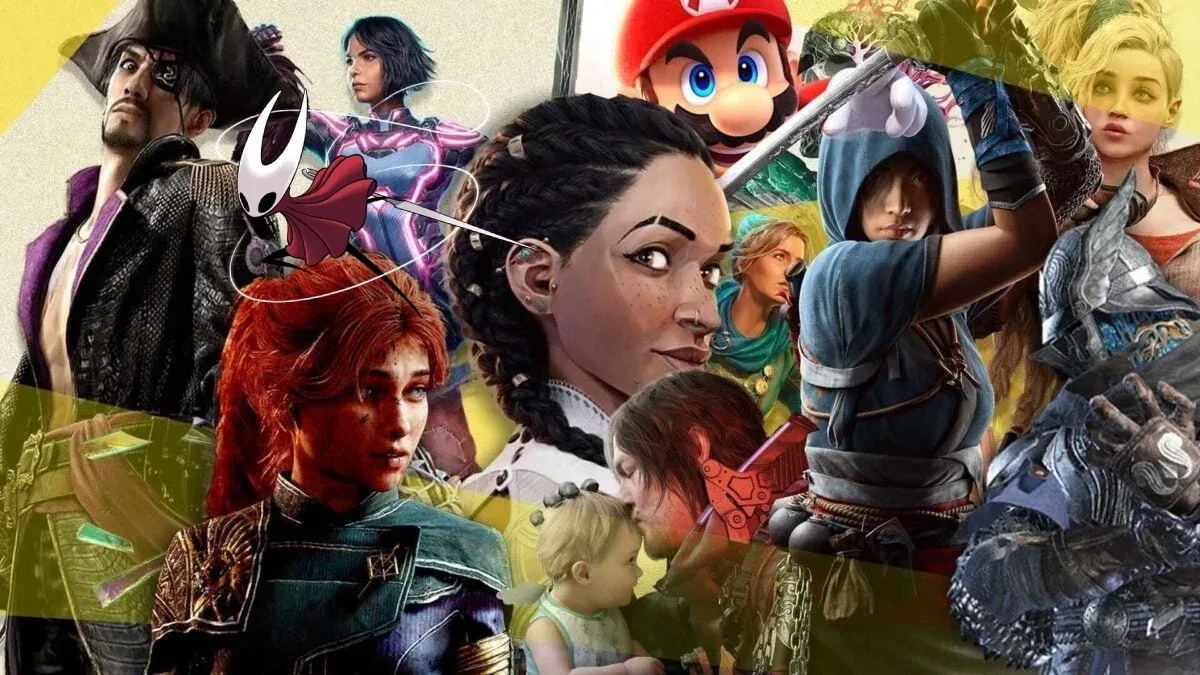
By late November, the annual argument over the best games of the year is supposed to be in full swing. People have made their peace with the releases they missed, discovered one last surprise in a sale backlog, and begun defending a personal favorite with the intensity normally reserved for a disputed family casserole recipe. In 2025, the sense of abundance is especially pronounced: 11 of the year’s 12 months have passed, and October has been characterized as an exceptionally busy stretch for new games.
That makes the instinct to pause and inventory the year completely reasonable. A packed release calendar changes the nature of the conversation. The challenge is no longer finding something worthwhile to play; it is giving the many contenders enough time, attention, and context to decide what actually stays with us. There is a big difference between a game that makes an explosive first impression and one that remains compelling after the new-release noise has moved on to the next thing.
Still, there is an awkward little controller-shaped problem here: a roundup of the best games needs the games. No titles, platforms, release details, scores, or individual write-ups have been supplied alongside the broad claim that 2025 has produced an increasingly packed favorites list. Those absent details matter. Without them, there is no responsible way to present a definitive selection, repeat supposed critical judgments, or pretend that a specific game has earned a place in a ranking.
That is not a failure of enthusiasm. It is a reminder that year-end lists are only as useful as the evidence and perspective behind them.
A crowded year is not automatically a settled year
The phrase “best games so far” does useful work because it leaves room for revision. It recognizes that a calendar year is not a closed case until the calendar is actually closed, and even then, critics and players often need more time with the biggest releases. A long role-playing game can reveal its weaknesses late. A multiplayer game can change dramatically as its community develops. A smaller game that arrived quietly may not reach the right audience until months after launch.
In other words, November is late enough to reflect but not necessarily late enough to declare the argument permanently over. The phrase also protects against a common year-end-list temptation: treating recency as quality. When an October release wave is particularly heavy, the latest games naturally occupy the most mental shelf space. Their mechanics are fresh, their endings are newly discussed, and their bugs, patches, and surprises are immediate. Games from earlier in the year can be unfairly displaced simply because memory is a terrible archivist and a new trailer has better lighting.
That does not mean October releases should be discounted. A busy month can absolutely deliver exceptional work. It just means the scale needs to be calibrated carefully. The best game of a year should be more than the game that arrived last while everyone was looking.
What a useful best-of list should tell readers
A list is not made trustworthy by the number of entries it has or by how forcefully it announces that every choice is essential. The best lists make their criteria visible. Readers do not need to agree with every pick; disagreement is part of the fun, and occasionally the only cardio some of us get. But they should be able to understand why a game appears.
Related coverage includes The Best Games of 2025 So Far: A Crowded Year Nears Its Finish.
For a 2025 roundup to be genuinely helpful, each entry should ideally establish several basics:
- The game’s name and release timing: enough information to place it in the year rather than vaguely invoking a cloud of “recent hits.”
- Its platforms: a recommendation is much more useful when readers know where they can actually play it.
- Its genre and core appeal: not every acclaimed game fits every player. A brilliant strategy game may be a poor recommendation for someone seeking a short narrative adventure, and vice versa.
- The distinctive reason it stands out: mechanics, artistic direction, writing, social play, design ambition, replayability, or an unusual combination of these qualities.
- Its limitations: great games can be demanding, uneven, long, technically rough, emotionally heavy, or tailored to a narrow audience. Honest caveats improve recommendations.
Even a short explanation can do this work. The point is not to turn every pick into a legal deposition, although some release schedules do look like they require counsel. It is to make the recommendation legible.
The difference between consensus and personal favorites
Another complication is the word “best.” It can mean a consensus pick, a personal favorite, the most innovative game, the game with the strongest craft, or simply the title that gave someone the most joy during a particular year. These are related ideas, but they are not interchangeable.
A personal list can be wonderfully idiosyncratic. It may elevate a strange puzzle game over a bigger production because its ideas landed at precisely the right time. A consensus-oriented list serves a different role: it tries to identify games that have generated broader praise or wider conversation. Neither approach is wrong. Trouble begins when a list adopts the certainty of consensus while providing neither the titles nor the reasoning that would allow readers to assess it.
The healthiest approach is to label the perspective. “Favorites” tells readers that taste is central. “Best reviewed” suggests an aggregation or critical framework. “Most important” signals a cultural or industry lens. “Best games to play with friends” offers a practical use case. Precision may sound less glamorous than planting a giant flag on a mountain of superlatives, but it produces a much better map.
Why platform details are more than housekeeping
Platform information can look like a small editorial detail, yet it changes what a recommendation means. A player choosing between PC, PlayStation, Xbox, Nintendo hardware, mobile, or other ecosystems has different constraints and expectations. A game may be technically available somewhere without being equally suited to every version. Accessibility features, control options, performance, online population, and local multiplayer support can also shape whether a game fits a particular household or play style.
This is especially true for shared play. A recommendation for a couch-friendly game means little if it quietly assumes everyone owns separate hardware, separate subscriptions, or the patience of a saint while one person remaps controls. For anyone organizing a living-room game night, our guide to the unwritten rules of couch multiplayer is a useful companion to any prospective best-of discussion. The game is only one part of the event; the people who accuse each other of screen-peeking are the other part.
Time is the unpaid editor of every list
The most valuable element in an end-of-year games list is often not authority but elapsed time. A few extra weeks can clarify whether a title’s ideas have depth, whether its momentum survives a difficult middle section, or whether an initially divisive design choice was actually the reason it felt memorable. Time also gives space for patches and player feedback without allowing technical conditions to be quietly rewritten after the fact.
For 2025, that editorial patience matters because the year is described as both crowded and still in progress. A list assembled after 11 months should embrace that status. It can be a snapshot, a shortlist, or a set of contenders worth catching before more formal year-in-review selections arrive. It should not disguise incompleteness as certainty.
There is also value in acknowledging what has not been played. No individual or team can experience every release with equal depth, particularly in a busy year. Stating a scope—whether it is limited by platform, genre, time, or direct experience—is more useful than implying total coverage. Readers can then treat the list as an informed route through a large field rather than a decree from the Mount of Perfect Taste.
For now, the only defensible 2025 takeaway
The available picture supports a modest but meaningful assessment: 2025’s game calendar has felt crowded as it approaches its final month, with October standing out as a particularly intense period for releases. That is enough to make retrospective discussion worthwhile and enough to suggest that any eventual top tier will face serious competition.
It is not enough to identify the year’s best games by name. Doing so would require the missing list itself, alongside the details that explain each selection. Until those specifics are on the table, the most honest recommendation is not a fabricated ranking. It is to keep the backlog organized, reserve judgment where the record is incomplete, and prepare for the annual ritual in which everybody discovers that their own number eleven was obviously everybody else’s number one.