Minor spoilers for The Witcher 3’s Skellige quests, including The Cave of Dreams, follow.
Even a long-familiar RPG can hide an entire detour behind one deceptively ordinary decision: when to turn in a contract. In The Witcher 3, completing the Skellige contract The Phantom of Eldberg before progressing through King’s Gambit can send Geralt down a sharply different route than players may expect. Instead of collecting a reward from Jorund and moving on, the aftermath at the tavern becomes violent, Jorund dies, and Geralt is imprisoned at Madman Lugos’ compound.
That sequence is not merely a harsher version of a familiar hand-in scene. It opens the way to The Cave of Dreams, a missable quest whose hallucinatory premise, striking cave imagery and character-focused encounters make it a particularly revealing piece of Skellige storytelling. It is also a neat illustration of the distinction between a branching narrative and a game that tracks quest state: the conditions created by what the player has already done, or has not yet done, can substantially change what happens next.
The timing that changes The Phantom of Eldberg
The Phantom of Eldberg begins as a classic Witcher contract. Geralt investigates wraith activity around a lighthouse on one of Skellige’s more distant islets, discovers the cause binding the apparitions to the area, and returns with proof of the work. On its surface, that sounds like a self-contained monster job: investigate, fight, resolve the haunting, take the payment.
But Skellige’s wider political instability is part of the backdrop. When Geralt returns to the tavern while the relevant story conditions are in place, hostile patrons turn the hand-in into a confrontation. Fisticuffs become a blade fight; Jorund is killed; Geralt, an outsider caught in local conflict, is taken to the prison at Madman Lugos’ compound.
Players who have previously finished the contract and found Jorund alive can therefore encounter what feels like a wholly new result. The crucial reported condition is simple: complete The Phantom of Eldberg before doing King’s Gambit. This is the route associated with the prison sequence and the later quest chain.
That is worth stressing because “missable” can mean several things in role-playing games. Sometimes it means an objective is obscure on the map. Sometimes it means a player chose one dialogue line over another. Here, it is principally a matter of progression order. A player may fully explore a region, complete contracts diligently, and still pass by this content because they prioritized another main or side quest first.
A practical, low-spoiler route
- Pick up and complete The Phantom of Eldberg in Skellige.
- Do so before completing King’s Gambit.
- Return to Jorund to resolve the contract rather than assuming the reward hand-in will be routine.
- Follow the consequences of the tavern incident and imprisonment to reach the Madman Lugos-related continuation.
This is not advice to treat every Witcher 3 quest as a checklist that must be solved in one “correct” order. The opposite is closer to the point. Players seeking the Cave of Dreams should make room for the game’s less tidy outcomes. The route’s impact comes from allowing a simple job to turn into a political mess, a prison stay, and ultimately a bizarre rite of fear.
Related coverage includes The Witcher 3: Wild Hunt Remastered Makes a Classic RPG Feel New Again.
Why The Cave of Dreams is more than a hidden cave
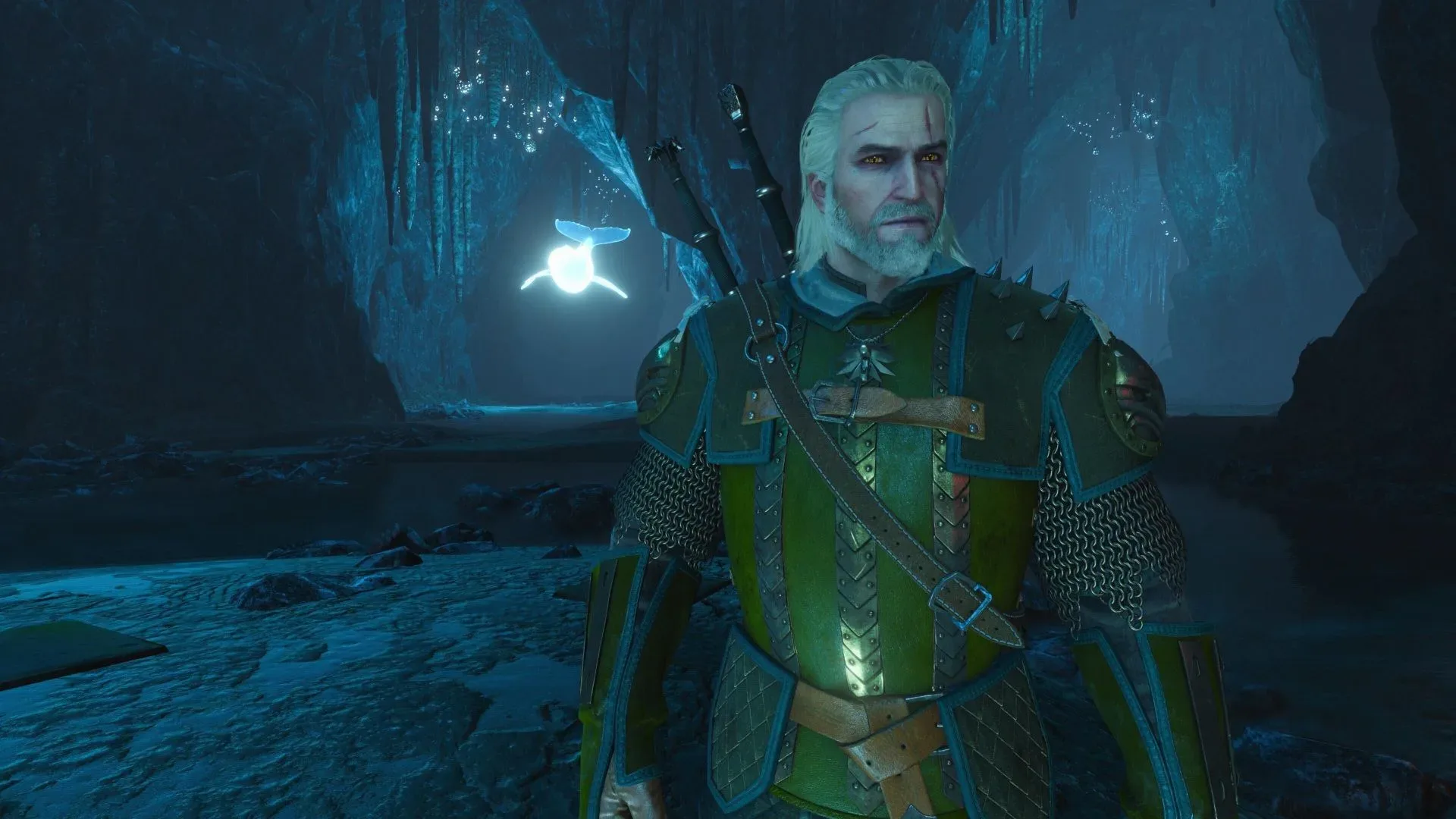
Geralt’s release leaves him indebted to Lugos, who asks for help involving his son, Blueboy Lugos. Blueboy and a group of companions have entered a storied cave to undertake a ritual challenge. Before going inside, the group takes hallucinogenic herbs. The cave then externalizes each person’s deepest fears.
That premise gives the quest an unusual tone. It is not structured chiefly around Geralt diagnosing a curse, bargaining between factions, or hunting down a named creature. Instead, it turns inward. The danger is psychological, though the experiences are rendered as things the party must directly confront.
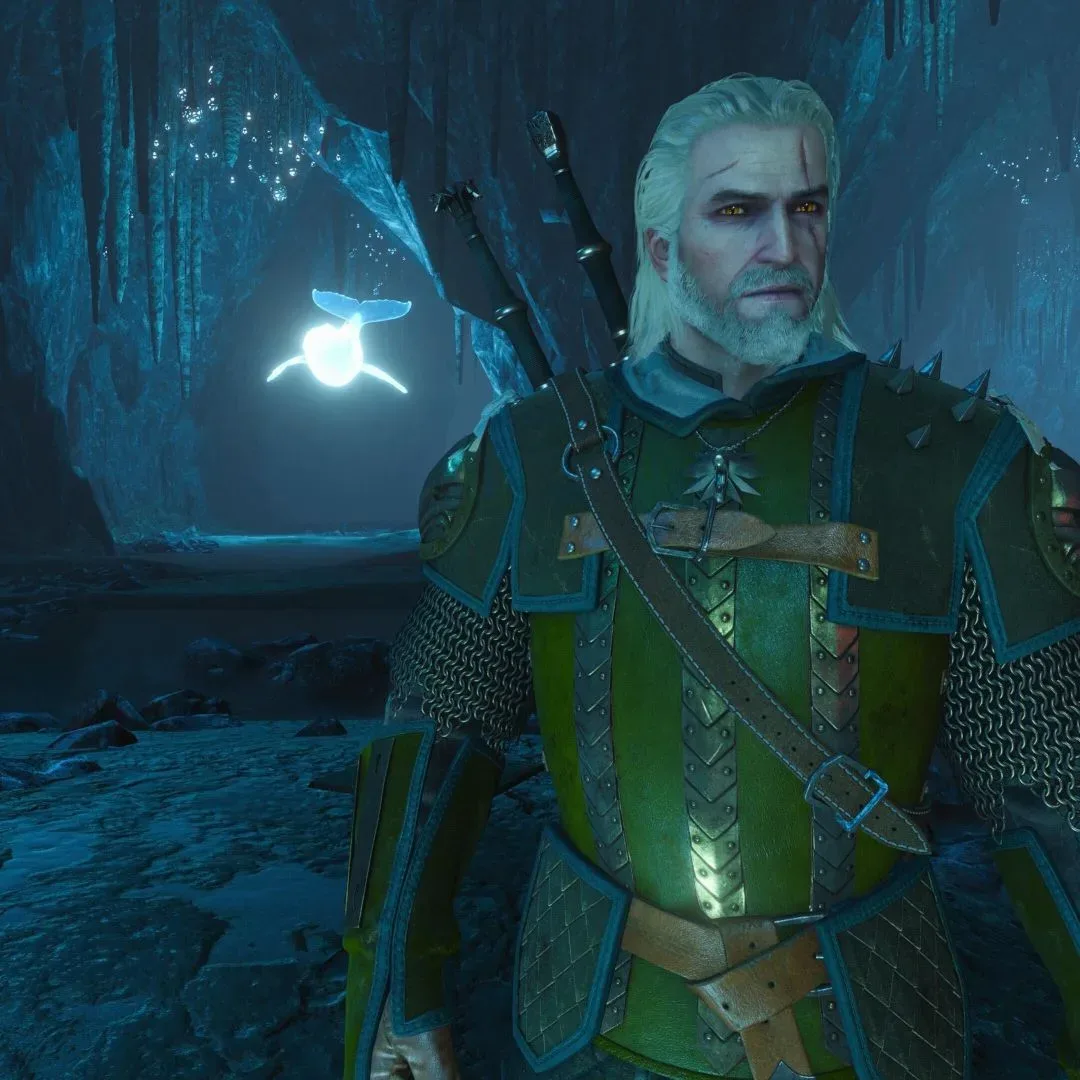
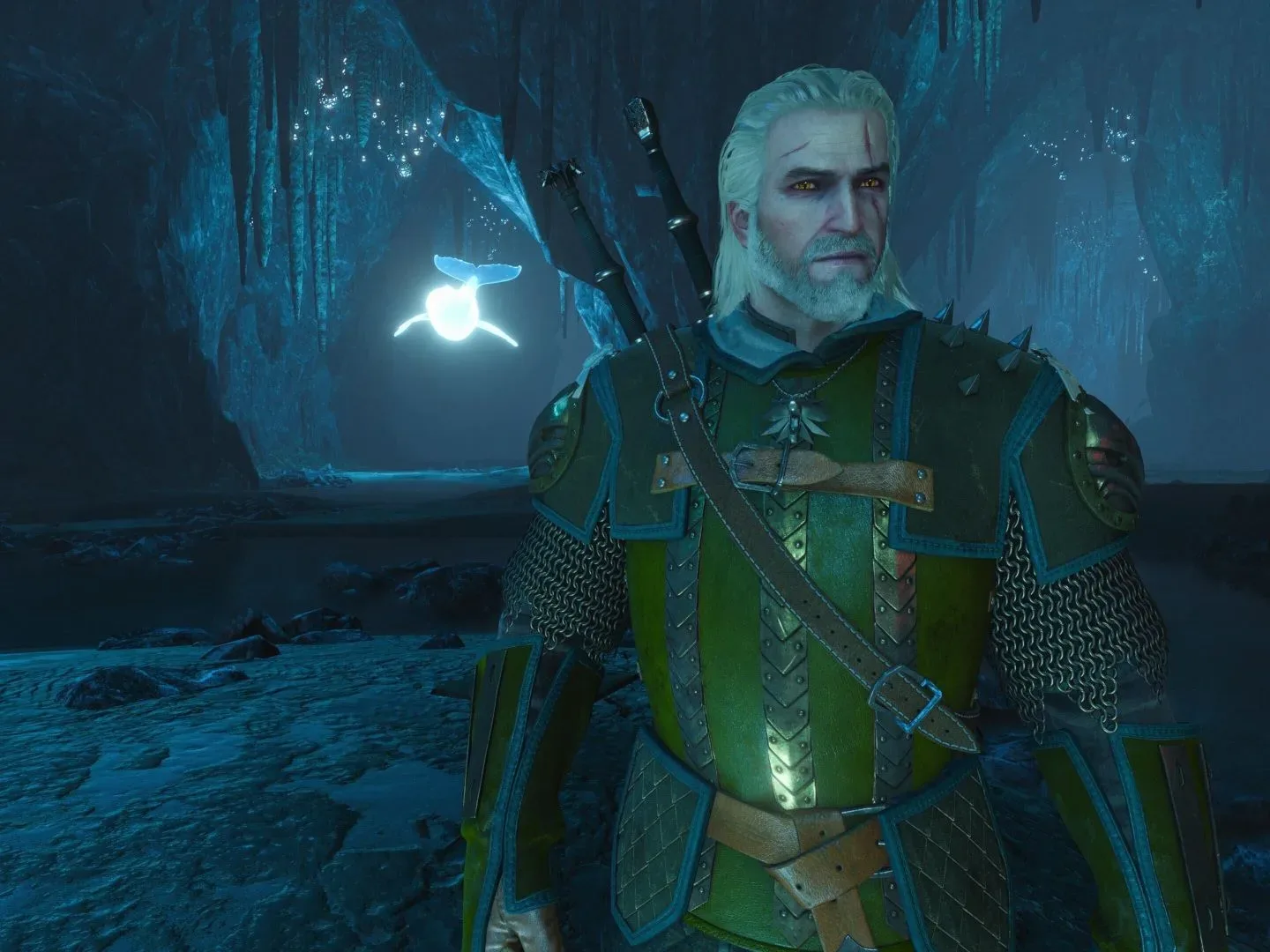
The early images announce that shift immediately. A giant glittering razorback whale swims through the air above the group, while fish appear across the cave ceiling farther in. These are deliberately dreamlike sights: underwater life displaced into stone tunnels, wondrous enough to be funny for a moment and disorienting enough to signal that ordinary rules are no longer reliable. For anyone revisiting the game through its remastered edition, this is exactly the kind of concentrated visual vignette that can make old content feel newly noticeable.
The hallucinations become more personal as the party advances. Uve Jabberjaw is confronted by the deceased king whom he once insulted. Uve’s history is not just a stray bit of lore: he cut out his own tongue as penance, so the king’s reappearance makes a buried act of shame immediate again. Blueboy, meanwhile, faces a vision of Madman Lugos whose rage and disappointment set him aflame. The imagery is blunt, but purposefully so. Blueboy’s fear is not an abstract monster; it is the crushing judgment of a father.
These episodes help explain why the quest has stuck with players who discover it late. The cave lets supporting characters communicate their histories through spectacle rather than an extended expository conversation. The visions work as a fast, visual form of characterization: Uve’s terror points to enduring guilt, while Blueboy’s points to an unstable and painful family bond.
Geralt’s fear is about Ciri, not simply Eredin
The most consequential vision belongs to Geralt. The scene moves to a snow-covered Kaer Morhen, where Eredin, king of the Wild Hunt, manifests. It would be easy to read this as Geralt being frightened of an imposing enemy. Yet the force of the encounter lies elsewhere. Eredin represents the threat still directed at Ciri.
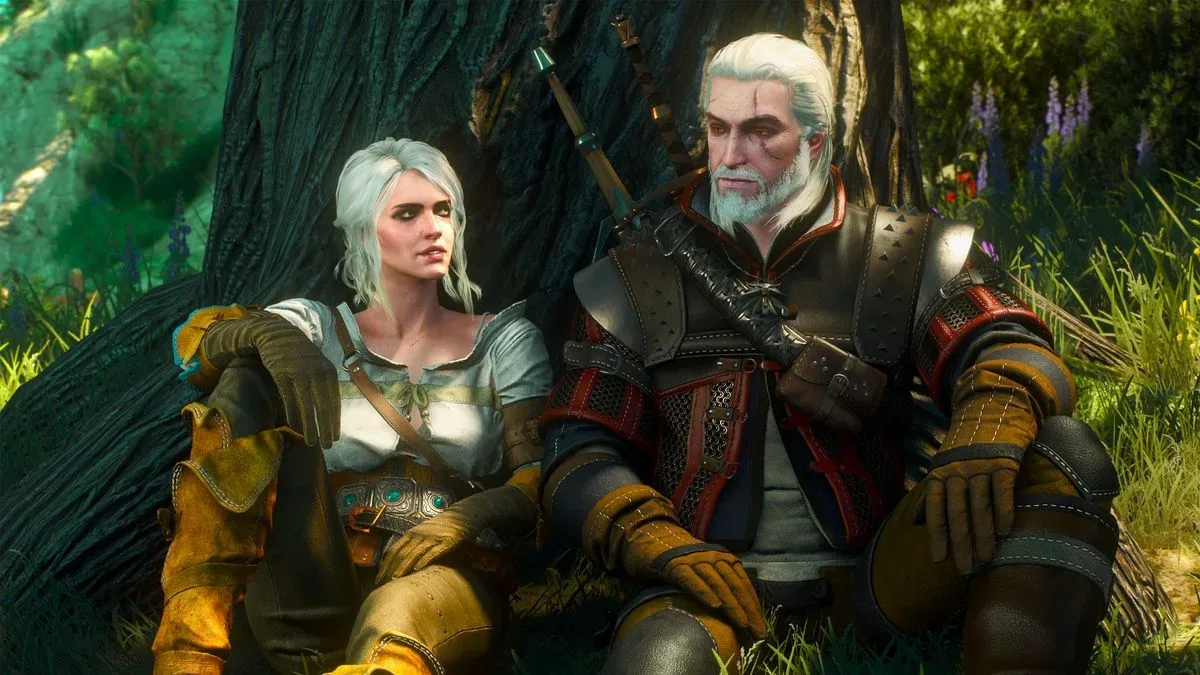
That distinction matters for how The Witcher 3 frames Geralt. He is a professional monster slayer accustomed to danger, and the game repeatedly places him against frightening foes. His central fear is not that he will meet another powerful adversary. It is that he will fail the person he is trying to protect.
In that sense, The Cave of Dreams condenses one of the game’s major emotional concerns: found family. Geralt’s relationship with Ciri turns threats from the Wild Hunt into more than another plot obstacle. The vision at Kaer Morhen reasserts the personal stake behind the larger conflict. A comparatively brief optional quest can therefore echo the emotional core of the main story without replacing it.
It also gives the earlier tavern detour a more meaningful payoff. The player does not reach this moment by selecting a quest obviously labelled as a Ciri-focused character study. They reach it by doing a wraith contract at a particular stage of Skellige’s story. That oblique path is part of the appeal: an apparently incidental piece of regional content can lead to a memorable reflection on Geralt’s priorities.
What this route says about replaying a huge RPG
Large open-world RPGs are often judged by sheer volume—how many contracts, quests, markers and diversions they contain. The Skellige route leading to the Cave of Dreams points to a more valuable measure: whether those activities can respond to one another. A world feels more reactive when a player’s order of operations has tangible consequences, even when those consequences are inconvenient.
Geralt being jailed is a strong example. It is not a reward in the conventional sense. The immediate outcome is chaotic and unpleasant, and Jorund’s death makes it clear that timing can carry a cost. But the consequence also creates a new narrative connection to the Lugos family and an optional quest with a distinct atmosphere. The game turns a disrupted contract hand-in into discovery.
For returning players, that is a useful reminder not to follow identical habits every time. If you always move directly from one preferred Skellige quest to another, always clear a region in the same order, or always prioritize a particular storyline, you may repeatedly lock yourself into the same version of events. Changing the order is not just completionist housekeeping; it can expose different character moments and different tonal corners of the world.
That does not make every unfamiliar branch essential. Nor should a player feel obligated to use a rigid route for a first playthrough. But anyone replaying the game, especially in the remastered release, has a specific reason to pause before King’s Gambit and take care of the Eldberg contract first. The reward is not simply another quest-log entry. It is one of Skellige’s stranger, prettier and more revealing side stories.
The value of an optional story that can remain unseen
There is an unavoidable tradeoff in content like this. A quest hidden behind timing requirements means some players will never see it without guidance. That can be frustrating, particularly for people who consider themselves thorough explorers. But it also means the game can still surprise players long after they believe they know its map and characters.
The Cave of Dreams earns its unusual route because it is thematically purposeful. Its surreal whale and fish-filled ceilings establish a genuine dream-state mood. Uve and Blueboy’s visions give their fears clear personal roots. Geralt’s final encounter connects the local Skellige detour to his enduring concern for Ciri. The quest is not memorable merely because it is hard to stumble upon; it is memorable because its strange imagery has something to say about each participant.
For a game as extensively replayed as The Witcher 3, that combination is a real strength. A single contract can appear familiar until the player approaches it at a different point in the story. Then a tavern payment becomes a prison break, a debt to Lugos, and a psychedelic cave expedition that reframes Geralt’s biggest fear. Players looking for more smart RPG reading after their Skellige detour can also explore this discussion of how creation is being reconsidered in games.