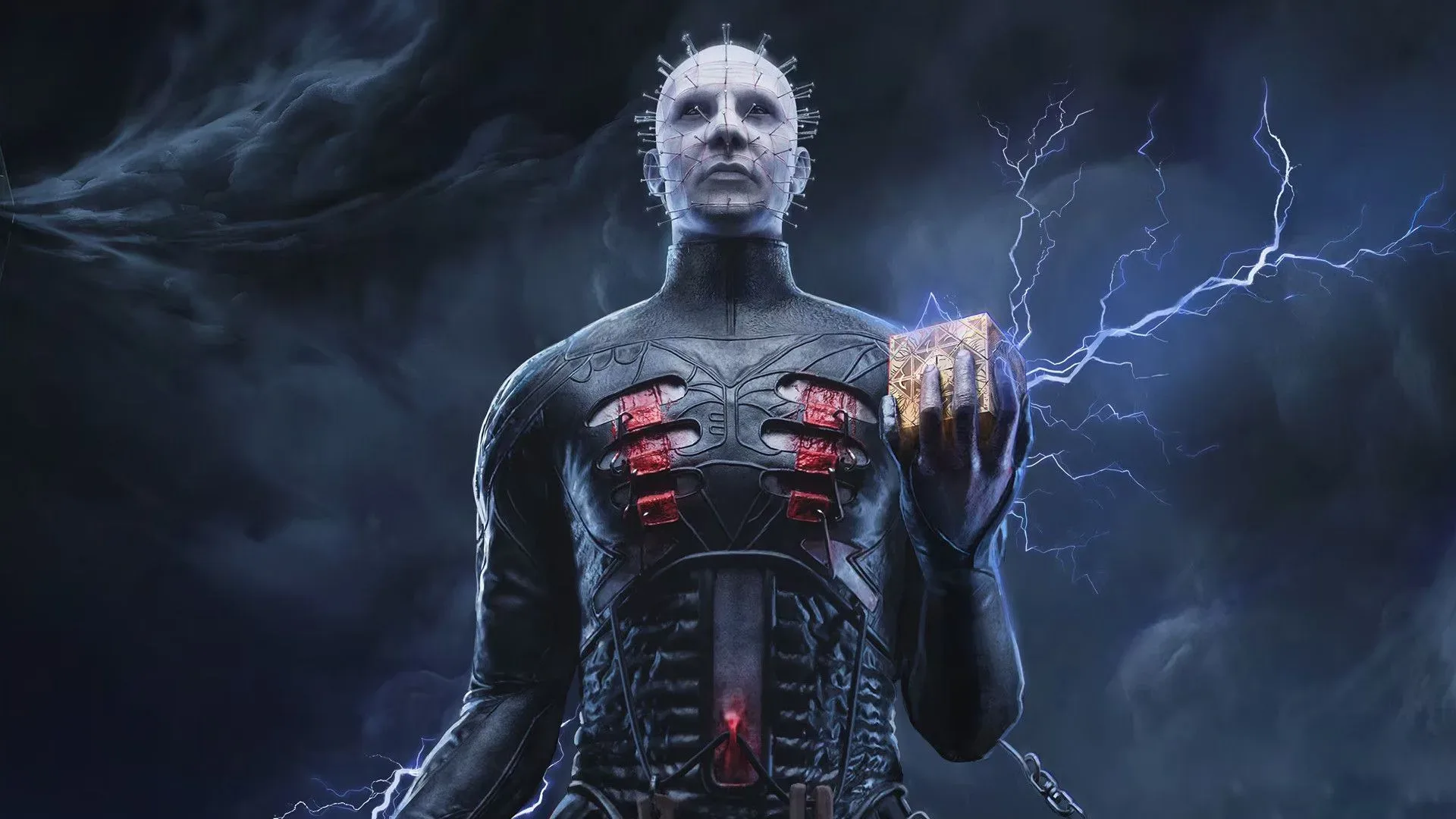
Spoiler warning: This guide discusses areas, documents, abilities and late-game scenes from Clive Barker’s Hellraiser: Revival.
Hellraiser: Revival does not restrict itself to familiar chains, hooks and puzzle boxes. Its background details appear to pull from several corners of the property: the original films, Hellraiser 2 and Hellraiser 3: Hell on Earth, comic-book mythology, and a broader collection of horror and pop-culture touchstones. That range matters because some references function as direct visual recreations, while others are names or objects that reward a player who reads notes and surveys a room before moving on.
The game’s most valuable callbacks are not all equally certain. A document naming an Eremite or Orno is an unusually firm connection to expanded Hellraiser lore. A balloon in a swamp, on the other hand, may be an intentional allusion or simply evocative set dressing. Treating that difference seriously makes the hunt more interesting: a good Easter egg guide should separate an explicit reference from a plausible interpretation rather than turn every ominous prop into franchise law.
1. The chained mattress during the first trip to Hell
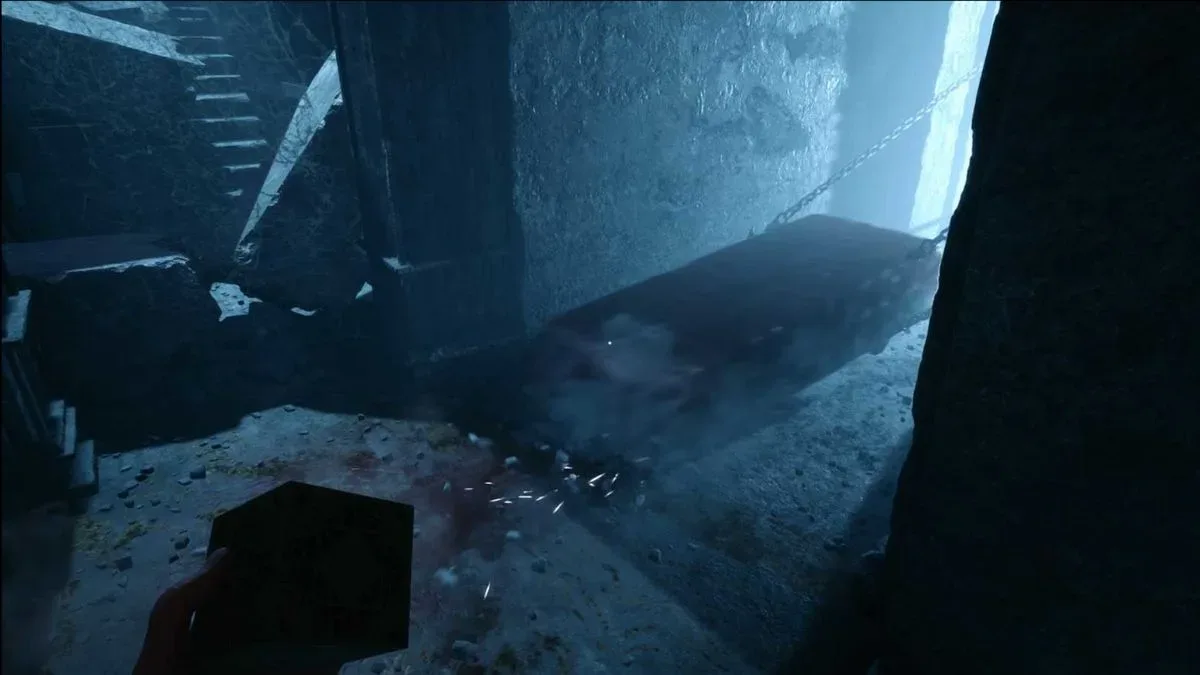
Very early, as the player enters Hell for the first time, a mattress is flung into view and rapidly dragged away by chains. It is a fleeting image, but mattresses hold a distinctive place in the films. In Hellraiser 2, Julia is resurrected through a mattress, and Revival later uses comparable imagery in relation to Sunny.
That does not establish that the mattress belongs to Julia, and there is no reason to treat it as a literal returning prop. The more grounded reading is that it is a visual motif: an ordinary domestic object made into a threshold for bodily horror. It is exactly the sort of association Hellraiser fans are meant to recognize before the game explains anything.
2. The wired detective and Dr. Channard imagery
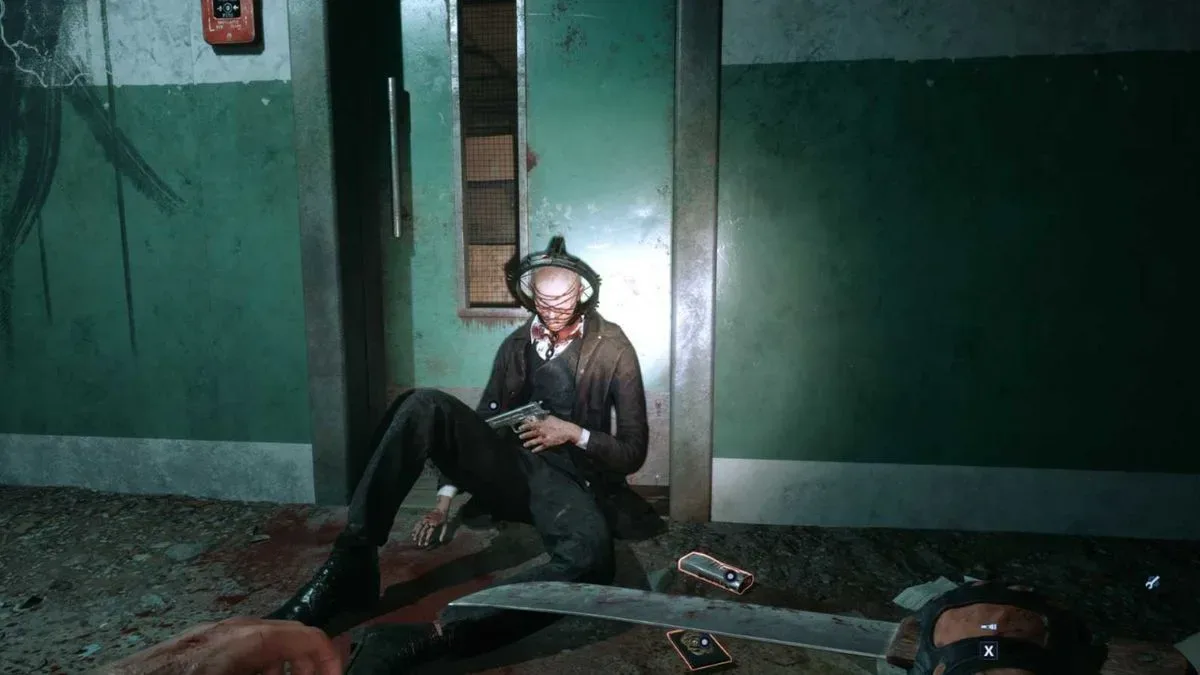
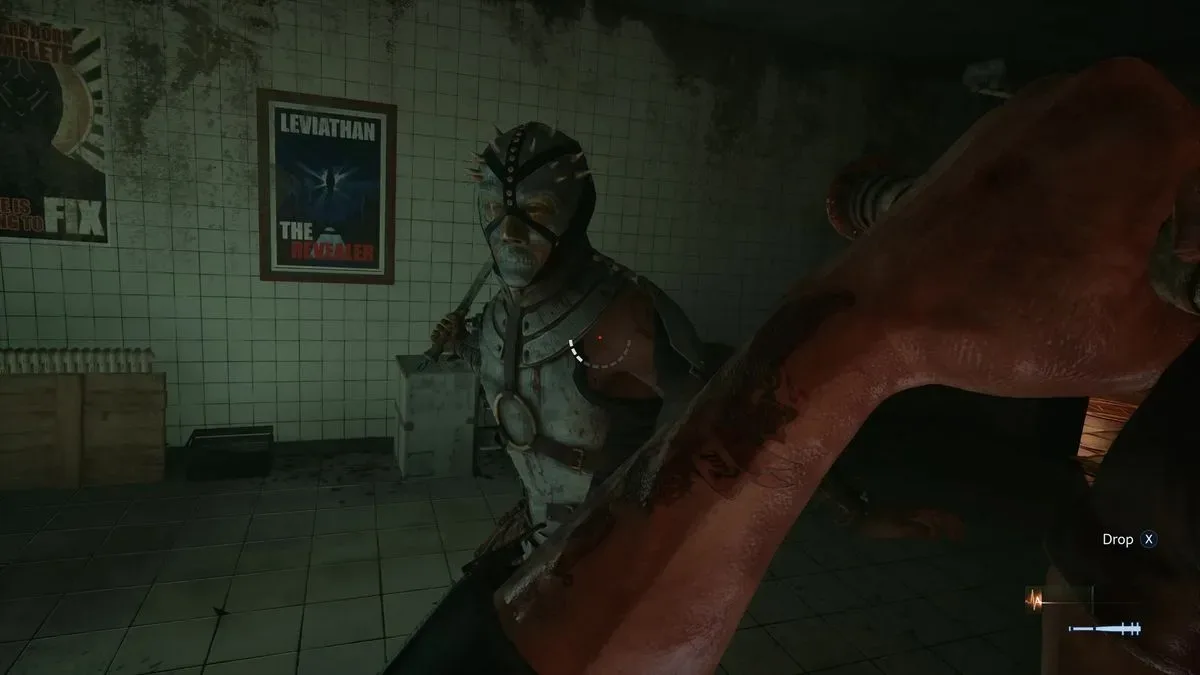
After escaping Bruno, near the point at which the first gun is acquired, a hallway contains the body of a detective fitted with a head apparatus. Wires cut into the victim’s face, strongly recalling Dr. Philip Channard’s transformation after Leviathan takes him in Hellraiser 2.
The model appears again later, so it is not an isolated one-off character model. Even so, the facial wiring is specific enough to read as a homage to Channard, later known as the Doctor. It also demonstrates how Revival adapts film imagery rather than merely placing still-life replicas in rooms: an established transformation image becomes part of the game’s own catalogue of mutilation.
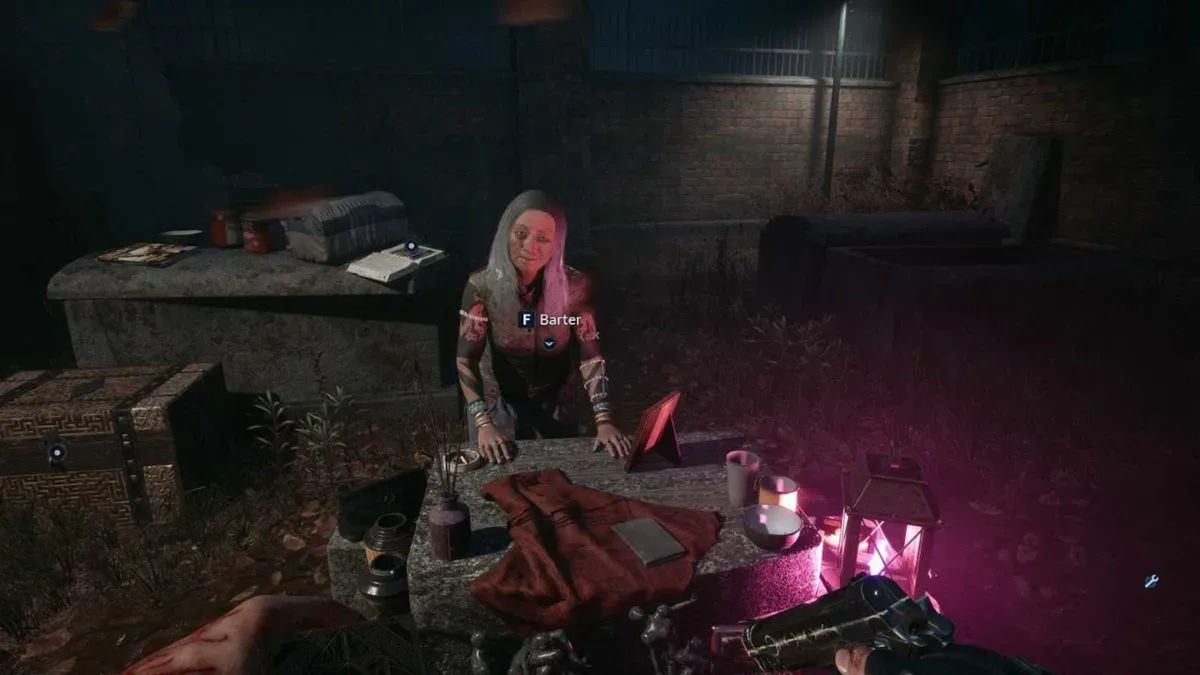
3. The shopkeeper’s Eremite identity
A document found near the shopkeeper during a later encounter identifies the character as an Eremite. That term is important for fans whose knowledge extends beyond the films. Eremites are associated with guarding puzzle boxes and enticing people toward Leviathan’s realm. They can present a human façade, but their true nature is monstrous.
Related coverage includes Hellraiser: Revival's 13 Darkest Easter Eggs, From Cenobite Lore to '80s Horror.
The first film contains an earlier visual predecessor: the apparently homeless figure who changes into a skeletal, winged creature while pursuing the Lament Configuration. The label “Eremite,” however, comes from the comics. Revival therefore uses an in-world note to connect a character to mythology that is less likely to be familiar to players who only know Pinhead from the movies.
The shopkeeper does not neatly behave like a servant acting solely under Leviathan’s command. Instead, the character toys with Aiden’s feelings about Sunny and his desires. That ambiguity is useful rather than contradictory. Hellraiser’s temptations often arrive through characters whose motives are not simple, and the Eremite reveal leaves room for the shopkeeper to be both a lore reference and a destabilizing presence in the story.
4. Orno brings comic-book mythology into the game
The same material that identifies the shopkeeper also mentions Orno, a name from the Hellraiser comics rather than the films. Orno is connected to the creation of new puzzles and to the origin of Eremites. The underlying lore is deliberately unpleasant: Orno uses a tortured human “Raw Material” in the process behind puzzle boxes, and Eremites are ultimately created through an extended process involving humans and Orno’s essence.
It is a dense bit of mythology, but that is what makes the reference notable. Rather than explaining the whole concept through a cutscene, Revival leaves a breadcrumb for readers who want to trace why its puzzle-box guardians matter. It is an example of an Easter egg that expands the fiction instead of just prompting recognition.
5. Ozzy Osbourne’s grave in the graveyard
Following the escape from the club, the graveyard includes a memorial clearly dedicated to Ozzy Osbourne. Its inscription calls out a “prince of darkness” who “raised hell,” while the surrounding details include his recognizable glasses, two bat statues and purple candles that evoke Black Sabbath.
The tribute also has a direct Hellraiser-adjacent connection. Osbourne co-wrote the song “Hellraiser” with Zakk Wylde and Lemmy Kilmister during the 1990s. The memorial’s placement makes it more than a random rock reference: its hellish language and visual design fit the game’s setting without obscuring whom it honors.
6. Lemmy’s hat beside the Osbourne tribute
Look beside the grave and you can spot a cowboy hat associated with Motörhead frontman and bassist Lemmy Kilmister. The pairing is purposeful. Kilmister co-wrote “Hellraiser,” and Motörhead recorded a version used in connection with Hellraiser 3: Hell on Earth. Lemmy also appeared playing poker with Pinhead in the song’s music video, which was directed by Clive Barker.
That makes the hat a compact history lesson for players who know the metal connection. The graveyard does not just celebrate two major musicians; it points to a small but real intersection between Hellraiser and Motörhead.
7. The Damballa magazine after gaining Hell chain
On returning to the club after obtaining the Hell chain ability, players can find a magazine titled Damballa on a chair. Damballa is associated with the supernatural mechanism in Child’s Play that lets Chucky transfer his soul into a doll. It has no inherent Hellraiser connection, so this should be understood as a cross-horror nod rather than an expansion of Cenobite lore.
It is also one of the clearer cases for Revival reaching beyond its own franchise, especially because the game includes an ’80s movie mode. Not every book or magazine in the environment necessarily carries that weight—some printed objects may be stock assets—but the distinctive Damballa name is hard to overlook.
8. “Hell on Earth” as a cultist document title
One collectible note is titled Hell on Earth and concerns a cultist plan to bring the Cenobites to Earth. The title is an overt nod to Hellraiser 3: Hell on Earth. The document’s writer reportedly prefers descending into Hell and “bathing” in Leviathan’s shadow, a grimly appropriate disagreement for a cult devoted to extradimensional suffering.
This is the simplest kind of Easter egg: a familiar franchise title repurposed as an in-universe text. It does not need elaborate decoding, but it tells players to keep examining document headings as well as their contents.
9. The yellow balloon is a possibility, not a certainty
In the swamp, while approaching the cabin after the graveyard section, a yellow balloon can be seen floating conspicuously out of place. It may allude to the 1990 IT miniseries, in which Pennywise gives Georgie a yellow balloon. That reading is strengthened by Revival’s apparent interest in horror culture beyond Hellraiser.
Still, this reference remains speculative. There are no supplied signs of Pennywise or other IT material nearby, so the balloon alone cannot confirm intent. This is the right category for it: an intriguing visual that genre-literate players may enjoy, without claiming a definitive crossover salute.
10. Steam achievements are a reference library
For completionists, the Steam achievement list is arguably the game’s densest collection of nods. Its titles reportedly draw from Hellraiser dialogue and from other games and films. Achievements are especially effective for this kind of fan service because they can reward an action while carrying a separate, compact cultural reference.
- “Only Nightmares Last Forever” points to Hellraiser: Deader.
- “A Waste of Good Suffering” draws from the first Hellraiser.
- “Burn, Oh Such a Limited Imagination” references Hellraiser 3.
- “What Are You Selling?” and “What Are You Buying?” invoke the merchant lines from Resident Evil 4.
- “What’s in the Box” recalls Seven.
- “No Life in the Void, Only Death” references Sauron in The Lord of the Rings: The Fellowship of the Ring.
- “Unlimited Power” points to Palpatine’s line in Star Wars: Episode III – Revenge of the Sith.
The mix makes clear that the achievement text is not a pure Hellraiser glossary. Players who enjoy tracing canon and influences in games may find the same impulse at work in other adaptations; deep knowledge of a series’ canon can shape details that casual audiences might never notice.
11. Blade tentacles in the Labyrinth
Some Labyrinth corridors are filled with tentacles tipped with surgical blades. That design closely evokes the Doctor’s blade-tentacle form in Hellraiser 2. While hooks and chains are broadly synonymous with Cenobites, the surgical blades are a more character-specific visual language, making this one of the strongest film callbacks in the game’s Hell environments.
It also helps the Labyrinth feel assembled from the franchise’s accumulated nightmares rather than designed around one iconic villain alone. Channard may not need to physically appear for the setting to carry traces of his transformation.
12. William Blake’s Red Dragon reinterpreted at Marlowe’s mansion
Marlowe’s mansion contains a painting that resembles William Blake’s Red Dragon. The image has a major connection to Thomas Harris’ 1981 novel Red Dragon, where the killer known as the Tooth Fairy believes murder will bring him closer to becoming the Red Dragon.
The painting in Revival is not described as an exact copy, but the thematic parallel is striking. Marlowe kills and mutilates followers in pursuit of a future among the Cenobites and in service to Leviathan. In both cases, violence is framed by the antagonist as transformation or ascension. This is more than a background-art wink: it reinforces the story’s interest in people trying to turn obsession into a form of spiritual elevation.
13. A choice-dependent echo of “Jesus Wept”
Depending on the player’s choice, Aiden can appear in a scene that mirrors the climax of the first Hellraiser, where Frank Cotton is seized by Pinhead’s chains and his body is grotesquely stretched. Frank’s “Jesus wept” is one of the original film’s most famous lines.
Revival does not reproduce the moment line for line: Aiden does not say it, and the staging is not a one-to-one recreation. But the resemblance is close enough to make the intended echo clear. It is an appropriate final example of the game’s approach to homage—recognizable imagery reworked around its own protagonist and player choice, rather than a static replay of the film.
For players revisiting chapters, the practical lesson is straightforward: inspect notes around recurring characters, slow down in the graveyard and club, and do not ignore achievement names. Revival’s references range from plainly signposted franchise titles to deliberately uncertain horror-movie atmosphere, and that uncertainty is part of the fun.