
Money in GTA 6 is not simply one number shared by the player. Jason and Lucia have to manage three distinct places for their funds: Pocket Cash, an individual BuckMe Checking Account for each protagonist, and a shared BuckMe Family Savings account. Each has a different purpose, different limitations and, crucially, a different level of risk.
The immediate priority is protecting cash that is exposed to loss. Pocket Cash is useful for modest spending, but it disappears when a character is Wasted or Busted. BuckMe Checking is the practical account for larger purchases and digital-only services, but it has a balance cap that can interrupt incoming payments. Family Savings is shared and can produce higher interest when its limit rises, yet transfers into it are permanent. The smart choice is therefore less about putting every dollar in one place and more about preserving flexibility.
If the goal is to build funds in Leonida without losing a haul at the wrong moment, use this guide as a working framework. For the other side of the equation—ways to bring money in—see our GTA 6 money guide covering robberies, vehicle sales and fences.
The three places your money can live
The game’s financial system separates currency by how it is held and what it can be used for. That distinction matters because not every dollar is equally safe or equally spendable.
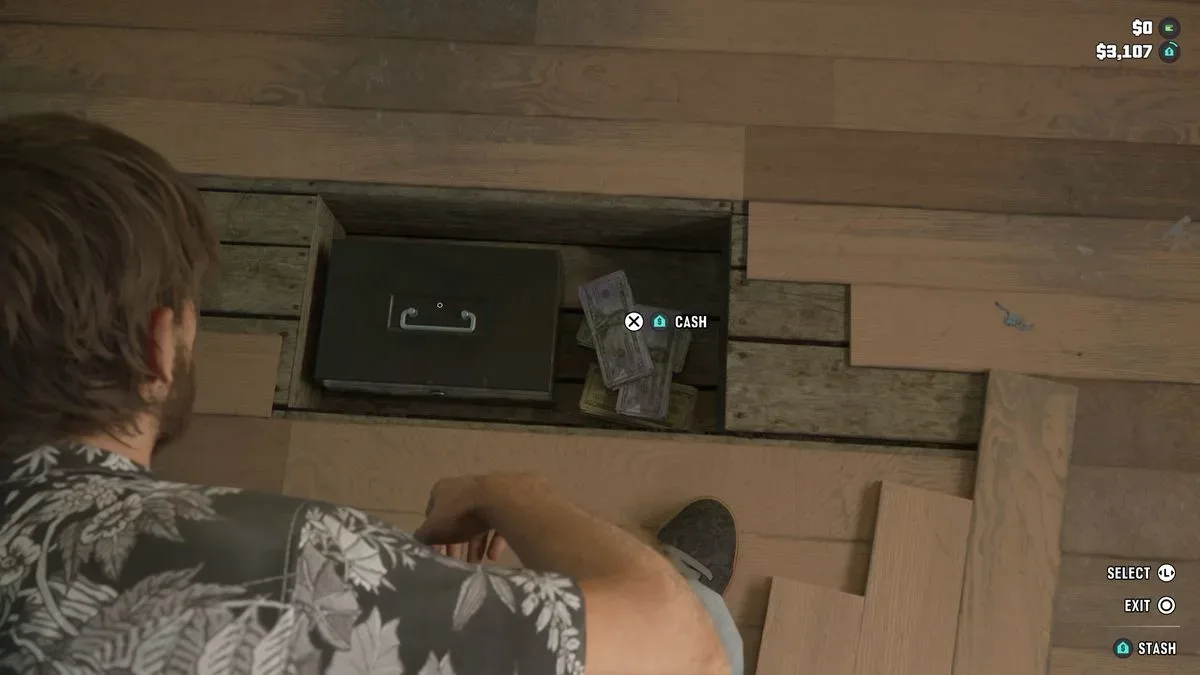
- Pocket Cash: physical cash carried by Jason or Lucia. It is generally used for smaller business purchases, but it is at risk if the character is Wasted or Busted.
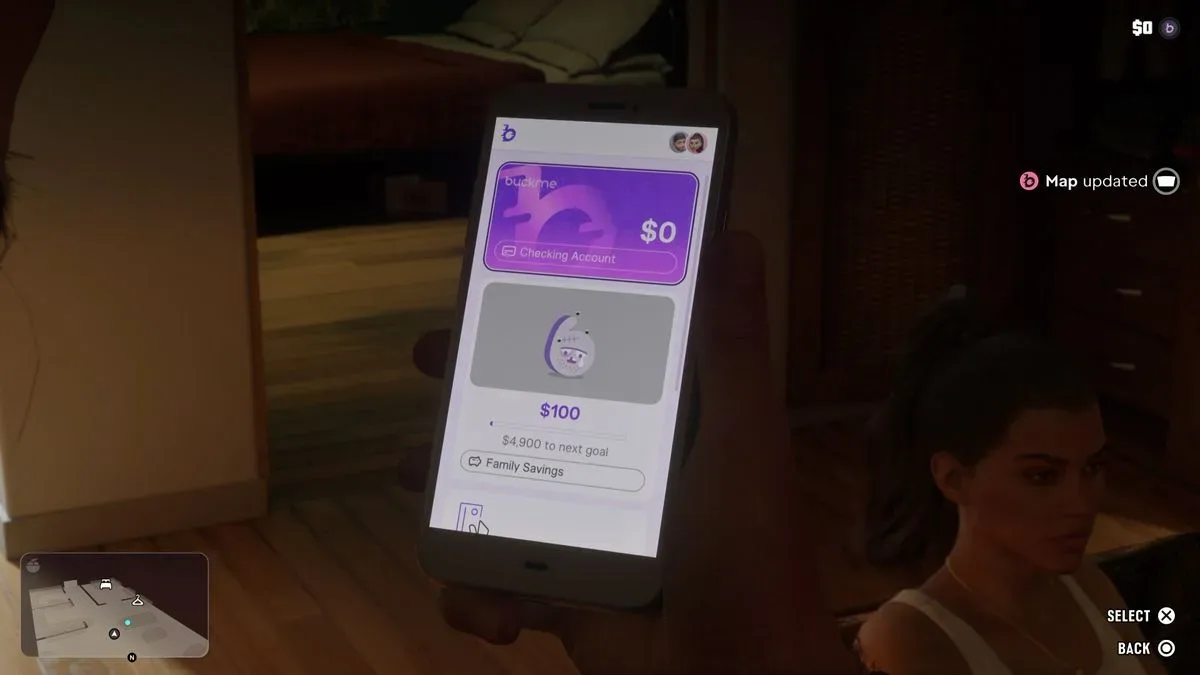
- BuckMe Checking: a phone-based, online bank account held separately by each protagonist. It handles purchases above $1,000 and services that require digital payment.
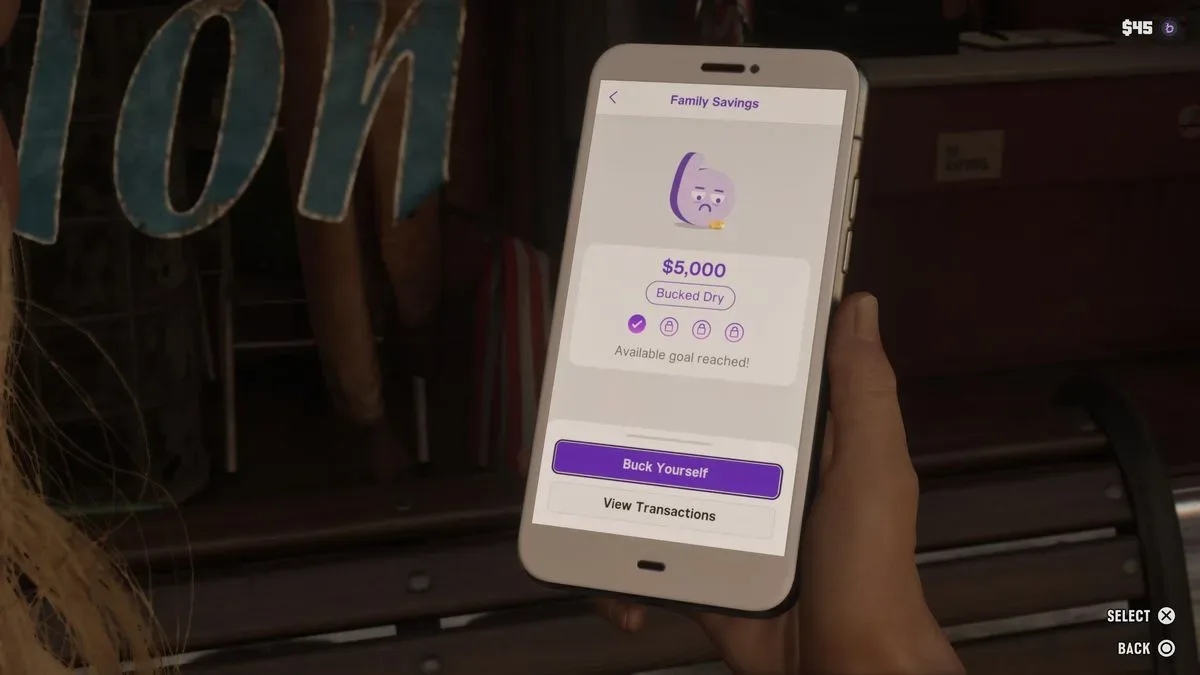
- BuckMe Family Savings: a shared savings pool for Jason and Lucia. Money can be moved into it from Checking, but it cannot be withdrawn afterward.
The word separately is especially important for Pocket Cash and Checking. Jason and Lucia each have their own carried cash and their own Checking balance. Family Savings is the exception: it is a single shared pool to which either character can contribute.
Pocket Cash: convenient, capped and easy to lose
Pocket Cash is the literal money on a character. It is often earned through burglaries and robberies, and both Jason and Lucia can individually carry up to $20,000. That is a per-character limit, not one combined $20,000 allowance for the pair.
Most businesses accept Pocket Cash for smaller transactions up to $1,000. This gives it a clear role: everyday spending. It is the money to use when the purchase fits under that threshold and when holding the cash is not creating an unacceptable risk.
The major risk: Wasted or Busted
All Pocket Cash is lost if a character is Wasted or Busted. In practical terms, cash on hand should not be treated as a long-term reserve. A successful robbery can leave a character holding a valuable but fragile pile of money, particularly if the next activity may involve combat, a police response or any other situation where being downed or arrested is plausible.
This does not mean players should avoid carrying any cash. The system is designed for it to be used. The key is to avoid treating the $20,000 carrying capacity as a target to maintain. A large carried balance offers no stated protection benefit, while the downside of losing it is immediate and total.
When to use an ATM
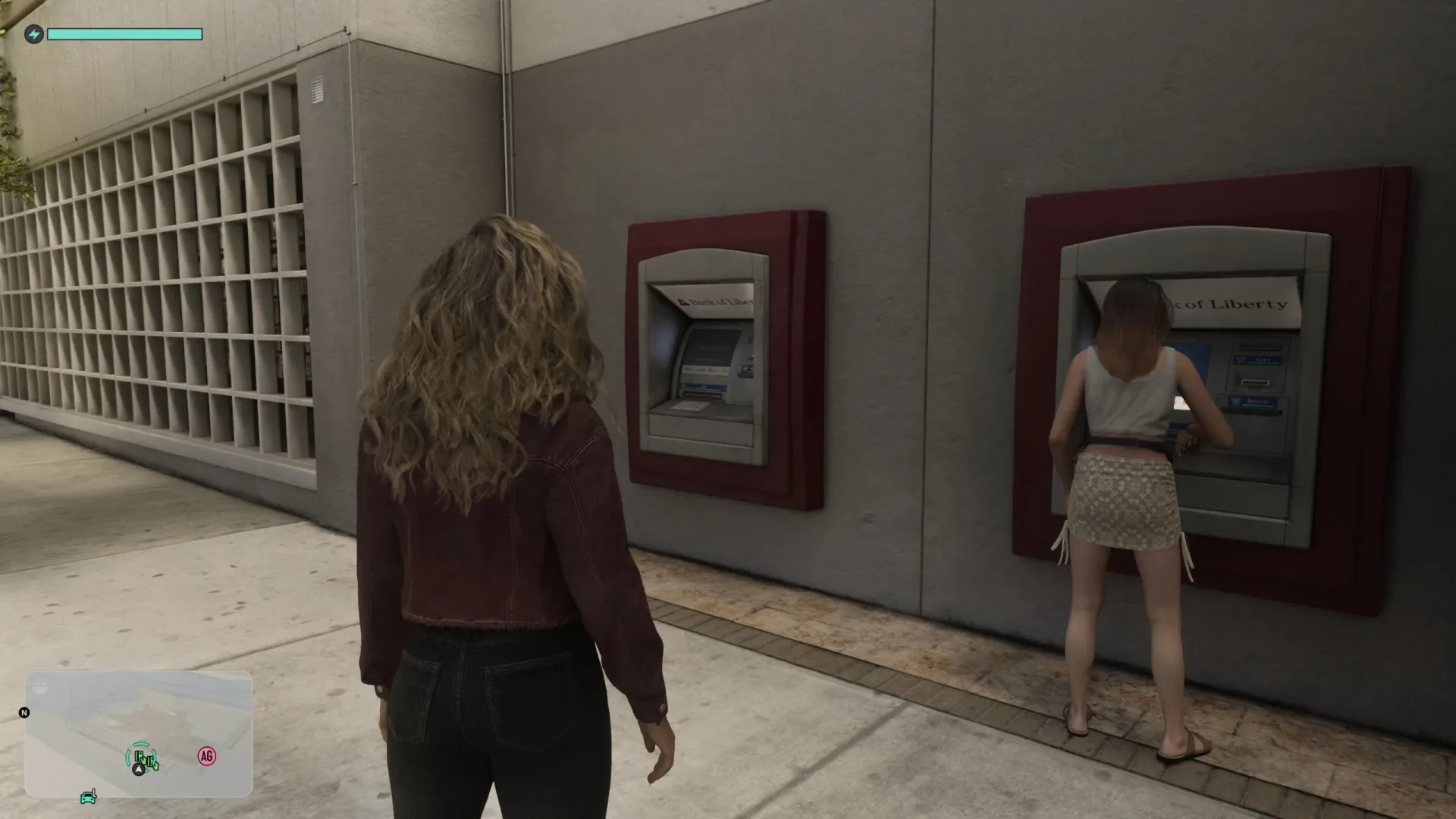
ATMs are the relevant tool when Pocket Cash is becoming more than a player is comfortable risking. Since larger purchases and digital-only payments rely on Checking, transferring funds out of a character’s pocket also prepares money for those uses.
A simple routine is sensible: after a burglary or robbery, consider banking cash before starting another high-risk activity. The exact timing depends on the player’s plans, but the principle is straightforward: do not bring a large physical balance into a situation where a Wasted or Busted result would erase it.
What the $1,000 threshold means
The $1,000 cutoff is not merely a payment inconvenience. It means Pocket Cash cannot solve every spending need. Purchases above $1,000 require BuckMe Checking, as do services available only through digital currency. Players should keep sufficient room in the appropriate Checking account rather than assuming a thick wallet will cover a major expense.
For smaller purchases, Pocket Cash remains viable. But it is worth considering the trade-off: paying with cash reduces the amount that could be lost later, while banking it first protects it from Wasted and Busted outcomes. The game’s design asks players to balance immediate convenience against exposure.
BuckMe Checking: the account for major spending
Access to a BuckMe Checking Account unlocks during Chapter 1 through the main story. BuckMe is an online banking application on the in-game phone. In free roam, press Up on the D-Pad to bring up the phone, then open BuckMe to check transactions and make payments.
Checking is the central account for purchases over $1,000. It also covers the services that cannot be paid for with physical cash. In other words, this is not an optional secondary wallet; it is the account that supports the game’s higher-cost and digital spending.
Jason and Lucia do not share Checking funds
Jason and Lucia each have an individual BuckMe Checking account and their own pool of money. A balance held by one character should therefore not be assumed to be available to the other through Checking. This makes character switching more meaningful for financial planning: before making a costly purchase, check that the protagonist doing the buying has the necessary funds in their own account.
The separation also makes the shared Family Savings account distinct. Family Savings can serve as a joint destination for funds, but it is not a way to retrieve money for either protagonist once it has been deposited.
Checking account limits and pending payments
Checking accounts have balance limits. Those limits rise as the story progresses, and account upgrades can offer special perks and lower fees. However, the constraint is important before an upgrade arrives: if an account reaches its cap, it cannot accept further payments.
Incoming payments do not vanish when the account is full, but they become pending until there is enough room for the complete deposit. A pending transaction is therefore money that has not yet become usable. If the player expects a payment, leaving headroom in Checking avoids the possibility of having that transaction held up.
“Headroom” simply means unused capacity under the balance limit. It is a useful concept here because the account’s capacity affects not just what can be stored, but whether new payments can clear. Spending some money, where appropriate, or committing funds to Family Savings are potential ways to create room—but the latter cannot be undone.
When BuckMe upgrades happen
Both characters’ Checking limits increase over the course of the story. The relevant upgrade opportunities arrive after specified main-story progress in Chapter 2, Chapter 3 and Chapter 4. BuckMe provides an in-game notification when the relevant mission has been completed and an upgrade is available.
That notification is worth watching for because the upgrade is more than a larger ceiling. The accounts can also gain special perks and lower fees. The supplied information does not specify the exact balance caps, fees or perks, so players should rely on the in-game BuckMe notice and account information rather than expecting a fixed value here.
BuckMe Family Savings: shared progress with no withdrawal option
BuckMe Family Savings also becomes available during Chapter 1 as part of the main story. It is a shared account between Jason and Lucia, and both can move money into it from their own Checking account using the BuckMe phone app.
The account has five savings goals. Its capacity increases with story progress in Chapters 2, 3 and 4, matching the broad upgrade rhythm of Checking. As the available balance limit rises, a greater Family Savings investment delivers a higher interest return.
Understand the irreversible transfer rule
Family Savings has one rule that should govern every deposit: money transferred in can never be transferred back out. It is not a second Checking account and should not be used as one. It is a permanent allocation of funds toward the shared savings goals.
That makes a Family Savings deposit a commitment. It may be attractive because of the interest benefit associated with increased investment and later limit increases, but the funds cease to be available for ordinary purchases once moved. Before confirming a transfer, it is sensible to make sure the depositing character retains enough in Checking for anticipated digital spending and that the account is not being left too close to a payment bottleneck.
How to decide what belongs in Savings
The available information supports a cautious approach rather than a one-size-fits-all amount. Family Savings is most suitable for money that a player is confident will not be needed again for purchases. Checking is best for money required for expensive items, digital services or near-term flexibility. Pocket Cash should be kept to an amount a player is willing to expose to loss.
Because only Checking funds can be transferred into Family Savings, the usual flow is: earn or carry cash, bank it into Checking when needed, then decide whether some Checking balance is safe to commit permanently to the shared account. It is a one-way progression from flexible money to locked savings.
A practical money-management routine
- Keep Pocket Cash under control. Use it for eligible purchases up to $1,000, but bank a large haul before taking on activities where being Wasted or Busted is a meaningful possibility.
- Check which protagonist is paying. Jason and Lucia have separate Checking funds. Confirm the buyer has the balance required for any large purchase.
- Leave Checking capacity free. Do not sit at the account cap if more payments may be coming. A full account causes incoming funds to remain pending until there is space for the entire deposit.
- Watch BuckMe notices after story missions. Chapter 2, 3 and 4 progression can unlock account upgrades, including larger limits, perks and lower fees.
- Only send surplus money to Family Savings. It is shared and may improve interest returns as limits rise, but every transfer is final.
Common mistakes to avoid
- Carrying a robbery haul indefinitely: Pocket Cash is lost on a Wasted or Busted result. Treat it as exposed money, not protected savings.
- Trying to pay a major bill with pocket money: purchases over $1,000 require Checking, as do digital-only services.
- Forgetting that Checking is character-specific: money in Jason’s Checking account is not described as a shared pool with Lucia’s Checking account.
- Filling Checking to the limit: a full account cannot receive more money immediately, leaving new transactions pending.
- Using Family Savings as an emergency fund: it cannot function that way because deposits cannot be withdrawn.
- Ignoring account-upgrade notifications: story-linked upgrades improve capacity and can include perks and lower fees.
GTA 6’s money system turns ordinary spending into a small risk-management exercise. Cash is convenient but vulnerable; Checking is flexible but capacity-limited; Savings is shared and potentially rewarding but permanent. Once those roles are clear, the most important habit is simple: protect money before it is at risk, reserve Checking capacity for what must remain spendable, and send only genuine surplus into Family Savings.