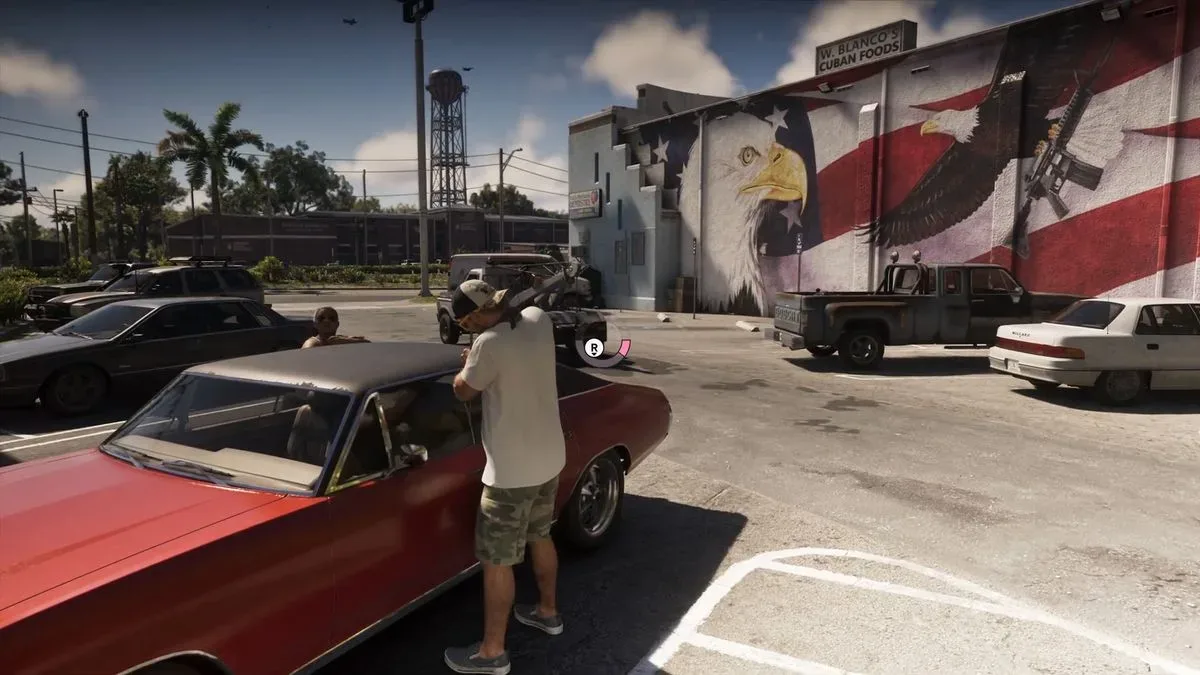

Money-making in Grand Theft Auto 6 is not a single activity with one permanent best answer. The available opportunities change as Jason and Lucia advance through Leonida, while the places willing to buy particular stolen goods expand across the first four chapters. That makes the most useful approach less about endlessly repeating one small score and more about matching the job to the tools, contacts and map information currently available.
There are two places to keep an eye on: Personal Cash and the BuckMe Checking Account. Story progress, missions and side activities can help maintain the account, while opportunistic crimes can add cash quickly. But the game’s criminal opportunities carry a trade-off: the faster and bigger the score, the greater the likely danger and the possible consequences for the player’s criminal profile.
For a fast overview, muggings and shop holdups are the accessible low-end options; vehicle theft becomes more valuable once buyers are available; robberies offer the largest potential payouts; and missions, pool and races provide more structured ways to earn while moving through the story.
Best GTA 6 money methods at a glance
- Muggings: A straightforward way to take valuables from civilians for small amounts of pocket cash.
- Store holdups: Convenience stores, restaurants and gas stations can be targeted for register money.
- ATM theft: Requires a vehicle winch fitted at a Mod Shop, so it is an option to pursue after building some funds.
- Vehicle theft and sales: Well-kept vehicles can be sold through businesses and contacts, with more options unlocked during the campaign.
- Robberies and Illegal Operations: The strongest route to rapid money, but also the most demanding and dangerous.
- Missions and activities: Story objectives, pool and racing opportunities offer cash alongside progression and exploration.
Start with low-risk, low-return crimes
At the beginning of a playthrough, small crimes establish the basic rhythm of quick cash: identify a target, make the demand, take the money, and decide whether the immediate gain is worth any resulting attention. They are not presented as the most lucrative long-term strategy, but they are available without waiting for the game’s more specialised buyers and larger operations to open up.
Mug civilians for quick pocket cash
To mug a civilian, aim an unholstered weapon at them and use Triangle on PlayStation or Y on Xbox to demand valuables. This makes muggings a direct way to collect a relatively modest amount of cash while moving around the world.
The practical limitation is clear: these are small, individual scores. Players looking to accumulate funds rapidly should treat them as an opportunistic supplement rather than assume each pedestrian encounter will finance a major purchase. They are useful when cash is immediately needed, but the larger systems—vehicle sales and robberies—have more room to scale as the campaign opens up.
Hold up businesses for register money
Convenience stores, restaurants and gas stations can also be robbed. The basic process is similar to a mugging: point a weapon at the staff member, then press Square on PlayStation or X on Xbox to demand the cash in the register.
These locations are especially easy to understand because they are fixed businesses rather than passing pedestrians. However, they remain part of the same risk-versus-reward equation. A player who wants to preserve a lower-profile approach may prefer to rely more heavily on story payments and activities. Anyone pursuing fast illicit money should be prepared for the fact that repeated criminal acts may affect the character’s criminal profile.
Use a winch to steal ATMs
ATM theft is a more equipment-dependent form of quick cash. It becomes available after earning enough money to add a winch to a vehicle at a Mod Shop. Once the winch is installed, ATM machines can be stolen.
The important planning point is that ATM theft is not necessarily an opening-hour money method. It has an upfront requirement, so it makes more sense as a next step after early cash sources have paid for the vehicle modification. In other words, a winch changes an ordinary vehicle from transportation into a tool for a new kind of theft.
That is a useful example of how GTA 6’s money options build on one another. Small crimes can provide funds; funds can pay for modifications; the modification can open an additional money-making route. Players should therefore avoid judging a method only by whether it is available immediately. Some opportunities are investments in future earning potential.
Steal vehicles, keep them in good condition, and find the right buyer
Stolen cars become a stronger revenue stream once sale points and contacts are available. A vehicle can be taken by breaking into it or by hijacking it from a driver after aiming a weapon at them. Vehicles in good condition can then be sold at certain businesses and to specific contacts.
Condition matters because it makes the trip from theft to sale part of the job. Wrecking a car during the escape is unlikely to support the goal of selling a good-condition vehicle. The route to a buyer is therefore as relevant as the vehicle itself: choose the target, get it moving, and avoid turning the potential sale into damaged cargo.
During Chapter 2, Moses’ auto shop becomes available as a place to make money from vehicles. GTA 6’s Pay ’n’ Spray locations also buy vehicles. These options give stolen cars a clear destination instead of leaving players to drive around with an asset they cannot yet convert into cash.
What fences do and why chapters matter
A fence is a buyer for stolen or otherwise risky goods. In GTA 6, the Index can identify fences willing to take cars carrying some heat. Different fences unlock at different points in the story and seek different classes of vehicle. This means a buyer may be selective rather than universally accepting every car a player steals.
The same chapter-based progression applies beyond cars. Across Chapters 1 through 4, additional fences become available for vehicles, narcotics and jewellery. That makes campaign progress part of the economy. If a valuable item cannot be sold to the currently accessible contacts, the answer may not be to keep searching randomly; it may be that the appropriate buyer has not yet been unlocked.
The GTA 6 Index guide is a helpful companion for understanding how the Index can point players toward robberies, activities, missions and destinations as more of the map’s opportunities become visible.
Robberies are the main route to fast money
For players prioritising payout potential, robberies are the leading option. The game’s map Index includes a Robberies section that lists known illegal operations and helps identify higher-yield targets. Rather than blindly travelling between locations, use the Index to compare opportunities before committing to one.
When hovering over a listed location, the summary can show the potential score and any important valuables that may be recovered. The available targets include gang hideouts, Smash ’n’ Grab locations, banks and Payday Loan vendors. This information is valuable because it lets players assess what is on offer before beginning the operation.
Read payout information as a risk warning, not just a reward promise
A large potential score should not be treated as guaranteed easy money. The same principle that makes robberies attractive also makes them dangerous: bigger scores are likely to come with greater difficulty. The smart use of the map summary is to balance the listed rewards and valuables against the threat implied by the target.
“Illegal Operations” is the game’s broad label for these higher-stakes criminal jobs. In practical terms, they differ from street muggings because preparation and survival matter more. A lucrative marker on the map is a prompt to consider capability, not merely an invitation to rush in.
Bring a partner for bigger jobs
Larger robberies and Illegal Operations are easier to survive with a partner providing support. GTA 6’s character-switching system is therefore relevant to making money, not just to the story structure. Bringing the other protagonist along can give a player more support when tackling a dangerous target.
This is where the most profitable approach becomes more measured than a simple crime spree. A player can use smaller opportunities for immediate cash, consult the Index for a promising robbery, then bring a partner when the potential reward justifies the higher risk. It is a better model than treating every crime as equal.
Do missions and activities while the world opens up
Main missions typically provide some money, making story progression a dependable baseline for keeping the BuckMe Checking Account supplied. Missions also have an additional financial benefit: they unlock more opportunities, including different types of fences and places to sell stolen goods. For that reason, advancing the campaign is not time taken away from money-making. It is often what broadens the economy in the first place.
Activities offer another route. Pool at bars can award cash, and races are spread across the map. These options may not have the same immediate appeal as a bank or a targeted vehicle sale, but they combine earnings with the process of exploring Leonida and discovering what each part of the map offers.
Check motels and hotels for local leads
Motels and hotels can hold pamphlets or town maps that can be examined to put nearby spots directly on the map. This is an easy detail to overlook, yet it can be useful when looking for activities and racing opportunities rather than waiting to stumble across them organically.
The broader lesson is to actively collect information. GTA 6’s Index presents known opportunities in categories, while local maps and pamphlets can reveal nearby destinations. Money does not only come from executing crimes or winning activities; it also comes from knowing where worthwhile opportunities are located.
A practical chapter-by-chapter money plan
- Early game: Use muggings and store holdups for small cash needs, while completing missions to keep advancing the story and unlock future options.
- After gaining vehicle-sale access: Target cars that can be delivered in good condition, then use available businesses, Moses’ auto shop from Chapter 2, Pay ’n’ Spray locations or appropriate contacts.
- After buying a winch: Add ATM theft to the list of potential quick-cash methods.
- As the Index fills out: Compare robberies by potential score and valuables, rather than treating every map marker as equally worthwhile.
- For major scores: Use character switching to bring a partner, especially for larger robberies and Illegal Operations.
- Through Chapters 1–4: Recheck available fences as they unlock, since vehicle, narcotics and jewellery buyers expand with campaign progress.
The essential point is that GTA 6 rewards flexibility. Small hold-ups offer immediate money; cars create a sellable asset when a buyer is accessible; winches open ATM theft; and robberies promise the biggest scores when players are prepared for the danger. Missions and activities supply both money and the story progress that unlocks more profitable avenues. Check the Index, pay attention to vehicle condition and buyer requirements, and let the current chapter determine which money route is most practical.