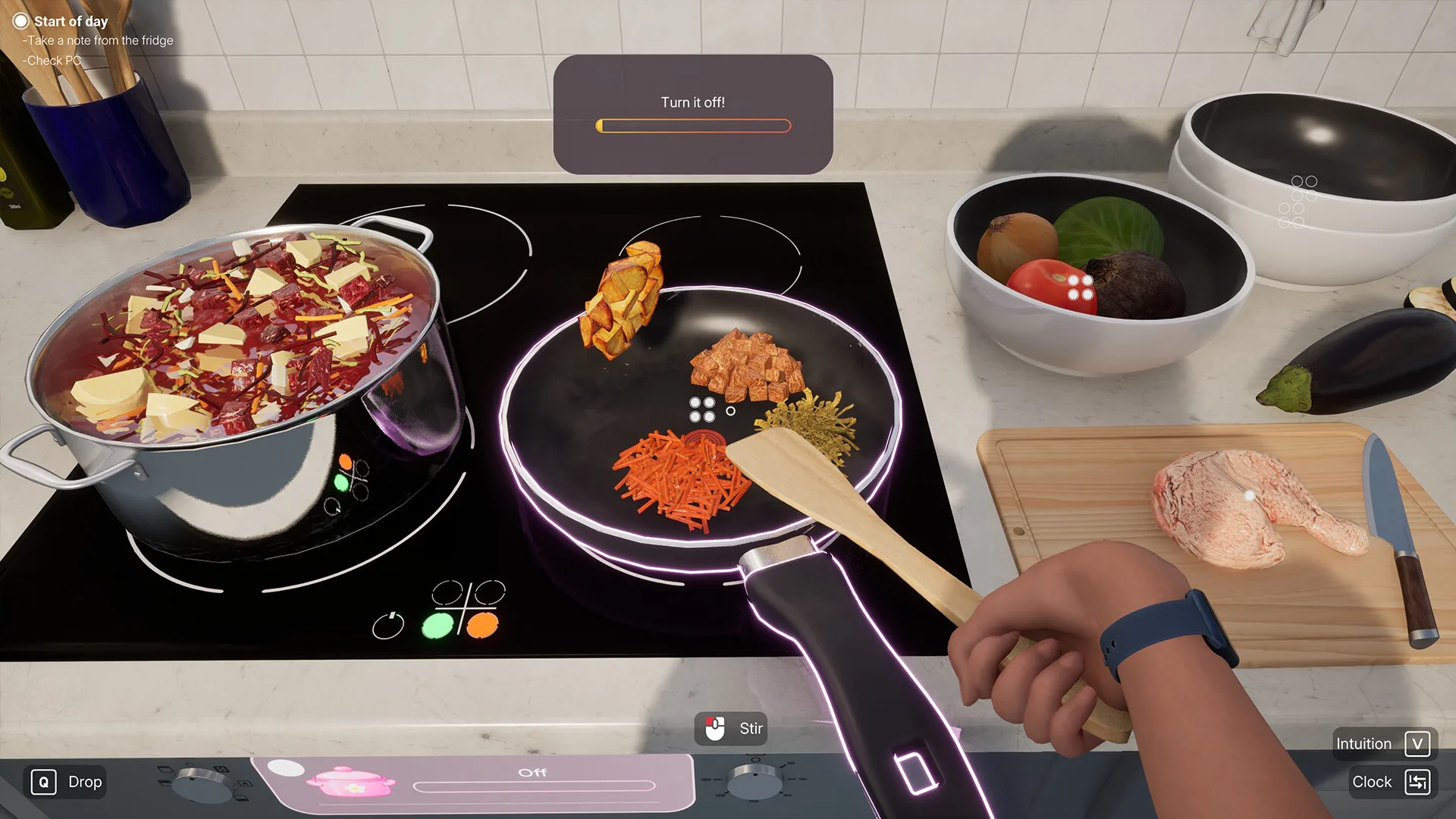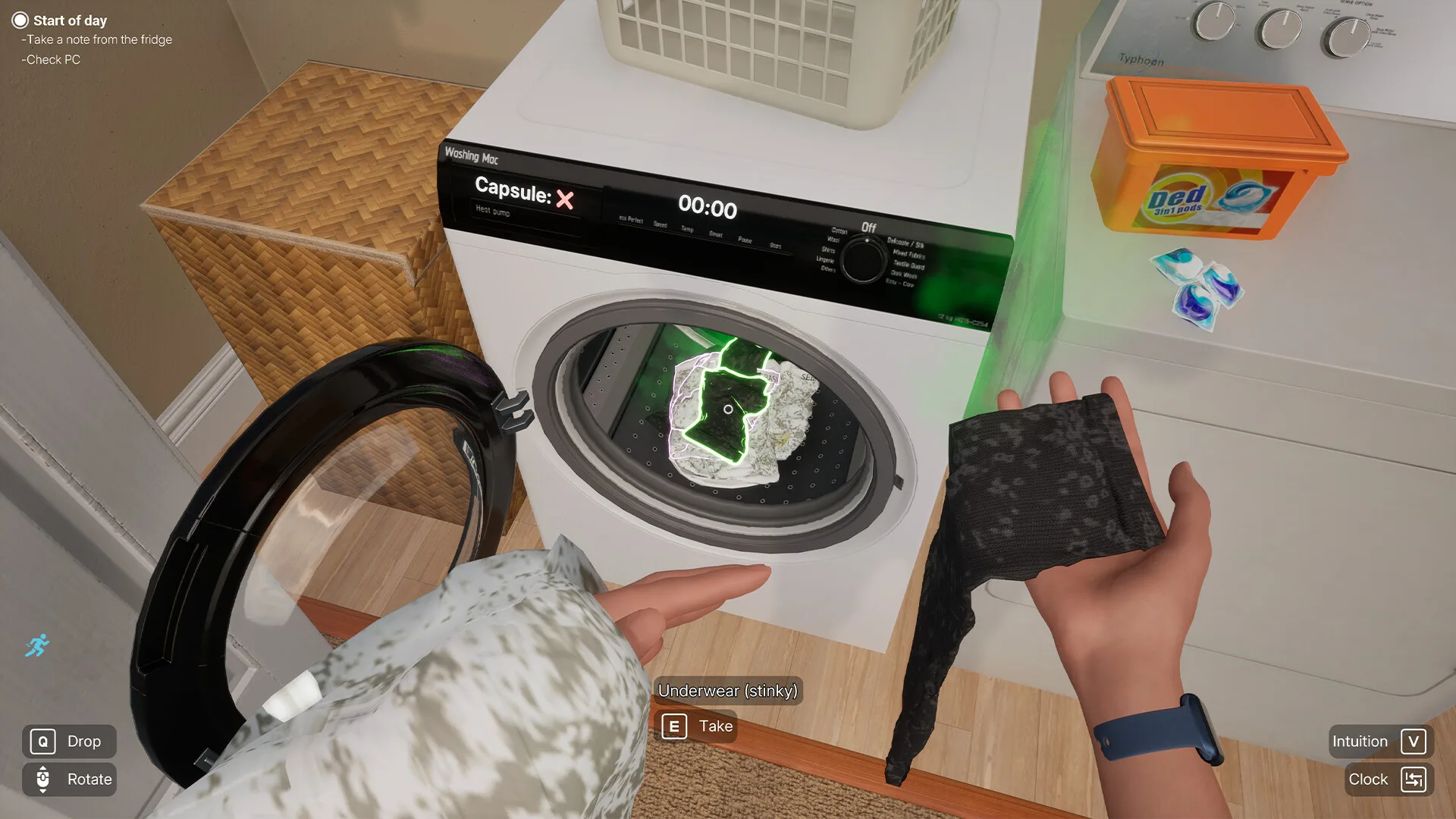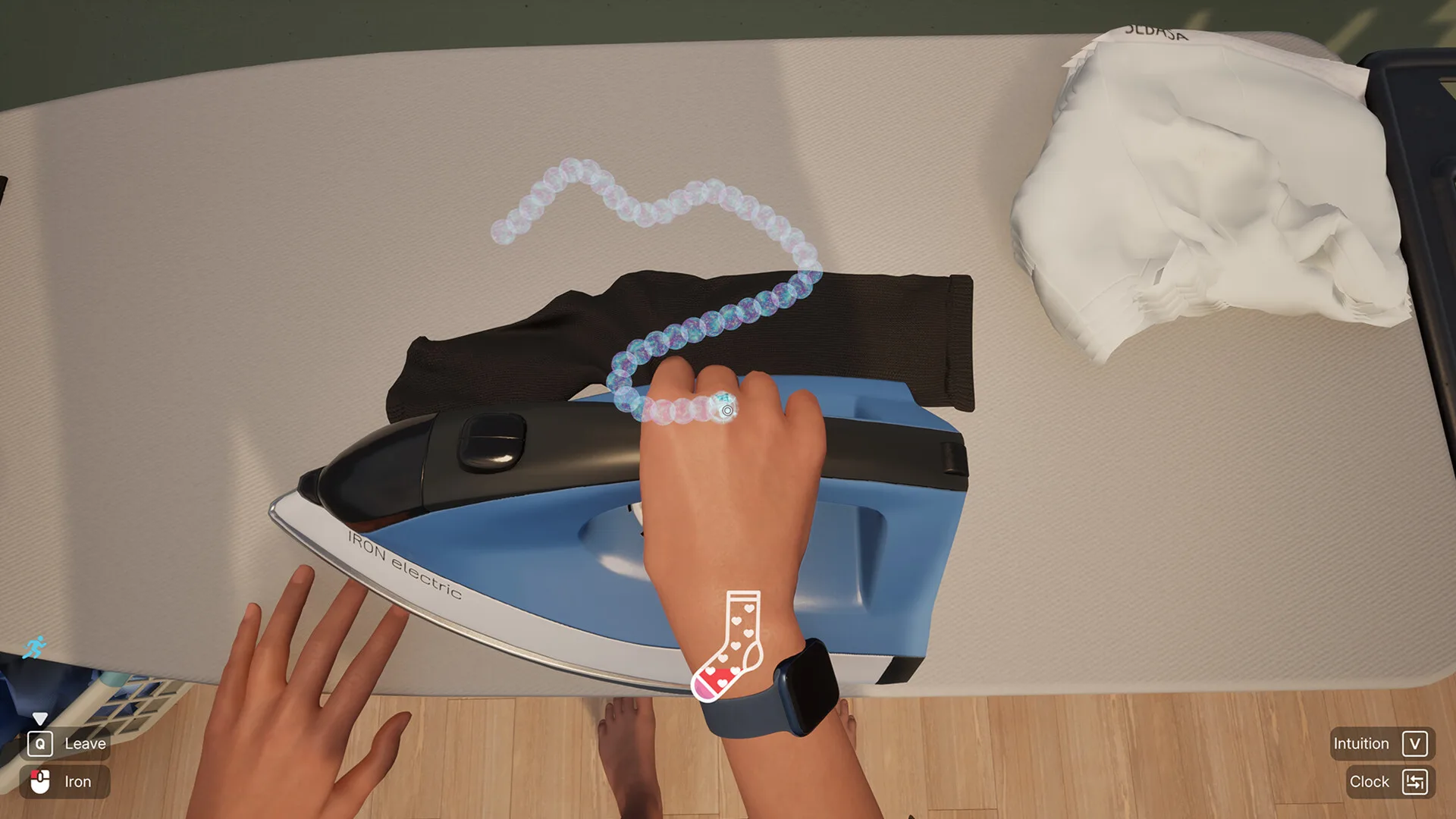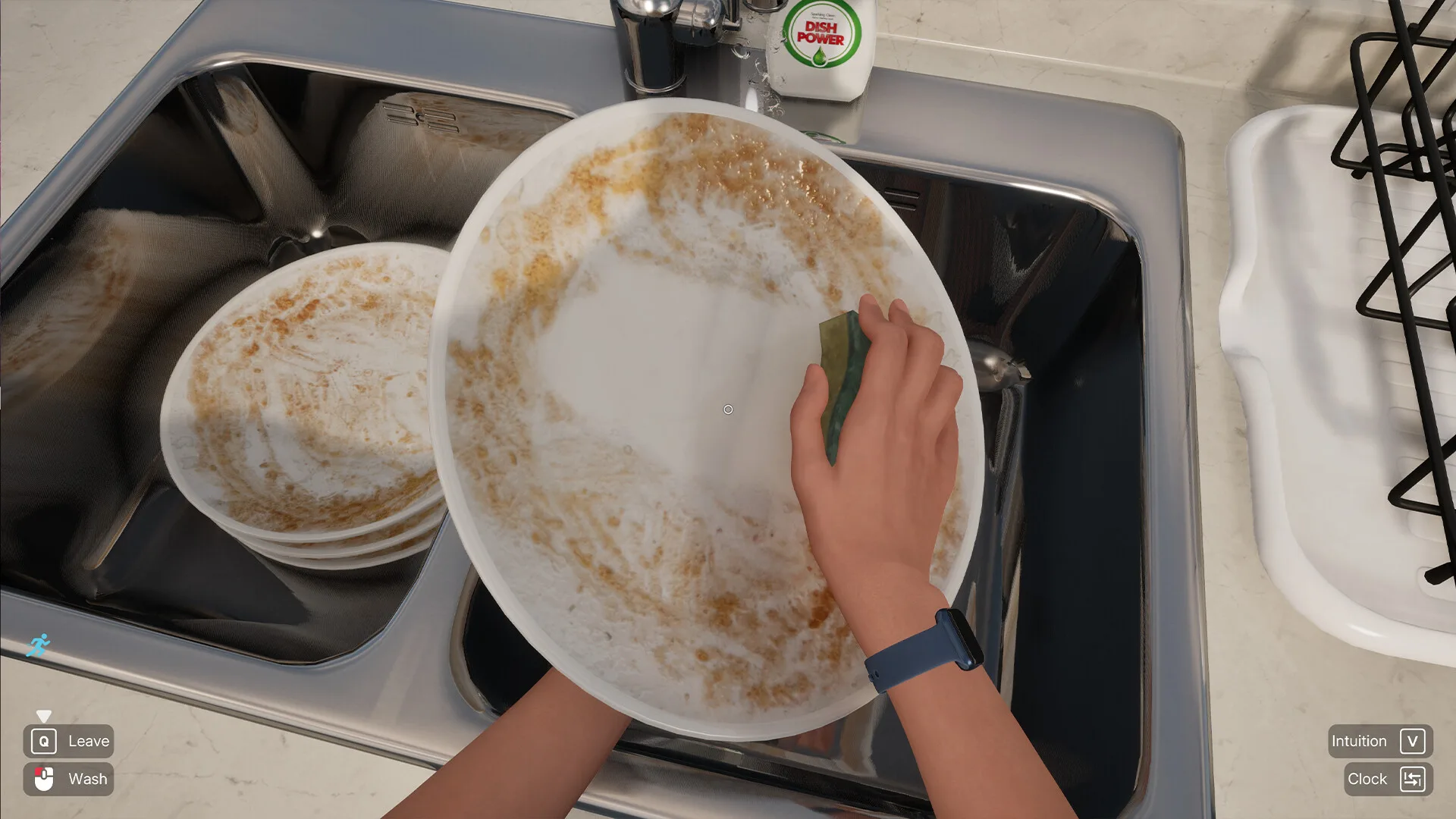
Woman Simulator is a Windows PC game built around a deliberately charged premise: the player takes on a housewife role and performs domestic work including cooking, washing dishes, laundry, ironing or drying clothes, and mopping. Developed and published by Sebasa Games, it places those activities at the stated center of the experience rather than presenting them as a brief detour from a separate adventure.
That focus makes the concept more specific than a generic housekeeping simulation. Domestic work often appears in games as background detail, a recovery action, or a small requirement before the more conspicuous activity resumes. Here, the announced task list makes upkeep itself the subject. The player is also said to manage morale and the husband’s mood, while taking a bath and flattering him are named ways to affect those measures. Together, those elements establish a premise about competing duties, personal condition, and interpersonal expectations.
Domestic work is the announced core, not the background
The important decision in Woman Simulator is not simply that it includes cooking or laundry. It is that the game identifies a chain of ordinary chores as its central activity. Cooking, dishes, clothing care, and mopping are all kinds of work whose results can be more visible than the effort behind them. Food is ready, clothes are clean, or a floor has been cleared, while the sequence of small decisions needed to reach that result is easily overlooked.
A game can make that process visible by requiring the player to engage with it directly. Even a relatively simple set of chores can form a meaningful time-management structure when several needs compete for attention. One responsibility can demand action while another remains unfinished. A small task can become consequential when it joins a larger group of pending work. That is a familiar foundation for time-management games, but the domestic context gives it a social charge that an abstract production line or customer queue does not automatically have.
Woman Simulator does not need to represent every household or every woman’s life for that context to matter. The role described for this release is narrower: a gendered domestic role within a marriage. The title is broad, but the announced scenario is particular. That distinction sets a useful standard. The game can be considered in terms of whether it gives this specific arrangement coherent framing and meaningful play, rather than whether it makes universal claims about womanhood.
A list of chores is only a beginning, however. The difference between purposeful routine and empty busywork depends on interaction clarity, pacing, feedback, and the relationship among tasks. Those details cannot be decided from the announced premise. They are nevertheless the relevant questions for a game that asks players to find meaning in work that is conventionally ignored once it has been completed.
Repetition can be theme, structure, or limitation
Repetition is unavoidable in a game about household maintenance, and it is not automatically a weakness. Many forms of domestic labor recur because their results do not last forever. Meals must be made again. Dishes return. Laundry returns. Cleaning is maintenance, not a permanent victory condition. Removing that recurrence might make the structure easier to pace, but it could also discard the reality the premise is positioned to explore.
In the strongest reading of this kind of design, recurring work is not just content being reused. It is the subject. Completing a responsibility does not erase the system of responsibilities around it. A routine can create pressure without spectacle through accumulation, timing, and the return of work that seemed finished only moments earlier. That pattern could make a mundane activity legible as labor rather than treating it as an invisible service performed between more important events.
But thematic repetition and mechanical repetition are not identical. If actions remain the same without shifting priorities, readable consequences, or meaningful relationships between one task and the next, recurrence may communicate little beyond duration. The premise can only carry so much sameness before a player may feel they are operating a rote routine rather than considering the system around it.
The key question is whether routine is intelligible. Players need to understand what needs attention, how actions affect household conditions, and why a given choice matters. Pressure has more expressive value when it follows rules the player can read. Without that clarity, a domestic-work loop risks becoming an opaque sequence of demands. With it, the same loop could make the often-unseen coordination behind daily upkeep its actual subject.
A stressful household premise is not automatically a cozy one
The word simulation can create expectations that do not fit every game using it. Domestic games are often associated with soothing rituals, self-directed pacing, personal expression, or arranging a living space. Woman Simulator’s listed morale and husband-mood measures suggest a potentially different emotional register, though readers interested primarily in those other elements should use the free demo to determine what the available loop actually offers.
A system built around managing duties and emotional conditions may be intentionally pressured or uncomfortable. If that is the intended direction, the contrast with a cozy homemaking fantasy matters. The game could be asking the player to navigate an ongoing routine in which work is persistent and another person’s disposition is treated as part of the player’s responsibility.
That can support satire. Stress can be expressive when it is connected to an expectation the game wants players to notice. A player may be made to feel how an ordinary chore list expands when it is combined with demands to remain responsive, presentable, and emotionally accommodating. Yet stress alone does not produce commentary. An arbitrary or confusing system can frustrate players without communicating anything clear about the social arrangement it invokes.
The husband-mood measure carries the sharpest satirical burden
The husband-mood measure is the most socially loaded announced system. Morale meters are common in games, but their meaning changes with context. They can represent fatigue, resilience, confidence, wellbeing, or a broader personal state. Pairing morale with the mood of a husband makes the setup much more specific: the player is asked to attend not only to domestic duties, but also to another person’s emotional condition.
Taking a bath and flattering him are named as ways to affect the listed measures. This does not establish how those actions are balanced, assigned, or presented in the full game. It does establish that personal care and interpersonal appeasement belong to the announced vocabulary of the system. This is where the game’s humor and framing have their greatest responsibility.
There is a clear possible satirical reading. The design may confront the expectation that one person should maintain a household while also performing the emotional labor of keeping another person content. The imbalance in that arrangement is not subtle. Encoding it as a meter could expose how unreasonable it feels when it becomes visible, quantified, and repeatedly demanded.
Yet no meter explains itself. A mechanic can portray an unfair expectation, or it can risk normalizing that expectation by presenting it as an unquestioned objective. The distinction depends on framing that has not been fully described: tone, feedback, language, consequences, narrative context, and the player’s degree of agency. Those elements should not be invented. They do identify the design challenge clearly. If Woman Simulator aims at satire, it needs to help players recognize the target of the joke rather than relying entirely on audience interpretation to supply critical distance.
This does not require the game to claim it speaks for everyone or to turn every point into blunt instruction. A focused work can use exaggeration, discomfort, or absurdity to interrogate one social arrangement. But the more charged the role, the more important it becomes for the game to distinguish depiction from endorsement through its own presentation.
First-person framing could make routine immediate
Woman Simulator is described as first-person, a perspective with particular potential for material centered on objects and spaces. A sink, a cooking surface, laundry, or a floor requiring attention can become immediate points of focus rather than icons on a distant task list. That proximity could put everyday work in the foreground.
It also creates a straightforward design tradeoff. Close interaction can make chores feel tactile and present, but it can feel cumbersome if the game does not clearly communicate what can be used, which action is expected, and what result follows. The announced premise cannot tell us which outcome applies.
For another examination of life-simulation systems connecting time, place, and family, see LIVORA’s life-sim design.
What the PC release establishes
Woman Simulator released for Windows PC on September 25, 2026. Sebasa Games is listed as both developer and publisher. The PC listing identifies single-player play, 35 achievements, Steam Cloud support, and a free demo.
The developer has also said that a recent update addressed issues involving sound, voiceover, recipes, laundry, a food timer, field of view, and a trash can. These are developer-reported update targets, not confirmation that every issue is resolved across every PC configuration. A prior launch delay connected to build verification and unfinished voice or localization work described an earlier development status and should not be treated as a statement of the current release.
The store also discloses that some music, images, and localization were AI-generated. That is relevant production information, but it does not answer the central design questions. It cannot determine whether tasks are clear, whether the routine remains engaging, or whether the satire communicates its intended target.
Who may find the concept compelling
Woman Simulator may be most compelling to players interested in time-management design with a satirical, socially pointed premise. Its stated hook is the conversion of routine household labor into visible demands, paired with morale and a husband-mood measure. That setup could appeal to players who want games to explore gendered expectations through systems rather than only dialogue or setting.
The game’s central challenge is substantial. It needs to make ordinary work meaningful without mistaking quantity for depth. It needs to use repetition as a lens on persistent labor rather than an excuse for thin interaction. Above all, it needs enough framing around the husband-mood measure for the pressure to read as critique, comedy, or both, rather than leaving a gendered stereotype unexamined. That is an ambitious burden for a premise built from chores, and precisely why the design is worth examining closely.