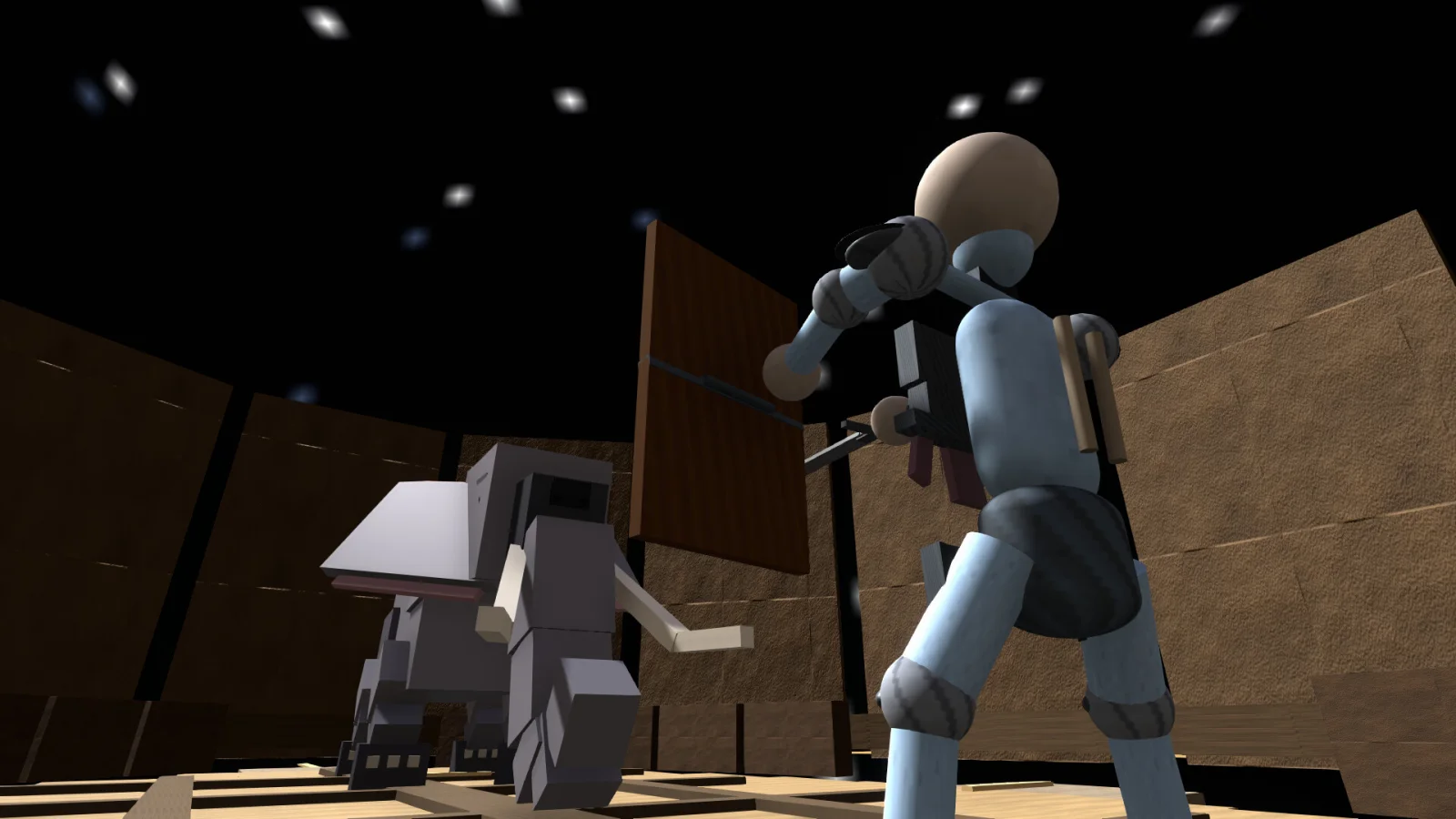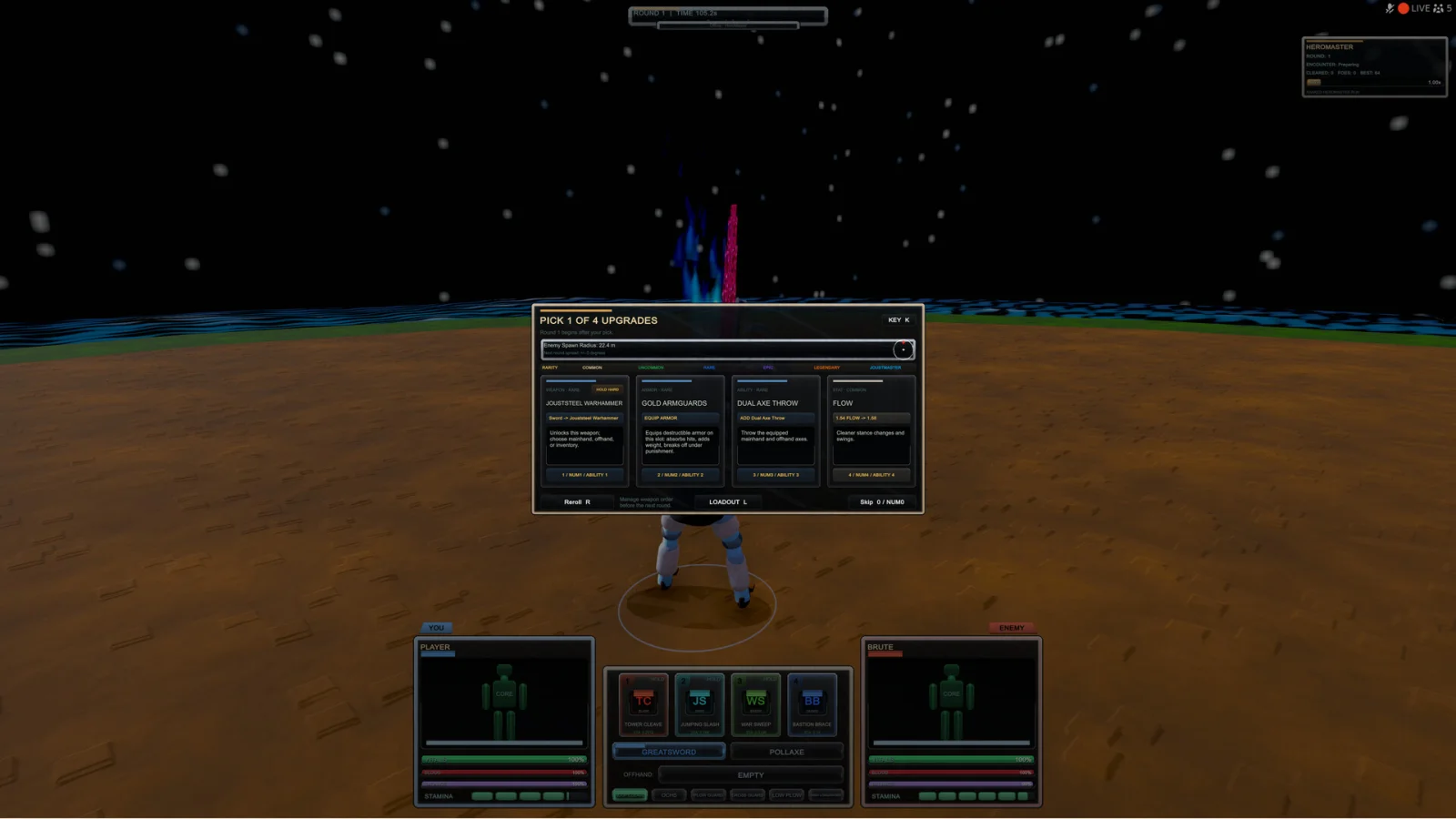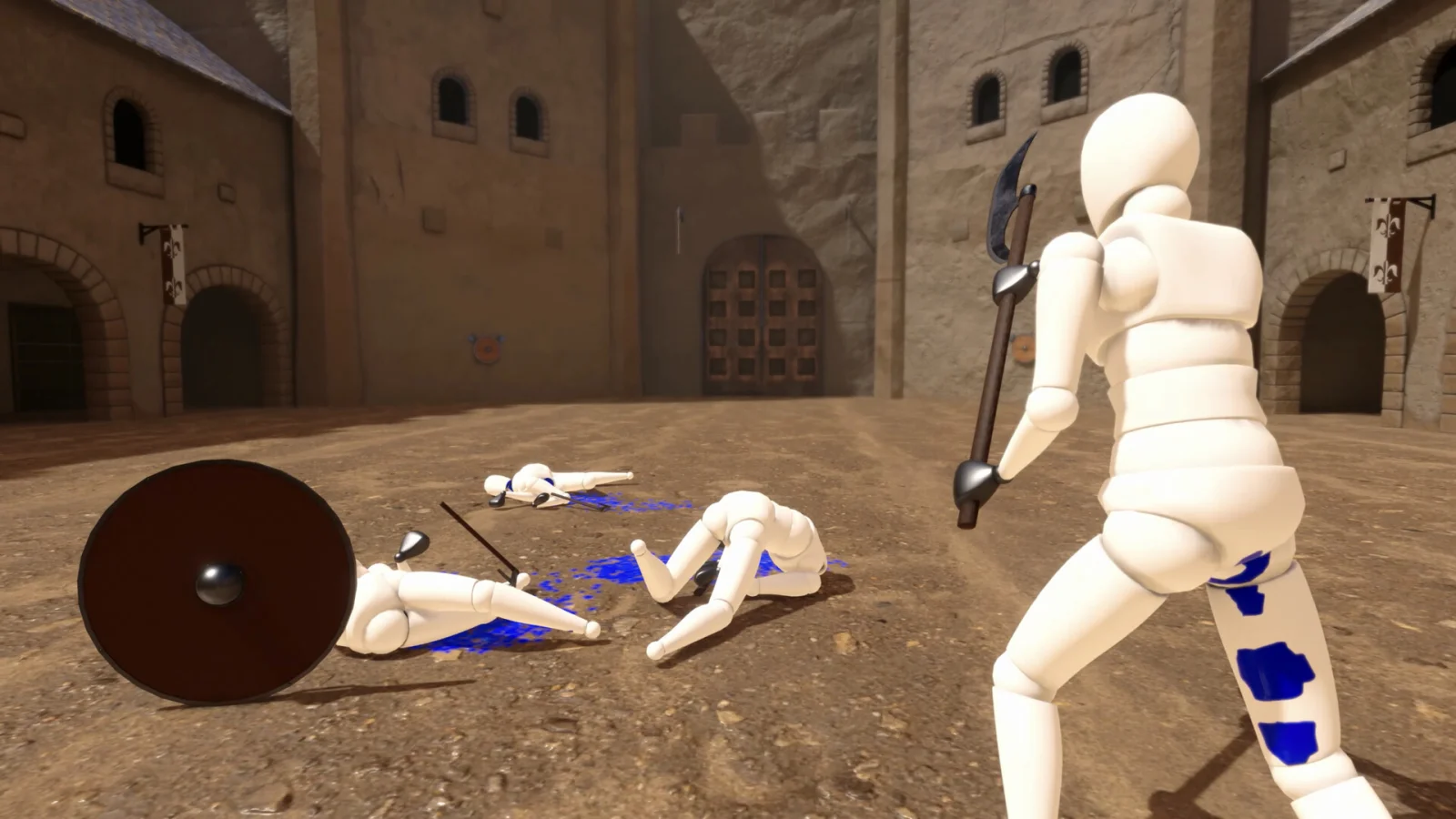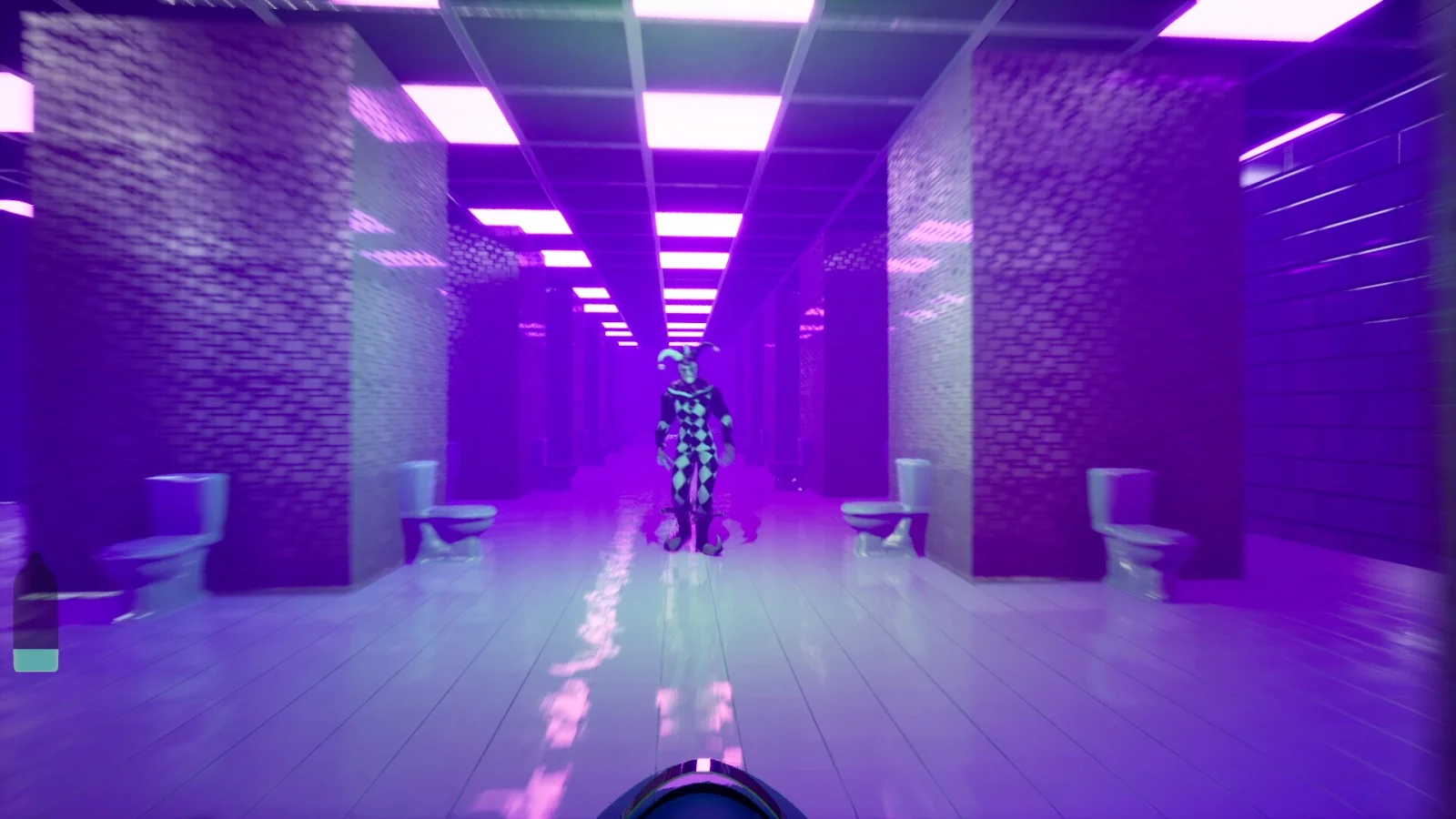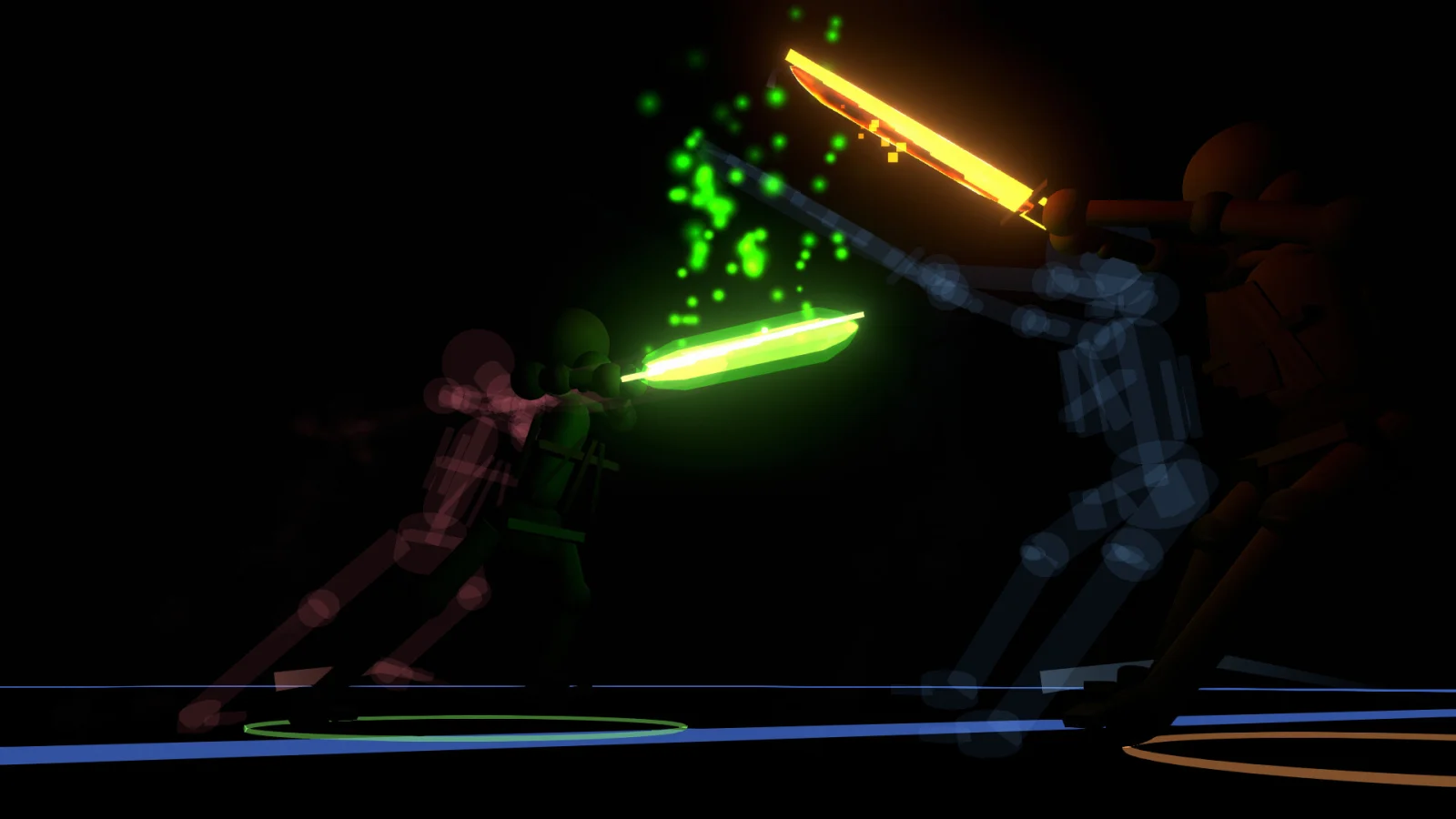
The Joust is a PC physics-based combat game developed and published by The Joust, released on June 29, 2026. Its advertised premise is expansive: more than 80 classes, a fighter selection that crosses medieval, futuristic, and deliberately absurd ideas, and support for single-player, multiplayer, online PvP, and LAN PvP. The PC listing also identifies achievements, leaderboards, statistics, and a level editor.
That is a substantial feature outline, but an outline is not the same thing as a settled critical judgment. The available public material supports a close assessment of The Joust’s design proposition, its likely strengths, and the questions it leaves open. It does not establish how consistently its combat works across the advertised roster, how its various play options are structured, or how well its technical performance holds up in ordinary use. This is therefore an unscored assessment. The most compelling part of The Joust, on the facts available, is not one confirmed match format or one confirmed standout class. It is the decision to frame combat as a physics-driven playground broad enough to include contrasting eras and intentionally silly concepts.
A roster designed around contrast
More than 80 classes is the headline claim, and it immediately gives The Joust an unusual burden. A large roster can make a combat game feel generous before a fight even starts. Each new choice can suggest a different visual joke, tactical puzzle, or physical complication. Medieval and futuristic fighters alone create a contrast in fantasy, while the advertised absurd characters indicate that The Joust does not intend to remain solemnly historical or narrowly science-fictional.
The potentially valuable idea here is variety of expectation. A player does not necessarily need every class to answer the same combat question. One may invite a careful approach, another may create a more volatile exchange, and an intentionally comic pick may exist partly to turn the collision of bodies and weapons into a spectacle. That is especially compatible with physics-led combat, where a mismatch can be entertaining not only because it is competitively dramatic but because the encounter itself is visually and mechanically unpredictable.
However, quantity alone cannot demonstrate meaningful variety. Eighty classes could represent a deep set of distinct play identities, or they could be a wide collection whose differences are harder to read than their presentation suggests. The available facts do not establish the combat rules of individual classes, their relative power, their unlock conditions, or whether every advertised fighter is available in every form of play. It would be premature to treat the number as proof of balance, strategic depth, or long-term competitive health.
Still, breadth matters as a design promise. It tells prospective players that The Joust is interested in collision rather than purity: different themes sharing the same arena, serious-looking combat machinery sitting beside sillier ideas, and selection itself functioning as part of the game’s appeal. If the classes are legible at a glance and distinct in action, the roster could give friends and rivals a reason to keep experimenting. If their distinctions are difficult to understand, the same abundance could become noise. The core question is not whether 80 is a large number; it clearly is. It is whether the game translates that number into choices players can recognize, learn, and discuss.
Physics as both the joke and the challenge
Calling The Joust physics-based is important because physics can change what “combat” means. In a tightly authored fighting system, the pleasure may come from reliable inputs and repeatable sequences. A physics-centered game may instead find its identity in force, momentum, unstable contact, and outcomes that look slightly different from one encounter to the next. That can make success feel less like reciting a fixed pattern and more like handling a situation before it becomes a mess.
The advertised absurdity of parts of the roster fits this premise. Comedy in a physics game need not be separate from the action. It can arise from an awkward landing, a mistimed charge, an object or body reacting in an unexpected direction, or two incompatible-looking fighters meeting under the same rules. In the best case, the humor gives failure a softer edge: a loss may still produce an amusing moment worth replaying in conversation, even when it was not the desired result.
But the line between entertaining chaos and opaque chaos is exceptionally important. Players generally need enough feedback to understand why an exchange went wrong, even when the result is wild. A physical system can be unpredictable in details while remaining intelligible in principle. Conversely, it can feel arbitrary if its reactions are hard to read or if its consequences appear disconnected from player decisions. The supplied information does not establish where The Joust falls on that spectrum.
One user account reported concerns about camera sensitivity, severe difficulty pacing, technical trouble during a large encounter, and a boss attack that the writer considered overly punishing. Those observations are not sufficient to establish general conditions for the game, nor do they prove that other players will encounter the same problems. They are nevertheless relevant as a narrow caution: a physics-combat design depends on readable framing, responsive-feeling interaction, and challenge that teaches its own terms. If camera behavior, encounter scale, or enemy pressure interferes with that readability, the game’s intended spontaneity could become frustrating rather than funny. If those elements have been refined, the same underlying physical disorder could instead be a major source of personality.
Developer update records describe a July physics overhaul and graphical improvements. That is meaningful evidence of post-release attention, particularly for a game whose central label is physics-based. Yet an update description should not be treated as independent proof of its results. It confirms that changes were described, not how fully those changes resolve any particular concern, how they affect all scenarios, or whether they improve every player’s experience. The distinction matters because physics systems are often felt through many small interactions, not captured by a feature list.
Accessibility and chaos need not be opposites
The Joust’s premise has a potentially broad appeal because its comedy may make it approachable to people who are not seeking a formal competitive fighter. The mix of medieval, future-facing, and ridiculous classes can invite casual curiosity. A player may be drawn to a concept, choose a character for the look of it, and discover what its physical behavior allows. That kind of entry point can be valuable in a game built around direct confrontation.
Approachability is not identical to simplicity, however. A playful roster and comic collisions may make the first impression welcoming while still leaving the deeper rules unclear. The game’s advertised facts do not state its control scheme, tutorial support, accessibility options, camera configuration, input remapping, or how it teaches class differences. Those are major factors in whether a chaotic-looking game becomes readable to newcomers. They should not be assumed from the presence of single-player or multiplayer options.
There is also a useful design tension in the word “joust.” It evokes a contest with direction, spacing, timing, and commitment. Physics can complicate each of those ideas. A clean approach may turn into a wobble, a well-timed strike may have an exaggerated consequence, or a reckless commitment may become the funniest possible error. The game could gain character if it lets players develop a practical understanding of that instability rather than merely endure it. In such a design, mastery does not have to eliminate comedy. It can mean learning how to produce favorable mayhem more often than unfavorable mayhem.
That possibility is why The Joust’s broad class list is more intriguing than a simple content count. Different fighters could potentially act as different ways of engaging with the same physical rules. The roster might offer clear, stable options alongside more volatile or novelty-led choices. Or it may ask every player to absorb a similar baseline of disorder. The current evidence does not determine which approach it takes, but the distinction will shape whether its chaos feels inclusive or exclusionary.
Solo, online, and LAN play broaden the invitation
The listing advertises single-player alongside multiplayer, online PvP, and LAN PvP. That combination gives The Joust several possible social contexts without allowing firm assumptions about their exact implementation. Single-player can matter for players who want to explore a game’s combat away from a live opponent, while online PvP can make an oddball roster a shared contest. LAN PvP, meanwhile, keeps room for local network gatherings and direct group play where rapid rematches, teasing, and experimentation can become part of the occasion.
It is important not to read more into those labels than they confirm. They do not establish matchmaking quality, connection performance, available match types, player population, bot support, split-screen, campaign structure, or the makeup of single-player content. None of those should be presumed. What is established is that The Joust presents itself as a game that can be approached alone and through networked competition, rather than restricting its identity to one of those paths.
For a physics-comedy combat game, that is strategically sensible in principle. Unusual class encounters may have value as a solo experiment, a competitive challenge, or a social gag. Online play could give the system an arena for repeated rivalry. LAN support could be particularly well matched to a game whose funniest outcomes may be easier to appreciate when the people involved are in the same room. These are design possibilities, not verified accounts of how the game feels in practice.
The most productive test for this combination would be whether it serves different motivations without making any one of them feel like an afterthought. Some players may want to test interactions privately; others may want a stable competitive contest; others may simply want to throw strange fighters together. A flexible physics game can serve all three, but it requires clear rules and dependable presentation. The available evidence establishes the options, not their depth.
Leaderboards, statistics, and the question of lasting interest
Achievements, leaderboards, and statistics are also advertised. These tools can give a physics-combat game a useful second layer. Achievements can point players toward goals they might otherwise miss. Statistics can turn experimentation into a record of habits or results. Leaderboards can give players a visible reason to improve or compare performance.
At their best, these systems can make an unpredictable game more legible over time. A player who initially treats The Joust as slapstick may gradually notice recurring decisions, favored classes, or measurable areas for improvement. A leaderboard can provide a target, while statistics can make personal progress easier to see. That possibility is especially relevant if the game wants its large selection of classes to support more than a brief novelty tour.
Yet these features also depend on context that the listing does not provide. It does not specify what leaderboards measure, which statistics are tracked, or how achievements are structured. A ranking system can support friendly competition, serious optimization, or something else entirely. The presence of these labels should be understood as an infrastructure promise, not evidence that a particular competitive scene exists or that one form of achievement is prioritized.
The same caution applies to longevity. The Joust has ingredients that could support repeated play: a large class count, multiple advertised play contexts, tracking tools, and a level editor. But longevity cannot be proven from an ingredient list. It emerges from whether players find the moment-to-moment physics, class selection, and available challenges compelling enough to revisit.
The level editor is the most open-ended promise
The confirmed level editor is perhaps the feature with the widest potential implications. A creation tool can extend a combat game beyond its shipped spaces by allowing players to imagine new places for the system’s collisions and confrontations. It can also reveal what the developers consider important about their own design: whether terrain, layout, hazards, scale, and sightlines alter a physical encounter in interesting ways.
That potential should be kept separate from claims about user-generated content. The available evidence does not specify the editor’s tools, sharing functions, limits, moderation, or the number and quality of player-made levels. It does not establish whether the editor is easy for newcomers to use or deep enough for dedicated creators. Still, its inclusion signals a willingness to give players some role in extending the game’s arenas, and that is a notable complement to the oversized class roster.
A level editor can be particularly effective when the core system rewards understandable experimentation. A creator may want to test how a layout changes approach angles, movement, spacing, or a class interaction. If the physics are readable, created levels can become new questions for players to solve. If the physics are too confusing, more spaces may multiply uncertainty without deepening it. Again, this is the central conditional around The Joust: the broader its content ambitions become, the more vital clarity becomes.
Readers interested in another physics-led game considered through the relationship between disorder and player understanding can read this physics arena assessment.
An unscored proposition with real appeal and unresolved proof
The Joust’s confirmed feature set is easy to understand and difficult to dismiss. A physics-based combat game with more than 80 classes, deliberately absurd fighters, solo and networked play options, leaderboards, statistics, achievements, and a level editor is aiming for breadth. Its concept has room for comedy, competition, experimentation, and social play without requiring those qualities to be separate modes of enjoyment.
The risk is equally clear. Scale can magnify the weaknesses of a physics-combat game as quickly as it magnifies its strengths. A huge roster needs readable differences. Unpredictable motion needs comprehensible cause and effect. Competitive options need rules that players can learn rather than merely survive. Creation tools need a core system worth creating around. The available evidence does not justify a firm conclusion on those execution questions.
For now, The Joust is best understood as an ambitious, unusually broad combat proposition whose strongest confirmed quality is the range of ways it proposes to turn physical confrontation into a game. The developer’s described July physics overhaul and graphical improvements suggest that the project has continued to change after release, but they cannot substitute for a fuller critical record. Players drawn to class experimentation, unstable physical comedy, or LAN-capable PvP may find the premise especially worth investigating. Players who need confirmed evidence on technical consistency, challenge tuning, camera behavior, or class balance should treat those areas as open questions rather than settled strengths or failures.