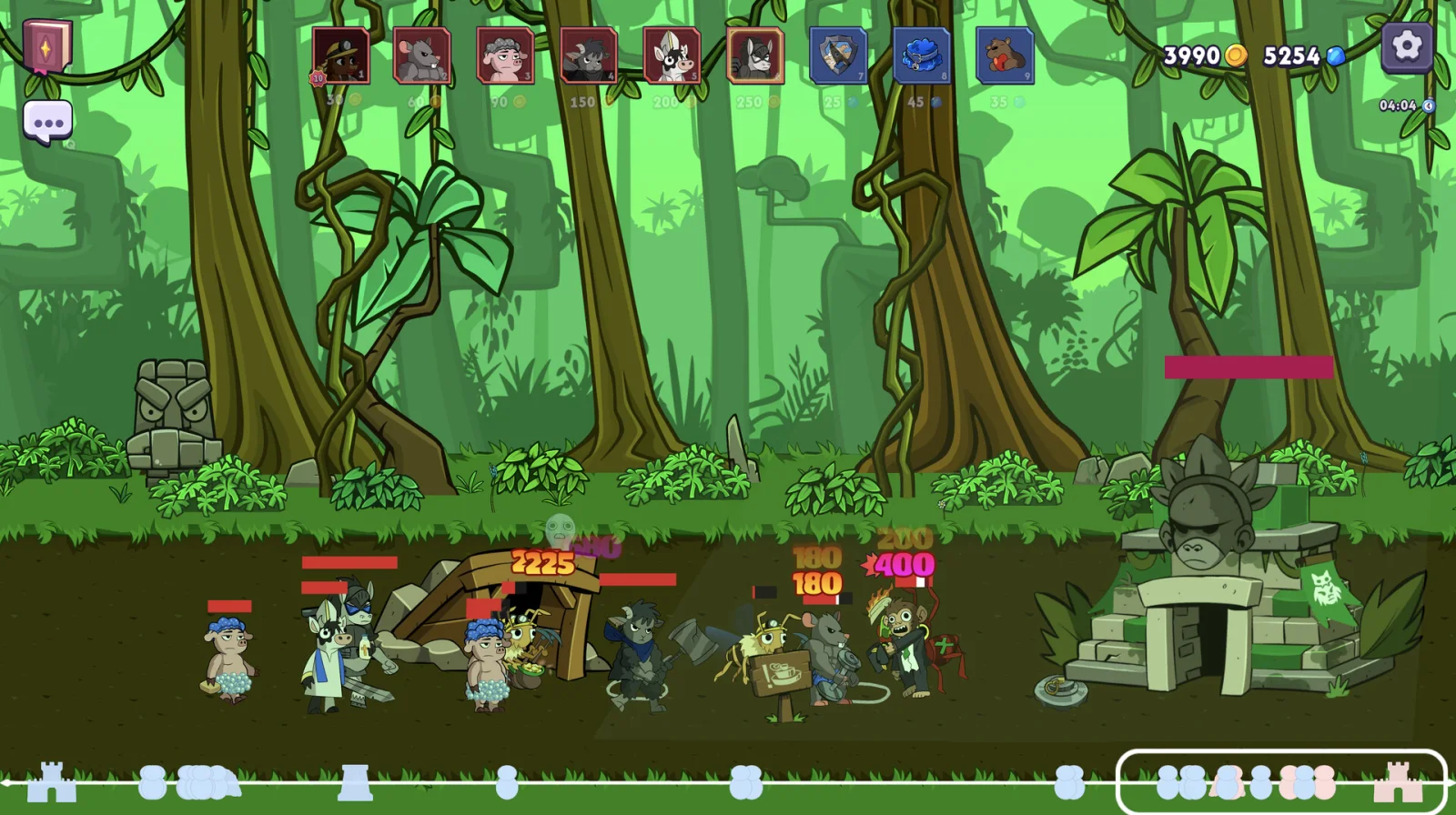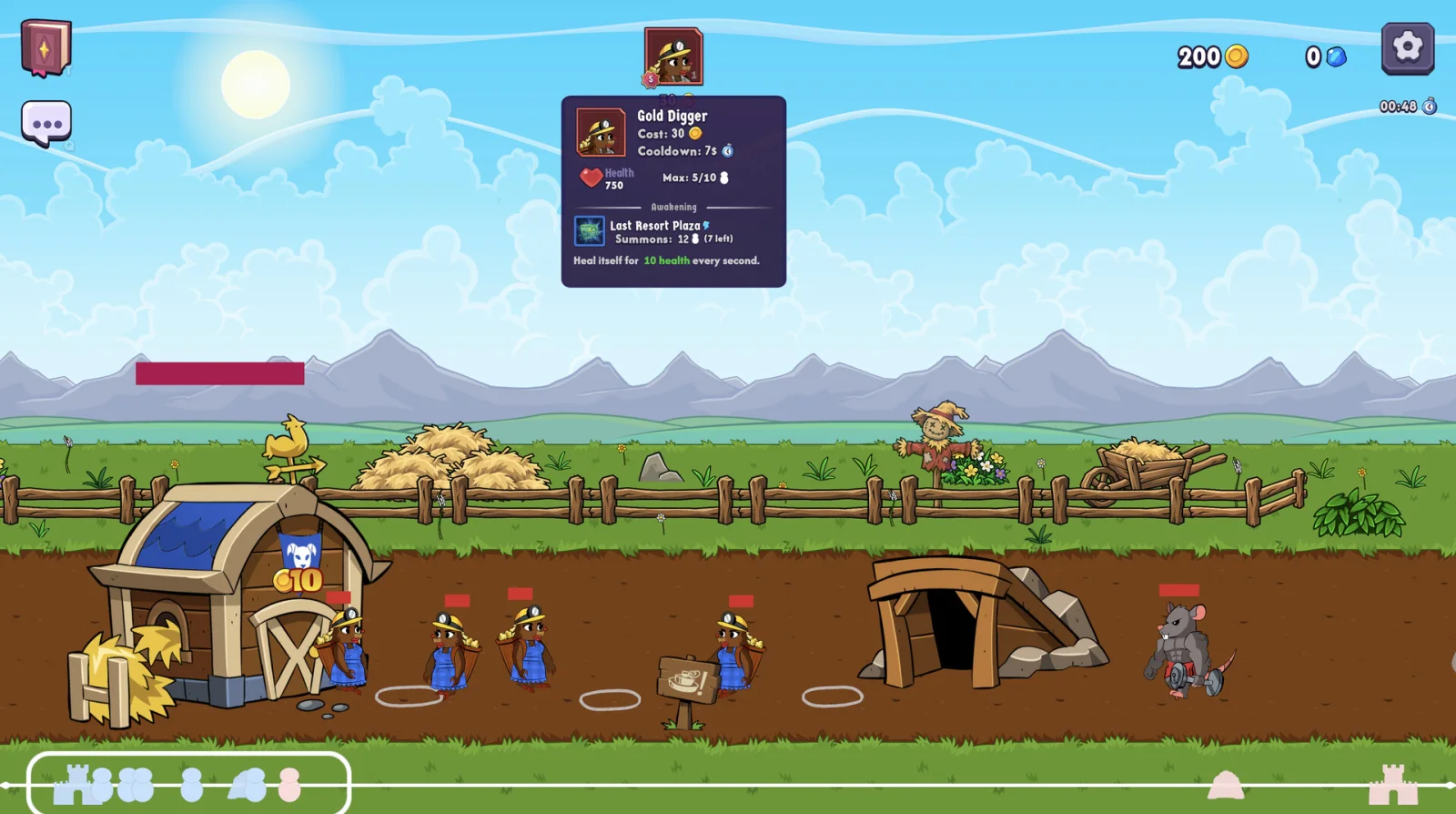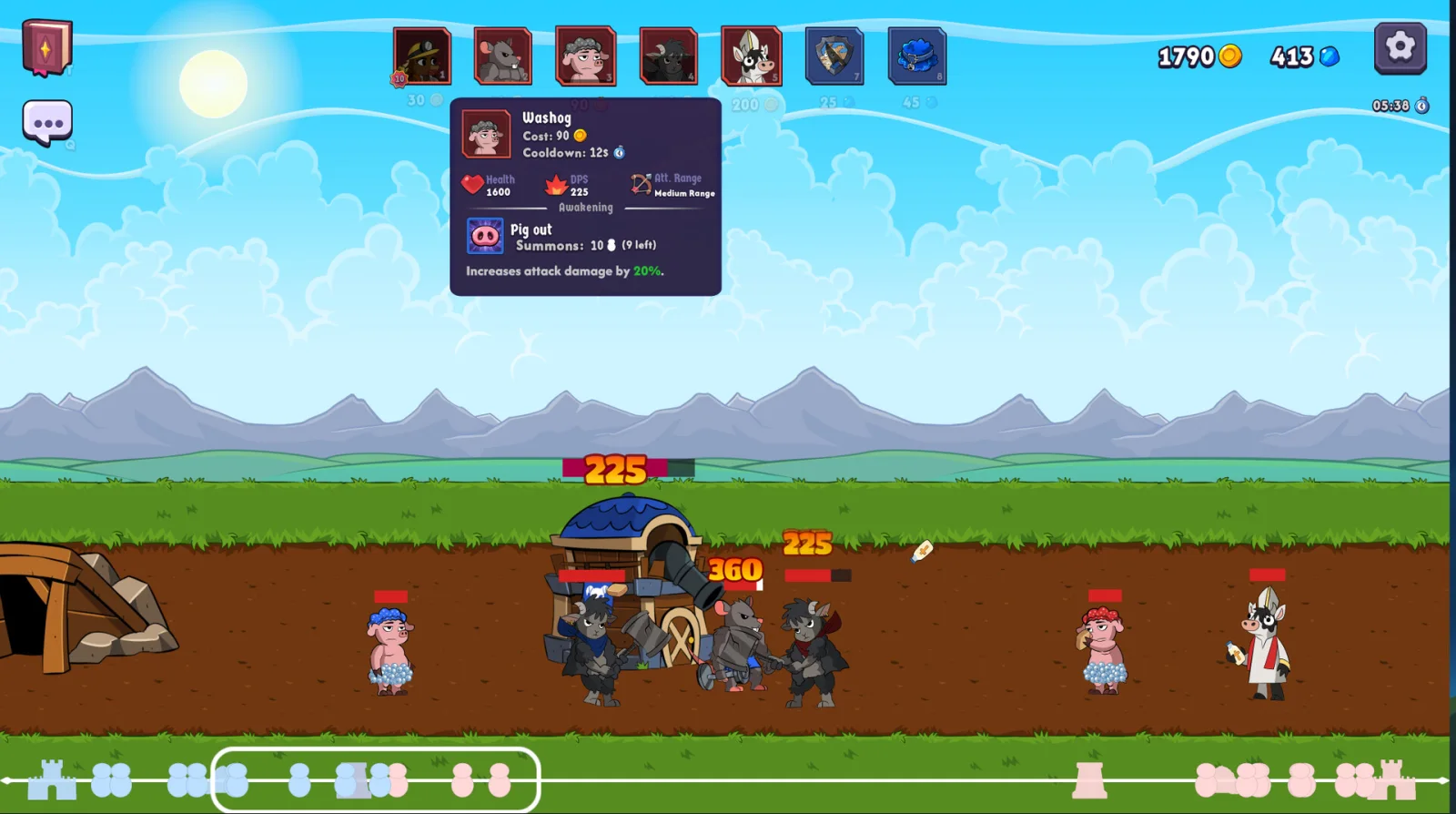
Stay in Your Lane is an announced real-time strategy game from developer and publisher Sol Elan, currently planned for release in Q4 2026 on Windows and macOS via Steam. Its central proposition is unusually narrow in the useful sense: the entire conflict is intended to unfold along one battlefield lane. Rather than putting players in charge of every individual soldier, the announced design has them make larger strategic decisions—building an economy, selecting upgrades, unlocking units and spells, and then watching those choices meet an opposing force.
That is a clear design statement, but it is not yet evidence of a finished game. There are no supplied hands-on notes, match recordings, balance data, or technical impressions to establish how responsive, readable, varied, or robust the final implementation will be. The worthwhile question, then, is not whether Stay in Your Lane has already solved the problems of compact RTS design. It is whether its announced systems appear capable of making a single lane sustain meaningful choices under pressure.
An RTS built around a deliberately small battlefield
The official description presents the lane as the game’s defining constraint. Rivals, armies, and old enemies are said to stand between protagonist Buck and the end of a road he is determined to travel. Mechanically, every decision is framed as either pushing the conflict forward or allowing the opponent room to breathe. The premise links the narrative image of an obstructed road to the strategy layer: advancement is not a background objective, but the stated point around which the whole battlefield is organized.
One lane can be a demanding structure rather than a simplification. In a broader RTS map, decision-making may involve scouting, expansion locations, flanking routes, territory control, and simultaneous fights. Stay in Your Lane’s announced model appears to concentrate that attention into an economy-to-army-to-push loop. If the game makes unit timing, positioning in the lane, spell use, defensive preparation, and technology selection interact cleanly, the absence of multiple fronts could turn each visible contest into a highly legible contest of commitment.
That possibility depends on information the current announcement does not provide. It does not specify the lane’s scale, how armies acquire targets, the degree of player control over movement or formations, the resource cadence, the limits on unit production, or how victory is determined in a match. Those details will substantially affect whether the lane feels like a tense strategic channel or merely a place where preselected forces collide. The announced avoidance of soldier-by-soldier micromanagement should not be read as an absence of skill expression; it simply places the prospective skill test in higher-level decisions. Whether those decisions arrive often enough and carry sufficiently distinct trade-offs is still an open question.
Gold Diggers put the economy at the center of the announced loop
Sol Elan identifies Gold Diggers as the means of building an economy, with their gold becoming the basis for the army needed to break through. The description is direct about the intended stakes: an early economic advantage can carry a match, while falling behind makes later decisions more difficult. This suggests an RTS structure in which production capacity and combat strength are closely linked, rather than an action game where resources are only a minor supplement to direct control.
Economy-first systems can create satisfying tension because spending choices are mutually exclusive in the moment. Resources committed to gathering may delay immediate military presence; resources committed to an early push may reduce the cushion for later unlocks or defenses. In a single-lane game, the pressure could be especially visible. A player who invests in Gold Diggers may be aiming for a stronger future, but that investment may also invite an opponent to contest the lane before the advantage pays off. Conversely, a player who concentrates on an immediate army may seek to turn the opponent’s investment window into a decisive opening.
That is design analysis, not a claim about confirmed balance. The public description does not say how Gold Diggers operate, whether they can be attacked, what economic choices exist beyond them, or how readily one side can recover from a deficit. The phrase “a small advantage can become an unstoppable push” communicates the intended drama, but it leaves a major practical question: how much counterplay will a trailing player retain? Strong snowball potential can reward clean execution and early planning; it can also make a match feel decided before the final advance. The answer will depend on costs, timing, defensive tools, spell strength, and the relationship between economy and combat that have not yet been detailed.
Technology, repeated summoning, and the prospect of long-term unit identity
The announced tech tree includes units, spells, and permanent upgrades. Alongside it sits one of Stay in Your Lane’s more distinctive stated ideas: units can be awakened by being summoned repeatedly, unlocking lasting abilities such as lifesteal, roots, stuns, and added durability. On paper, this ties repeated use of a unit to further strategic identity. A player may not simply be buying a body for the current clash; repeated investment could influence what that unit becomes over the course of a match or other unspecified context.
The potential attraction is that familiar production choices may acquire a second horizon. A unit selected for present needs could also be a candidate for a later awakening effect, making repeated deployment part of a larger plan. The named abilities point toward different battlefield functions. Lifesteal may support endurance, roots and stuns may affect enemy movement or action, and added durability may reinforce a front line. Since the game centers one lane, effects that interrupt, hold, or sustain a frontline could be unusually consequential: they may decide when an army can preserve momentum and when it must yield ground.
However, the announcement does not establish the exact awakening thresholds, whether all units awaken, how many abilities are available, whether players choose among them, or whether awakened traits persist beyond a given match. “Lasting” describes the announced abilities, but the scope of that persistence is not elaborated. Nor is it known how readily an opponent can respond to crowd-control effects or durable formations. These are not minor omissions. They are the details that would decide whether repeated summoning rewards flexible planning, encourages overly narrow production patterns, or provides a useful catch-up and specialization tool.
The permanent-upgrade language raises a related question of clarity. Permanent upgrades can make a tech tree feel consequential when their effects are understandable and their opportunity costs are legible. In a fast pressure-focused RTS, players need enough information to recognize why an upgrade matters before a lane collapse makes reconsideration impossible. Stay in Your Lane’s final interface, pacing, and tutorialization will therefore matter as much as the number of upgrades. None of those elements can be evaluated from the announcement alone.
Spells and defenses could define the rhythm of a push
Spells are positioned as timing tools. The announced examples include healing a collapsing frontline, strengthening an attack, punishing a crowd, and pulling enemies away from where they are needed. These examples imply that spell use is meant to interrupt an otherwise straightforward advance and create moments when the player’s decision timing matters alongside long-term resource and technology planning.
In conditional terms, that could be a productive fit for a game that de-emphasizes micromanaging individual soldiers. A well-timed spell can give a player a short, readable intervention point: rescue an investment that is about to fail, create an opening for a push, or punish an enemy that has committed too many forces in one place. A pull effect is particularly interesting within a lane-based battlefield because its value may not come from sending an enemy to another map region, but from disrupting where that enemy is needed in the immediate contest.
The game also announces turrets and landmines for base defense while players prepare their next push. Those tools suggest that defensive planning is intended to coexist with forward aggression. Their eventual role is unknown. They could function as insurance against an exposed economy, a way to buy time for technology, or part of a more deliberate base-defense layer. The announcement does not explain placement rules, limits, targeting, durability, visibility, or whether defenses interact with spells and unit abilities. It would be premature to assume that they provide reliable comeback options or that they meaningfully alter match flow. Still, their inclusion indicates that the stated design is not solely about sending units forward as quickly as possible.
Two announced factions, with room for meaningful asymmetry
Stay in Your Lane is planned to offer two factions: the Herd and the Verdant Grove. The Herd is described as sturdy and premium, while the Verdant Grove is described as fast and self-healing. Those short descriptions establish a directional contrast rather than a full faction breakdown. The Herd appears positioned around tougher, more expensive forces, whereas the Verdant Grove appears oriented around speed and sustaining itself through healing.
If those identities extend consistently across their economies, tech options, units, spells, and defenses, the faction choice could shape how each side understands pressure. A sturdy, premium faction might ask players to safeguard costly commitments and time a durable advance. A fast, self-healing faction might invite players to value mobility and prolonged pressure. But that is a conditional reading of the announced themes, not confirmation of a specific matchup structure. The available information does not identify either faction’s complete roster, resource model, strengths against particular tools, or whether their differences reach beyond the labels supplied.
Faction asymmetry also makes the awakening system worth watching. Repeated summons that unlock abilities could feel different depending on whether a faction already favors resilience or self-healing. The final design will need to communicate those relationships cleanly if faction identity is to be more than a cosmetic starting choice. At present, the announcement establishes intent but not the degree of strategic separation.
Campaign, skirmishes, and online matches are announced, not yet defined
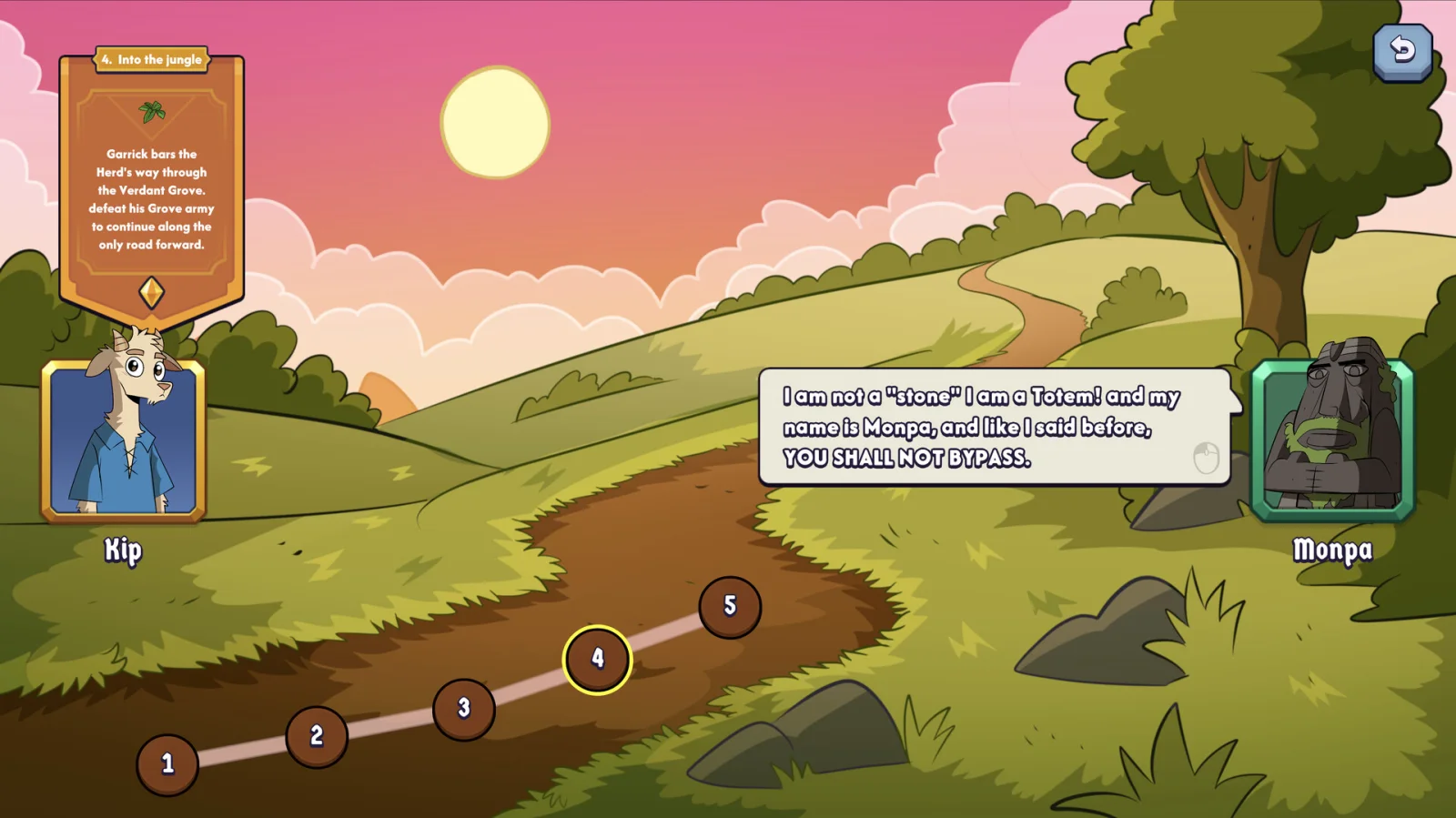
The game’s campaign follows Buck, whose revelation is that he must reach the end of the road. The official description says the route is personal and includes a rival who knows how to get under his skin. This gives the single-lane premise a character-focused framing, but it does not reveal the campaign’s structure, mission variety, length, presentation, or how narrative scenes are delivered. It is only established that a campaign is planned and that Buck’s forward motion is its narrative focus.
Skirmishes and online play against another player are also announced. These modes could be important tests of how the economy, awakening, faction identities, spells, and defenses work outside campaign scenarios. Yet the public information does not specify matchmaking, lobby options, network performance, ranking, map variation, custom rules, AI behavior, or any other operational detail. Online play is a stated feature, not a basis to judge competitive support today.
Readers interested in another announced strategy project built around compact battlefield decisions can find a Tower Tactics II design preview. That link is not a claim that the two games share systems; it is simply related reading on strategy design questions awaiting hands-on evidence.
What Stay in Your Lane still needs to prove
Stay in Your Lane has a coherent announced premise: take a real-time strategy game’s resource decisions, unlock paths, army composition, tactical interventions, and base protection, then focus them on one road where retreat and advancement are always meaningful. Gold Diggers, tech choices, repeat-summon awakenings, spells, two factions, turrets, landmines, a Buck-led campaign, skirmishes, and online opponent play give that premise several interconnected moving parts.
The key unknown is not whether the feature list contains recognizable RTS ingredients. It is whether the completed game will make their interactions clear, contestable, and varied. Can early economy be challenged without making every match a coin flip? Do awakenings broaden tactical planning rather than lock players into a single production answer? Will spells create timely reversals without obscuring cause and effect? Are the Herd and Verdant Grove meaningfully distinct in practice? Can defenses make preparation matter without stalling the central promise of forward pressure? And how does the campaign use its road-bound premise across its missions?
Those questions are appropriate for an announced design feature because the available evidence is an official listing and public feature description, not direct play. Sol Elan has presented a focused RTS concept with a planned Q4 2026 release window. Until playable evidence clarifies the pacing, balance, interface, and breadth of the final game, Stay in Your Lane is best understood as a clearly stated strategic design with its most important implementation questions still ahead.