Advent calendars are no longer limited to small chocolates behind numbered cardboard doors. The 2026 lineup puts licensed characters, miniature display pieces and reusable holiday décor at the center of the December ritual, with horror, Disney, Marvel, Star Wars, Bluey and The Nightmare Before Christmas all receiving their own countdown formats.
For collectors, the distinction matters. A calendar can be a consumable countdown, a toy set, a display-focused assortment, or an object intended to return every December. This year’s offerings include all of those approaches. The result is a broad field in which the door count alone tells only part of the story: some products last 24 days, others run for 12, 15, seven or even 25 days, and their contents range from candy and coffee capsules to pins, ornaments, flocked figures and brick-built scenes.
The strongest common thread is the move toward items that survive the holiday. LEGO calendars turn daily reveals into a build collection; Hallmark’s miniature ornaments are meant for repeated tree use; the Olaf plush becomes seasonal décor with a built-in countdown; and Disney’s cookie-pin set includes a tray for displaying the completed group. For a buyer weighing these against a conventional treat calendar, the practical question is simple: is the appeal in the daily surprise, the completed collection, or both?
Horror gets a 24-day miniature countdown
The 2026 Horror Advent Calendar takes the most straightforward collectible route. It contains 24 compartments, each holding a mystery miniature collectible. The stated mix includes masked figures, skeletons and supernatural creatures, putting the emphasis on an unfolding creature feature rather than food or a single building project.
“Mystery miniature” is the important phrase for prospective collectors. It indicates that individual contents are not identified in advance in the supplied details, so the calendar’s experience depends partly on uncertainty. That can suit someone who enjoys the reveal-first rhythm of a countdown. It also means a buyer looking for one confirmed character should not assume the calendar offers it. There is no supplied indication of specific character names, rarity tiers, materials, scale, or a checklist.
Its 24-day structure makes the horror calendar one of the closest entries to the familiar December-one-through-24 format. The theme, however, separates it from the overwhelmingly sweet and cheerful seasonal norm. Monsters, skeletons and masked miniatures make it a better fit for a shelf where Halloween fandom does not get packed away when the lights go up.
LEGO calendars turn the package into play
LEGO has three distinct licensed calendars in the 2026 selection, each using small daily builds and minifigure-scale characters to create a month-long project. That format is different from a blind collectible assortment: the pieces are intended to be assembled, and the eventual display or play value can be as important as opening each door.
Disney Princess: builds plus a board game
The LEGO Disney Princess Advent Calendar has 290 pieces and 24 daily surprises. Ariel, Cinderella, Moana and Mulan appear alongside buildable accessories and miniature versions of sidekicks including Sebastian, Mushu and Pua. Its most unusual feature is what happens after the countdown: the packaging converts into a board game for as many as eight players.
Related coverage includes 2026 Advent Calendars Bring Horror, Disney, LEGO and Luxury to December.
That transformation gives the box a second job rather than treating it as disposable packaging. It is also a reminder that “collectible” does not always mean “display only.” In this case, the reveal sequence feeds into a shared activity. For households with multiple Disney fans, the board-game element may be a more useful factor than a single figure count.
Star Wars: Mandalorian holiday wear and small spacecraft
The LEGO Star Wars Advent Calendar draws from The Mandalorian and contains 293 pieces. Mando and Grogu wear matching holiday sweaters, each printed with the other character’s likeness. The lineup also includes Moff Gideon, Jawas, miniature spacecraft, a festive X-wing and brick-built creatures.
The appeal here comes from the collision of familiar franchise imagery with deliberately seasonal variations. A festive X-wing and sweater-clad Mando and Grogu are not simply neutral versions of characters and vehicles; they make the calendar’s holiday framing part of the collection. That is useful for collectors who enjoy seasonal displays, but it is also worth remembering that this is a themed set rather than a general survey of the series’ cast.
Franchise merchandise often works best when it gives an established setting a new frame without losing the recognizable icons that made people care about it. That relationship between a fictional world and the objects built around it is part of the wider conversation about durable entertainment properties, including why worldbuilding can shape the long-term pull of an IP.
Marvel: 317 pieces of superhero winter nonsense
The LEGO Marvel Advent Calendar brings together Spider-Man, Iron Man, Wolverine, Captain America, Ghost-Spider and Doctor Doom across 24 days. It has 317 pieces and is recommended for ages 6 and up. Its seasonal builds include Spider-Man on skis, a snowball cannon, an X-Jet sleigh and a Christmas tree built around Wolverine’s claws.
Of the three LEGO options, Marvel has the largest cited piece count. That is not automatically a measure of value or complexity, but it does give shoppers a concrete comparison point: 317 pieces versus 293 for Star Wars and 290 for Disney Princess. More importantly, all three have a 24-door cadence, while their themes point toward different uses: Disney Princess includes a multiplayer board game, Star Wars leans on Mandalorian-specific holiday designs, and Marvel emphasizes a multi-hero seasonal scene.
Disney’s countdowns span pins, flocked figures, plush and ornaments
Disney-related calendars are particularly varied in 2026. Rather than one uniform product type, the lineup covers display pins, small vinyl-style figures, flocked character figures, candy, plush décor and ornaments. A collector should therefore start with format, not only fandom.
The Disney Christmas Cookies 24-Day Advent Calendar is a limited-edition $275 set with 24 mystery collectible pins designed like Christmas cookies. Every pin is presented on a miniature baking pan, and the calendar itself is shaped and packaged as a festive oven. A display tray is included for showing the completed set after Christmas.
For physical collectors, this is a notably presentation-driven entry. Pins have a clear after-countdown home in the supplied display tray, while the cookie-and-baking-pan motif carries through the individual pieces and the outer box. As with the horror calendar, the pins are mystery reveals; the information provided does not name all 24 designs. Its $275 price is also stated plainly, making it one of the higher-cost pop-culture calendars listed.
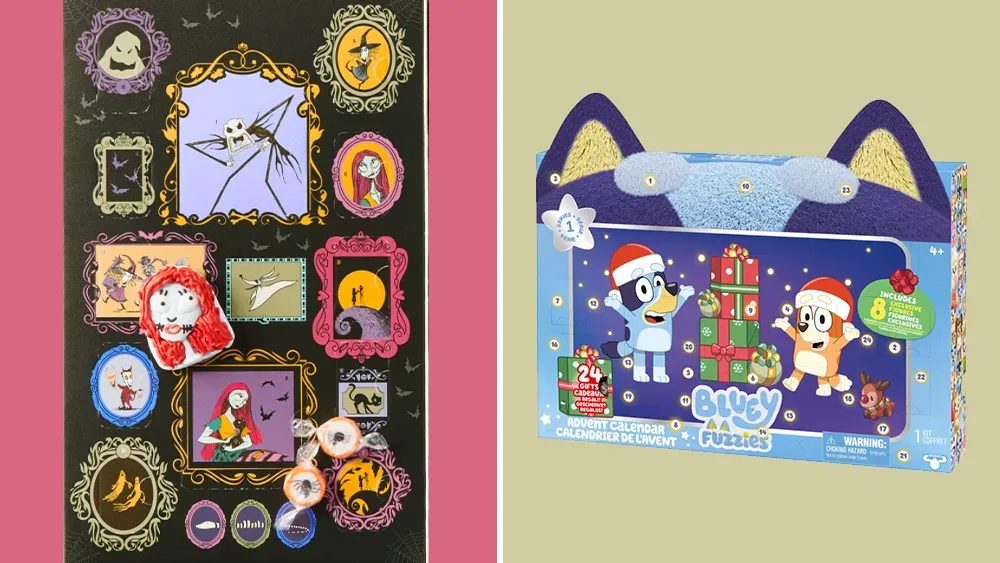
The Bluey Fuzzies Advent Calendar provides 24 days of surprises, including eight exclusive flocked figures. “Flocked” describes a surface finish with a soft, fuzzy texture rather than standard smooth plastic. Bluey, Bingo, Bandit, Chilli, Muffin and other characters appear in festive attire. The calendar’s collectible proposition is concentrated in those eight exclusive figures, although the supplied details do not itemize every other surprise.
Funko’s Bitty Pop! Disney Princess Holiday Advent Calendar takes a more explicitly modular approach. Its 24 doors contain 10 tiny figures, nine stackable display pieces, three holiday accessories, and cases intended for a keychain and pin. The stackable displays make the set’s presentation component clear: the calendar is not only about finding mini figures but also about arranging them. Buyers should note the stated breakdown rather than assume every door contains a figure; 10 of the 24 reveals are tiny character figures.
For a less miniature-focused option, the Olaf Plush Christmas Countdown Calendar is an 18-inch plush Olaf in a Santa hat. It has 12 numbered pockets and a soft Sven marker moved from day to day. This is a reusable decoration, not a 24-item cache. Its appeal rests in a tactile countdown object that can remain part of a seasonal display, particularly for younger Frozen fans.
Halloween Town offers either sweets or repeat-use decorations
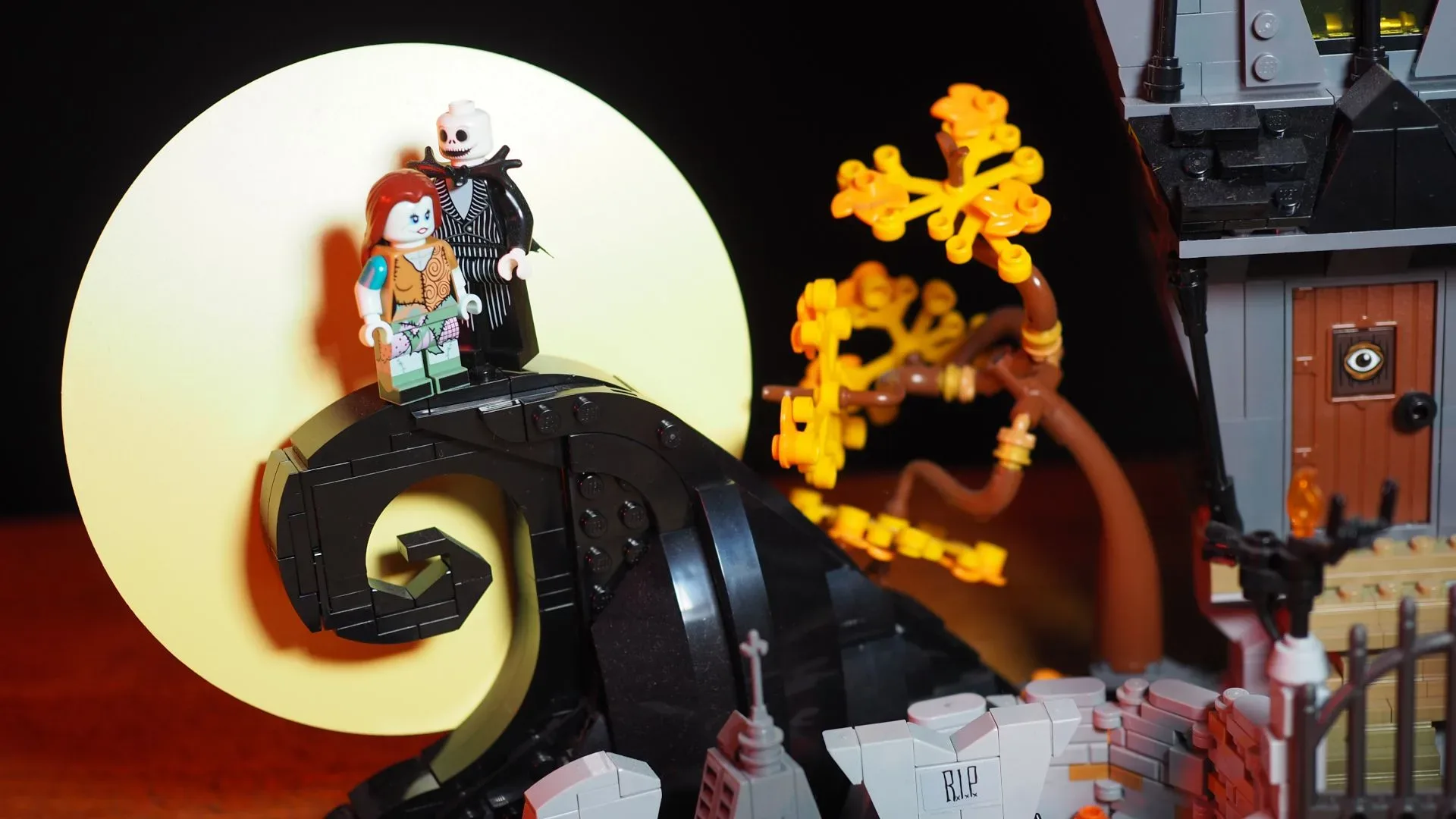
The Nightmare Before Christmas appears in two sharply different formats. The 12-day Williams Sonoma countdown centers on edible treats: Jack and Sally marshmallows, gummy spiders, sour worms, black licorice and pumpkin-shaped sweets. It is a compact option for someone who wants the film’s character and mood without needing more objects to store after December.
Hallmark’s The Nightmare Before Christmas Countdown With 12 Mini Ornaments makes the opposite choice. It contains 12 shatterproof miniature ornaments, with one character-themed decoration revealed each day. Because the items are intended for a Christmas tree, the calendar has a built-in annual reuse case. “Shatterproof” is a practical descriptor here: it indicates ornaments designed to avoid the breakability associated with more fragile decorations, though no specific material is identified.
For buyers deciding between the two, the split is clean. The candy calendar is a 12-day themed snack experience. The ornament calendar is a 12-day path to a recurring tree collection. Neither needs to be treated as the definitive option; they serve different habits and different storage realities.
How to choose a 2026 pop-culture calendar
The most useful way to compare these products is to separate three kinds of value: countdown value, meaning how much enjoyment comes from opening one door at a time; completion value, meaning what the set becomes after the final door; and reuse value, meaning whether its contents or package have a role next year.
- Choose mystery-driven miniatures if the reveal itself is the point: the horror calendar and Disney cookie pins make uncertainty part of their design.
- Choose LEGO if you want incremental building and a finished seasonal scene. The Disney Princess box adds a board game, while Star Wars and Marvel use franchise-specific holiday twists.
- Choose ornaments or plush décor if annual reuse matters most. Hallmark’s 12 ornaments and Olaf’s 12-pocket plush are explicitly designed to return to seasonal decorating.
- Check the stated day count before buying. A calendar does not have to run 24 days: this group includes 12-day and 24-day examples, while other 2026 calendars range from seven to 25 days.
- Check what is actually itemized. The Bitty Pop! calendar identifies its figure, display-piece and accessory totals; the Bluey selection specifies eight exclusive flocked figures; several mystery formats do not provide full revealed-content lists.
The broader 2026 calendar market also contains luxury beauty, candles, stationery, cocktails, coffee and wellness options, but the licensed pop-culture side is where the collecting logic is most visible. A daily door can now lead to a pin ready for a tray, a tiny figure with a display piece, a brick-built sleigh, a plush countdown marker or an ornament for next year’s tree.
That does not make every calendar a permanent collection, and it should not. The right one depends on whether December’s pleasure lies in snacks, surprise, building, display or ritual. But the year’s horror, Disney, LEGO and Marvel entries show that a countdown can be more than a pre-Christmas diversion: it can be a deliberately finite event that leaves behind something tangible when the last door is open.