Buying a used copy of Super Mario 64, The Legend of Zelda: Ocarina of Time, Shadow of the Colossus, God of War, Phoenix Wright: Ace Attorney or Final Fantasy III is partly a condition check and partly a reading exercise. A listing may identify the title correctly while leaving the region, edition, contents, authenticity and working status unclear.
Treat every marketplace description as a claim set. Separate what the seller explicitly states, what the photographs visibly show, what remains unknown and what you are merely assuming. That process is more reliable than judging a game from one attractive label photograph or a screen showing the title menu.
Start with the buyer’s actual goal
Before comparing listings, decide what you are buying. A player who only wants a working copy has different priorities from a collector completing a North American box set. A cartridge with a worn label may be acceptable for play but unsuitable for a display shelf. A disc in a replacement case may work perfectly while failing a complete-in-box collecting goal.
Write down your minimum requirements before messaging sellers. You may require an original cartridge, a readable label, a tested save function, a matching regional edition, an original case, a manual or a return option. If you cannot accept an unverified item, do not let a low headline price turn an untested listing into an apparent bargain.
Your use case also determines which unknowns matter most. A DS buyer may care whether a cartridge is standard Nintendo DS software, DSi-enhanced software or DSi-exclusive software. A PS2 buyer may care about the edition, disc surface and console region. An N64 buyer may care about reproduction status, shell alterations and whether the cartridge saves reliably. A collector may need evidence that the box and inserts belong with the game rather than simply being present in the same photograph.
- Define whether your priority is playability, completeness, regional matching, authenticity, display condition or a combination.
- Set non-negotiable requirements before contacting the seller.
- Treat every unresolved requirement as a cost or risk, not as a detail that will probably be fine.
Translate vague listing language into questions
Words such as works, tested, untested, as pictured, complete, rare, OEM, authentic and minor wear do not communicate enough by themselves. More importantly, they often omit the detail you need. Tested might mean only that the seller saw a title screen once. It may not mean that the game loaded repeatedly, saved successfully or ran on hardware relevant to you.
Ask questions that require observable answers. Instead of asking whether a game works, ask which hardware model was used, whether it reached the title screen, whether a save was created and loaded, and whether any freezing, missing audio or read errors occurred. Instead of asking whether a copy is complete, ask the seller to name each included component: cartridge or disc, case, cover art, manual, inserts and promotional material.
As pictured is not a condition description. It may exclude items hidden by the angle, and it does not explain whether the photographed item is the one being shipped. Minor wear should prompt a request for close photographs of the relevant surface. Authentic is a claim to investigate, not proof that the seller has checked the board, disc or packaging history.
- Replace broad questions with questions about a specific test, component or defect.
- Ask what complete includes rather than accepting the word by itself.
- Ask whether the photographs show the exact item being shipped.
- Treat untested as unknown, not as a soft synonym for working.
Build an identity record before comparing copies
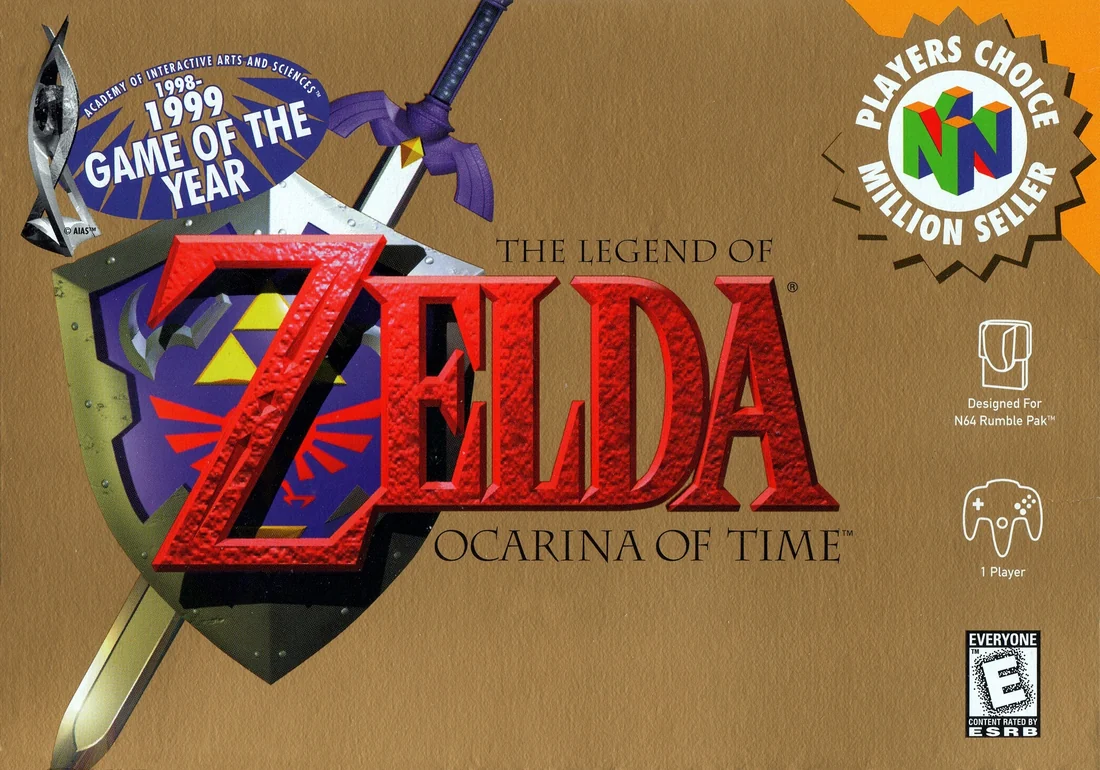
A game title alone is insufficient identification. Record the platform, region, release family, edition and physical format for every candidate. Super Mario 64 and The Legend of Zelda: Ocarina of Time should be identified as Nintendo 64 cartridges, while Shadow of the Colossus and God of War should be identified as PlayStation 2 discs. Phoenix Wright: Ace Attorney and Final Fantasy III should be identified as Nintendo DS game cards, with the regional release and included packaging noted separately.
Edition matters even when the software is broadly the same. A PS2 listing may show an original release while shipping a Greatest Hits copy, or it may use an original cover with a replacement case. The difference can matter to a collector, a buyer matching a library or anyone comparing packaging condition. The same principle applies to DS cases and manuals: a cartridge can be genuine while the surrounding materials are replacements.
Do not assume that a title with a familiar name is the edition you want. Ask for photographs of the front and back of the physical item, readable catalog markings where available, the cartridge or disc itself, and every included component. If the seller’s title, description and photos identify different versions, pause until the contradiction is resolved in writing.
- Record title, platform, region, edition and physical format.
- Separate the game from its case, cover art, manual and inserts.
- Compare the listing title, written description and photographs for contradictions.
- Ask which parts are original and which are replacements.
Read photographs as evidence, not authentication
A listing photo can establish that something was photographed. It cannot automatically establish that the object is genuine, functional or the same item that will be shipped. Stock images, catalog artwork and copied screenshots are especially weak evidence. Used-item listings should show actual-item photographs, and you should be cautious when every image looks like promotional material or a generic reference picture.
For an N64 cartridge, request clear views of the front, back, cartridge edge, label and visible fasteners. These views can reveal missing plastic, heavy wear, label replacement, corrosion or an unusual shell, but they cannot prove board authenticity by themselves. A matching front label is not enough. A screw that looks familiar is not enough. Even a board photograph may require specialist knowledge and still cannot establish the complete history of the item.
For DS games, ask to see the cartridge front, back and edge contacts at a useful distance. For boxed copies, request the inside of the case and photographs of the manual and inserts. For PS2 games, request the data side of every disc, not only the printed top, along with the case interior and edition markings. A photo of a game running on a screen supports a boot claim only when the physical item is also clearly identified.
- Reject stock photography when you need condition evidence.
- Request fresh photographs of the actual item from several angles.
- Use photos to identify inconsistencies and defects, not to declare authenticity.
- Ask for a dated or otherwise specific photo when several similar copies are listed.
Cartridge checks for N64 and DS games
Cartridges have different failure and identification risks from discs. Ask whether the seller knows the item to be an original cartridge, a reproduction, a modified copy or an unverified item. Do not assume that a game booting once settles the question. A reproduction can display the expected title, and an original cartridge can have a damaged connector, intermittent fault or save problem.
For Super Mario 64 and Ocarina of Time, ask whether the seller tested repeated insertion, booting and saving on compatible hardware. You do not need the seller to perform invasive work. You do need a precise description of what happened. Ask whether the label is original or replaced, whether the shell has been changed, and whether there are cracks, corrosion, missing screws or evidence of liquid exposure.
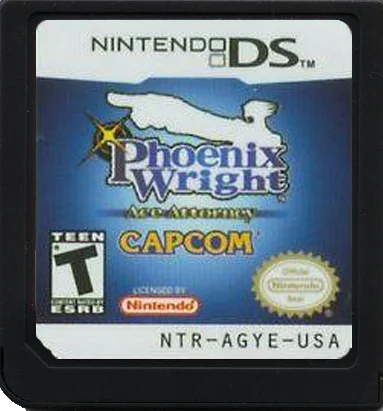
For Phoenix Wright: Ace Attorney and Final Fantasy III, ask whether the cartridge is an original licensed Nintendo DS card and whether it was tested on a DS or DS Lite, and, when relevant, a DSi-family system. Older Nintendo DS and DS Lite software is generally region-free, while DSi-exclusive cards can be region-locked. Bent or contaminated connector pins can prevent a card from working and may damage the system. Unlicensed products should not be treated as equivalent to original licensed cards.
A failure on one console does not automatically identify the faulty component. Nintendo recommends trying a suspect card in another compatible system when possible. That makes tested more useful when the seller states both the system used and the result, but it still does not replace authenticity evidence.
- Ask whether the cartridge is original, reproduced, modified or unverified.
- Ask about label replacement, shell replacement, corrosion, cracks and liquid exposure.
- For N64 games, ask specifically about saving as well as booting.
- For DS games, confirm the card type, region and hardware used for testing.
- Do not use one failed or successful test as definitive authentication.
Disc checks for PS2 games
For Shadow of the Colossus and God of War, inspect the data side rather than relying on the printed label. Scratches, dust, dirt and fingerprints can affect playback, and minor wear is too vague to evaluate without a close, well-lit photograph. Ask whether the disc has been resurfaced, polished or repaired. Resurfacing is not automatically disqualifying, but it is relevant history and should be disclosed when known.
Ask what the seller’s test involved. Did the disc reach the title screen? Did it load beyond the opening sequence? Were there read errors, unusual noises or freezes? Was the test performed on a PS2, a backward-compatible console or another drive? A boot screen establishes less than a sustained loading test, and no test can promise indefinite future operation.
Check whether the printed disc markings match the described game and edition. Ask whether the case is original, whether the cover art is original and whether the item is an original release or a Greatest Hits edition. A readable disc, intact case and correct title marking are useful consistency checks, but none alone proves that the disc is original or that the package is complete.
Do not ask a seller to open the console or perform risky repair work to prove a game. The useful evidence is external: close photographs, a clear test description and a return process that protects you if the item arrives materially different.
- Request a close photograph of the complete data side of every disc.
- Ask whether the disc was resurfaced and whether any read errors occurred.
- Confirm the console and test performed, including loading beyond the title screen.
- Check original versus Greatest Hits status and replacement case or artwork.
- Do not treat a clean-looking disc as a guarantee of successful playback.
Compatibility and regional traps
Compatibility is not a single yes-or-no property. It depends on the game format, console family, region, edition and any modification or unusual hardware involved. A seller saying works on my system has not necessarily confirmed that the copy suits your setup.
Older DS and DS Lite software is generally region-free, but DSi-exclusive cards can be region-locked. Ask which card category is being sold and which system was used for testing. Do not generalize that rule to every Nintendo platform or every DS-related product. An unfamiliar or unlicensed card deserves additional caution rather than a confident assumption that it behaves like a standard release.
For PS2 games, confirm the software region against your console and display setup, especially if the listing is imported or your console has an unusual configuration. Regional compatibility and video behavior can vary with the console model, software edition and modifications. For N64 cartridges, ask the seller to identify the regional release and disclose any shell or modification history rather than assuming a universal rule.
Compatibility is also practical. If you have only one console and the listing is untested, the risk is higher than if you can test on another compatible system. If the game is expensive or evidence conflicts, a qualified specialist or established retro retailer may be more appropriate than relying on an uncertain marketplace listing.
- Identify your console model, region and any relevant modifications before buying.
- Ask which exact hardware the seller used for testing.
- Keep original DS, DSi-enhanced and DSi-exclusive categories separate.
- Treat imported or modified hardware and software as compatibility questions, not assumptions.
Send a message that produces useful evidence
A good seller message is short, specific and easy to answer. It should request information that changes your decision rather than inviting generic reassurance. Keep the conversation on the marketplace so the listing, answers and photographs remain associated with the transaction.
You can adapt this request: Please confirm that the photos show the exact item being shipped. Identify the platform, region and edition, and list every included component. Is the cartridge or disc original, reproduced, modified or unverified? Please send fresh photos of the front, back, label or printed side, connectors or data side, and case interior. What hardware did you use to test it, and did it boot, load, save or show any errors? Please also disclose cracks, corrosion, replaced labels, resurfacing, odors, liquid exposure and replacement packaging.
The response itself is evidence about the transaction. A seller who answers clearly and supplies relevant photographs has reduced uncertainty, not eliminated it. A seller who ignores the questions, becomes defensive, changes the story or pressures you to act quickly has increased the risk. Do not move payment outside the marketplace to obtain a supposed discount or a more convenient arrangement. Mercari states that off-platform payment removes its ability to resolve an item that never arrives or is not as described.
- Ask one message covering identity, contents, condition, test method and defects.
- Keep answers and photographs inside the marketplace communication system.
- Save the listing and seller responses before purchasing.
- Treat refusal, pressure or contradictions as risk signals.
Calculate the delivered cost and protection window
The headline price is only one part of the purchase. Add shipping, marketplace buyer-protection fees, taxes, replacement cases, missing manuals, cleaning supplies, possible professional inspection and the cost of returning an item. If a supposedly complete copy needs a case, cover insert and manual, compare its delivered cost with a less ambitious copy that already meets your requirements.
Review the marketplace’s current buyer-protection and return rules before paying. Policies can change, and coverage is not the same as a warranty. eBay’s Money Back Guarantee may cover an item that arrives faulty, damaged or materially different from its listing, but it does not guarantee indefinite operation or independently authenticate a game. Claims depend on following the platform’s process, meeting its time limits and returning the same item in the required condition.
Mercari currently applies a Buyer Protection fee of 3.6 percent to the item price and buyer-paid shipping for applicable listings. Buyers have 72 hours after confirmed delivery to report an item that is not as described through the Help Center, and payment can be released after rating or when that period expires. The practical lesson is simple: inspect before rating. Check the item promptly, document the condition and do not assume that a seller’s no-returns wording overrides every platform rule or guarantees a successful claim.
Protection is strongest when the listing, messages, packaging and received item can be compared. It is weakest when you pay elsewhere, discard packaging, miss the reporting window or cannot show what was advertised.
- Calculate the checkout total, not only the listing price.
- Include missing components, replacement packaging and inspection costs.
- Read the current platform rules before purchase.
- Inspect before rating or closing the transaction.
- Keep the original listing, messages, packing materials and photographs.
Know when to stop and what to do when it arrives
Walking away is the correct decision when the evidence cannot support the use case. Stop if the seller uses only stock images, refuses actual-item photographs, cannot identify the platform or edition, contradicts the photographs, will not disclose whether the item is reproduced or describes a valuable game as untested while presenting it as a working copy. Also stop when the total delivered cost leaves no room for the condition risk or a possible return.
A sealed case, matching label, original-looking screw, clean disc or title screen can support consistency with a listing. None independently proves the contents, board, disc history, authenticity or long-term function. When evidence conflicts, do not solve the uncertainty by paying more or assuming the most favorable explanation. Choose a different listing or seek qualified authentication.
When the package arrives, photograph the unopened parcel and then document the item from every side before cleaning or altering it. Compare the game, label, disc, case, inserts and defects with the listing. Test promptly on suitable hardware, following safe user-level procedures and avoiding invasive repair. If the item is materially different, use the marketplace’s official help or return process within its stated deadline. Do not send it back until the platform tells you how to proceed, and do not substitute another copy.
The strongest purchase is not necessarily the cleanest-looking listing. It is the listing whose identity, condition, compatibility, cost and protection terms are clear enough for you to make a deliberate decision.
- Walk away from missing evidence, contradictions and off-platform payment requests.
- Do not authenticate a game from one visual feature or one software screen.
- Document the package and item before cleaning or testing.
- Use the platform’s official dispute or return process when the item is materially different.
- Keep the item unchanged until the platform provides instructions.
A careful used-game purchase is an evidence exercise. Translate vague claims into specific questions, identify the exact release, inspect the physical item, confirm the relevant hardware and calculate the complete delivered cost. The goal is not to eliminate every uncertainty; it is to know which uncertainties you are accepting.
If a seller will not provide the evidence needed for your stated use case, the listing has already answered the most important question. Preserve your buyer protection, keep payment on the marketplace and wait for a copy whose condition and identity can be evaluated honestly.