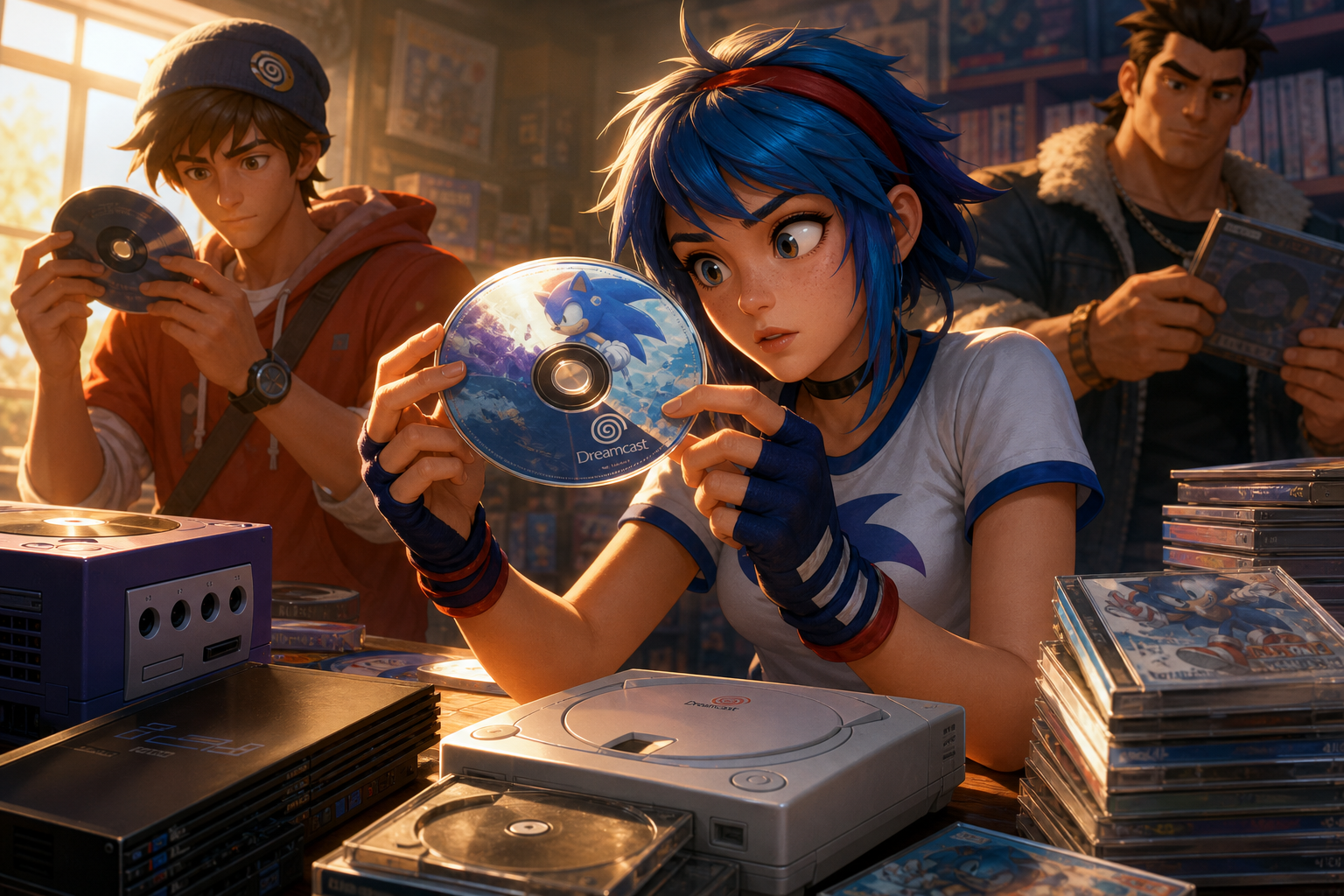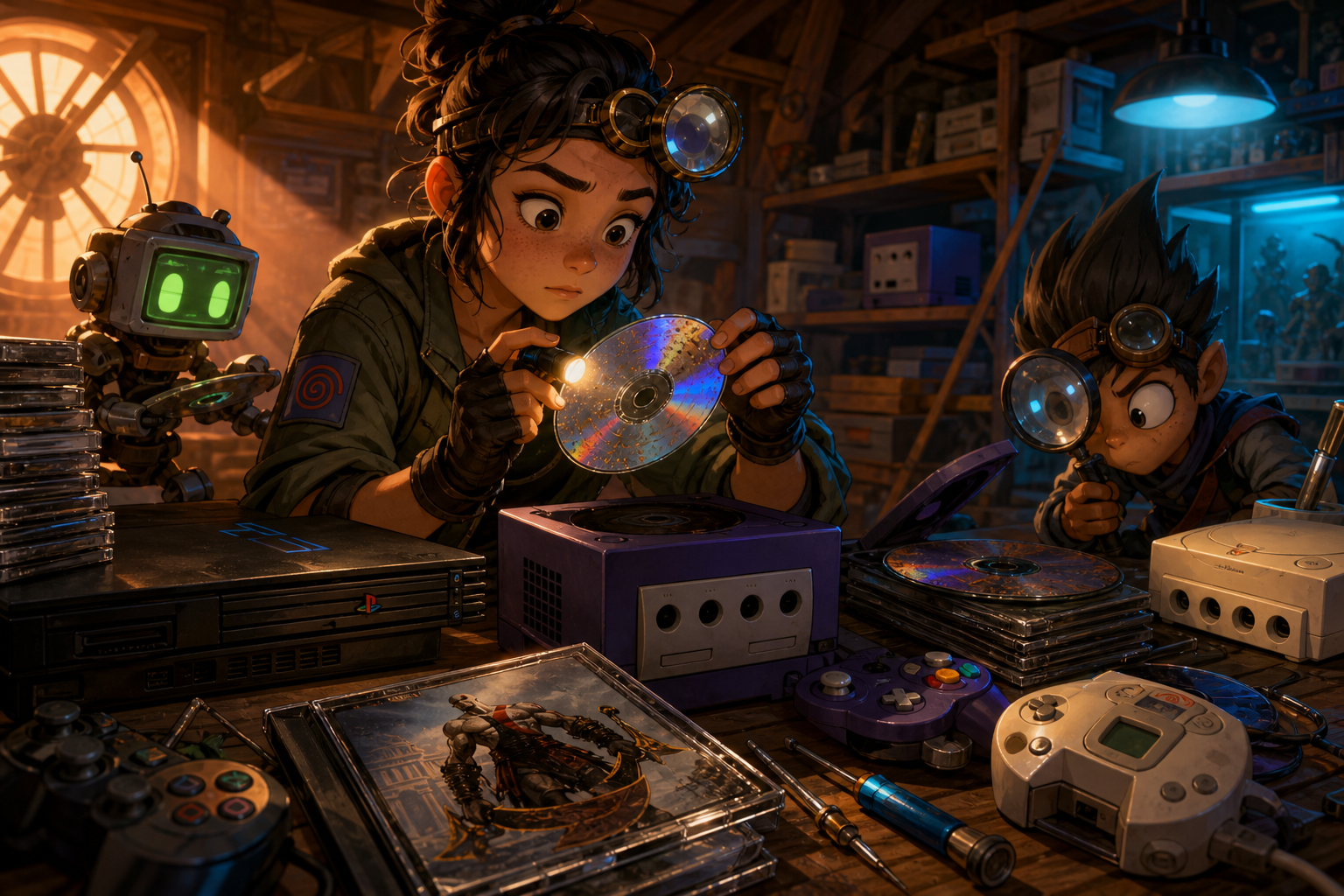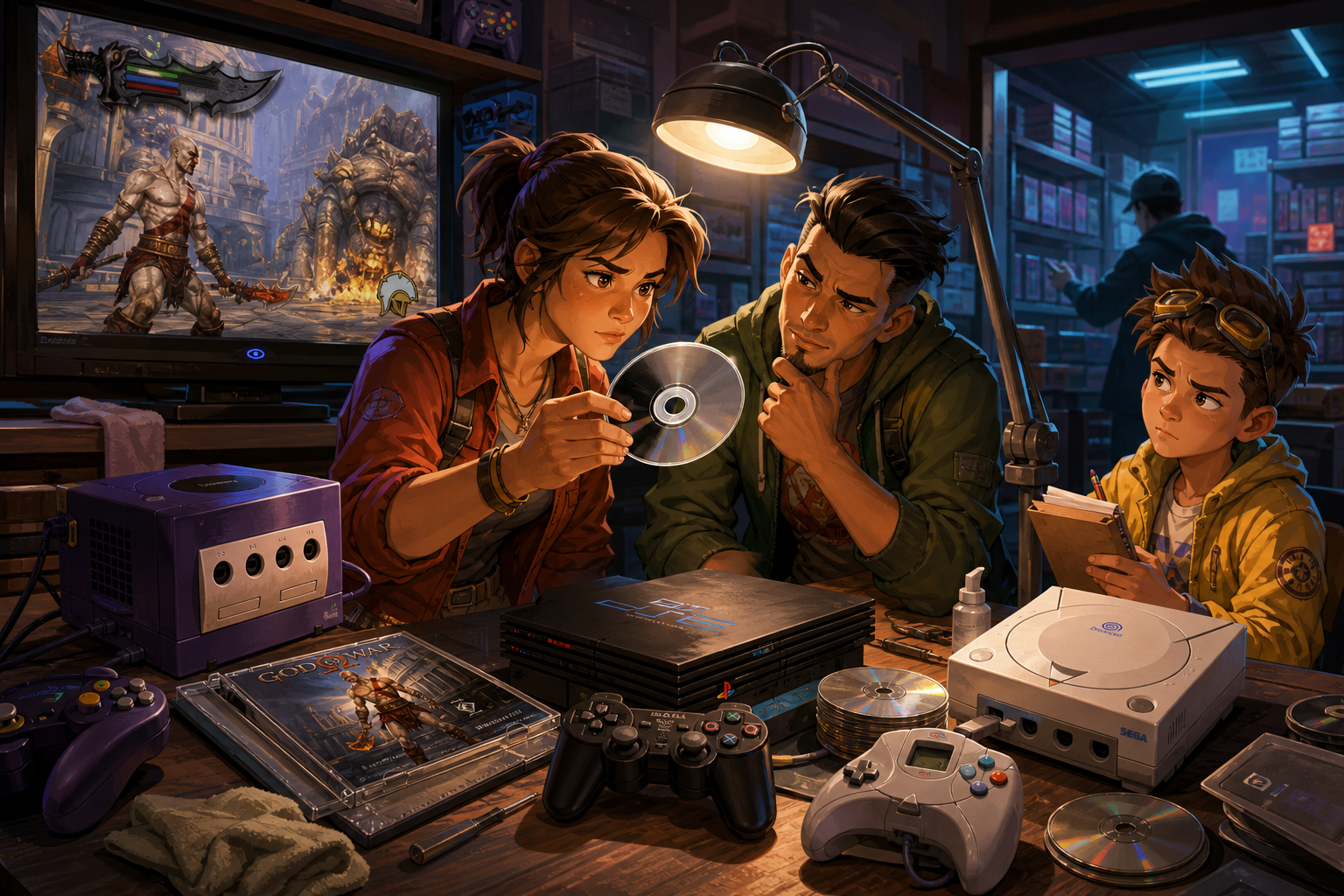
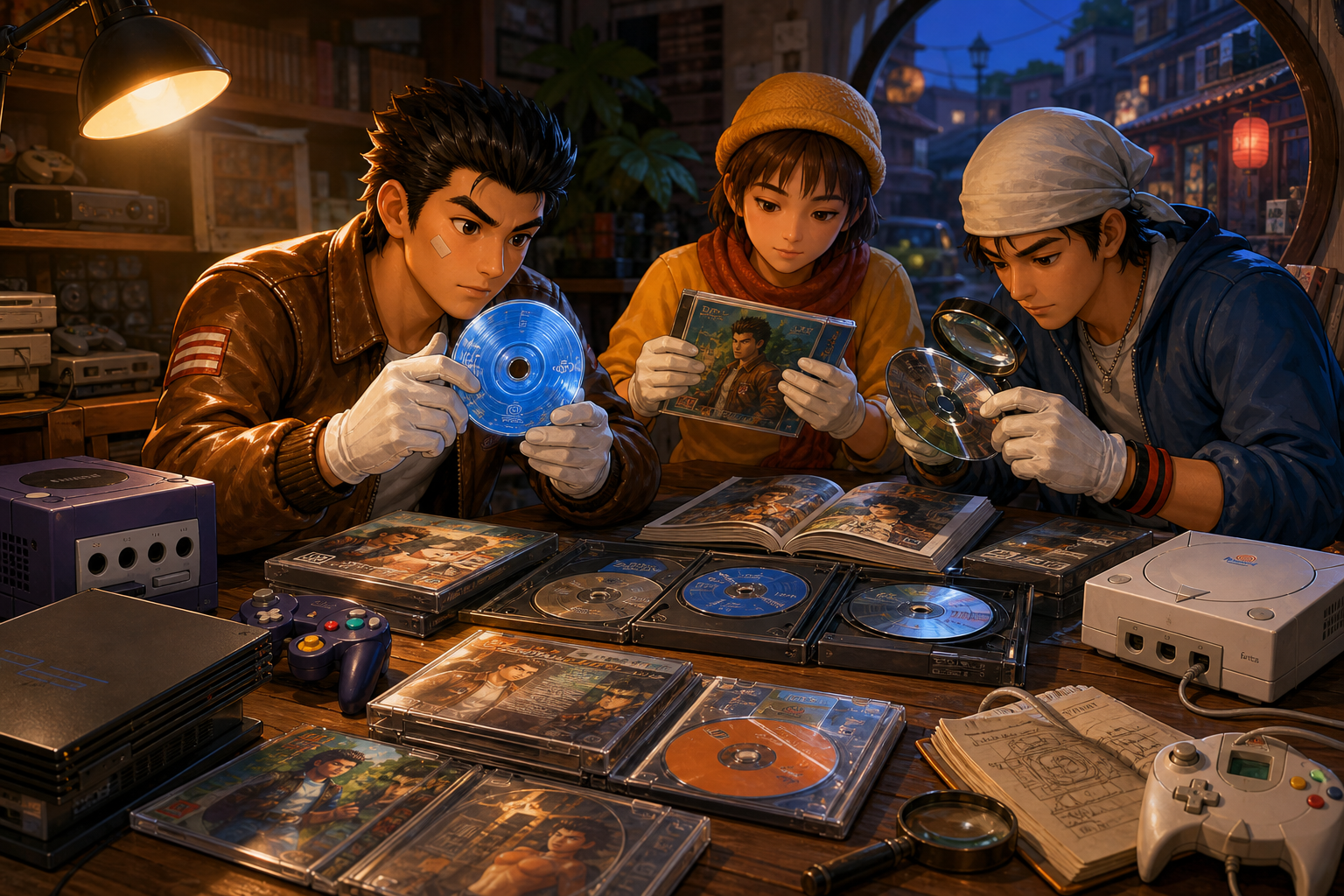
A case full of discs is not automatically a complete copy. Retro listings often combine a replacement jewel case, mixed-region artwork, a missing manual or discs from different print runs. The first decision is therefore not whether an item looks attractive, but what “complete” means for your collection.
You may want a playable copy, a game with its original case, a complete-in-box example for a particular region, or a specific first-release or budget variant. Those are different targets. Define yours before comparing listings, because a correct North American disc in a replacement case is a different purchase from an original-region complete package.
Define the edition before you inspect the listing
Write down the target platform, region and release family first. For the examples in this guide, that means identifying Nintendo GameCube, Sony PlayStation 2 or Sega Dreamcast, then deciding whether you want North American, Japanese or PAL packaging. Record the expected title, publisher marks, rating panel, language, barcode or product code and disc count where available.
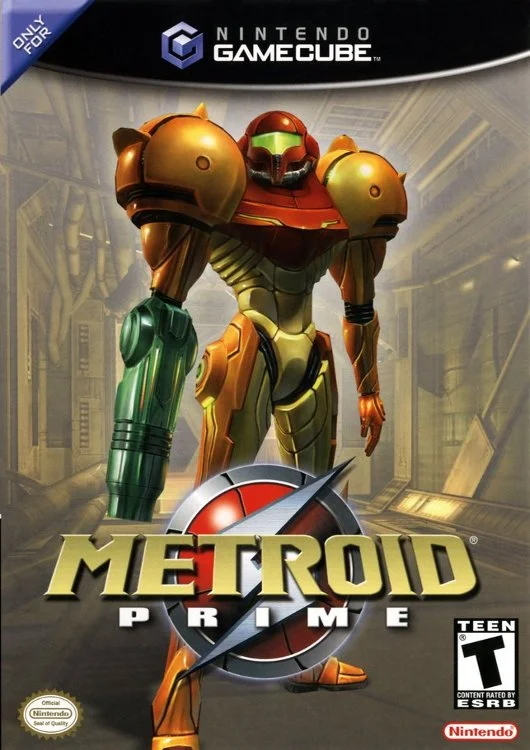
The six games provide useful contrasts. Mario Kart: Double Dash!! and Metroid Prime on GameCube, along with Shadow of the Colossus and God of War on PlayStation 2, are useful single-game-disc baseline examples. Sonic Adventure is a strong regional-comparison case because its Dreamcast packaging exists in multiple regional and boxed forms. Shenmue is the stress test because its gameplay is distributed across numbered discs, with the commonly cataloged North American package also associated with a separate Passport disc. Verify the exact target edition before applying that inventory.
Do not use the phrase complete until the edition scope is settled. If the region is unclear, use “edition uncertain.” If the game and case are present but paper contents are unresolved, describe it as “game and case” rather than complete in box.
- Platform and title identified
- Target region written down
- Release or budget variant identified where relevant
- Expected discs and components confirmed from matching references
- Unresolved parts labeled as uncertain rather than assumed
Build a component inventory, not a visual impression
Create a line-by-line inventory before looking at prices. Separate game discs, bonus media, manuals, registration cards, advertisements, inserts, tray pieces, cover art and the outer case. Mark each as required, edition-dependent or optional. This prevents a common mistake: treating every piece of paper found in a case as equally important, or assuming that every pictured bonus item belongs to the same release.
For GameCube examples, reference scans document separate front, back, disc and manual entries for Mario Kart: Double Dash!! and Metroid Prime. That evidence is useful for identifying what a particular regional package looks like, but an archive cannot prove that every other regional or reissue package used the same contents. Compare like with like.
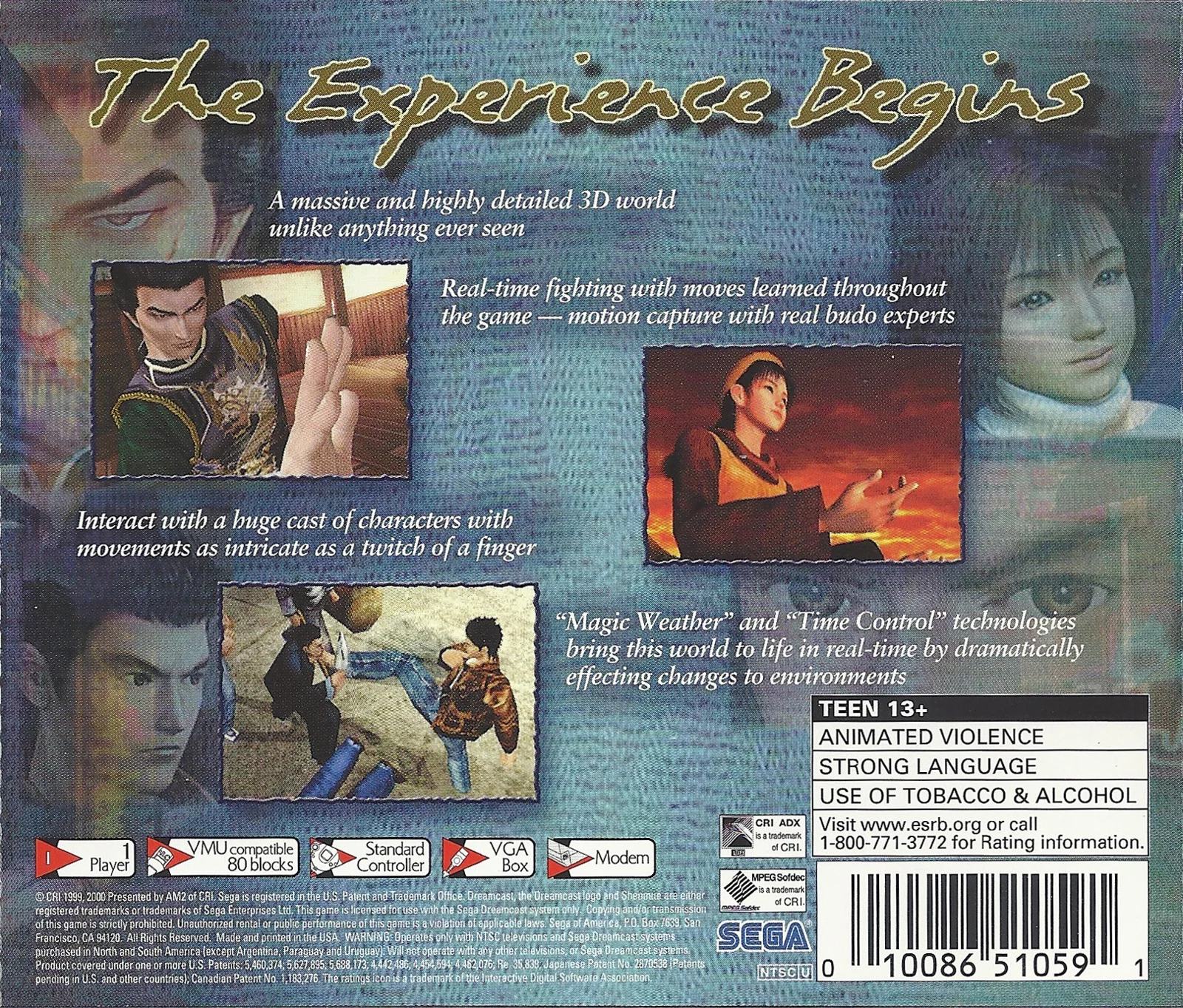
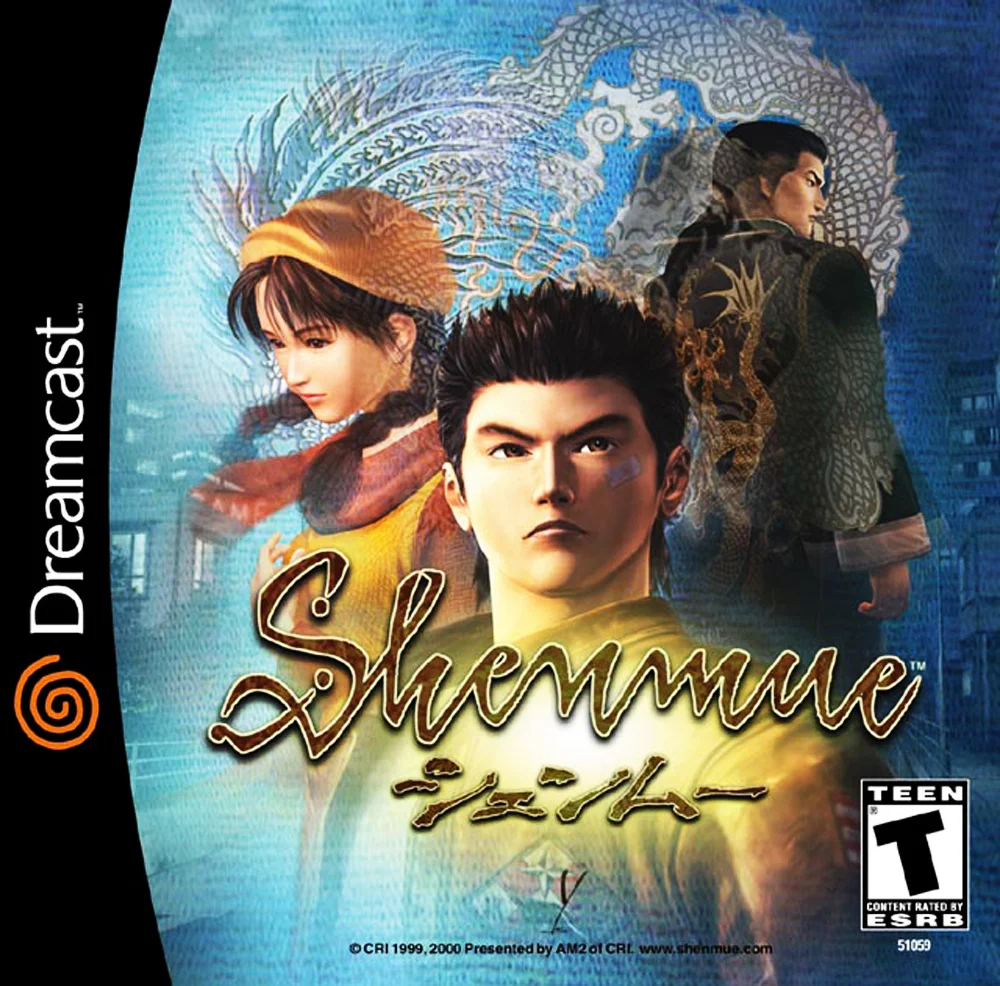
Dreamcast packaging deserves an interior inspection. Reference scans show separate front, back and interior entries for Shenmue and Sonic Adventure. A front cover alone cannot tell you whether the correct tray, spine insert or inner artwork is present. Photograph or request the case opened with every position visible.
For PlayStation 2, distinguish the original game package from later remakes or collections. The Shadow of the Colossus PlayStation 2 manual is tied to the original PS2 software and its memory-card saving instructions; it should not be used as proof that a later version has the same paper contents.
- Every disc has its own inventory line
- Manual and inserts are listed separately
- Tray, hub, hinges and back insert are checked
- Bonus or promotional media is identified by edition
- Case contents are compared with the same region and platform
Start with the disc labels and inner rings
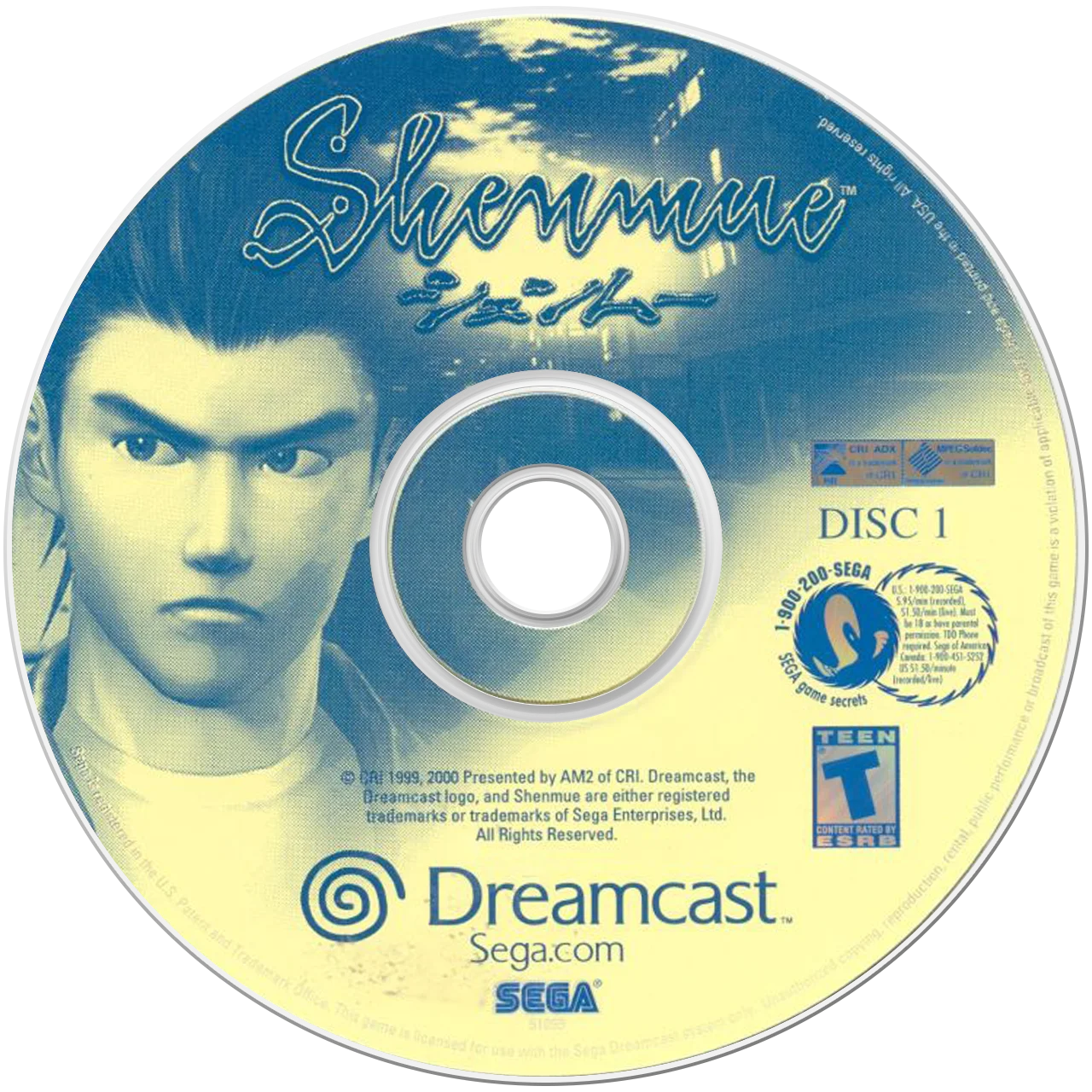
Ask for readable photographs of every disc face, not one representative disc. Check the title, platform logo, publisher marks, region information, rating panel, disc number and product code. Where visible, compare inner-ring text or mastering identifiers with reliable reference photographs. These details can reveal that a seller has placed a Greatest Hits, rental, promotional or foreign disc in an otherwise convincing case.
A matching title is only one piece of evidence. A replacement disc may carry the correct game name while differing in rating symbol, copyright text, label layout or product code. Conversely, a label variation may be legitimate when it belongs to another print run. The correct response to a difference is comparison, not instant authentication.
The physical disc also needs a condition record. Note cracks around the center ring, label-side damage, deep scratches, warping, corrosion-like marks and evidence of resurfacing. A disc that boots proves only that the console recognized it at that time. It does not prove that all numbered media works, that the disc belongs to the case, or that future reading will be reliable.
Never call an item authentic from one label, one screw, one seal or one inner-ring marking. Those features can support a match but cannot settle provenance by themselves. If the disc artwork and paperwork disagree, ask for more evidence or use the marketplace return process rather than trying to repair the uncertainty yourself.
- Photos show every disc in the advertised set
- Disc numbers are readable
- Region, rating and publisher details agree
- Product codes are compared with the target edition
- Condition is recorded separately from completeness
Inspect the case, tray and inserts as separate parts
A replacement case can protect discs and still make a collection incomplete. Check the case dimensions and format, hinge condition, disc hubs, locking tabs, tray color, spine insert, back insert and the number of disc positions. A multi-disc package needs enough correctly arranged positions to hold the advertised media without loose discs being stacked or left in envelopes.
Look for mismatch between the artwork and the plastic. A Dreamcast case with a single-disc tray may be unsuitable for a Shenmue set even if the front cover is correct. A replacement jewel case may have a different hinge design, tray color or interior layout from the regional original. For a collector, that is not merely cosmetic: it changes what is being bought.
Inspect the spine and back insert for trimming, fading, water damage, replacement printing and incorrect dimensions. A scan or reproduction can look clean while lacking the paper stock, fold, printing alignment or regional text of an original. Do not infer originality from sharp color alone; modern reproductions can be cleaner than surviving period materials.
Ask for photographs of both sides of the case opened flat, including the tray and every disc position. Front-only photography hides the exact evidence needed to establish completeness.
- Case format matches the platform and edition
- Tray has the correct number of disc positions
- Hubs and locking tabs are intact
- Spine and back insert match the target region
- Replacement or reproduction parts are disclosed
Use Shenmue as the multi-disc completeness test
Shenmue requires a more disciplined check than a single-disc title. Its instruction manual states that a new game begins with Disc 1 and that the player must change game discs as the story advances. That makes disc numbering functional, not merely decorative. A missing later disc may go unnoticed during a brief boot test, while a missing starting disc prevents normal use.
For the commonly cataloged North American package, collecting references often identify three numbered game discs plus a separate Passport disc. Treat those as four separate inventory lines only after confirming that the listing targets that edition: game Disc 1, game Disc 2, game Disc 3 and Passport disc. Other regions or packages may differ, so do not turn this example into a universal rule.
Do not infer that a four-disc listing is complete solely because four discs are visible. Confirm that the game discs are numbered correctly, that the Passport disc is the expected media for the target edition, and that all labels share compatible regional and publisher details. A set can contain four genuine Dreamcast discs and still be mixed from different copies or regions.
If the seller says the game was tested, ask which discs were tested. Testing Shenmue Disc 1 does not establish the condition of Discs 2, 3 or Passport. Ask the seller to identify each disc by number and photograph the label clearly.
A loose replacement case may be acceptable for a player who only needs protected storage. It should not be priced or described as an original complete package unless the tray, artwork, manual and regional details support that claim.
- The target edition’s disc count is confirmed
- Every numbered game disc is individually identified
- Passport or other supplemental media is identified separately
- Every disc is photographed and condition-described
- Case has a secure position for each required disc
Separate bonus media from required media
A demo disc, soundtrack, sampler, advertisement or promotional insert is not automatically part of a game’s standard package. The specific edition documentation must establish that it belongs there. This distinction matters especially when a seller adds an attractive extra disc to make a listing appear more complete.
For Shenmue, the Passport disc needs separate treatment because it is associated with some regional packages, while the numbered game discs carry the gameplay. For Mario Kart: Double Dash!!, Metroid Prime, Shadow of the Colossus and God of War, do not assume that a pictured bonus disc is required simply because it is inside the case. It may be an unrelated promotional item or a separately cataloged release.
Ask the seller what the extra media is, where it came from and whether it was included with the exact regional edition shown. Request a photo of its label and any matching packaging. If the answer is “it was already in the case,” treat that as provenance uncertainty, not confirmation.
A bonus item can still matter to your personal goal. A player may value a soundtrack or demo, while a strict cataloger may want only the original contents. Decide whether it is required, desirable or irrelevant before adding its perceived value to your comparison.
- Each bonus item has an identified catalog role
- Seller states whether it was original to the package
- Bonus media has matching region and platform details
- Required game media is not confused with extras
- Unrelated additions are recorded as extras, not completeness evidence
Match region, language and release evidence together
Sonic Adventure demonstrates why a title alone is not an edition identifier. Reference catalogs show separate United States, Japanese, United Kingdom, European, Australian and other versions, including different box formats. These releases can differ in cover design, spine text, rating symbols, language, barcode and interior materials. Compare a North American listing with North American references, not with whichever image is easiest to find.
Check the manual and inserts as carefully as the disc. A manual may have different language, rating symbols, publisher address, warranty text and product code from another regional release. Physical compatibility with a console does not make the paper contents region-matched.
The same approach applies to the GameCube and PlayStation 2 examples. A case can contain a valid North American disc with Japanese or PAL artwork, or a manual from a later reissue. The game may work, but the collection is not the edition represented by the package.
Do not overstate what a discrepancy proves. Different paper color or label layout may indicate a print variation, but it may also reflect a legitimate reprint. When the evidence cannot distinguish those possibilities, record the variant as unresolved and choose a seller with a clear return route.
- Disc and artwork share a region
- Manual language matches the target release
- Rating panel and publisher text agree
- Barcode or product code is consistent where visible
- Regional differences are documented rather than guessed
Ask seller questions that produce usable evidence
Good questions request photographs or specific disclosures rather than broad assurances. Ask for one image showing all discs together, individual close-ups of each label, the case opened with every tray position visible, both sides of the inserts and the manual cover. Request a photograph of any item described as a bonus, replacement or reproduction.
Ask whether any disc, case, tray, artwork or manual was replaced; whether components were combined from multiple copies; whether the set is from a rental or promotional release; and which discs were actually tested. “Tested” must be attached to a named disc. A seller who tested Shenmue Disc 1 has not established the condition of Discs 2, 3 or Passport.
Ask whether the photographs show the exact item being shipped. Stock images and reference scans can help establish what to look for, but they cannot prove that the seller possesses the advertised contents. If the seller refuses clear component photos, the listing remains incomplete evidence.
Keep questions and answers on the marketplace. Do not move payment or dispute resolution off-platform, and do not rely on promises that cannot be tied to the listing description.
- All discs can be photographed clearly
- Seller identifies replaced or reproduction parts
- Testing claims name the specific discs tested
- Photos show the exact item for sale
- Messages remain inside the marketplace
Calculate total cost and set stop conditions
Compare total cost rather than the headline listing amount. Include shipping, tax, possible import charges, protective packaging, replacement case or tray costs, missing manual or insert costs and the possibility of buying a second copy to complete the first. A cheaper incomplete set may become the more expensive route once the missing parts are located separately.
Do not invent a current fair price. Instead, compare several completed transactions for the same platform, region and edition, separating disc-only, game-and-case, incomplete in-box and complete examples. Exclude listings with unclear disc counts or mixed-region contents from the comparison pool.
Stop before checkout when the seller will not show every disc, the case cannot hold the advertised media, region evidence conflicts, the disc count is unclear, a critical disc is missing, or the return route is vague. Also stop when the listing uses only stock artwork or says “complete” without defining what is included.
For marketplace purchases such as eBay, read the current Money Back Guarantee rules attached to the transaction. The policy requires checkout through an eligible payment method and action within the applicable time limits; it also states that coverage can apply when an item is damaged, faulty or does not match the listing. Keep the listing, messages, photographs, payment record and delivery evidence. If a package arrives damaged or differs from the listing, follow the platform’s stated process rather than arranging an unrecorded private solution.
- Shipping, tax and import costs are included
- Missing-part and replacement costs are considered
- Comparison listings match platform, region and edition
- Critical evidence is not being assumed
- Return deadlines and eligibility are checked before payment
Document the set when it arrives
Photograph the package before opening if shipping damage is visible. Then photograph the contents in place and inventory each disc, tray position, insert and manual before cleaning, resurfacing or rearranging anything. Keep the listing screenshots and seller messages until the return period has ended.
Compare the received item with the original checklist, not with memory. For Shenmue, confirm the target edition’s numbered game discs and any expected Passport disc. For Sonic Adventure, verify that the regional artwork and interior components match the target. For the GameCube and PlayStation 2 examples, confirm that the disc, manual, inserts and case belong to the same release family rather than merely sharing a title.
If something is missing or substituted, record the discrepancy with clear photographs. Do not begin invasive repair or discard packaging while a return may be needed. A boot test is useful evidence about that disc at that moment, but it does not replace the completeness inventory.
The most defensible catalog label is the narrowest one the evidence supports: disc-only, game and case, incomplete CIB, complete for a named region, or edition uncertain. Precise language protects both your collection records and your future buyer if you later sell or trade the item.
- Package and contents are photographed on arrival
- Every component is checked against the listing
- All required numbered discs are present
- Condition and substitutions are recorded
- Catalog description uses only supported claims
A convincing front cover is only the beginning of a multi-disc buying decision. Match the disc labels, region evidence, manual, inserts, tray and case layout as a single package, then separate original contents from extras and replacements.
If the evidence does not establish the edition or complete disc count, do not pay for certainty you have not received. Choose a clearly documented incomplete copy, ask for more proof, or walk away while marketplace protection is still available.