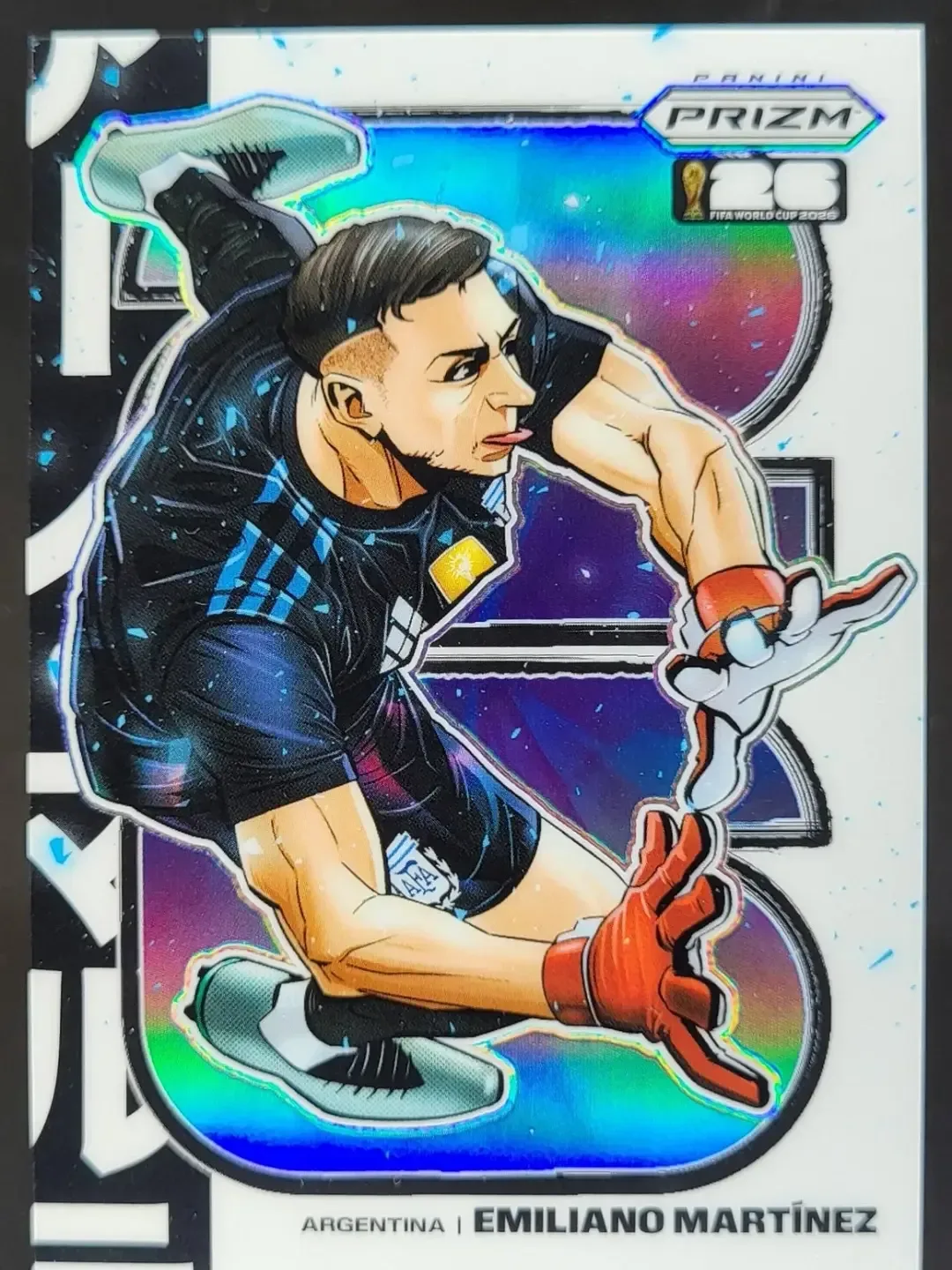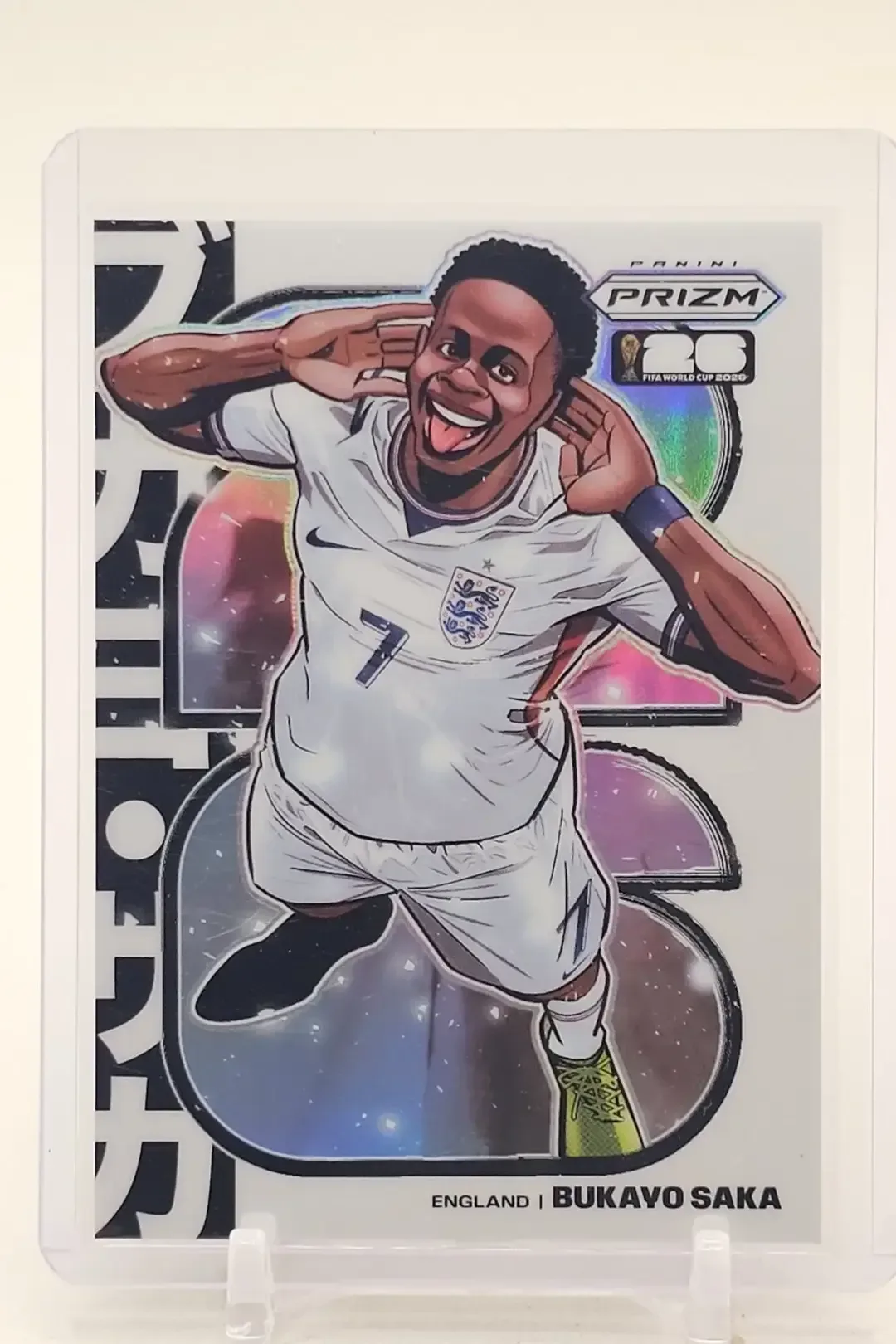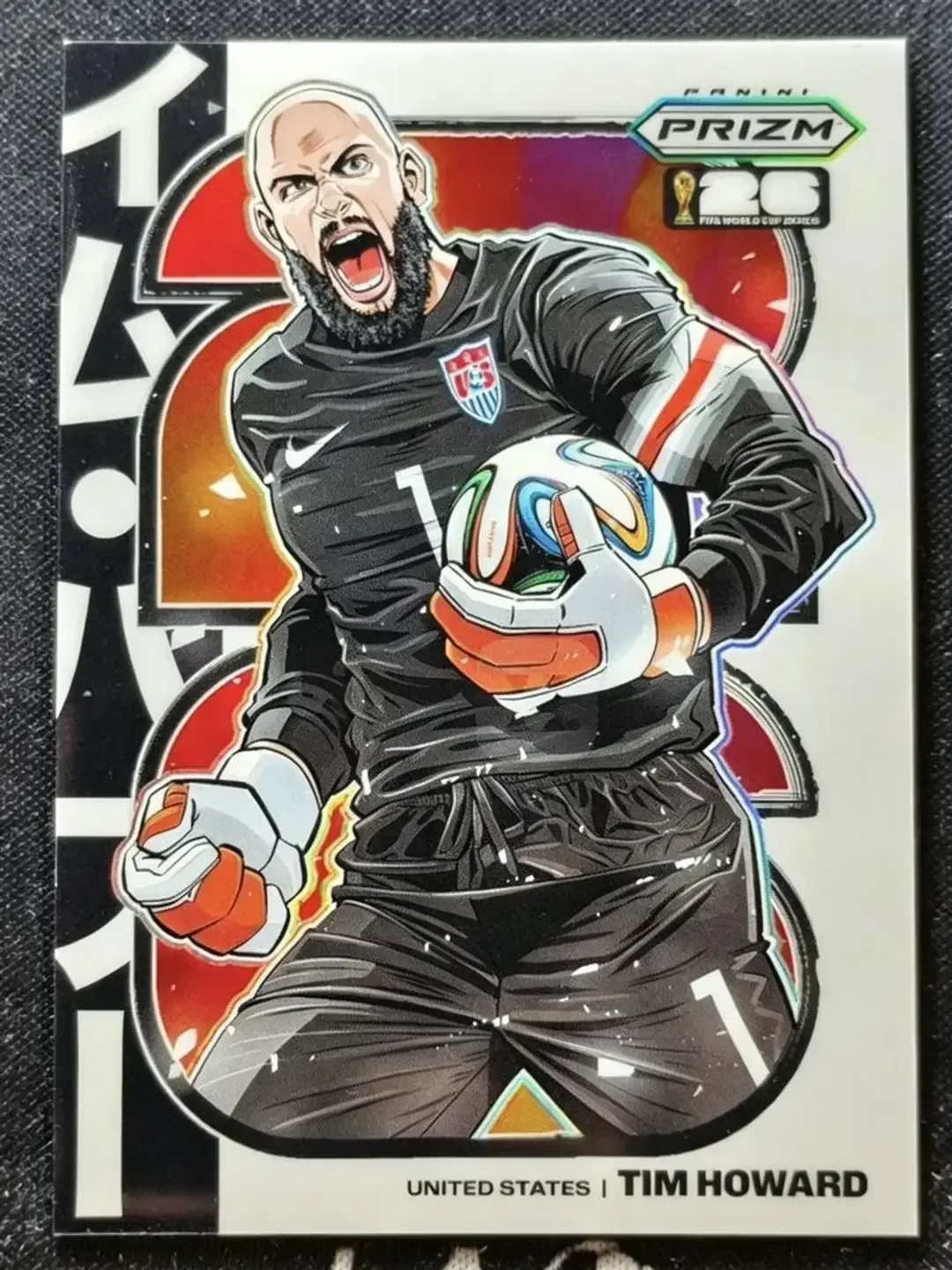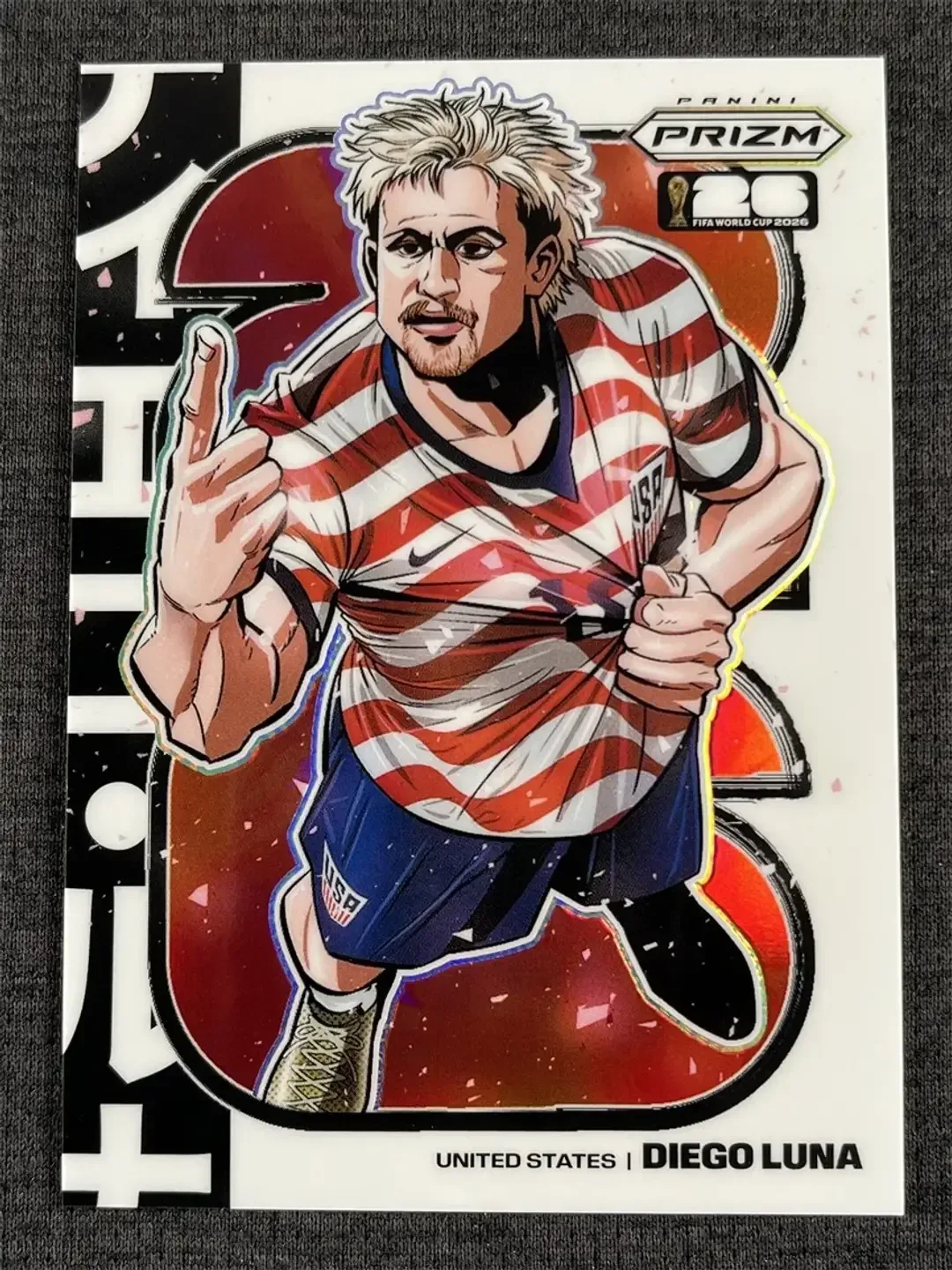
The 2026 Panini World Cup Prizm Manga market has delivered a useful reminder that the loudest card is not always the most frequently traded one. Sales recorded from the set’s June release through September 18 reached $3,673,349.99 across 2,956 Manga-card transactions. Yet the market has separated into two noticeably different races: a concentrated contest for spending led by Lionel Messi, Lamine Yamal and Cristiano Ronaldo, and a volume contest topped by Diego Luna.
That distinction matters for anyone trying to read modern sports-card activity beyond a single eye-catching sale. A high-dollar card can dominate total market value with comparatively few transactions, while lower-priced cards can keep changing hands often enough to lead the transaction table. In this release, the three biggest global names by dollars—Messi, Yamal and Ronaldo—combined for $2,293,827.94, or 62% of all money spent on individual Manga cards. At the same time, the five most actively sold players were Diego Luna, Tim Howard, Bukayo Saka, Emiliano Martinez and Raphinha.
Panini’s World Cup Prizm release arrived with several product configurations: retail boxes, preferred hobby boxes, mega boxes and retail-exclusive blaster boxes. The Manga cards are case-hit inserts, meaning collectors view them as a particularly scarce chase within the wider product line. There are 30 players on the Manga checklist, and the reported market results show how a checklist can support several collecting motivations at once: superstar demand, national-team attachment, player collecting, grading upside and affordability.
Two leaderboards, two different stories
Price leadership is strikingly top-heavy. Messi, Yamal and Ronaldo account for almost two-thirds of the total Manga dollars recorded in the period. That is a measure of sales value, not necessarily the number of copies sold. It indicates that buyers have placed exceptional financial weight on the set’s most recognizable chase subjects.
Messi provides the clearest illustration of the gap. A raw 2026 World Cup Prizm Messi Manga averaged $9,088.50 in the reported sales data. “Raw” means the card has not been encapsulated and assigned a condition grade by a third-party grading company. At that kind of entry point, even a modest number of sales can add a large amount to a player’s dollar total.
Volume measures something else: how many completed sales occurred. It can suggest that there are more buyers and sellers meeting at accessible price levels, but it does not automatically prove that a card is rarer, better, or a stronger long-term hold. The volume leaders’ most recent reported raw sales ranged from $85 for Luna to $375 for Saka. Those price points are still meaningful, but they create a much different participation threshold from a four-figure—or, in Messi’s case, five-figure-adjacent—purchase.
The difference is especially important in a case-hit insert set. A collector can want the visual style, a favorite country, a current player, a retired player, or a card to submit for grading without chasing the three most expensive names. The result is an active market beneath the superstar tier rather than a leaderboard that simply repeats the highest-profile athletes.
The five Manga cards leading by number of sales
1. Diego Luna — 155 sales
Diego Luna led the Manga insert in reported transaction volume with 155 sales. The 23-year-old United States midfielder plays for Real Salt Lake in MLS. His most recent reported Manga sale was $85, and there had not yet been a recorded PSA 10 sale.
Related coverage includes 2026 Panini World Cup Prizm Manga Sales Show a Split Between Star Power and Collector Volume.
His position atop the volume table is notable because he did not make the United States World Cup squad selected by Mauricio Pochettino. The data does not establish why buyers gravitated toward the card, but it does show that transaction activity need not track only the most obvious tournament storyline or the very highest-priced athlete. At $85 for the latest reported sale, the card also sat at the most accessible recent price among these five volume leaders.
2. Tim Howard — 129 sales
Former United States goalkeeper Tim Howard followed closely with 129 sales. His latest reported raw Manga sale was $160; no PSA 10 result had been recorded at the time of the data snapshot.
Howard’s place near the top demonstrates another wrinkle in player demand. He is a retired goalkeeper, two traits that might lead collectors to expect a smaller audience beside active attacking stars. Instead, the card’s transaction count was second only to Luna’s. It is a useful check against reducing a checklist solely to current form or future projections. Collectors can value a player’s established connection to a national team and the personal appeal of a recognizable name just as much as on-field recency.
3. Bukayo Saka — 123 sales
Bukayo Saka placed third with 123 sales. The England regular’s latest reported raw Manga sale was $375, while a PSA 10 most recently sold for $1,182.
A PSA 10 is a card awarded the top numerical grade by Professional Sports Authenticator. The sizable difference between Saka’s listed raw and PSA 10 sales is an example of the condition premium that can appear in modern case-hit cards. It should not be read as a fixed multiplier: cards can sell at different times, under different demand conditions, and a grade depends on the individual card’s condition. Still, the two figures show why collectors often distinguish carefully between raw-market prices and graded-market prices.
4. Emiliano Martinez — 122 sales
Emiliano Martinez registered 122 sales, only one behind Saka. The Argentina goalkeeper, a 2022 World Cup winner, most recently sold raw for $115.80; the latest PSA 10 sale was $660. Martinez has also transferred to Chelsea.
Goalkeepers are sometimes treated as a more difficult sell in hobby conversations compared with goal-scoring or creative attacking players. This volume ranking offers a more nuanced picture. Martinez was one of two goalkeepers in the top five by sales count, alongside Howard. That does not mean goalkeeper cards broadly match the value of the set’s headline stars, but it does mean this particular Manga checklist found repeat buyers for them.
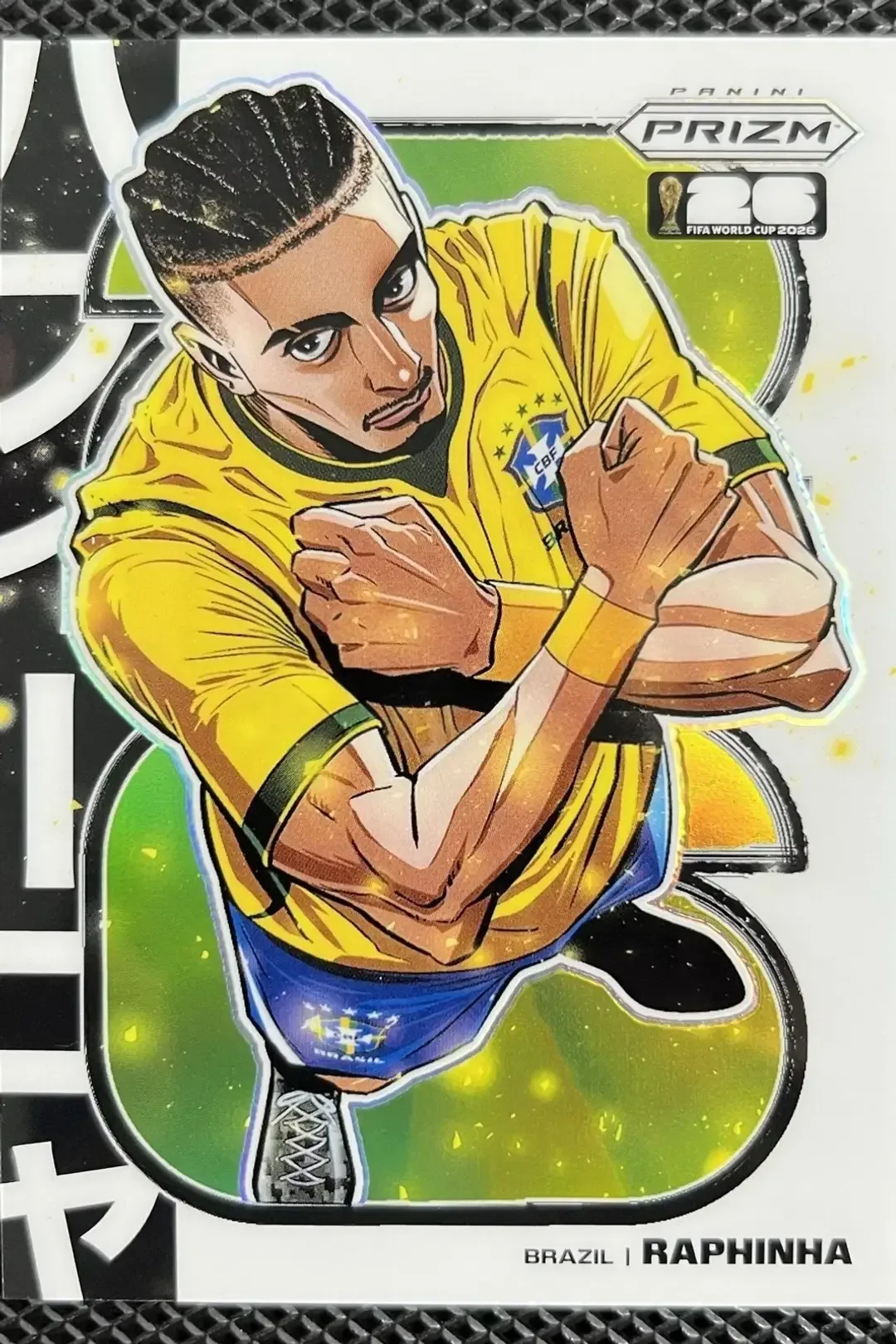
5. Raphinha — 119 sales
Raphinha rounded out the top five with 119 sales. The Brazil and Barcelona player’s last reported raw Manga sale was $306.65, and a PSA 10 last sold for $950. He had begun the La Liga season with 12 goals in seven Barcelona matches.
Among the five volume leaders, Raphinha’s recent raw price was second only to Saka’s. That is a reminder that high transaction count does not require a bargain-basement price; it requires enough willing buyers and enough cards reaching market for transactions to occur. His result also leaves little separation in the middle of the table: 119 sales for Raphinha, 122 for Martinez and 123 for Saka.
What collectors should take from the split
The sales data supports a simple but important distinction: dollar leadership and volume leadership are different signals. The first tells collectors where money has concentrated. The second tells them which cards have changed hands most often. Neither one independently provides a full verdict on desirability, scarcity, future value, or liquidity.
Liquidity is the practical ability to find a buyer or seller near a market price. A card with many recorded sales can be easier to benchmark because there are more recent transactions to compare. However, 155 sales over a multi-month window is not a guarantee that a collector can immediately sell a copy at a preferred price. Condition, timing, platform, buyer interest and whether the card is raw or graded remain relevant.
Likewise, a PSA 10 sale is not interchangeable with a raw sale. A graded card has been evaluated, sealed in a holder and assigned a numerical condition grade; a raw card still leaves the buyer to assess its condition or decide whether to submit it. The reported examples make that distinction tangible: Martinez’s latest raw sale was $115.80 compared with $660 for a PSA 10, while Saka’s respective figures were $375 and $1,182. Those are individual latest-sale reference points, not universal price guides.
Collectors evaluating a Manga card can therefore begin with a few grounded questions:
- Is the price being cited for a raw copy or a specific grade?
- Is the figure a single recent sale, an average, or a total-sales number?
- Does the player’s market rely mainly on global superstar recognition, a national-team following, current performance, or a lower acquisition cost?
- Is the goal to own a favorite player, pursue a complete Manga run, or buy a card with an established record of recent transactions?
Those questions are more useful than treating the $3.67 million headline as a single, uniform market. The 30-card Manga checklist contains very different buyer propositions. Messi, Yamal and Ronaldo have absorbed the overwhelming share of dollars. Luna and Howard, meanwhile, show that sales volume can be fueled by names outside the usual ultra-premium trio. Saka, Martinez and Raphinha sit between those poles, pairing strong transaction counts with reported raw prices above $100.
Why product format remains part of the conversation
The 2026 World Cup Prizm rollout included hobby and retail formats, including retail-exclusive blaster boxes. That breadth is relevant because collectors encounter a set through different purchase paths before cards enter the secondary market. The Manga cards were widely treated as the release’s coveted case-hit chase, and collectors reported pulls from retail blasters as well as the broader product ecosystem.
For collectors, that is not a promise about pull rates or a recommendation to rip sealed product. The available information does not provide odds, print runs or a format-by-format Manga breakdown. It does explain why the set has a broad pool of potential participants: multiple configurations put the release in front of different kinds of buyers, while the Manga design gives the market a clear premium insert to chase.
Release structure can shape collecting behavior even when it cannot answer every value question. For another example of how configuration and premium-card positioning affect a sports-card product, see this look at Upper Deck ICE Hockey’s premium-pack format and Ice Premieres focus.
A market led by stars, sustained by variety
The snapshot through September 18 presents a market with both concentration and breadth. Concentration is evident in the $2.29 million generated by Messi, Yamal and Ronaldo alone. Breadth is evident in the transaction leaderboard, where a young MLS midfielder, a retired American goalkeeper, an England regular, an Argentina goalkeeper and a Barcelona attacker all posted at least 119 sales.
That combination is healthy for interpretation, even if it should not be mistaken for a forecast. The available figures describe completed sales in a defined window. They do not reveal print runs, grades across the population, unopened-product odds, or what prices will do next. What they do reveal is much more specific: for 2026 World Cup Prizm Manga cards, collectors have paid most heavily for the global icons while repeatedly trading a wider mix of players at lower recent price points.