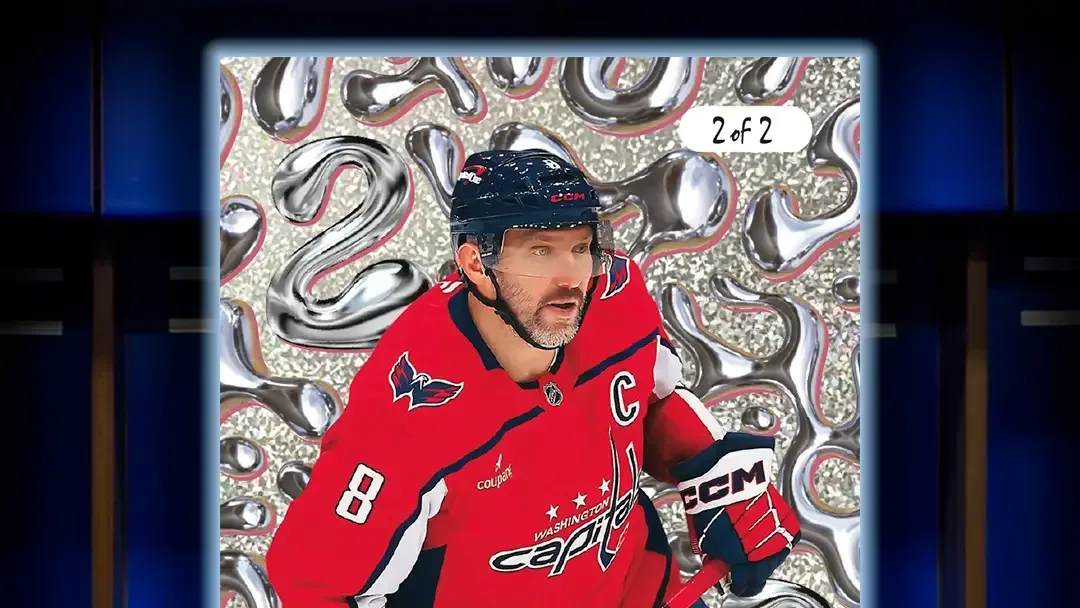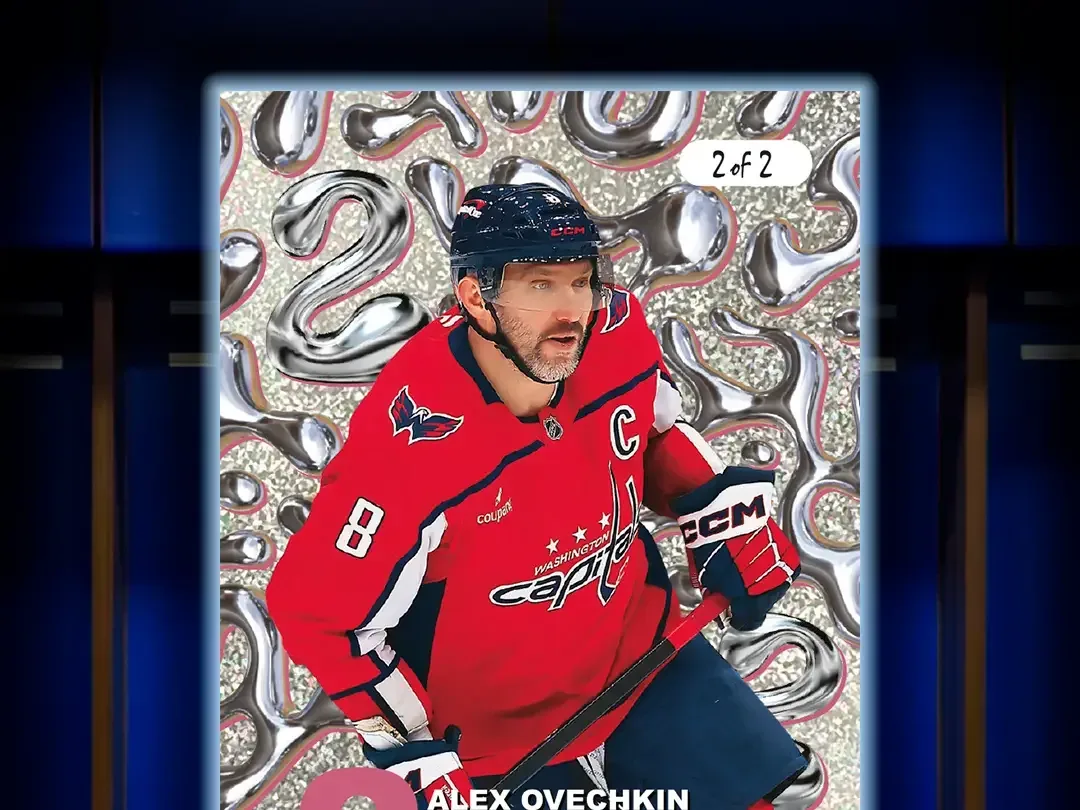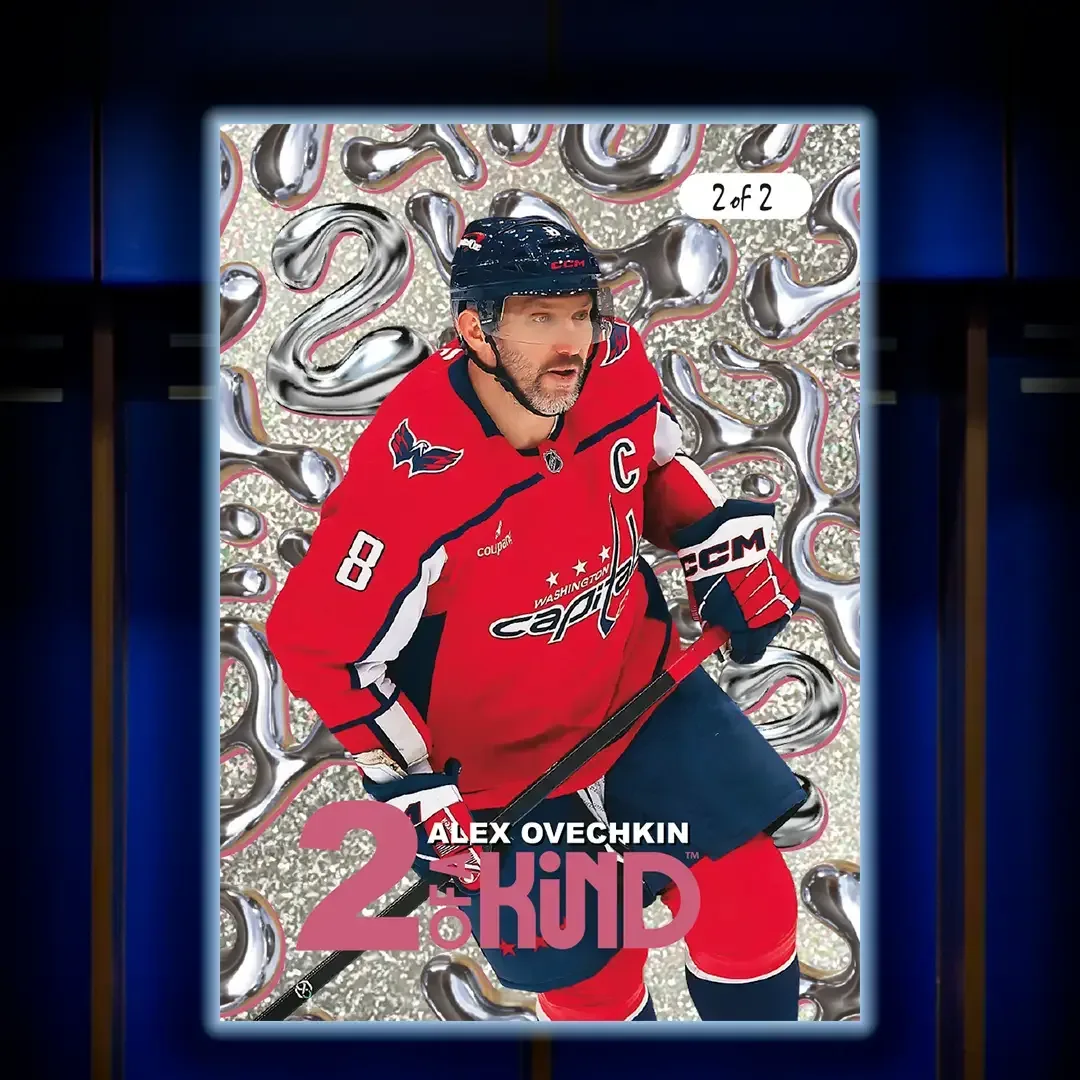
Trading cards have always offered a compact way to follow a favourite athlete, but Upper Deck’s forthcoming 2 of a Kind NHL insert aims to make that connection considerably more literal. Each entry in the program is a matching pair of cards: one copy is intended for the player pictured, while the other is placed into packs for collectors to find.
That means the publicly available version is not merely scarce in the usual sense. It is one half of a two-card issue, paired directly with a card that is being gifted to the NHL player. Upper Deck says each year’s program will have a 100-card NHL checklist, with every player receiving the card numbered 1-of-2 and collectors chasing the corresponding 2-of-2 copy.
The concept will make its debut as an insert in 2026-27 O-Pee-Chee, scheduled to arrive around the 2027 NHL All-Star Weekend. The inserts are set to be available in both hobby and retail product, and Upper Deck says collectors will not need to use redemptions to obtain them.
What makes 2 of a Kind different?
A card insert is a specially issued card placed within a larger trading-card product rather than part of the standard base set. Inserts may have a distinctive design, a limited print run, or a particular theme. 2 of a Kind takes the limited-run element to an extreme: exactly two cards of each listed player are being made.
The numbers also establish a clear division between the copies. The 1-of-2 card goes to the athlete, while the 2-of-2 is the version collectors can pull from packs. The two cards match, rather than functioning as separate parallel versions or different pieces of a larger puzzle.
Upper Deck President Jason Masherah framed the idea around two familiar collecting pleasures: landing a rare card of a favourite player and feeling closer to the athlete represented on it. In this case, the connection is built into the object itself. A collector holding the pack-pulled card knows that just one matching companion exists, and that it was designated for the player.
“With only two cards being created of each player, them getting one and a collector getting the other, we can't wait to see the reactions and interactions this program brings for years to come,” Masherah said.
The program is described as continuous, so it is not being positioned as a single one-off insert with a fixed end after its first release. Upper Deck plans an extensive 100-card NHL checklist each year. That matters for collectors because the 2026-27 O-Pee-Chee appearance is the start of an ongoing concept, while the exact pair for any individual player remains capped at two copies.
The card design and numbering
Upper Deck says 2 of a Kind card fronts use metallic foilboard, a reflective card stock or finish intended to give the front a bright, premium-looking surface. The reverse has a rose-gold substrate. A substrate is the underlying material or layer that contributes to the card’s finish and appearance; here, it is part of the visual identity of the set rather than a separate gameplay or authentication feature.
Collectors should also pay attention to the serial numbering. A card marked 2/2 indicates that it is the second of two produced. In this program, the designation has an unusually specific purpose: it is the collector-facing member of the pair. The complementary 1/2 is reserved for the player, not a second card expected to be found through hobby or retail packs.
That distinction is important when discussing scarcity. The public supply is effectively one pack-issued card per checklist player. There may be two physical cards in existence, but only one is slated to enter the product for the public to collect. It is a different setup from a conventional low-numbered parallel where all copies are distributed to collectors through products, breaks, private sales, or the secondary market.
No redemption cards planned
Upper Deck says 2 of a Kind can be collected directly from hobby and retail products with no redemptions. In card collecting, a redemption is typically a placeholder card that a collector submits to receive the promised item later. Removing that step means the finished 2/2 cards are intended to be in packs from the outset rather than represented by a claim code.
For collectors, the practical advantage is clarity at the pull stage: the card found in a pack is the physical card itself. There is no stated requirement to wait for fulfilment or to track a redemption deadline for the card. It also keeps the central idea easy to understand. Find the 2/2, and you have the public counterpart to the player’s 1/2.
The announcement does not provide pack odds, a full player checklist, product configuration, or details on how many individual hobby and retail products will contain the inserts. Those are meaningful variables for anyone attempting to estimate how often a particular 2/2 might surface, so collectors should avoid treating the 100-card checklist size as an odds statement. It tells us the planned scope of the annual program, not the probability of pulling any one card.
A possible meeting opportunity, with details still to come
Upper Deck also says collectors will be able to submit their 2 of a Kind card for a chance to meet the NHL player holding the matching version. The wording is significant: this is described as a chance, not a guaranteed meeting attached to every card.
No process, eligibility requirements, submission window, player participation terms, or event format were specified in the information released so far. Collectors interested in that part of the program will need to watch for additional official instructions before assuming a card automatically grants access to an appearance.
Even so, the possibility fits the set’s premise. The physical card pair creates a shared collectible between an athlete and a fan; the submission opportunity could turn that shared link into an interaction. Whether that becomes a major draw will depend on the later rules and how the program is administered across a checklist of this size.
What it means for O-Pee-Chee collectors
O-Pee-Chee will be the first home for 2 of a Kind, giving the 2026-27 release a particularly unusual chase component. The insert is not a base-card variation, and it is not presented as a reward unlocked after opening product. It is a direct pack pull across hobby and retail distribution.
For set builders, the annual 100-card scope suggests a long-term goal rather than a checklist likely to be completed casually. For player collectors, the appeal is more focused: the card is a maximum-scarcity issue of one chosen NHL star, with a matching player-held copy. For collectors who primarily value distinctive concepts over completing every card, the split-pair premise gives the insert a story that can stand independently from its foil treatment and low numbering.
There is also an obvious practical limit. Because each public card is the only collector-issued copy planned for that player, a completed annual run would require locating 100 separate 2/2 cards. The announcement does not say how cards might be allocated between hobby and retail channels or whether every player will be equally difficult to locate. Still, the one-public-copy structure means that completing a full checklist would be inherently dependent on both pack pulls and collector-to-collector movement.
That makes condition, documentation, and card identity especially relevant for anyone who eventually handles one. The serial number should establish the card’s place in the pair, while the design and checklist association explain the player connection. As with any especially limited modern card, collectors may wish to retain packaging or purchase information where appropriate, but Upper Deck has not outlined any special authentication, grading, or registration process for the set.
A collector-focused rarity rather than a conventional chase
Modern sports-card products often use rarity through numbered parallels, autographs, memorabilia pieces, and insert themes. 2 of a Kind’s differentiator is not an autograph or a patch, at least based on the details announced so far. Its value proposition is the deliberately divided pair: one copy is in the athlete’s hands, and one can be in a collector’s binder, display, or collection.
That is a simple idea, but it changes the narrative around a serial number. A 2/2 normally tells a collector that two copies exist. Here it additionally identifies the card as the public half of a specific two-card relationship. The 1/2 is not simply another copy somewhere in circulation; it is earmarked for the player on the card.
The release arrives amid a wider collectibles conversation in which provenance, limited production, and personal connection can shape interest as much as the player image itself. Readers can find more coverage of that broader space in our collectibles news section. For 2 of a Kind specifically, the practical facts remain straightforward: 100 NHL players per year, two matching cards per player, one for the athlete, one for a collector, and an initial appearance in 2026-27 O-Pee-Chee.
Collectors will get a clearer picture once Upper Deck reveals the full checklist and pack-level details. Until then, the key attraction is already defined: a card designed not just to depict an NHL player, but to exist as that player’s extremely limited matching counterpart.