Week 10’s loaded college football slate carries two overlapping scoreboards. One is obvious: ranked teams are fighting for playoff security and, in several cases, simple survival. The other is less official but no less closely watched by collectors: whether the performances of Jeremiah Smith, Darian Mensah, CJ Carr and other headline prospects can sustain or reshape demand for their cards.
That does not mean a single Saturday result automatically rewrites a player’s market. Card values reflect scarcity, product design, licensing, player performance and longer-term professional outlook—not merely a box score. Still, this weekend creates unusually direct pressure points. There are matchups involving multiple prominent Heisman candidates, undefeated teams, fragile playoff resumes and players whose available cards differ dramatically in presentation and desirability.
The practical lesson for collectors is to distinguish a compelling on-field narrative from a completed market move. A win can intensify interest; it cannot guarantee a lasting price increase. A loss can create uncertainty; it does not by itself erase a prospect’s appeal. Here is how the pivotal games and the available evidence frame the weekend.
Oregon at Ohio State: Jeremiah Smith’s spotlight gets brighter
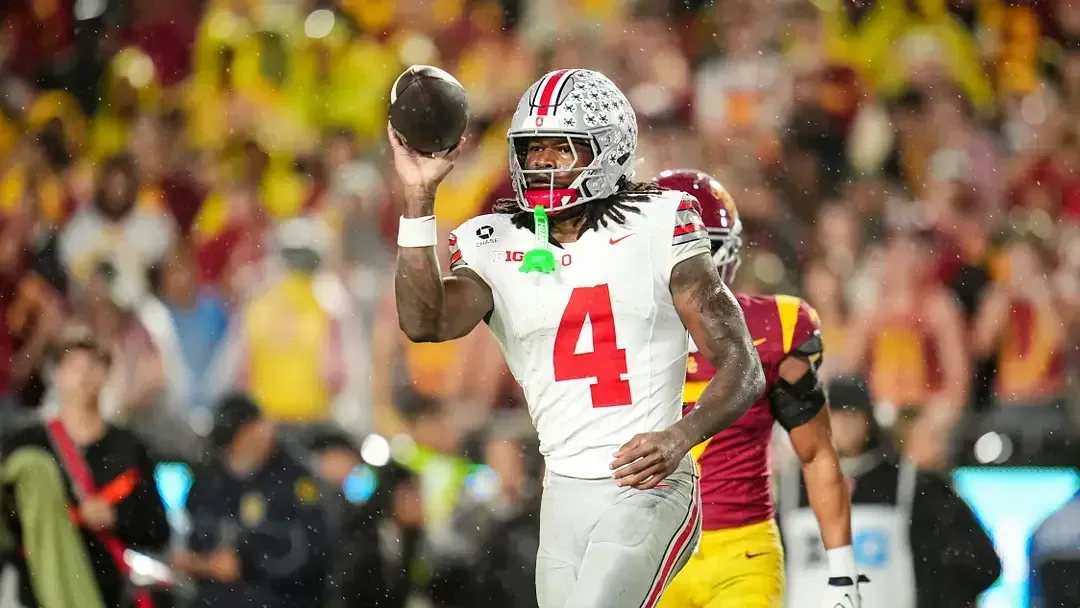
No. 23 Oregon travels to No. 12 Ohio State with Buckeyes wide receiver Jeremiah Smith entering the week as the leading Heisman candidate. Smith remained productive in Ohio State’s loss to USC even without quarterback Julian Sayin, making 10 catches while being kept below 100 receiving yards.
For a receiver, the Heisman discussion is inherently demanding because standout performances must remain impossible to ignore among quarterbacks. Smith’s status as the favorite makes every nationally relevant game a chance either to reinforce that lead or invite a challenger closer. A big outing against Oregon would serve both the award case and the ongoing collector narrative around him.
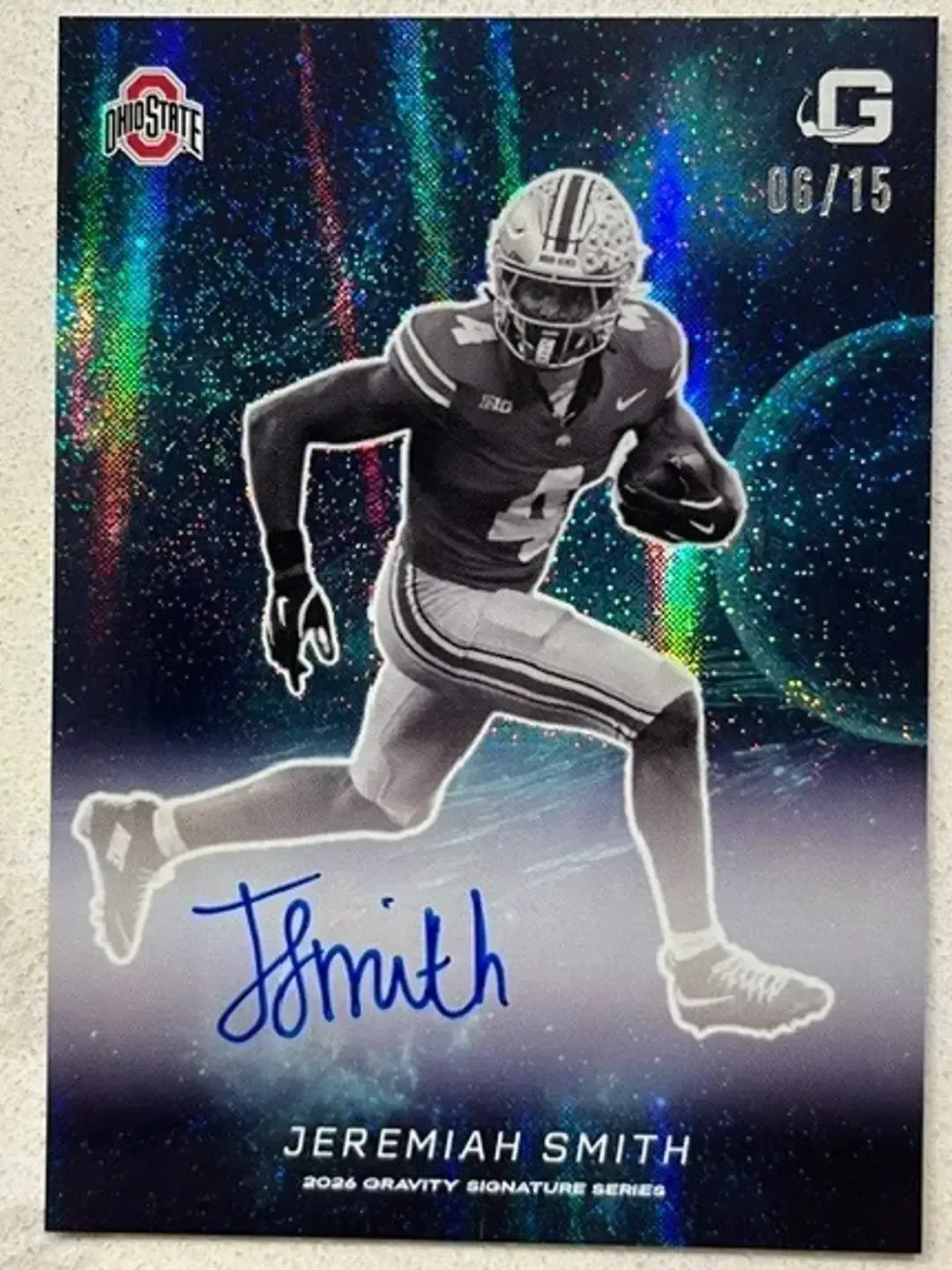
His card situation adds an important wrinkle. Smith is available this fall in Leaf and ONIT products, a narrower product environment than some rivals enjoy. Availability alone is not a verdict on a card’s quality, but collectors often attach value to factors such as familiar product lines, visual appeal, autograph supply and whether a product carries team licensing. Smith’s 2026 ONIT autograph numbered to 15 is one example of a low-numbered card receiving attention.
The Buckeyes also face a difficult team-level backdrop. Another defeat would not formally remove them from playoff consideration, but reaching three losses would be hard to overcome from their current position outside the playoff field. That makes the Oregon game meaningful beyond individual statistics: Smith’s performance will be viewed alongside Ohio State’s ability to keep its season from slipping further.
Kentucky at Tennessee: Kenny Minchey has a chance to make a longer-shot case
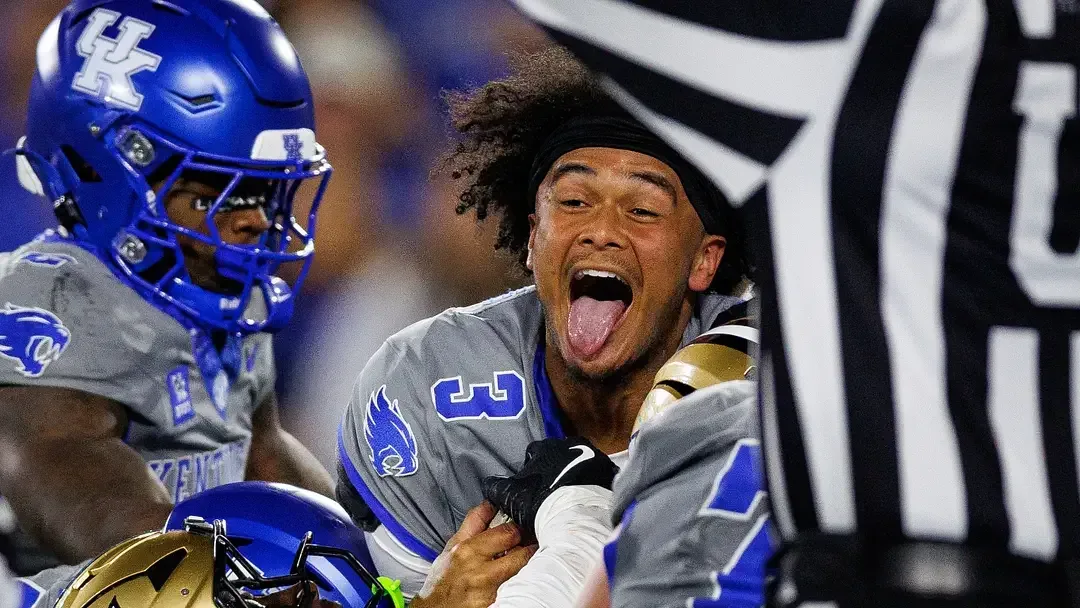
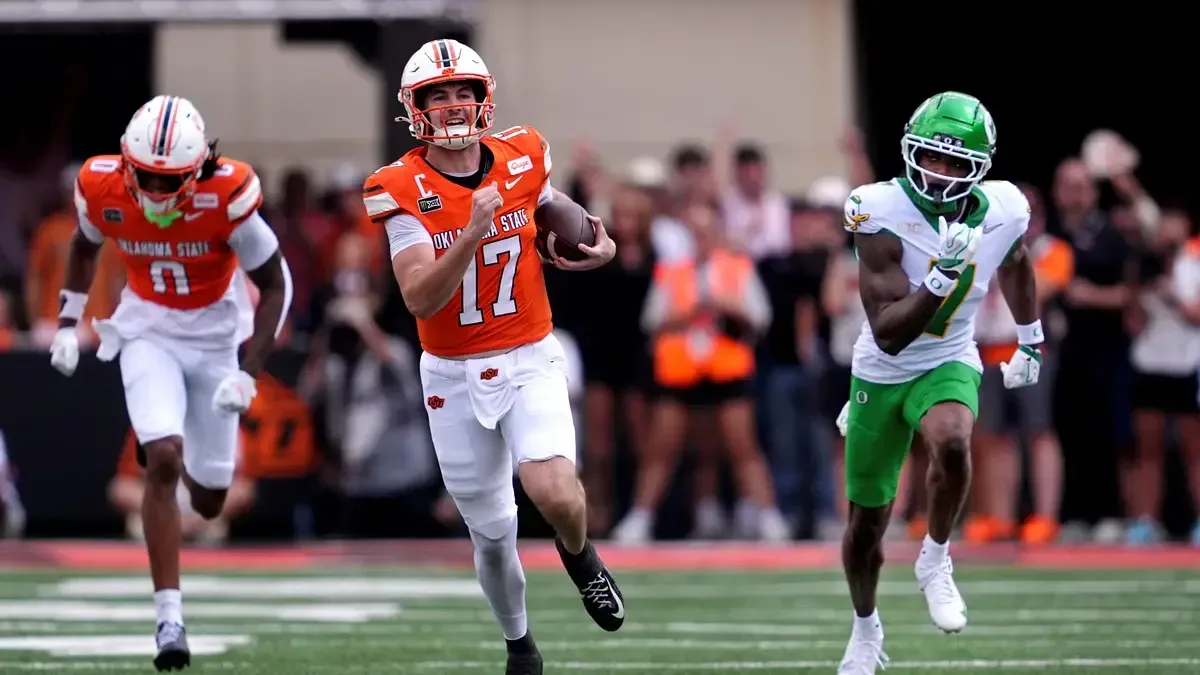
No. 6 Kentucky’s trip to No. 13 Tennessee has less concentrated hobby heat than some of the other games, but Wildcats quarterback Kenny Minchey has attracted fresh attention as Kentucky climbed the rankings. He remains a Heisman longshot, though a road win over Tennessee could put him closer to the broader national conversation and perhaps an invitation to New York.
Related coverage includes Week 10 Heisman Watch and Hobby Outlook: Six College Football Matchups Driving Card Interest.
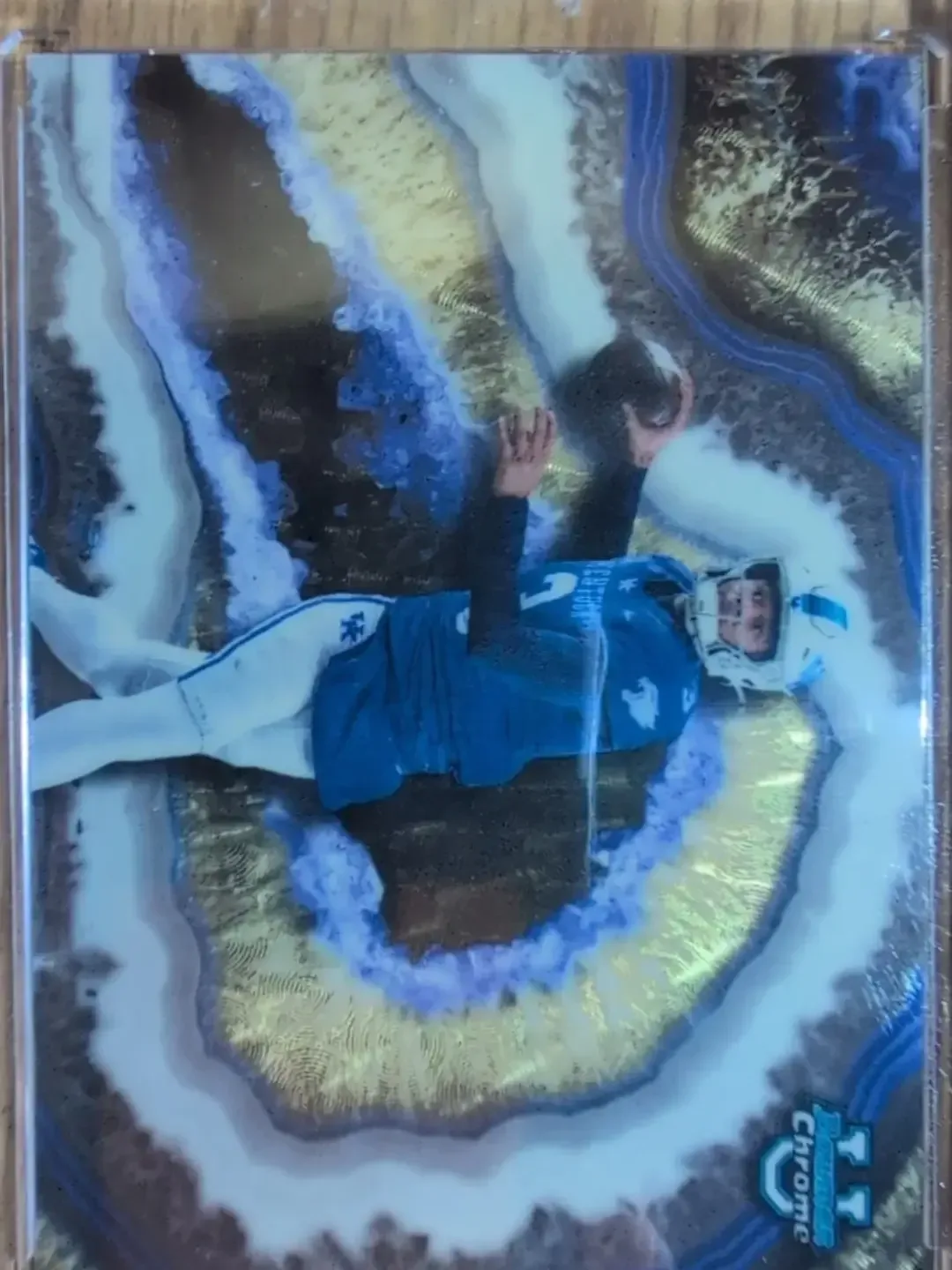
One recent result offers a concrete indicator of collector interest: Minchey’s Bowman Chrome Crystalized Superfractor sold for $2,850 last week. That is a notable sale for what is described as a Tier 2 short-print parallel. In card terminology, SSP means “super short print,” generally signaling a card produced in especially limited quantity compared with standard cards or regular parallels. The Superfractor label likewise points to a top-end, highly scarce parallel treatment.
That sale should be read as a useful data point rather than a universal price guide. A one-of-one card is, by definition, unique, so its price reflects the particular bidders and moment as much as it reflects a replicable market level. But it does demonstrate that Kentucky’s rise has arrived with meaningful attention for its quarterback.
The stakes are stark on the field. A Kentucky win would make the Wildcats’ playoff position considerably stronger, while Tennessee is in danger of effectively being eliminated from the playoff race with a loss. For Minchey, that gives the contest a straightforward route to greater visibility: lead a major win, and the collector conversation has more substance behind it.
Alabama at LSU: two quarterbacks, very different card-market questions
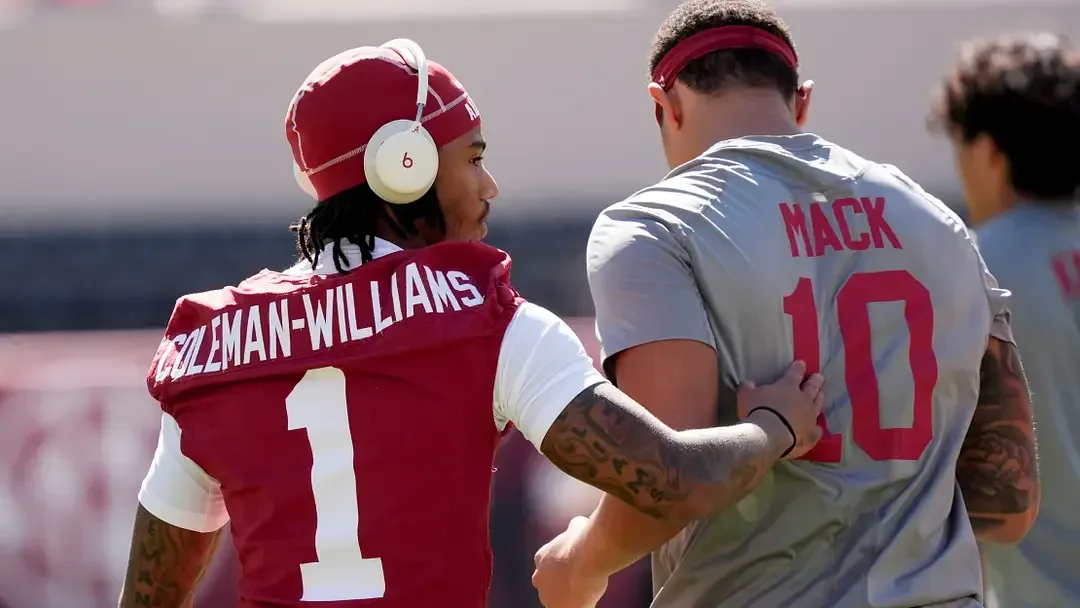
No. 5 Alabama meets No. 14 LSU in a game containing two more Heisman-relevant quarterbacks. LSU’s Sam Leavitt sits in the top five of the race, while Alabama’s Keelon Russell is in the top 10. Alabama receiver Ryan Coleman-Williams is also returning, though the central collecting question remains the two signal-callers and what a decisive result would mean for their respective momentum.
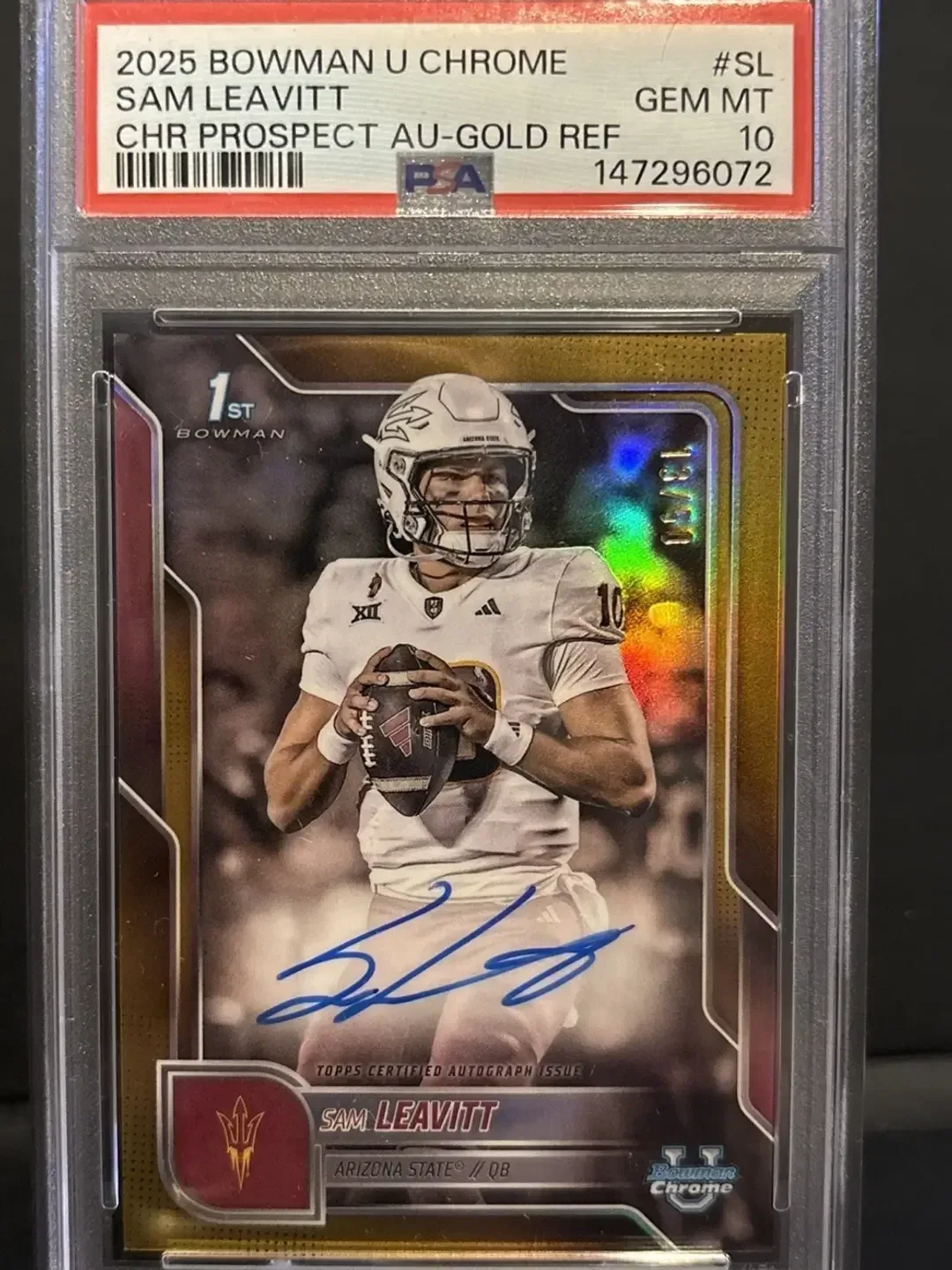
Leavitt’s case is tied closely to LSU’s need for a win. A victory over the Crimson Tide would keep him firmly in the Heisman discussion and preserve LSU’s playoff hopes. His card market has been uneven, mirroring the volatility often seen when a player’s standing rises and falls through a season. A 2025 Bowman Chrome Gold autograph numbered to 50, graded PSA 10, is among the notable Leavitt cards in circulation.
Russell’s portfolio includes 2026 Panini Donruss cards and a Downtown insert. Downtown is a recognizable case-hit-style insert concept: a scarce, visually distinct chase card rather than a standard base issue. Yet the cards are unlicensed, which can be a significant consideration. In this context, “unlicensed” means the cards do not carry official team marks and imagery in the same way a fully licensed college product does. Collectors may still pursue them—especially for an important rookie or prospect—but the presentation can affect how the market values them.
Alabama appears to have a little more margin for error because of its strong initial playoff ranking. LSU has less room. That imbalance may shape the reaction to the game: Leavitt has an opportunity where a win could be seen as season-saving, while Russell has a chance to add a defining result without facing precisely the same immediate elimination pressure.
Georgia at Ole Miss: Chambliss and Stockton face a high-leverage showcase
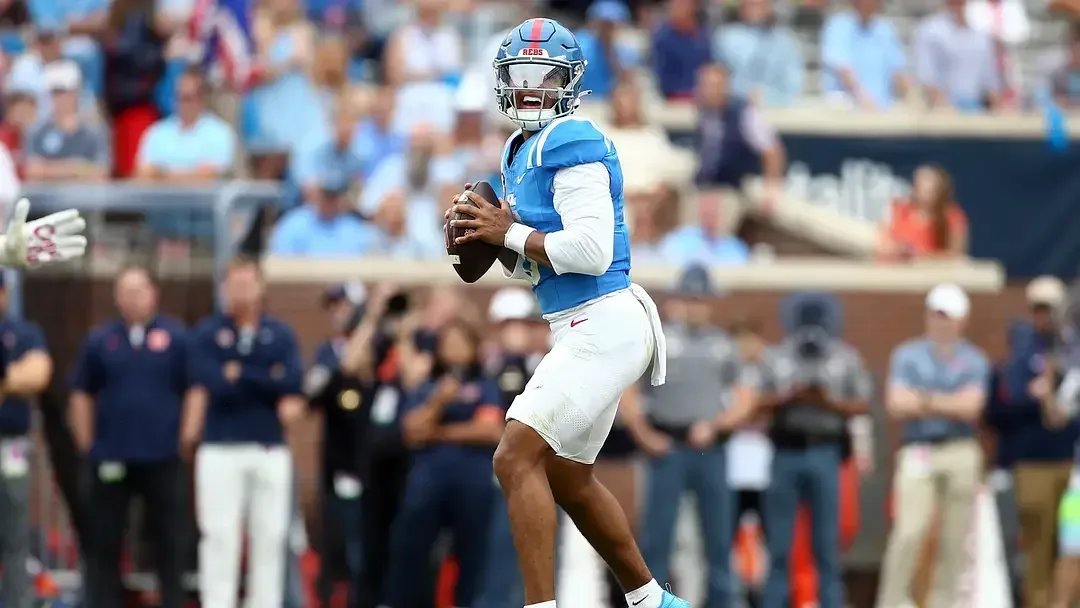
No. 2 Georgia at No. 10 Ole Miss is one of the weekend’s strongest quarterback-versus-quarterback matchups. Ole Miss quarterback Trinidad Chambliss is fourth in the Heisman picture, with Georgia’s Gunner Stockton sixth. Both remain in the playoff hunt even with a loss, but Ole Miss has far more need for a victory if it wants to remain convincingly alive—and Chambliss’ already faint Heisman path likely needs it too.
Chambliss’ collecting profile demonstrates the importance of product ecosystem. He has cards in Panini Obsidian and Donruss, including an Obsidian autograph numbered to seven, but his available cards are unlicensed. His strong on-field season and improving draft outlook have nevertheless made him a player to monitor, particularly as other quarterback prospects such as Arch Manning and injured Dante Moore have lost ground.
Stockton has a deeper range of cards across 2025 Bowman Chrome Football, 2025 Bowman's Best and 2026 Panini releases. His strongest-performing cards are his Bowman 1st issues, followed by Bowman's Best. A Bowman 1st is typically a player’s first designated Bowman card, a status collectors frequently treat as a foundational early issue. It is not synonymous with a player’s first card from every manufacturer, but the branding makes it especially relevant in prospect-focused markets.
The contrast is clear. Chambliss has a powerful performance and draft-stock narrative but narrower, unlicensed card choices. Stockton has multiple product pathways and established interest in specific early Bowman cards. Saturday cannot settle every question about either player’s future, but it can determine which storyline heads into the next phase of the season with far more momentum.
BYU at Utah: a rivalry where the chase extends beyond the Heisman odds
No. 9 BYU at No. 3 Utah puts an undefeated Utah team against a BYU squad that owns a win over Notre Dame and has been without LJ Martin. Utah quarterback Devon Dampier is just outside the top 10 in Heisman odds despite leading the third-ranked Utes. BYU quarterback Bear Bachmeier is a longer shot for the award, but his place in the card market is stronger than those odds alone might suggest.
Bachmeier is one of the leading prospect chases in 2026 Bowman Football, including a Spotlight Superfractor one-of-one. That distinction matters because collectors do not buy cards solely as instant Heisman bets. Prospecting also weighs perceived development, potential draft trajectory and the scarcity or cachet of a player’s earliest major cards. Bachmeier’s interest shows how a player can be a key chase without being near the front of the award race.
Dampier, meanwhile, was an understated chase in 2025 Bowman Chrome Football. The game therefore presents a useful reminder that popularity within a release is not fixed forever. An undefeated season, a rivalry win or a sustained run in the playoff picture can bring a previously quieter card market into clearer focus.
Both teams appear able to withstand a loss more comfortably than teams such as LSU, Tennessee or Notre Dame. Utah’s undefeated record gives it breathing room, and BYU can point to both the Notre Dame victory and the absence of Martin. That relative safety could keep the focus on the rivalry and individual players rather than pure postseason desperation.
Miami at Notre Dame: the biggest direct collision of Heisman and hobby narratives
No. 1 Miami at No. 11 Notre Dame may be the weekend’s clearest crossover event between award momentum, playoff urgency and established 2026 Bowman Football demand. Miami quarterback Darian Mensah sits alongside Smith as a leading Heisman candidate. Notre Dame quarterback CJ Carr is close behind Mensah for second and notably nearer to that spot than Chambliss is to fourth.
Mensah and Carr were both major 2026 Bowman Football chases. Carr ranked second in that set behind Arch Manning, while Mensah was also a prominent name. Their recorded high-end sales underscore how seriously the market has treated the matchup even before the game: Mensah’s Garbage Pail Kids Red Refractor numbered to five sold for $3,800, his second-largest sale and just below the $3,900 realized by his 2025 Bowman Chrome U Superfractor autograph.
Carr’s ceiling has been higher in the available sales data. He has seven sales above Mensah’s top sale, led by a 2026 Bowman Football Red Anime SSP numbered to five at $6,500. Red Refractors are limited parallel versions, and the “/5” notation means the card is numbered to a total production run of five. Such scarcity helps explain why these examples should not be used to estimate the value of a standard card from the same player.
Notre Dame’s situation makes Carr’s opportunity especially urgent. The Irish are 11th in the playoff rankings and are in serious trouble with a loss; a victory over the nation’s top-ranked team would be a powerful corrective. Miami would likely remain in a workable playoff position even if it loses, but the Canes will face the game without receiver Malachi Toney. Mensah has been outstanding, and the absence raises the importance of his ability to maintain that level in a more difficult setting.
For collectors, this is the game where restraint is most useful. Carr and Mensah already command attention through scarce, high-end sales, and a major result could intensify the chase. But those sales also demonstrate the difference between a headline parallel and the broader market. Track the exact card—set, numbering, autograph, grade and licensing—not just the player name after the final whistle. For another example of how personal stories can shape interest around cards, see this report on a request for a Pokémon card tribute.
What collectors should watch after the games
- Results and role: A win matters most when the player drives it. Quarterback efficiency, decisive late-game moments and Smith’s ability to produce as a receiver will carry different weight than a simple team result.
- Playoff leverage: Notre Dame, LSU, Tennessee and Ole Miss have especially sharp stakes. A player whose team stays relevant has more opportunities to remain visible.
- The exact card: Separate a one-of-one, a card numbered to five, an autograph numbered to 50 and an unnumbered base card. They are not interchangeable market references.
- Licensing and product context: Chambliss and Russell illustrate why collectors should understand whether a card is licensed, as well as the particular brand and insert design involved.
- Durability of attention: One excellent Saturday can spur bidding, but continued performance, award positioning and longer-term draft outlook determine whether excitement becomes sustained demand.
This weekend offers a rare concentration of games where college football’s competitive stakes and the trading-card hobby’s prospect narratives are tightly connected. The strongest collector takeaway is not to treat the schedule like a guaranteed price chart. It is to watch which players create meaningful new evidence—an elite performance, a season-saving win or a clearer path toward major awards—and then evaluate that evidence card by card.