College football’s third week has given the upcoming 2026 Bowman Football release a much sharper early storyline: on-field momentum and card-market attention are connected, but they are not the same thing. A huge win can make a player the conversation for a weekend. A first Bowman card, a scarce insert, or a prominent autograph can keep that player central to collectors long after the final whistle.
Texas quarterback Arch Manning delivered the loudest result of the week, engineering a comeback against then-No. 1 Ohio State and moving the Longhorns to No. 1. Miami quarterback Darian Mensah and Notre Dame quarterback C.J. Carr remain positioned as early Heisman frontrunners, with a future Miami-Notre Dame meeting looming as a potentially decisive showcase. Meanwhile, players including Indiana’s Josh Hoover, USC’s Jayden Maiava, Mississippi State’s Kamario Taylor, Oklahoma State’s Drew Mestemaker, and California’s Jaron-Keawe Sagapolutele illustrate just how varied a prospect’s Bowman profile can be.
The product is still a few weeks from release, following pre-orders the previous week. That leaves time for performances, schedule difficulty, and awards narratives to change. It also means collectors should separate confirmed checklist-style details from assumptions about which player will ultimately command the most attention.
The key distinction: player momentum versus card configuration
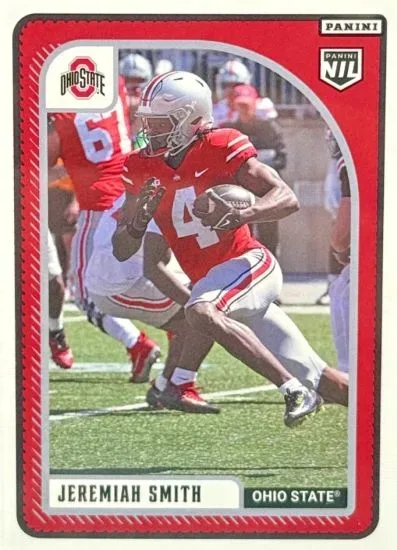
A college athlete can be a serious Heisman candidate yet have little direct impact on a specific sealed-card product if he is not included. Ohio State wide receiver Jeremiah Smith is an example: he belongs in the broader on-field discussion, but does not have a card in 2026 Bowman Football. The same product-specific limitation applies to Ole Miss quarterback Trinidad Chambliss and Miami wide receiver Malachi Toney, despite their place in the season’s early Heisman conversation.
That is a useful reminder for anyone evaluating boxes, breaks, singles, or player collections. Product relevance is not a measurement of a player’s talent. It is simply the question of whether that player appears in the release and, if so, what types of cards are attached to him.
Several terms matter here:
- Bowman 1st refers to a player’s first Bowman-branded card. It is a landmark designation in Bowman collecting and can make a player especially important within a release.
- Autograph, often shortened to auto, is a signed card. The supplied product details distinguish some players by having their first autographs in a new uniform or by appearing on multi-player signed cards.
- Case hit is collector shorthand for a particularly scarce insert expected at a case-level frequency rather than as a routine pull. It describes relative rarity in product terms, not a guarantee of value.
- SSP means super short print, a very limited card variation or insert. An SSP’s scarcity can increase interest, though player demand, condition, and collector preferences still matter.
For a wider look at how card releases can place emphasis on character-driven inserts and collectible formats, Joking Joystick’s coverage of Hornsby & Halo #16 offers a different corner of the card-collecting landscape.
Arch Manning: the most immediate Week 3 surge
Manning’s comeback against Ohio State is the clearest Week 3 development affecting the Bowman conversation. Texas is now the nation’s No. 1 team, and Manning is set to receive his Bowman 1st in 2026 Bowman Football. He is also identified as the release’s NIL-side chase, a label that signals unusually concentrated collector focus within the college-athlete portion of the checklist.
Related coverage includes 2026 Bowman Football Stock Watch After Week 3: Heisman Hopefuls Driving Early Hobby Interest.
His card makeup goes beyond a standard debut. Manning is slated for the SSP Anime and GPK cards. The Anime designation points to a stylized insert concept, while GPK identifies another distinct themed inclusion. What matters most at this stage is not trying to rank those cards against every other parallel or insert before the product arrives. It is recognizing that Manning combines three forces that collectors often watch closely: a first Bowman card, a nationally prominent program, and a major early-season result.
The practical implication is straightforward. Manning’s performance has made the on-field argument for attention much easier to understand, while the confirmed card details provide the collecting argument. Neither automatically predicts a final hierarchy in the hobby, but together they make him the most obvious name to monitor as release approaches.
Mensah and Carr have a collision course
Mensah is the early Heisman leader after dominant outings against Stanford and Florida A&M. The larger measuring stick is still ahead: Miami and Notre Dame are scheduled to meet later in the season. That game is not presented as a College Football Playoff elimination game, but it could function as something close to an elimination moment for the Heisman narratives surrounding these quarterbacks.
Mensah’s Bowman situation differs significantly from Manning’s and Carr’s. He already had a Bowman 1st in 2025 Bowman Chrome University, so 2026 Bowman Football will not be his initial Bowman appearance. Still, he is expected to be broadly represented in the new release. That distinction is important for collectors who prioritize a debut card over breadth of checklist presence. A player can be heavily featured and highly sought after without having a Bowman 1st in the product.
Carr, by contrast, is due for his first card in 2026 Bowman Football. The timing is notable. If he remains among the Heisman contenders once the product is available, his first-card status could make him a focal point in breaks and singles discussions. Breaks are formats in which participants buy a defined claim—often a team, player, or other allocation—rather than opening all of a product themselves. For breakers and participants alike, a player with a first card and current awards relevance can become an especially visible target.
The anticipated Miami-Notre Dame matchup therefore has two separate dimensions. On the field, it will test each quarterback against a major opponent. In collecting terms, it could clarify whether Mensah’s established Bowman presence or Carr’s debut-card appeal has the stronger late-season tailwind. That is analysis, not a promised price outcome: the supplied information establishes their card roles and football narratives, not future sale values.
The second tier has different kinds of upside
Josh Hoover and Jayden Maiava enter the release with more established Bowman histories, as both had Bowman 1sts in earlier products. Their interest is more dependent on what happens next on the schedule and which specific cards collectors want.
Hoover’s late October and November are especially consequential, with Ohio State, Michigan, and USC ahead. Those games give him major opportunities to alter his national profile. In 2026 Bowman Football, he will have Spotlight and Crystalized cards along with his first autographs in an Indiana jersey. The uniform detail can matter to team-focused collectors because it identifies a specific stage of a player’s college career. It also gives Hoover’s autograph offerings a clearer place in an Indiana collection than cards tied to an earlier stop.
Maiava is set for all of the product’s case hits except Anime. The breadth of those premium insert appearances means he is not short on rarity-driven options. But the early picture suggests his hobby standing may not completely mirror his Heisman outlook. This is another example of why a collector should not treat awards odds as a substitute for a checklist. A player can have a strong football case while facing competition from players with first-card appeal, more concentrated promotional attention, or different scarcity combinations.
Taylor and Mestemaker are the longshot names with concrete hooks
Taylor has been one of the most productive quarterbacks in the supplied early-season snapshot: 581 passing yards, 145 rushing yards, and eight combined touchdowns. Those totals came against UL-Monroe and Minnesota, with the opposition context worth retaining. Strong production is meaningful, but the degree of difficulty remains part of any responsible Heisman or hobby assessment.
For 2026 Bowman Football, Taylor is slated for Spotlight and Crystalized cards, autos, and an SSP auto. That makes him more than a base-checklist afterthought. Still, his status as an under-the-radar Heisman name suggests a potential gap between his available card formats and broad collector awareness. That gap can close if his season builds, but it can also remain. Scarcity provides a reason to look; it does not create universal demand by itself.
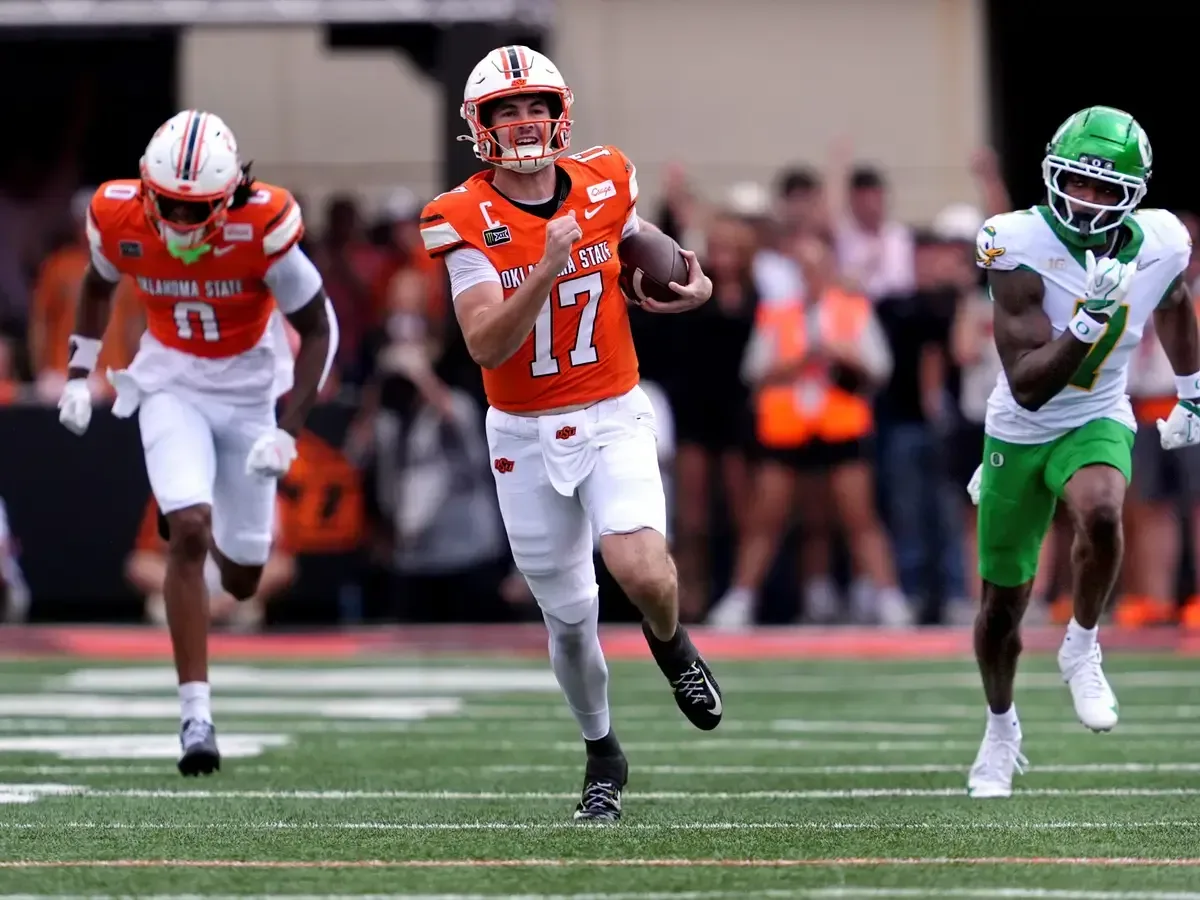
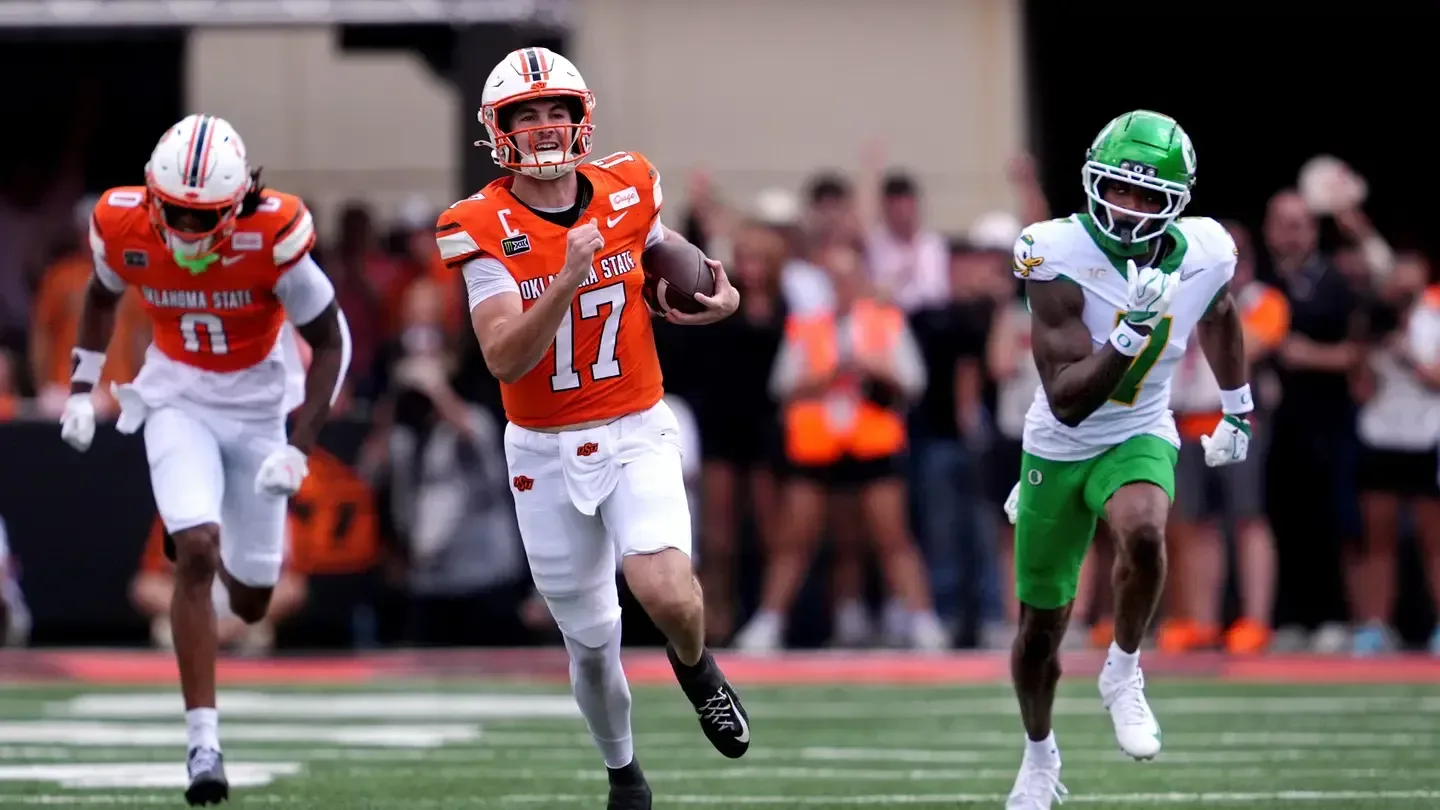
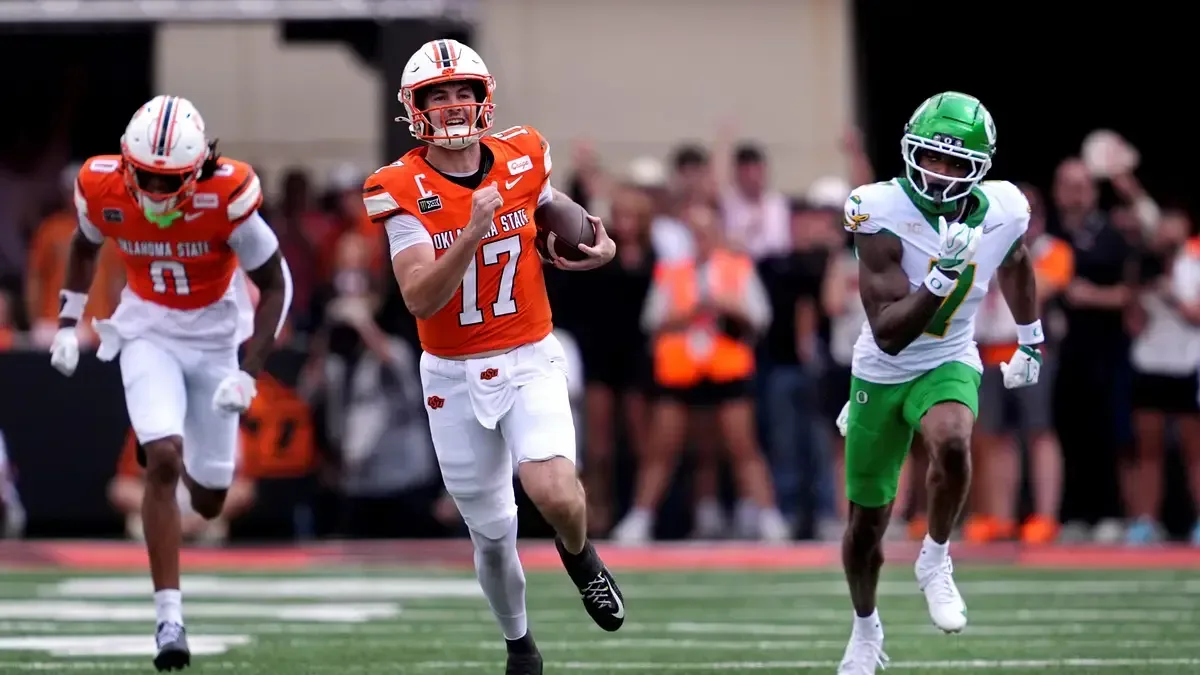
Mestemaker brings perhaps the week’s most dramatic revival narrative. After a productive 2025 at North Texas, he produced a major performance in Oklahoma State’s upset of No. 6 Oregon. His 2026 Bowman Football profile includes a Bowman 1st and most case hits, excluding Anime. He will also share a triple autograph with Carr and Sagapolutele.
A triple autograph is a card signed by three players. In this instance, it creates one collectible object connected to three very different early-season narratives: Carr’s first card and front-runner status, Mestemaker’s resurgence after the Oregon upset, and Sagapolutele’s preseason-driven collector appeal despite a difficult opening. The card’s appeal may therefore depend on more than any single player’s performance.
Sagapolutele shows why preseason hype can persist
California’s start has complicated Sagapolutele’s football case. Cal was decisively beaten by UCLA, and he has struggled for much of the season, including during a comeback win over Syracuse. He remains in the Heisman race, albeit with some of the longest odds.
His 2026 Bowman Football role is nevertheless substantial. Sagapolutele will receive a Bowman 1st, the principal case hits and SSPs, plus the triple auto alongside Carr and Mestemaker. That setup makes him one of the release’s biggest chases based on preseason hype even though his current on-field trajectory is less favorable.
For collectors, this is a clear lesson in timing. Checklists are built and product plans take shape before all of a season’s defining games are played. A release can therefore preserve the expectations that existed before Week 3, while the sport itself is already revising them. Sagapolutele has work to do on the field, but his cards have already been assigned an important place in the product.
What to watch before 2026 Bowman Football arrives
The next several weeks should be approached as an evolving set of football questions rather than a rush to declare a definitive card-market winner. Manning has the biggest recent team result and a debut Bowman card. Mensah and Carr have the clearest potential head-to-head Heisman inflection point. Hoover has a schedule that can create high-profile opportunities. Taylor and Mestemaker possess specific premium-card reasons to track them, while Sagapolutele remains a heavily featured chase whose early play has not matched preseason expectations.
The sensible approach is to identify the exact card type that matters to a collection. A Bowman 1st collector may prioritize Manning, Carr, Mestemaker, or Sagapolutele. An autograph collector may focus on Hoover’s first Indiana-uniform autos, Taylor’s SSP auto, or the Carr-Mestemaker-Sagapolutele triple auto. A fan of scarce inserts may look instead at Manning’s Anime and GPK cards, or the various Spotlight, Crystalized, case-hit, and SSP allocations.
Week 3 has made one thing clear: 2026 Bowman Football will arrive while the Heisman race is still unsettled. That uncertainty is not a flaw in the conversation. It is the central reason the season, the checklist, and every major matchup between now and release will matter.