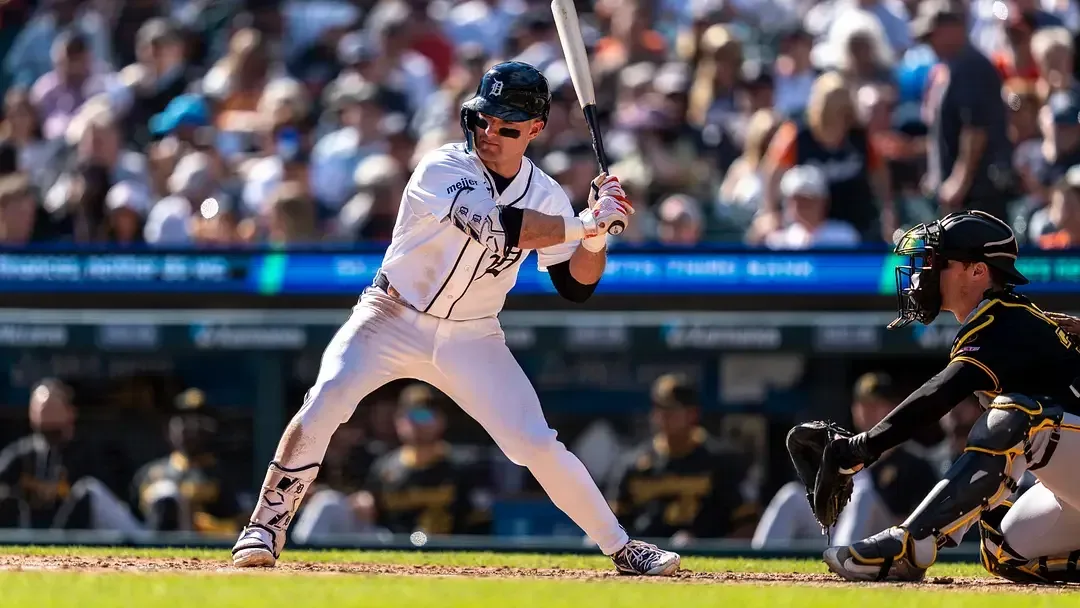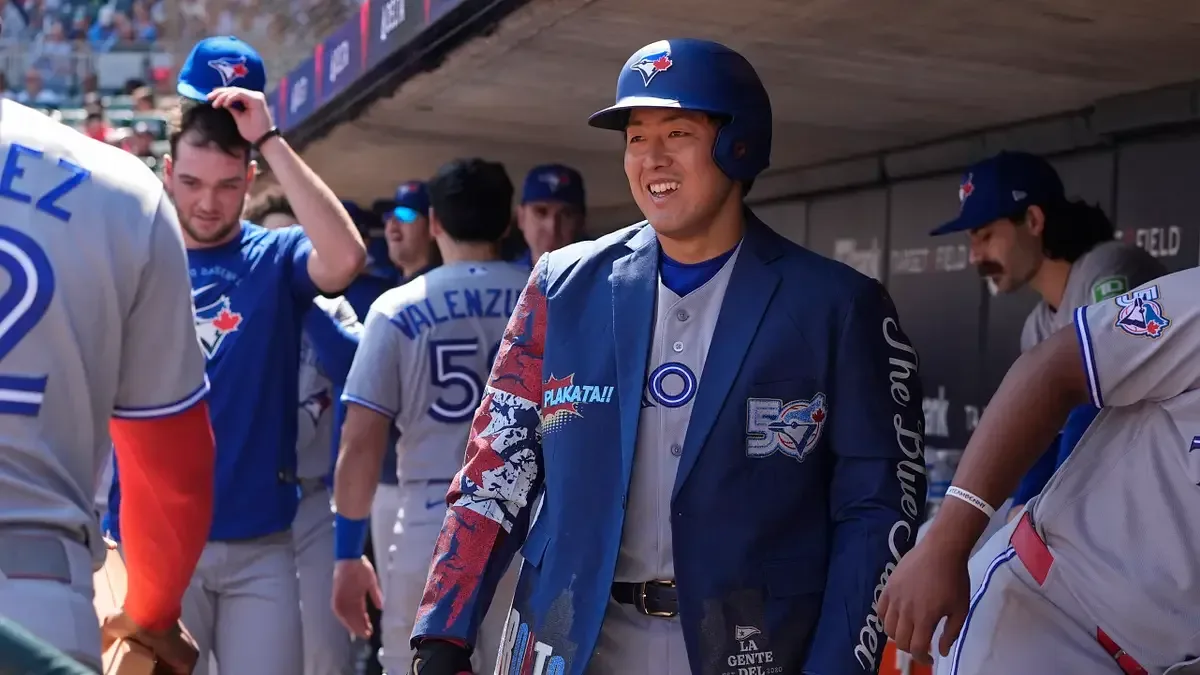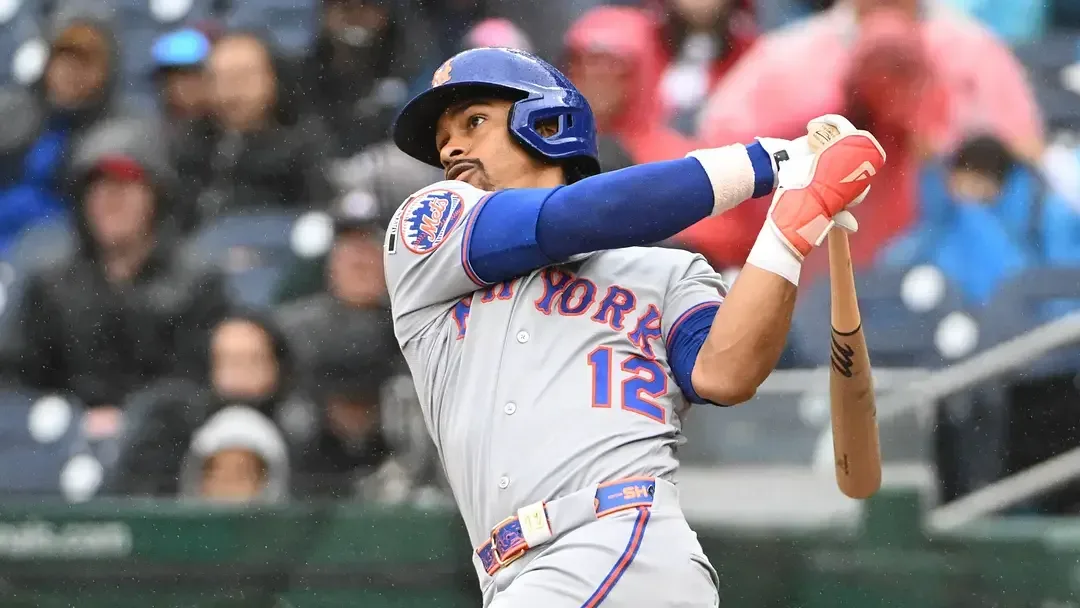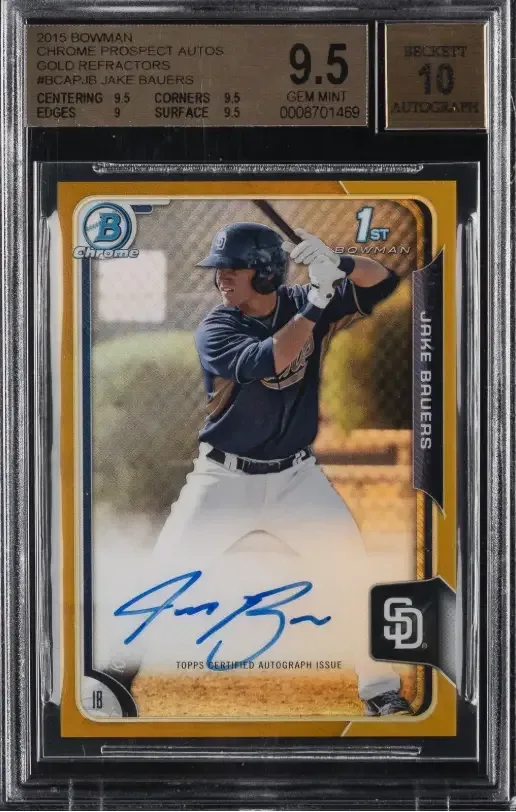
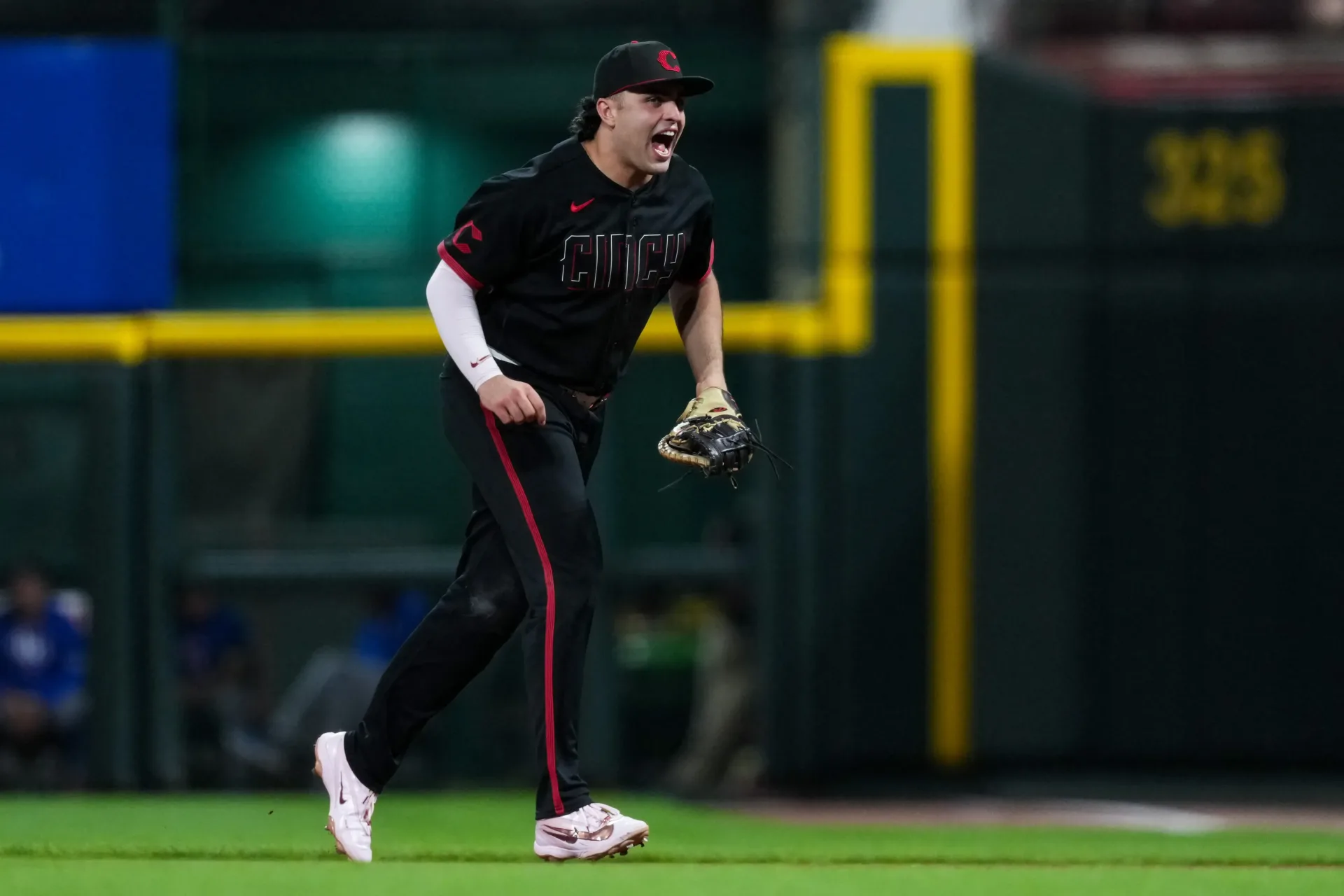
Rookie of the Year is a powerful collecting milestone because it converts promise into an accomplishment no prospect ranking can quite replicate. For Cincinnati Reds infielder Sal Stewart and Detroit Tigers infielder Kevin McGonigle, the award has another immediate consequence: their qualifying Bowman Chrome Red Rookie cards are now eligible for the Red Rookie Redemption buyback.
That leaves holders with a decision that is deceptively simple. Redeem now for $100 in Fanatics FanCash, or retain the card and wager that a much larger career achievement will eventually make the redemption more valuable. Stewart won the National League honor; McGonigle earned the American League award. Both have cleared the same first major checkpoint, but the available evidence makes the longer-term cases meaningfully different.
The short version: collectors who prioritize certainty have a strong reason to redeem either card. For collectors choosing between the two players on projected upside, Stewart looks like the cleaner candidate to take the guaranteed value now, while McGonigle has the more compelling argument for a patient hold. That is not a forecast of either player’s career. It is a decision about risk, opportunity cost and how much confidence an individual collector has in an award-driven redemption path.
What the Rookie of the Year win changes
Bowman Chrome Red Rookie Redemption cards tie their eventual value to career accolades. The Rookie of the Year result matters because it makes Stewart and McGonigle eligible for the stated $100 Fanatics FanCash buyback. In practical terms, the card is no longer merely a speculative rookie collectible with a possible future event attached; it now carries a defined redemption option.
For more context, explore Ocarina of Time Remake’s Infinite Gold Skulltula Glitch Appears to Survive — With a Loading-Zone Catch.
That certainty is important. FanCash is not the same thing as cash in hand: it is credit intended for use within the relevant Fanatics ecosystem. Even so, a guaranteed $100 of usable credit can have clear value for a collector who already planned to buy cards, apparel or other eligible items there. Before deciding, holders should consider whether they can use FanCash at close to face value. A collector with no practical use for it may reasonably value the offer below $100, while a regular customer may view it nearly dollar for dollar.
The alternative is an escalator. In this setting, an escalator is the prospect that a later career milestone raises the redemption’s value beyond the Rookie of the Year level. The relevant aspirations discussed for these cards are Most Valuable Player honors and, at the most ambitious end of the spectrum, Hall of Fame induction. Those events are inherently uncertain and may be years away. The cardholder is therefore choosing between realized utility now and a long-duration bet on player achievement.
That distinction should guide the entire decision. A Rookie of the Year award is finished business. Future MVP voting, career health, performance progression and eventual Hall of Fame consideration are not. The card can be fun to hold, but it should be treated as an award-outcome wager rather than a guaranteed investment.
Sal Stewart: why the immediate redemption case is strong
Stewart entered the season with considerable momentum after a strong finish to 2025 and a notable 2025 postseason. He was viewed as a credible Rookie of the Year contender, even if he was not widely positioned as the leading choice ahead of players such as Nolan McLain and J.J. Wetherholt. He nevertheless claimed the National League award after a season that included an All-Star selection and a likely Silver Slugger Award.
That is a terrific first-year résumé. It also explains why a Stewart Red Rookie holder should not feel pressured into selling the player short by redeeming. The award has already validated a level of performance that made the card eligible in the first place. The question is narrower: does holding offer a sufficiently favorable chance of a later, larger reward to justify passing up the $100 credit?
The case for redeeming is built around the difficulty of reaching the next tier, rather than a dismissal of Stewart’s talent. Stewart is expected to remain an All-Star-caliber performer, but the available assessment is that he may be relatively close to his established level. If that is correct, there may be room for incremental improvement without the major leap usually needed to dominate an MVP race.
There is also the National League environment. Shohei Ohtani remains an enormous obstacle in any discussion of future MVP honors while he is playing for the Los Angeles Dodgers. An MVP is voted on in a single season, so no player needs to be better than Ohtani over an entire career to win one. But a Stewart holder counting on an MVP escalator would need the right blend of exceptional individual production, team context, voter sentiment and competition. An established elite competitor raises the threshold for everyone else.
That makes the $100 redemption a sensible conversion of a successful rookie narrative into a usable, known benefit. It is especially logical for a collector who bought or pulled the card with the buyback in mind, has purchases planned that FanCash can cover, or prefers not to let a collectible’s value hinge on a far-off award result.
Holding Stewart is still defensible, just more speculative. It fits a collector who is specifically building a Reds or Stewart collection, enjoys keeping milestone-linked cards regardless of redemption economics, or has a substantially more optimistic view of his capacity to move from All-Star production to regular MVP contention. Those are collecting preferences, not mistakes. They simply require accepting that the guaranteed option is being declined.
Stewart decision snapshot
- Redeem case: Rookie of the Year has already unlocked $100 in FanCash, while an MVP path appears difficult in a National League that includes Ohtani.
- Hold case: Stewart has already reached the All-Star level and could remain a central piece of a personal Reds or player collection.
- Most practical lean: Redeem, particularly for holders motivated by certainty and usable credit.
Kevin McGonigle: the more intriguing long hold
McGonigle’s route to American League Rookie of the Year arrived with less surprise. His rise through Detroit’s farm system was driven by impressive plate discipline alongside developing power, and those traits carried into his work with the Tigers. He finished the season with 5.1 WAR, made his first All-Star team and emerged as the clear Rookie of the Year choice.
WAR, short for Wins Above Replacement, is a broad statistic intended to estimate how much value a player contributes compared with a replacement-level alternative. It is not a direct MVP formula, and different versions of WAR can calculate value differently. Still, a 5.1 WAR rookie season is useful context here because it supports the idea that McGonigle’s first year was not simply a hot stretch or an award based on modest production. He contributed at a high level while earning his first All-Star recognition.
His profile also produces the key reason to hold: the assessment that he has more room to grow. Plate discipline refers to a hitter’s judgment of pitches and ability to avoid giving away at-bats on poor choices. Improving power refers to the potential for more impactful extra-base damage as a player develops. If both remain present and the power takes another step forward, McGonigle could develop from an excellent rookie into a more forceful annual MVP candidate.
No future award is easy, and the American League is not devoid of competition. Aaron Judge is an obvious formidable name in that conversation. But the comparison offered between the leagues is about the shape of the road ahead: Judge is older than Ohtani and has dealt with injuries in recent seasons, which could make the American League’s future MVP picture feel less blocked than Stewart’s route in the National League.
That does not mean McGonigle has a clear runway, nor does it mean that an injury to any rival should be presumed. It means a long-horizon collector can reasonably see a less intimidating barrier to an MVP breakthrough than in Stewart’s case. Combined with McGonigle’s documented rookie performance and potential for added power, that creates a coherent case for retaining the Red Rookie card.
The opportunity cost remains real. Holding means declining credit that is available today, and it leaves the card dependent on results that are never assured. Injuries, changing performance, tougher competition and the simple volatility of award voting can reshape the picture quickly. The appropriate hold is therefore a conviction play, not a passive default.
McGonigle decision snapshot
- Redeem case: The $100 FanCash option is immediate and certain, while every higher career milestone remains speculative.
- Hold case: A 5.1 WAR rookie campaign, All-Star recognition, strong plate discipline and possible power growth offer a credible path toward a higher ceiling.
- Most practical lean: Hold for collectors comfortable with long-term uncertainty and interested in the MVP-upside argument.
A practical checklist before submitting either card
The better choice is not necessarily the same for every holder, even when the player analysis points in one direction. A few questions can keep an exciting award announcement from turning into an automatic decision.
- Confirm that the card qualifies. Verify the exact Red Rookie branding and the redemption program’s terms before acting. Similar-looking rookie cards, parallels and inserts may not carry identical eligibility.
- Assess your real FanCash use. The face value is $100, but its personal utility depends on whether you intend to spend it on eligible purchases. Do not mentally treat store credit as fully interchangeable with cash if it is not useful to you.
- Decide whether you collect the player or the outcome. A player collector may value owning the card more than the credit. An outcome-focused collector may prefer to bank the known return and redirect it into other cards.
- Set a time horizon. An MVP or Hall of Fame-oriented hold can require exceptional patience. If the idea of monitoring seasons and awards for years sounds burdensome, the redemption has a strong practical appeal.
- Avoid treating Rookie of the Year as a promise. It is a major accomplishment, not a guarantee of later MVP awards or Hall of Fame election. The same restraint applies to a superb rookie WAR total.
Collectors seeking another take on the two choices can read this related discussion of the Stewart and McGonigle redemption decision.
The sensible split: certainty for Stewart, upside for McGonigle
Stewart and McGonigle have both done the hard part required to unlock the current redemption: they won Rookie of the Year. From here, the optimal move diverges because the wager is no longer about their rookie seasons. It is about the probability and timeline of a still-higher achievement.
For Stewart, the immediate $100 FanCash route is the more compelling all-purpose choice. His rookie campaign can be celebrated without assuming another dramatic performance jump, and the National League MVP race presents a daunting recurring obstacle as long as Ohtani remains in it.
For McGonigle, holding is the more interesting calculated risk. His 5.1 WAR season, All-Star status, disciplined approach and possible power development provide a foundation for the belief that his best offensive seasons may still be ahead. That does not transform the card into a sure thing; it makes the wait easier to justify for collectors who can live with the uncertainty.
In other words, use Stewart’s card when guaranteed value best serves the collection. Keep McGonigle’s only when the collector is intentionally buying into future upside. Both approaches respect what the cards represent—and neither should be confused with a prediction that awards will inevitably keep arriving.