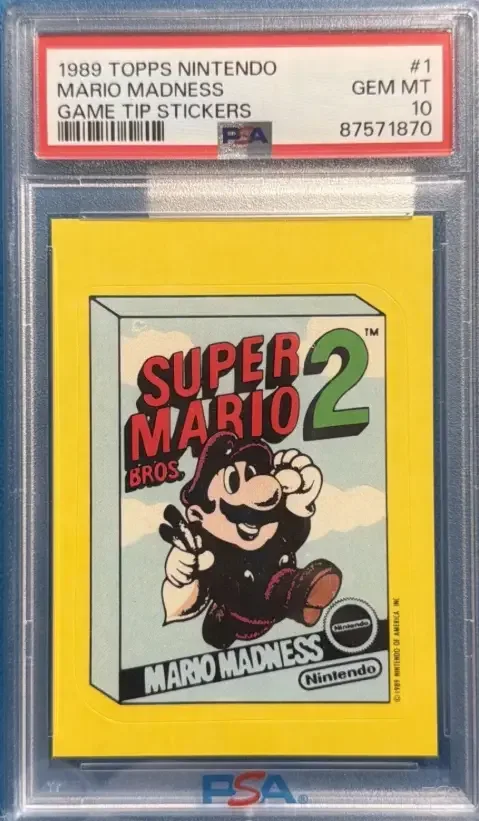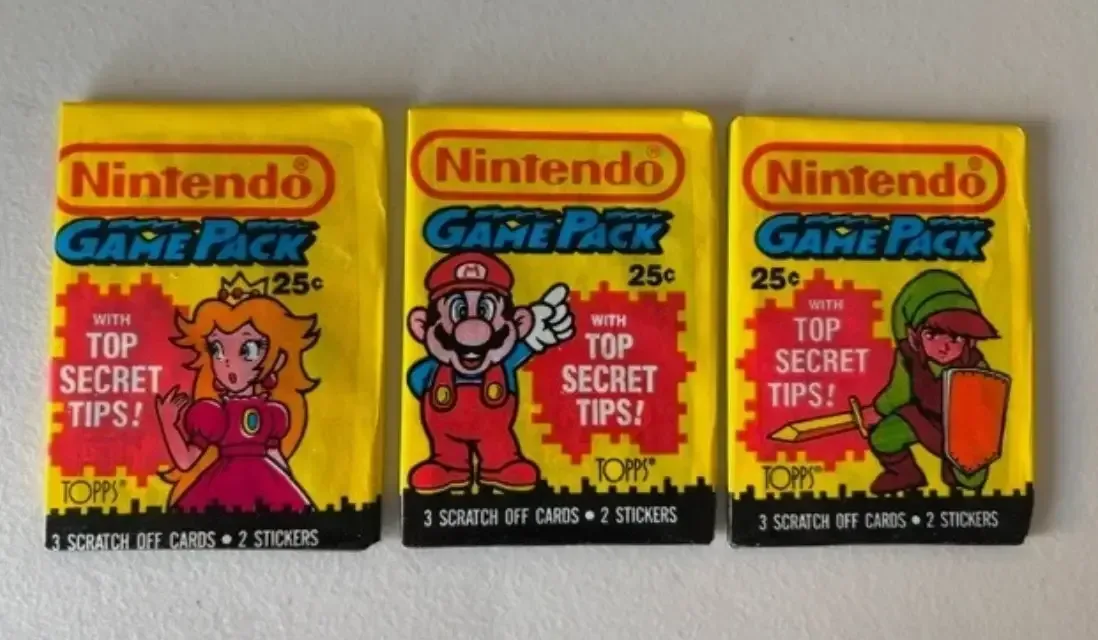
The 1989 Topps Nintendo set is drawing fresh attention after several recent sales showed dramatically higher prices for graded cards tied to the NES era. The clearest headline number is a PSA 10 copy of Mario Madness, a Super Mario Bros. 2 card numbered #1, which sold for $7,700 on October 2, 2026 through a best-offer transaction.
That result matters not merely because it is the reported high sale for the set, but because of the gap between it and earlier recorded transactions for the same card. Its previous sale was $372 on May 11, 2025. Seven sales recorded from December 8, 2021 through that May 2025 transaction averaged $314. The $7,700 result is therefore a striking outlier relative to the available history, rather than a small step up in an already-established price range.
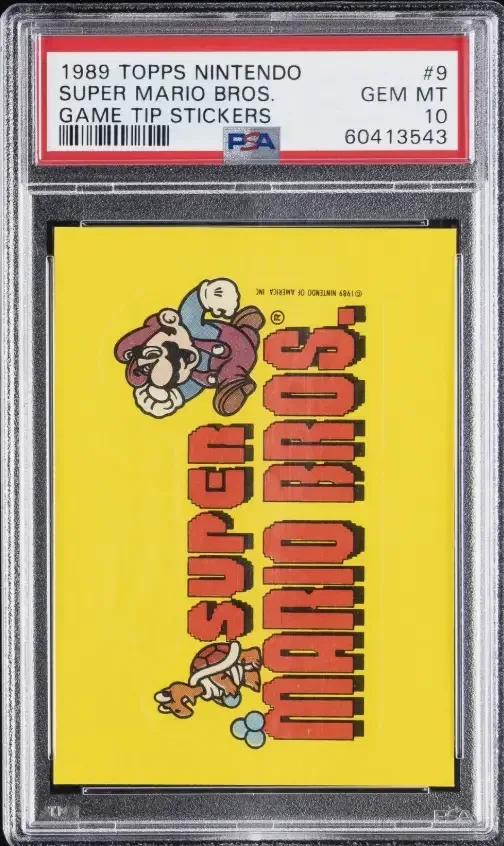
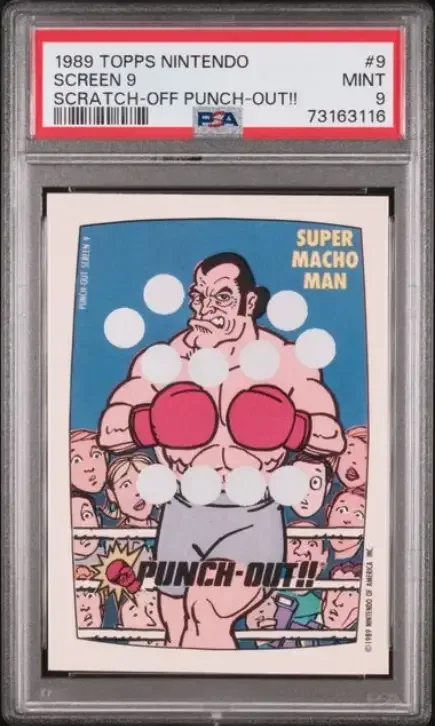
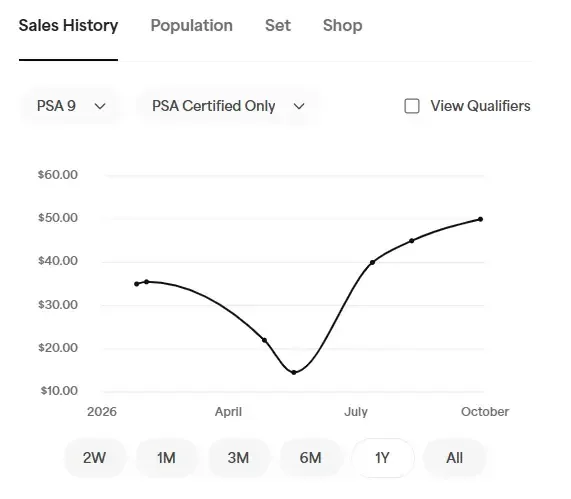
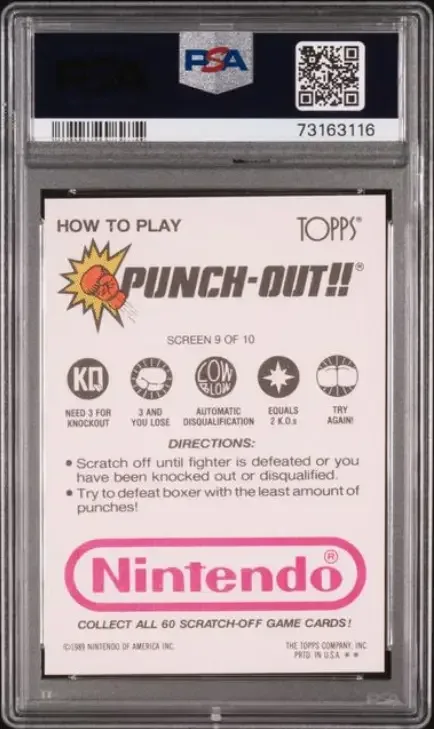
There are similarly sharp moves lower down the grading ladder and price scale. A PSA 10 1989 Topps Nintendo Super Mario Bros. card averaged $183.56 across five recorded sales between January and May 2026. Later sales landed at $535 on September 11 and $900 on October 2. Meanwhile, a PSA 9 Scratch-Off Punch-Out!! card #9 recorded a $50 sale on September 30, after a $14.53 sale on May 19.
Those numbers do not establish a permanent new floor for every card in the release. They do, however, show that recent buyers have been willing to pay far more for particular graded examples than buyers did earlier in the same year or in the prior few years. For collectors sorting through old Nintendo material, the practical message is simple: identify the exact card, card format and grade before treating any eye-catching sale as a comparable.
For more context, explore GuadaLAjara Film Festival Sets ‘Ashes,’ ‘Mexicanamerican’ and Ava DuVernay’s ‘14th’ for Los Angeles Run.
A Nintendo set built around six NES games
Topps released the Nintendo set in 1989, drawing on characters and imagery from an NES library led by Super Mario Bros.. The checklist contains 93 cards in total: 60 scratch-off game cards and 33 sticker cards.
Six games appear across the 60-card scratch-off component:
- Super Mario Bros.
- Super Mario Bros. 2
- The Legend of Zelda
- Zelda II: The Adventure of Link
- Punch-Out!!
- Double Dragon
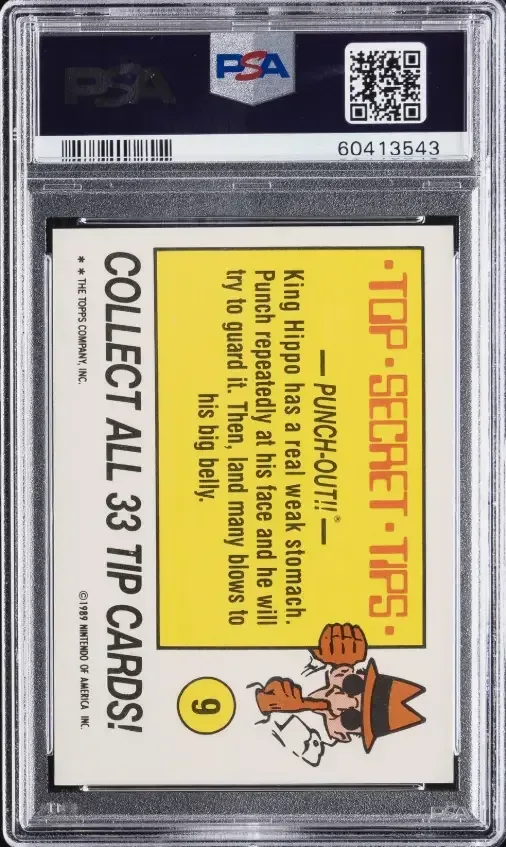
The 33-card sticker portion has a narrower game selection. It includes material from Super Mario Bros., The Legend of Zelda, Punch-Out!!, and Double Dragon, along with gameplay tips. That distinction is crucial for anyone researching a card or buying a copy online. A Nintendo character alone is not enough to identify the item’s place in the set: a scratch-off card and a sticker card are separate formats with different content, even when they come from the same release.
The set also joins two related but distinct collector interests. One is trading cards and their physical condition. The other is nostalgia for games that became defining parts of the NES catalog. That overlap helps explain why card-level details matter so much. A buyer may be pursuing Mario, Zelda, a particular game, a numbered card, a sticker, a scratch-off format, or an especially high third-party grade. These are not interchangeable motivations, and a sale price attached to one does not automatically transfer to all the others.
What the recent sales actually show
The biggest result belongs to the PSA 10 Super Mario Bros. 2 #1 Mario Madness card. It was listed at $9,500, but the seller accepted a $7,700 offer. The completed amount, not the asking price, is the meaningful number when comparing sales. A listing can signal ambition; an accepted offer documents the price at which a buyer and seller actually reached a deal.
Compared with the prior $372 sale, $7,700 is an increase of roughly 1,970%. Compared with the $314 average cited for the prior seven sales, it is roughly 2,353% higher. Both comparisons communicate the same broad point: the October sale sits enormously above the earlier record. But they answer slightly different questions. Comparing it with the immediately prior sale tracks the last known step in the market. Comparing it with several older sales provides a broader, if still limited, reference range.
The PSA 10 Super Mario Bros. card presents a different kind of evidence. Its five-sales average of $183.56 from January through May supplies a recent baseline, albeit from a small sample. The $535 sale is about 191% above that average, while the $900 sale is about 390% above it. The $535 figure itself is roughly 172% above $183.56. In other words, whether the comparison is made to the early-2026 average or from one later result to the next, the direction is unmistakably upward.
The PSA 9 Punch-Out!! Scratch-Off #9 is important because it offers evidence beyond a single premium PSA 10 card. Its rise from $14.53 in May to $50 in late September is about 244%. That is still only two recorded sales, and it is a lower-grade, lower-priced example than the Mario cards. Yet it suggests the attention is not confined solely to the release’s most expensive grade tier.
Why grade and card format need to stay in the headline
PSA is a grading company whose label assigns a numerical assessment to a card’s condition. In the sales discussed here, PSA 10 is described as GEM MT 10, while PSA 9 is described as Mint 9. The point is not that a number makes every card valuable by itself. Rather, each sale is for a very specific combination: a particular 1989 Topps Nintendo card in a particular assessed condition.
That is why a $7,700 PSA 10 Mario Madness result should not be read as the price of every Super Mario Bros. 2 card, every Mario item in the set, or every ungraded copy. Similarly, the $50 result belongs to a PSA 9 Scratch-Off Punch-Out!! #9, not simply “a Punch-Out card.” A grade, card number, game title and product type all narrow the comparison.
Scratch-off cards deserve special care in descriptions because they are a defined 60-card component of this release. The sticker cards form a separate 33-card component and carry gameplay-tip content, but do not cover every game represented by the scratch-offs. Collectors should therefore avoid assuming a card is a sticker or scratch-off based on its character, front design, or game alone.
When looking at a potential purchase, a useful checklist is:
- Confirm it is from the 1989 Topps Nintendo release.
- Identify the card number and the game represented.
- Determine whether it is a scratch-off game card or a sticker card.
- Check whether it is graded and, if so, record the exact grade.
- Compare completed sales for that same card and grade rather than broad searches for “Nintendo Topps.”
- Separate a seller’s list price from a documented completed sale.
That process does not predict the next sale, but it prevents the most common comparison error: attaching a record price for a specific pristine example to a materially different card.
A fast market move, with a limited sales record
The available figures support a story of accelerated demand, particularly at the top of the condition spectrum. The $900 PSA 10 Super Mario Bros. sale followed an early-year average below $200. The $7,700 PSA 10 Super Mario Bros. 2 sale dwarfed both its previous $372 transaction and the $314 average of earlier sales. And the PSA 9 Punch-Out!! scratch-off moved from $14.53 to $50 in a little over four months.
At the same time, the evidence base is narrow. Five sales formed the early-2026 average for the PSA 10 Super Mario Bros. card. The Punch-Out!! comparison relies on two dates. The seven earlier sales for Mario Madness stretch from late 2021 to May 2025, before the much larger October 2026 result. Small groups of sales can show major changes quickly, but they do not answer every question about where prices will settle next.
That uncertainty is part of the story. A sudden record can attract more attention to a vintage set and encourage owners to check their own cards, yet it does not guarantee that the next copy will command the same number. Condition and exact card identity remain central, and a best-offer transaction adds another reminder that the accepted price may differ substantially from the public listing price.
Still, these transactions make the 1989 Topps Nintendo set difficult to dismiss as a minor curiosity. Its six-game scratch-off checklist, smaller sticker selection and direct ties to major NES-era properties give collectors several ways into the set. Recent high-grade sales have added a more urgent reason to learn the differences. For a closer look at the latest grading-sale movement, see the recorded PSA sale gains for 1989 Topps Nintendo cards.
The market may continue upward, level off, or move unevenly from card to card. What is already clear is that the latest sales have reset the conversation around select examples. A $7,700 PSA 10 Mario Madness card, a $900 PSA 10 Super Mario Bros. card and a $50 PSA 9 Punch-Out!! scratch-off are three very different transactions—but together they indicate that this 1989 Nintendo release is being watched much more closely than its earlier sales history suggested.