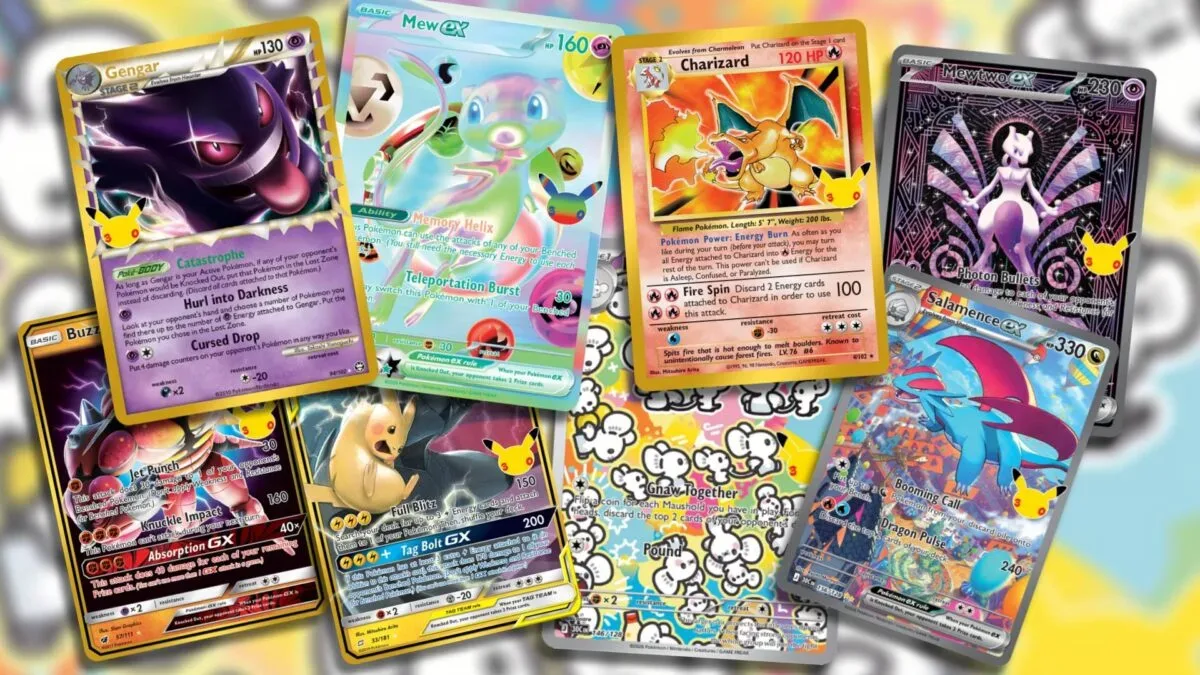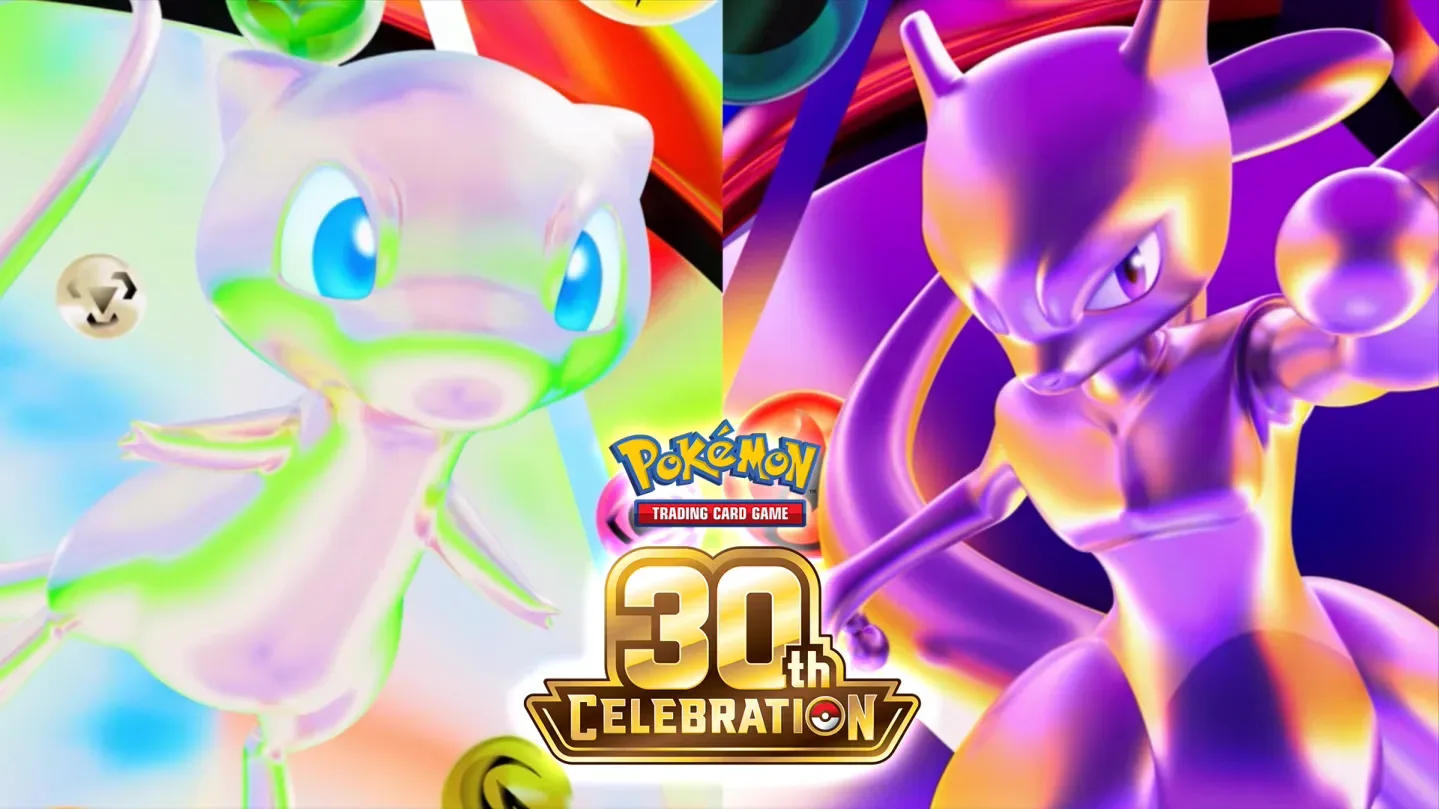
Pokémon’s 30th Celebration Classic Collection is built around a wonderfully dangerous idea for collectors: take cards that live in memory, give them a modern release, and ask the market to decide whether it wants history, shine, or both. Its 30 reprints span different eras of the Pokémon Trading Card Game, and the first five examined here make a persuasive case that a card’s original printing is not automatically the more expensive one.
That point matters. Reprints can make a historic illustration more attainable, but they are also distinct collectibles with their own holofoil patterns, anniversary branding and pull appeal. Meanwhile, original cards carry the weight of their first release, and sometimes the game history that came with it. The result is not one simple hierarchy. A modern Pikachu can outpace an older Base Set version; an original Charizard can remain in a completely different price bracket; and an inexpensive old competitive card can lose out to a fresh anniversary holo.
The five cards are Base Set Pikachu, Base Set Charizard, Gym Heroes Misty, Gym Challenge Erika’s Jigglypuff and Neo Genesis Sneasel. Their reported values are a snapshot rather than a permanent price guide, but the spread between each new version and its predecessor is revealing.
First, what a reprint is—and what it is not
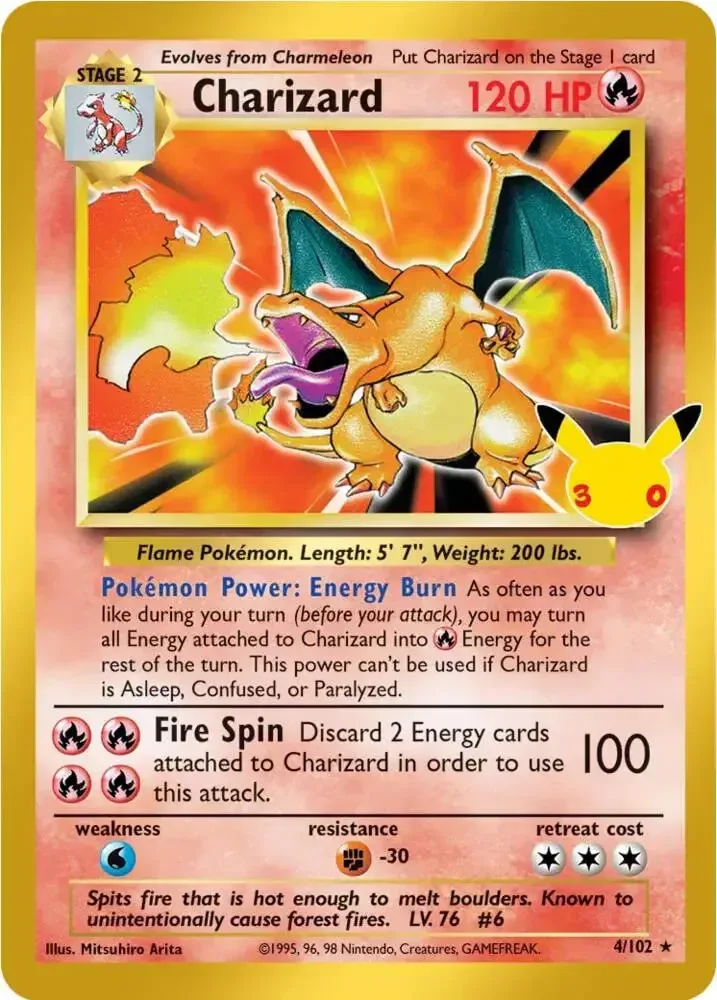
A reprint uses a previously released card as its foundation, whether that means its artwork, card identity or gameplay text. It is not the same physical artifact as the first printing. For the 30th Celebration cards, the anniversary treatment is part of that separate identity: the newer Charizard has a different holo pattern and a prominent Pikachu 30th-anniversary mark at the lower right of the frame.
That distinction is central to sensible collecting. “Original” tends to describe the earlier issue, while “reprint” identifies the new release. Neither word automatically declares a winner. An original may be scarcer, historically important, or simply harder to find in strong condition. A reprint may be the version collectors actively want to pull right now, perhaps because it delivers a famous image in a holo presentation not associated with the original version discussed here.
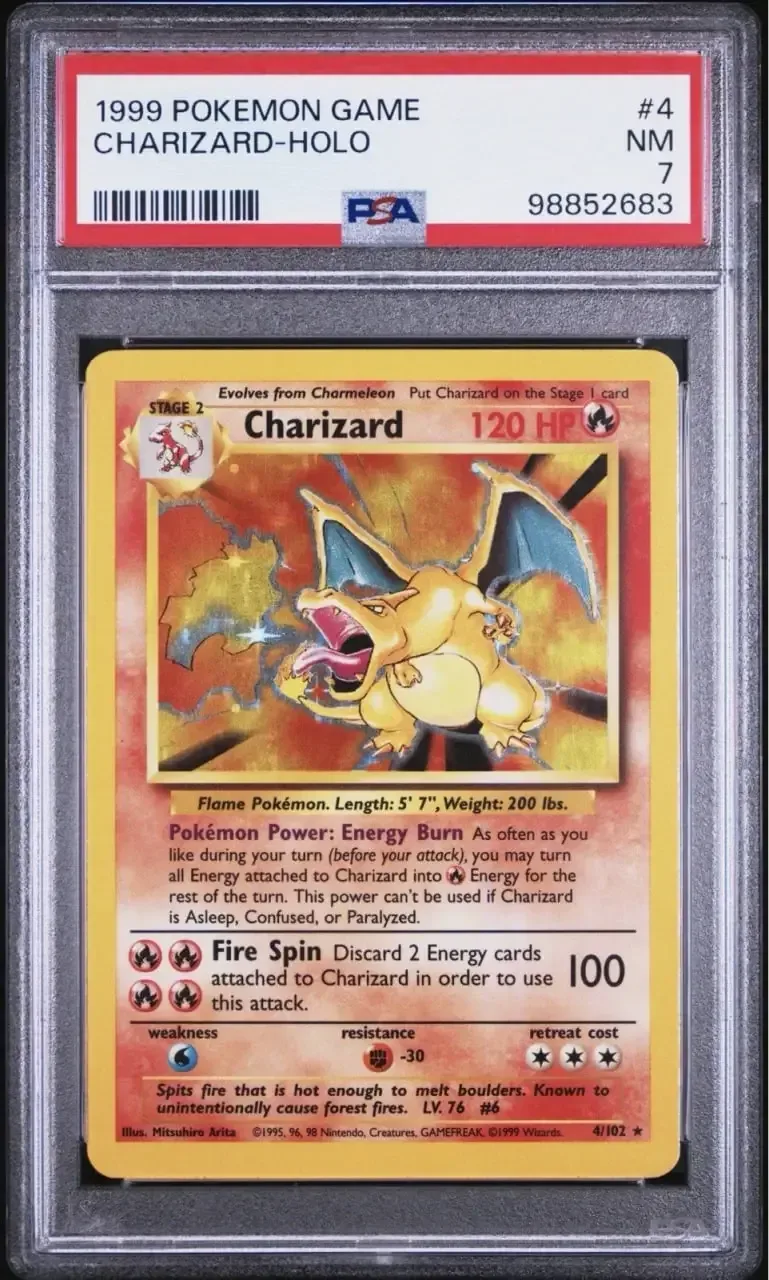
It is also important not to compare unlike conditions. The Charizard figure for the original, for example, is for an ungraded Near Mint copy, while some of the card images associated with these comparisons show graded examples. Grading is an independent condition assessment by a third-party service; a numerical grade and an ungraded Near Mint card are not interchangeable market references. Treat every listed number as a reported market indication for a particular version and condition, not as a universal value for every copy with that name.
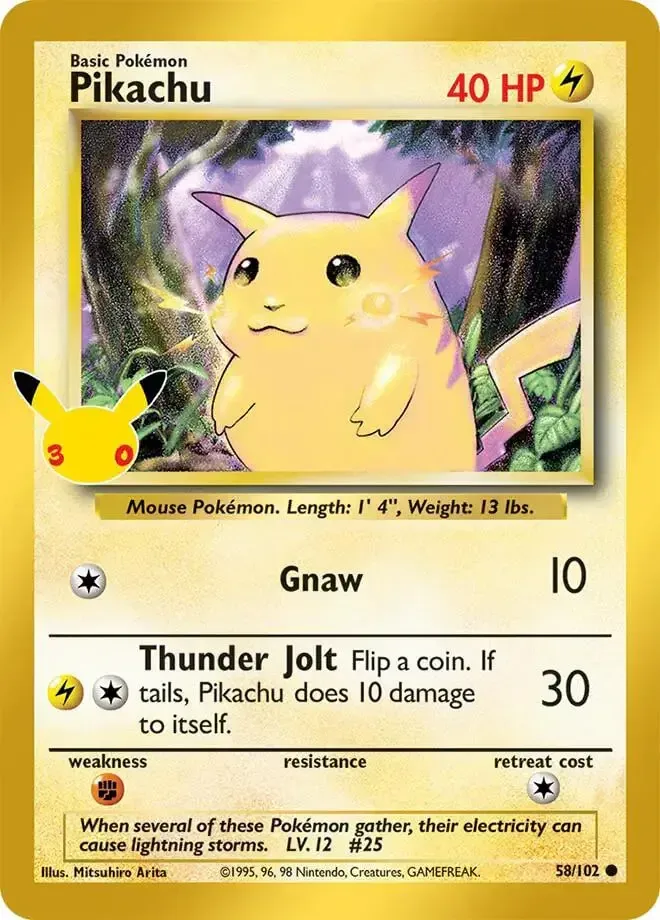
Base Set Pikachu: a modern holo gives “Chonkachu” a premium
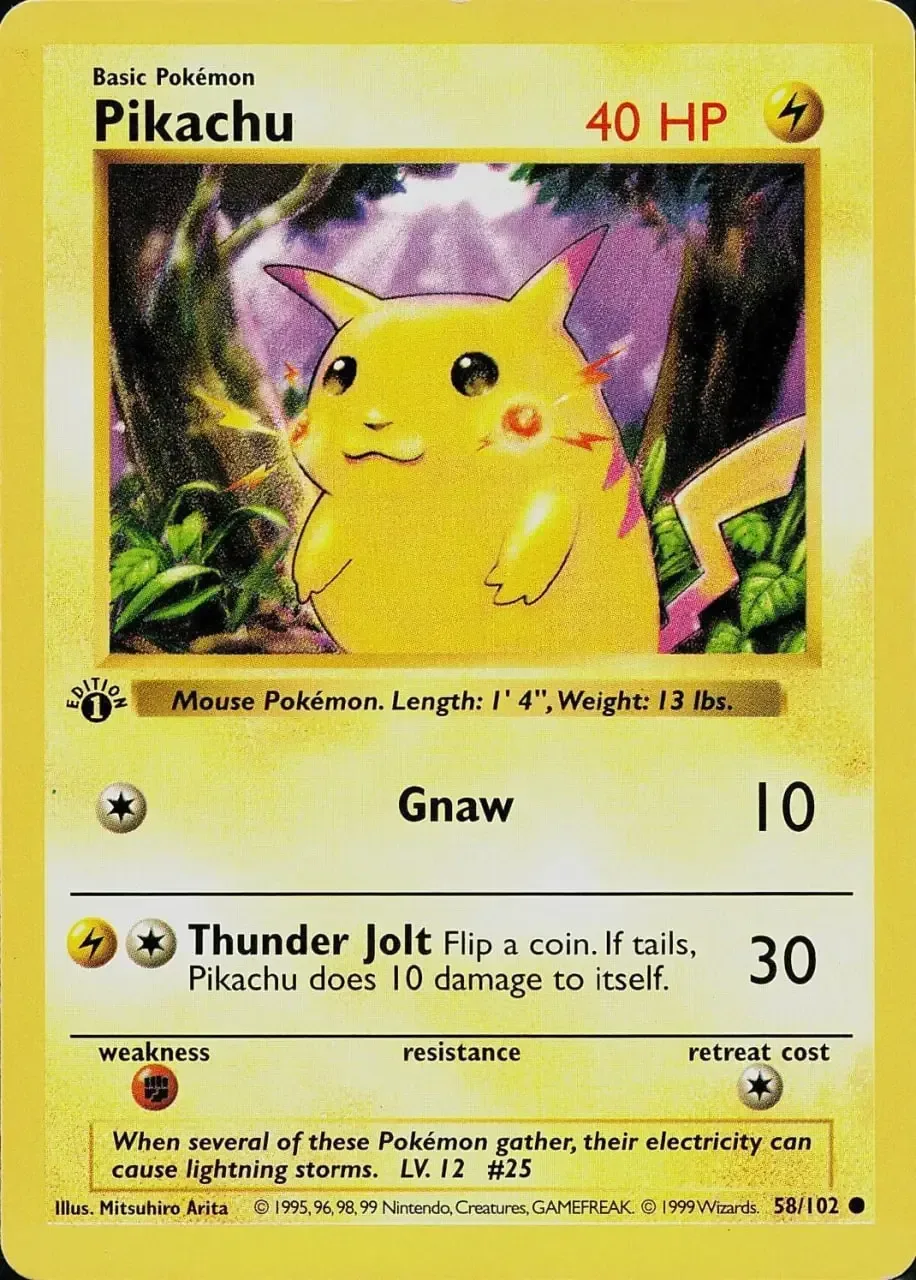
Base Set Pikachu is the franchise mascot in one of its most recognizable card poses, affectionately called “Chonkachu” by collectors. The 30th Celebration Classic Collection edition turns that famous Pikachu into a holo card. The original point of comparison is the Base Set “Red Cheeks” variation, named for the red coloring on Pikachu’s cheeks instead of the more typical yellow treatment.
The reported market picture reverses the assumption that vintage must cost more. The 30th Celebration Pikachu was trending around $30 roughly a week after release, while the Base Set Red Cheeks version was selling around $14. In other words, the new card was valued at more than twice the cited original example.
There are practical lessons in that gap. Collectors are not merely buying age: they may be responding to the modern holo finish, the celebratory framing, or the immediate excitement of a new release built around a deeply familiar mascot. Conversely, a low entry price for the older version does not make it less significant. The Red Cheeks variation remains a recognizable Base Set printing trait, and it offers a route to owning an early Pikachu without paying the current price attached to the 30th Celebration holo.
For anyone deciding between them, the question is not “which is the real Pikachu?” Both are legitimate releases. The better question is whether the goal is an early printing variation, a modern commemorative holo, or a two-card pairing that makes the visual and market contrast visible in a binder.
Base Set Charizard: history still commands the larger number
Charizard is the counterweight to Pikachu. The 30th Celebration reprint preserves the immense appeal of a Base Set Charizard pull, but the original’s historic cachet remains expensive. The anniversary version was reported at about $180, while an ungraded Near Mint original sat near $1,000.
That difference is substantial: the cited original is worth more than five times the newer card. The reprint therefore functions less as a direct replacement and more as another way to collect an image that has never stopped being a major Pokémon TCG chase. Its different holo pattern and 30th-anniversary Pikachu logo make it readily distinguishable, which is useful for collectors who want the homage without confusing it for the older card.
There is a temptation to reduce this to artwork, but the comparison suggests something broader. The older Charizard has an established identity as an original Base Set card. The current reprint has event-like appeal within a celebration set, yet it does not erase the collecting significance attached to the earlier issue. That is exactly why a reprint can be meaningful even when it does not reproduce the original’s price level.
Buyers should be especially precise when reading Charizard listings. “Base Set Charizard” alone is insufficient information in a market where an anniversary reprint, an ungraded Near Mint original and a graded copy can all command dramatically different amounts. Release version, condition, grading status and visible anniversary markings are the minimum details worth checking.
Gym Heroes Misty: character nostalgia meets a large vintage gap
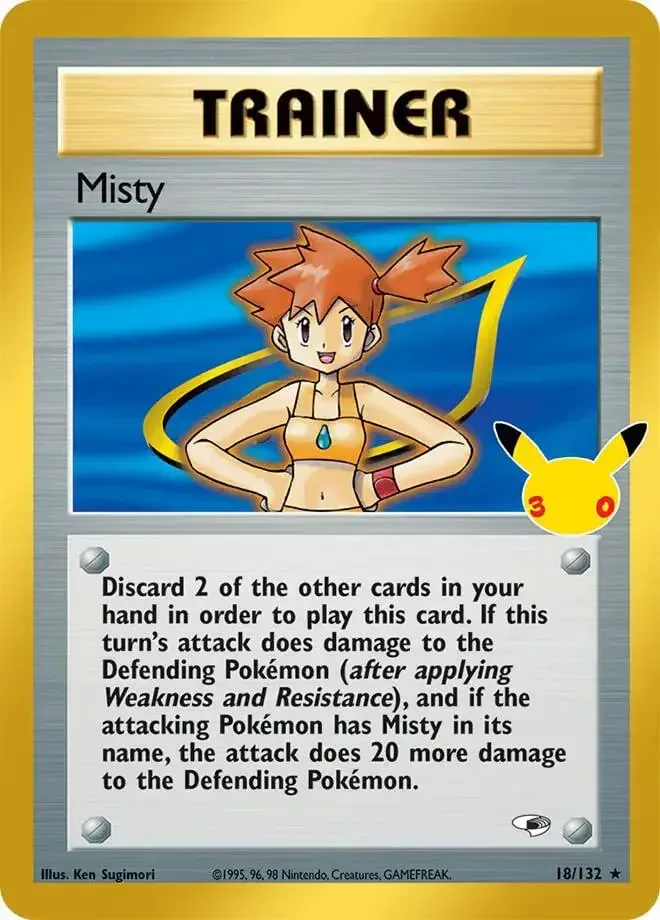
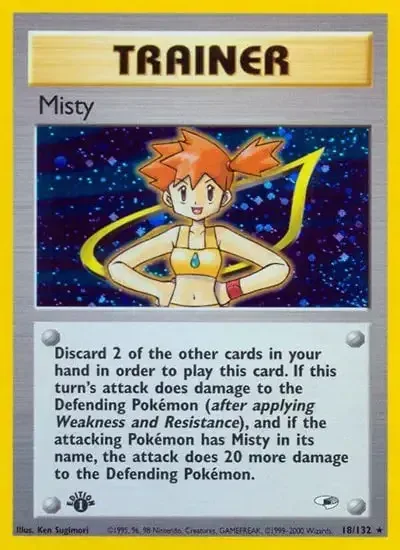
Misty from Gym Heroes illustrates how a Trainer card can sit in a different collector lane from headline Pokémon such as Pikachu and Charizard. Misty is a fan-favorite character and one of Ash’s first companions in the anime. The original holographic Trainer card also arrived at a time when holo versions of Trainer cards were regarded as hits.
Even so, the price separation is striking. The 30th Celebration Misty was reported around $11, compared with roughly $180 on average for the Gym Heroes original. That makes the original’s cited price more than sixteen times the modern reprint’s.
The comparison demonstrates why character popularity alone cannot explain a card’s value. The old Misty combines a particular set identity, a holographic treatment that mattered in its era, and the appeal of an early character card. The newer version offers a much lower-cost way to own that design in the 30th Celebration collection, but it is not being valued as the same historical object.
For collectors who build around favorite characters, this is arguably one of the clearest examples of two sensible paths. The anniversary card is a comparatively approachable commemorative piece. The Gym Heroes card is the vintage target, with the corresponding price expectation. Neither choice has to invalidate the other, especially when a collection is organized by character rather than by a single era.
Erika’s Jigglypuff: playability does not guarantee a premium decades later
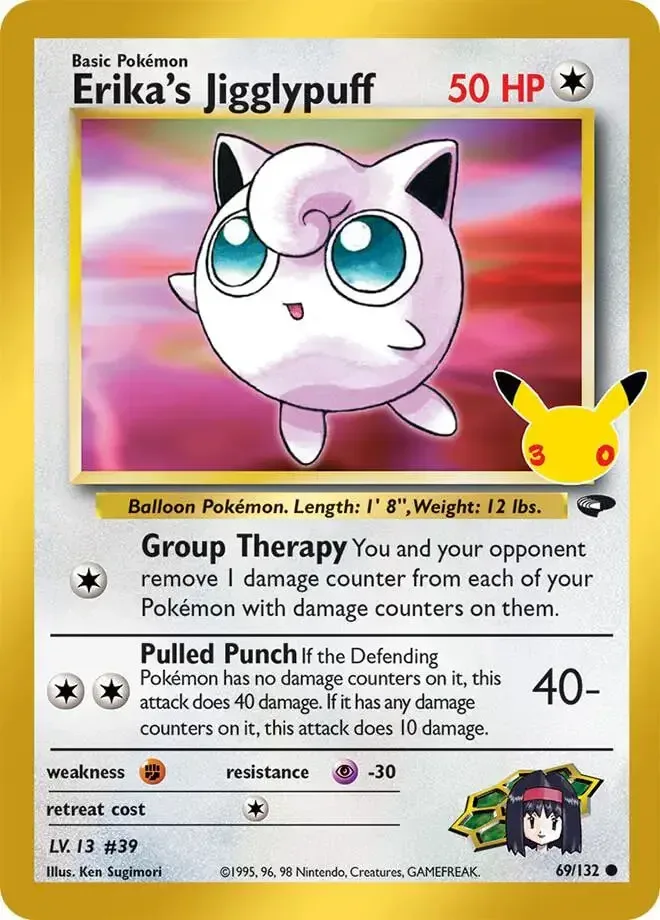
Gym Challenge’s Erika’s Jigglypuff adds a gameplay wrinkle. In its own era, the card was competitively viable thanks largely to Pulled Punch. One Double Colorless Energy enabled 40 base damage to the opponent’s Active Pokémon, a meaningful rate in an environment where most Pokémon did not even reach 100 HP. Fully evolved starters such as Charizard were among the exceptions.
That historical utility has not translated into a costly original, at least in the values cited here. The 30th Celebration holo was around $17, while an original Erika’s Jigglypuff could be found for less than $3. The newer version therefore cost several times more than the older card.
This is a useful corrective to the idea that every formerly strong card becomes a high-dollar vintage collectible. Competitive relevance is one part of a card’s story, not a guarantee of enduring market premium. In this case, the reprint’s holo presentation and place in a high-profile anniversary checklist appear more influential than the original’s old tournament utility.
It also underscores a key term for newer collectors: Double Colorless Energy is an Energy card that can satisfy two Colorless Energy requirements. Its role here is why Pulled Punch could be used efficiently. Understanding that detail makes Erika’s Jigglypuff more than a cute character card; it explains why the original was once a credible gameplay option, even if that past has not pushed its price above the commemorative version.
Neo Genesis Sneasel: the banned card whose versions are close in price
Sneasel from Neo Genesis arrives with the most notorious competitive pedigree of the five. It is described as the first card banned in competitive Pokémon TCG history. Fury Swipes was already powerful, but Beat Up was the effect that made Sneasel especially oppressive. For two Darkness Energy, it could knock out virtually any card an opponent could put into play, with coin toss outcomes contributing to its potential.
The rest of the card only intensified that threat: no type weakness and no retreat cost. A retreat cost is the Energy a player must discard to move an Active Pokémon to the Bench. Having none means switching Sneasel out did not consume Energy, adding flexibility to a card that was already a potent attacker.
Unlike the enormous Charizard and Misty gaps, the two Sneasels are comparatively close. The 30th Celebration version was reported at just over $6, while the Neo Genesis original was around $8. The reprint keeps the same features noted for the original, including the lack of weakness and retreat cost.
That narrow split makes Sneasel perhaps the most approachable history lesson in the group. A collector interested in a card’s competitive legacy can choose an original for only a modestly higher cited price, or collect the anniversary edition without giving up the crucial gameplay characteristics that made the card famous. It is a reminder that “banned” is not necessarily synonymous with “prohibitively expensive.”
What these five comparisons say about collecting the celebration set
Across the first five reprints, three patterns emerge. First, modern demand can lift an anniversary holo above a cheaper original, as seen with Pikachu and Erika’s Jigglypuff. Second, seminal vintage status can remain dominant, most clearly with Charizard and Misty. Third, an old card’s gameplay legacy can create interest without forcing a huge price difference, as Sneasel shows.
The practical approach is to identify the version before reacting to the number. Look for the 30th-anniversary logo and holo treatment, distinguish variants such as Pikachu’s Red Cheeks printing, and read the condition and grading language carefully. A price comparison without those details is not really a comparison at all.
For collectors following more than one corner of the hobby, the same listing discipline is useful well beyond Pokémon; even coverage of original comic cover art listings hinges on knowing precisely what object is being offered. Here, the object may be a modern anniversary card or an earlier printing, and that distinction is the whole game.
The 30th Celebration reprints are not simply substitutes for the cards that inspired them. They are new collectibles carrying old stories: mascot recognition in Pikachu, enduring chase-card energy in Charizard, character appeal in Misty, an efficient attack in Erika’s Jigglypuff and tournament infamy in Sneasel. Their values show that nostalgia is not a straight line from old to expensive. It is a maze, and the holofoil is absolutely not helping.