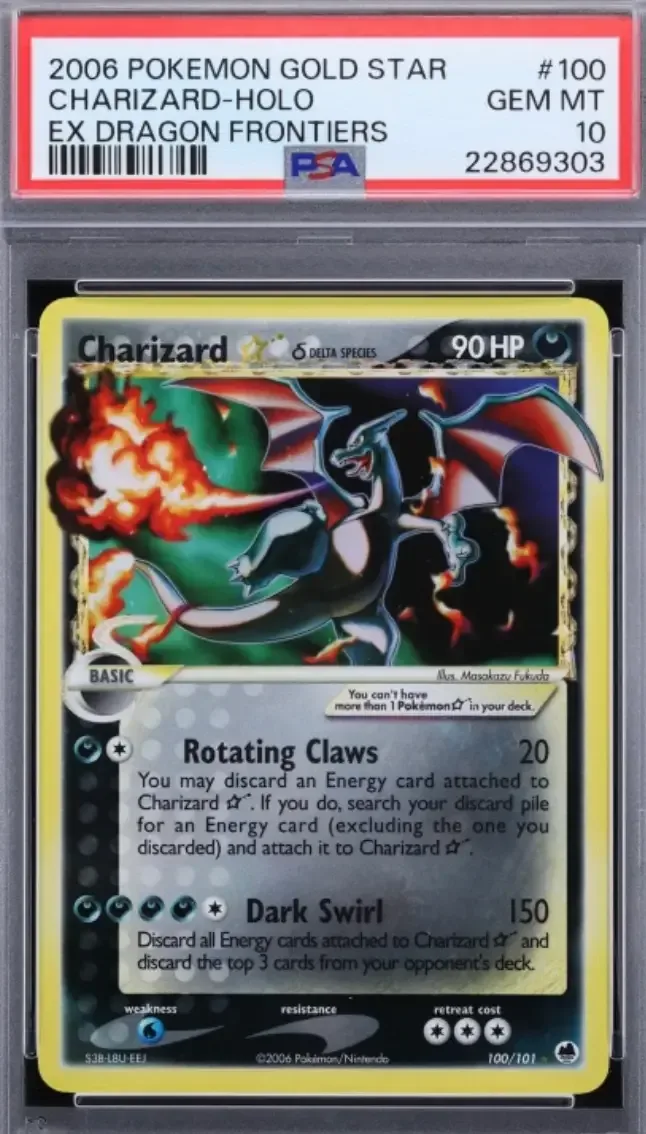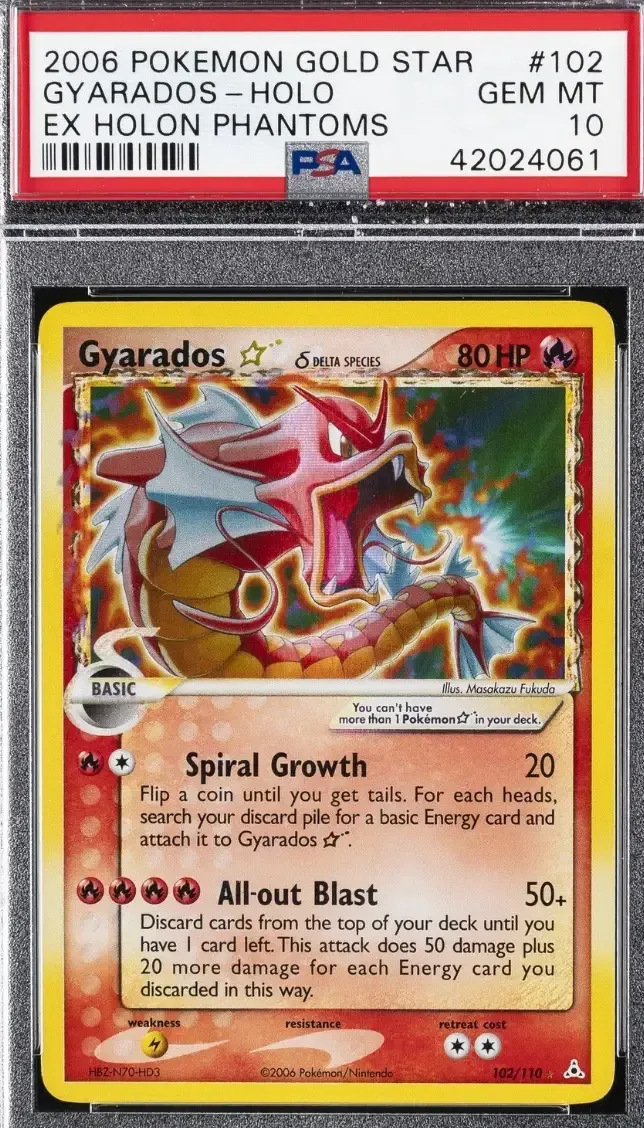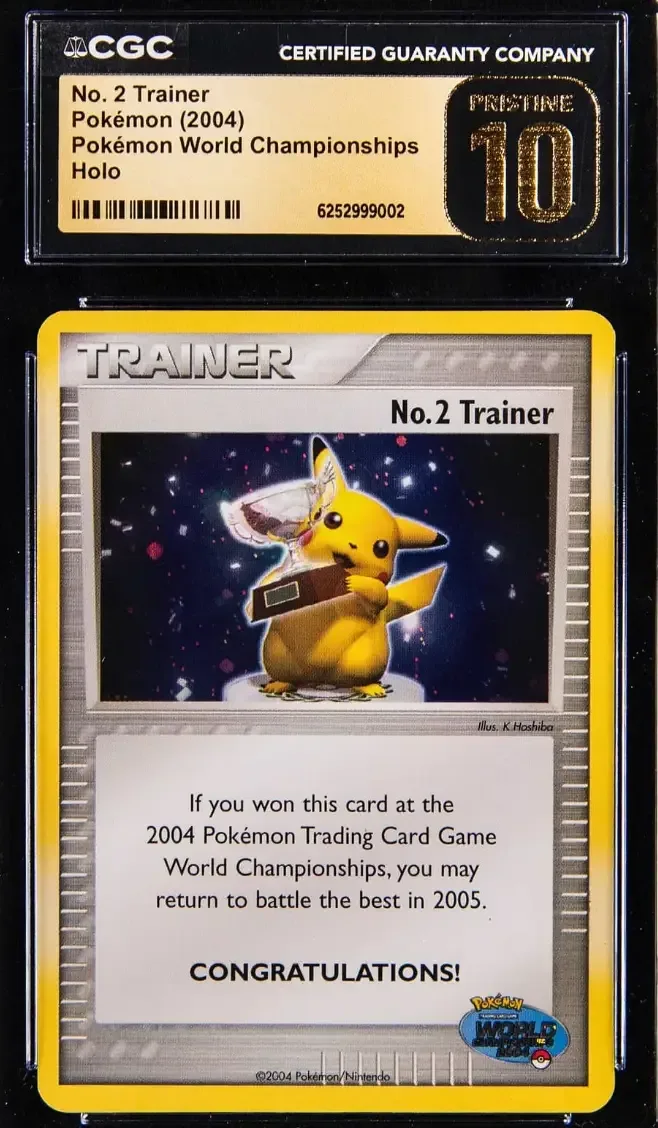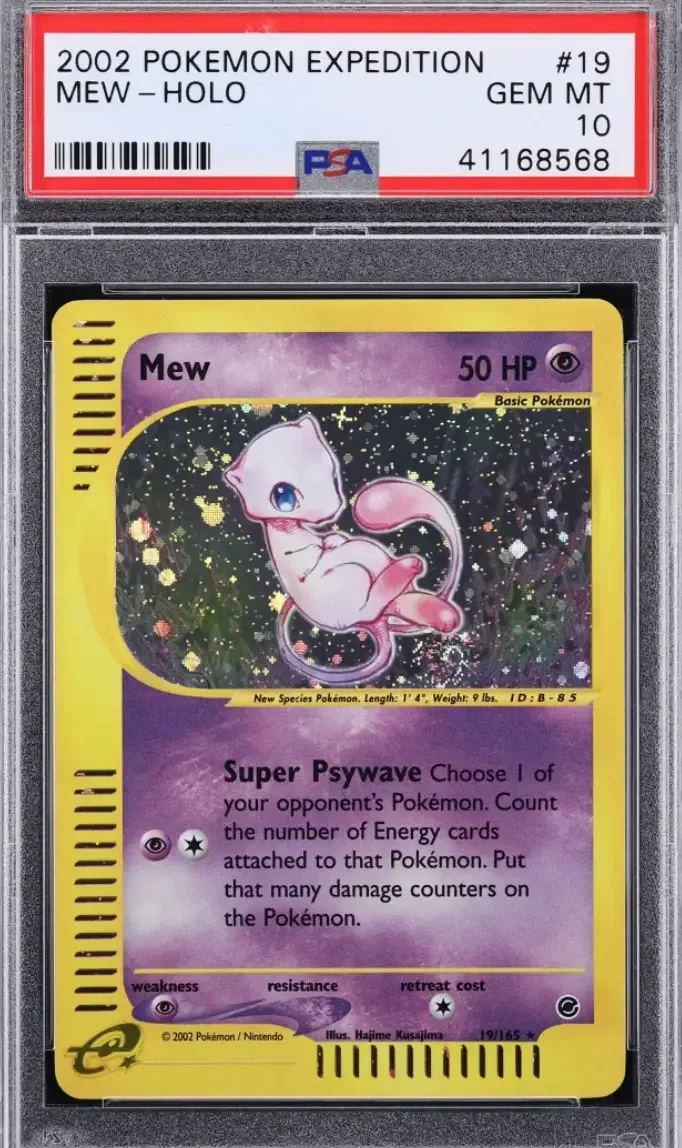
A 2002 Pokémon Expedition Holo Mew #19 graded PSA 10 was the biggest reported trading-card sale for the October 31 through November 7 window, bringing $529,000. It led a five-card group totaling $2,276,013, a result that returned the weekly leaderboard to a less explosive level after the preceding week’s $10.65 million Pokémon surge.
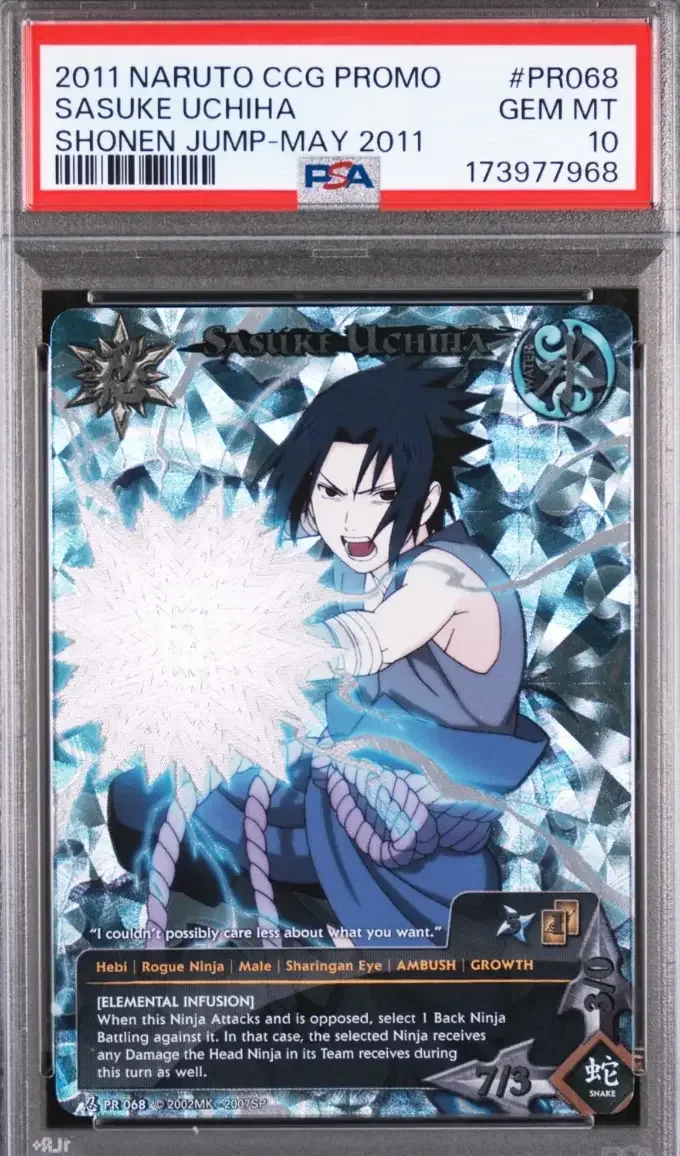
Pokémon supplied four of the five highest sales, but the most notable break in that pattern came from Naruto. A 2011 Naruto Collectible Card Game Shonen Jump promotional Sasuke Uchiha #PR068, also graded PSA 10, sold for $401,013. That puts a non-Pokémon card in a weekly top five otherwise packed with high-grade Pokémon pieces spanning e-Card, EX-era Gold Star, and competitive trophy-card collecting.
The list is useful less as a universal price guide than as a snapshot of what drew major-money bids in a particular seven-day period. Every card here combines a recognizable character or collector niche with an exceptional grade, unusually limited distribution, or both. Those conditions matter. A six-figure result for one pristine, provenance-rich example does not automatically establish a comparable value for lower-grade copies or similarly named cards.
The five biggest reported sales
- 2002 Pokémon Expedition Holo Mew #19, PSA 10 — $529,000. Sold November 1 through Fanatics Weekly.
- 2004 Pokémon World Championships No. 2 Trainer Trophy Pikachu, CGC Pristine 10 — $488,000. Sold November 1 through Goldin.
- 2006 Pokémon EX Holon Phantoms Gold Star Gyarados #102, PSA 10 — $450,000. Sold October 31 on eBay.
- 2006 Pokémon EX Dragon Frontiers Gold Star Charizard #100, PSA 10 — $408,000. Sold November 1 through Fanatics Weekly.
- 2011 Naruto CCG Shonen Jump Promo Sasuke Uchiha #PR068, PSA 10 — $401,013. Sold November 2 on eBay.
The top two were separated by just $41,000. Beneath them, Gyarados, Charizard, and Sasuke occupied a similarly tight band from $401,013 to $450,000. That compressed spread is a reminder that the week did not revolve around one outlier alone: several distinctly different kinds of high-end cards found buyers at substantial prices.
Mew edges a tournament trophy for first place
Mew’s winning card came from Expedition Base Set, identified as the first Pokémon e-Card expansion released in English. The $529,000 sale placed a classic set card above a much harder-to-obtain tournament award, at least in this week’s results.
“e-Card” refers to the Pokémon card era associated with cards designed for e-Reader functionality. For collectors, however, the relevant point here is not a claim about the card’s utility but its position in an early English expansion and the appeal of Mew itself. Mew is one of the franchise’s best-known mythical Pokémon, and the reported copy carried a PSA 10 grade.
PSA 10 is the top numerical grade on PSA’s 10-point scale. In practical collecting terms, a grade is an assessment attached to a specific submitted card, not a blanket promise that every copy from the same set is equally desirable or equally preserved. The Mew result is therefore best read as demand for this exact high-grade copy, alongside demand for the character and its Expedition origin.
It is also a useful counterpoint to the assumption that only trophy cards or ultra-limited promos can lead an elite sales chart. The No. 2 card has a far more specialized path into collectors’ hands, yet the Expedition Mew finished ahead. Character appeal, set identity, grade, and buyer preferences can all pull in different directions at the very top of the hobby.
Related coverage includes Top 3 TCG Sales of the Week: Mew Leads as Trophy Pikachu and Gold Star Gyarados Surge.
The Trophy Pikachu’s competitive history
The second-place card was a 2004 Pokémon World Championships No. 2 Trainer Trophy Pikachu, graded CGC Pristine 10, at $488,000. Unlike a conventional card issued through booster packs, a trophy card was awarded to high-performing competitors. That distribution model is central to its appeal: it makes the card difficult to acquire through the normal route of opening product.
The 2004 event was the first Pokémon World Championships, adding a specific piece of tournament history to the card’s identity. It was also the only card in the top five with a CGC grade rather than a PSA grade.
CGC Pristine 10 is a grading designation distinct from PSA 10, so collectors should not treat the labels as interchangeable without understanding the grading company and the individual card involved. The important shared point in this week’s top five is that every result was attached to an elite graded example. Condition certification is clearly part of the story, but the trophy’s competitive origin and World Championships connection are what make it fundamentally different from Mew’s set-card route to the leaderboard.
Gold Star Gyarados beats Gold Star Charizard
Two 2006 Gold Star cards made the list, offering the clearest same-category comparison of the week. Pokémon EX Holon Phantoms Gold Star Gyarados #102 in PSA 10 sold for $450,000, taking third. Pokémon EX Dragon Frontiers Gold Star Charizard #100 in PSA 10 followed at $408,000 in fourth.
Gold Star cards hold a distinct place in Pokémon’s EX-era collecting. The two examples on this list feature their Pokémon in shiny coloration, and their rarity has helped establish them as particularly sought-after cards from that period. But the rankings also show why broad rules such as “Charizard always wins” can be misleading. In this one reporting window, Gyarados finished $42,000 ahead of Charizard.
That does not establish a permanent hierarchy between the two cards, nor does it diminish Charizard’s enduring collecting power. It shows that collectors with substantial budgets can focus on set-specific scarcity, the particular card offered, grade, and immediate auction demand rather than choosing solely by the franchise’s most famous character.
There is one cataloging detail worth keeping straight. The Dragon Frontiers Charizard auction listing identified the card as a 2003 release, but EX Dragon Frontiers was released in 2006. The sale itself remains part of the weekly results; the corrected set year helps collectors avoid carrying a listing error into future comparisons or collection records.
Naruto’s Sasuke promo is the week’s major surprise
The Sasuke Uchiha #PR068 result is the entry that changes the texture of the chart. The 2011 Naruto CCG promo was distributed in connection with the May 2011 issue of Shonen Jump, rather than appearing as a standard pack card. Its $401,013 sale on November 2 gave Naruto a place beside four Pokémon cards and came within $6,987 of the Charizard in fourth.
That is a meaningful result precisely because Pokémon, Magic: The Gathering, and Yu-Gi-Oh! are often the franchises most associated with high-end trading-card discussion. Naruto has its own card-game history and collector base, and this Sasuke sale demonstrates that significant demand can develop around a promo from outside the most routinely cited trio.
A promo, short for promotional card, is generally a card distributed through a particular event, publication, campaign, or other nonstandard channel instead of ordinary pack distribution. In this case, the connection to a specific magazine issue gives collectors a clear distribution story. It does not mean every Naruto promo carries the same value; rather, this PSA 10 Sasuke’s result shows what one particularly coveted, top-graded example achieved.
For collectors following the broader category, the practical implication is simple: franchise labels alone are too blunt a filter. A card’s distribution method, character, grade, and the community built around a property can matter as much as whether it belongs to the hobby’s most visible brand. That does not make a single sale a market-wide turning point, but it makes Naruto’s appearance on this list worth monitoring.
How to read a weekly high-end sales list
These five sales represent a narrow tier of the market. They should not be used to estimate the value of an ungraded card, a lower-grade copy, or even another example with the same grade without further sales evidence. Collectors comparing cards should first verify the exact set, card number, release year, grading company, grade, and distribution type.
- Confirm the card’s identity: Set names and card numbers help distinguish similarly titled cards and prevent errors like the Dragon Frontiers year discrepancy from spreading.
- Separate pack cards from award and promo cards: Mew, the Trainer Trophy Pikachu, and Sasuke arrived through very different channels, which affects how collectors frame scarcity and history.
- Compare grades carefully: PSA 10 and CGC Pristine 10 are not the same label, even though both signal elite condition assessments.
- Avoid treating one result as a complete market: Auction timing and the individual copy offered can influence a final number. A weekly leaderboard records transactions; it does not guarantee a repeatable price.
The wider takeaway is that Pokémon remains the dominant force in this particular top five, with four entries and the week’s highest price. Yet it was not one-note dominance. An English e-Card Mew led; a tournament prize Pikachu followed; Gyarados surpassed Charizard among Gold Stars; and a Naruto magazine promo reached six figures. For more card-culture context beyond Pokémon, readers can also browse this Marvel-related trading-card story.
The result is a more varied leaderboard than an all-Pokémon sweep, while still underscoring how many collecting lanes exist inside the Pokémon market itself. Set cards, trophy awards, and Gold Stars are not interchangeable categories, and this week gave each one a place near the top.