Yen Press has outlined a varied slate of 10 acquisitions due in April 2027, dividing the lineup among two Yen Audio releases, two Yen On light novels and six manga titles. The announcements range from a deluxe psychological-horror omnibus to fantasy adventures built around magic, a dungeon reset skill, an undead realm and an unexpectedly modern machine gun.
For readers, the useful headline is not simply the quantity of books. It is the breadth of formats and story structures arriving in the same month. The new group includes continuations or extensions of existing material, manga adaptations of prose works, original light novel releases and audio editions. That distinction matters: a manga adaptation uses sequential art to tell a story already established in prose, while a light novel is prose fiction typically paired with illustrations. An audiobook, meanwhile, is an audio performance or presentation of a text rather than a comic adaptation.
The April 2027 slate also covers several very different reader expectations. There is a horror mystery driven by incriminating secrets, a revenge fantasy set beyond death, romance with alternate routes, a supernatural cat story, and Boys’ Love titles with markedly different tones. Anyone mapping out their future reading should therefore approach these as individual projects rather than a single, unified genre line.
Two releases join Yen Audio
The audio additions are Scarlet by Mamoru Hosoda and ’Cause I’m Freedom! by Taro Hitsuji, with illustrations by Azumi Akitake for the latter.
Scarlet begins with a dynastic catastrophe. Princess Scarlet’s uncle, Claudius, takes the throne and has her father executed. Her attempt at revenge fails, after which she awakens in a land of the dead. The setting is described as a hostile wasteland populated by soldiers from many eras, where weakness is not tolerated. Scarlet meets Hijiri, a registered nurse from present-day Japan, and the pair set out to prevent her enemies from finding salvation.
That premise places revenge at the centre, but its framework is broader than a palace coup. Scarlet’s journey moves into an afterlife where the conflict is no longer limited to one kingdom or one historical period. Hijiri’s modern-day profession and origin create a sharp contrast with Scarlet’s royal fantasy background, although no further details have been given about how the story’s audio version will be presented.
’Cause I’m Freedom! takes a deliberately different route through fantasy. Its protagonist, Faye Leonheart, is a 17-year-old sword prodigy and heir to a famous warrior clan. She returns from a three-year sword-training pilgrimage carrying a magical machine gun. Her family disowns her, leaving Faye to explore ancient ruins while researching technology called overgear.
The contrast between sword training and a firearm is the point of the setup. Rather than treating old-fashioned fantasy equipment as the only path to heroism, the story positions Faye’s gun as both an unconventional tool and the reason she is cast out. “Overgear” is the term used for the ancient technology she studies; beyond that label and the ruins connected with it, the announcement does not establish the technology’s rules or capabilities.
Yen On brings an extra volume and a time-spanning fantasy
Yen On’s pair consists of Cross-Dressing Villainess Cecilia Sylvie: Extra Round! by Hiroro Akizakura, illustrated by Dangmill, and And Thus, the Wizard Noi Garené Became a Bride 100 Years Later by Eiko Mutsuhana.
Cross-Dressing Villainess Cecilia Sylvie: Extra Round! is an extra collection set after the original series, and it contains both a continuation-focused story and an alternate branch. This is important for prospective readers: it is not described as a straightforward next numbered volume. Instead, it offers two routes tied to Cecilia’s different potential romantic outcomes.
In “Oscar’s Route,” Cecilia and Oscar are in their next year at Vleugel Academy when they are invited to a princess’s wedding in a neighboring country. The bride considers cancelling the wedding because she has feelings for Oscar. In “Gilbert’s Route,” the premise asks what might have happened if Cecilia had chosen Gilbert. Following the events of Volume 3, Gilbert leaves the Sylvie household to join his biological family and withdraws from school for a semester. Cecilia heads to a masquerade connected to the Prosper Kingdom underworld in an effort to bring him back and confess her feelings.
Calling this an alternate branch means the Gilbert material explores a conditional version of the narrative, not an additional fact that replaces the Oscar route. Readers invested in either love interest appear to be the intended audience, while newcomers may want to note that the book is explicitly set after the original series and refers to events from Volume 3.
And Thus, the Wizard Noi Garené Became a Bride 100 Years Later begins with Noi Garené, regarded as Ethria’s greatest wizard, taking responsibility for a child who is the vessel of the Demon Lord. She calls him Kaldia and raises him while teaching him magic and trying to stop the Demon Lord’s eventual emergence. When the critical day arrives, she gives her life to save him.
The title’s “100 Years Later” is literal to the premise. Noi awakens a century after her sacrifice, only to be met by a man who resembles Kaldia and immediately proposes marriage. The setup combines a long separation, the consequences of an apprentice’s dark destiny and a romantic turn that reframes the teacher-and-child relationship only after the passage of a hundred years. Details about what happened during that century, and about the man’s identity, have not been outlined.
Six manga projects cover horror, fantasy and romance
The manga selections begin with Secret: Homicide Edition by Yoshiki Tonogai, described as a new deluxe omnibus for a psychological-horror story. Six people survive a tragic bus accident and receive a chilling proposition: three murderers are supposedly among them. Those responsible have one week to confront their crimes, or evidence will be sent to the police.
The narrative engine is distrust. Every survivor has a secret, creating uncertainty over who is guilty, whether the accusation can be believed, and what the anonymous ultimatum is trying to achieve. A deluxe omnibus generally indicates a collected edition bringing material together in a premium format; the announcement identifies it as an all-new deluxe omnibus but does not give its contents, page count or physical specifications.
My Yandere Girlfriend Hiding in the Dungeon Kills Me Over and Over Again, illustrated by Eiji Nomura from the original story by Nikita Kitagawa, has Kiska falsely accused of a crime and exiled to the depths of a dangerous dungeon. Near death during a monster attack, he receives the “Save & Reset!” skill.
“Save & Reset!” is an overtly game-like phrase, evoking the ability to return to an earlier state after failure. In this case it is presented as a skill within the story, not as a video game release or an explanation of a specific gameplay system. The title also signals that Kiska’s girlfriend and repeated deaths will be central, but the announcement does not spell out her identity, motives or the precise limits of the reset ability.
About a Place in the Kinki Region by Tsukasa Usui adapts an original story by Sesuji. It follows the friend of a missing occult-magazine editor, who retraces the editor’s investigation into unsettling tales connected to an area in the Kinki region. Old magazine pieces, odd fan mail and implausible-looking forum posts start to form a troubling picture.
The work is described as “found footage” in novel form before becoming manga. Here, that term refers to a storytelling approach built from discovered materials rather than a conventional, uninterrupted account. Readers should not interpret the label as a claim that the events are real. Its function is to create horror from fragments, gaps and conflicting records: a missing editor, archived articles and online posts can all make the act of assembling information part of the mystery.
My Childhood Friend Meows Under the Skirt by Raku Nanahashi, adapting Hotori Handa’s original story, moves to Miyake, a town said to have more cats than anywhere else in Japan. Cat-loving Ichika discovers that Maki, the childhood friend she has not spoken to for more than a year, is now in her class. Ichika tries to repair their bond, but Maki remains withdrawn until a magical feline curse changes the dynamic between them.
The announced setup gives the series an emotional foundation beneath its fanciful title. Ichika’s effort to reconnect with Maki is already complicated by their estrangement before the magical element enters the story. The curse appears to be the device that forces a new relationship between them, though its nature and its consequences have not been detailed.
The remaining pair is positioned within the publisher’s Boys’ Love and Girls’ Love offerings, a broad publishing label for romance-focused stories about same-gender relationships. It is a category, not a promise that every title will share the same mood, age setting or level of dramatic intensity.
Summer Boy Blues by Miyako Tono concerns Atsushi and Michiru, whose first sexual encounter is abruptly interrupted when they are discovered. They later meet again during the summer of their high-school entrance exams. Michiru wants distance from what happened, while Atsushi refuses to let their connection disappear. The description frames their reunion around unresolved hurt and shared trauma, making this a more emotionally fraught romance than a simple chance encounter.
Is the Hot-Voiced Streamer Into Me?! by APEKO follows college student Sora Hoshino, a fan of a BL roleplay ASMR streamer called Sojiro. ASMR is audio designed to emphasize close, intimate or soothing sounds, and the premise specifically ties Sojiro’s appeal to voice-based roleplay. When Sojiro asks Sora to meet in person, Sora finds an unexpected person waiting for him. The gap between an online performance and a real-world meeting is the central hook, although the reveal itself remains undisclosed.
What the April 2027 plan tells readers
All 10 announced acquisitions are scheduled for the same April 2027 launch window, but no dates, formats beyond the stated Yen Audio, Yen On and manga groupings, or pricing information have been provided. That makes the slate a useful early reading list rather than a complete purchasing guide.
The strongest practical distinction is between titles that presume prior familiarity and titles that establish their own premises. Cross-Dressing Villainess Cecilia Sylvie: Extra Round! is clearly connected to an existing series and even references Volume 3. Secret: Homicide Edition is a returning horror work in a newly described omnibus presentation. By contrast, Scarlet, ’Cause I’m Freedom!, And Thus, the Wizard Noi Garené Became a Bride 100 Years Later and the newly announced manga adaptations are introduced through self-contained story setups.
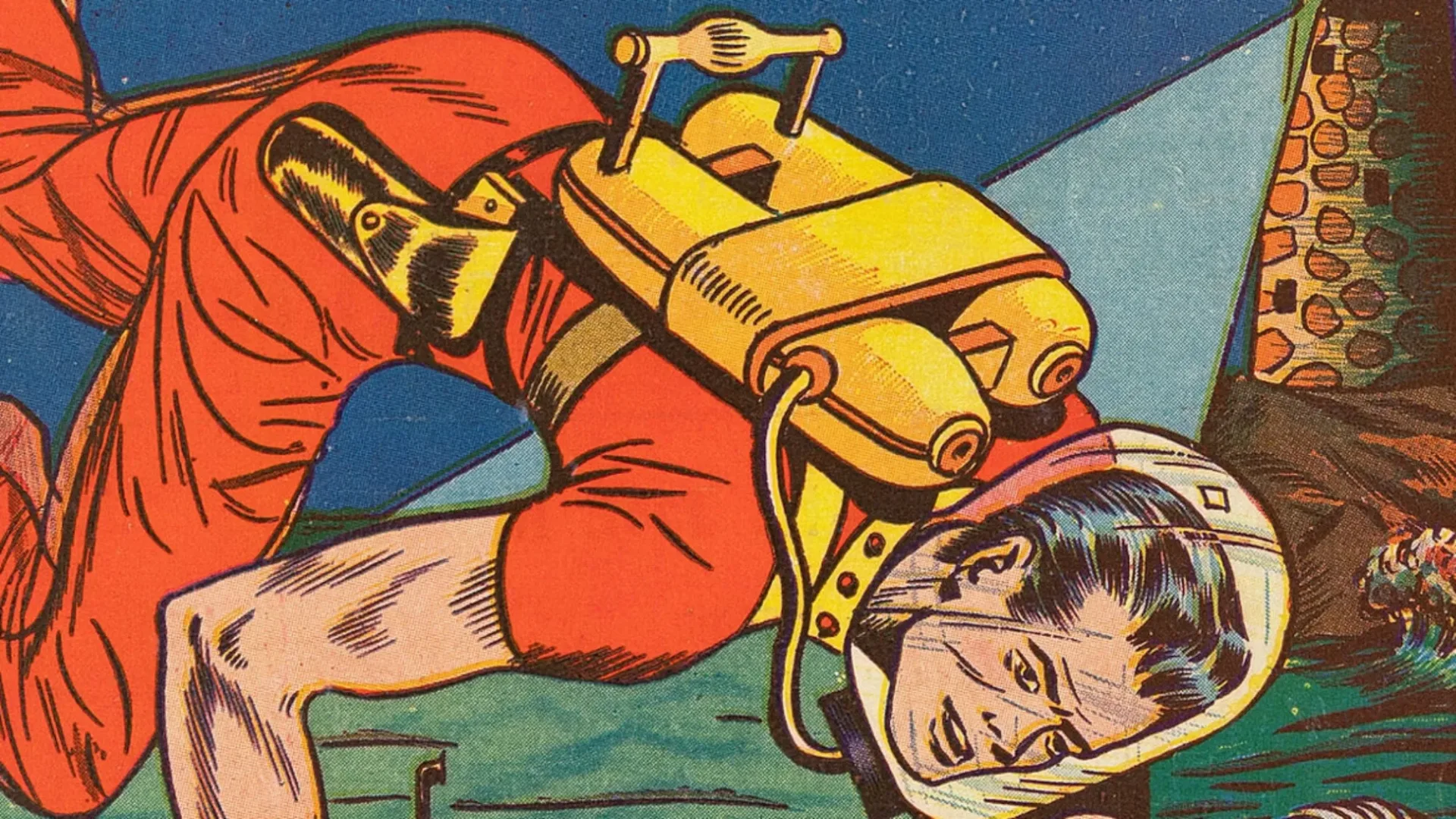
The selections also show how much range can sit under the wider manga and light-novel umbrella. One reader may be drawn to the formal puzzle of fragments in About a Place in the Kinki Region; another may prefer the branch-based romance of Extra Round!, or the high-concept fantasy of a wizard waking a century after her sacrifice. There is no need to treat “manga” as one genre any more than readers would treat every serialized comic alike; recent discussion around a comic that turns wartime scrap-metal anxiety into a space war likewise illustrates how flexible sequential storytelling can be.
For now, the key takeaways are the names, divisions and premises: two audio titles, two light novels and six manga releases, all planned for April 2027. More concrete information will be needed before readers can assess editions, release sequencing or exact availability.