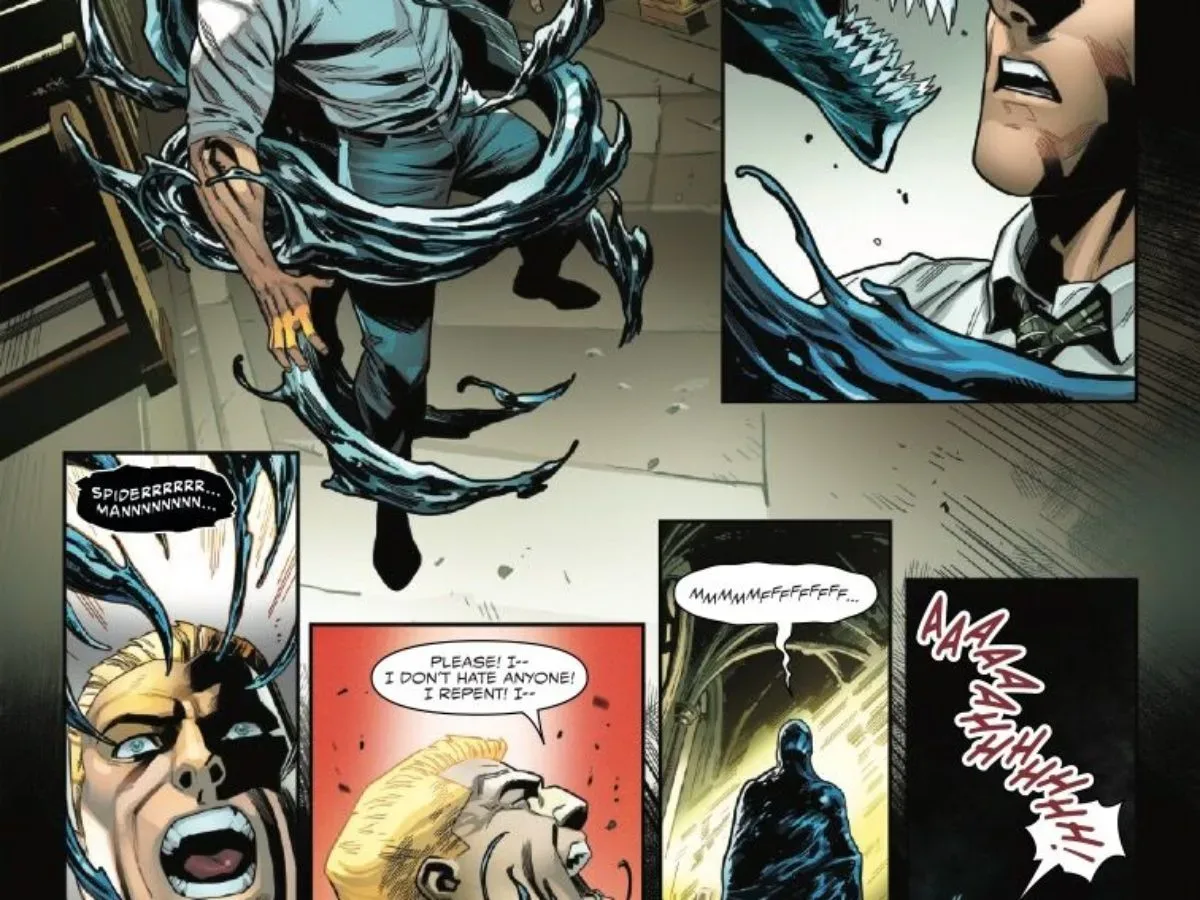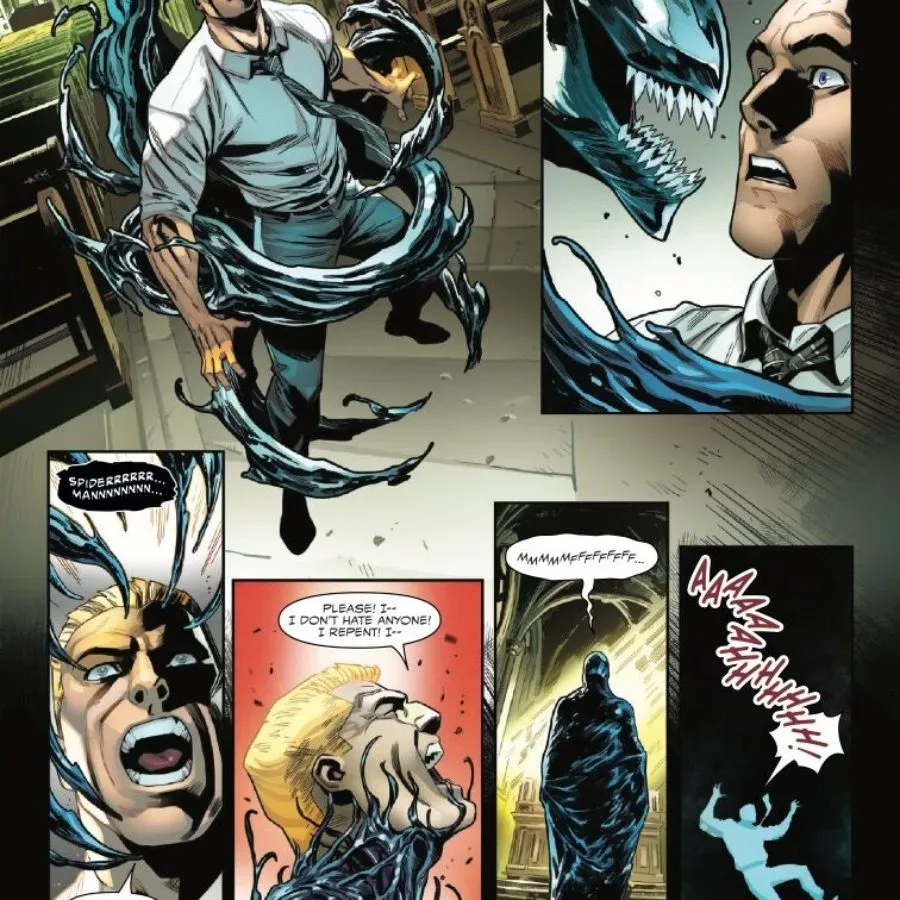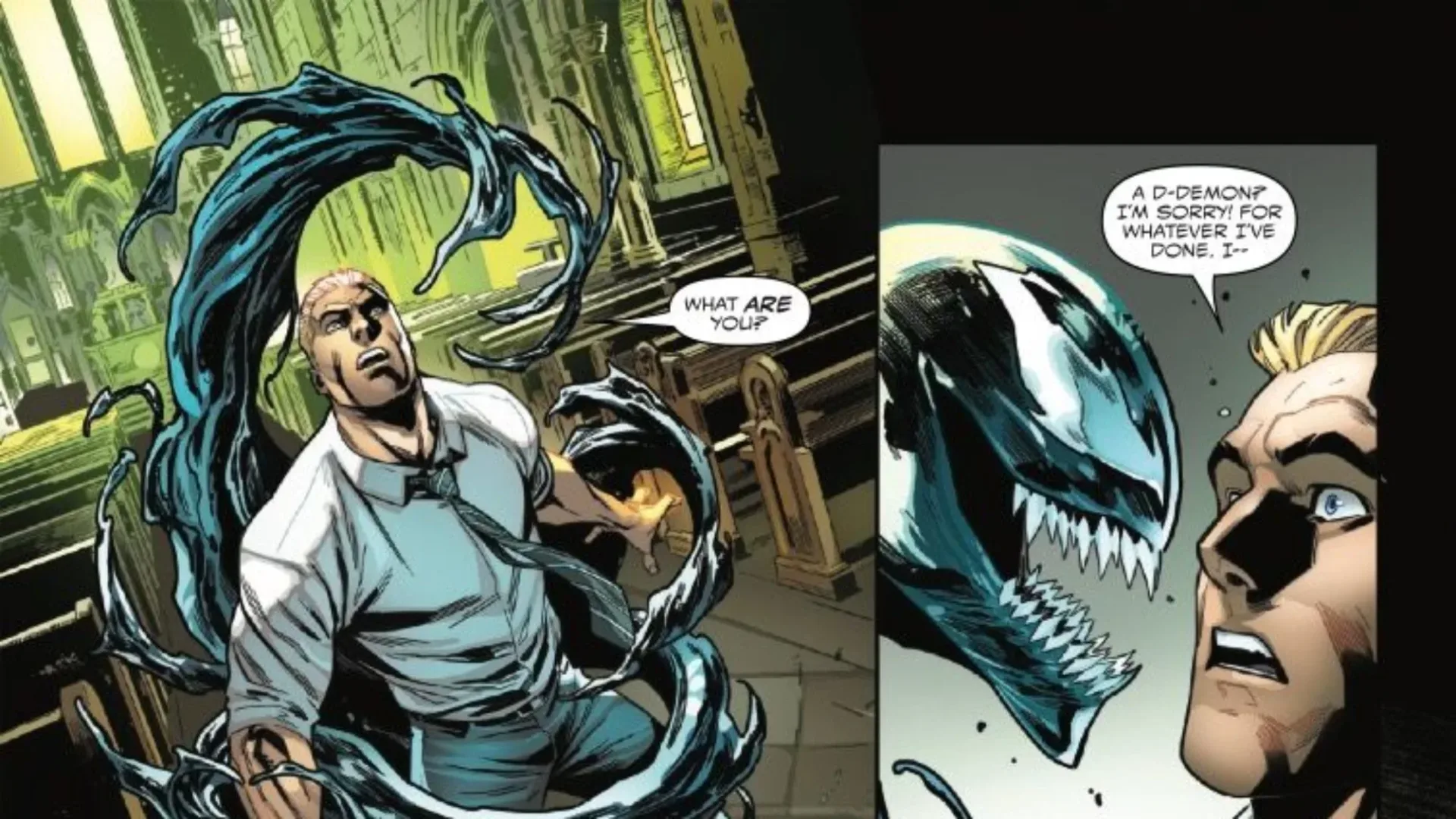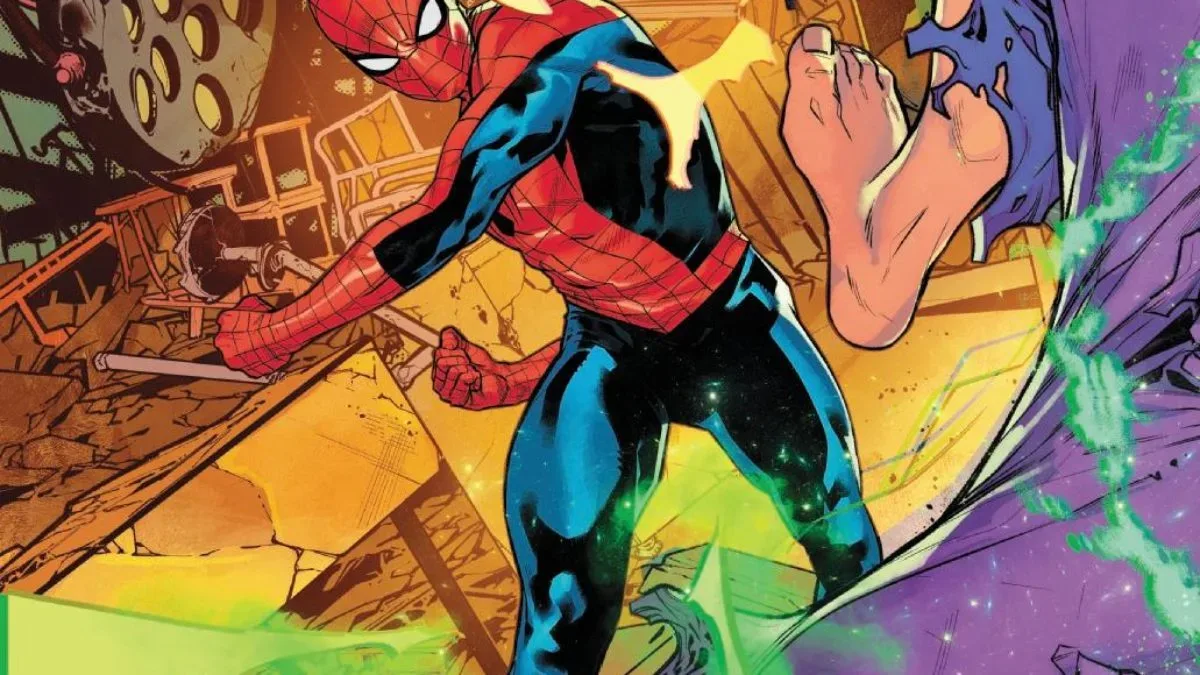
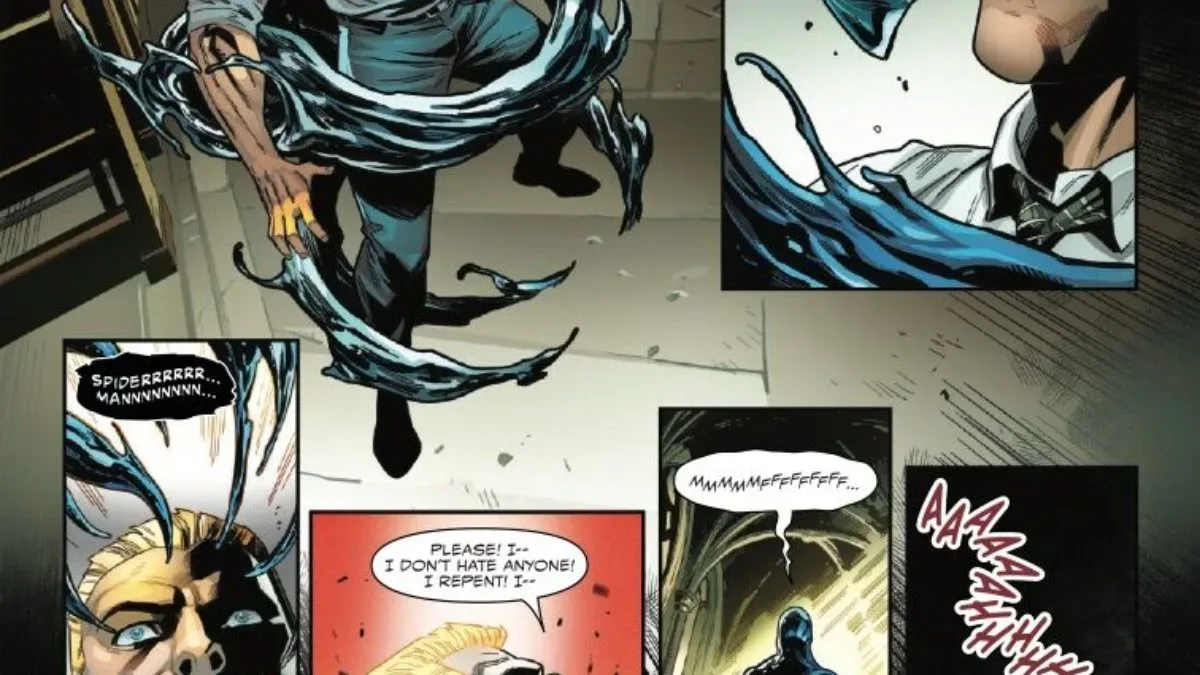
Venom’s earliest partnership with Eddie Brock is headed back to the comics page, but Venom: P.O.V. #1 intends to tell that familiar setup with the spotlight aimed in a different direction. The 32-page Marvel issue, written by Ryan Stegman with art by Carlos Gómez, is listed for release on December 2, 2026 at $4.99.
The central hook is plainly stated: this is the story of Eddie Brock and the alien symbiote joining forces against Spider-Man, retold from Venom’s point of view. That distinction matters. Rather than treating the symbiote solely as the element that transforms Brock into Venom, the premise positions it as a participant with its own rejection, grievance and reason to seek out a host.
For a character built around a partnership, that is a sensible lens. Eddie Brock and the symbiote are often spoken of together under the name Venom, yet the solicitation frames their initial connection as two damaged parties finding common cause. Brock is described as a disgraced reporter; the symbiote is described as rejected. Their mutual target is Spider-Man.
A familiar origin, deliberately reframed
A “point of view” story does not necessarily mean an entirely new origin. In this case, the available description explicitly calls it a return to the classics that introduced Venom, with a new spin created by changing whose perspective guides the reader through the events.
That approach can alter the emotional meaning of scenes without requiring the basic outline to change. From Eddie’s side, the formation of Venom can be understood through personal disgrace and a desire for vengeance. From the symbiote’s side, the same union can instead emphasize exclusion, abandonment, recognition or the practical need to find someone who shares its anger.
The premise therefore puts special pressure on the word together. The issue is not billed simply as a Spider-Man conflict or as an Eddie Brock spotlight. It is about the moment a rejected alien symbiote and a reporter who has fallen into disgrace become a unit. The revenge plot remains important, but the relationship that enables it is the stated subject.
“THE STORY YOU KNOW…FROM A NEW POINT OF VIEW!”
That is a compact promise, but it establishes reasonable reader expectations. This is positioned as a revisit rather than an unexplained jump into a wholly separate status quo. Readers looking for the early Eddie-and-symbiote dynamic have a clear entry point, while existing Venom readers have a reason to consider how much changes when the symbiote’s agency moves to the foreground.
What “P.O.V.” signals here
P.O.V. is short for “point of view,” a storytelling term describing the perspective through which events are presented. In comics, a point-of-view shift can be delivered through narration, scene selection, internal reaction, framing, or simply by making one character’s motivations the primary concern.
The issue’s title does not confirm exactly which of those tools Stegman and Gómez will use. It does, however, make the creative intention unmistakable: Venom itself is not just a costume, power set or plot device in this retelling. The symbiote is the perspective character.
That distinction has practical implications for readers approaching the book. A new point of view may fill in emotional context around actions that readers already associate with Venom’s beginning. It may also invite readers to reconsider how they assign responsibility within the alliance. The description supports an origin centered on a shared vendetta; the comic’s hook is the opportunity to see why that vendetta appealed to the symbiote specifically.
There is also an appealing structural tension in the idea. Venom is a character identity created through combination, but this issue promises to separate the voices enough for the symbiote’s version of events to stand on its own. The story may still be about the making of “we,” but it begins by asking readers to listen to one half of that we.
Stegman and Gómez return to a Venom-focused story
Marvel credits Ryan Stegman as writer and Carlos Gómez as artist, with Stegman also providing the main cover. The issue description notes that both creators have a substantial history with Venom, though it does not identify individual prior stories or runs.
For this particular premise, the pairing is significant less as a promise of a specific artistic style than as an indication that the book is being handled by creators already associated with the character. A story that revisits an established origin has to navigate two needs at once: it must remain recognizable enough to deliver the premise readers were offered, and it must find a fresh emphasis that makes the revisit worthwhile. Putting the symbiote’s perception first is the book’s stated answer to that challenge.
Venom has long been a character whose visual identity depends on contrast: an alien presence paired with a human host, a monstrous exterior attached to an intensely personal grievance, and an identity that is at once singular and plural. A retelling focused on the symbiote creates room for the art to underline that imbalance, but readers should wait for the finished issue before assuming how Gómez will visualize its inner voice or recollections.
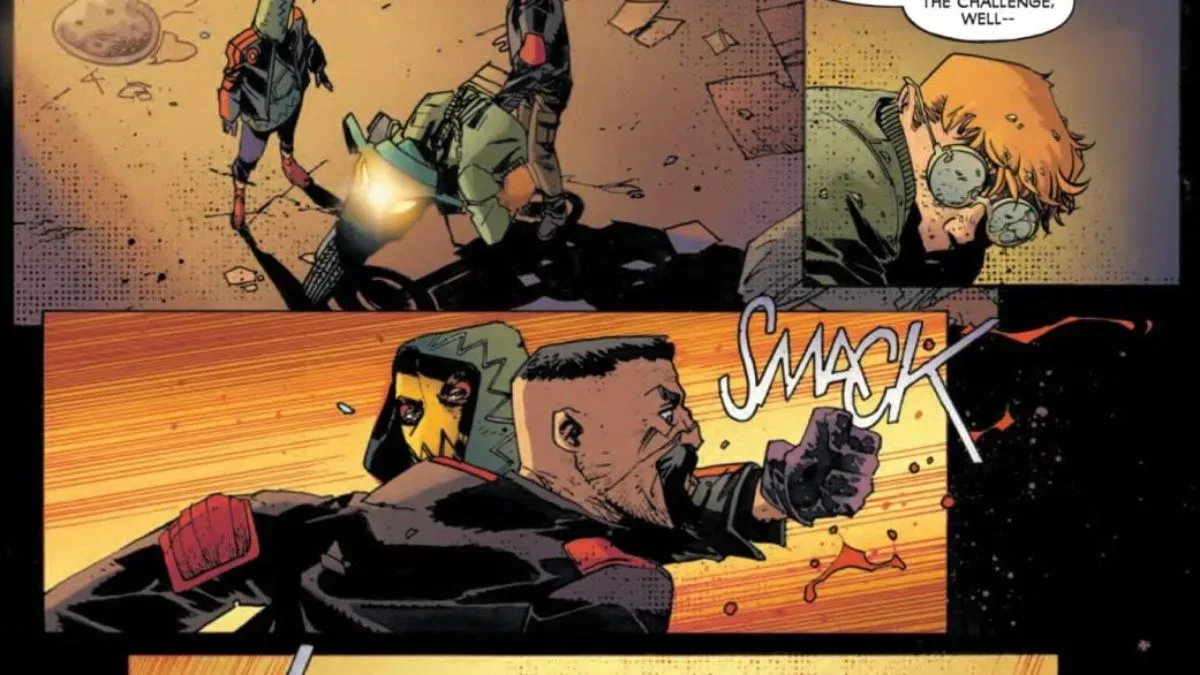
The broader comic-book conversation around superhero reinterpretations remains relevant here as well. Not every return to a well-known event is asking readers to discard what they know. Some are built around re-examination. Another recent superhero-comics story centered on a character collision illustrates how familiar figures can be reconfigured around a focused dramatic question. Venom: P.O.V. #1’s question is more intimate: what did the symbiote believe it was gaining when it found Eddie Brock?
Issue details and cover options
Venom: P.O.V. #1 is rated T+, carries a 32-page count and has the item code 75960621764900111. In addition to Stegman’s main cover, Marvel lists four alternate covers:
- Cover B: Rod Reis variant
- Cover C: Chris Campana 1:25 variant
- Cover D: Erik Larsen variant
- Cover E: Ryan Stegman virgin 1:50 variant
In comics publishing, a variant cover is an edition of the same issue with alternate front-cover art. The issue’s interior story and page count are not described here as changing between those cover versions. “Virgin” identifies a cover presentation, while the 1:25 and 1:50 labels distinguish two numbered variant editions in the listing.
Collectors interested in a particular cover should pay attention to the full designation rather than treating every edition as interchangeable. The Rod Reis, Chris Campana, Erik Larsen and Ryan Stegman versions are separately named, while the main cover is also by Stegman. The provided listing gives a $4.99 U.S. price for the issue and variants, with $6.25 listed for Canada.
Who this one is for
The clearest audience is readers interested in Venom’s formative connection to Eddie Brock, especially those who want an origin revisit that treats the symbiote as more than the source of Venom’s appearance and abilities. It may also suit readers who know the broad premise but want a self-contained way into the partnership’s early animating conflict: both members arrive at the relationship seeking vengeance against Spider-Man.
At the same time, the available information sets sensible limits on what can be assumed. There is no detailed plot breakdown, no confirmation of how closely each sequence follows earlier stories, and no previewed resolution to the Spider-Man conflict. The supported takeaway is more focused: this is a return to an essential Venom setup, built around the alien symbiote’s account of meeting Eddie Brock and turning a mutual resentment into a shared identity.
Venom: P.O.V. #1 arrives December 2, 2026, from Marvel. For a character whose name implies a joined voice, giving the symbiote the microphone is an appropriately direct way to make an old grudge feel newly personal.