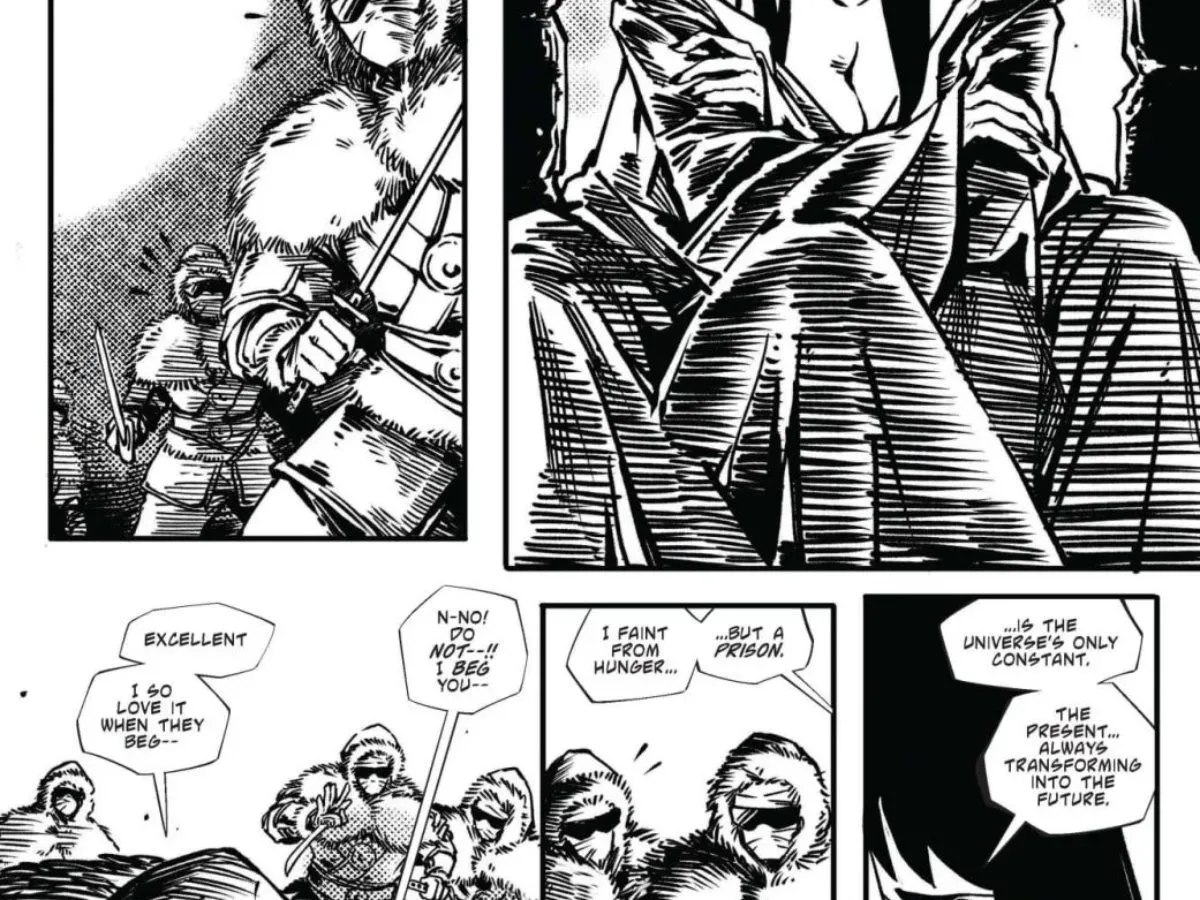
Vampirella #8 is set to take the long-running horror heroine in a formally different direction. The Dynamite issue, listed for release on November 25, 2026, is presented as a manga-style special: readers begin at the back, move toward the front, and follow panels from right to left rather than the conventional Western-comics arrangement.
Christopher Priest writes the issue, with Ziyan Qiu handling interior art. Its premise moves Vampirella outside her usual continuity and into a world described as a collision of ancient tradition and political futurism. At the center is a murder: the benevolent king of mystical Escala has been killed, and Vampirella is compelled to accept responsibility under the discipline of wüde, even if the search leads to the man she loves.
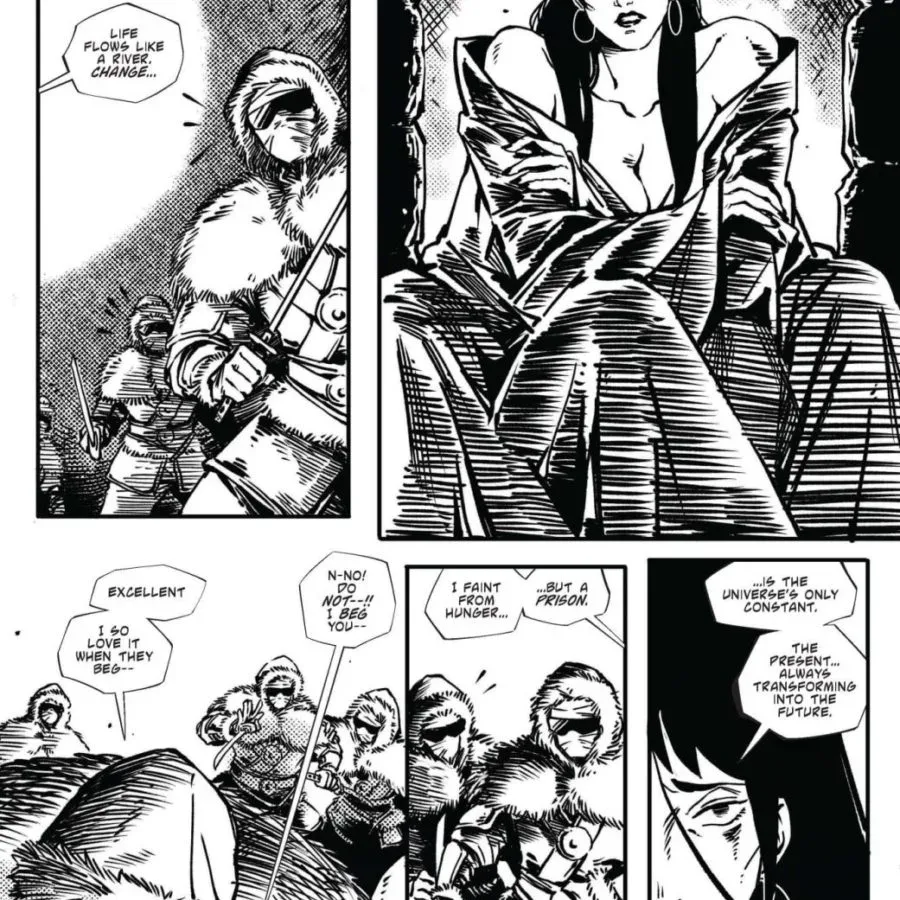
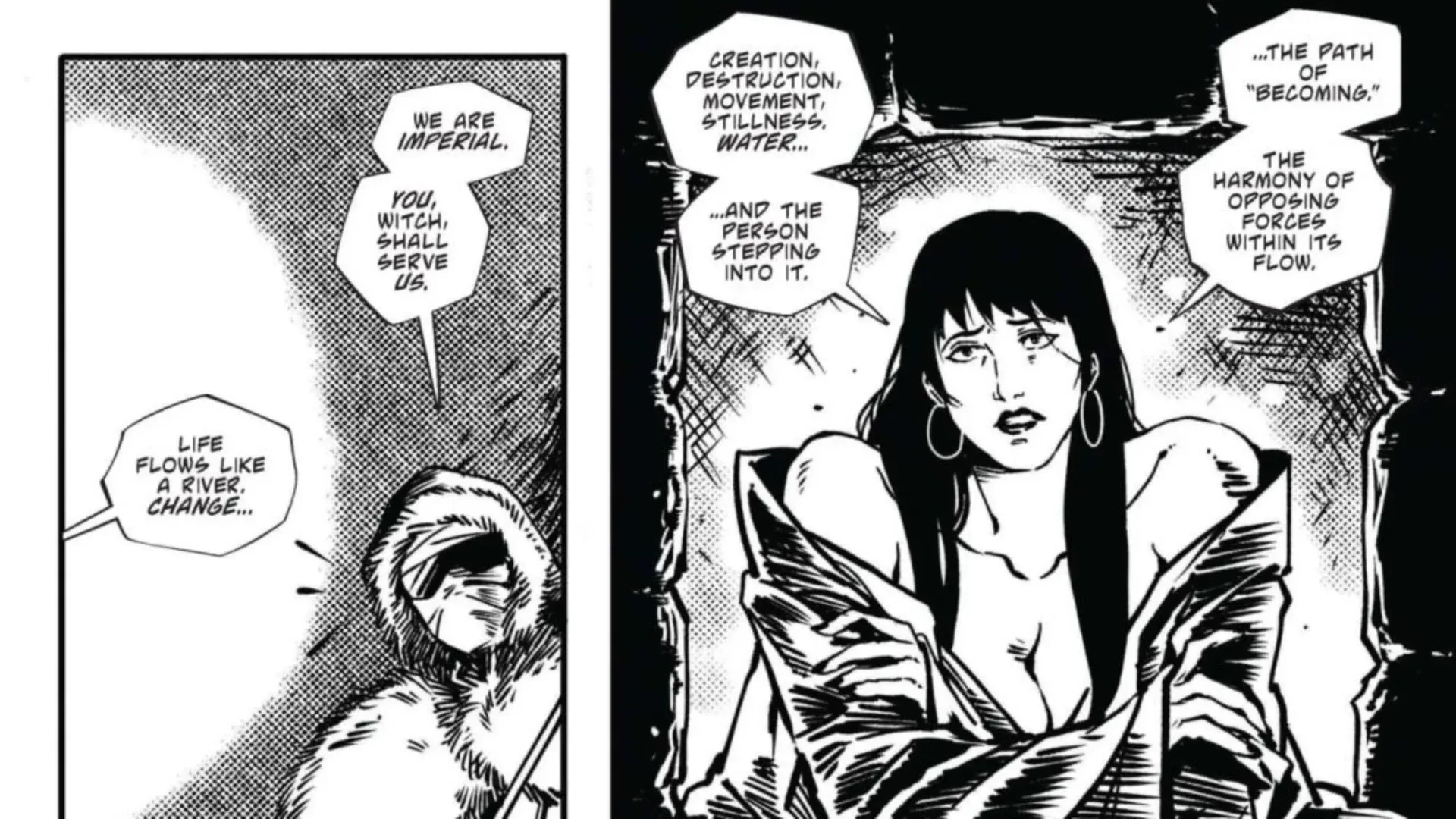
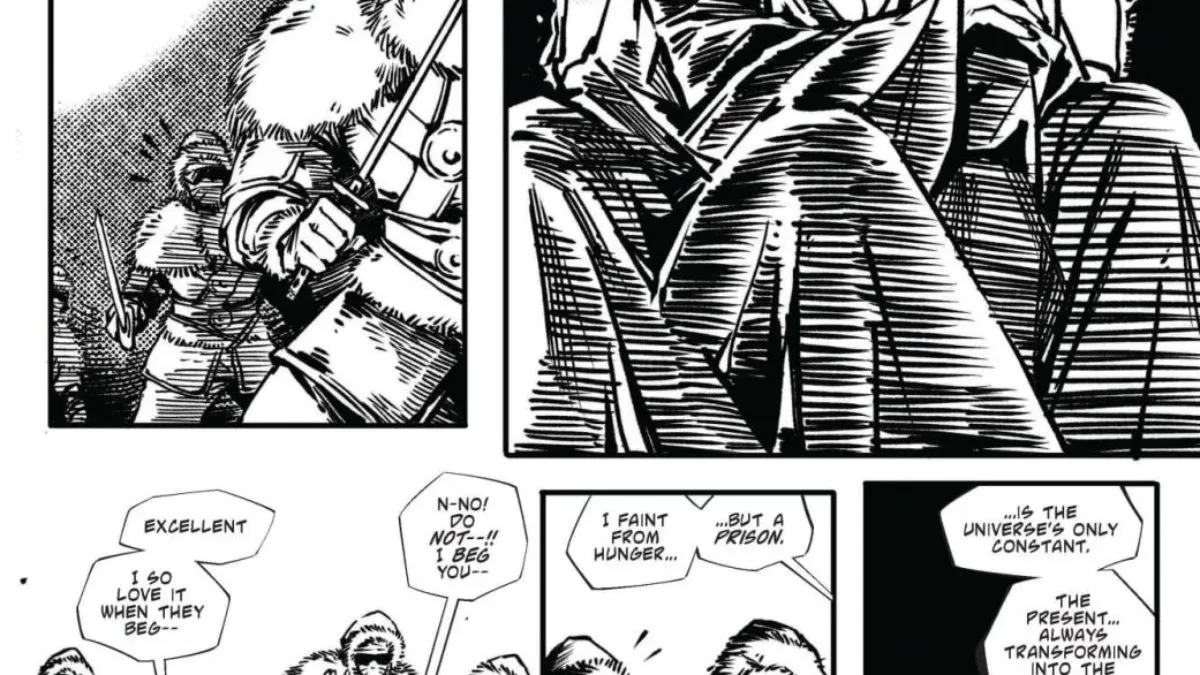
The result is not simply a variant-cover experiment or a few pages styled differently. The issue’s reading order, black-and-white artwork and color accents all point to a story built around a distinct visual language and a self-contained setting.
A comic designed to be read in reverse order
For readers accustomed to American superhero, fantasy and horror comics, the physical navigation of Vampirella #8 will be its immediate defining trait. Manga commonly uses a right-to-left panel flow, meaning the eye enters a page from the upper-right and proceeds across and down in the opposite direction from a standard English-language comic. A book produced in that format is also opened from what many Western readers would initially think of as the back cover.
That change matters because comics are not just text placed beside pictures. Page composition directs timing, action and emphasis. The order of panels determines when a reveal lands and how a reader follows character movement through a scene. By committing to the manga convention, this issue asks its audience to approach the story on its own terms rather than treating the format as a decorative influence.
The listing also says that Qiu’s artwork will be black and white with color accents. In practical terms, that means color is positioned as a selective storytelling tool rather than an ever-present default. Used sparingly, an accent can draw attention to an object, emotional beat, setting detail or visual transition. The material provided does not identify where those colors appear, so readers should not assume a particular narrative purpose for them. Still, the choice makes sense for an issue explicitly framed around a manga presentation.
Escala’s murder case is tied to responsibility
The plot begins with Vampirella affected by medication prescribed by her therapist. She enters a world of her own creation, one combining older cultural traditions with political futurism. That premise introduces a measure of uncertainty before the mystery even starts: this is a setting filtered through Vampirella’s mind, and it sits apart from normal series continuity.
Escala’s king is identified as benevolent, an important detail because it establishes the murder as more than a palace intrigue built around an obviously compromised ruler. Vampirella must respond to the crime through wüde, rendered in the issue’s description as “Martial Virtue.” The concept is defined here through ethical boundaries of respect, benevolence and humility.
Within the story, wüde appears to be more than a fighting style or a label for dramatic combat. It provides Vampirella with an ethical demand: she has to take responsibility for the killing and pursue the truth despite a personal cost. The conflict becomes sharper because the investigation may force her to hunt a man she loves.
That is a useful distinction for anyone deciding whether the issue sounds like a fit. The supplied premise promises a murder investigation and armed tension, but its stated dramatic engine is accountability. Vampirella is not merely dispatched against an external threat. Her values, attachment and obligation are set against one another.
A departure that remains accessible
The description calls the comic a departure from Vampirella’s normal continuity. In comics terms, that generally signals a story readers can approach without needing it to advance the primary ongoing narrative. Here, the special world of Escala, the altered presentation and the self-contained moral dilemma all reinforce that framing.
That can make issue #8 appealing to two different groups. Regular readers get an experiment with the character’s form and setting, while curious newcomers have a stated entry point that is not dependent on the usual continuity. It does not mean the issue is consequence-free or lightweight; rather, its stated stakes are concentrated within its own premise.
The strongest appeal may be the way format and story appear to meet. A fictional world blending antiquity and futurism is an apt place for a comic that changes familiar reading habits. Likewise, a protagonist required to rethink her responsibility fits a book that asks its audience to reorient itself physically on the page. That is interpretation rather than a confirmed creative statement, but the connection is clear in the available setup.
Priest and Qiu lead a large cover lineup
Priest is credited as writer and Qiu as artist, with Lucio Parrillo credited for the principal cover. The issue also has covers by Derrick Chew, Joseph Michael Linsner and Elias Chatzoudis, plus a cosplay cover featuring Rachel Hollon and Dilemmatown. Nishi Lee contributes special back-cover art.
Two blank-cover versions are also listed: a Blank Authentix Cover and a Blank Cover. Blank editions are typically useful for readers who want a clean cover surface for commissioned sketches or signatures, though no specific event, signing or artist participation is stated here. They should be viewed as alternate editions, not as a promise of a particular collecting opportunity.
Each listed edition carries a $4.99 suggested retail price. Readers who prefer a particular cover should check availability with their comic shop or preferred digital storefront rather than assume every version will be easy to find. The provided information confirms the editions and price, but does not provide print-run details or availability expectations.
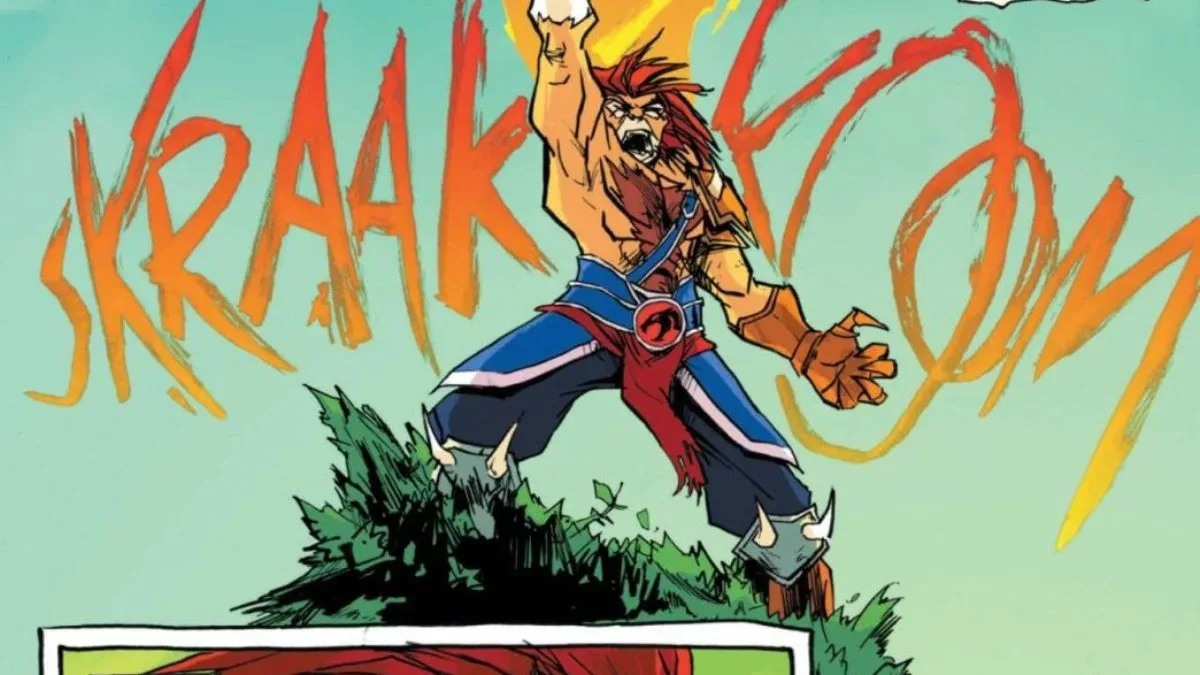
For another recent example of comic storytelling built around a familiar genre figure in a sharply focused setup, see Joking Joystick’s coverage of ThunderCats #2’s “Feral King” storyline.
What readers should know before buying
- Release listing: November 25, 2026.
- Publisher: Dynamite Entertainment.
- Creative team: Christopher Priest writes; Ziyan Qiu provides interior art; Lucio Parrillo is credited for the main cover.
- Format: Manga-style reading direction, from back to front and right to left.
- Art treatment: Black and white with color accents.
- Story setup: Vampirella enters an imagined world, then faces a king’s murder in Escala under the moral code of wüde.
- Continuity: Presented as a departure from the character’s normal continuity.
- Listed SRP: $4.99 for the listed editions.
Vampirella #8 therefore looks less like a routine stop in an ongoing series than a concentrated formal detour. Its central mystery supplies the immediate plot, but the more distinctive hook is the union of a right-to-left presentation, Qiu’s black-and-white visual approach and a Vampirella story explicitly concerned with responsibility, humility and the cost of pursuing someone close to her.