There are plenty of classic gothic-horror problems: ancient curses, bloodthirsty aristocrats, wicked relics and the occasional threat to two worlds. Vampirella #6 has those covered. It also gives its immortal heroine a far more recognizably mortal problem: she is broke, facing eviction and learning that the job keeping a roof over her head may have been serving a demon’s agenda.
The new issue from Dynamite Entertainment is due in comic shops on September 23, 2026, priced at $4.99. Christopher Priest writes, Davis Goetten provides interior art, and Lucio Parrillo is credited for the main cover. Derrick Chew, Joseph Michael Linsner, Elias Chatzoudis and Rachel Hollon are among the named variant-cover artists.
Its central setup places Vampirella in a particularly ugly crossroads. Her employers are revealed to be agents of Belial, a demon. The practical question is blunt: keep doing work for them to make rent, or resist and risk homelessness. That is a useful pressure point for a supernatural series because it makes the danger less abstract than a distant prophecy. Vampirella’s decision is not merely about defeating a villain; it is about what survival might cost her.
An eviction notice with fangs
“Broke and facing eviction” is not conventional shorthand for an all-powerful hero’s adventure, and that contrast appears to be the point. Vampirella is being positioned against a system of leverage, in which ordinary financial vulnerability leads directly to an extraordinary moral compromise. Belial’s influence is not presented only as a monster-of-the-week threat. It reaches into employment and housing, turning everyday dependence into a trap.
The available preview material also places Vampirella in a ransacked apartment, questioning a pawnbroker named Sergius about Belial. That image supports the issue’s more grounded tension: even when demons, time travel and supernatural factions are in play, the search for answers begins close to home and amid damage already done.
Belial’s history apparently reaches back a century, including the disappearance of Vampirella’s sister into what is called the “time stream.” The term signals a story device involving time displacement or movement through time, rather than a simple physical abduction. It gives the conflict a personal dimension beyond the current eviction crisis, while leaving plenty of questions about exactly what happened and what recovery could mean.
The premise makes Belial an effective kind of antagonist on paper. A demon is inherently supernatural, but an employer who can exploit somebody’s basic need for income has a more intimate form of power. The issue’s drama should therefore rest on agency: whether Vampirella can refuse the role she has unknowingly been playing once she understands who benefits from it.
Dracula’s new blood changes the larger threat
Vampirella’s immediate predicament is only one half of the issue. Dracula is now empowered by alien Vampiri blood, and is said to be free of the conventional limits of vampiric existence. That makes him a heightened threat to both Earth and Drakulon, Vampirella’s home world.
In straightforward terms, “conventional limitations” means the familiar rules that ordinarily constrain a vampire in this series. The precise limits Dracula has overcome have not been specified, so it would be premature to assume a particular new power or immunity. What is clear is the narrative function: the alien blood changes the balance of power and gives Dracula more room to act than he previously had.
That is a major escalation because it links the street-level pressure on Vampirella to a conflict with planetary stakes. She may be navigating a demonic employment arrangement and imminent housing insecurity at the same time Dracula becomes more dangerous to both of the story’s key worlds. The two threads can work in tandem: one tests Vampirella’s choices under personal coercion, while the other tests her capacity to confront a threat that is becoming harder to contain.
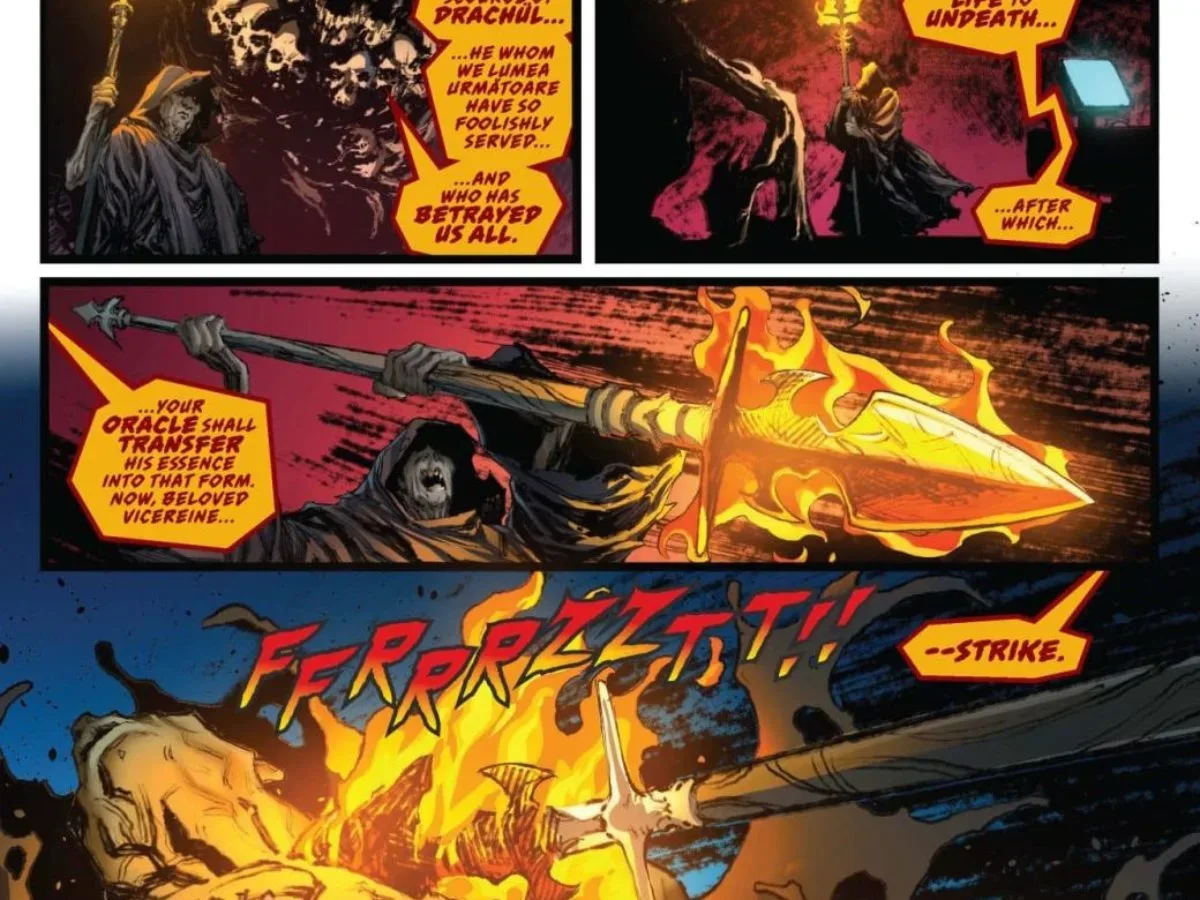
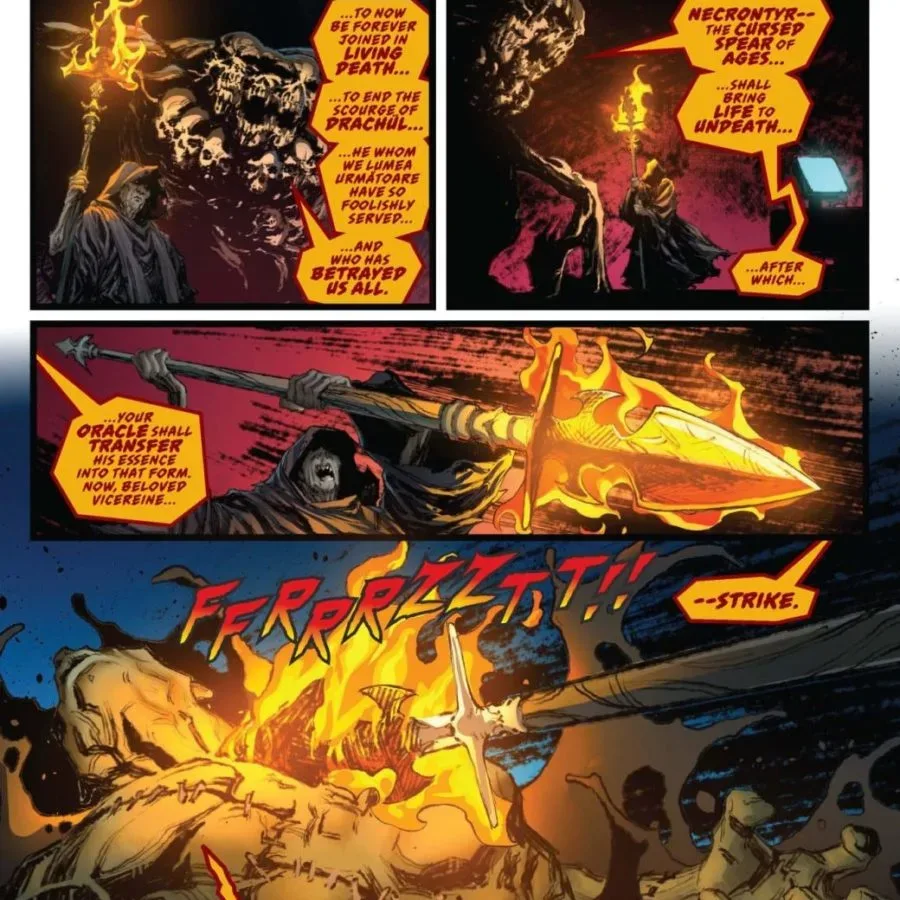
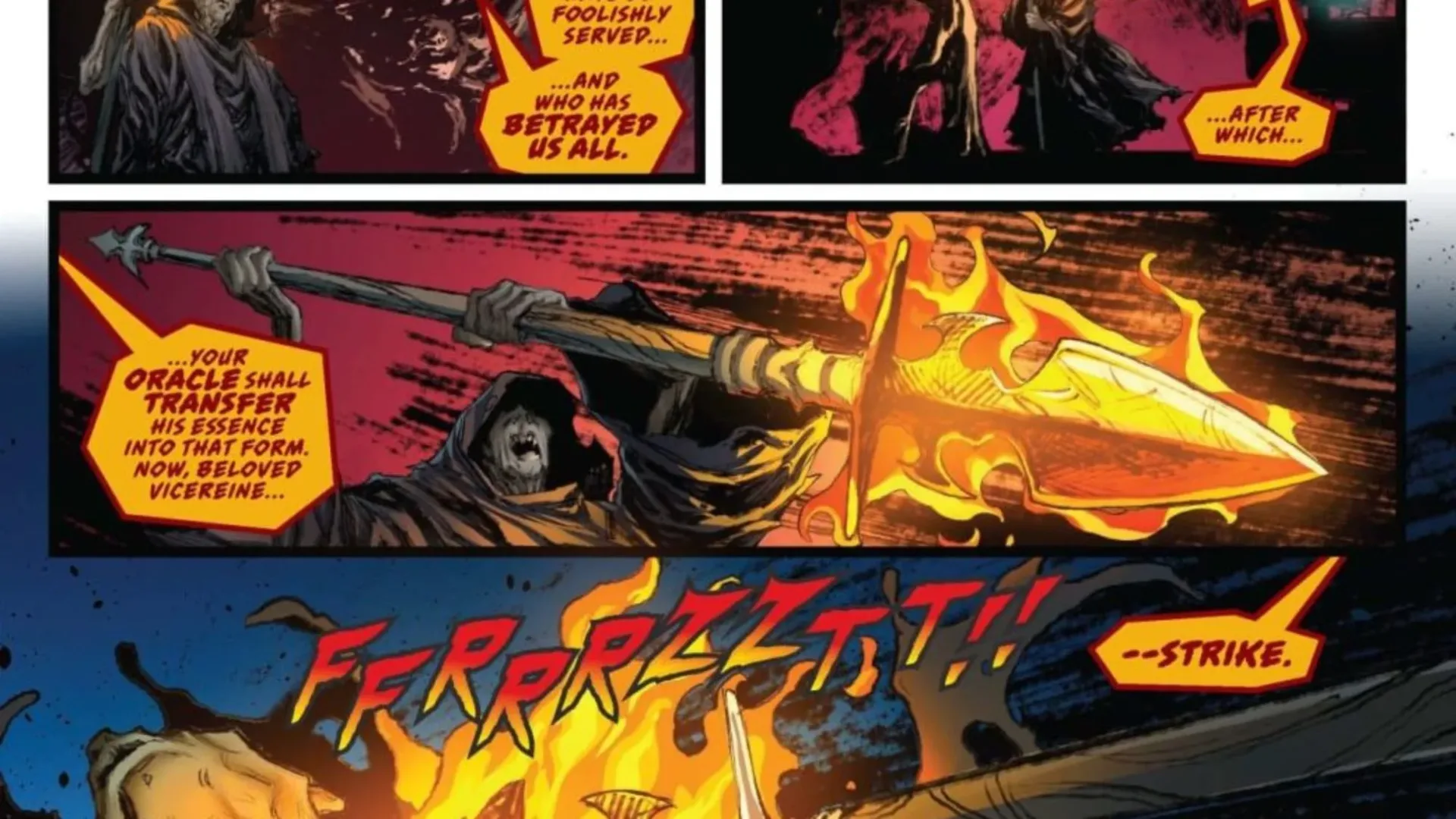
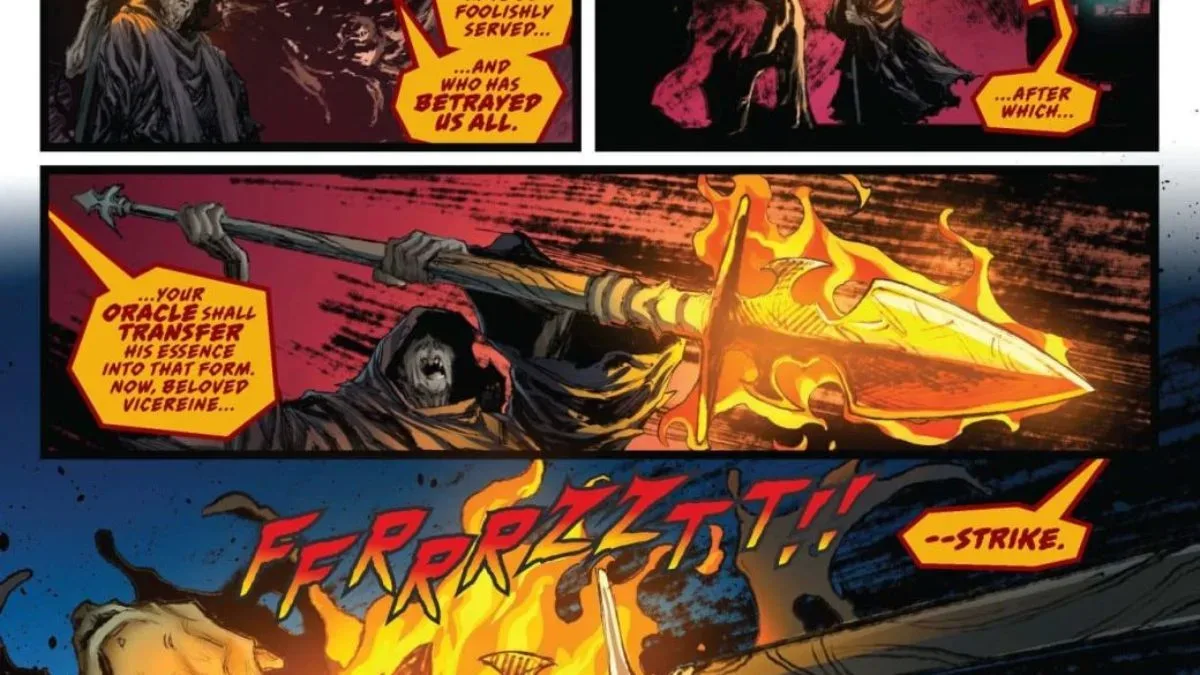
There are further signs of a wider supernatural power struggle. The preview material references a silver-haired Vicereine, a figure named Drachul, and the Necrontyr, a flaming spear connected to a resurrection plot. A vicereine is traditionally a woman governing or acting with authority on behalf of a higher power; here, the title suggests rank and political weight within the comic’s supernatural hierarchy. The available details do not establish the full relationship among the Vicereine, Drachul, Dracula and Belial, but they make clear that multiple forces are moving at once.
Why the issue’s smaller stakes matter
Comics often use a ticking clock, a cosmic invasion or a city in flames to create urgency. Vampirella #6 instead pairs vast mythology with a recognizable economic deadline. Rent is due. An eviction is looming. The people holding the work arrangement have hidden allegiances. It is a compact setup, but it can generate tension without requiring readers to know every detail of the larger mythology first.
For returning readers, the Belial revelation and Dracula’s altered condition push ongoing threads forward. For readers considering the issue as a possible entry point, the solicit provides an immediate framework: Vampirella has been unknowingly working for the wrong people, and a more powerful Dracula threatens both her current home and her origin world.
That kind of dual structure is particularly suited to serialized comics. The immediate dilemma gives an individual issue shape, while the alien-blooded Dracula plot promises consequences that reach beyond it. The unanswered details are part of the hook: what, specifically, did Vampirella’s work enable; what does Belial want; and what are the limits of Dracula’s transformation now that old vampire rules no longer fully apply?
Creative team and cover options
Priest is credited as writer, with Goetten on art and Parrillo on the main cover. The issue’s listed named variants include covers by Chew, Linsner and Chatzoudis, plus a cosplay cover featuring Rachel Hollon. These editions share the same story, so the choice is fundamentally about cover preference rather than different narrative content.
The $4.99 listed price applies to the named editions in the solicitation. Additional cover listings appear in the distribution information without artist names in the supplied details, so collectors who are choosing among editions may want to check their preferred comic shop’s ordering information for the exact cover images and availability.
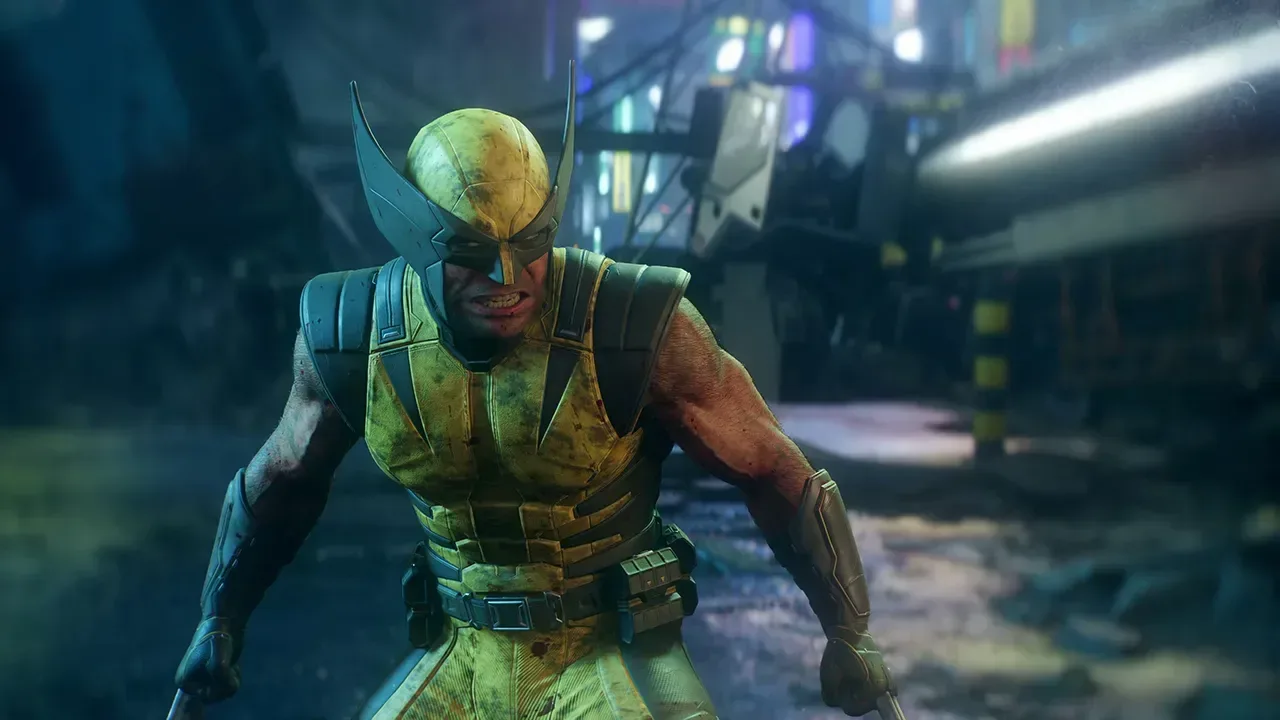
Vampirella’s predicament also lands at an interesting moment for readers who enjoy character-driven genre stories: huge lore does not have to erase human-scale pressure. The strongest part of this setup may be its insistence that a woman dealing with demons and world-threatening vampires can still be cornered by a job she cannot ethically keep. For another example of how comic characters are being framed through story and character decisions across media, see this look at Marvel’s Wolverine and its narrative approach to Logan.
What readers should know before release
- Release date: September 23, 2026.
- Publisher: Dynamite Entertainment.
- Price: $4.99.
- Writer: Christopher Priest.
- Artist: Davis Goetten.
- Main cover artist: Lucio Parrillo.
- Core conflict: Vampirella discovers that her employers serve the demon Belial while she is broke and threatened with eviction.
- Larger danger: Dracula, strengthened by alien Vampiri blood, is described as a growing menace to Earth and Drakulon.
The premise does not need to choose between gothic excess and real-world anxiety. It uses both. One storyline asks whether Vampirella can afford to defy a demon who has embedded himself in her life; the other asks how she can confront a Dracula whose altered blood has made him less bound by the rules that once defined him. That is a busy arrangement, but it gives issue #6 a clear identity: supernatural horror where the monster at the door may be the landlord, the employer, or the ancient vampire preparing to outgrow every old limitation.