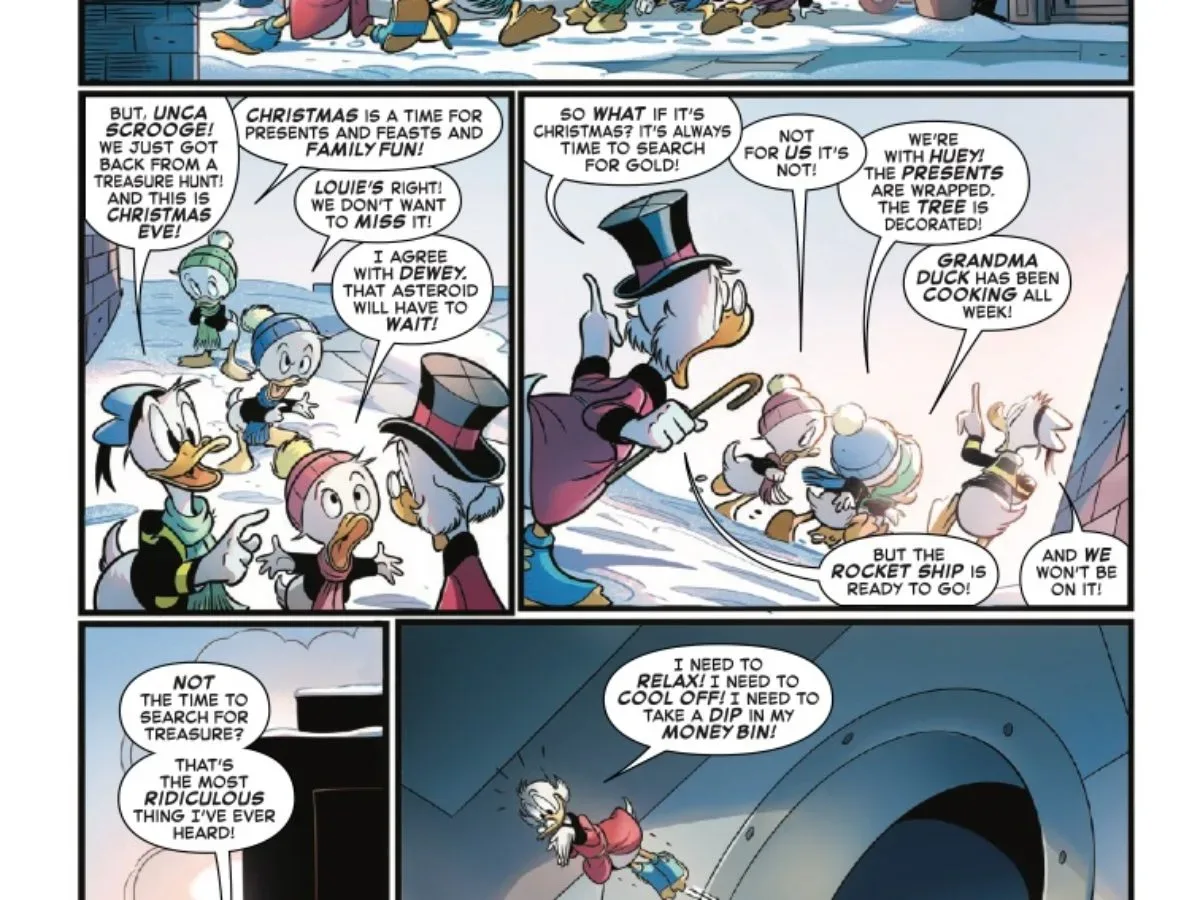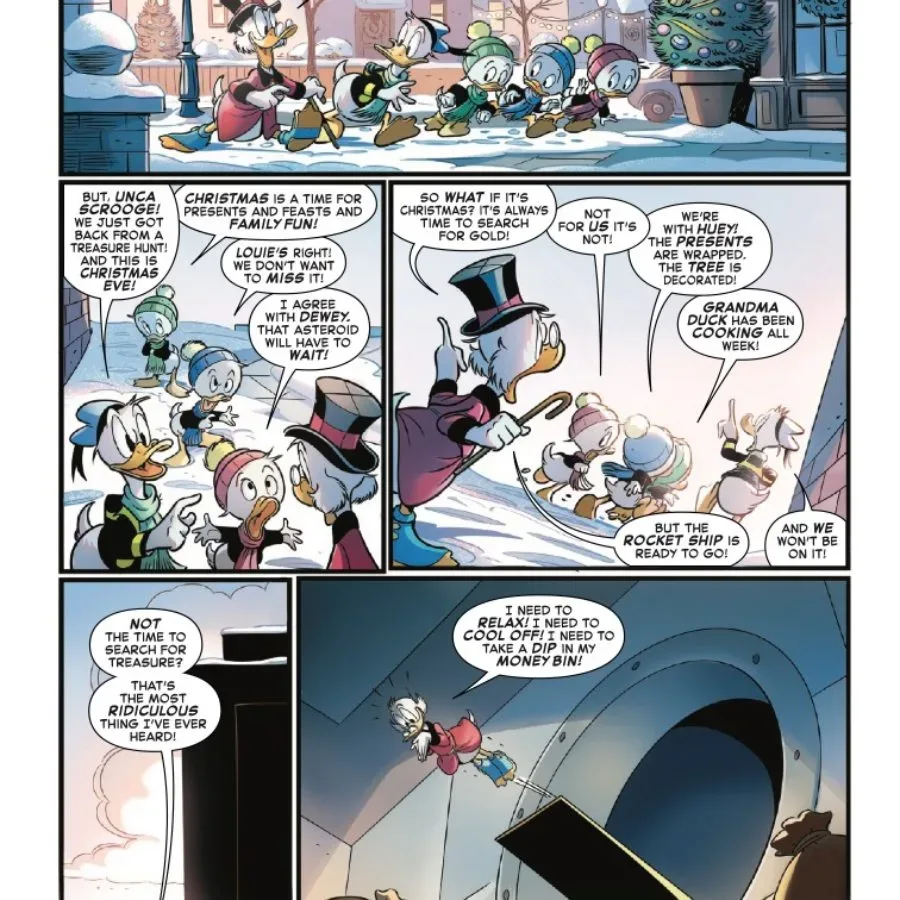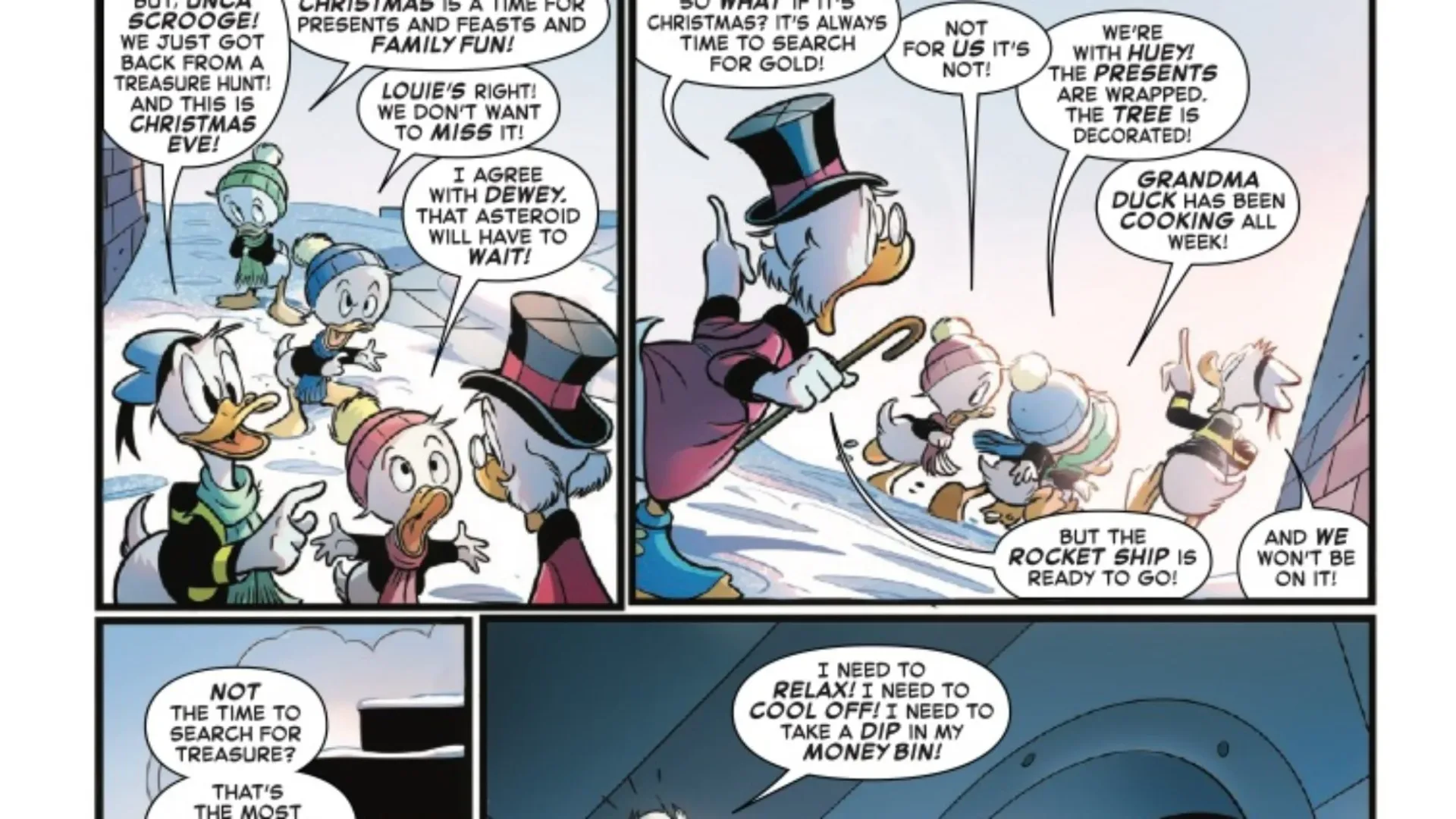
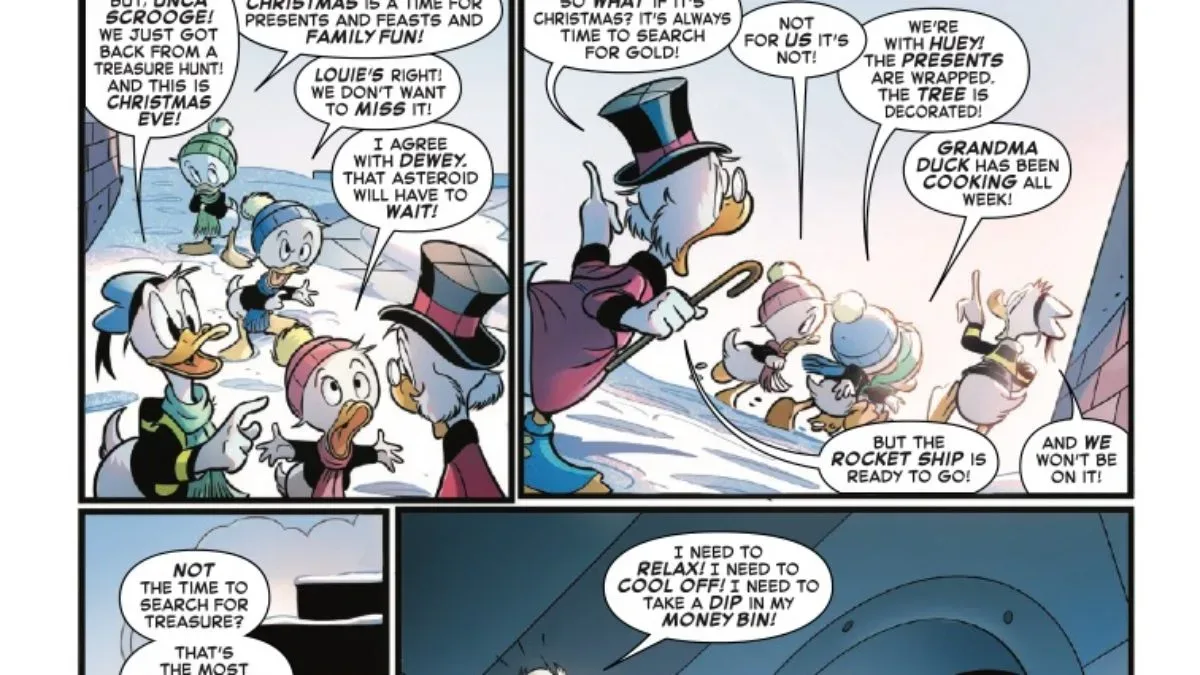
Scrooge McDuck is about to face a holiday problem no amount of vault diving can solve. Uncle Scrooge: A Christmas Carol #1, a 40-page Marvel special scheduled for November 18, 2026, puts its famously money-minded lead in a distinctly seasonal bind: he chooses gold over Christmas, only to find himself spending the holiday alone.
The issue’s stated premise is direct, but it has room for a big emotional swing. Scrooge is sent on three magical adventures through the past, present and future, where he must reconsider the treasures that have actually mattered in his life. Donald Duck, Huey, Dewey and Louie, Ludwig Von Drake and Gyro Gearloose are among the featured guest stars, placing several sides of Scrooge’s family and Duckburg orbit around a story built on isolation.
For a character whose identity is inseparable from the Money Bin, that setup is a neat pressure test. The question is not whether Scrooge likes gold; that part is settled before page one. The tension is whether material wealth remains meaningful when it costs him the people and traditions that give the season its purpose.
A holiday structure with three distinct points of view
The past-present-future framework gives the one-shot a clear three-part engine. Each stop is positioned as a magical adventure rather than simply a lecture, which should allow the issue to keep an adventure-comics rhythm while placing Scrooge’s priorities under scrutiny.
Past, present and future function here as more than time periods. They are perspectives. The past can force a character to revisit earlier values or decisions; the present focuses attention on what is being neglected right now; and the future turns consequences into something immediate enough to confront. The solicitation does not reveal the settings, antagonists or details of the three adventures, so readers should treat the exact shape of those journeys as under wraps.
What is established is the connective idea: the journeys make Scrooge revisit what he truly treasures. That wording matters because it reframes the story’s central conflict. Gold is a treasure in the literal sense, but the comic is explicitly asking whether it is the most important kind. Scrooge’s loneliness on Christmas means the debate is personal rather than abstract.
Scrooge’s choice leaves him alone for the holiday, and three magical adventures revisit the things that matter most to him.
Why the supporting cast fits this particular story
The announced guest list makes practical sense for a family-centered holiday special. Donald Duck and Huey, Dewey and Louie immediately bring family into the story’s foreground. If Scrooge is being asked whether family outweighs his fortune, their presence gives that question faces rather than leaving it as a general moral.
Ludwig Von Drake and Gyro Gearloose expand the available tone. Their names suggest the special will not be limited to quiet sentiment, although no plot role has been announced for either character. In a premise driven by magical adventures across time, the contrast between Scrooge’s obsession with his wealth and a broader cast of relatives and inventive personalities creates plenty of opportunity for visual momentum and comic complications.
That ensemble also distinguishes the special from a story solely about a miser sitting beside a pile of coins. The loneliness in the premise is not just physical solitude. It is the consequence of Scrooge placing the Money Bin above the people who normally surround him. The announced cast keeps that absence—and its potential repair—at the center of the issue.
The creative and edition details
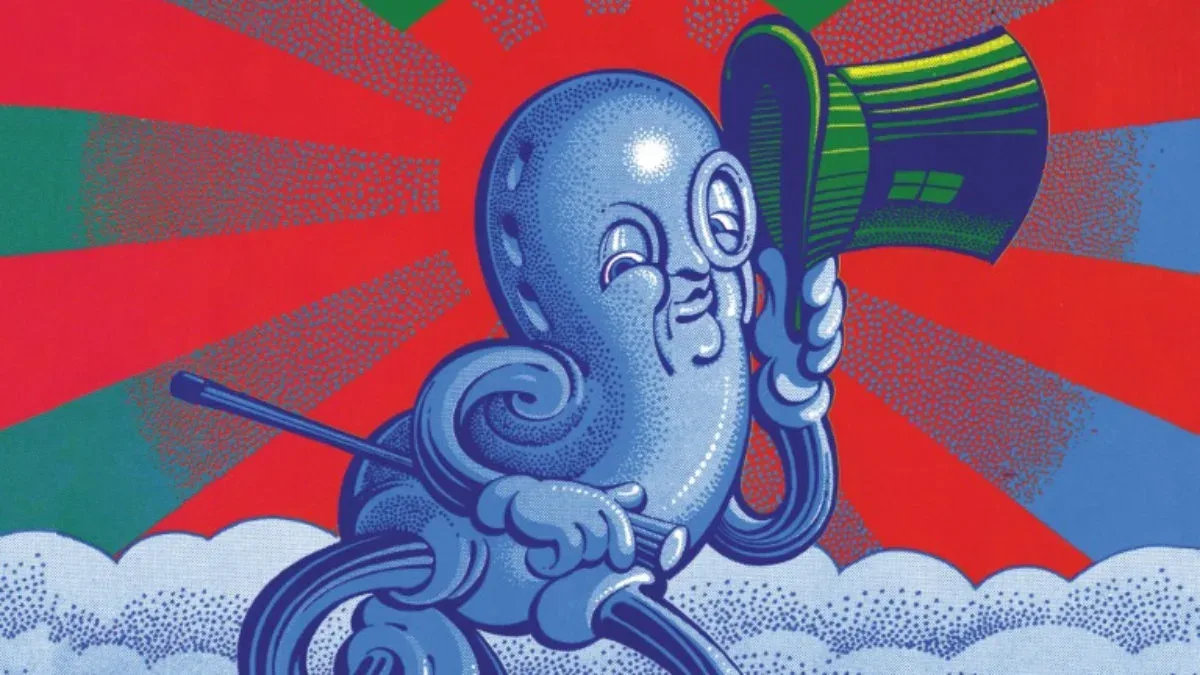
Uncle Scrooge: A Christmas Carol #1 is credited to Louise Simonson and Marvel Various, with a cover by Walter Simonson. It is listed at 40 pages, rated for Kids to Adults, and priced at $5.99 in the United States.
Three named variant editions are also listed: a Paco Medina 1:25 variant, a Rose Besch variant and a Nicoletta Baldari variant. The listings give each variant a $5.99 U.S. price and a $7.50 Canadian price. A variant cover is an alternate cover edition of the same comic issue; it is not, by itself, evidence of a separate story or additional pages. The supplied issue information identifies the alternate covers but does not describe their art, print quantities or distribution specifics beyond the “1:25” label attached to the Paco Medina version.
That is worth keeping straight for readers deciding which copy to seek out. The base edition and the listed variants all point to the same numbered holiday special. Collectors may prefer a particular cover artist or retailer availability, while story-first readers can focus on the standard issue and its 40-page Scrooge-and-family adventure.
What the premise says about Scrooge
There is a deliberate joke built into making Scrooge McDuck the center of a Christmas morality tale about gold. He is one of comics’ clearest symbols of extravagant wealth: the solicitation itself invokes his Money Bin, and the conflict begins with a choice in favor of gold. The special does not need to pretend that Scrooge’s wealth is incidental. Instead, it turns that defining trait into the obstacle he must address.
That makes the possible lesson more specific than “money is bad.” The supplied setup does not argue that Scrooge must stop valuing gold or abandon his fortune. It asks whether he can recognize the cost of choosing it over Christmas and family. There is a meaningful difference. A character can be motivated by money and still need to confront the way that motivation affects everyone else.
The title’s seasonal time-travel structure intensifies that question by putting choices into a wider frame. Looking backward can make sentimental objects, relationships and decisions visible again. Looking at the present can expose the immediate result of prioritizing the wrong thing. Looking ahead can show what a continued pattern might leave behind. Those are analytical possibilities inherent to the advertised structure, not plot details that have been disclosed.
A one-shot built for seasonal reading
As a #1 with a self-contained holiday premise, the comic has an approachable entry point. Readers do not need announced prior-issue context to understand the starting conflict: Scrooge favors gold, Christmas passes without company, and magical adventures challenge his priorities. The simple setup gives returning Duck readers a familiar central figure while leaving the emotional stakes legible for newcomers.
The holiday focus also makes the 40-page format useful. A longer-than-standard single installment can accommodate a beginning in which Scrooge makes his choice, a middle organized around the three journeys, and a resolution that addresses the family question raised in the solicitation. That is an observation about the issue’s stated page count and structure, not a confirmation of its page-by-page pacing.
Anyone tracking more upcoming comic stories can also see how another issue frames a looming moral reckoning in Wonder Woman #39’s setup for a judgment on fate. The common ground is thematic rather than narrative: both premises put a major character in front of consequences, even if Scrooge’s Christmas special approaches that idea through family, wealth and magical time travel.
Release information at a glance
- Title: Uncle Scrooge: A Christmas Carol #1
- On sale: November 18, 2026
- Publisher: Marvel
- Credits: Louise Simonson and Marvel Various; cover by Walter Simonson
- Format: 40 pages
- Rating: Kids to Adults
- U.S. price: $5.99
- Featured characters: Scrooge McDuck, Donald Duck, Huey, Dewey, Louie, Ludwig Von Drake and Gyro Gearloose
- Listed variant covers: Paco Medina 1:25, Rose Besch and Nicoletta Baldari
At its core, Uncle Scrooge: A Christmas Carol #1 promises a holiday adventure with an unusually pointed choice at its center. Scrooge may possess a legendary reserve of coins, but this special is built around whether that reserve can compensate for a Christmas spent alone—and whether three journeys through time can make him see the answer before the holiday is over.