Tom King and Daniel Sampere’s Wonder Woman run is scheduled to end with Wonder Woman #40, on sale December 16, 2026. The 32-page issue carries a $4.99 cover price and is positioned as the finale to the pair’s ongoing story, described as the conclusion of the “Wonder War.”
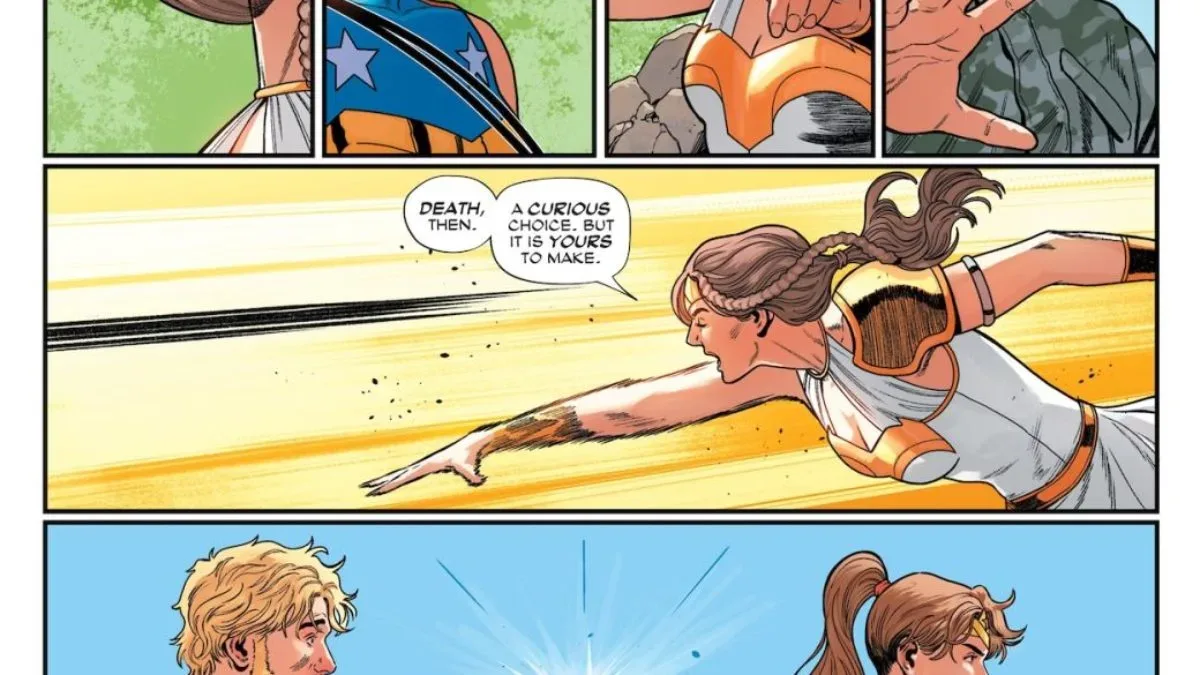
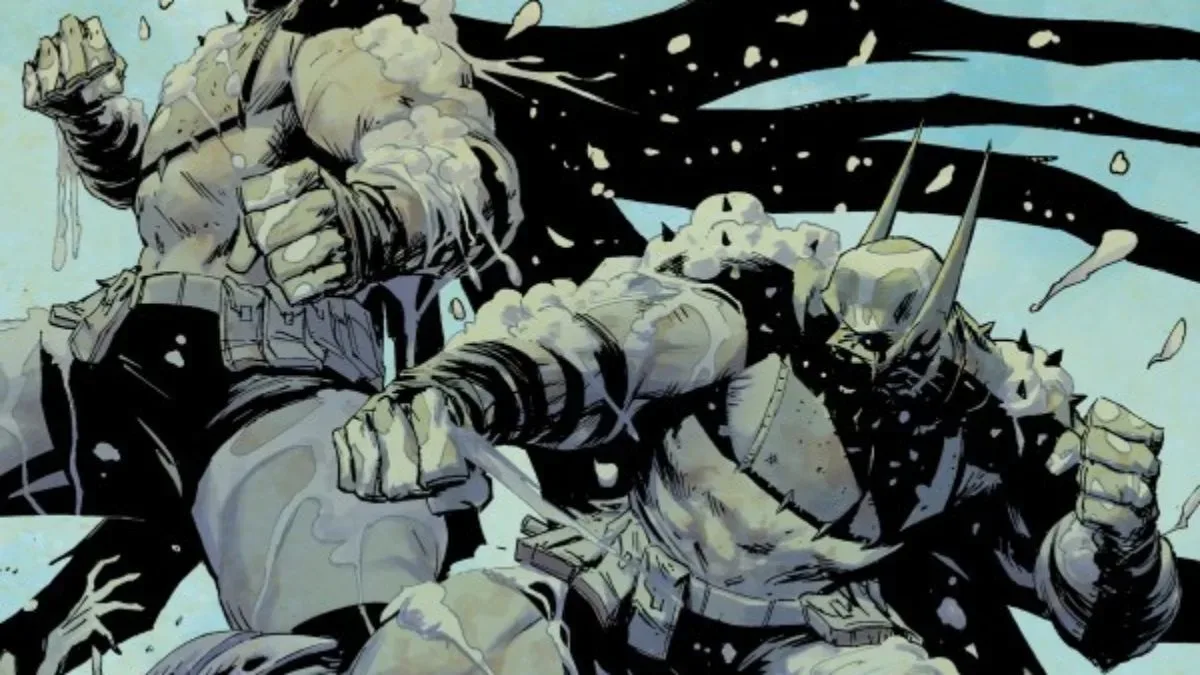
The final conflict is set to put Diana, her family, and Themyscira itself under pressure. The Matriarch and her father, the Sovereign, have assembled violent villains for an assault intended to destroy Wonder Woman and what she represents, with Paradise Island—the common name often used for Themyscira—as the target.
It is a decisive endpoint for a creative run that King initially hoped might reach 100 issues. That larger plan will not happen, but King has indicated that the core thematic direction established at the start remains intact through the planned ending. He has also said that story elements developed organically as the series progressed, including material that received a stronger response from readers and therefore became more prominent.
A finale built around Themyscira
December’s #40 solicitation frames the issue as more than a standard villain showdown. The opposing side’s objective is explicitly broad: eliminate Wonder Woman and challenge the ideals attached to her. That gives the confrontation two simultaneous stakes. There is the immediate physical threat to Diana and the people defending the island, and there is the symbolic threat to the values she embodies.
The setting matters. Themyscira is not simply another battlefield in the premise; it is Wonder Woman’s home and the place Diana and her allies are defending. A story about enemies attempting to reach and conquer its shores naturally makes the finale a test of community as well as individual heroism. The solicitation’s emphasis on Diana and her family standing together points toward a conflict where protection, solidarity, and resistance are central to the resolution.
“Wonder War” is the label used for this concluding arc. In practical comics terms, an arc is a connected stretch of issues that develops one major conflict toward a resolution. A final arc is usually where earlier character dynamics, recurring antagonists, and the book’s principal themes are brought into direct contact. Based on the announced premise, #40 concentrates that structure into a final invasion scenario rather than leaving the run on an open-ended status quo.
Why issue #40 marks a meaningful stopping point
A 100-issue ambition and a 40-issue conclusion are obviously very different scales. King has acknowledged disappointment that he will not reach the original target, citing an increasingly busy schedule outside comics, including work on projects such as Lanterns. But he has also expressed happiness with the planned ending and confidence that it completes the story he and Sampere set out to tell.
That distinction is important for readers. A shortened run is not automatically an unfinished one. There is a difference between a series ending because an intended story has reached its final chapter and one ending while its creators leave its main narrative unresolved. The available details point to the former: the December issue is advertised as a monumental conclusion, and King has said the thematic through-line runs from issue #1 to the end.
At the same time, the original 100-issue goal offers useful context for expectations. Readers should not assume every idea imagined for that longer format will appear in #40. King’s comments suggest that the story evolved in response to reader reception and production realities. What matters for the finale, then, is whether the material that survived that evolution delivers the intended emotional and thematic endpoint—not whether it reproduces every possibility of a much longer plan.
The creative team and the announced covers
King is credited as writer and Sampere as interior artist for Wonder Woman #40. In a monthly superhero comic, the writer generally shapes the script, scene progression, dialogue, and narrative structure, while the interior artist turns that script into the sequential visual storytelling on the pages. The writer-artist partnership is especially significant for a finale because the final issue must make its action readable while landing character moments and bringing the series’ visual identity to a close.
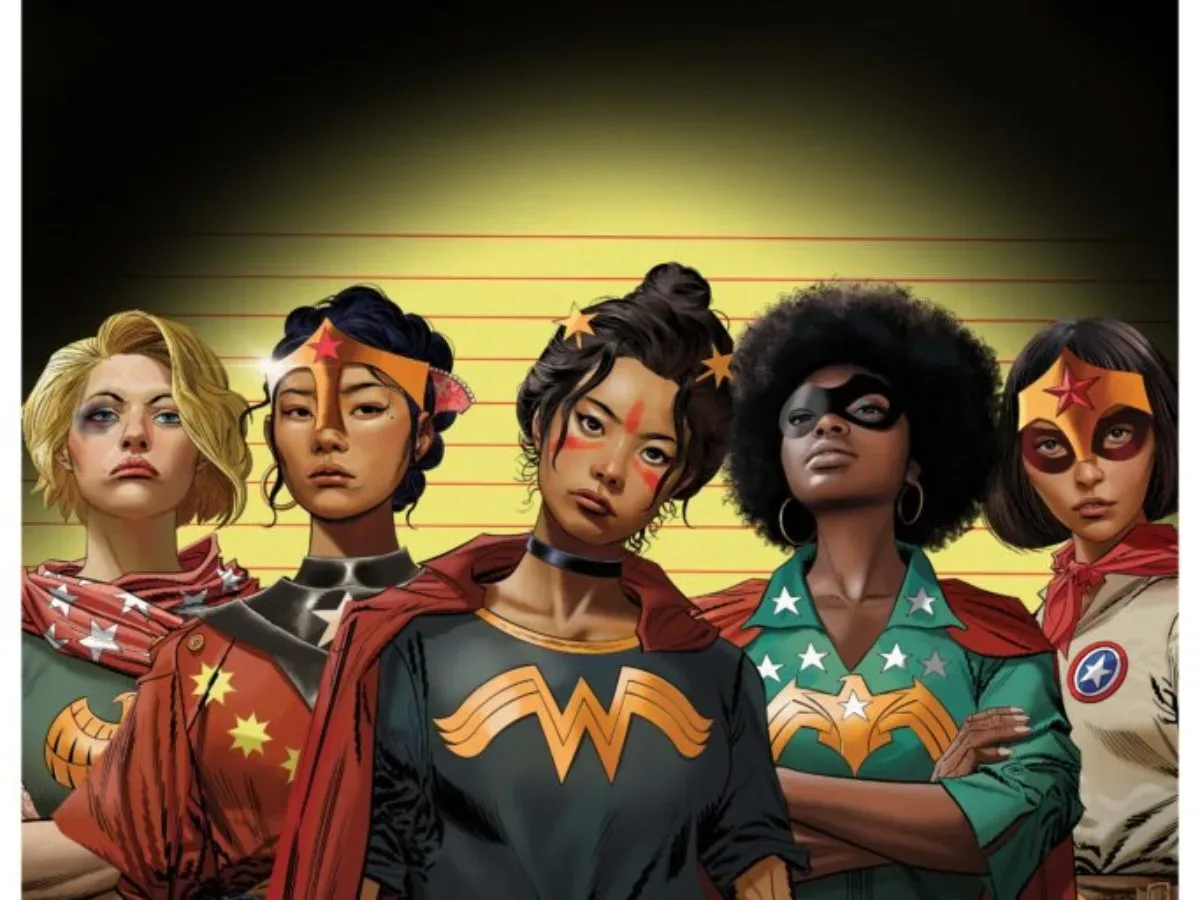
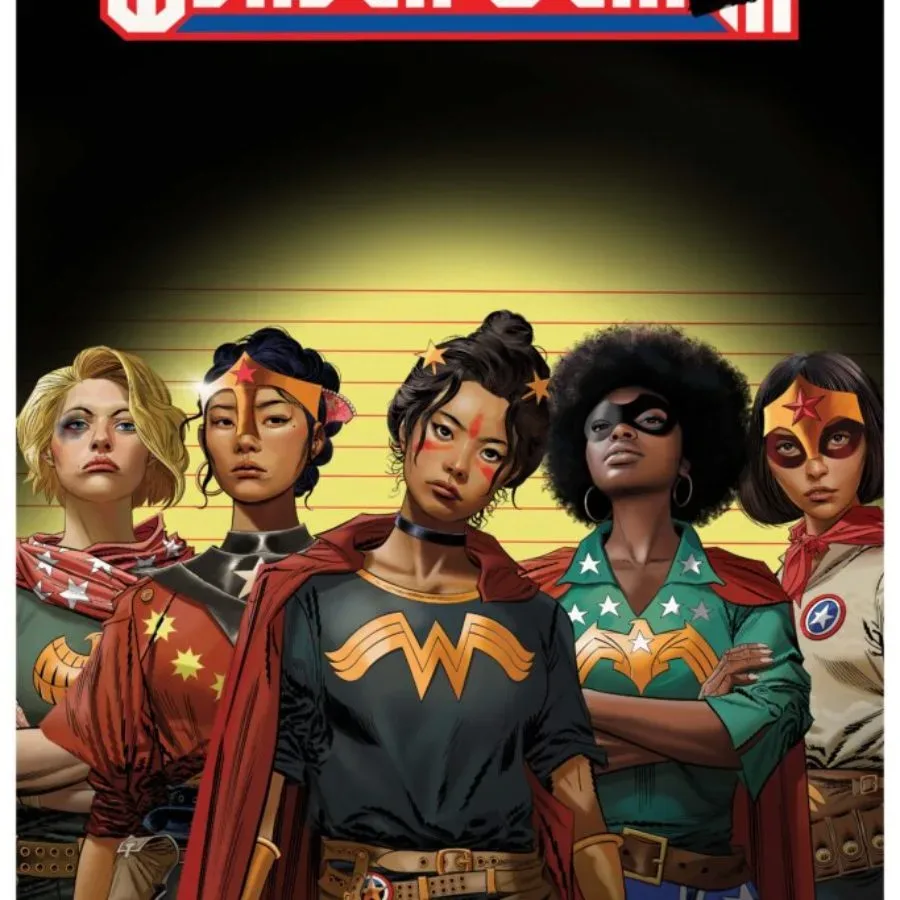
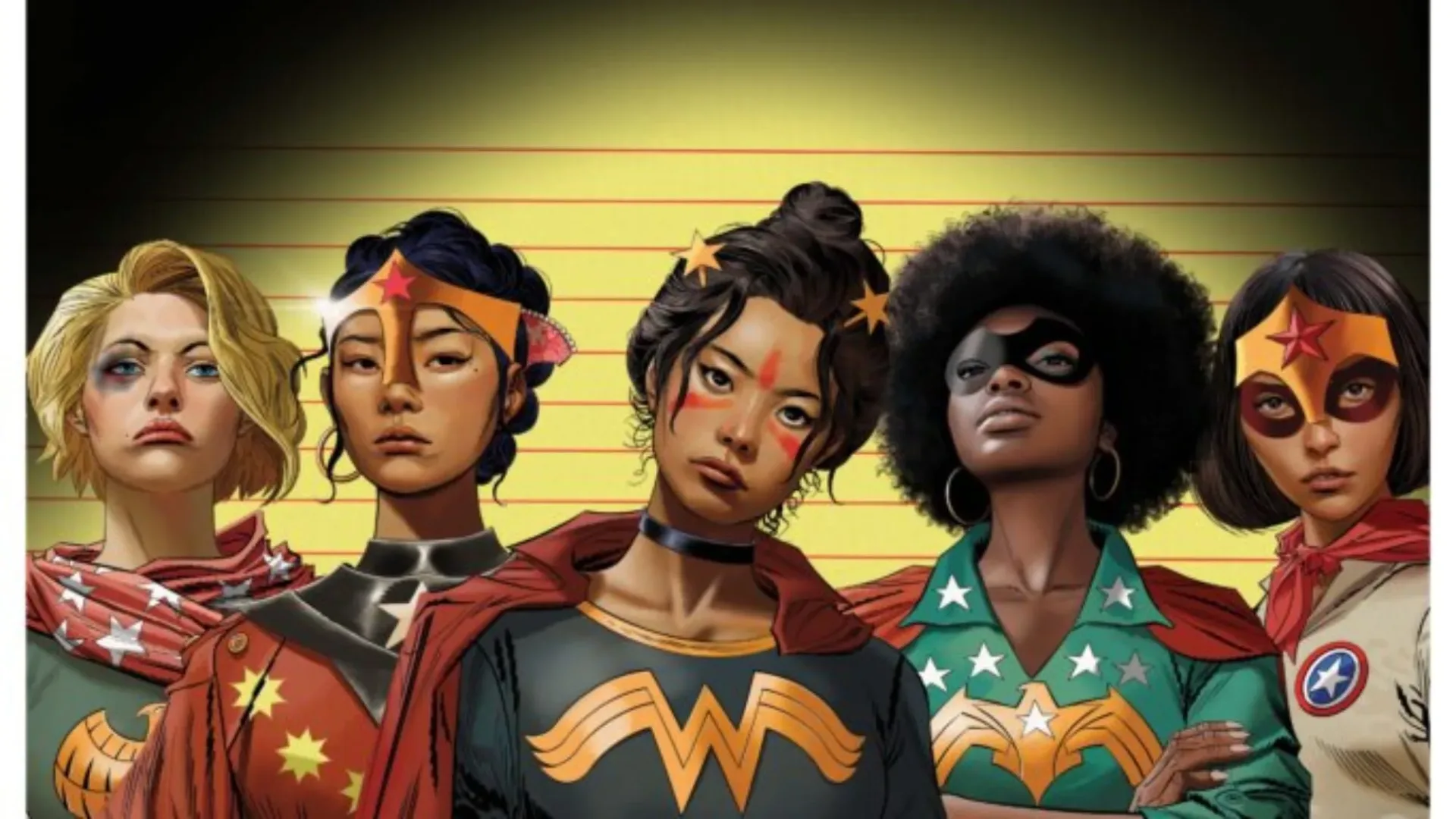
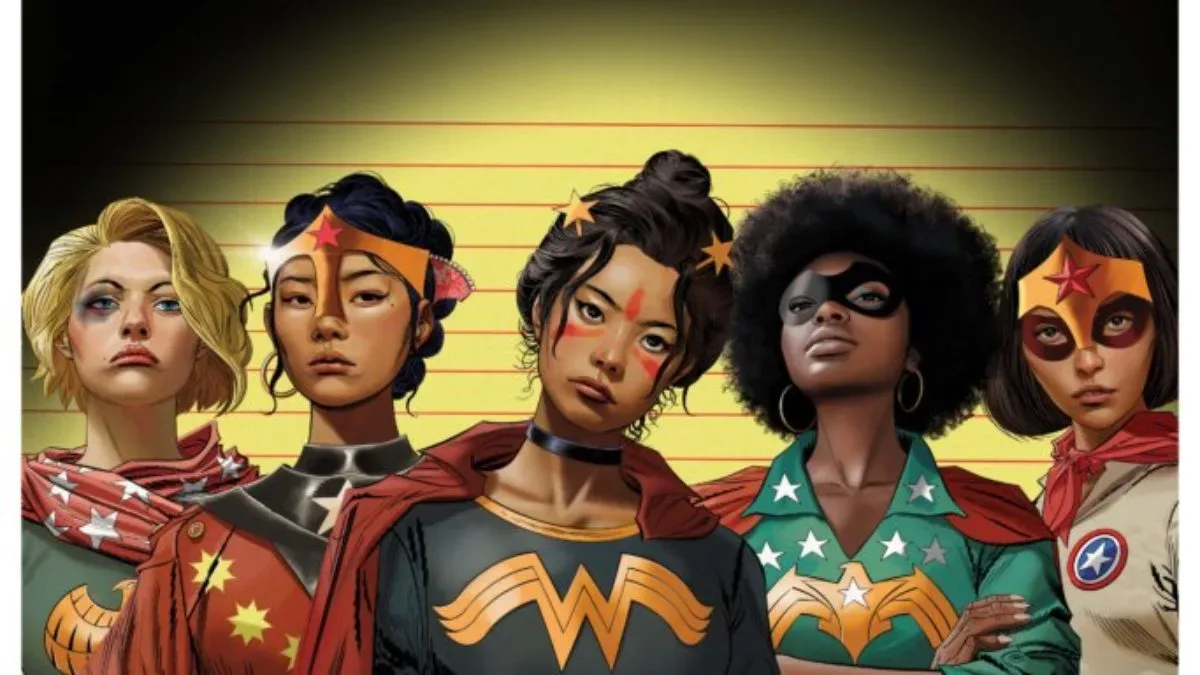
Sampere is also among the issue’s cover artists. Additional announced covers come from David Nakayama, Julian Totino Tedesco, and Jamie Hewlett. These are variant covers: alternate front-cover designs for the same comic issue. They do not indicate separate story editions or different endings. The interior narrative remains the same; the cover is the presentation choice.
For readers who want the conclusion itself, the main practical detail is simple: any cover version of Wonder Woman #40 contains the same 32-page issue. For collectors who care about the cover art, the announced lineup creates several visual options without changing the story continuity. A Jamie Hewlett cover is particularly notable as one of the variants attached to the finale, but it should not be mistaken for a separate special issue.
What has been confirmed—and what has not
The confirmed information is specific. Issue #40 is scheduled for December 16, 2026; King writes it; Sampere provides the interior art; and the Matriarch and Sovereign lead an attack involving a gathered group of violent villains. Diana and her family will defend Themyscira in the climax of the Wonder War.
There are also limits to what the solicitation establishes. It does not identify every villain in the assembled force, explain how the confrontation will conclude, or reveal the future creative direction for the title after #40. It likewise does not establish whether every plot thread conceived under the original 100-issue plan will receive a direct resolution. Those details remain outside the announced material.
That uncertainty is worth preserving because finale solicitations are designed to establish stakes without giving away outcomes. Their purpose is to tell readers why an issue matters, not to publish its resolution in advance. The phrase “ultimate threat” communicates the scale DC is aiming for, but it is not evidence of a particular twist, death, reboot, or successor story.
What the ending means for readers
For ongoing readers, #40 is the issue to mark as the endpoint of King and Sampere’s shared run. The setup indicates that it will pay off the conflict involving the Sovereign and Matriarch while placing Wonder Woman’s personal connections and her homeland at the center of the final struggle.
For people who have not been following every issue, the finale’s clear central premise may make it an accessible reference point, but it is still the closing chapter of a 40-issue run. The most direct route to its intended impact is likely reading the preceding story rather than treating the final battle as a standalone event. The stated thematic continuity from the first issue onward reinforces that point: the climax is being presented as a culmination, not merely another installment with an oversized fight.
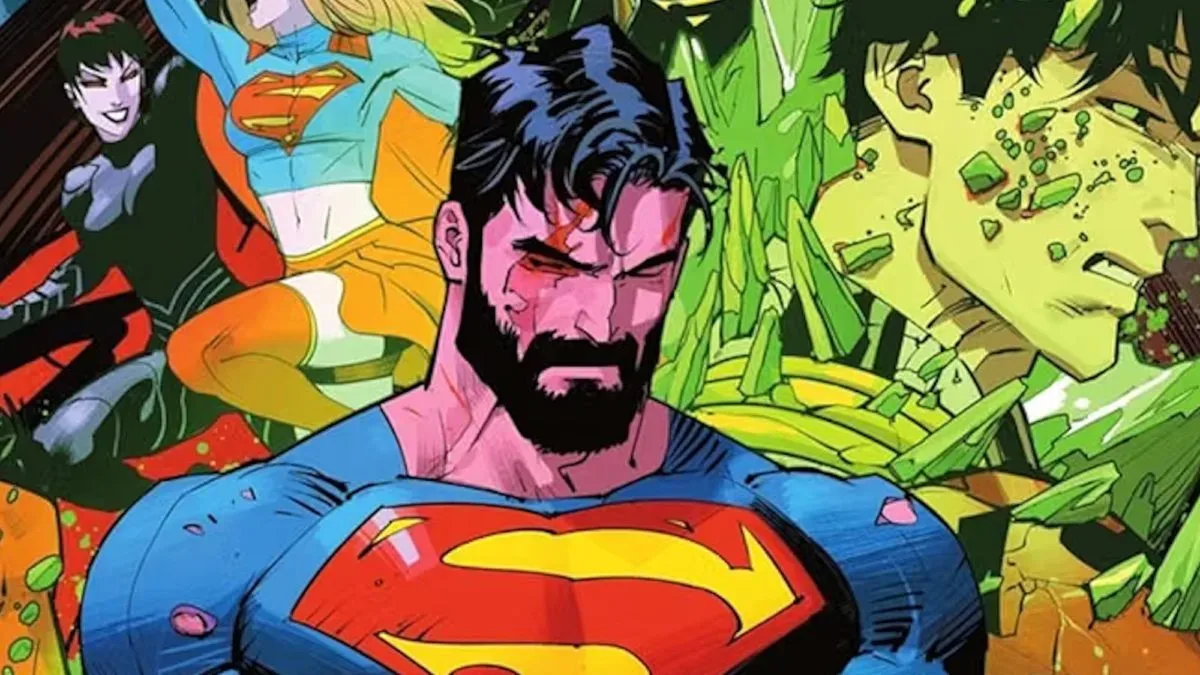
The announcement also closes a chapter in a wider DC comics landscape that continues to generate major character-story developments. Readers tracking such changes may also be interested in the latest discussion surrounding Superman and the approaching end of Kingdom of Zod.
Ultimately, the notable part of this news is not just that a writer is leaving a superhero title. It is that King and Sampere’s run has a named final issue, a concrete release date, a defined central conflict, and a finale focused on the survival of Themyscira. Whether readers came aboard for the full run or are watching its final movement from afar, Wonder Woman #40 is being set up as the point where its principal argument about Diana, her family, and the world she protects has to withstand its harshest test.