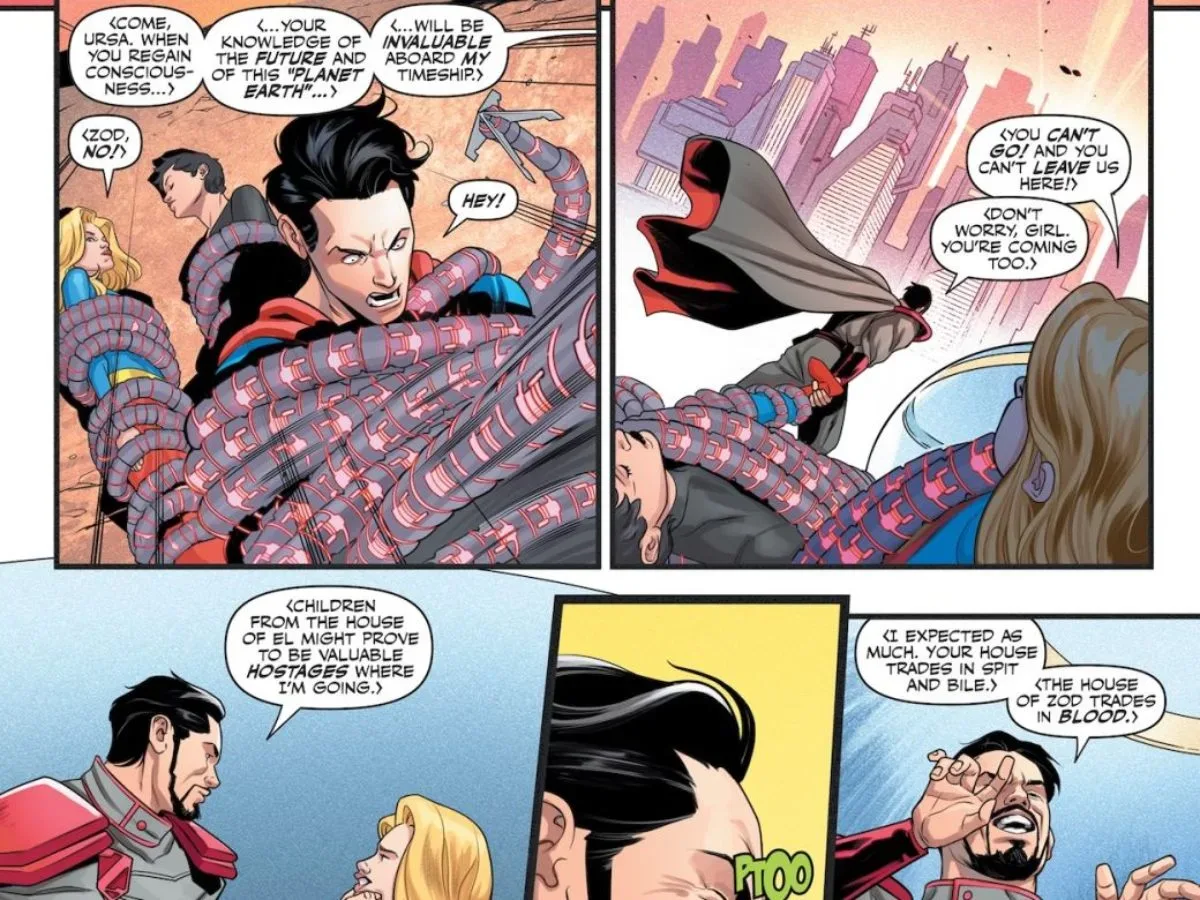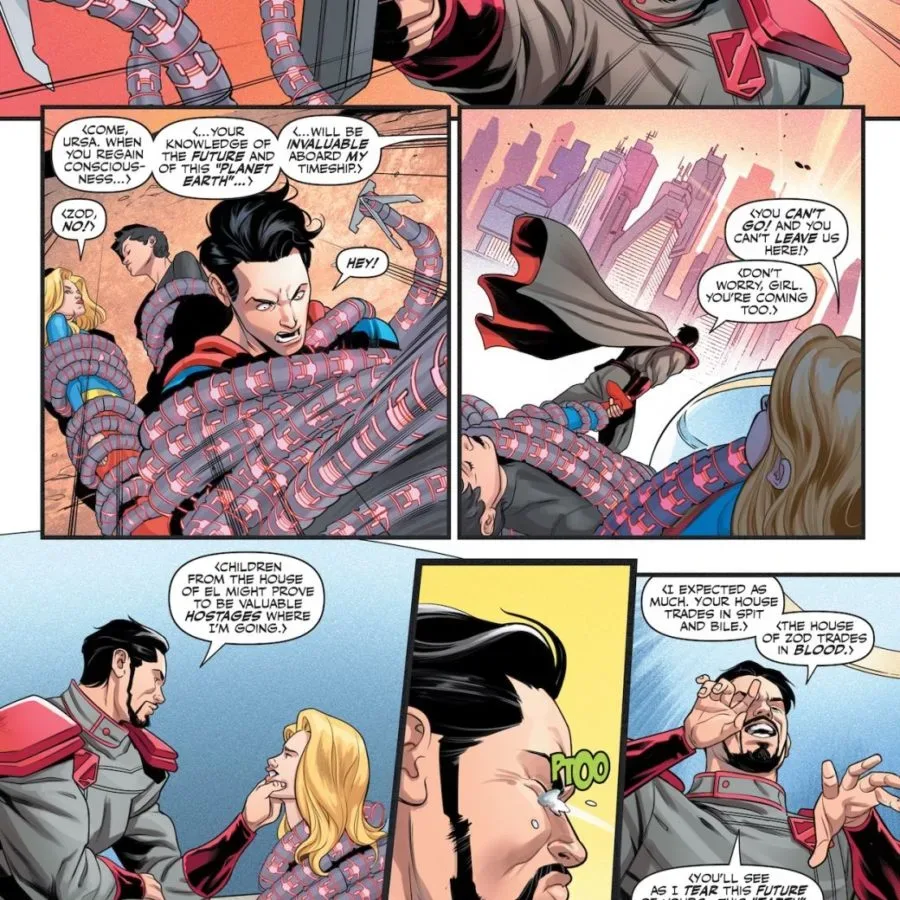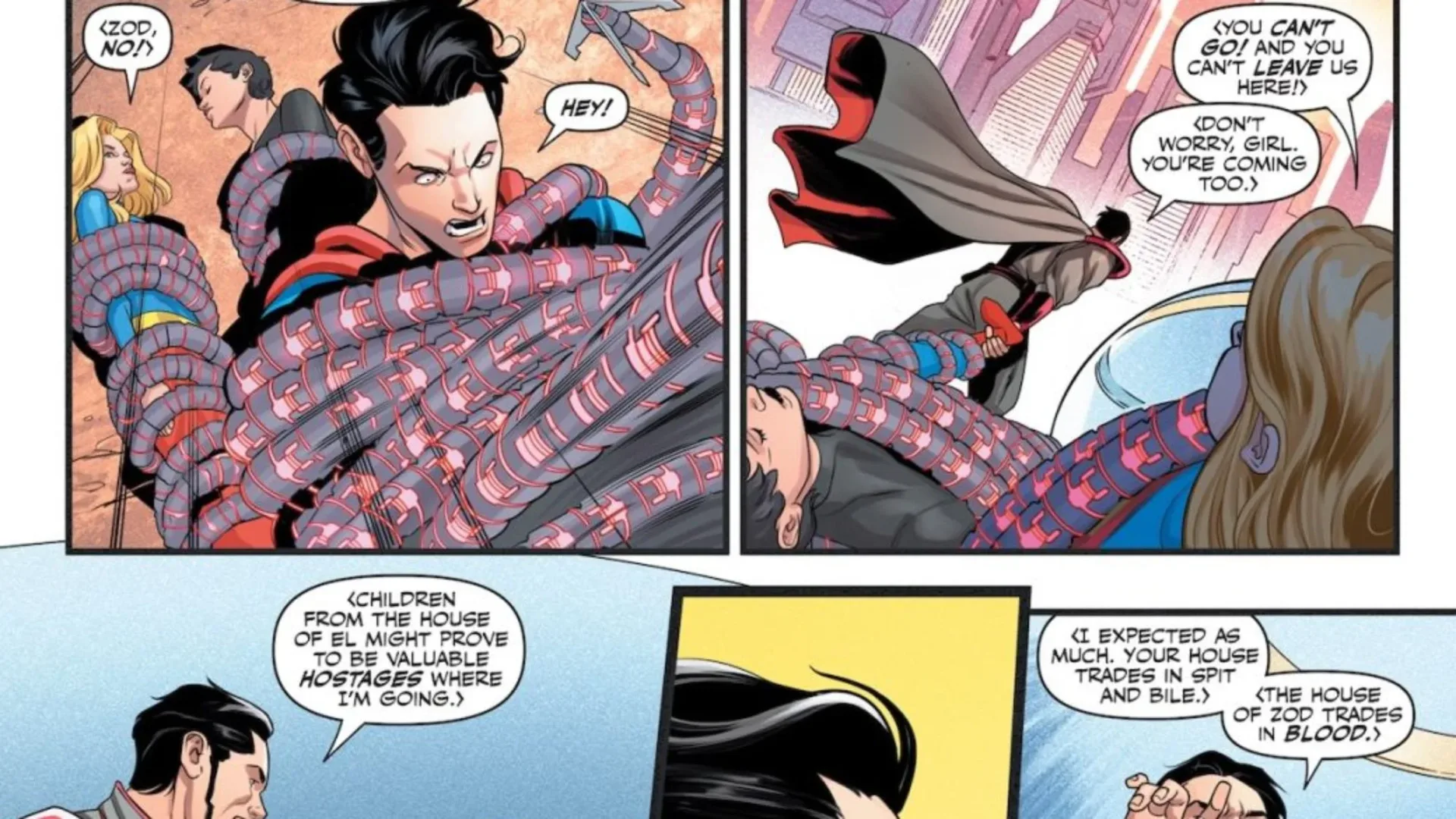
Superman Unlimited #17 reaches comic shops on September 16, 2026, with “Kingdom of Zod: Part Seven” placing its central question squarely on Superman’s survival: can a power born from Kryptonite save the world without destroying the Man of Steel in the process?
The issue is written by Dan Slott, illustrated by Rachael Stott, and has a main cover by Lucas Meyer. Its premise follows Superman’s encounter with a Kryptonite asteroid, an event that left him able to absorb the mineral’s deadly radiation. That change is now no longer simply an unusual addition to his powerset. It is presented as the tool Superman may need to stop General Zod’s world-threatening plan—and as a potential sacrifice with consequences the heroes may not be able to easily reverse.
A Superman power designed to hurt
Kryptonite is ordinarily one of Superman’s defining weaknesses: a substance associated here with radiation that is deadly to him. Superman Unlimited #17 flips that familiar danger into a difficult defensive ability. Superman can take that radiation into himself, rather than merely being harmed by its presence.
That distinction matters. Absorption is not the same thing as immunity. The solicit material explicitly asks what the cost will be, framing the ability as hazardous even when it is useful. Preview material further depicts Kal-El in visible pain as crystalline growths emerge, followed by a brief “golden” state used to burn off the radiation. The stated duration of that release is 200 seconds, underscoring that this is portrayed as a short, exhausting burst rather than a permanent solution.
In practical story terms, Superman’s new power creates a sharp limit on his usual advantages. A hero known for being exceptionally hard to stop is dealing with a threat he can only address by taking it into his own body. The issue’s tension is therefore not just whether he has enough power to beat Zod. It is whether using the necessary power leaves Superman unable to continue.
What “radiation absorption” means in this issue
The phrase describes Superman drawing in Kryptonite’s harmful energy. Based on the material available for the issue, that energy does not simply disappear. It inflicts agony and appears to build toward a forced release. Superman’s golden state is presented as a way to expel or burn away the absorbed radiation, but with only a narrow window before he is depleted.
That setup gives the conflict an inherent countdown. Zod’s scheme demands an answer, but Superman cannot casually repeat the maneuver without risk. Whether the 200-second limitation is a fixed rule, an estimate under these circumstances, or something that changes as the arc continues is not established in the available details. Readers should treat it as the immediate pressure point of this installment rather than assume it defines every future use of the ability.
The supporting heroes have a crucial job: buy Superman time
While Superman confronts the Kryptonite crisis and Zod’s wider threat, the issue assigns Superboy-Prime, Conner Kent, and Tomorrow Man a separate but equally essential responsibility: holding off Zod’s army.
The structure is meaningful because it turns the fight into more than a one-hero rescue. Superman’s task is strategic and high-risk, while the other heroes must preserve enough breathing room for him to attempt it. If their line breaks, Superman may be forced into combat before he can complete the action needed to save the world. If they succeed, their stand could make his dangerous use of Kryptonite absorption possible.
Conner Kent’s participation also places a version of Superboy alongside Superboy-Prime, with Tomorrow Man completing a three-hero defense force. The available description does not define their tactics, matchups, or the precise size and nature of Zod’s army, so it would be premature to predict who faces whom. What is clear is that the issue treats cooperation as necessary. No single member of the group is positioned as having the luxury of sitting out while Superman handles everything.
That division of labor gives the installment two simultaneous sources of jeopardy: Superman’s physical deterioration and the possibility that the defenders will be overwhelmed. It also makes sacrifice a shared theme. Superman may have to endure the radiation; the younger heroes may have to withstand an army long enough for that gamble to matter.
Why Zod is the right opponent for this kind of crisis
The supplied plot details identify General Zod as the force behind the world-ending plan at the heart of the arc. Even without further specifics about that plan, the pairing is thematically direct. Zod puts Superman in a conflict where the stakes are global, personal, and tied to Kryptonian danger all at once.
“Kingdom of Zod: Part Seven” is also described as part of the saga’s penultimate stretch. That makes this chapter sound less like a detour and more like a pressure-building installment before the storyline’s final movement. Superman’s Kryptonite absorption, the army confrontation, and the uncertainty over the power’s personal cost all point toward a conflict that is escalating rather than resolving cleanly.
The key unknown is whether Zod expects Superman to make this choice. The setup establishes that Superman needs his new ability to intervene, but it does not reveal whether the absorption mechanic is an unforeseen complication for Zod or something that plays into his larger design. That uncertainty is one reason the cost question carries weight. A power can become a liability if an opponent can dictate when and how it must be used.
What is confirmed for Superman Unlimited #17
- Title: Superman Unlimited #17
- Publisher: DC Comics
- On-sale date: September 16, 2026
- Story: “Kingdom of Zod: Part Seven”
- Writer: Dan Slott
- Artist: Rachael Stott
- Main cover artist: Lucas Meyer
- Standard cover price: $4.99
- Variant covers: V. Ken Marion and Vincenzo Riccardi variants are listed at $5.99 each; a Mark Spears variant is listed at $7.99.
For readers deciding which edition to seek out, the listed prices distinguish the standard issue from the three variants, but no additional information is supplied about their print quantities or distribution. A higher listed cover price alone should not be read as evidence of scarcity or collector value.
The bigger dramatic question is not whether Superman can win
Superman stories frequently put the world in danger. What makes this issue’s setup more pointed is that the proposed answer is inseparable from Superman’s weakness. He is not merely confronting Kryptonite despite its danger; he is deliberately absorbing it because the situation calls for it.
That reframes heroism as endurance. The ability may be new, but the choice is recognizably Superman: accept personal harm to protect others. The story’s suspense comes from its refusal, at least in the available setup, to promise that this choice can be made without a lasting price.
There is also a storytelling advantage to the 200-second detail seen in preview material. A clear limit makes an abstract super-power problem immediately legible. Superman has a finite period to act, and the other heroes have a concrete reason to hold the battlefield. Readers do not need a lengthy explanation of every technical rule to understand the danger: the clock is short, Zod’s forces are still advancing, and Superman is suffering while he tries to turn a lethal substance into a last resort.
That is a promising framework for an issue positioned late in a Zod-centered arc. The comic can deliver a large-scale superhero battle while keeping its emotional focus on a single hard decision: how much of himself can Superman spend to save everyone else?
Readers looking for another example of a familiar pop-culture property taking a different game-oriented form can also check out Plants vs. Zombies: The Board Game and its co-op card battles.